


12,99 €
Mehr erfahren.
- Herausgeber: John Wiley & Sons
- Kategorie: Fachliteratur
- Sprache: Englisch
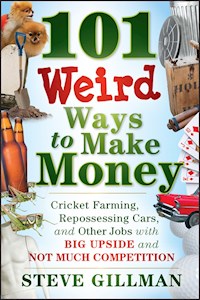
Find creative ways to make money in businesses with little competition Using interviews with unconventional entrepreneurs, the author's own wide-ranging experience with weird jobs, and extensive research, 101 Weird Ways to Make Money reveals unusual, sometimes dirty, yet profitable jobs and businesses. Whether you're looking for a job that suits your independent spirit, or want to start a new business, this unique book shows you moneymaking options you haven't considered. Most of these outside-the-box jobs don't require extensive training, and are also scalable as businesses, allowing you to build on your initial success. * Jobs and businesses covered include cricket and maggot farming, environmentally friendly burials, making and selling solar-roasted coffee, daycare services for handicapped children, and many more * Each chapter features a "where the money is" section on how to scale-up and be profitable * Author writes a popular website and email newsletter on unusual ways to make money Whether you're seeking a new career, an additional revenue stream, or a new business idea, you will want to discover 101 Weird Ways to Make Money.
Sie lesen das E-Book in den Legimi-Apps auf:
Seitenzahl: 387
Veröffentlichungsjahr: 2011
Ähnliche



















Contents
Cover
Title Page
Copyright
Acknowledgments
Introduction
Money
My Own Story
Part One: Fun Ways to Make Money
Nevette Michael, Craps Dealer
Chapter 1:Stealing Cars for Fun and Profit
Auto Repossession
Chapter 2: Drinking on the Job
Specialty Beer Brewer
Chapter 3: Creating Beauty and the Beast
Makeup Artist
Chapter 4: Count to Twenty-One
Casino Dealer
Chapter 5: Magic Money
Part-Time Magician
Chapter 6: Exploding on the Job
Demolition Worker
Chapter 7: Maybe It's Not So Funny
Rodeo Clown
Chapter 8: The Business of Chasing Criminals
Bounty-Hunter
Chapter 9: Hilarious Income
Niche Comedian
Chapter 10: Juggling Burning Bowling Pins
Street Performer
Chapter 11: Digging Up Old Coins
Metal Detecting
Part Two: Making Money Outdoors
David Marcks, Geese Police
Chapter 12: Have Fun Frightening Geese
Golf Course Bird Remover
Chapter 13: Killing Small Trees
Christmas Tree Seller
Chapter 14: Swimming at the Golf Course
Golf Ball Recoverer
Chapter 15: Medicating Maple Trees
Tree Surgeon
Chapter 16: Chop Wood, Make Money
Specialty Firewood Seller
Chapter 17: Wintertime Profits
Rooftop Snow Remover
Chapter 18: Paid to Exercise
Bicycle-Taxi Driver
Chapter 19: Your Product Cost Is Zero
Worm Grunting and Farming
Part Three: Dirty and Ugly Jobs
Eric and Melinda Johnson, Melrics Mobile Lube
Chapter 20: Jiminy Cricket!
Cricket-Farmer
Chapter 21: Mopping Up Brains
Crime-Scene Cleaner
Chapter 22: Pumping Poop
Septic Cleaner
Chapter 23: Traveling Grease Monkey
Mobile Oil-Changer
Chapter 24: Another Pooportunity
Diaper-Cleaning Service
Chapter 25: Preparing the Way for Santa
Chimney Sweep
Chapter 26: Capturing Wild Animals
Animal-Control Specialist
Chapter 27: Clean Up with This Dirty Job
Garbage and Junk Hauler
Chapter 28: Work in a Sewer
Wastewater-Treatment Worker
Chapter 29: Perhaps the Stinkiest Job?
Maggot Farmer
Chapter 30: Blood-Sucking Profits
Leeches
Part Four: Internet Opportunities
Mister X, Domain-Name Investor
Chapter 31: A Laptop in Bangkok
Selling Writing Services from Anywhere
Chapter 32: Get Rich with Unreal Estate
Virtual Worlds
Chapter 33: Give It Away and Make It Pay
Profit from E-Books
Chapter 34: Automatic Profits from Writing
Auto-Responder E-Mail Newsletters
Chapter 35: Paid to Write about Feet
Niche Blogs
Chapter 36: Be Master of Your Domains
Internet Names Buyer and Seller
Chapter 37: What's Your Opinion Worth?
Online Product-Reviewing
Part Five: Green Jobs and Businesses
Dave Hartkop, Solar Roast Coffee
Chapter 38: Green Death
Environmentally Friendly Funerals
Chapter 39: Sleep on This Idea
Recycling Mattresses
Chapter 40: Computer Garbage Man
Electronic-Waste Recycling
Chapter 41: Be an Oil-Tank Tycoon
Old Fuel-Tank Remover
Chapter 42: Cash from Catalytic Converters
Scrap Metals Salvager and Seller
Chapter 43: Solar-Roasted Coffee
Unique Green Foods and Drinks Seller
Part Six: Home-Basedmoneymakers
Mark Shapiro, Judgment Broker
Chapter 44: Be a Home-Based Slumlord
Room Renter to Friends
Chapter 45: Driving Home Your Profits
Used Car Seller from Your Yard
Chapter 46: Making People Pay
Judgment Enforcer
Chapter 47: Big Money in Metal Houses
Mobile Homes Flipper
Chapter 48: Judging a Book by Its Cover
Used Book Seller from Home
Chapter 49: Sell Your Dating, Design, or Dog Expertise
Specialty Consulting
Chapter 50: Staying Home Monday Morning
Virtual Assistant
Part Seven: Working with People
Mike Kopczynski, Bartender
Chapter 51: Handicapped Kids and Other Day-Care Niches
Specialty Day Care
Chapter 52: The Life of a Traveling Bartender
Drink Server
Chapter 53: Professor without a Degree
Noncredit College Teacher
Chapter 54: Coming into the Closet
Home-Organizing Consultant
Chapter 55: Students Pay You $50 per Hour
Specialized Tutor
Chapter 56: Prepping Grandpa's Condo
Senior Services Provider
Chapter 57: Paid to Travel the World
English Teacher Overseas
Part Eight: Working with Animals
Lisa Kelly, Kitty Cat Condos
Chapter 58: Hooking Up Lady and the Tramp
Dog Breeder
Chapter 59: Making Pets Beautiful
Mobile Pet Groomer
Chapter 60: Paid to Visit Animals
Pet Sitter
Chapter 61: It's a Walk in the Park
Dog-Walker
Chapter 62: Managing Noah's Ark
Animal-Boarder
Chapter 63: A Car Full of Animals
Pet-Taxi Service
Chapter 64: Sit, Fetch, and Roll Over
Animal Trainer
Chapter 65: Caging Wild Kittens
Cat Enclosures
Part Nine: Creative and Artisticwork
Phil Black, Inventor of FitDeck
Chapter 66: Bird-Poop Earrings
Unique Jewelry
Chapter 67: You'll Like the Sound of This
Voice-Over Work
Chapter 68: Paint Yourself a Profit
Mural-Painter
Chapter 69: Putting Antlers on Dogs
Gadgets and Gifts Inventor
Chapter 70: A Burning Desire to Create?
Aromatherapy-Candle Maker
Chapter 71: Carving Out a Niche
Walking Sticks
Chapter 72: Profits from Painting People
Temporary Tattoos
Part Ten: Buying and Selling Things
Rusty and Debbie Lake, Classic Furniture
Chapter 73: I See Dead People Profits
Estate Goods
Chapter 74: Their Loss Is Your Gain
Storage Unit Auctioner
Chapter 75: The Middleman Always Gets His Cut
Liquidation Broker
Chapter 76: Barber Chairs and Other Opportunities
Used and Unusual Furniture Seller
Chapter 77: Finding New Owners for Old Shirts
Used Clothing Seller
Chapter 78: One Man's Trash
Antique Treasure Hunter
Chapter 79: A Little Here and a Little There
Rack Merchandiser
Chapter 80: A Store with No Overhead
Flea-Market Dollar Store
Chapter 81: Profiting from the End Times
Survival Supplies and More Seller
Part Eleven: Cleaning Jobs and Businesses
Chris Gillman, Carpet Cleaner
Chapter 82: Sucking Up Dirt
Specialty Carpet Care
Chapter 83: Get Paid by the Banks
Foreclosure Cleaner
Chapter 84: The Money Is in the Details
Auto-Detailing Niches
Chapter 85: Cleaning Up after Trash Collectors
Garbage-Truck Washer
Chapter 86: Cleaning Up after Carnies
Event Cleanup Worker
Part Twelve: Stillmore Unusualways Tomakemoney
Jason Gillman, Surveillance Equipment Sales
Chapter 87: Be a Human Guinea Pig
Medical Research Subject
Chapter 88: Deep-Fried Butter
Unique Food Concession Businesses
Chapter 89: Secretly Watching People
Surveillance Worker
Chapter 90: The Parts Are Greater Than the Whole
Junkyard Business
Chapter 91: You've Got Their Number
House-Number Curb-Painter
Chapter 92: Playing with Plastic People
Mannequin Business
Chapter 93: A Sweet Job
Chocolatier
Chapter 94: Putting It All on the Table
Tabletop Advertiser
Chapter 95: Small Cracks Equal Big Profits
Mobile Windshield Repairer
Chapter 96: Driving Other People's Cars
Contract Chauffeur
Chapter 97: Making Room for More Stuff
Shed-Installation Business
Chapter 98: Rugs for Students
Necessities Renter to College Students
Chapter 99: Beating the House
Gambler
Chapter 100: What to Do with an IOU
Note-Broker
Chapter 101: Animal Poop Coffee Anyone?
Rare and Unusual Foods Seller
Index
Copyright © 2011 by Steve Gillman. All rights reserved.
Published by John Wiley & Sons, Inc., Hoboken, New Jersey.
Published simultaneously in Canada.
No part of this publication may be reproduced, stored in a retrieval system, or transmitted in any form or by any means, electronic, mechanical, photocopying, recording, scanning, or otherwise, except as permitted under Section 107 or 108 of the 1976 United States Copyright Act, without either the prior written permission of the Publisher, or authorization through payment of the appropriate per-copy fee to the Copyright Clearance Center, Inc., 222 Rosewood Drive, Danvers, MA 01923, (978) 750-8400, fax (978) 646-8600, or on theWeb at www.copyright.com. Requests to the Publisher for permission should be addressed to the Permissions Department, JohnWiley & Sons, Inc., 111 River Street, Hoboken, NJ 07030, (201) 748-6011, fax (201) 748-6008, or online at www.wiley.com/go/permissions.
Limit of Liability/Disclaimer ofWarranty: While the publisher and author have used their best efforts in preparing this book, they make no representations or warranties with respect to the accuracy or completeness of the contents of this book and specifically disclaim any implied warranties of merchantability or fitness for a particular purpose. No warranty may be created or extended by sales representatives or written sales materials. The advice and strategies contained herein may not be suitable for your situation. You should consult with a professional where appropriate. Neither the publisher nor author shall be liable for any loss of profit or any other commercial damages, including but not limited to special, incidental, consequential, or other damages.
For general information on our other products and services or for technical support, please contact our Customer Care Department within the United States at (800) 762-2974, outside the United States at (317) 572-3993 or fax (317) 572-4002.
Wiley also publishes its books in a variety of electronic formats. Some content that appears in print may not be available in electronic books. For more information aboutWiley products, visit our web site at www.wiley.com.
Library of Congress Cataloging-in-Publication Data:
Gillman, Steve, 1964-
101 weird ways to make money: cricket farming, repossessing cars, and other jobs with big upside and not much competition/Steve Gillman.
p. cm.
Includes index.
ISBN 978-1-118-01418-9 (paper)
ISBN 978-1-118-08574-5 (ebk)
ISBN 978-1-118-08572-1 (ebk)
ISBN 978-1-118-08571-4 (ebk)
1. Creative ability in business. 2. Success in business. I. Title.
HD53.G49 2011
331.702—dc22
2011002030
Acknowledgments
I don't know what I would do without the loving support of Ana, the love of my life. Add to that the many hours she spent helping research the chapters here, and I owe her more thanks than I can offer on this page.
I also have to thank my editor, Richard Narramore, who pushed me to find real and accessible ways to make money that are still unusual or interesting so this would not be a book of untested ideas nor a routine employment guide. The book is better because of his suggestions.
Finally, thank you to all the individuals who participated in the interviews that appear in the book, as well as those who spent time helping me to understand the nature of the work involved in the jobs and businesses covered here.
Introduction
Some of the jobs, businesses, and investments covered here make millions for those who use them. Others are just profitable and interesting—better than another day flipping burgers or negotiating office politics. And who knows? Every billion-dollar industry had to have its first millionaire, so you too might be the first to really hit it big with a new and fun way to make money.
Who would have guessed, even a year before it happened, that we would see the first millionaire investor in virtual real estate? Ailin Graef used her avatar to buy and sell imaginary land for real money in the online fantasy game called Second Life. Players want better fantasy homes and are willing to pay real dollars for them. Real-world corporations rent billboards that occupy strategic locations in online virtual worlds. Ailin started with just $9.95—the monthly subscription fee—and built a virtual real estate empire worth a million dollars.
And who would think that frightening geese could be profitable? David Marcks had a job as a grounds superintendent for a golf course and had to get rid of hundreds of geese. He had the idea to use dogs, and after experimenting with various breeds, he found that border collies could be trained to do the job without losing interest (as the other dogs did). From that start, he developed and grew his company, Geese Police, to the point where it generated millions in annual revenue.
Some jobs and businesses covered here are not so weird. In those cases I try to find a different approach. Providing day care is not unusual, for example, but a real need exists in some areas for day-care services that specialize in caring for children with developmental disabilities. Or consider power-washing. It has become common, but it's possible to specialize in washing garbage trucks or travel trailers. “Normal” ways to make money suddenly have less competition—and more income potential—once you come at them from a new angle or find a new niche.
I have a good personal example of how a seemingly small niche can make money because of the lack of competition. Just prior to moving to Arizona, I bought lunch for my brother Chris and took notes as I questioned him about every aspect of carpet cleaning, a business he had been in for years. Once we settled in our new home in Tucson, I spent a few days putting together the web site www.HowToRemoveCarpetStains.com, which, as its name suggests, offers tips for removing stains from carpet.
From that point onward, I spent perhaps a few hours annually working on the site, eventually adding general carpet-care advice. Visitor traffic was slow to grow, but the site made about $30,000 profit in its first five years. I don't recall the last time I spent more than a few minutes working on it, but last month it made more than $1,500 (and it's just one of our many sites). Making web sites is old news, and everyone is doing it, but this shows the potential of a low-competition niche.
With that said, I have to also admit that not every niche—in jobs or businesses—is a good one. Some are likely to leave you struggling financially no matter how smart or motivated you are. Based on my experience, these tough niches include playing chess for money, picking fruit, and web sites about metaphors. That's okay though. I have enjoyed all three of these, and the pocket money they made for me was just a bonus (and my www.metaphorology.com makes enough money monthly to buy us dinner). It's great to build wealth, but you also have to enjoy what you do.
The moneymakers covered here have been carefully selected. Most are at least a bit weird or uncommon and therefore have less competition than most jobs or businesses. All of them are real ways that people have made money. I aimed for interesting, available in most areas, little money needed, little training needed, and potential for above-average income. Some entries meet all of these criteria, but all of the ways covered here meet at least several of them.
Money
You'll find a section with the above title in each chapter. The profit potential of some of the occupations covered here will be obvious, but some key ways to realize that potential will be pointed out. What about the less lucrative jobs and businesses? My advice is to use them for what they are: enjoyable ways to make some money, and steps toward bigger opportunities. For example, if you work as a bartender with the best shifts at the right clubs, you can have fun making a decent living, but if you want riches, you are free to use this as a means to someday own a chain of bars or nightclubs. And who knows where worm grunting, diaper cleaning, or mural painting might lead.
Work as an employee and then become the boss. This theme appears again and again in this book. High incomes are rarely found in employment alone unless you become a pro football player or a movie star. Of course, a job doesn't have to make you rich if you really enjoy the work and it pays the bills, but it is also true that almost any job can be a training ground for creating future wealth if you treat it that way. Millions of business owners are right now training their future competition—their employees. If you are hired to market green funerals and you pay attention, you can someday own profitable funeral homes. A part-time job tearing down buildings can give you the knowledge and contacts necessary to start your own demolition company.
Look at the small businesses covered here in the same way. A web site about carpet stains might just barely pay the bills, but you can expand that into an Internet empire consisting of 40 or more sites. Making a couple of hundred dollars weekly as a magician working birthday parties is not the end of the line if you use the experience to eventually create a television show or to write best-selling books on magic. A snow removal business won't make you very much as a one-man venture, but you can put your profits into more equipment and employees.
Think as an investor too. Buying and selling used stuffed animals might not make you rich by itself (then again, who knows?), but the profits can be parlayed into bigger investments. I used to invest money with friends who bought and sold old cars, splitting the profits with me. Making $500 at a time wasn't thrilling, but I did save that money and eventually invested it into real estate to make bigger profits.
Put all these ideas together, and you'll see that I'm suggesting you purposefully engineer upward progress in your financial life. Use jobs to gain the knowledge, the people access, and the skills you need for starting a business in a given field. Use small businesses to create larger ones. Use your investment returns to fund the next bigger investment. If you are seriously committed to doing so, you can make money with any of the ways covered here, and if it isn't enough by itself, you can use it as a step toward something better.
My Own Story
Am I really qualified to write on different ways to make money? I'll tell you a few details of my life and let you decide.
At 6 years old I was an exterminator, killing flies in the house for a penny each at my mother's request. By 10 I was an arms dealer, collecting spent ammunition in the Great Paper Wad War and selling it back to the combatants—my brothers. By 12 I was running carnival games in the basement of my parents' house, charging money and offering prizes for ridiculously difficult games. Much of the paper route money earned by my brothers and their friends ended up in my first bank account. At 14 I became a loan shark, offering $2 loans to friends who had to repay me $3 in a week.
My penchant for finding ways to make money did not end in childhood. By 16 I was cutting and selling firewood with a friend, making perhaps $5 per hour, which seemed like a lot of money in 1980. At 17 I took my first real job as a short-order cook in a Big Boy restaurant and saved enough money to hitchhike to California and Mexico, among other destinations. By 20 I was done traveling for a while and took a job in a fast-food restaurant, quickly working my way into management after finding a better way to schedule, which cut $12,000 per year from the owner's labor costs.
About that time, I bought my first piece of real estate. I had a very basic idea that I had picked up somewhere. It was that you can buy for less when you pay cash and sell for more when you offer terms. A lot of people out there want to buy land or homes but don't have any money saved. This was before zero-down mortgage loans were being handed out by every bank and finance company.
I found a two-acre piece of land overlooking a small valley in some woods 30 minutes from where I lived. The real estate agent who owned it wanted $4,100 for it. I offered $3,300 cash, and we eventually agreed on $3,500. Closing a deal was much cheaper and simpler then, so a couple of days later the property was mine and I had perhaps $3,650 into it. I raked up the dead branches on the land and outlined a possible driveway in the grass using some logs. I took an old piece of plywood and painted on it: “For Sale: $4,750, $250 down, $100 per month, 11 percent interest,” along with my phone number.
Two weeks later I sold it for exactly that price and those terms. I met the buyers in a restaurant to avoid closing costs. Selling the land for $1,100 more than my investment in just two weeks was fun, but I also collected that 11 percent interest for several years before the balance was paid off. Later in life I used the same strategy to sell a rental property for 15 percent more than I had paid for it just months earlier.
I had a variety of jobs around this time. I worked as a skip tracer for a collection agency, did some process-serving work (locating people being sued and handing them their summonses) for an insurance company, and became a blackjack dealer. I had “normal” jobs as well, like delivering pizza, landscaping, and driving a newspaper box route. But I always preferred the more unusual and interesting employment. Stealing cars in the middle of the night sounded both unusual and interesting, so I was happy to help out my brother when he started to do auto repossessions as part of his towing business.
At about midnight one evening, in my brother Jason's tow truck, we were cruising through a small town in northern Michigan. Behind a bar Jay spotted a Pontiac we were looking for. I jumped out with my flashlight and verified the VIN (vehicle identification number). Realizing that because the front wheels were turned the car was likely to hit the brick wall next to it if we tried to tow it, Jay decided it was better to enter the bar and ask the owner for the keys. I didn't like the idea, but he was probably right. I never felt comfortable with the ones we towed because they took longer, which meant the owner might do something—like the time a young man pulled a gun on us when were hooking up his Ford Mustang. When we had keys (from the lender), we could quietly sneak into a yard, and by the time the owner heard the engine start we were driving away.
The owner in this case was sitting at the bar staring into his beer as Jay explained that the bank would treat him better, and maybe even reinstate the loan, if he turned in the car voluntarily. No luck. In fact, no response at all. He just drank his beer. He wouldn't even turn his head in our direction. But his friends—who seemed to include everyone in the bar—were listening. A small crowd followed us back into the alley to watch Jay hook up the car and to yell a few insults at us.
Nervous because of the angry taunts, Jay pulled out quickly, and just as predicted, the front corner of the car caught the brick wall. A turn-light cover broke, and the crowd erupted, yelling and throwing things. I grabbed the baseball bat and ran through the drunks back into the bar, where I called the police. When I returned, Jay was on the roof of the tow truck, surrounded by the mob.
Fortunately, the police arrived quickly, but not quickly enough to prevent the theft of a toolbox from the back of the truck. They supervised as Jay dragged the car out, hooked up from the other end, and disconnected the drive shaft so as not to wreck the transmission when towing from the wrong end (the wheels were turned, making this necessary). Recalling that incident and others, it seems hard to believe what I would do for $15 back then.
Flash forward 15 years. After being a chauffeur, a real estate agent, and doing a 10-year stint as a part-time casino dealer (I've worked a full-time job for perhaps only 9 or 10 months of my life), I was taking some time off. I had cut down to one day of work each week, stuffing Sunday newspapers with ads for $100 every Saturday night. I had several rooms rented in my home, which no longer had a mortgage, and I had a few dollars in the bank, so it was time to travel again.
I went to Ecuador for four weeks and met the love of my life. A lot of paperwork and a few months later, Ana was here and my bachelor days were over at 37 years old. But the days of finding new ways to make money were not over. With renters depositing their money into our bank account, we embarked on several cross-country trips to find a new hometown and new ways to make a living. After a few normal jobs and residences in several states, we realized that we would be better off doing something more interesting and profitable, like starting a business.
Fortunately, like myself, Ana had had the entrepreneurial spirit since she was young. At eight years old she rented comic books to children who couldn't afford to buy them. With her grandmother she sold sandwiches to factory workers on their lunch breaks. They also sold homemade ice cream, popsicles, and Coca-Cola out of their house in Guayaquil, which was next to a school. Ana helped her grandmother sell “magic water,” and in her teens she sold homework services and was a ghostwriter of love letters. When I met her, she was giving Spanish lessons to tourists while finishing college.
Early in our marriage, we brought back backpacks full of hand-carved Tagua figurines and fish-scale earrings from one of our trips to Ecuador. Tagua, also known as vegetable ivory, is a harder-than-wood nut from a palm tree, often carved into animal and other forms. Fish-scale earrings are made from, well, fish scales. They're dyed various colors and are actually quite attractive. We sold both at craft shows and flea markets.
We had a lot of fun working the flea-market circuit in Michigan. We sold dozens of different products. Ana made crafts to sell, and she discovered that we could triple our investment on Barbie dolls we found at rummage sales and thrift stores. I created Canned Critters, which were small stuffed animals trapped inside canning jars—kids insisted that their parents buy these so they could release the poor animal. I also sold hundreds of walking sticks that I carved and prepared from trees I cut. In the end, as much fun as it was, we discovered that the heyday of the flea market was long past (except in a few niches), and vendors who used to make $600 daily told us they hoped for $150 now, thanks to dollar stores and the Internet.
The Internet. That was where we needed to focus our efforts, we decided. There were some problems with this plan. To start with, I disliked computers and couldn't type. To this day I type with just two fingers. Also, we knew nothing about making a web site. What was HTML? How do you get people to your web sites, and then how do you make money? Still, we liked the idea of a portable business, especially since Ana hated the idea of another winter in Michigan.
We had invented a game called Deal a Poem, hoping to license it to a game maker, so www.dealapoem.com was the first domain name that we registered. The game never made a dime, but the web site we started to market it (and which made only a few dimes) helped get us into Internet publishing. Another early one of the 40 web sites we currently operate was www.HousesUnderFiftyThousand.com, inspired by our experiences traveling the country looking for a place to settle, and buying a beautiful home in a great little town in Montana for just $17,500 (which we sold six months later for $28,000). I started my web site www.IncreaseBrainpower.com around this time, too, which eventually generated an e-mail list of more than 32,000 subscribers to my Brainpower Newsletter. We used pay-per-click advertising programs to generate revenue. We soon moved to Arizona, and eventually to Colorado, with our new company: Webhiker LLC.
It was fun to write what we wanted and make money doing it! We were making only about $5 daily after six months, but then I discovered the power of distributing articles to promote our sites, and a few months later we were making a living. Currently some of our sites singlehandedly make more than any job I've had. I also started writing and selling e-books. Ana created TuSuperacionPersonal.com, a Spanish-language site with self-improvement articles. I created Unusual Ways, a newsletter for UnusualWaysToMakeMoney.com, to write about the many jobs and businesses that we and others have tried. That led to this book, and I hope you're holding onto the 30,000th copy sold, in which case I've found another good source of income.
By the way, just to complete my résumé, I should tell you that in addition to the ways mentioned thus far, I've made money as a property researcher, can collector, landlord, poker player, food vendor, postal worker, house renovator, contract laborer, road construction flagman, sample distributor, convention host, construction worker, restaurant equipment installer, factory worker, thrift store employee, carpet cleaner, drywall installer, apple harvester, adults-with-special-needs supervisor, banquet setup worker, product packager, mover, and more. Some of these jobs and ventures lasted just weeks, which was fine with me. On to the next one . . .
I love reading about all the ways people make money, and I especially like the less common occupations. But apart from being interesting to read about, unusual jobs and weird ways to invest or do business have some distinct advantages. To start with, it's more fun to make money doing some of the things in this book, versus sitting at a desk or on an assembly line five days every week. What about the dirty jobs that don't seem too fun? A common advantage with these is a lack of competition. You can get rich providing necessary services that nobody else wants to provide. And perhaps normal jobs aren't quite right for you. Many of the jobs and businesses in this book require a unique set of skills and interests. You might find something that you never considered but that makes you want to get up and go to work every morning. I did. I even gave up writing longhand and learned to like computers.
Part One
Fun Ways to Make Money
You can find fun in any work—although I don't recall finding any as a real estate agent. Of course, some ways of making money are more entertaining and exciting than others, and which ones they are depends on who you are. I enjoyed tracking people down when I was a process server, and I even made some money playing chess. Currently I have a lot of fun writing on my favorite subjects.
This section covers work ranging from bounty hunting to making a hatful of dollar bills as a street performer. The focus is on the fun, but many of the following activities hold real potential for making big money—if you approach them with the right attitude. Making beer for a brewpub is just a nice job, for example, but with experience and a few of your own recipes you can start a new brand. Some craft brewers have built multimillion-dollar companies from small starts. And tearing down or blowing up buildings might be a blast as a $12-per-hour job, but you can also use the experience to start your own successful demolition company.
Nevette Michael, Craps Dealer
Nevette Michael works at Turtle Creek Casino in northern Michigan. I worked with her many years ago (at another casino), but even after weeks of training I couldn't handle craps, so I dealt blackjack and roulette. Nevette not only can handle her job but also clearly loves the work, as you'll see in this interview:
What did you do before casino work, and how did you become a craps dealer?
I was working full-time for a commercial photographer, running the office and occasionally helping where it was needed. My coworker . . . had been hired part-time at our little local casino and was loving the job . . . both the thrill of the game and the money. . . . He told me they were still hiring, so I interviewed for the dealer position (blackjack) and was immediately asked to training class. It took me another two years (and all the other games knowledge) before I tried craps training. . . . It took me six months before I could be on the floor for an hour without making a mistake!
Do you still enjoy the work?
After 19 years working in the casino, craps is still my favorite game. Nothing is more exciting in the whole place than a hot craps game executed by competent dealers who are smooth and having fun with the entire table. There are still many days I walk out to the table and my customers say, “There she is, my favorite dealer!” Not too many jobs where you feel the love like that!
How much do you make now, and what do starting dealers typically make?
I could be making twice as much if I chose to live in a bigger market. Still, I make enough to pay the mortgage, put food on the table, and take a few adventure vacations. . . . My base rate has been topped for the last nine years at approximately $10 per hour. We average $11 per hour in tips. . . . I believe they start at a base wage of $5.50 per hour plus tips ($16.50 per hour total).
As far as you know, do most casinos still do their own training of dealers?
Certainly here in my little neck of the woods. I've heard that there are actual schools in Vegas, but I believe those are only high-paid employment services in reality. Most casinos train their own and/or hire experienced dealers.
Is dealing blackjack or craps something anyone can learn to do?
If you've got basic math skills and are sociable, you can deal blackjack. Craps is another matter entirely. Not only do you have to have superior math skills, you have to be able to multitask, listen to many people tell you what they want you to do with their bets (sometimes all at once!), keep the game secure, and still be able to entertain. It takes a special personality and special skills to be able to deal craps.
Have you had opportunities for promotion to pit boss or other positions?
I have had the opportunity to “advance” to a management position, but it does not pay as well as dealing. Still, after dealing for so many years, I was interested in running a pit/sitting box for variety and, yes, more job security. As a dual-rater I mostly deal (and mostly deal craps), and on occasion I am a pit boss.
There are opportunities to deal casino games on cruises or in exotic locations. Have you considered working elsewhere, and have many of your coworkers done so?
When I first started . . . the casino business was just beginning to open up all over the country. . . . Many went to Chicago riverboats, Florida cruise ships, Vegas, Mississippi, and other Native American casinos. . . . Of course I've fantasized about making more money, seeing other places, but Traverse City is a wonderful place in so many ways for me . . . biking, kayaking, skiing . . . and is one of the best places to raise a boy. Maybe when he's off to college I'll reconsider my options. . . . Winters are awfully long!!
What advice do you have for a person who wants to be a casino dealer?
Feel comfortable with your math skills and just love to work with people. People come to the casino to be entertained, so give 'em a good time whether they win or lose. Toughen up your skin and let any negativity roll off your back. A warm smile works wonders!
Chapter 1
Stealing Cars for Fun and Profit
Auto Repossession
“It's just the repo man,” he told his son.
“But, Daddy, why is he taking our car?” the little boy asked. His mother was digging out a mitten frozen to the floor of the trunk.
“Son, we didn't make the payments, and when you can't pay for it, you don't get to keep it,” he explained, and then he handed me the keys. It was rare for an owner to handle a repossession that well, and even rarer to see it made into a teaching moment for his children. This was one of the first repossessions I did during my brief stint as a repo man more than 20 years ago.
Often, cars were not handed over voluntarily. I snuck into driveways, yards, and parking lots to take them with keys or by tow truck. I was chased and I had guns pulled on me—all part of the adventure. It had to be fun, since the boss paid me just $15 per car. The job pays better these days, but conflict is still common.
Money
Some companies pay their agents a percentage of the repossession fee or bonuses in addition to hourly wages, so if you become good at what you do you can boost your income. To make big money, though, you have to treat the job as insider training, with the goal of owning your own company. You can do repossessions as a sideline to a normal towing business or as your specialty. Additional sources of revenue come from related services. With a fenced area to store cars for clients, you can charge a daily fee. You can also auction cars for clients, taking a percentage of the sale or a flat fee.
Some sources peg the average annual income of repossession agents at about $15,000, although this may reflect the part-time nature of many positions. Tow truck drivers average $42,000 annually, and often do repossessions. Owners of repossession or towing companies can make much more, of course, with a handful in the United States currently topping $5 million in annual revenue.
How to Get Started
Many repossession businesses don't have web sites, so look in the yellow pages under “auto repossession.” Call towing companies, too, because car repossessions are often a sideline to towing. Smaller companies may be open to your offer to help out for free on a job or two, to prove you can do the work. In fact, some outfits might require you to ride along on a few repossession jobs before you are put on payroll in any case, just to see if you really want the job and can handle it.
If you want to start part-time—whether as a way to decide if you like the work or to learn about the business before investing—a small company can be perfect. Some towing companies do just a few repossessions per week. And if you are interested in repossessions as a business, it is best to work as an employee for a few months.
Resources
www.repoman.com: Phone numbers and links to many repossession companies—a good place to start a job search. Also has information for business owners.http://en.wikipedia.org/wiki/Repossession: Covers the basics of the business and the relevant laws; the latter varies from state to state.www.ftc.gov/bcp/edu/pubs/consumer/autos/aut14.shtm: More detail on the laws involved in repossession, although from a consumer perspective.www.campingcompanies.com: An example of a successful repossession company, and a good place to get a job (employees get full benefits).Chapter 2
Drinking on the Job
Specialty Beer Brewer
Yes, a brewer, sometimes known as a brewmaster, really does have to taste-test the beer he makes. If you like that idea, here is more good news: Beer-making jobs in small pubs and microbreweries have become available across the country in the past decade. In addition to drinking on the job, another benefit is the exercise. Unloading and carrying sacks of grain and hops will keep you in shape. The job also requires malting, milling, mashing, boiling, fermenting, conditioning, filtering, and packaging that beer.
Large breweries often require a degree in chemistry and hire only brewers with years of experience. Microbreweries are usually satisfied with certification from one of the good craft brewing schools, such as Siebel or the Institute for Brewing Studies. Some certification courses can be completed online in as little as three months—although you should look for one that also offers on-site training for a few weeks.
There are different ways to work in brewing. Some microbreweries now have hundreds of employees and positions for brewers and assistant brewers. It is probably easier to get hired at small brewpubs though. You can also work as a traveling brewer. Our local Irish pub recently lost its brewmaster, so it pays traveling expenses and $500 per batch for a brewer to come from California and spend a couple of weeks at a time working here in Colorado. He works at other pubs as well. We might call this position on-call emergency brewmaster.
Money
Although brewing beer has not yet made the list of professions tracked by the U.S. Bureau of Labor Statistics, the consensus in the forums at BeerAdvocate.com is that brewmasters are paid between $25,000 and $40,000 annually, and assistant brewmasters between $15,000 and $25,000. Filling in at small pubs and getting paid by the batch can provide a decent income along with travel opportunities.
Eventually owning a brewpub or starting a small microbrewery that distributes to bars and pubs is how you make bigger money with your skills. Of the brewpubs tracked by the business-data site Manta.com, more than 70 top $1 million in estimated annual sales.
How to Get Started
The University of Wisconsin and the University of California at Davis offer brewing courses. If you prefer a faster route to employment, try one of the online brewing courses, like that offered by the American Brewers Guild. For the cheapest and perhaps the fastest way into the industry, get a job at a brewpub and volunteer to help the brewer in any way you can. Offer to take on more and more responsibility. I know three people who brew beer in pubs, and two of them started in this way. It can also help to first experiment with brewing at home.
Resources
Homebrewing For Dummies, Second edition, by Marty Nachel (Wiley Publishing, 2008): Start at home with this guide and see if you like brewing beer.http://en.wikipedia.org/wiki/Brewing: An explanation of the basics of brewing beer.www.siebelinstitute.com: Siebel Institute of Technology and World Brewing Academy offers online and on-site course in brewing.www.beer-brewing-advice.com: A large collection of articles on every aspect of beer brewing.www.pubcrawler.com: Catalogs breweries, brewpubs, and beer bars, along with reviews—a good place to start a job search.Chapter 3
Creating Beauty and the Beast
Makeup Artist
I was in Hollywood recently, being interviewed for a documentary about luck (I wrote a book on the subject), and I had to have makeup put on for the first time. The young woman whose job it was to make me look good came from New Zealand a few years earlier. She was doing contract work, meaning she was paid by the day for various projects. One advantage of making money in this way is that you have more freedom than as an employee. You can choose the projects you like, or to take time off when you like. A disadvantage is that your income is less consistent.
In addition to being a makeup artist for people appearing on television or film, there are many other niches you can work in. Makeup artists are hired to prepare brides and bridesmaids for weddings and to do high-fashion work for photo shoots. Then there are the classic special effects positions in Hollywood—making it look like an actor's arm has been blown off or his face burned, for example. This is perhaps the most creative niche you can get into.
Money
According to the Bureau of Labor Statistics, makeup artists average $45,010 annually, with 25 percent of them making more than $61,000. Fortunately the BLS provides additional information, so we know that positions at performing arts companies average $56,570, and makeup artists working for motion picture and video companies average $85,930—not bad pay for a fun job. Obviously, working in Hollywood is a worthy goal if you want to make more money at this.
As with almost any profession, you can make more money as a business owner than as an employee. Some self-employed makeup artists charge $400 to $600 per day, so even without employees you can make a decent living if you fill your schedule. Niches can be profitable too. You might specialize in working with politicians, for example. In October 2008 the New York Times reported that the makeup artist for vice presidential candidate Sarah Palin was paid $13,200 in the month of September 2008 alone.
How to Get Started
To get hired as a makeup artist, you'll generally need some sort of training and certification. Special effects makeup schools and colleges offer options from one-year certificates to four-year degrees. Targeted training classes around the Hollywood area can be as short as a month and typically cost less than $4,000, making this a fast-track way to get started.
Outside of the Los Angeles area, you can start by getting cosmetology training and then volunteering at local theaters. Having a year of real-life experience combined with a short-course certification can make you more employable than someone fresh out of a makeup college who has never worked in the field. You can also forgo the certification for special effects and just use your cosmetology training to start a business catering to brides and working in local television.
Resources
The Complete Make-Up Artist: Working in Film, Television, and Theatre, Second edition, by Penny Delamar (Northwestern University Press, 2002).www.candacecorey.com: The web site and portfolio of makeup artist Candace Corey.www.makeup-artist-world.com: Offers home-study course. Also has articles on how to market yourself as a makeup artist and related topics.http://education-portal.com/special_effects_makeup_schools.html: Lists special effects makeup schools and colleges around the country.www.cinemamakeup.com: Offers hollywood makeup training of many types, including special effects courses.Chapter 4
Count to Twenty-One
Casino Dealer
I dealt blackjack, poker, and roulette for 10 years. Fortunately they let me work part-time, because I didn't care much for the job, even if it did pay off my first mortgage. On the other hand, I can tell you without a doubt that many of my coworkers loved the work, yet another example of how we are each unique and need to find the jobs and/or businesses that fit who we are.




