


16,99 €
Mehr erfahren.
- Herausgeber: John Wiley & Sons
- Kategorie: Geisteswissenschaft
- Sprache: Englisch
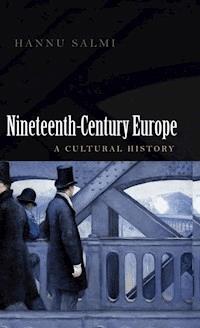
Nineteenth-Century Europe offers a much-needed concise and fresh look at European culture between the Great Revolution in France and the First World War. It encompasses all major themes of the period, from the rising nationalism of the early nineteenth century to the pessimistic views of fin de siècle. It is a lucid, fluent presentation that appeals to both students of history and culture and the general audience interested in European cultural history.
The book attempts to see the culture of the nineteenth century in broad terms, integrating everyday ways of life into the story as mental, material and social practices. It also highlights ways of thinking, mentalities and emotions in order to construct a picture of this period of another kind, that goes beyond a story of “isms” or intellectual and artistic movements.
Although the nineteenth century has often been described as a century of rising factory pipes and grey industrial cities, as a cradle of modern culture, the era has many faces. This book pays special attention to the experiences of contemporaries, from the fear for steaming engines to the longing for the pre-industrial past, from the idle calmness of bourgeois life to the awakening consumerism of the department stores, from curious exoticism to increasing xenophobia, from optimistic visions of future to the expectations of an approaching end. The century that is only a few generations away from us is strange and familiar at the same time – a bygone world that has in many ways influenced our present day world.
Sie lesen das E-Book in den Legimi-Apps auf:
Seitenzahl: 343
Veröffentlichungsjahr: 2013
Ähnliche



















Nineteenth-Century Europe
Nineteenth-Century Europe
A Cultural History
HANNU SALMI
polity
Copyright © Hannu Salmi 2008
The right of Hannu Salmi to be identified as Author of this Work has been asserted in accordance with the UK Copyright, Designs and Patents Act 1988.
First published in 2008 by Polity Press
Polity Press
65 Bridge Street
Cambridge CB2 1UR, UK
Polity Press
350 Main Street
Malden, MA 02148, USA
All rights reserved. Except for the quotation of short passages for the purpose of criticism and review, no part of this publication may be reproduced, stored in a retrieval system, or transmitted, in any form or by any means, electronic, mechanical, photocopying, recording or otherwise, without the prior permission of the publisher.
ISBN-13: 978-0-7456-5859-9
A catalogue record for this book is available from the British Library.
Typeset in 11 on 13 pt Bembo by
Servis Filmsetting Limited, Stockport, Cheshire.
Printed and bound in Great Britain by MPG Books Limited, Bodmin, Cornwall
The publisher has used its best endeavours to ensure that the URLs for external websites referred to in this book are correct and active at the time of going to press. However, the publisher has no responsibility for the websites and can make no guarantee that a site will remain live or that the content is or will remain appropriate.
Every effort has been made to trace all copyright holders, but if any have been inadvertently overlooked the publishers will be pleased to include any necessary credits in any subsequent reprint or edition.
For further information on Polity, visit our website: www.polity.co.uk
Contents
Acknowledgements
Introduction
1
Industrialization: Economy and Culture
2
The Faustian Man: A Society in Motion
3
From the Cult of Genius to Worship of Art
4
On the Cultural History of Nationalism
5
A Century of Family and Home: Daily Routines and Country Excursions
6
Baudelaire in the Department Store: Urban Living and Consumption
7
The Breakthrough of Mechanical Reproduction
8
Colonial Culture and European Identity
9
Fin de Siècle: The End of a Century
10
Conclusion: ‘Things to Come’
Notes
Bibliography
Index
Acknowledgements
In his Passions of the Soul, the French philosopher René Descartes argued that all passions are based on wonder. This book has offered me ample possibilities for wondering. The century that is only a few generations away from us is both strange and familiar. The 19th century has often been described as a century of rising factory pipes and grey industrial cities, and as a cradle of modern culture, but the era has many faces. This book pays special attention to the experiences of contemporaries: from the fear of steaming engines to the longing for a pre-industrial past, from the idle calmness of bourgeois life to the awakening consumerism of department stores, from curious exoticism to increasing xenophobia, and from optimistic visions of the future to expectations of an approaching end.
The journey into the perplexities of a century has been long, and would never have been realized without the support of my friends at the Department of Cultural History at the University of Turku. Founded in 1972, the department is one of the oldest academic units in cultural history, if not the oldest one, in Europe. There has always been a special interest in the cultural history of the 19th century, modernity and popular culture within the department, especially in the work of Keijo Virtanen and, later, Kari Immonen, Ritva Hapuli, Kari Kallioniemi and Anne Ollila. I warmly thank you for all your support and assistance!
This book has been written during the last six years, and started with the aim of writing a concise survey of the 19th century. I wish to thank especially Kalle Pihlainen who translated most of the text into fluent English several years ago. A cultural historian himself, Kalle has been an excellent commentator, giving valuable advice throughout the project. The manuscript has been completely revised, expanded and updated during the last year, and Kalle has shown incredible flexibility in smoothing my extensions to the text.
I would also like to thank Hanne Koivisto, Katriina Mäkinen, Sakari Ollitervo and Heli Paalumäki for their inspiring comments and suggestions. I am especially grateful to Katriina who also offered the possibility of starting this project as a course for the Centre for Extension Studies at the University of Turku.
Hannu Salmi
Turku, March 2008
Introduction
Let us not be deceived: that vestment of black which the men of our time wear is a terrible symbol; before coming to this, the armour must have fallen piece by piece and the embroidery flower by flower. Human reason has overthrown all illusions; but it bears in itself sorrow, in order that it may be consoled.1
So the French author Alfred de Musset (1810–57) described the emotions at the start of the nineteenth century in his Confession of a Child of the Century (La confession d’un enfant du siècle). When de Musset’s book appeared in 1836, it was against the background of the Great Revolution in France and its distressing consequences. De Musset saw the new men’s fashion, the black suit which had lost the elegance and pageantry of earlier centuries, as a symbol of the times. In the age of the physical sciences and industrialization, beauty was replaced by a calculating rationality that was found more appropriate. In historical literature and imagination, the nineteenth century is indeed portrayed more often as black and white or grey, as the era of great socio-economic structural changes: industrial production revolutionized the economy, urbanization accelerated, and the working class and the women’s rights movement were born. The nineteenth century has also been called the century of ‘isms’. Intellectual and artistic movements like nationalism, conservatism, socialism, liberalism, Darwinism, realism and impressionism have become almost indispensable elements in the perception of the century. In traditional cultural historical accounts, the century has appeared not only as a period of ideas and art but also as one of growth in material well-being, and as the triumph of science and technology.
My aim is, instead, to construct a picture of another kind of nineteenth century – not one that would forget the significance of Darwin or Marx, for example, but one that provides room for the more commonplace as well as for more concrete cultural phenomena, and that would at the same time listen to how contemporaries perceived their past, present and future.
I have, in this endeavour, attempted to see culture broadly: it is not limited to the worlds of science, art and religion, but embraces ways of life as mental, material and social practices, also tackling them on the level of ways of thinking, mentalities and emotions. In 1973, the anthropologist Clifford Geertz wrote in his Interpretation of Cultures that culture can be defined as webs of significance.2 Obviously, the Geertzian idea carries overly strong implications: the metaphor of the ‘web’ solidifies culture that is, instead, in continuous flow. It might also make us forget that culture is not outside or around humans, as codes or structures of signification. A meaning is neither a knot nor a thread of the web: it is a relation. This is why meanings can never be separated from the people of the past and their cultural products. It is crucial to stress that culture is neither just a discursive fabrication nor something that can be fully comprehended by emphasizing the immaterial processes of signification. A cultural history of nineteenth-century Europe should pay attention to the agents of history that spun their webs of significance and also changed them;3 to those social practices that connected and disconnected people of the past; and to that tangible, concrete, bodily world in which the people of the century lived and experienced their surroundings, both real and imagined.
Fundamentally, cultural history means the study of relations. It may be seen as a study of the way in which the people of the past interacted with their environment. Even emotions were a part of this dialogue: the people of the past responded to the phenomena of their time – perhaps differently from the way in which we might. Meanings, signs, symbols and representations are, and were, in constant flow, under circulation and change, in a perpetual process of becoming. Still, there are slower rhythms, deeply rooted assemblages, like the gender system or religious beliefs, that need to be considered over a much longer time span.4
Given this comprehensive approach, it is clear that it would be difficult to examine any historical period in a single compact and coherent presentation. For this reason, I must admit that my presentation will not cover everything. We can certainly locate social, and perhaps even national, particularities in various dimensions of culture and thus construct generalizations, yet the differences are also significant. These differences can be, for instance, internal to communities as well as geographical. We can hardly assume that generalizations about nineteenth-century culture would apply simulta neously to that vast geographical area that Europe is, reaching from the shores of the Arctic Ocean to those of the Mediterranean, from the boulevards of Lisbon to the streets of Moscow. European cultural multiplicity was as concrete a reality in the nineteenth century as it is today – perceiving the distinctive features is therefore important. Let us only think of the relation between the urban and rural populations during the century. The majority of Europeans lived in the countryside throughout the nineteenth century and their lifestyle differed enormously from that of the inhabitants of urban centres like St Petersburg, Paris, Berlin and London.
Another absorbing question is the temporal discrepancy be t ween historical processes. Although genetically oriented historians have a tendency to simplify the processes of the past by stating, for example, that the printing press was invented in the 1450s and film in the 1890s, such rough approximations should not be understood as universal or even pan European. It took a long time for the cultural impact of printed books or of films to extend over Europe. Innovations can spread slowly and receive local meanings from the particular dialogue specific to each area. The significance of this regional variance is demonstrated well by the fact that Enlightenment thought and the Copernican worldview arrived simultaneously in Latin America in the eighteenth century, despite the fact that Copernicus’ De revolutionibus orbium coelestium had originally appeared as early as 1543.5 In the same vein, we can follow the thinking of Wolfgang Schivelbusch to claim that railway travel changed European perceptions of time and space in the midnineteenth century.6 The break may indeed have been accompanied by a mental change, yet it is hardly likely that the spread of railways in central Europe affected the perceptions of time and space of those living further afield. In addition to being a technical innovation, the railway was also an issue of experience and perceptions, and thus also had a subject, a horizon of experience situated in time and space. For this reason alone, observations cannot be extended to include all Europeans in the nineteenth century. We should also bear in mind that all cultural influence did not travel from centre to periphery, but was, rather, a matter of interaction. Central Europe was not self-evidently a source of innovations: in the field of forest protection, for example, many impulses came from Scandinavia.
Temporality is also an important starting point in another sense. We may well ask why a cultural history of the nineteenth century needs to be written at all: is a century a meaningful temporal unit? Comparing the situation in Europe at the end of the eighteenth century to that at the beginning of the twentieth, we can only conclude that changes during that century were tremendous. The nineteenth century cannot be forced into a brief overview, the particulars of which would be valid from the era of the Napoleonic Wars to the decadent atmosphere of the fin de siècle. Writing a history of the nineteenth century becomes meaningful only when the period is seen as an open-ended process of change, rather than a closed entity; a process with roots extending far into the past and effects felt to our present day. The task for the historian could be to explain why European culture was so different at the beginning of the twentieth century from the way it had been a hundred years earlier. The paradox lies, however, in the fact that even if the nineteenth century itself is viewed as a vague historical unit, an account of it must have – as Aristotle already revealed in his Poetics – both a beginning and an end. In this book, I have extended the examination beyond the obvious temporal markers.
Traditionally, the nineteenth century has been seen as defined by two historical points whose meaning is incontrovertible: the Great Revolution in France (1789) and the First World War (1914–18). Also, in this study, the emphasis is on the period between the end of the eighteenth century and the beginning of the twentieth. In some cases, the origins must, however, be traced quite far into the past because previous centuries were strongly present in the nineteenth century. On the level of lifestyles, emotions and mentalities, the horizon of understanding sometimes needs to be located beyond the limited confines of the immediate moment and even those of the fairly recent past.
In accounts of the early nineteenth century, the aftermath of the Great Revolution in France often rises powerfully into view. Contemporaries felt themselves to be living in an age of transition, a watershed between the past and future: an epoch was changing. In the already mentioned work by Alfred de Musset, this con flicting experience is interestingly summarized:
Three elements entered into the life which offered itself to these children: behind them a past forever destroyed, still quivering on its ruins with all the fossils of centuries of absolutism; before them the aurora of an immense horizon, the first gleams of the future; and between these two worlds – like the ocean which separates the Old World from the New – something vague and floating, a troubled sea filled with wreckage, traversed from time to time by some distant sail or some ship trailing thick clouds of smoke; the present, in a word, which separates the past from the future, which is neither the one nor the other, which resembles both, and where one can not know whether, at each step, one treads on living matter or on dead refuse.7
De Musset’s interpretation speaks of a break between the past and future. In contemporary perspective, the change was so powerful that the ‘new generation’ no longer felt any connection to the past, yet had not intentionally begun to build a future of its own. Interestingly enough, de Musset mentions America, which undoubtedly shimmered in the minds of the young Europeans. In between, however, lay an ocean full of the shipwrecked: the victims of political and economic upheavals. In mentioning the steamer that leaves its ‘thick clouds of smoke’, de Musset is also referring to industrialization. Technological change intensified the feeling of a break from the past. It is no accident that it is a steam vessel that sails the ‘troubled sea filled with wreckage’, the sea separating the old world from the new.
Although contemporary experience of change is certainly not sufficient to justify the temporal limits of a historical presentation, past agents can be argued to have acted on the basis of their awareness of the epoch. An investigation of the mental landscape is meaningful also because the cultural conventions as well as the patterns of thought and feeling by which Europeans lived changed so greatly. Along with increasing urbanization, ways of life and everyday customs also changed. New, urban forms of culture, an urban imagination and new forums for consumption were conceived. The modern world was born in another sense too: nationalism took firm hold in European consciousness. While patriotic feelings were of course already familiar in the eighteenth century, modern nationalism only began to take form with the Napoleonic Wars. National solidarity was perhaps largely imagined, yet national projects were an insurmountable historical phenomenon. The idea of a common past and the utopian dream of impending national harmony inspired artists and authors throughout Europe.
Where should an examination of the nineteenth century end, then? The marker cannot be set at the year 1900, although contemporaries reacted strongly to the turn of the century. In central Europe the fin de siècle/end of the century had already been a topic of debate for several decades. It referred above all to the interpretation of the decline and degeneration of western culture. While the phenomena occurring at the end of the nineteenth century were viewed pessimistically, the new century was expected to bring something better. It is believed that the author Émile Zola had spoken of the fin de siècle as early as 1886, and the term came to be better recognized from the newspaper Le Fin de Siècle, edited by Édouard Dujardin between 1890 and 1909.8 When the century actually changed, nothing epoch-making happened. A fireball that many took as foretelling the end of the world was, however, seen in Scandinavia in March 1899: the so-called Bjurböle meteorite fell into the Gulf of Finland, in a bay near the town of Porvoo and, according to accounts by contemporaries, caused buildings to shake to their foundations as far as Helsinki and Tallinn.9 On New Year’s Day an exceptionally strong thunderstorm raged in Paris. The Finnish soprano Aino Ackté wrote in her memoirs: ‘It awakened me at midnight, at twelve o’clock. The sky was aflame, the house shook.’10 In addition to the thunder, the boom of cannons and thousands of fireworks were to be heard from the city.
As always at the turn of a century, contemporaries were confused by mathematics. Did the twentieth century commence at the beginning of the year 1900 or at the beginning of 1901? Pope Leo XIII, who turned ninety in 1900, was convinced that the new century would not begin until 1 January 1901: since the year nil does not exist, a hundred years would not be up until the year 1900 was behind. Most Europeans celebrated a year earlier, however. In the great cities of central Europe, in Paris, London and Berlin, celebrations were unprecedentedly boisterous, but this enthusiasm was not found everywhere. In Finland, under Russian rule at the time, it was a bleak period. February 1899 saw the beginning of the first period of oppression during which Russia tightened its political hold. In Vyborg, near the eastern border of Finland, life was ‘calm, almost silent’. Candles were placed on window sills, church bells were ringing, and people gathered at the town square to sing Martin Luther’s hymn ‘A Safe Stronghold Our God Is Still’ and the Finnish national anthem, ‘Maamme’ (‘Our Country’).11 If celebrations in Finland were more serious than usual, those in Russia were still to come. Imperial Russia, following the Julian calendar, stepped into the new century thirteen days later.
The turn of the century is, of course, purely a matter of numbers. A sense of being at a turning point could have been part of it but, in the end, epochs changed locally. In Finland the February Manifesto of 1899 marked an important milestone, noted and understood by contemporaries and highlighted in later historical research. In Great Britain, on the other hand, an indisputable turning point was the death of Queen Victoria in 1901: the Victorian period, which had started as early as 1837, ended with King Edward’s succession to the throne. Lasting sixty-four years, Queen Victoria’s reign imprinted the whole century in Great Britain and must not be overlooked in writing a cultural history of the nineteenth century.
Those contemporaries who pessimistically called the end of the century the fin de siècle were forced to admit that no new world came, even though the old century had been laid to rest. In fact, many of the phenomena that had been criticized continued past the turn of the century and even to the First World War. For this reason, it is natural to carry accounts of nineteenth-century culture through to the catastrophe known as the ‘Great War’. Viewed after the epoch-making war, the turn-of-the-century world was given the name la belle époque, the beautiful age. Throughout the nineteenth century, the industrial society had gnawed away at the stultified foundations of the old class society, yet it was the First World War that marked the decisive crisis for the social structure and ways of life that had predominated during the nineteenth century. On the other hand, the war also led to the birth of new, small nation-states, obviously impacting on the cultural scene. At the same time, the position of the great European powers was weakened culturally as colonial and imperialist ties to other continents began to tear.
The watershed created by the First World War has undoubtedly affected our understanding of the nineteenth century. After the war, the century was ‘nostalgized’ to such an extent that it came to be portrayed as an idyllic world that had been lost. In this embellished yet fragile image, la belle époque was still a patriarchal world ruled by the bourgeoisie and landed aristocracy. Some cracks no doubt existed, but the emancipated women of the 1920s with their threat to masculine supremacy were still to come, as was the October Revolution which was to greatly alter European consciousness. Numerous descriptions of the bygone world can be found in twentieth- century literature and films. It was not, of course, simply the case of a mythological nineteenth century being constructed. Behind it lay a genuine experience, felt especially by members of genteel families. One of the finest literary depictions of the subject is Giuseppe Tomasi di Lampedusa’s The Leopard (Il gattopardo, 1958), which later gained more fame in Luchino Visconti’s cinematic rendition. The novel ends in a scene where the main character, Prince Salina, don Fabrizio, exits the historical stage: there is no room for an old aristocrat in the new world. At the moment of his death, don Fabrizio ponders on how different the world will be for his grandson:
It was useless to try and avoid the thought, but the last of Salina was really he himself, this gaunt giant now dying on a hotel balcony. For the significance of a noble family lies entirely in its traditions, that is in its vital memories; and he was the last to have any unusual memories, anything different from those of other families. Fabrizietto would only have banal ones like his schoolfellows, of snacks, of spiteful little jokes against teachers, horses bought with an eye more than to price than quality; and the meaning of his name would change more and more to empty pomp, embittered by the gadly thought that others could outdo him in outward show.12
In the imagination of the ‘gaunt giant’ don Fabrizio, the era had already changed. He would be the last of the leopards. The new democracy had brought the feudal class society to a crisis, and the descendants of the family would not experience their lives as he had. ‘The Beautiful Age’ has become an object of nostalgia in Giuseppe Tomasi di Lampedusa’s The Leopard, a lost world which can never be recovered – except by means of fiction.
I have attempted to write the cultural history of the nineteenth century from a perspective that would take into account contemporary experiences and the horizons of those like don Fabrizio, even though it is clear that generalizations can never be avoided and that the particularity of the past seems impossible to grasp. The variety of past perceptions can never be fully captured; more detailed and focused studies are needed and, to be sure, there already exists a great deal of recent scholarship that sheds light on to those darkened corners of history that cannot come to the fore in concise surveys of the century. I have tried to write this portrait in a monographic way, by using primary sources, especially literary examples, novels, poems, diaries, letters and newspaper columns, in order to reflect on the contemporary experience. These excerpts are not only for relief or to illustrate the more general claims. Rather they provide a route to the feelings and imagination of historical agents. At the same time they highlight the contradictions and multiple interpretations that the otherness of the past evokes.
My examination begins with industrialization, which is investigated from the vantage point of its cultural impact as well as that provided by the emotions of those who experienced it. This approach continues in the second chapter, dealing with the nineteenth- century revolution in transportation that greatly altered the conceptions of time and space held by Europeans. Paradoxical as it may sound, the age of industrial revolution laid special emphasis on the problems of creativity, originality and individuality, which crystallized in the contemporary conception of art. This will be discussed in the third chapter. Although my aim is not to construct a comprehensive picture of the myriad ideologies afoot in the nineteenth century, the fourth chapter is devoted to nationalism, the significance of which continues to our present day, not only as a political but also as a cultural phenomenon. Other themes are the history of the family and the home (chapter 5), the history of urbanization and consumption (chapter 6), the breakthrough of mechanical reproduction, especially photography and the cinema (chapter 7), and colonial culture (chapter 8). In the last chapter I aim to construct a picture of the close of the century, the fin de siècle, its worldview and conceptions of human nature.
In addition to these contours, there are underlying themes or threads that run throughout the book. The culture of the nineteenth century could not be portrayed without paying attention to science and scholarly work. This thread runs all the way from the first chapter, which presents the scientific and technological accomplishments that paved the way to industrialization, to the final chapters, which delve into the fields of psychology and medicine that shaped the western imagination of body and soul during the last decades of the century. Another underlying feature that surfaces along the way is religion. Even though the eighteenthcentury Enlightenment had already criticized the power and dominance of the Church, religious views and practices formed an essential part of nineteenth-century life, both in the cities and in the countryside. It can be argued that in the age of rationality there was a persistent temptation to think and wonder about the irrational and the transcendental. At a time when industrialization moved forward, the bourgeoisie devoured gothic novels and horror stories, fascinated by a world beyond sensory perception.
One of the great dividing lines in the history of Europe is in evitably the Great Revolution of France in 1789. From a religious perspective, the revolution seemed to be a backlash. The Viscount François-René de Chateaubriand wrote a compelling, overwhelming portrait of the great change in his memoirs, Mémoires d’outre tombe. Chateaubriand saw himself as a child of two ages. He was brought up in a feudal castle in Combourg, Brittany, and witnessed the revolutionary struggles in Paris; he hunted with the last king of France and shook hands with George Washington, but he never accepted the closing of churches after 1789 and became one of the leading conservatives of his times. He saw the Great Revolution as a break that separated the old world from the new. He expressed this rupture in a way that can well accompany readers of this book into the century that Chateaubriand did not see end: ‘Now, my reader, you may continue. Cross that bloody torrent that irrevocably and eternally divides the Old World, which you come from, and the New World, on the threshold of which you will yet die.’13
1
Industrialization: Economy and Culture
In his short story ‘A Day in the Country’ (1881), Guy de Maupassant describes a bourgeois Parisian family on an excursion to the tranquillity of the countryside. After the city ruined by industry, the family enjoys the innocence of nature: ‘there was sweet content and salutary refreshment to be had now that they could at last breathe a purer air which had not swept up black smoke from the factories or fumes from the sewage-pits’.1 Although industry brought material well-being, it affected people’s lives in many ways, even the manner in which surrounding reality was perceived and understood. Economic change affected not only the way in which people related to nature but also, as Maupassant’s short story indicates, their views on technology. The nineteenth century can be seen as the beginning of the industrial age, yet at the same time it was the starting point for our modern western emphasis on technology. Maupassant’s short story appeared, however, at a time when the effects of economic and technological changes had become readily observable and their relation to the production of material well-being had already become problematic.
Lesen Sie weiter in der vollständigen Ausgabe!
Lesen Sie weiter in der vollständigen Ausgabe!
Lesen Sie weiter in der vollständigen Ausgabe!
Lesen Sie weiter in der vollständigen Ausgabe!
Lesen Sie weiter in der vollständigen Ausgabe!
Lesen Sie weiter in der vollständigen Ausgabe!
Lesen Sie weiter in der vollständigen Ausgabe!
Lesen Sie weiter in der vollständigen Ausgabe!
Lesen Sie weiter in der vollständigen Ausgabe!
Lesen Sie weiter in der vollständigen Ausgabe!
Lesen Sie weiter in der vollständigen Ausgabe!
Lesen Sie weiter in der vollständigen Ausgabe!




