


Erhalten Sie Zugang zu diesem und mehr als 300000 Büchern ab EUR 5,99 monatlich.
- Herausgeber: Gratia
- Kategorie: Fachliteratur
- Sprache: Englisch
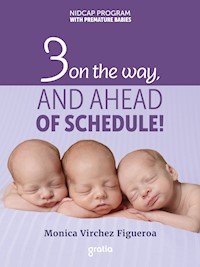
Being a mother of multiples and preemies is a great adventure which is unknown to many. It involves a lot of attention, commitment, dedication, and time to take care of your health at the same time as raising your newborn babies. Be moved by the experiences of a mother who delivered her triplets prematurely in a foreign country, with the help of the NIDCAP method, in the Neonatal Intensive Care Unit. It is not intended as an advice guide, but it does tell the story of several years of experience for her, her husband and their three babies. Are you afraid of finding out that you will have a multiple pregnancy? Do you know what it means to have babies born prematurely? Can you imagine what life will be like for you and your babies in the Neonatal Intensive Care Unit? Do you have any idea how exhausted you will feel during the first year? Have you heard about the consequences of burnout and chronic fatigue? In this book you will also find answers to your questions about what a high-risk pregnancy and an emergency caesarean section can be like, as well as different concerns such as premature birth and neonatal care, psychological support networks and the monitoring of babies so that they can grow up in the best possible way. As parents, we are often faced with major changes in our lives, and a myriad of different and contradictory emotions and feelings manifest themselves due to the big event. Find out more: Necessary care for the mother during a high-risk pregnancy and in the postpartum. The optimal neonatal care needed for premature babies and the help of the NIDCAP method. Some complications and miracles that can occur in these fragile and sensitive babies. Tips on how to be an active mother in the NICU. The importance of follow-up in premature babies. Important topics such as chronic fatigue, burnout and sleep deprivation, as well as resilience and positive mental attitude. You will value your new conscious motherhood through direct contact with your baby.
Sie lesen das E-Book in den Legimi-Apps auf:
Seitenzahl: 293
Veröffentlichungsjahr: 2022
Das E-Book (TTS) können Sie hören im Abo „Legimi Premium” in Legimi-Apps auf:
Ähnliche



















3 on the way,AND AHEADOF SCHEDULE!
Original Title:Llegan 3 ¡Y antes de tiempo!ISBN: 978-84-122619-2-91st edition: 2020
© 2020 Mónica Vírchez Figueroa [email protected]© 2020 Gratia Editions
Translators: Grace Wintergest
Edition: Valeria Le DucEditorial Design: Karina Flores Cover: Ángel Ruiz and Karina Flores
The partial or total reproduction by any mechanical or electronic means, without the authorization of the author and the publisher, is prohibited.
NIDCAP PROGRAMWITH PREMATURE BABIES
3on the way,AND AHEADOF SCHEDULE!
Monica Virchez Figueroa
Contents
FOREWORD
Listen and be guided by your child
Beating the odds
Trajectory
INTRODUCTION
CHAPTER 1Starting the new adventure
Family planning, news and surprise
First trimester of pregnancy
Care during a high-risk triplet pregnancy
Complications
Possible causes of prematurity
CHAPTER 2Passing the first test
Maternity
Second trimester of pregnancy
The Neonatal Unit
CHAPTER 3The long-awaited event
Emergency C-section
The respected birth
What is prematurity?
Attachment
We are mammals
CHAPTER 4Transfer between hospitals
Co-sleeping
My children and the NIDCAP
The maternal role and the paternal role
Positive touch contact
The language of the newborn according to Charlotte
Infant massage
CHAPTER 5Special situations in the NICU
Parental Grief
Grief process
Postpartum care
CHAPTER 6Process prior to hospital discharge
Optimal neonatal unit
Ivana and the Brazelton Program
Thomas Berry Brazelton
Preparing to leave the hospital
CHAPTER 7Philosophy of developmental-centred care
What is the NIDCAP Program?
Family-centred care
Benefits of NIDCAP care in early development
The family
CHAPTER 8Hospital Discharge
Arriving Home
Baby Bassinet
Installation and adaptation at home
Postpartum Depression
First Months at Home
CHAPTER 9Second Semester at Home
Playtime and Routines
First Time Leaving the Country
Burnout notice
First year of age
The Importance of the Father
CHAPTER 10Schooling
Nursery
Transition from nursery to preschool
Four Year Follow-Up
How to help them develop?
New relocations
Primary School
Tracking the triplets
Secondary Education
CHAPTER 11Continuous Monitoring of the Premature Baby
Possible long-term sequelae
The importance of family and the environment
Continuous monitoring
CHAPTER 12Resilience process
Burnout (emotional hypersaturation)
Mental Health in Mothers of Preterm Multiples
How to support parents in the hospital
Trauma
Post Traumatic Stress Disorder (PTSD)
The presence of the psychologist can help
Parents’ needs
Sleep Deprivation
Chronic fatigue
Fibromyalgia
Resilience
How to develop optimal resilience
Tips for future parents of multiples as parents and as a couple
CHAPTER 13Parent Associations
Premature Association
Importance of the parent association
EFCNI European Foundation
Decalogue of rights of the premature baby
CHAPTER 14Conclusions
Psychological and Social Support Network
Mental health
Acknowledgments
Bibliographic References
Resources
NIDCAP centres
Glossary
Appendix
FOREWORD
Listen and be guided by your child
Birth stories are infinitely fascinating. For every woman, giving birth is a transcendental experience. The stories of mothers who gave birth prematurely are extraordinary and I feel privileged to have listened to so many and to learn from both mothers and fathers about how they faced the complex emotions and physically demanding responsibilities that come along with having a baby in need of neonatal care. How do they handle it and how can we help them develop the resilience they need, not only for the first days but also for the weeks, months and years to follow?
Mothers tell us that their most important sources of support are their partner, followed by their family, and finally, the medical professionals who care for them and their baby, but it’s not always this way. What happens if you’re alone, in a country far from home where the language spoken isn’t your own? And if managing the anxieties of your well-intentioned friends and family becomes an added charge? What happens if there’s a conflict within the family? Facing parents who believe they know what is best is hard at any time, but even more so when your defenses are low and they cannot know what you are going through. Suppose that the feelings you’re juggling double or triple with twins or triplets, each on a different journey. We need to allow parents to carve their own paths during their stay in the neonatal care unit and provide emotional support until they find their place in the community, not only for babies deemed “high-risk” but for all families who want and need it.
The separation of the mother and her child is traumatic for both; international organizations such as the World Health Organization and the European Foundation for the Care of Newborn Infant rightly insist that parents should have unlimited access to their babies and be as committed as possible to providing all the love and care that is part and parcel of being a parent. Despite the evidence demonstrating its importance for the future of the baby and the family, this is still far from a universal practice, even in countries with adequate resources. The separation creates a situation in which parents are found stripped of their power by professionals who have the knowledge and control, establish rules and far too often act as guardians. It takes bravery to challenge this position. Every family needs advocates to help them through the system.
Health professionals know it is their duty to advise the family, but too often all they do is distribute large volumes of printed information that is never read. Mission accomplished! Parents may feel inhibited when it comes to asking questions, and even more so when their questions or doubts are not clarified because they have been too stressed to absorb the information. They are not sure if they are being painted the true picture or they are afraid to be perceived as “difficult” and this may have an impact on their baby.
Good communication means asking as well as telling. What do parents really want to know (not just what professionals think they want to know)? Can we use meaningful language instead of hiding behind the jargon of the neonatology club? Do we sit down and engage in a personal conversation or do we stand before them in intimidating groups? Parents need to trust the communication and also the culture of the team. They perceive the rivalries and disputes that lurk in the background and that render them more vulnerable and vigilant.
One of the main platforms of resistance training is what we sometimes call “responsible selfishness,” meaning taking care of oneself. Mothers are often encouraged to go home and rest when they most want to be around their babies. As one mother said, having to leave her baby felt like an amputation. The minimum that must be provided is: a comfortable seat next to the baby in which she can sleep if she needs to, access to clean water and nutritious food. And when parents choose to leave, perhaps to have some privacy and snuggle up every now and then, that’s okay too. Family rooms are increasingly being incorporated into neonatal units to make the continued presence of parents a reality, but they also need to be able to be alone and have privacy. Parents learn from each other and need opportunities to build those relationships. The breast pump room is often their sanctuary. Loneliness is a common condition for new mothers, and many parents fear venturing back to their community when their baby leaves the hospital. After the hospital discharge, it can help to reach out to other parents so that those relationships can flourish – being with others who have shared similar experiences is a relief.
The arrival of a new baby always changes the family dynamics, but when their arrival in the world is too soon, and clouded with uncertainty about the future, the prospects are more complicated. Much emphasis has been placed on caring for mothers, but lately more attention has been paid to fathers. Fathers are also vulnerable to anxiety, depression, and post-traumatic stress disorder. We must update the traditional idea of a father in the role of the strong provider who manages to be more interested in the data on the monitors than his own baby. Some units now offer father support networks. A well-supported partner is what the mother needs. And if there are other children in the family, how does one choose where to invest their energy? In the little newborn who clings to life at the hospital, in their other children at home, distraught and disoriented by your absence, or in the cloud of anxiety that floats over the family? This is a balancing act that neonatal units need to consider, offering opportunities to welcome in siblings (who may also be able to help with the babies’ care).
There is no single way to be a parent, but there is a primary principle: to listen and be guided by your child. Perhaps one of the most important ways to help a parent build their resilience is to listen to them without judgment, to give them space to reflect on their situation and what their baby is communicating. Each baby is special in their own way, and if the parent is encouraged to simply be with them, they will learn who the baby is, and will discover individual particularities and characteristics that must be understood and cared for. In this book, Mónica recalls the frustration of hearing her babies referred to as “the triplets”, which led her to pen portraits of each one of them, to help us understand how different they were. Likewise, it is wonderful to see how their differences led them to evolve into three unique and glorious young people and how each one took a different path to become the adults that they are today.
INGAWARRENSenior trainer of the NIDCAP Program and Director of the UK NIDCAP Training Centre.Co-director of Family and Infant Neurodevelopmental Education (FINE) program.Honorary Research Associate at the University of London College Hospitals NHS Foundation Trust.Consultant at Bliss.Founder ofEarly Babies.Author ofCaring for your Baby in the Neonatal Unit.
Beating the odds
The premature birth of a child, even when parents are warned that their child may be premature, is a stressful event. They may have prepared for it, but it is often even more overwhelming than they might have anticipated. Now, imagine you are dealing with triplets born eleven weeks before the C-section. Will they live? This is a book about a family starting with a high-risk pregnancy and neonatal care until they are discharged. Often times, the story stops there for obstetricians and neonatologists. But coming home to all three babies is an important milestone and the beginning of a round-trip journey for this family and their triplets, throughout childhood and into adulthood. It is the story of a mother, Monica, and her triplets, and what a journey it has been! From continuing with tube feeding and oxygen at home, to burnout and postnatal depression, the journey continues through early developmental follow-up, right up to the beginning of elementary school. Then the shift to secondary school and the challenges of adolescence, making friends and building relationships with peers. And all this while trying to accommodate six home moves in ten years. The story of this book ends with the triplets’ transition to adulthood. And despite a common beginning, how different they have turned out to be as individuals.
There have been many tensions and sacrifices throughout this journey, such as the fact that the marriage would not survive, but both parents continued to take care of their two daughters and their son. There has been pain, worry and doubts. But the most important message is that of resistance: how to beat the odds, how to face and overcome obstacles, and how to share their experiences, as well as everything they learned from going through them to give hope to others who are in a similar situation.
Monica and her children are the testimony that one can overcome and create something for the benefit of others — an association for parents of premature children in Spain and in collaboration with all of Europe. May this book bring hope to many parents who have given birth to a premature child or multiple babies.
DIETERWOLKEPh.D. Dr rer nat h.c .; Professor of Developmental Psychology and Individual Differences at the University of Warwick, Stradford upon Avon, UK.
Trajectory
Prematura is a Spanish association of parents that is part of the European Foundation for Newborn Care (EFCNI), made up of parents of babies born before term or with complications in conjunction with specialist doctors. It arose in 2006 with the intention of optimizing the treatment and development of premature babies throughout their childhood and adolescence, as well as offering lived experience to all families that need it.
Mónica Vírchez has participated in the development and growth of the Premature Association for 20 years. From the beginning, she has connected the association with other parent organizations both nationally and internationally, promoting a fruitful exchange of experiences between affected families and professionals.
In 2006, she attended the first parents’ meeting in Rome, organized by the EFCNI Foundation. She has been part of this organization as a member of the parent advisory board from 2015 to 2019. In this position, she has been involved in the European standards project for neonatal care and newborn health, where she has collaborated in the expert group on the follow-up and continuing care of the premature baby. Her skills and knowledge, backed by her personal experience as a mother of triplets and premature babies, and professionally by her degree in psychology specializing in prematurity, has qualified her to develop a standard for the care of the baby with a high quality follow-up for newborns born prematurely and facing significant challenges in their future.
The European Standards for Newborn Health Care were officially launched in November 2018 at the European Parliament in Brussels and endorsed by more than 150 health professional societies and official European organizations.
In 2015, the Congress of Joint European Neonatal Societies (JENSCongress) was created. It is the first medical congress where representatives of parents and patients actively participate in sessions and workshops, and allowed parents and health professionals to cooperate and establish a supportive relationship, in addition to working together.
These are just two examples of the changes we can observe in the relationship between parents and medical experts. Monica wants to continue her commitment to the parental perspective, as she is convinced that respectful cooperation between parents and professionals will result in sustained, high-quality care for premature or sick babies. She therefore promotes and supports professional parenting groups as president of the Premature Association and a long-time member of EFCNI and, last but not least, as a mother of triplets who were born prematurely.
SILKEMADERCo-founder and President of EFCNIEuropean Foundation for Newborn Care.
Out of respect for the anonymity of professionals and hospitals, the original names in the book have been changed.
To my triplets: Tania, Fiona and Dídac, with all my love, thank you for being here.
To their fairy godmothers: Ivana, Charlotte, Joyce and Megan.
“When a newborn grips his father’s finger for the first time with his little fist, he’s got hold of him forever.”GABRIELGARCIAMARQUEZ
XAVIERKRAUEL
INTRODUCTION
I’ve thought at length about writing this book and it took me several years to decide to do so, and to be able to finish it. Marc and I are Mexican and have lived outside of our country for several years. At the end of our professional careers and jobs in Mexico City, we made the move to England, where we had the great luck and blessing of welcoming our triplets. Because of Marc’s work, we have resided in different places over the years, with countless moves, experiences and adventures in the company of our three children. As a psychologist, I had always worked in nurseries, kindergartens and doctors’ offices. Since having my triplets, I have been greatly inclined to all issues related to motherhood.
Being parents of multiple births and babies born prematurely is a great adventure into the unknown. It involves a lot of care, both for the mother during pregnancy and in the long-awaited delivery, and even more so when babies are born prematurely. It takes a lot of dedication, time and readiness to be able to raise three babies at the same time. Parents encounter great changes in their lives and emotions, and they face the feelings that occur before the great event.
This account of my experience as a mother of premature triplets has been a project that I started years ago and have only now been able to complete. I have journeyed through a unique adventure that has marked my life intensely. In these lines you will find the experiences of a mother who had her premature triplets in a country that was not hers, with the NIDCAP Program in the Neonatal Unit of a hospital in London. I describe my high-risk pregnancy and myriad experiences over the next twenty years.
It is not an advice guide, but it is my lived experience with a psychological support network and other lessons learned in a country other than my own. Both the babies and us are warriors who fought to survive this difficult experience of uncertainty, doubts, confusion and pain. This book is addressed to all those parents interested in the prematurity of one or more babies at the same time, as well as the passage through the neonatal unit. I relate my journey during my conception, pregnancy, delivery and postpartum. I share my adventures in a country that was not mine, as well as the great advantage and benefit that my children received with the NIDCAP Program in an English hospital, which I will explain in detail later.
In it, I consider the importance of prevention during pregnancy and the optimal care to receive three babies at the same time; the complications that may appear; and the possible situations that can arise during childbirth and the postpartum period. Unexpected changes can present themselves in these fragile and sensitive babies in need of special medical care.
I also relate the day of the triplets’ birth through a caesarean section and thesubsequent respected lactation.I share the fact that I realized, several years later, that I had the chance to carry out a conscious motherhood without having planned it. I appreciate the opportunity to have lived this unique and unforgettable experience in a foreign country, thanks to the National Health Service (NHS).
Likewise, I emphasize the importance of the bond and attachment that parents develop with premature babies who are so fragile and vulnerable. I highlight the emotions experienced by new parents faced with a new and difficult situation that puts them to the test.
In the same way, my intention is to delve into the importance of the skin-to-skin bond, the kangaroo Program, breastfeeding, infant massage and care for parents, and I take the opportunity to share with the reader how we learned to be parents and to carry out a conscious motherhood.
I explain how attachment, touch, affection and parental presence are essential for the survival of these little human beings.
I also explain what the NIDCAP Program consists of in the hospital (it is a Program internationally recognized for its humanization of neonatology, combining a validated and standardized technique for newborns).
I share with the reader our experience as first-time parents, when we learned the basic principles of the NIDCAP Program. We value positive touch, appropriate touches for babies, communication, interaction, crying, the baby’s sleep, as well as beginning of home care.
Very soon we realized that the planning, organization and logistics to be able to cope with three premature babies involved a gigantic challenge: continuous routine and carry on!
Additionally, I include in detail the different studies, analyses and tests necessary for their optimal development, as well as controls during the first year, and the importance of monitoring the premature infant during childhood and adolescence, as well as the children’s medical and psychological checkups carried out by different professionals.
I also mention how the three babies’ development and growth were different, despite having been born on the same day, and I emphasize the way in which they had to adapt to different individual challenges and international moves. I also comment on how they carried out their schooling from the beginning to the present day at university. I raise how important the mother’s postpartum care is for the family. The aftermath due to lack of sleep, excessive fatigue leading to burnout, and later, fibromyalgia. How harmful sleep deprivation and non-restorative sleep is, a condition that I have had to learn to live with, as it has accompanied me for 20 years.
Likewise, I comment on the importance of parent associations at the national level in Spain throughout Europe, while sharing the great value of relying on a network of various health professionals whom I had the opportunity to meet and from whom I learned so much throughout all these years.
A fundamental part of the book is dedicated to the history of the creation of the Premature Association and the European Foundation EFCNI in Germany, as well as the great network of contacts and documents published by the parent associations: the importance of the rights of the premature baby, of the European Project on Standards on neonatal care in babies born prematurely and the presentation and assistance to the European Parliament, in Brussels.
I invite parents who are in this very special situation of multiple births to inform themselves, to read as many books and articles as they can on the subject of prematurity and multiple pregnancies, as well as the bibliographic references and research to delve into the subject.
I especially suggest that you contact other families who have gone through the same experience and support each other. I invite you to learn along with health professionals and together face this great battle in the company of our children.
I inform and motivate the parents of premature babies and multiples to take very seriously the follow-up of the child, as fundamental in their psychocognitive and social development as their overall health. I also propose what an ideal education for premature children could be.
Finally, I present my conclusions about this long-learning path to guide new parents. I also attach testimonies of those who observed and accompanied me on this path throughout its different stages, and my resilience in difficult years.
I have traveled a unique adventure that has marked my life intensely.
CHAPTER 1
Starting the new adventure
Family planning, news and surprise
People think I have a fairy tale story, because they see that my children are healthy, fortunately. But it was not really like that and now I will tell you the reality of this great adventure. I feel very fortunate about this experience I lived in England.
One in ten births in the world are premature! Prematurity is one of the most prevalent health problems among the child population in developed countries. Between 8% and 10% of births occur before the 37th week of gestation, and it is the cause of 75% of perinatal mortality, in addition to being the reason for 50% of disability problems in childhood (UNICEF,WHO).
I will start my story relating that Marc and I left our beautiful and beloved Mexico after we were married, and after he won a scholarship abroad. We were in the middle of our move and began to consider the idea of having a family. We were living in Germany at the time, and the company where Marc worked was moving him back to the UK. I was 35 years old and we had a quiet life. We are a bit adventurous and we liked to travel and learn about different cultures.
We came to live in England and settled in a cabin, an old barn on the outskirts of North London, in a small town very close to Watford and not far from Marc’s work. The place was beautiful, quiet and secluded from the city and civilization. We were surrounded by nature, everything was very green, amidst meadows and forests: the typical picturesque English countryside, although isolated from the city. Wild animals roamed all around us and there was no lighting on the sidewalks. We led a very practical life and, at that time, I was working in the city; we were about 40 minutes from downtown. We used to go out on weekends with friends or to explore our surroundings.
It was still late winter, when I went out for the weekend with my mother who was visiting with us. I started to have severe pain in my lower back and kidney, and I had to rush to my doctor. I couldn’t even drive; it was an intense pain that I had never felt before. I had renal colic, so they had to admit me for a few days for medical observation. From that admission and the blood tests that followed, we learned that I was pregnant. When they broke the news, we were astonished. We were truly ecstatic and we received the news with great enthusiasm and hope. I continued with my life and followed my daily routine normally, and did not have nausea or vomiting in the first weeks, as usually happens to mothers-to-be, which caught my attention. I just remember my sense of smell being heightened. I smelled coffee clearly from a long distance.
First trimester of pregnancy
In the first routine gynecological examinations, they told us that we were expecting twins, which made us very excited because personally I had always wanted that, but I never thought it would happen to me. We got used to the idea that we would have twins and were happy with the news. A few months later, we went to the next medical consultation and, after viewing the ultrasound, they confirmed that they did not see two babies, but three! And they were in different amniotic sacs.
We couldn’t believe it and we were even more excited. Of course they were still very small, but they could be seen perfectly on the device’s screen. The truth is that it was extremely surprising and intense to receive the great news for us as new parents-to-be, and we took it with great enthusiasm and it made us very happy. We couldn’t believe it!
Within the framework of the British National Health Service (NHS), the option of embryo reduction was raised, and, in fact, we were asked if we agreed with the idea of continuing with a triplet pregnancy, since multiple pregnancies imply high physical risks for the mother and babies, in addition to posing a great adventure for future parents.
We were convinced from the beginning about our decision to keep the three of them and go ahead with the pregnancy; we didn’t have a doubt in our minds about it. Therefore, the subject was not broached with our doctor again. My doctor informed us that it would be a high-risk pregnancy because of my age, as well as the fact that it was a multiple pregnancy. After the age of 35, pregnancy poses greater risks for women, and requires special care and a lot of rest. The doctor recommended that we contact various maternal associations for advice and guidance, since having a multiple pregnancy would be delicate and would imply several changes in our lives. He suggested that we contact Dr Brant of the Multiple Birth Association (MBA) in London.
I immediately contacted the association and they told me about upcoming meetings they were organizing for future mothers of multiples. Subsequently, they sent me information with the dates of the next meet-ups for twins or triplet pregnancies in a hospital in London, where the MBA was at located that time. I continued with my day-to-day routine and was surprised that I didn’t really have any sudden or noticeable changes in my body as I expected, since it was my first pregnancy and triplets on top of that!
The only thing was that I felt extremely fatigued; I was permanently sleepy at all hours. During the first trimester I made my way around the city as usual. I was taking yoga classes, but I had to leave them because I grew tired very quickly while doing the exercises. I remember one day falling asleep on the train before reaching my destination. My abdomen had started to grow little by little, and every day it was getting bigger and bigger.
Anticipating the inconveniences, we decided that the best thing to do would be to move to a different house. We lived in a beautiful place surrounded by nature, but very far from the city, and I did not picture myself with my three future babies isolated from civilization and everything I might need as a first-time mother. So I started looking for a flat in London. I was in my first trimester of pregnancy.
While visiting the different departments, I experienced some sciatica pain, but it was merely irritating and it lasted for a couple of days, nothing special. Little by little I saw that I was gaining weight, but only my belly, as my arms and face were thinning out. Of course, the doctor had prescribed iron and folic acid supplements, as well as infant aspirin for the first few months, which I took without fail, and I tried to eat healthy foods, but I admit that I had no appetite and was quickly satisfied. My stomach filled up very quickly. I ate whatever I wanted in the moment, several times a day. I remember being very thirsty and drinking a lot of water and juices during this period and, above all, I tried to rest when I had the opportunity. I slept quite well, without problems, and rested enough, but still felt tired. I was physically exhausted. Spring was blooming in London and the days grew beautiful and sunny.
My doctor told us that after 14 weeks of pregnancy, the danger of miscarriage, common in multiple pregnancies, had passed. For that reason, we did not want to break the news to our families until enough time had passed to share the joyous and startling news with our families. I had my regular gynecological check-ups, which I always attended with enthusiasm and dedication to find out how the babies were doing.
I was very excited every time I had a medical appointment. They ran several tests, ultrasounds and laboratory studies and everything seemed normal during these first weeks of gestation. My doctor sent me to do a necessary test with Dr. Nick.
I would like to share a bit about Dr. Nick and his background: He is a foreign doctor based in the UK, a specialist in maternal-fetal medicine and a pioneer in fetal surgery. As professor of fetal medicine at King’s College Hospital in London, he furthered the prevention of pre-eclampsia and preterm births and the development of fetal therapy. He performed intrauterine surgical operations, carrying out the 11-13 week scan evaluation, including nuchal translucency measurement, and it was he who proposed a new model of pregnancy care. These studies make it possible to assess the risk of miscarriage or premature birth, in addition to showing that it is possible to assess the risk of most of the relevant complications that affect the mother and the baby. Assessing the possibility of high-risk pregnancy complications early gives clinicians an opportunity to reassure patients and expectant mothers.
Dr. Nick designed a specific nuchal study for that week of gestation through which we could check in on the babies and measure their weight and height while avoiding the amniocentesis test, since it is invasive and carries the risk of inducing an abortion. The nuchal test was common in England at that time and consisted in measuring the baby’s neck by means of ultrasound in order to find out if there was a specific problem, such as an organ complication, Down Syndrome or another genetic factor to take into account during the pregnancy and delivery.
A few days later, we learned of the nextMBAmeeting, which would be held at Queen Charlotte’s Hospital. Marc and I attended, nervous but highly attentive and motivated to know what they would say to us. We noticed that, among the attendees, several women were pregnant with twins and four with triplets. At the discussion table, different mothers of multiple birthsin a variety of fields spoke: the business executive, the working mother, the stay-at-home-mother, the disorganized one, the hippie, the “supermum”, the athlete, the perfectionist and others.
I found it very interesting to listen to them and they gave us various brochures, dossiers, tips, suggestions, and book recommendations on the subject. These meetings were held every two or three months approximately. I remember that I was struck by the fact that the mothers of multiples commented that they had all been admitted to the hospital for some complication, generally for hemorrhages that are common in these types of pregnancies. In any event, I started to dive deeper into the subject, to research bibliographic references, and to visit bookstores, since all the issues related to babies and multiple pregnancies seemed extremely interesting and important to me at that time. Learning what was happening in my body in the moment, week by week, and what I could do for my babies, motivated me. The Multiple Birth Association gave a series of recommendations for future mothers of triplets.
Care during a high-risk triplet pregnancy
Mine was considered a high-risk pregnancy because, according to studies, the average gestation for triplets was around 34 weeks. Obstetricians recommend complete rest starting from week 24, either in the hospital or at home with the same care as in a medical centre. The only difference is that at home you need organization and a great deal of help for the expectant mother at rest.
Generally, it is suggested that the future mother deliver through a cesarean section for safety, both her own and the babies’, since through natural childbirth the little ones born after the first can experience fetal distress. Parents are informed about the possible future prematurity of multiples, since 80% of triplets are born prematurely and require special treatment in the intensive care units of hospitals for several weeks (MBA, 1998). However, there are countries where multiples are still delivered through natural birth, such as the United States.
Armed with all this information we confirmed our decision to move to the city, since I could not picture myself living alone with three babies in the countryside disconnected from the necessary services. We began to hunt for flats. London is a very expensive city, so we had to search far and wide to land on an option that was practical for us.
Around my fourth month, I found a flat downtown and we decided to move as soon as possible. From that moment, we began to take into account the rooms, surroundings and practicalities for when we had the babies in our home. So we made the move in a few days and soon I was settled in our new flat in London, much closer to the doctors in the city centre, which was very comfortable and reassured me. At this point I was still able to make the move with ease, calm and help.
The flat was near the Maida Vale subway. We were returning to London, a warm and welcoming city. Active, dynamic and avant-garde. It grabs you and has always attracted me. I enjoyed it thoroughly, especially its street life.




