


Erhalten Sie Zugang zu diesem und mehr als 300000 Büchern ab EUR 5,99 monatlich.
- Herausgeber: BoD - Books on Demand
- Kategorie: Gesellschafts- und Liebesromane
- Sprache: Englisch
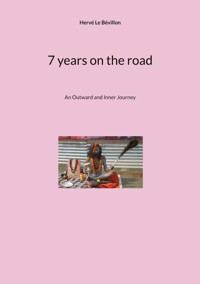
From September 1967 to December 1974, I traveled across Europe, Africa, and India, mostly penniless, hitchhiking. Through my travels, both internal and external, I discovered peoples and cultures completely different from what we know in Europe, and I loved it. Fifty years later, I finished translating the Rig Veda into French and English. It's the logical conclusion of this experience.
Sie lesen das E-Book in den Legimi-Apps auf:
Seitenzahl: 249
Veröffentlichungsjahr: 2025
Das E-Book (TTS) können Sie hören im Abo „Legimi Premium” in Legimi-Apps auf:
Ähnliche



















I dreamed, I saw Joe Hill last night
Alive as you and me
Says I "But Joe, you're ten years dead"
"I never died" says he
"I never died" says he
……
Joan Baez
to all my Joe Hill
All illustrations are royalty-free and come from
https://commons.wikimedia.org/ ;
https://creativecommons.org/publicdomain/zero/1.0/
November 2024
I just turned off the TV. I'm still in shock. No, I wasn't dreaming, I definitely saw the flooded Sahara! There are even lakes! Rivers and lakes! And, what's more, that's where I drove! The dunes, where the trucks that got stuck in the sand had to be pulled out, are flooded... And further south, the Zinder mosque collapsed. It was made of earth, like all those in the Sahel, since it almost never rains.
We're living in a wonderful time, as Reiser1 said. This year in Delhi, it was so hot that fifteen election workers died of heat! Two or three years ago, birds were dy ing in flight, also in Delhi! That year, in Lokarn, my village in the heart of central Brittany, it was 42 degrees, while on the same day, at the same time, it was only 37 degrees in Agadez and Delhi. And it was almost spring in Bangui, with only 27 degrees.
Global temperatures are rising every year. Water wars have already begun, and many more are brewing, for water and other resources vital to our modern world.
And, meanwhile, world leaders still think they're in the 19th century, with wars fought over territories, borders, or other dubious reasons. The pride and vanity of the "great" of this world remains the same. Obsessed with their own image, they see nothing coming...
Time flies, and I've been able to see the evolution of our lives, we little whites.
When I was a kid, women would throw themselves on the horse dung left behind by those who pulled the hearses. It was excellent fertilizer for flower pots.
In the evenings, we watched the radio. More precisely, we listened to the radio while watching it. Television was commercially available the year I was born, but it took a while for ordinary people to buy it. We walked to school, regardless of the weather.
Now everything has changed, including mentalities. Of course, it's better, in terms of comfort. No need to fetch water from the well, no more gray coats, but computers, smartphones, etc. But other problems have arisen. There are more than eight billion of us on Earth. The temperature rises every year. This causes disruptions and unexpected natural disasters, such as, for example, monstrous floods in Pakistan and, less serious but surprising, snow in Saudi Arabia.
The world has completely changed before my eyes. That's the advantage of being old. You see the evolution of life and thought, and unfortunately, it's getting worse.
But it's good to be old. Not so good for the body, because it breaks down like all old mechanical things. On the other hand, for the mind, it's excellent. Among other things, we revisit the moments that mattered most in our lives, before globalization.
For me, it started when I was about to turn twenty...
1 a French humorist
On the road. 1967-1968
September 1967. I was about to turn twenty when I left as a "beatnik." I hadn't read Kerouac, Burroughs, or the others, but it was really in the air. I was working in a post-synchronization studio in Paris. It was a scam. I started at the beginning of July and finished at the end of August. The boss did the same thing every year. Rather than hiring an extra to replace his projectionist on vacation, he brought a young candidate for the job up from the "deep provinces" in July, extended the trial period in early August, under the pretext that there wasn't much work, dangling the dream life in front of him, and on August 16, he told him he wasn't keeping him on. I only found out after meeting an old projectionist, while looking for another job, in the Latin Quarter.
***
We're under De Gaulle. Women have only recently been allowed to wear trousers, and even then, not officially. They can't open a bank account without their husband's consent. They have no rights over their children; it's the father who has to sign and decide. They've had the right to vote for 23 years. Three years before I was born!
The age of majority is 21. So I'm still a minor. The atmosphere is heavy and oppressive in this Gaullist France. The churches are still full. In Brittany, my country, women go to mass on Sunday mornings and men go to the chapel. That is, to the pub. The streets are empty.
The ultimate dishonor for a man was to have long hair. That is, at the time, practi cally anything longer than a crew cut. The joke among aggressive, drunken proles was: Is your hairdresser on strike?
Homosexuality sends quite a few people to prison. In short, France before 1968 was far from joyfull. Racism was very common. Even though it wasn't the case at my parents' house at all, everyone considered Arabs and blacks to be almost human. It's not mean, it's just how it is: on one side there are the superior whites— especially the French and the English, convinced they invented everything in terms of humanism and civilization—and on the other side, anyone who was more or less tanned.
The white man's duty is to civilize inferior peoples. And among these whites, the French are by far the most open to human rights. In any case, they are truly convinced of it. What they forget to say is that these are the rights of white men only, and preferably Parisians. That's how it is, practically everyone shares this vision of things. On the right as on the left. Especially on the right. On the left for the good of the inferior man, even if it means imposing happiness on him with bayo nets. The right is more venal but hides behind the values of the Christian West, of course. And yet the Algerian War has been over for five years, Africa has been decolonized, but that doesn't change anything, the average Frenchman remains convinced of being superior. It's in his DNA.
We are raised on the myth of the French Resistance, almost silently mentioning the fact that its official policy was collaboration with Nazi Germany. The French police are in the spotlight. There is barely any mention of their Vel d'Hiv roundup and the hunts for Jews and resistance fighters, which they carried out right up un til the eve of the liberation of Paris. The values of this era are practically those of Pétain: Work, Family, Fatherland. There is no arguing, no protesting, it's not done. Period. The one who is right is the leader or the one wearing a tie.
This life doesn't appeal to me. Not at all. My adolescence was ruined by school, which I was bored to tears. It didn't interest me. School bored me considerably. I had absolutely no ambition and didn't see myself at all in the future. I took refuge in the quasi-religious listening of rock 'n' roll, with Gene Vincent, for the music, and I became politicized with Léo Ferré1, for the lyrics.
I still ended up getting a BEPC2 and a CAP3 as a projection operator. And now I'm getting ripped off at my second job. I had worked for six months in a cinema in Brittany, in Rennes, just before.
The life that lies ahead for me doesn't interest me at all. I want to see the world. Above all, I want to meet people who are different from the average Frenchman, to leave this sad and narrow-minded France. I feel I have to find something. My own life. Me, quite simply. I have to get rid of all the nonsense that was stuffed into my head during my youth. I have no desire to have a "good job," nor a bad one either, for that matter. I absolutely do not want to become a doctor or a teacher, any more than I want to be mayor or even rich.
Something else awaits me, I don't know what, but I'm dying to stay living in this gray and mean France before 1968, to get married, to have kids, to build a house and wait for retirement. It's grim.
Towards the end of August, while my notice period was still running, I spent the evenings on the stairs of Montmartre, without really understanding what these people from all over the world were doing, sitting on the steps, except that they traveled a lot and were happy to be together.
I've heard of beatniks before, but not yet hippies. They probably talked about them a bit on TV, but at that time, not everyone had a TV, especially not twenty-year-olds. Of course, there were the Beatles, Antoine4 and his Ramblings5, but that didn't reach many people outside of Paris and the privileged circles of the big "provincial" cities. From time to time, I see daddy's boys in flowered shirts with a daisy in their long hair. They're very clean. They try to copy the Americans and talk about peace and love, without their country being at war. For me, they're snobs and that doesn't appeal to me at all. On the other hand, what interests me most is dealing with non-French speakers.
At first, I had a little trouble with English, but I managed to make myself more or less understood. I wasn't too bad at it at school, despite the almost uninterrupted succession of teachers who were completely incompetent in pedagogy. They taught us English in French! I compensated by listening to rock 'n' roll classics. In the 10th grade, my English teacher asked me, seriously, if I had been raised in the USA. I would have liked that...
One evening, I brought a dozen people into my furnished room who didn't know where to sleep. Among them, a tall, thin man was a fan of a drug: amphetamines, used for particularly difficult alcohol detoxification. It was also the secret behind the cycling exploits of the time. It was also what would kill Tom Simpson in the Tour de France that same year.
He offers me an injection and I accept. I haven't even smoked a joint in my life and I'm about to go straight to the big leagues, with a uncertain life expectancy. I'm ready, tourniquet in place, veins bulging. Ready to commit the biggest stupidity of my life. And at the precise moment the tall, skinny guy is about to stick his needle in my arm, someone knocks at the door. I take off my tourniquet and go to answer it. To my great surprise, it's Bernard, my childhood friend who had also been forced to go to work in Paris. I leave everyone behind, in my room, and go with him to tour the local bars. I'll never forget this disturbing coincidence. He unknowingly saved my life, or at the very least, he kept me from becoming a junkie. I'm convinced of it.
At the end of August, I'm heading to Amsterdam with a guy I met at the Sacré-Cœur. He's happy to introduce me to the road, probably also because I'm leaving with my last paycheck. I don't mind; I intend to blow it all as quickly as possible and be truly poor.
In fact, I didn't go to Holland, and instead stopped in Antwerp, where I hung around miserably at the Muse. It was a café, well-known among the small, marginal world that had been developing in recent years. It was owned by Turks and was occasionally frequented by Ferré Grignard, a star of the time.
After a few days, I was deported along with about ten other French nationals. It was an opportunity to discover the joys of police custody and my first experience of prison, since the deportation would take two days. We spent the night in Moons's cells. Seven of us slept in a room with three bunk beds. So they put mat tresses on the floor for us.
Barely back in Paris, I hang out at Popov's on Rue de la Huchette in Saint-Michel, where you can spend the day in front of a small red wine for 30 centimes. He's a White Russian of about 70 who runs his bar with his daughter. All the backpack ers passing through Paris come to drop off their backpacks in the back room. The cops arrive up to four times a day to check papers. Luckily, a cop from the police station warns Popov beforehand, which gives us time to get organized.
Ferré Grignard
It was the era of the eccentrics in Saint-Michel and Saint-Germain: There was es pecially André Dupont, known as Aguigui Mouna. Mouna was a former restaura teur, who publishes a newspaper sold at auction by beatniks and penniless students, they receive a percentage of the sales.
Mouna
There was a difference between travelers and those who stayed put. They were called zonards6, with a touch of contempt. The zonards spent their time looking for money. Living in Paris without working must have been a problem.
One day, a vague, slightly odd friend asked me to accompany him to Simone de Beauvoir's house, where JP Sartre was also. The friend had come to demand some money that Sartre owed him. They didn't seem to agree, and Sartre seemed quite annoyed. Finally, he asked me to help the friend out, who was in a rather strange state. He gave him a 100-franc note, taken from his outer jacket pocket, which was resting on the back of a chair, to help him get out. It was the first time I'd seen someone put their bills in that kind of pocket. It must have been small change for him.
Life is hard in Paris, penniless and without knowing anyone. At night, I walk for hours in Les Halles, and when the Métro7 opens, I rush out before the ticket collector starts working. And I sleep on a bench in a quiet station. Other times, I go up to the top floor of a building8 and sleep on the landing. All this, of course, without a sleeping bag or anything else.
JP Sartre
I do a bit of begging, but I hate it and I stop as soon as I have enough money to buy a baguette. On lucky days, I buy a Tunisian sandwich, a real treat. But I don't like this life at all, so I quickly decide to hit the road again.
At first, I hitchhiked, usually with a guitar, through France, Italy, Switzerland, and Belgium. I only knew a few chords and was incapable of really tuning it properly, but it was part of the folklore, even if I annoyed many people.
Before leaving, I had bought a backpack and a sleeping bag. I had found them at the Saint-Ouen flea market. There was a strange atmosphere. All the vendors were huddled around the radios, looking serious, but I couldn't hear what was go ing on. Much later, I learned that it was the Six-Day War between Israel and the Arab countries.
A sleeping bag is comfortable and a little bulky, but in Europe, it's essential. One of the first nights, I was in the middle of the countryside somewhere in France. It wasn't raining, and I decided to sleep in a field, or rather a meadow, right next to the road. In the middle of the night, while I was sleeping soundly, I felt something like breathing next to my head. Since it couldn't be a girlfriend, I looked over and discovered a horse who must be wondering what I could be. Our story ends there, because he leaves. And I go back to sleep, very happy with this encounter.
I have a lot of adventures with the people who pick me up. They range from the guy who can't drive and who obviously has mental health problems—luckily the cops stop him before we kill each other—to the completely drunk grandpa who goes from Nice to Paris to shoot his son-in-law. He shows me his pistol and the loaded magazine in his glove compartment.
I wander around a bit everywhere: in Paris, Bordeaux, Dijon, Rome, Positano, Neuchâtel... When I like a place, I stay, and when I don't like it anymore, I leave. I get to know the night shelters, municipal or religious. There I meet lots of tramps and former legionnaires who were really shaken by the Algerian War.
In one of these shelters, I discover a business that one of the tramps has developed: he peels an orange and sells each slice to his colleagues for 10 cents. He should have thought of that!
I'm a beginner, I don't know anything. I don't know the good spots, the places where I'm going to find nice people. I get stopped by the cops—or gendarmes— all the time when I'm hitchhiking. They call the central database to see if I'm wanted.
I commit petty thefts from time to time reluctantly, depending on the friends I have. I don't like stealing, but I get carried away sometimes. The thefts in question are still very rare and very pathetic. Like Camembert in a grocery store, fake hashish scam using Kub bouillon, fake LSD scam on blotter paper, etc. I leave my fingerprints and photos at more than one police station. Routine.
The big joke the cops tell us when we arrive at the police station for an identity check is: "I can't wait until next year when we get lawnmowers."
Sometimes I meet colleagues who are as disheveled as I am. Over a joint, we tell each other about our "adventures." Istanbul always comes up as a heavenly place.
In Marseille, I make a friend: Claude. He sings his own songs while accompany ing himself on the guitar. We squat in a large building on Boulevard de Strasbourg with about ten other backpackers. One day, Claude and I decide to leave for Istanbul. But we have a problem: his clothes are at the dry cleaners and he doesn't have a penny to get them back. So he comes up with a brilliant idea: we're going to steal a car stereo from a car and resell it on Rue des Chapeliers where a small thieves' fair is being held, tolerated by the police.
Personally, I don't like it at all. No, it's not a question of morality—I refer to Proudhon9 for his phrase "property is theft" in these cases—but the fear of getting caught. But, I'm going anyway. Stupidly.
No surprise, a patrol car catches us in the act. The loot is impressive: a blanket, a bungee cord, a pair of gloves, and a screwdriver. Pathetic thieves, pathetic loot, but a decent punishment: three months in prison. Not bad for beginners! We didn't even have a lawyer! I wouldn't see Claude again until the day of our release. He didn't linger; he went back to his parents' house. In Marseille!
I should have been suspicious: a backpacker who puts his things in the dry clean ers!!!
The Baumettes
You have to love prison. Okay, we get food and shelter, but there are three of us to a cell 23 hours a day. And honestly, most of the young inmates are really stupid. Very stupid. And boastful. They're all Al Capones. None of them got caught by the cops, they were all "given away." They all talk about killing the guy who ratted them out.
In my first cell, I encounter two super gangsters my age who have different ideas about the honor of the underworld. One extols the virtues of pimping, and the other the morality of robbers. In reality, the first was convicted of rape, and the super-robber, of car theft, like me. Discussions about the morality of robbers and pimps quickly bore me.
Fortunately, the trial comes quickly. Claude and I take our three months in five minutes. It must be said that there are a lot of people, and without a lawyer, whom we had requested, things go faster.
The advantage is that I get to change cells when I get back. This time the two oc cupants, also my age, are tough guys. The younger one was "beating up some faggot" in the public restrooms and the other had tried to settle a dispute with his boss with a crowbar one evening when he'd taken the pastis a bit too far.
My roommates have developed a system to designate who is on duty each week to clean the floor and toilets10. We play poker with matches and the loser is on duty. At first, I agree, but strangely, I always lose. I point this out, but it doesn't go down well. I feel that things are going to get worse. I prefer to ask the prison director to move me to another cell. I write to him and I don't have to wait long. He receives me with a big smile and tells me that I'm going to be happy: he's put me with anti-militarists!
Indeed, I like it. But only relatively. There are probably different categories of anti-militarists. These two guys are more of the moron type. The first is here for beating up a lieutenant one day when he was really drunk. The other for desertion. Not in the Boris Vian11 style, but more like a sensitive little thug who wants to go back to his mother's. They do push-ups all day between combing their hair.
One new feature, though, is the opportunity to work in a workshop, just to keep busy and earn some money when we leave. We file the burrs off miniature cars coming out of the molds. We're paid by the piece. By the bag, to be exact. Every one has ten minutes to smoke a cigarette. The guard on duty isn't at all mean. There are some bizarre rumors going around. One of them says that Donovan, while singing "Mellow Yellow," encourages us to smoke dried banana peels. The effect is said to be the same as hashish. Very stupidly, I spread some peels out to dry in the sun on the windowsill and smoked them. Of course, it didn't do any good. It was just ridiculous.
And then one day, news reached us. We could no longer bring in newspapers or magazines. We found that strange. Two days later, another, much more unpleasant news: we could no longer order tobacco. Fortunately, the two "anti-militarists" kept all their cigarette butts in a tin can.
A few days later, we finally ask the workshop supervisor what's going on. "Noth ing, there's just an unlimited general strike." He calls it nothing! It's the middle of May 196812!
Even the best things must come to an end, they say. I'm leaving at the beginning of June. After seeing my friends from Marseille again, I hitchhike back to Paris. In Auxerre, I'm stuck for three days on the outskirts of the city. The locals look at me askance. There are posters everywhere showing protesters cutting down Parisian plane trees to put them on the barricades. In large letters, they read: "It's not by cutting down the trees that we reap the fruits."
Finally, after three days, I take off. I arrive in Paris and go to the banks of the Seine. At Saint-Michel, there are several CRS13 trucks. A group of cheerful students goes to meet them. One of them tells me to join them; they're going to read poetry. I'm not interested, and I decline the invitation. Sitting on my sleeping bag, I intensely appreciate freedom. I realize that the word I love most in the French language is precisely that: freedom. It feels so good to discover it.
It was also the time of Michel Corringe who sang "la route14".
Oh, sure, I'm often hungry and cold
I feel like stopping sometimes
But the road still carries me away
Desire to realize a symbol
To possess the unique beauty
That we call Liberty.
1 A famous Anarchist singer.
2 Diploma for 12-year-olds.
3 Professional qualification certificate.
4 First French singer with long hair.
5 One of his famous songs
6 A kind of slacker.
7 The subway.
8 There were no intercoms back then, you had to shout a name in front of the caretaker's lodge.
9 A famous French anarchist.
10 The word is a bit pompous.
11 Famous French poet who wrote a song in which he refuses to go to war and kill people like himself.
12 Famous revolt of young people against the established order.
13 Riot police.
14 The road
Sahara, here we come.
A few months later, after spending a week or two visiting my parents, who now understood my point of view – even if my father had to force himself a little – I decided to go to Africa.
I had been hanging around Rennes for a bit, where I had made some friends. There was no hashish, so we used over-the-counter products from pharmacies. It wasn't particularly good, but it allowed me to make four "abstract" drawings, since I have no talent. I had been struck by the Parisian fine arts students, who were making "chalks15" on the sidewalks. I told myself that it was a good way to survive. I kept them carefully for a long time. They were awful, but hey, it was better than nothing.
Leaving for Algeria has nothing to do with leaving for Istanbul, but I want to dis cover the world, to leave Europe. I'm fed up with police checks, with rednecks who call us all sorts of names, because we have long hair16. I want to see something else, other people, other cultures. In my passport, I have a 100 franc note that my mother gave me on the sly before I left .
With that, I just have enough to take the boat from Marseille to Skikda.
The boat is packed with Algerians returning home. Arriving at the port, in the large disembarkation hall, I see a queue of several hundred passengers who have to declare the money they are bringing to their families. I'm very embarrassed be cause I don't have a cent and I have no desire to wait in line.
A little to one side, a big, smiling policeman in uniform, rifle slung over his shoulder, oversees the smooth running of the formalities with a certain benevolence. I go to see him and explain that I have no money. He's nice, and he takes me through customs without making a declaration.
I'm amazed. French cops could use a lesson. And then I find myself outside. The weather is beautiful, even though it's winter. It was snowing in Marseille before I left.
I head towards Constantine and stick out my thumb. Three cars immediately stop. I've never seen anything like it! Not wanting to offend anyone, I hesitate a little, but finally, I take the first one that stops.
In Constantine, I decide to exhibit my drawings in a fairly large square. A crowd of young people gathers and I chat with them. They give me what they can while I finish writing a magnificent "help me continue my journey" in full color. That's the only thing that's more or less beautiful in what I'm exhibiting. But, I don't have time to finish, two cops arrive and tell me to pick up my things and get out. Which I do without any particular emotion. This isn't the first time I've been kicked out.
I don't have time to go far because the young people are practically jostling to in vite me into their homes. They explain to me that it is a duty for Muslims to help travelers. I spend several days going from one family to another. I see everyone, cousins, uncles, grandparents... Everywhere the welcome is wonderful. I still regret, inwardly of course, seeing practically only men. The women are a little too discreet.
I'm also discovering the meaning of burping. My father, who spent eight years in Morocco in the "colonial" army, told me that it was polite to burp after a good meal. In fact, it means: "I've eaten enough, thank God." So, the families who host me feed me until I burp naturally. I finally understand, on the verge of indigestion. I should have faked it!
One thing that interests me a lot is their perception of the Algerian War. They talk to me about it without any problem and I notice that they don't hold it against the "roumis17", despite what we did to them. There is no resentment. They are mainly interested in France. Their dream is to go and live there. Those who return to their countries with the famous white 40418 are considered heroes. They make no reference to the very real racism that existed at the time.
When I leave Constantine, I hitchhike again, and boom, two more cars brake sud denly. It's the perfect country for a hitchhiker!
Constantine
In Algiers, in front of the central post office, I meet a very nice German. His name is Rudy. He speaks French quite well. He's like me, that is to say: completely broke. He has a guitar. He's set off on the road without really knowing why. He lets himself be carried along by events. We spend a few days making "chalks" not far from the main post office. It goes very well. Even the beggars, including a blind man, are keen to give us something. We refuse, of course, but they insist heavily. We end up accepting, so as not to offend them.
We're spoiled for choice when it comes to accommodation. All the young people, usually students, invite us. Hospitality isn't legendary in Algeria. It must be very strange for them when they come to France.




