


171,99 €
Mehr erfahren.
- Herausgeber: John Wiley & Sons
- Kategorie: Geisteswissenschaft
- Sprache: Englisch
Companion to Celebrity presents a multi-disciplinary collection of original essays that explore myriad issues relating to the origins, evolution, and current trends in the field of celebrity studies. * Offers a detailed, systematic, and clear presentation of all aspects of celebrity studies, with a structure that carefully build its enquiry * Draws on the latest scholarly developments in celebrity analyses * Presents new and provocative ways of exploring celebrity's meanings and textures * Considers the revolutionary ways in which new social media have impacted on the production and consumption of celebrity
Sie lesen das E-Book in den Legimi-Apps auf:
Seitenzahl: 1318
Veröffentlichungsjahr: 2015
Ähnliche



















A Companion to Celebrity
Edited by
P. David Marshall and Sean Redmond
This edition first published 2016 © 2016 John Wiley & Sons, Inc, except Chapter 10 © 2013 Taylor & Francis Group
Registered OfficeJohn Wiley & Sons Ltd, The Atrium, Southern Gate, Chichester, West Sussex, PO19 8SQ, UK
Editorial Offices350 Main Street, Malden, MA 02148-5020, USA 9600 Garsington Road, Oxford, OX4 2DQ, UK The Atrium, Southern Gate, Chichester, West Sussex, PO19 8SQ, UK
For details of our global editorial offices, for customer services, and for information about how to apply for permission to reuse the copyright material in this book please see our website at www.wiley.com/wiley-blackwell.
The right of P. David Marshall and Sean Redmond to be identified as the authors of the editorial material in this work has been asserted in accordance with the UK Copyright, Designs and Patents Act 1988.
All rights reserved. No part of this publication may be reproduced, stored in a retrieval system, or transmitted, in any form or by any means, electronic, mechanical, photocopying, recording or otherwise, except as permitted by the UK Copyright, Designs and Patents Act 1988, without the prior permission of the publisher.
Wiley also publishes its books in a variety of electronic formats. Some content that appears in print may not be available in electronic books.
Designations used by companies to distinguish their products are often claimed as trademarks. All brand names and product names used in this book are trade names, service marks, trademarks or registered trademarks of their respective owners. The publisher is not associated with any product or vendor mentioned in this book.
Limit of Liability/Disclaimer of Warranty: While the publisher and authors have used their best efforts in preparing this book, they make no representations or warranties with respect to the accuracy or completeness of the contents of this book and specifically disclaim any implied warranties of merchantability or fitness for a particular purpose. It is sold on the understanding that the publisher is not engaged in rendering professional services and neither the publisher nor the author shall be liable for damages arising herefrom. If professional advice or other expert assistance is required, the services of a competent professional should be sought.
Library of Congress Cataloging-in-Publication Data
A companion to celebrity / edited by P. David Marshall and Sean Redmond. pages cm Includes bibliographical references and index. ISBN 978-1-118-47501-0 (cloth) 1. Fame–Social aspects. 2. Celebrities. 3. Celebrities in mass media. 4. Mass media–Social aspects. 5. Mass media and publicity. 6. Mass media and culture. I. Marshall, P. David. II. Redmond, Sean, 1967- BJ1470.5.C66 2015 305.5′2–dc23
2015017679
A catalogue record for this book is available from the British Library.
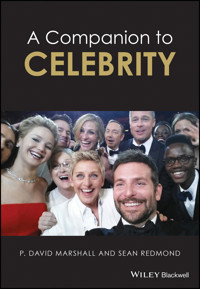
Cover image: Ellen DeGeneres poses for a selfie taken by Bradley Cooper with (clockwise from L-R) Jared Leto, Jennifer Lawrence, Channing Tatum, Meryl Streep, Julia Roberts, Kevin Spacey, Brad Pitt, Lupita Nyong'o, Angelina Jolie, Peter Nyong'o Jr. and Bradley Cooper during the 86th Annual Academy Awards at the Dolby Theatre on March 2, 2014 in Hollywood, California. (Photo: Ellen DeGeneres/Twitter via Getty Images)
David Marshall:
To my loving wife Sally
Sean Redmond:
Chow Mo-wan: In the old days, if someone had a secret they didn't want to share…you know what they did?
Ah Ping: I have no idea.
Chow Mo-wan: They went up a mountain, found a tree, carved a hole in it, and whispered the secret into the hole. Then they covered it with mud and left the secret there forever.
From In the Mood for Love (dir. Wong Kar-wai, 2000)
To my beautiful starry eyed children, Josh, Caitlin, Erin, Dylan and Cael
Contents
Notes on Contributors
Acknowledgments
1 Introduction
Celebrity Intersections
Road, Paths, Fields, and Landscapes
Celebrity in The Academy
Universities and Celebrities: A Long Historical Association
Studying Celebrity – Seriously
How the Companion Makes Sense of Celebrity: The Parts and Their Intellectual Roots
Celebrity Companions
References
Part One The Genealogy of Celebrity
References
2 The Moral Concept of Celebrity:
A Very Short History Told as a Sequence of Brief Lives
I
II
III
IV
V
Notes
References
3 Brand Names:
A Brief History of Literary Celebrity
The Poet Hero
Making a Name
Impersonal Personalities
Second Selves
Coda: Authorial Afterlives
Notes
References
4 The Changing Face of Celebrity and the Emergence of Motion Picture Stardom
Celebrity and the Movies
Conclusion
Note
References
Part Two The Publics of Celebrity
References
5 Celebrity, Participation, and the Public
Accessing Celebrity
Customized Consumption, Public Engagement and Celebrity
Conclusion
Note
References
6 Celebrity, Convergence, and the Fate of Media Institutions
Celebrity and Mediatization
Celebrity as Attention Trap
Conclusion
Notes
References
7 Barack Obama, Media Spectacle, and Celebrity Politics
Media Spectacle and Politics: The Democratic Party Spectacle
Celebrity Politics and the Election 2008 Spectacle
The Obama Era
Election 2012, Media Spectacle, and Celebrity Politics
Obama's Second Term and the Limits of Celebrity Politics
Notes
References
8 Construction of the Public Memory of Celebrities:
Celebrity Museums in Japan
What Is a Popular Culture Museum Movement?
Celebrity Museum as a Site of Public Memory of Celebrity
Case Studies of Celebrity Museums
Celebrity Museums in the Period of Digitization and Globalization
Notes
References
Part Three Celebrity Value
References
9 Hope Springs Eternal?:
The Illusions and Disillusions of Political Celebrity
“Cleggmania” as Political Celebritization
Political Celebrity and Celebrity Politicians
Deconstructing “Modernity”
Politicians Being “Ordinary”
Conclusion: The Politics of “Trust” Revisited
Notes
References
10 Winning Isn't Everything. Selling Is:
Sports, Advertising, and the Logic of the Market
The New Sex
Michael Jordan in “a drug-infested, too-black league”
Brand Beckham: Like Soap Powder
Authentic Sharapova
To the Center
Note
References
11 From Celebrity to Influencer:
Tracing the Diffusion of Celebrity Value across the Data Stream
The Condition of Celebrity
Producing Celebrity Value: The Celebrity as Product, Industry, Property, Endorser, and Brand
Promotional Post-Fordism, Self-Branding and Reality TV
Social Media, the Reputation Economy, the SMI and Traditional Celebrities
Klout: Measuring the Value of the Micro-Celebrity
The Value of Celebrity?
References
Part Four Global Celebrity
References
12 Recognition, Gratification, and Vulnerability:
The Public and Private Selves of Local Celebrities
Methods
Recognizability and the Public Self
Recognizability and the Private Self
On Feeling Vulnerable
Conclusion
Notes
References
13 “Tweeting the Good Causes”:
Social Networking and Celebrity Activism
Social Media and Political Participation
Reflections on Social Media's Impact on Civic Engagement and Participation
Celebrities in Politics and Activism
Celebrity Tweeting
What Happens Next, Then?
Methodological Note
Discussion of Findings
Conclusions
Notes
References
14 Celebrity Diplomats:
Differentiation, Recognition, and Contestation
The Practice of Celebrity Diplomats
Mobilization and Elevation as State-Based Responses to Celebrity Diplomats
Elaborating on the Contested Nature of Celebrity Diplomacy
The Wider Salience of Celebrity Diplomacy
References
15 Brand Bollywood Care:
Celebrity, Charity, and Vernacular Cosmopolitanism
Vernacular Cosmopolitanism
Antiquity, Antecedents, Authenticity
Local Star, Global Stage
Notes
References
Part Five Celebrity Screens/Technologies of Celebrity
References
16 Celevision:
Mobilizations of the Television Screen
The Technological Mobility of the TV Screen: Diversification and Convergence
Going Up, Going Down: Reality TV Celebrity
Media Mobility of the Distributed Celebrity
The Pop-up Celebrity: Affect beyond the TV Screen
Notes
References
17 Stardom, Celebrity, and the Moral Economy of Pretending
Persona
The Instrumentalization of Identity in Performance
The Interposition of Technology
The Body as a Technology
A Perfusion of Avatars
The Big Fix
Notes
References
18 You May Know Me from YouTube:
(Micro-)Celebrity in Social Media
Celebrification, Celebritization, and Media
Micro-Celebrity
Tumblr: Mollysoda
YouTube: Miranda Sings
Discussion: Social Media and the Attention Economy
Conclusion
Notes
References
Part Six Emotional Celebrity
References
19 Frontierism:
“The Frontier Thesis,” Affect, and the Category of Achieved Celebrity
Frederick Jackson Turner's “Frontier Thesis”
Character and Personality
The Inimitable, the Sorcerer
Conclusion
Notes
References
20 The Democratization of Celebrity:
Mediatization, Promotion, and the Body
Three Layers of Democratization of Celebrity
From Ascribed to Achieved Celebrity
From Achieved to Attributed Celebrity
Enter Reality TV and DIY-Celebrity
Conclusion
Note
References
21 Sensing Celebrities
Open Your Eyes
Sense and Sensation
Celebrity Aesthetics: Part One
Celebrity Aesthetics: Part Two
Sensing Time, Skin and Race
Celebrity Confessions
The Celebrity Carnival
Miley Cyrus, Vulvas and Affective Tears
Conclusion
References
Part Seven Celebrity Embodiment
References
22 The Ambivalent Irishness of Denis Leary and Kathy Griffin
Notes
References
23 Neymar:
Sport Celebrity and Performative Cultural Politics
Introduction
Celebrated
Brasilidade
Futebol
as Art
Neymar to the Rescue
Foot Soldier of
Neoliberalismo
Conclusion
References
24 Digital Shimmer:
Popular Music and the Intimate Nexus between Fan and Star
Digitization's Sensually Mathematical Configurations
The Voice's Breath Signals the Heart's True Intent: Music, Star Performer, and the Formation of Identity
Star Performers, Listening/Watching Bodies and the Contemporary Music Industry: A Beautiful Catastrophe
Conclusion
References
Part Eight Celebrity Identification
References
25 From Para-social to Multisocial Interaction:
Theorizing Material/Digital Fandom and Celebrity
Para-social: Fan–Celebrity Identification and the Cultural Production of Self
Multisocial: Practices of Social Media and Sharing Fan–Celebrity Interactions
References
26 The Everyday Use of Celebrities
Before and After the Introduction of Commercial Television
National Politics and Everyday Celebrity Use
The Fallacy of Role Models
Conclusion
References
27 Exposure:
The Public Self Explored
Technological Change
Publicity and the Emergence of Glamour
Self-Branding
Paparazzi and Risk
Conclusion – Specularity
References
Index
EULA
List of Tables
Chapter 9
Table 9.1
Chapter 12
Table 12.1
Chapter 13
Table 13.1
Table 13.2
Table 13.3
Table 13.4
Chapter 17
Table 17.1
Table 17.2
List of Illustrations
Chapter 4
Figure 4.1
Caricature of George Bryan “Beau” Brummell by Richard Dighton, 1805 (Public domain, via Wikimedia Commons)
Figure 4.2
Poster for Buffalo Bill's Wild West and Congress of Rough Riders of the World (Library of Congress Prints and Photographs Division, Washington, DC)
Figure 4.3
Sarah Bernhardt in costume for
Théodora
; photographic portrait by William Downey, ca. 1884 (Public domain, via Wikimedia Commons)
Figure 4.4
Florence Lawrence, a motion picture player promoted through humbug; studio portrait by Frank C. Bangs, ca. 1908 (Wisconsin Center for Film and Theater Research, Film and Photo Archive)
Chapter 8
Figure 8.1
Subcategories of museums in Japan
Figure 8.2
Change in number of museums, 1987–2008 (Data from Ministry of Education, Culture, Sports, Science and Technology, Japan, 2008)
Figure 8.3
Types of museums (Data from Tansei Institute, 2013)
Figure 8.4
Number of museums by region (Data from Tansei Institute, 2013)
Figure 8.5
Celebrity museums in each field (Data from Tansei Institute, 2013)
Figure 8.6
Ando Tadao in Germany, 2004 (flickr: Tadao Ando)
Chapter 9
Figure 9.1
Clegg Obama
Chapter 13
Figure 13.1
John Legend tweets on poverty (From twitter.com)
Figure 13.2
Justin Bieber tweets on education (From twitter.com)
Figure 13.3
Barack Obama tweets on immigration reform (From twitter.com)
Figure 13.4
Barack Obama tweets on abortion rights (From twitter.com)
Chapter 16
Figure 16.1
Kim Kardashian at the hands of the celebrity-making machine (Photo by Tim Lundin/TDLphoto.com)
Figure 16.2
Julianne Moore as Sarah Palin watches Tina Fey as Sarah Palin (
Game Change
, 2012, Dir. Jay Roach, Prod. HBO Films)
Figure 16.3
Michelle Obama on camera being caught on camera (June 2, 2011) (Photo: Lance Cheung)
Chapter 17
Figure 17.1
Mixed reality continuum
Chapter 22
Figure 22.1
In contrast to a 2013 ad that designated Griffin's body a crime scene, she has labored to ensure her corporeal compliance with Hollywood norms of midlife female visibility (Image from Twitter @kathygriffin)
Chapter 24
Figure 24.1
Lead singer of Little Dragon, Yukimi, seen sitting in her home/studio (Image from nabumarubberband.com)
Figure 24.2
Fans are invited to send Little Dragon their landline or cellphone number (Image from nabumarubberband.com)
Chapter 27
Figure 27.1
Hair dye models' idealized selfie-like poses on supermarket shelves
Figure 27.2
The celebrity magazine rack: out of control
Figure 27.3
The chaos aesthetic of the celebrity magazine cover
Guide
Cover
Table of Contents
Part
Pages
xiii
xiv
xv
xvi
xvii
xix
1
2
3
4
5
6
7
8
9
10
11
12
13
15
16
17
18
19
21
22
23
24
25
26
27
28
29
30
31
32
33
34
35
36
37
38
39
40
41
42
43
44
45
46
47
48
49
50
51
52
53
54
55
56
57
58
59
60
61
62
63
64
65
66
67
68
69
70
71
72
73
74
75
76
77
79
80
81
82
83
84
85
86
87
88
89
90
91
92
93
94
95
96
97
98
99
100
101
102
103
104
105
106
107
108
109
110
111
112
113
114
115
116
117
118
119
120
121
122
123
124
125
126
127
128
129
130
131
132
133
134
135
136
137
138
139
140
141
142
143
144
145
146
147
148
149
150
151
152
153
155
156
157
158
159
161
162
163
164
165
166
167
168
169
170
171
172
173
174
175
176
177
178
179
180
181
182
183
184
185
186
187
188
189
190
191
192
193
194
195
196
197
198
199
200
201
202
203
204
205
206
207
208
209
210
211
212
213
214
215
216
217
218
219
220
221
222
223
224
225
226
227
228
229
230
231
232
233
234
235
236
237
238
239
240
241
242
243
244
245
247
248
249
250
252
253
254
255
256
257
258
259
260
261
262
263
264
265
266
267
268
269
270
271
272
273
274
275
276
277
278
279
280
281
282
283
284
285
286
287
288
289
290
291
292
293
295
296
297
298
299
300
301
302
303
304
305
306
307
308
309
310
311
312
313
314
315
316
317
318
319
320
321
322
323
324
325
326
327
328
329
330
331
332
333
334
335
336
337
338
339
340
341
342
343
344
345
346
347
348
349
350
351
352
353
354
355
356
357
358
359
360
361
362
363
364
365
366
367
368
369
370
371
372
373
374
375
376
377
378
379
380
381
382
383
384
385
386
387
388
389
390
391
392
393
394
395
396
397
398
399
400
401
402
403
404
405
407
408
409
410
411
412
413
414
415
416
417
418
419
420
421
422
423
424
425
426
427
428
429
430
431
432
433
434
435
436
437
438
439
440
441
442
443
444
445
446
447
448
449
450
451
452
453
454
455
457
458
459
460
461
463
464
465
466
467
468
469
470
471
472
473
474
475
476
477
478
479
480
481
482
483
484
485
486
487
488
489
490
491
492
493
494
495
496
497
498
499
500
501
502
503
504
505
506
507
508
509
510
511
512
513
514
515
516
517
519
520
521
522
523
524
525
526
527
528
529
530
531
532
533
534
535
536
537
538
539
540
541
542
543
544
545
546
547
548
549
550
551
552
553
554
555
556
557
Notes on Contributors
David L. Andrews is a Professor of Physical Cultural Studies in the Department of Kinesiology at the University of Maryland School of Public Health. He has published widely on themes related to the cultural politics of sport and physical culture.
Ellis Cashmore is the author of Celebrity Culture, Tyson: Nurture of the Beast, Beckham, and Martin Scorsese's America. He has held positions in sociology at the universities of Hong Kong; Tampa, Florida; Aston (UK); and Staffordshire (UK).
Toija Cinque is a Senior Lecturer in media and communications at Deakin University in Melbourne, Australia. Her works include Changing Media Landscapes: Visual Networking (2015), the co-written Communication, Digital Media and Everyday Life (2nd edition, 2015), and Enchanting David Bowie (2015) with Sean Redmond and Chris Moore. She edits New Scholar: An International Journal of the Humanities, Creative Arts and Social Sciences.
Andrew F. Cooper is Professor, Balsillie School of International Affairs and Department of Political Science, University of Waterloo, in Ontario. In 2009 he was a Fulbright Research Chair, Center on Public Diplomacy, University of Southern California. Among his books as co-editor is the Oxford Handbook of Modern Diplomacy (2013), and as author, Celebrity Diplomacy (2008) and Diplomatic Afterlives (2014).
Nick Couldry is a sociologist of media and culture. He is Professor of Media, Communications and Social Theory at the London School of Economics and the author or editor of 11 books, including Ethics of Media (2013), Media, Society, World (2012) and Why Voice Matters (2010).
Olivier Driessens is a Fellow in the Media and Communications Department of the London School of Economics and Political Science. His research interests include promotional culture, celebrity culture, and mediatization studies. His work has been published in journals such as Theory and Society, Media, Culture and Society, and Celebrity Studies.
Kerry O. Ferris, Associate Professor of Sociology at Northern Illinois University, is working toward an empirically grounded sociology of celebrity using ethnographic methods and a symbolic interactionist approach. Past studies have included analyses of fan–celebrity relations, celebrity sightings, celebrity stalking, red-carpet celebrity interviews, and the work lives of professional celebrity impersonators.
Loren Glass is Professor of English at the University of Iowa. His books include Authors Inc.: Literary Celebrity in the Modern United States (2004), Counterculture Colophon: Grove Press, the Evergreen Review, and the Incorporation of the Avant-Garde (2013), and, with Charles Williams, Obscenity and the Limits of Liberalism (2011).
Tamara Heaney is a PhD candidate and research assistant at Deakin University, Australia. Her research investigates the role of celebrity in the lives of women in their forties. She is also interested in the representation of women in popular culture, feminist scholarship, and female aging.
Alison Hearn is an Associate Professor in the Faculty of Information and Media Studies at the University of Western Ontario in Canada.
Joke Hermes is Professor of Media, Culture and Society at Inholland University of Applied Sciences, the Netherlands. As audience researcher she is interested in everyday media use, feminism, and popular culture. She is one of the founding editors of the European Journal of Cultural Studies.
Matt Hills is Professor of Film and TV Studies at Aberystwyth University, Wales. He is the author of five books, including Fan Cultures (2002), and is also the editor of New Dimensions of Doctor Who (2013). Matt Hills has published widely on cult media and fandom.
Fred Inglis is Professor Emeritus at the University of Sheffield and Honorary Professor of Cultural History at the University of Warwick, UK. He has been three times member of the Princeton Institute of Advanced Studies, as well as Visiting Professor in a variety of countries. His books include interviews with and biographies of celebrated public figures intrinsic to the subject in hand: George Kennan, Willy Brandt and others in The Cruel Peace, his history of the Cold War, and such giants of the news pages as Walter Cronkite, Martha Gellhorn, Bob Woodward, and Ben Bradlee in People's Witness, his history of political journalism. His book A Short History of Celebrity applies itself to the many uses of the term, the countless differences in its application, and the sheer length of its history from the mid-eighteenth century up to the present day.
Saeko Ishita is a Professor in the Department of Sociology, Graduate School of Literature and Human Sciences, Osaka City University. Her main publication is Yomeisei to iu Bunka Sochi (Celebrity as Cultural Apparatus) (1998). Her research interests include television cultures (television archives), visual sociology, and contemporary cultural studies.
Steven J. Jackson is a Professor in the School of Physical Education, Sport and Exercise Sciences at the University of Otago, New Zealand and Visiting Professor at the University of Johannesburg, South Africa. Past-President of the International Sociology of Sport Association, he focuses in his research on globalization, media, and national identity.
Misha Kavka teaches film, television, and media studies at the University of Auckland, New Zealand. She has published widely on celebrity in relation to reality television in journals, edited collections and her book Reality Television (2012). She is also the author of Reality Television, Affect, and Intimacy (2009) as well as co-editor, with Jennifer Lawn and Mary Paul, of Gothic New Zealand: The Darker Side of Kiwi Culture (2006) and, with Elisabeth Bronfen, of Feminist Consequences: Theory for the New Century (2001). She is currently working on the gender politics and effects of celebrity damage
Douglas Kellner is George Kneller Chair in the Philosophy of Education at the University of California at Los Angeles, and is author of many books on social theory, politics, history, and culture. His latest books include Cinema Wars: Hollywood Film and Politics in the Bush/Cheney Era (2010) and Media Spectacle and Insurrection 2011: From the Arab Uprisings to Occupy Everywhere (2012).
Barry King is Professor of Communications at Auckland University of Technology. His most recent book is Taking Fame to Market: Essays on the Prehistory and Post-History of Hollywood Stardom (2014), and he is editor (with Harriet Margolies, Sean Cubitt, and Thierry Jutel) of Studying the Event Film: The Lord of the Rings (2008). He has also published a substantial number of articles that explore the relationships between popular culture, celebrity and stardom and digital media, as well as works focusing on creative labor, semiotic determinism, the sociology of acting and performance, and the New Zealand cultural industries.
Jaap Kooijman is Associate Professor of Media Studies and American Studies at the University of Amsterdam, the Netherlands. His research focuses on the global mediation of American pop culture and its intertwinement with politics. He is one of the founding editors of NECSUS: European Journal of Media Studies.
Victor B. Lopes is a Master's degree candidate in physical cultural studies in the Department of Kinesiology at the University of Maryland School of Public Health, and holds a BSc in Business Administration with an extension in Sports Marketing Management from the Pontifical Catholic University of Rio de Janeiro, Brazil. His research interests include sport development policies; globalization and sport culture; and physical cultural studies in Brazilian society.
P. David Marshall is a Professor and holds a Personal Chair in New Media, Communication and Cultural Studies at Deakin University, Australia. He is the author or editor of many books related to celebrity culture and online culture, including Celebrity and Power (2nd edn, 2014), Celebrity Culture Reader (2006) and New Media Cultures (2004). His current research focuses on persona studies and includes two forthcoming books: Persona Studies: Celebrity, Identity and the Transformation of the Public Self and Promotional Vistas.
Alice E. Marwick is Assistant Professor of Communication and Media Studies and the Director of the McGannon Communication Research Center at Fordham University. Her work examines the legal, political, and social implications of popular social media technologies. She is the author of Status Update: Celebrity, Publicity and Branding in the Social Media Age (2013), an ethnography of the San Francisco tech scene which examines how people seek online status through attention and visibility.
Pramod K. Nayar is Professor, Department of English, University of Hyderabad, India. His most recent books include Citizenship and Identity in the Age of Surveillance (2015), Posthumanism (2014) and Frantz Fanon (2013). His essays on posthumanism, travel writing and postcolonial writing have appeared in the Journal of Postcolonial Writing, Journal of British Studies, Modern Fiction Studies, Celebrity Studies, South Asian Review, and elsewhere.
Diane Negra is Professor of Film Studies and Screen Culture and Head of Film Studies at University College Dublin. She is the author, editor or co-editor of nine books, including Extreme Weather and Global Media (with Julia Leyda, 2015) and serves as co-editor of the journal Television and New Media.
Sean Redmond is an Associate Professor in Media and Communication at Deakin University, Australia. He has research interests in film and television aesthetics, film and television genre, film authorship, film sound, and stardom and celebrity. He convenes the Melbourne-based Eye Tracking and the Moving Image Research group, and the Science Fiction Research group at Deakin University. He has published nine books, including The Cinema of Takeshi Kitano: Flowering Blood (2013) and Celebrity and the Media (2014). With Su Holmes, he edits the journal Celebrity Studies, short-listed for best new academic journal in 2011.
Chris Rojek is Professor of Sociology at City University, London. He is the author of 14 solo authored books, of which the most recent is Event Power (2013). His next book will be Presumed Intimacy: Para-Social Relationships in Media, Society and Celebrity Culture.
Stephanie Schoenhoff recently graduated with an Honours Specialization in Media and the Public Interest from the Faculty of Information and Media Studies at the University of Western Ontario, Canada.
Gaylyn Studlar is David May Distinguished Professor in the Humanities at Washington University in St. Louis. She is the author of Precocious Charms: Stars Performing Girlhood in Classical Hollywood Cinema; This Mad Masquerade: Stardom and Masculinity in the Jazz Age; and In The Realm of Pleasure: Von Sternberg, Dietrich, and the Masochistic Aesthetic. Her latest book is Have Gun – Will Travel (2015).
Andrew Tolson is Visiting Fellow in the Department of Media and Communication, University of Leicester, UK. He is a founder member of the Ross Priory Group for the study of broadcast talk, and is the author of Media Talk: Spoken Discourse on TV and Radio (2006).
Liza Tsaliki is Assistant Professor in the Faculty of Communications and Media Studies, National and Kapodistrian University of Athens. She is currently working on a book about the sexualization of young children for Palgrave Macmillan.
Graeme Turner is Emeritus Professor in Cultural Studies in the Centre for Critical and Cultural Studies at the University of Queensland. His many books and articles on media, popular culture, cultural studies and celebrity include the recently revised second edition of his Understanding Celebrity.
Acknowledgments
We would like to thank Julia Kirk and Jayne Fargnoli at Wiley for their tremendous support for this project and for navigating us through the various iterations of the volume. Tamara Heaney has been an invaluable research assistant on the project, a good friend and colleague, and has contributed to its thinking and shaping. To all our contributors we express heartfelt thanks for the brilliant work you have given us for inclusion in this volume.
David: The book has been an interesting journey that has not only been shared by my co-editor and the wonderfully engaged contributors, but also to lesser and greater degrees by many of my research colleagues at Deakin University. I want to thank all the members of the Persona Celebrity Publics Research Group for their support and their engaged inquiry in our many meetings and discussions over the last two years. They have provided the intellectual environment that allows this kind of scholarship to flourish. In particular, I would like to thank Chris Moore, Kim Barbour, Katja Lee, Aurore Fossard, Praba Bangaroo, Kristin Demetrious, Neil Henderson, and Glenn D'Cruz: you have all been exemplary colleagues whose spirit of collaboration, support, and assistance has been deeply appreciated and valued. I would also like to thank my family – my wife Sally, my children Erin, Julia, Zak, and Paul, as well as my mother, Theo: I want all of them to know that I appreciate their support and love when my ideas, writing, organizing and editing take me away from them and absorb my time and energy.
Sean: To everyone and anyone who has ever listened to me talk about Mickey Rourke …
1Introduction
P. David Marshall and Sean Redmond
CELEBRITY INTERSECTIONS
Road, Paths, Fields, and Landscapes
From first sentence to last, the writing and editing of this book has taken over 18 months to complete. We have traveled down numerous scholarly roads during this period, making the book stronger, tighter, and more relevant as we did so. Where you start is never exactly where you end up: thinking, drafting, reviewing and revising takes you on different paths, in this instance magnified by the fact that 26 authors have been going through this shimmering, shape-shifting process with us. Celebrity culture doesn't stand still and neither did the volume as we responded to these delirious transformations as they took place while the book was being developed.
One can compare the journey of a collection like this to the trajectory of a young celebrity, seeking to make the right career decision, taking different turns to achieve that singular end. One can compare the development of a collection like this to the mindset of its editors, both of whom come from different academic traditions and who see celebrity culture intersecting in distinct and divergent ways. We have assembled a companion that speaks to academic journeying, that takes seriously the vibrant pulse of celebrity culture, and which addresses in fresh and dynamic ways those celebrity intersections that we see as important and necessary, as they manifest historically and in the folds and flows of the contemporary cultural landscape.
Our introduction is built out of these intersections: we take different turns on what the volume does, and where it might be placed within the fertile fields of celebrity. We hope you enjoy and are stimulated by this companion to celebrity.
P. David Marshall and Sean Redmond
CELEBRITY IN THE ACADEMY
On a very basic level, this is bound to be a fascinating book. After all, the object of study – celebrity – clearly fascinates. The media, in its various guises, are absolutely filled with stories of the famed and celebrated. Online culture in all its many mobile and social media structures continues to use celebrity as the “click-bait” to draw attention and guide the searching user through all manner of content and stories. At the same time, all this activity, all these vignettes on stars and the notorious have generally been seen by cultural critics and audiences alike as the ephemera of culture and history, the flotsam and jetsam of contemporary culture that, like a piece of sea-glass, attracts the eye but we know that in its origins had only a momentary utility that led to its current state as a discarded and forgotten fragment of an object. Celebrity is often then flashy, but in its flashiness – its very “glamour” as Gundle expresses it (2008) – it betrays its temporality in terms of value.
And yet, for a very long time, a culture of celebrity has proclaimed its significance and – though the personalities change – it endures as a remarkable social, cultural, economic and, perhaps surprisingly, political phenomenon. Celebrity circulates through our cultures. It migrates or more accurately invades, sometimes without any resistance by borders and languages. Thus, in 2014 the name Justin Bieber was equally known in China as it was in his native Canada. Celebrities connect to our own identities and our own sense of selves and thereby inhabit an inner-sense of meaning and, occasionally for fans, an outer-sense of proclamation of their personal and collective significance(Redmond 2014). Celebrities are sometimes the conduit for comprehending our world or for someone trying to comprehend cultural values around gender, youth, or class and how these are re-presented through celebrities. Indeed, celebrities operate as a transcendence of categorization in their obvious display of their uniqueness, their singularity and their public visibility and thereby serve as the locus of debate about all forms of cultural codes, etiquette and discussion of what is “normal” and acceptable.
This dialectic of ephemera and very clear value is intriguing and perhaps this puzzling conundrum has operated as a stimulus for the growth of the study of celebrity by academics and intellectuals as much as by popular pontificators. The entirety of this book has been written by university-related academics. They have approached its study from a wealth of directions and disciplines that further identify the impact of celebrity culture. Before we further reveal the contents of this book, it is worthwhile to identify how celebrity has migrated into academic study and how this Companion has led to a collection of the most innovative and current scholarship on a phenomenon that is enduringly fascinating.
Universities and Celebrities: A Long Historical Association
Celebrity culture had invaded many aspects of politics and culture long before academics actually began studying the phenomenon with any degree of intensity, and indeed had invaded the academy by the mid-twentieth century if not earlier. A remarkably understudied area of celebrity study is how universities began using the famous for their own ends. On a basic level, universities have always been in an industry obsessed with impact: they want their individual location to be noticed, their impact and prestige to be recognized and their “work” valued, and thus they have consistently wanted to be attached to those who were most visible in many domains of public activity. Thus, for centuries they have been the place for the provocative lecture and the site of invitation to the most famous literary or performing arts star. Moreover, the drive for fame at universities of the highest level has been collecting winners of prestigious prizes such as Nobel Laureates. Admittedly these attempts at creating attention and fame by universities were couched in other educational, social and cultural values; nonetheless, universities along with many institutions of business, culture, entertainment and politics played in the same arena of a sophisticated attention economy and worked very hard at building prestige and impact through the personalities they associated with it as an institution. Their actions in inviting recognized figures from other professions and other walks of life was a simple and basic form of celebrity cultural production in and of itself as it pulled the person from their place of skill or achievement and into the orbit of the individual university for a celebration and not something directly related to their work or achievement.
In a much more systematic way, the relationship between celebrities and universities was built through the system of honorary degrees and doctorates where the individual university reached out beyond its borders to connect to some prominent individual. It is one of those surprisingly mundane practices of universities that made them less monastic and more “worldly” in their desires and interests. The honorary degree emerged in Oxford and Cambridge in the fifteenth century and parallel processes occurred in many of the European universities in the following centuries ( Heffernan and Jons 2007: 390). In research that explored the use of honorary degrees in Nordic universities, Dhondt explains that the practice was designed to connect the university to the nation and the community through anniversary celebrations; but its expansion in the nineteenth century then was a form of connection outward that made the event richer, particularly in relation to the royalty present. Ultimately, Dhondt explains, “the degrees also acted as relational gifts and expressions of political and cultural relationships, rather than acknowledgment of an individual's academic prowess” (Dhondt 2014: 92). And so even in universities some 200 years ago, nonacademic reasons such as cultural value and visibility were an essential part of the ceremonies that universities produced.
By the twentieth century, the conferment of honorary degrees and doctorates had become standard practice for each graduation in many universities in North America and Europe. For instance, Oxford handed out 1,487 honorary doctorates during the century (Heffernan and Jons 2007: 391). By 1950, both Cambridge and Oxford had standardized their practices and awarded eight to ten a year. What became remarkable was the emergence of stars and celebrities in the pantheon of honorary doctorates, and the practice increased over the twentieth century. Cambridge achieved some notoriety in 1962 by conferring an honorary degree on the film comedian Charlie Chaplin. But this momentary celebration of the popular in universities is dwarfed by the practices of most universities in the United States and the United Kingdom.
By the last three decades of the twentieth century, the award of honorary doctorates to popular music performers, television personalities or film stars was no longer an exception, but a rule. For example, one institution, California State University (CSU), began its practice by awarding John F. Kennedy, often considered the first celebrity politician, its first honorary doctorate in 1962. By the 1990s and 2000s, CSU was handing out awards to the chef Julia Child (2000) and film and TV stars Nicholas Cage (2001), Bill Cosby (1992) and Danny Glover (1997). Although its policy for honorary doctorates was not dissimilar to Cambridge or Oxford – it gave awards to the “distinguished” in particular fields, and the person had to be “widely recognized” – it is clear that the university was drawn to the entertainment industries to produce visible personalities for its convocation ceremonies, and the idea of “widely recognized” trumped any other value.
Some individual celebrities literally collected honorary degrees in a way that gave them the positive visibility similar to film premieres and endorsing perfume. Bill Cosby, a recipient of an honorary doctorate from CSU in 1992 along with literally dozens over his lifetime, received five doctorates between 2009 and 2014 from Marquette, Boston University, University of San Francisco, California Polytechnic, and St Paul's College. This kind of frequency of awards makes university graduations yet another prominent stop or possibility in a managed “attention economy” career. Meryl Streep, clearly an A-list star, received doctorates as early as 1983 from Yale and as late as 2009 and 2010 from Princeton and Harvard respectively: clearly the universities' reputations dovetail beautifully with the actor's credentials. Similarly, Oprah Winfrey received honorary doctorates from the prestigious Princeton in 2002 and Duke University in 2009 (Meyers 2013).
It is also not true that universities avoid controversial celebrities with somewhat dubious reputations. The boxer Mike Tyson received an honorary doctorate from the Central State University in Ohio in 1989, while the controversial cricket player and celebrity Shane Warne was awarded a doctorate for his contribution to cricket from Southampton Solent University in the UK in 2006. When one realizes that the Aerosmith lead-singer Steve Tyler, the “celefiction” (Nayar 2009) star Kermit the Frog, and Kylie Minogue (who was awarded a Doctorate in Health Sciences for her aid in breast cancer awareness by Anglia Ruskin University in the UK) have received these apparently significant honorific awards and achievements (Saunders and Thomas 2011; Douglas and Sastry 2012), it becomes evident that universities have been well aware of the meaning and significance of celebrity far in advance of their legitimizing their study in their disciplines.
Along with the practice of bestowing honorary doctorates, one can see that celebrities were given outside legitimacy in a very similar way by the state and royalty over the same period. Henry Irving was the first actor to be knighted in 1895 (The Speaker 1895), but by the mid-twentieth century, bestowing knighthoods on celebrities became an almost yearly ritual, including Paul McCartney in 1997, Alec Guinness in 1959, Laurence Olivier in 1947, Tom Jones in 2006, and Bono in 2007 (Ranker 2014). Indeed, even France's Napoleonic system of the Légion d'Honneur has been granted to the most famous domestic and international stars of entertainment.
Studying Celebrity – Seriously
In a sense, this book is recognition of the very significance of celebrity within our culture. It is a moment of contemplative reflection on the capacity of the celebrity to migrate and comfortably camp as a way of being in all sorts of dimensions of contemporary life. It is interesting that the university and the state deployed this “power” of celebrity regularly and often; but then again, those in positions of power are perhaps more aware of these different ways in which power and influence manifest and move through cultures and societies.
This book also identifies what could be described as the maturation of a field of study within the academy. The study of celebrity, as becomes apparent in reading the short biographies of our contributors, has emerged in a variety of disciplines that have advanced in universities over the last 50 to 80 years – an almost delayed doppelganger of how celebrity itself has with various degrees of legitimacy migrated through our cultures. Although one will see some older nineteenth-century disciplines such as political science, social history, literary studies and sociology, for the most part the emergence of the study of celebrity has arisen in the “new” disciplines of the academy. At the core of its study are fields such as Film Studies, where Richard Dyer's seminal text Stars would first have been explored in 1979, with precursors coming from the comparative film and literary work of Barthes in 1957 (1993: 56–7) and the sociology of media research by Edgar Morin (1972). From literary studies, our closest authors in this collection are Loren Glass, Pramod Nayar and Graeme Turner. Writers such as Barry King, Gaylyn Studlar, Diane Negra, Matt Hills, and Sean Redmond in this collection have strong affiliations with film (and television, the later interloper) studies, although I am sure this characterization does not completely match their interdisciplinary toolkits for the study of celebrity. Another active pole for the study of celebrity has been communication studies, particularly as it has been inflected and refracted by cultural studies in various intellectual cultures internationally. This intersection describes some of the intellectual origins of some of our contributors such as Liza Tsaliki, Graeme Turner, Fred Inglis, Douglas Kellner, Jaap Kooijman, Sean Redmond, Alison Hearn, David Marshall, and Andrew Tolson. Connecting strongly with this tradition is a kind of scholarship which is related to technology and culture and is often grouped around media and digital media in some way and operates as another influential source for the study of celebrity. In this collection, writers such as Alice Marwick, Toija Cinque, and Misha Kavka along with David Marshall and Alison Hearn and Stephanie Schoenhoff identify this particular direction of celebrity studies that often further aligns directly with studies in consumer culture and what is often called self-branding. What can be discerned is the transdisciplinary scholarship in the collection and within the works of our contributors. Many rely on strong traditions in sociology, social theory, political studies and media ethnography, such as David Andrews, Joke Hermes, Chris Rojek, Kerry Ferris, Olivier Driessens, Saeko Ishita, David Andrews, Victor Lopes, Steven Jackson, Andrew Cooper, Ellis Cashmore and Nick Couldry; but their work has clearly challenged some of the conventions in those disciplines as they have explored the formations of cultural power and significance in provocative ways. And because of the position of celebrity in contemporary culture, gender and feminist studies has also been a natural home for its study as well: by my estimation more than half of our contributors would claim this tradition as another intellectual source and resource for their work on celebrity. In all, this book describes the structured formation of an area of investigation that in this stage of its development is beginning to produce clear differentiations in research and study, possibly specifically because of these intersections of intellectual traditions that have informed its analysis.
How celebrity studies has developed beyond these individual scholars is worthy of an explanation because it really defines how this book came into being. From the emergence of collections of works by Sean Redmond and Su Holmes (Holmes and Redmond 2006 and Redmond and Holmes 2007), Thomas Austin and Martin Barker (2003), Christine Gledhill (1991), and David Marshall (2006), among others, it became clear that there was a need to build better exchange and intellectual communication channels among scholars of related research. Many of these collections included new work as much as they identified the kinds of writing and scholarship on stardom and public personalities that had accumulated through other journals, sections of books, and research in the related disciplines. At the same time, serious levels of scholarship were building through series devoted to particular stars, celebrities and public individuals, as well as emerging collections that related to the work by celebrities in areas defined as “celebrity activism” and politics (for example, Corner and Pels 2003). Single-authored works had been expanding since Gamson's Claims to Fame (1994) and Marshall's Celebrity and Power in 1997 (Marshall 2014), with Graeme Turner's Understanding Celebrity in 2004 (Turner 2013) and Rojek's Celebrity (2001) in particular impacting the expansion of the teaching of celebrity culture in universities.
The burgeoning field of celebrity studies required a real forum for debate and a place for a more developed exchange of ideas across media forms and professional and cultural practices, as well as an arena where the idea of the audience and the fan and their relationship to stardom and celebrity could be explored with greater depth and consistency. In the first decade of the twenty-first century a series of conferences on celebrity appeared internationally that further identified that a critical level of scholarship was already engaged with the study of public personalities.
In 2010, the journal Celebrity Studies was launched and quickly fulfilled the needed role of intellectual exchange in the investigation of celebrity. My co-author, Sean Redmond, along with Su Holmes and James Bennett laid the groundwork to produce what has generally been regarded as one of the most influential and successful new journals of the last decade by its press, Taylor & Francis. Its forum section allowed the journal to nimbly relate to new debates around celebrity that had emerged in popular culture, while its articles attracted the best celebrity scholarship. One of its successes has been its capacity to explore new directions in its study and, like the prehistory of celebrity scholarship, allow the streams of intellectual discourse from a range of disciplines to intersect and interplay within and between its articles. There is no question that the two major international conferences sponsored by the journal in 2012 and 2014 derived their influence and value from the journal itself. The cumulative impact of both the journal and the conferences has been substantial.
This book has tried to address some of the major conceptual themes that have driven the intellectual vitality of celebrity studies and made it now an essential part of the intellectual environment of many universities, countless courses, and a variety of disciplines. Celebrity in all its guises, from a form of promotion and an elemental component of the attention economy to a burgeoning channel to investigate political, economic, mediated and popular culture, is a complicated phenomenon. The themes of the eight parts we have chosen to organize this complexity are an attempt to capture the rich density of the research and thinking related to public personalities.
How the Companion Makes Sense of Celebrity: The Parts and Their Intellectual Roots
It is useful to summarize the logics of these constellations of thought defined by our eight part-titles and how they relate to key cultural theories in the contemporary academy. For instance, research that relates to affect and emotion has been grouped around the idea of “Emotional Celebrity,” although these concepts float in and out of other parts such as “Celebrity Identification.” In a similar vein, we labeled our first part “Genealogy of Celebrity” in its capacity to identify the historical presuppositions that informed the expansion of celebrity culture. But the continuities and discontinuities of historically engaged research are at play in many other essays that can serve as intellectual responses to those approaches in the Genealogy section. Another area of inquiry relates to the political economy of celebrity and this is conveyed most directly in the part entitled “Celebrity Value”; however, political economy also informs some of the research in “The Publics of Celebrity” and is an evident element in “Celebrity Screens/Technologies of Celebrity.” The implications of technological transformations of cultural forms of celebrity are best looked for in this Screens/Technologies part, as you would expect, but also figure prominently in at least some of the chapters in “Celebrity Value.” One of the most complex cultural themes we try to address is globalization and we have grouped four fascinating case study articles in the part entitled “Global Celebrity.” Like other key concepts, globalization is certainly not contained within this part: it is clearly a central concern in two of the essays in the Identification part and is identified in a transnational way in two further articles in “Celebrity Embodiment.” We tried to address constitutions of collective identity such as audience, ethnicity and gender in the part on Embodiment, and the one on Identification operated as the site where these characterizations were put into both fan contexts and individual forms of public expression.
Just from this brief summarizing of the ideas coursing through the “veins” of our 26 following chapters in their eight parts, one can see that this Companion to the study of celebrity engages with most of the key social, political and economic issues that envelope the arts, social sciences and humanities disciplines in the academy. It is a valuable primer in understanding how the public form of individuality is constituted and evaluated. It will serve equally as an interesting pathway to many other disciplines even as it represents the definitive volume on the study of celebrity. The academy has now benefited from these scholars and scholarship in a way that I can only hope outweighs their use of celebrities for honorary doctorates. Like the discovered piece of sea-glass that is collected by the beachcomber, celebrity continues to both fascinate and be revalued. This Companion with its many insights by its contributors adds a quite different value to the enduring luster of celebrity.
P. David Marshall
CELEBRITY COMPANIONS
Philosophy begins in wonder. And, at the end, when philosophic thought has done its best, the wonder remains
Alfred North Whitehead
Su Holmes and I first introduced to our writing the idea of the academic celebrity in our edited collection Framing Celebrity (2006). We used a keynote delivery by Richard Dyer to illustrate how and why the stardust of the age fell heavily on gifted academics presenting their work on great stages in front of adoring delegates. At this year's 2014 Celebrity Studies Conference, held at Royal Holloway University in London, Su and I had our own uneasy sense of the minority fame that academia can bring.
We were asked by one of the delegates to sign or autograph a copy of our Framing Celebrity collection. The autograph has a long tradition in stardom and celebrity; it personalizes and memorializes the copy, postcard, letter, or photograph; and in being asked to sign it one is been given recognition and renown. It also humanizes the encounter, and in this context suggested the work had import and impact for the person holding the copy. Our book was their celebrity companion.
We appreciated the gesture very much so when I say Su and I were uneasy about being asked to sign the copy, I do so out of a sense of our own humility; the self-doubt we have about our work; our own imperfect identity positions; and because the work isn't just ours but belongs also to the great writers who fill its pages with insight and texture. Nonetheless, the request got me thinking about companions and companionship and about the idea of the celebrity companion, a set of related themes and instances I would now like to take up within the context of liquid modernity and its aching, lonely neoliberal form of individualism. I will ultimately suggest that we live in the vexing age of the culture of the companion, within which this volume will sit.
Su and I are not just professional colleagues but close friends. During our friendship we have faced many trials and tribulations together; anorexia nervosa, break-ups, divorce, bouts of depression, anxiety, and loneliness. We have shared many moments of joy and celebration; births, love affairs, and clubbing, where we would wildly dance to 1970s retro pop in seedy clubs on the wrong side of town. Professionally, we have now worked together in the area of stardom and celebrity through two edited collections, co-authored articles, and in the work we do as editors and co-founders of the journal Celebrity Studies. We are companions, then, in the many senses of the word: through these shared experiences, good and bad, foul weather and sunshine, we have stayed the course of true friendship. Truth be told though, we have used stardom and celebrity to maintain and sustain that relationship, particularly because we live and work thousands of miles apart. To make a play on words, Su and I are celebrity companions; it is the talk, chatter, discussion and fandom about fame that has enabled us to keep in touch, and to share with each other the more intimate parts of our lives. We are able to hold each other close because of celebrity companionship. This, I will suggest, is one of the great overarching stories of the contemporary age.
Many relationships and bonds are forged in similar ways: stars and celebrities can provide the interest “glue” that can bring people together in the first place; ongoing fandom can provide the social setting for a range of shared (subcultural) activities to take place and it can provide a rationale or logic for life choices that can be made; and one's memories, spectacle events, and rituals can be marked by the inclusion or incorporation of celebrity texts and contexts. Celebrities are our common companions; they are a key “narrative” in the intimacies we make, and in the stories we tell and share. As I have argued, we story the world through celebrity (Redmond 2014).
That said, we are supposedly living in the age of loneliness, in which we have fewer companions, and where networks are broken down or rendered virtual and ephemeral. In the age of loneliness we are supposedly self-driven isolates, caught in the self-reflexive glare of narcissism, and we suffer, suffer terribly as a consequence. In his article “The age of loneliness is killing us” (2014), George Monbiot writes:
Three months ago we read that loneliness has become an epidemic among young adults. Now we learn that it is just as great an affliction of older people. A study by Independent Age shows that severe loneliness in England blights the lives of 700,000 men and 1.1m women over 50, and is rising with astonishing speed … Social isolation is as potent a cause of early death as smoking 15 cigarettes a day; loneliness, research suggests, is twice as deadly as obesity. Dementia, high blood pressure, alcoholism and accidents – all these, like depression, paranoia, anxiety and suicide, become more prevalent when connections are cut. We cannot cope alone. Yes, factories have closed, people travel by car instead of buses, use YouTube rather than the cinema. But these shifts alone fail to explain the speed of our social collapse. These structural changes have been accompanied by a life-denying ideology, which enforces and celebrates our social isolation. The war of every man against every man – competition and individualism, in other words – is the religion of our time, justified by a mythology of lone rangers, sole traders, self-starters, self-made men and women, going it alone. For the most social of creatures, who cannot prosper without love, there is no such thing as society, only heroic individualism. What counts is to win. The rest is collateral damage.
Zygmunt Bauman takes a similar position where he outlines how late modernity has stripped away a range of solid connections to be replaced with floating networks, neo-tribes without emancipation, and just-in-time consumption demands that govern all aspects of our lives, including love and intimacy (2000).




