


Erhalten Sie Zugang zu diesem und mehr als 300000 Büchern ab EUR 5,99 monatlich.
- Herausgeber: Grand Books
- Kategorie: Gesellschafts- und Liebesromane
- Sprache: Englisch
Told in reverse chronology, this novel follows Alice and Jules, who are eighty-five years old. They meet on a bench in the Jardin du Luxembourg in Paris. Children are playing by the pool, a ray of sunshine breaks through the leaves of the trees. Is it déjà vu? Because what they now risk forgetting, and what began sixty years ago, started here: their life together. Step by step, from the end to the beginning. Age, routine, affairs, jealousy, becoming parents, marriage, passion: the two of them experienced all of this against the backdrop of Paris and the major historical upheavals of the last decades. This hopeful and tender book asks how love can endure and what holds us together.
Sie lesen das E-Book in den Legimi-Apps auf:
Seitenzahl: 186
Veröffentlichungsjahr: 2025
Das E-Book (TTS) können Sie hören im Abo „Legimi Premium” in Legimi-Apps auf:
Ähnliche




















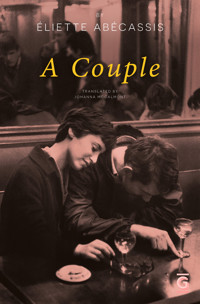
Éliette Abécassis
A Couple
Translated from the French by Johanna McCalmont
This is a work of fiction. Names, characters, places, and incidents are from the author’s imagination or are used fictitiously.
W1-Media, Inc.
Grand Books
Stamford, CT, USA
Copyright © 2025 by W1-Media Inc. for this edition
© Éditions Grasset & Fasquelle, 2023
First English edition published by W1-Media Inc./
Grand Books 2025
The Library of Congress Control Number: 2025930054
English translation copyright © Johanna McCalmont, 2025
Excerpt in chapter 2 translated by A.S. Kline, 2021.
From Letter VII
Used with permission by Poetry in Translation
“L’Été indien”, Joe Dassin, lyrics by Toto Cutugno, Vito Pallavicini, Pasquale Losito and Sam Ward, adapated by Claude Lemesle and Pierre Delano., CBS Disques, 1975.
“Histoire d’un amour”, Dalida, lyrics by Carlos Almarán, adapted by Francis Blanche, in Gondolier, Disques Bar-clay, 1958.
This work is protected by copyright, any use requires the authorisation of the publisher.
All rights reserved. The publisher prohibits the use of this work for text and data mining without express written consent. No part of this publication may be reproduced, stored in a retrieval system, or transmitted, in any form or by any means, electronic, mechanical, photocopying, or otherwise, without the prior permission of the publisher and copyright owner.
ISBN978-1-64690-050-3
www.arctis-books.com
To Ethan, who inspired this story.
1.Paris, May 2022
“May I?”
The old man indicates the space on the bench next to the woman who is sitting upright, a serious air about her, one hand on her cane as she stares into the distance.
She turns round to look at him. He is handsome, his salt and pepper hair, thick for his age, swept back on his head. His smile lights up his thin, angular face, which is speckled with small age spots. His eyes are a piercing blue—the left one serious and earnest, the right one happy.
“Of course, please do.”
With a nod in reply, he notices her high cheekbones, red-rouged lips, fine, parchment-like skin, wrinkled hands, and visible veins. She smiles kindly at him. Her hair is perfectly set, like she has just left the salon, and she is wearing light summer pants and a beige wool twin set. She straightens her curved back, correcting her posture. Delicate, slim, and quivering, she looks like a reed that might bend in the wind.
They are in the Jardin du Luxembourg, a place she likes to come, always to the same spot, on the right as you look at the pond, beside the rows of green chairs.
She looks straight ahead again, focused. Her face, marked by the passing of time, crisscrossed by deep lines, settles back into a serious expression like she is waiting for something or someone. She left home alone, walked along Rue Lhomond, down Rue d’Ulm to the Pantheon, then took the grand Rue Soufflot to get to the Jardin du Luxembourg. She sat down on her favorite bench to rest at the pond where children sail remote-controlled boats. This is where she cat-naps, reflects, and slips back into her memories. When she was younger, she used to walk down the long path to the Sorbonne where she was studying, to the feminist meetings in the cafés in the Latin Quarter, and to the jazz clubs in Saint-Germain at night.
She looks up and observes the man who has sat down beside her. He’s dressed elegantly, with a V-neck sweater over a white shirt and beige chinos, bright, understated colors for a spring morning when the sky is clear and the days are starting to get longer.
Paris is coming to life ahead of the Libération festivities to commemorate the end of the Second World War on May 8, 1945. Many Parisians have already deserted the city for the holiday. She likes how the city feels empty, reminding her of those summers when the streets were silent, subdued by the heat. That was a long time ago, when seasons were still seasons, when they hadn’t become blurred.
Sitting there beside each other, stiff, moving wearily, seemingly lost in another world, smiles frozen on their lips, they try to be present, but life moves at a slower pace for those who no can longer see or hear as well as they once could—a sign that reality is slowly slipping away, along with life.
He turns to her and smiles with sadness and sorrow. She looks at him, slightly lost. Why is his left eye black? His heart condition makes life very difficult for him. He slipped on the rug in the lounge and lay there for hours with no one around to help. He developed sores and has slowed down now. His arthritis makes walking hard, but sometimes he forgets and dashes down the corridor like he’s in a hurry—that’s how he tripped. He fell on his side, bumped his head on the corner of the coffee table, and ended up with the black eye that makes him look like a pirate or bullfighter. Since then, he has had a domestic helper, but he doesn’t like other people touching his body that has become so unwieldy, heavy, and weak despite his solid frame and swimmer’s physique.
His hearing isn’t what it was; the batteries in his hearing aid wear out too quickly. Sometimes, it’s a while before anyone changes them for him, so he gets caught off guard by loud noises. It’s like the volume is too high, and he is surrounded by a deafening din, so in the end, he prefers silence. Unless he’s watching television, fascinated by the plethora of new channels that offer him a window onto the world, a world now beyond his reach, apart from through his memories, ones he likes to recall from the time he helped build the world and make it more inhabitable with the projects he worked on. A school, a town hall, quite a few houses, apartment blocks, countless renovations. And the ones that will never see the light of day: hotels in Iceland or South America, villas made entirely of glass, ridiculous towers erected with a dash of a pencil on his architect’s drawing board.
She listens carefully, her hearing not what it once was either, but out of vanity, she refuses to get a hearing aid. Architect, that’s a nice profession. How does he come up with his buildings? Does he have visions? Where does his inspiration come from? Does he like Bauhaus?
Her cell phone rings, and she pauses. Slowly, she gets it out of her small red leather purse, along with her glasses so she can see the button to answer the call. “Where are you? I was worried. I called you a couple of times, but you didn’t pick up. You know you’re not supposed to go out on your own.”
She sighs and looks at the gardens. A gentle breeze rustles the majestic, exotic trees and the enormous sequoias that cover them like a canopy of centennial shade. A ray of sunlight pierces the foliage. The air is sweet; it is almost like being in the countryside. She hangs up and carefully returns the phone and her glasses to her purse.
“It was my son,” she explains. “He calls ten times a day. He used to come here as a child. He could stay for hours, playing with just a few stones. Sometimes, he’d put them in his mouth, and one day, he even choked on one. My husband saved him with the Heimlich maneuver.”
Her husband—this was where she had told him she was pregnant with their second child. He hadn’t exactly jumped for joy at the news. And over there, near the pond, they had kissed for the first time. And this bench was where they had met one May afternoon. That’s why she likes coming here.
She runs her hand through her hair to straighten it, still looking at him solemnly.
“It’s so sad,” she says.
“What is?” he asks.
“I miss my life. My old life.”
“Which life?”
“The one I had with my husband and children. It feels like there’s a permanent vacuum. It feels unfair,” she says.
“That’s not what feels wrong: it’s living against the flow that feels wrong. Not being of your time.”
She doesn’t reply. He wonders if she heard him. He repeats what he just said louder; she jumps and turns toward him.
“In my head, I’m twenty years old,” she murmurs.
“Don’t tell me you’re not twenty?” he jokes, smiling.
“Almost ninety! And you?” she asks.
“Same as you?”
“We’re old, aren’t we?”
“Not as old as when we weren’t . . .”
All of a sudden, a phone rings: Joe Dassin’s Indian Summer. This time, he reaches for his cell phone at the bottom of his pocket. But he doesn’t get it in time, and the song stops.
“That will be my daughter,” he says. “I think she’s waiting for me.”
He suddenly looks at her, worried.
“May I?”
He dares to take her hand gently. He holds it for a few seconds before bringing it to his lips and closes his eyes for an instant.
“I once loved a woman too,” he says. “As soon as I met her, I proposed. I didn’t know her. I didn’t know where she lived, so I wrote her a letter . . .”
His hands start to shake, and trembling, he brings a battered, old envelope out of his small bag, gray and perforated, and pulls a yellowed sheet of paper out of it, folded in four, covered in narrow, slanted writing. He gives it to her, and she takes it, puzzled.
Then he leans on the bench to get up, almost falls, and says goodbye with a nod.
“Adieu Madame,” he says. “It was a pleasure to meet you.”
Then he leaves slowly, uncertain of his step.
She watches him as he walks down the long path to the entrance.
“See you again soon,” she murmurs, tears in her eyes.
2.Port-des-Barques, August 2018
Sitting on the small garden patio beside the sea, Jules rereads the letter he found in the drawer of the desk he shares with his wife, the letter he wrote after they met in May 1955. The thin paper has resisted the passing of time, his tight, slightly slanted handwriting still legible. It’s like the first time he’s ever seen it. He smiles and is surprised at the emotions that well up again, so many years later, and also at how presumptuous he had been. He studies it carefully, searching for obvious signs of the effect of time, notices how the ink is fading, the lines and curves, guesses a few words that have almost become illegible, strokes the yellowed paper, and holds it against the light with his marked, worn hands. This letter hasn’t aged, he thinks, even though he struggles to hold it because of the pain spreading through him, and that’s when morbid thoughts overwhelm him. His limbs feel heavy, and a multitude of minor aches and pains restrict his freedom. Alice takes care of him; he relies on her day after day. She is the one who counts out his pills and gives them to him each morning. He doesn’t even know what he’s taking, neither the names of the drugs nor the doses. She arranges his doctor’s appointments and visits to the physical therapist, the hairdresser, the ophthalmologist, the gastroenterologist, and friends and family, too; she organizes every aspect of his daily life. Since his retirement, he has delegated his entire life to her. She has become his mother, his sister, his friend, his doctor, his nurse, his caregiver, his therapist, his cook, and his personal secretary.
Their house in Charente-Maritime is a modern home with white walls and a large bay window that looks out over the ocean. They love to watch the colors change, from morning to evening, in good weather or stormy weather, changing from the darkest grays to the brightest of blues. They retired here after Jules had the house built to his plans, just as he had pictured it: clean lines and full of light. They had rented out their apartment in Paris, bought a small pied-à-terre in the Latin Quarter, brought their things, their books, their clothes, and their habits to take up residence in the middle of nowhere, in this far-flung corner they had discovered on one of their trips to the country. Even though there aren’t many people around and the area can feel as if it’s desolate in winter, they like it. They go grocery shopping, on trips to the Ile de Ré, long walks along the shore, to the western point, and to the Phare des Baleines lighthouse, where the fresh air from the open ocean hits you in the face. Jules loves this corner of the world.
Alice has settled into this life, too. She enjoys the sunsets tinged with hues of red, yellow, and purple when the sky is set alight at the end of the day, like a ball of fire sinking into the ocean. It’s in this unlikely, almost dreamlike place that she has started to collect family photographs and documents in order to draw the family tree. She spends hours contemplating and painting this natural beauty that only reveals itself at dusk. Now that she has time, she carries out research, using place names, marital statuses, marriage certificates, family documents, and old photographs, along with the genealogy websites that are flourishing online. Like a detective, she investigates her ancestors and has traced her family tree back five generations. She is the daughter of Alexandre Edelman, a literature professor, and Clara Aron, a violinist. Her parents are the children of Moïse and Colette Edelman and Étienne and Judith Aron, and the grandchildren of Richard and Alice Edelman, Isidore and Simone Dreyfus of Phalsbourg in Lorraine. Among her ancestors, she discovers a textile merchant for the army during the time of the Napoleonic wars, a tycoon or “financier” as they were called back then, a confectioner from Lorraine, a cattle seller in Poland, and even a government minister, teacher, and general inspector who helped found the École Normale Supérieure college in Fontenay-aux-Roses to train women teachers.
Why does she want to reconstruct the past? Jules wonders. What good will it serve? My memory isn’t what it used to be. I want to slow down time, this feeling that everything is wiped out, and I’d like to bring the dead back to life through my ancestors. Do you know your family’s history? With the marriages and births, I’m trying to identify the crucial moments when fates are decided; out of all the possible configurations of our lives until then, the way they sometimes develop unbeknownst to us. Sometimes, I feel that particular sense of weariness that comes with old age, so I remember my youth. I manage to chase away the fear that paralyzes me, that constant feeling of running after my own existence, and find that vague sense of happiness when time stops. And in this new period of my life, I feel a need to become immortal through transmission, something that cannot exist without a sense of the past. With genealogy, I ask myself fundamental questions about an existence that is constructed and deconstructed. I prefer solitude; I like being in a shack at the end of the world. That’s where I feel most free because I no longer depend on anything or anyone, not on this strange world whose values, lives, and traditions I have studied since I retired. But to really exist—I don’t know if I’m still able to. For that, you would have to live, and I no longer think I have the strength to do so. I told you I would help you. But I feel uncomfortable with all these dead. Who amongst them are still alive? Am I still alive in your eyes? Do you remember the sofa bed in our small apartment in Rue Mouffetard, where we laughed, cried, and lived on love and freshwater? I used to cuddle up beside you and whisper in your ear how beautiful you were. Stunning with your straight dark hair that fell over your shoulders, your doe eyes, and your sweet flowery vanilla smell.
As Alice watches the horizon turn purple every day, the heavens clothed in their best finery as though offering a palette to a heavenly painter, she allows herself to be amazed and astonished, two childlike qualities that Alice hasn’t lost despite her age, and she is finally reunited with her childhood memories once more. Her face, tanned by the sun that has sprinkled it with age spots, relaxes, her expression softens, and she feels happy. With her small mouth, a beauty spot above her lip, her brown eyes, slim nose, thick eyebrows beneath a crown of dark hair, cropped short with bangs, she moves slowly, like a shadow, leaving a wake of that sweet perfume she has always worn. She holds her straw hat tight around her face to protect her hair from the wind and spends hours contemplating the horizon and the boats sailing across it, lost in her thoughts and smiling at her memories. It is always the same ones that come to mind: those few days in Naples and on Capri during her honeymoon, a trip to Venice, the two-room apartment in Rue Mouffetard, the children playing in the garden, like layered snapshots, or photos you look back at, images in a kaleidoscope that make up the film of her life.
In the summer, she goes swimming when it’s high tide, heading out from the shore,
like she’s trying to cross the Atlantic while Jules watches her, worried, his hands shading his eyes. He can stand staring after her for an hour. Each time, he imagines the worst. He can’t help it. All of a sudden, he loses sight of her and starts to panic. His heart stops beating until he sees her again. He waves to her to come back, but she moves further away, alone, like she wants to prove her strength and her freedom. That’s when she experiences that exhilarating feeling of being somewhere between heaven and earth, of being weightless. Each time she comes back, he welcomes her warmly, relieved, like she has just escaped serious danger. Yet he tries not to show her that he was afraid, terribly afraid.
A few times a year, their children or grandchildren join them in Port-des-Barques. Since his divorce, their dear son Alexandre has come here with his daughters every August. Thanks to social media, he found his young love again, a woman he met at university. Their daughter Émilie comes to visit during Christmas and Easter. She moved to London with her husband and three children and lives in Soho, where her parents visit her less and less often. Jules didn’t want to travel anymore, so Alice ended up going alone and then no longer going at all. It’s too far, too difficult, and too unsettling for her now, and she prefers to stay at home.
Clara and Léa, their granddaughters, are only interested in the fairytale sunsets along the coast and creating stories, with their long, straight hair, fake eyelashes, pink lipliner, and perfectly white smiles after years of visits to the orthodontist, making V for victory signs with their pink nails.
They have sunk into the sofa in the lounge, glued to their cell phones, headphones on their ears. Jules’ laptop is on the table beside her. He only turns it on occasionally to catch up with emails and read the papers online, including the one about modern architecture he set up with a colleague. He uses Skype to talk to his son, who has called him every day since he took over the business and is now successfully working on the site for the multimedia library Jules never managed to finish himself. There is a pretty Art Deco lamp on the desk in the lounge, with a pewter base and a white glass shade—a gift from Jules to Alice that he found at a flea market after a very long hunt and brought home triumphantly one Mother’s Day. Alice has lit it every evening ever since and likes the soft light it casts over the room.
Clara logs back on to a new dating app to continue a chat she started the previous evening.
What do you do?
I travel . . . I’m an airline pilot.
Wow! How do you keep it up? It must be crazy. Long or short haul?
Both. I’m leaving for Berlin soon, for example.
Divorced father, I see?
Yes, I’ve got one child and a double life that suits me perfectly. Every other weekend, I’m a doting father, and during the week, I’m single. I like the combination. It’s perfect! You get kids and fun.
“Who are you writing to?” asks Alice, reading over her granddaughter’s shoulder curiously.
“A stranger.”
“Aren’t you a bit young for that?”
“It’s just for fun, Grandma. I’m not really going to meet him.”
Did you enjoy Berlin?
I loved it. I went to bars after work.
“Berlin,” Alice murmurs. “Did you know I went there to see the Berlin Wall come down in 1989?”
“What did you do, Grandma?”
And what about you, what do you do?
“I was reporting for a newspaper. It was a time when everything changed. The end of one world. The entire Communist Bloc was collapsing! Two years later, the USSR no longer existed.”
I’m a journalist.
“And was Grandpa with you?”
“No. He was working.”
Which paper?
“Which paper did you work for Grandma?”
“The Nouvel économiste.”
The Nouvel économiste.
Does that still exist?
“And did Grandpa travel too?”
“At one point, yes. Grandpa often traveled outside Paris for his projects.”
“Grandma,” Léa interrupts, “what age were you when you met Grandpa?”
“Eighteen.”
“That’s young!”
“We were more traditional. He proposed to me before he even kissed me.”
“And as soon as I’d met you,” adds Jules.
“But you saw May ’68, didn’t you Grandma?” Clara says. “That must have been crazy!”
“Yes. We were activists. Grandpa was a Trotskyist; I was a feminist.”
Can we do a video call, Clara?
“Did you and Grandpa call for the sexual revolution?”
“We were . . . like everyone. Well, I was for it. I took part in the November 1971




