



Erhalten Sie Zugang zu diesem und mehr als 300000 Büchern ab EUR 5,99 monatlich.
- Herausgeber: Ylva Publishing
- Kategorie: Gesellschafts- und Liebesromane
- Sprache: Englisch
Quirky romance, deadly secrets, and Australia's oddest mystery duo. Life is going swimmingly for haughty, sharp-tongued historian Margaret Gale and her sunshine-filled lover Bess Campbell. They have a beautiful new home, great jobs, and no one has tried to kill them in months. Then chaos arrives when an eccentric relative drags them off on a wild-goose chase across Australia involving a remote pink lake, a mysterious dead body, a creepy "wellness centre", and a Yorkipoo Enthusiasts Society. Against the backdrop of eerie Lake Mirari, they uncover many dangerous secrets…including ones Margaret and Bess have been keeping from each other. Is this the end for lesbian fiction's most unlikely odd couple?
Sie lesen das E-Book in den Legimi-Apps auf:
Seitenzahl: 402
Veröffentlichungsjahr: 2025
Das E-Book (TTS) können Sie hören im Abo „Legimi Premium” in Legimi-Apps auf:
Ähnliche



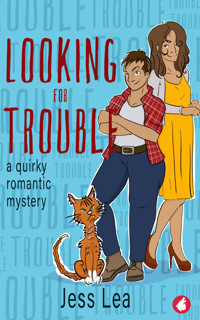
















Table Of Contents
Other Books by Jess Lea
Acknowledgements
Dedication
Chapter 1
Chapter 2
Chapter 3
Chapter 4
Chapter 5
Chapter 6
Chapter 7
Chapter 8
Chapter 9
Chapter 10
Chapter 11
Chapter 12
Chapter 13
Chapter 14
Chapter 15
Chapter 16
Chapter 17
Chapter 18
Chapter 19
Chapter 20
Other Books from Ylva Publishing
About Jess Lea
Sign up for our newsletter to hear
about new and upcoming releases.
www.ylva-publishing.com
Other Books by Jess Lea
Looking for Trouble
The Taste of Her
Murder Under the Gum Trees
A Curious Woman
A Curious Visit
A Curious Journey
Acknowledgements
Thanks to everyone at Ylva for bringing Bess and Margaret together again! Thanks to Rach for her encouragement and thoughts on writing. And thanks to my partner, Sam, for introducing me to Australia’s extraordinary pink lakes and to the joys and adventures of life on the road.
Dedication
To my old history teachers, with thanks.
Chapter 1
Bess Campbell finished her sage-smudging ritual and adjusted the beautiful black tourmaline crystal over the back door of her new home. One of the removalists had knocked it out of place with his head and had been quite grumpy about it.
“Crystals have many healing properties,” Bess had explained in a friendly tone. “This one promotes self-awareness and a sense of calm and provides a shield against negative energy. It’s often carried as a talisman by people embarking on challenging journeys.”
It sounded lovely to her, but the removalist had just muttered something about “bloody hippies” and added a small item to the bill.
Well, never mind. People had to arrive at their own insights, and at least her tourmaline wasn’t damaged.
And look where her life’s journey had taken her now. She gazed out into her new garden and smiled.
She had loved this house from the moment she’d arrived at the open inspection. It was a trim Edwardian cottage with a neat veranda edged with cast-iron lacework and a stained-glass window shaped like a porthole with a mermaid design. Inside, sunshine poured through the skylights, bathing the floorboards in a warm glow. A plane tree in the yard spread its branches, casting a welcoming shade, while the gnarled fruit trees and neglected veggie patch seemed to be just waiting for her to tend them back into flourishing life. The place gave her the same good vibes she used to get from her tiny house.
But this time she would not be living alone.
Outside, sitting upright on the garden bench as if on a throne, was a tall, pale, angular woman.
The woman’s black hair was cut short and close to her head with threads of silver at the temples. Her face seemed to be all cheekbones and dark, intense eyes. She gazed straight ahead with a brooding air, as if plotting something intricate and dangerous.
Four chickens pecked at the dirt by her feet.
Smiling again, Bess picked up a laden tray and climbed down the back steps to join her unlikely but beloved partner.
“Don’t tell me,” Bess said. “You’re deciding whether the books you packed in Box 2F should be unpacked into Bookcase B.”
“Bookcase D, actually.” Margaret looked up at Bess with her usual narrow-eyed attention. Many people were intimidated by that direct, tunnel-boring gaze of hers. Bess loved it.
Margaret stretched out her long legs in their dark linen trousers and black pointed-toe leather boots. The Australian summer was well underway and Melbourne was sweltering, but Bess had not managed to convince her partner that she would be happier in shorts and carbon-neutral vegan sandals. Maybe next year.
Bess’s own outfit—a white cotton tunic embroidered with gold—had been designed to flow comfortably in the heat, to fit the full curves of her plump figure, and to flatter her freckled skin and wavy red hair. Learning to sew her own clothes had been one of her best decisions so far.
“And how about you?” Margaret asked. “Are you content with the placement of our furniture at last? I thought those removalists were going to have kittens when you made them move the bed for the fourth time.”
“Feng shui requires precision,” said Bess serenely. “It’s not easy to get a bed facing south with symmetrical space on either side while also ensuring it’s not angled towards a mirror or underneath a window. Plus, you need a clear line of sight to the door without actually being in line with the door. You don’t want your bed in the coffin position.”
“I think that by the end, our removalists were ready for the coffin position.”
“Hmph, you can talk. What about you—threatening to sue them for criminal damage over a tiny little scuff?”
“A scuff to an antique mahogany ship’s saloon chair salvaged from a 1925 wreck and worth four thousand dollars.” Margaret curled her lip. “As they would have known if they’d read page five, paragraph two of the briefing papers I sent them.”
“Well, they’ve gone now. I’ve never seen a truck accelerate out of a driveway that fast before. Snack?”
“Thank you.”
Bess placed her tray on the folding table in front of them. Margaret studied it. “On television, when people move into a new house, they have a bottle of champagne and some pizza boxes.”
“I never knew you were so keen on pop culture,” Bess said. “But I thought the two of us would prefer this. A hand-picked dandelion and lemon-zest salad from our very own garden”—she waved around—“and vodka.”
“Whatever did I do to deserve you?” Margaret’s usually stern lips softened into a tender half smile. She leaned over and kissed Bess, lingering as she trailed her long, tapered fingers down Bess’s cheek, before drawing back and pouring their drinks.
Lifting her glass, Margaret said, “We did it. Our very first shared mortgage.”
Bess toasted her in return. “Our very first permanent home. No more shabby rentals, no more Saturdays spent trudging around to open inspections…”
“No more dealing with loans officers who can’t use a telephone, pest inspectors who tell you about their bunions, and ex-tenants who threaten to put a curse on the place…” Margaret tossed back the clear liquid and let out a sigh. “Here we are.”
It was still hard to believe. Everything in their lives had been short-term for the past couple of years ever since they had left Port Bannir to care for Margaret’s sister, Deidre, during her painful final months. Back then, Bess had commuted long distances for work, too, which had made things feel even less steady. That time had been followed by more changes: job losses and travels in Tasmania, a trip which had taken a bizarre and dangerous turn. And while that experience had rejuvenated them in the end, it had taken a while to recover from the shock.
After a year’s hiatus in Tasmania—where interesting short-term jobs in a beautiful location had helped to restore their equilibrium—they had made some much-needed changes to their lives back in Melbourne. Margaret had finalised her late sister’s estate, sold her house in Port Bannir, and found a new job: advising on the full-scale reproduction of a seventeenth-century Dutch sailing ship, a sixty-tonne merchant vessel that had once sailed the South Seas. The work drew on her talents as a maritime historian, antiquarian, and nitpicker, and she did not have to deal with the public. That suited everyone. Margaret was also publishing a book based on her old thesis: A History of Cartography in the Port Fairy Region of Victoria, 1828-1839.
The first print run was due out soon, and Bess was loyally determined to find it interesting.
Meanwhile, Bess had a new job of her own, managing exhibitions at the Sanctuarium, a kooky converted farm on the edge of the city, once an artists’ colony and now run as a trust, full of old, half-finished canvases and photographs of the original bohemian residents frolicking nude in the lush garden. The job suited Bess well, and she got home in time to feed her chickens.
“All the good things I’ve been visualising for years have come true.” She took a deep, happy breath, then leaned across and gave Margaret a playful prod. “Thanks to you and your killer auction technique. The way you stared down those other buyers was truly scary.”
“It’s quite straightforward, really,” Margaret said. “Stand tall, project confidence, and set your own pace. Watch them for signs of sweating, slumping, or glancing at their partners. Then it’s just a matter of glaring at them until they are overwhelmed by anxiety and self-doubt.”
“We’ll have to do some serious cleansing of your aura.” Bess yawned, the long day catching up with her. “Not that I’m not grateful. You were amazing, haggling over our terms.”
“Don’t downplay your role. Lurking around the house before the auction in your glittery scarves and bangles, whispering about chilling vibes in the attic and a ‘hungry presence’ in the laundry… I’m sure at least one prospective buyer thought you were a legitimate psychic and was scared off.”
Bess blushed. “I’m not proud of doing that. But people should learn to trust their own instincts and not be led astray.”
“Quite.” Evidently returning to some mental checklist, Margaret said, “Well, the essential boxes are unpacked, and your chicken hutch is up. Have you moved your car into the drive, now that those bungling removalists have gone?”
“Of course.”
Driving still made Bess nervous, the horror of a dear friend’s death on the road never really banished from her mind. But she’d been determined to get her independence back, and now she had the proof: her own car, the first brand new one she had ever owned. A hybrid, fuel-efficient, zippy little hatchback in a cheerful shade of buttercup yellow with crocheted flowers dangling from the rear-view mirror and a Witchy Woman bumper sticker. Bess called the car Enid.
Margaret winced faintly every time she looked at Enid, but she would adjust.
“Good. Well, here’s to the finest house I’ve lived in. And the finest company.”
Margaret had been as enthusiastic as Bess about buying the property—after she had checked it for cracks, termites, bathroom fungus, and historical murders, of course. She loved the built-in bookcases, storage space, modern kitchen, and wipe-down surfaces.
But the real triumph was making a home together at last. Bess leaned over and linked her fingers through Margaret’s, relishing the warm pressure, the smoothness of her partner’s skin, and the surprisingly perfect way that their hands—one long, slim, and muscular; one small, plump and adorned with homemade rings—fit together.
A home with Margaret. Prickly, pedantic, sarcastic Margaret, whose presence in Bess’s life was sometimes so maddening but also such a surprising source of warmth and joy.
She refilled their glasses, caught her partner’s eye, and toasted her again. “Here’s to the future.”
* * *
Satisfied with the day’s achievements, Margaret turned her face to the evening sun, letting its warmth seep into her and ease the lingering tensions of the move. She pointed up at the flowering gum tree.
“It has room for your bird feeder. And your possum house.”
“I know.” Bess ran a hand through her long hair escaping from its ponytail. “And did you notice how high and sturdy those fences are? You’ll never have to see another person.”
“How well you know me.”
A message sounded on Bess’s phone. She frowned, then showed it to Margaret. “Should I be worried about my mother?”
Reluctantly Margaret pulled out her square, black-rimmed reading glasses. Bess insisted they looked stylish, but Margaret never felt comfortable admitting to weakness of any kind.
OK to have hygiene at your place cpl days? Explain ltr. V imp for Mel.
“Autocorrect?” Margaret guessed.
“It must be. Our place is very hygienic already, thanks to you.”
“I try.”
“I wonder what Mum meant to type?” Bess adjusted her own glasses. Their funky cat’s-eye frames were emerald-green and made from recycled plastic bottles. She believed in making ethical choices, although life didn’t always make that easy.
“What does Mum want us to have at our place for a couple of days? Hydrangeas? Huskies? Hamburgers? And why is it important for Mel?”
“I’ve no idea.” Margaret tightened her lips, repressing a critical remark. She had always managed to be polite to Bess’s family, even when it took effort. “It would have been more courteous to call and explain.”
“Mum likes texting; it makes her feel young. If she’s no good at it, I don’t take that personally.”
Bess’s family relationships had thawed recently, although her mother, Yvonne, still expended most of her energy on Mel, her golden child and greatest source of stress and conflict.
“Will you call your mother back?” Margaret asked. “Find out what’s wrong with the hygiene at our house?”
“Later.” Bess pulled a face. “I’m not ready for the daily update on my sister’s ovulation.”
Mel was trying to get pregnant, and while Bess had been happy to buy fertility crystals and recommend meditation classes, there were limits. “Mum could be at their place now, checking to make sure Richard’s swapped from undies to boxers.”
“Thank you for that image. I’m glad I’d finished eating.”
Still, Margaret smiled as she watched Bess shoo the chickens into their coop for the evening and shut it up tight against foxes. For all her alternative beliefs, Bess was punctual and vigilant. Funny to think there had been a time when Margaret believed they had nothing at all in common.
When the two of them had first met, they had joined forces—not by choice but by necessity, having been thrown together by the mysterious murder of Bess’s boss. Since then, they had weathered danger and tragedy more than once. But life was different now. No-one had tried to kill them for months.
Now, at last, would they be able to leave their pasts behind and settle into a normal life? A life of morning coffees on the veranda together, of shared calendars, weekly supermarket trips, TV marathons, and bickering over whether to get a cat? The sort of life Margaret, stern and solitary, had once assumed she would never have?
The thought touched a tender place inside her. She wanted all that with Bess. Bess, who had turned Margaret’s life upside down the day she burst into the old maritime museum with her ridiculous arguments about antique dildos, her wild red hair, and her beautiful smile.
A life with her, free from the old turmoil and sadness that had marred her life in Port Bannir, was all Margaret wanted. Nothing could be permitted to get in the way of that.
“Come back inside.” Bess pulled her up from the bench. “The best life hack I ever learned was this: when you move into a new house, make your bed first. That way it’s ready later on, whenever you need to fall into it.” She slid her arms around Margaret and pressed up against her. “Exhausted.”
“Hm.” Margaret smiled, relishing the sturdy softness of Bess’s figure, the coconut scent of her organic shampoo, and the steady rise and fall of her breasts, which Bess pressed marvellously against Margaret’s torso. “Are you exhausted?”
Bess stood on tiptoe and kissed her, the beloved shape of her lips so familiar, the energy behind her kiss always wonderfully new.
“Not yet.” She tugged at Margaret’s hand. “Let’s establish some happy energy in the house. I’m sure it’s as important as my sage cleansing ritual.”
“Well, I had planned to organise the filing cabinets before bed.” Margaret let herself be hauled towards the back steps. “But if you insist.”
They made it halfway along the corridor, Margaret stooping to kiss the side of Bess’s tender, freckled throat, where her pulse throbbed close to the skin, an excited rhythm palpable beneath Margaret’s lips.
Bess laughed breathlessly and slid her hands up inside her partner’s shirt.
Boom, boom, boom. A knock at the front door seemed to come from a balled-up fist and a lot of irritation. They looked at each other.
Margaret muttered, “Wherever I go, ill-mannered cretins find me.”
“It might be a neighbour,” Bess whispered. “Maybe our removalists bumped their fence or something. You don’t get a second chance at a first impression. We’d better go out and show them—”
“That we’re not to be trifled with.”
“That we’re really nice people.”
Rolling her eyes, Margaret nodded. They straightened their clothing and trudged over to open the front door.
A battered brown suitcase had been dumped across their front steps. Odd. Why would a neighbour bring a suitcase?
Beside it stood a woman in her sixties wearing a mustard-coloured skirt and blouse, brown sandals, and a hat like a mushroom. She had an empty, rather dirty old pram and a small white dog with wiry, grubby fur that reminded Margaret of a toilet brush. Margaret guessed it was the pram’s usual passenger. It cocked its leg against Bess’s favourite basil plant.
“About time!” the woman barked. “I’ve been knocking for ten minutes.”
“Oh, sorry.” Bess gave her most welcoming smile, which was not returned. “We were out the back; we didn’t hear you.”
The stranger harrumphed. A cheeky reaction in Margaret’s opinion, given that this woman was trespassing and ignoring Margaret’s homemade sticker that read Absolutely no cold callers under any circumstances.
“Can we help you?” Margaret asked in a tone cold enough to cause the listener circulation problems. It had always served her well in the past.
But the intruder didn’t flinch. Instead she snapped, “You tell me. Leaving guests to swelter on the doorstep is not my idea of hospitality.”
When both women stared at her, she squinted. “Hm, hair like an orangutan: you must be Bess. I haven’t seen you in years. I’d hoped that shade of red might fade. Too bad.”
She held out a hand, which Bess shook automatically, looking too baffled to take offence.
Margaret stepped forward. “Margaret Gale. I’m afraid I don’t know who you are or why you permit your dog to urinate on other people’s property. To what do we owe the pleasure, Ms …?”
“Campbell,” the woman huffed as if Margaret were being dense. “And it’s ‘Miss’. I’m not ashamed to have escaped matrimony. I suppose you can call me Hattie.”
“Hattie?” Bess furrowed her brow, evidently thinking back. “Dad’s cousin? From Sydney?”
“Took you long enough. Your parents have some disgusting stomach upset; I couldn’t stay there. But your mother said you’d be happy to have me for a few days.”
“ ‘Hattie’.” Margaret recalled that autocorrected text message. “Not ‘hygiene’.” A terrible realisation dawned that this person was not just an irate neighbour but something much worse: a visitor.
“Are you trying to be offensive?” Hattie sniffed. “No need to try; that sour face of yours does the job well enough.”
Leaving Margaret speechless for once, Hattie tugged on the dog’s collar and said to Bess, “I’d better have a cold drink and see where I’m going to sleep. I can’t tolerate anywhere with synthetic carpets, low ceilings, or venetian blinds.” She waved at Margaret. “My sciatica is playing up; you’ll have to take my suitcase. Be careful with it.”
“A few…days?” Bess looked stunned. Margaret felt a headache starting.
“Call it a week.” Hattie barged past, shooing the dog inside. “Don’t worry, I shan’t ask you to show me the town. I have things to do.”
Chapter 2
“Why is she here?” Margaret washed down two paracetamols. The hum of the microwave covered their voices as she prepared a late dinner for three.
She and Bess had hauled their boxes out of the spare room to make space for their visitor. The thought of those boxes now cluttering up the living room made Margaret feel agitated. Disorder was bad. Disorder in her new home was intolerable.
Bess shrugged. “I’ve called Mum and Dad, but it keeps going to voicemail. I hope they aren’t too sick with this stomach bug.”
“I’d take the stomach bug any day. And I don’t understand why your parents sent her to ours. We moved in today. And you barely know her.”
Bess wrinkled her forehead. “I think we saw each other a few years ago at a family barbeque. She ticked me off for bringing a strawberry and cucumber salad. She said exotic recipes showed a lack of consideration for other people.”
Once, Margaret might have agreed. It was a measure of her love for Bess and her dislike for the intruder that she tutted sympathetically.
From the spare room came the sounds of wardrobe doors being yanked open and cross grumbling. Three knocks sounded on the wall.
Margaret and Bess glanced at each other. The knocks came again.
“Is she…summoning us?”
Bess went to check. Margaret chopped the carrots forcefully.
Hattie’s voice carried down the hall. “Ah, there you are. I can’t yell; it damages the vocal cords. I once wrote about how that problem affects drill sergeants. Now, I’ll need a boomerang neck pillow and a light cotton blanket or I won’t sleep a wink.”
“Well, as I explained, most of our belongings are still boxed up.” There was a strained smile in Bess’s voice. “But I think I remember where we put the extra blankets.”
Mashing the potatoes indignantly, Margaret listened as two sets of footsteps entered the living room and tape was ripped off a box. The sound made Margaret fidget. She hated the look of reused tape, and it never held fast the second time.
“Here’s a light blanket.” Evidently making an effort to be friendly, Bess asked, “So, what brings you to Melbourne?”
“My solicitors moved their office here. I don’t believe in Zoom meetings. And the boomerang pillow?”
“Sorry, we don’t have one.”
Claws clattered on the floor. Hattie’s dog appeared in the doorway, watching Margaret with what she fancied was a sneer. She glared back, her fingers clenched around the potato masher. The dog froze, then trotted away.
Bess said politely, “I hope there’s no problem with your solicitors?”
“I don’t see that it’s any of your business.” Footsteps sounded again as Hattie returned to her room. “But if you must know, I had a modest lottery win ten years ago. I invested it sensibly, unlike seventy percent of lottery winners. I wrote about that issue once, too. I’ve moved some money around, and I’m here to update my will.”
“That sounds very empowered.” Margaret could hear Bess trying to be enthusiastic. “You say you write about a lot of things. Are you a novelist?”
“A journalist,” Hattie said. “Didn’t your father tell you anything? I was a feature writer with the Chronicle for decades.”
“That sounds exciting! Are you retired now?”
“Forced out, more like. I wrote about a certain bank which was complicit in the ivory trade. Unfortunately they also happened to be a major advertiser. The editor and I had a difference of opinion about what to do next. I stuck to my principles, and here I am.”
“That’s dreadful.” Bess’s concern was undoubtedly real; she couldn’t stand injustice.
But perhaps even Bess lost some sympathy over the next twenty minutes as Hattie demanded more items from storage: an icepack, a cooling towel, a shoe rack, a spare hair dryer.
“We have a second one, but I’m not sure where it is,” Bess said. “You’re welcome to borrow mine.”
“No, sharing is inconvenient.” Hattie barged into the living room again. “Which box? I’ll find it.”
At the thought of her meticulously packed and labelled boxes being messed up by a stranger, Margaret could bear it no longer. Abandoning her grilled broccoli, she strode down the hall and removed the box from Hattie’s grasp.
Poor Bess stood to the side, her face an unhappy shade of pink. Margaret knew how hard Bess worked to create a restful energy at home with her potted ferns, air purifier, and rules about no screens after dinner. It seemed unfair to add further tension. But it seemed worse to let Hattie keep buzzing around like a mosquito in a motel room.
Margaret said, “If you require your own hair dryer, there is late-night shopping at Kmart. I could call you a cab.”
Perhaps the look on her face was enough to quell even Hattie, who said, “Well…it’s getting late. I’ll have to make do.”
Politely, Bess added, “Oh, and Hattie? Please keep the back door closed. I have chooks in the yard, so your dog mustn’t get out.”
“I wrote about that once.” Hattie seemed to cheer up at the opportunity to tell someone they were wrong. “Hippies moving their chickens and goats into suburbia—it shouldn’t be allowed. The noise and smell are intolerable for neighbours.”
“Well, we didn’t have any complaints at our last place. If you could keep little Woodstock the puppy inside, please.”
“Woodward.” Hattie stomped back to her room. “And he’s a mature Yorkipoo. Prize-winning.”
Bess blinked. “Woodward? Really?”
“Of course. Bernstein the schnoodle is staying with my neighbours.” Hattie sighed. “I couldn’t leave this one behind. Terrible problems with his anal glands. Few people understand the importance of evacuating them regularly. I’ve written about that, too.”
* * *
Bess slunk out into the backyard. The hot air had turned hazy and smelled of smoke from a far-off bushfire. She sank onto the bench, pulled out her phone, and tried her parents again.
The last time she’d tried, Hattie had looked over her shoulder and commented that Bess’s PIN—G-A-L-E, Margaret’s surname—was far too obvious. Didn’t Bess know that identity theft happened even in families?
“Bessie, why do you keep ringing?” her mother snapped. “I texted to say I would call back when I had my head out of the toilet.”
“Sorry, Mum. Are you any better?”
“It was that cannelloni from the new deli. As soon as I’m mobile, I’ll be down there with a legal team.”
“That’s the spirit.” Bess lowered her voice. “Mum, I can’t cope with Dad’s cousin. She’s an absolute—” Bess stopped, reminding herself that she didn’t believe in labelling people. “Her behaviour has been unacceptable.”
“Hattie? Don’t be silly. She’s only been there a couple of hours.” Still, Yvonne’s tone was cagey. Bess suspected she was not surprised by the complaint.
“The longest couple of hours of my life. She tried to rearrange Margaret’s kitchen!” Bess shuddered at the memory. “And she wants to sign me up for Iyengar yoga because it fixed her dodgy hip, even when I explained I’m happy with my Kundalini yoga. She has no respect for people’s boundaries, Mum!”
“Bess, I have been staring at my own stomach contents for eight hours. Don’t tell me your troubles.”
“Why is she here?”
“She’s in town to see her solicitors.”
“Yes, she told us that.”
“Word on the family grapevine is she’s updating her will. She’s a single older woman with no kids, so we thought…” When this got no reaction from Bess, Yvonne sniffed impatiently. “We thought she might leave something to Mel, of course!”
Bess stared ahead. “Mel?”
“Now that your sister’s planning to have children. It makes sense: Hattie and your father are each other’s only first cousins, and she doesn’t get on with the rest of the family. Who else would she leave it to?”
“I don’t know. The Genghis Khan Memorial Scholarship Fund?” Bess rubbed the tight muscles in her neck. “Has Hattie even met Mel?”
“Of course! One Christmas when you were in primary school. She said Mel was quieter than our other children. I’m sure it was a compliment.”
“Great. And she’s not staying with Mel because…?”
“Your sister is trying to fall pregnant, Bessie. She can’t be put under stress.”
“I moved house today, Mum!” Bess looked around and saw Woodward pressed against the glass door, his tiny eyes fixed on the chickens’ coop. “And that dog of hers is a furry little psychopath!”
“I never thought of you as mean-spirited, Bess. You’re the one who’s always talking about being a force for good in the world. Doesn’t your own family count?”
That stung.
Her mother continued, “You know Mel’s never had much sense with money. Once she and Richard have children, think of the things they’ll need! A bigger house, a family car, school fees, university fees…”
“Psychiatrist fees…”
“What was that?”
“Nothing, Mum.”
“So Hattie is insufferable—so what? All around the world, millions of women are putting up with insufferable family members for the greater good. You think I used to enjoy it when your father’s parents barged in here? It’s only for a couple of days. Once your father and I have stopped worshipping at the porcelain altar, we’ll take her out for meals. You’ll barely see her.”
“Well…” Bess faltered. Her eye fell on a garden gnome she’d saved from a neighbour’s rubbish pile. He watched her over his wheelbarrow with what seemed a judgemental look.
“Think of your future nieces and nephews, Bessie. As their favourite aunt—”
“I’m not even their least favourite aunt yet.”
“—it would be a generous thing to do.”
Wearily, Bess looked at her watch. Mel had given it to her for Christmas. It had a mother-of-pearl dial set with sparkly diamantes. Bess wouldn’t have chosen it for herself, but it was the sort of thing her sister thought beautiful.
“Okay, Mum.”
“Good girl. And you don’t mind driving Hattie around, do you? She flew down from Sydney. Give Margaret my best.” Yvonne hung up before Bess could change her mind.
Slumped on the bench, Bess distracted herself by checking the news on her phone. Normally she banned screens at night, but their frantic day, combined with Hattie’s arrival, had disrupted her usual calm routine.
The news items matched her mood: civil war in Bolivia; a mystery disease killing horses in New Zealand; a hand model’s candid interview about how her career was cut tragically short by nail fungus.
There was also an article about the nominees for the annual Australian of the Year award. Hoping that would lift her mood, Bess scrolled through it, but she felt uncharacteristically glum when she saw that the first nominee, a woman called Sally Crenmore, looked the same age as her. Not that she believed in judging herself in comparison to others, but it had been a long day.
Sally Crenmore had fluffy, blonde hair, and her smile showed one front tooth crossed halfway over another. She had pioneered some amazing new treatment for pancreatic cancer. Bess wished her well, closed the news site, and went back indoors.
As she stepped into the kitchen, Margaret put her own phone down hastily. She pointed towards the guest room and mouthed, I think she’s asleep.
Nodding, Bess wondered what Margaret had been looking at. Hopefully not “Ways to poison a house guest”.
Bess headed off to bed herself. With Hattie in the next room, she guessed she and Margaret would not be celebrating their new bedroom tonight after all.
Sighing, she reminded herself they had all the time in the world ahead of them. And she wondered for a moment why the genius doctor Sally Crenmore had looked vaguely familiar.
* * *
“I can’t believe it’s only been a day since we moved in.” Bess tapped the steering wheel in time with Dusty Springfield as she sat in traffic chatting hands-free to Margaret on the phone. “It feels like a week. What have you been doing?”
“Unpacking. I’ve set up my bookcases.”
“All five? That’s great!”
“Yes.” A pause. “Our guest thought I should arrange them thematically instead of alphabetically. She explained her views at length.”
“Oh.” Bess winced. “I’m sorry to hear that. What about those sugar-free muffins I baked? Did you take them to the neighbours?”
“I did.”
Another pause.
“Margaret? You were polite to the neighbours?”
“Of course. But I’m afraid Hattie was at a loose end and insisted on accompanying me. She told the man on the right that his electric car was made by slave labour. She told the woman across the street that her cat was definitely murdering native wildlife. And she told the family on our left that their children were abnormally loud and should be tested for behavioural disorders. The children were playing Cluedo at the time.”
“Oh dear.”
“I tried to make clear that your father’s cousin is only visiting. But I’m afraid our first impression was not all it could have been.”
“I’m sorry. That must have been stressful. You’re going to the physio this afternoon, right?”
“Yes.” Margaret sounded tenser than ever.
Bess knew she hated medical appointments. “It’ll help you.”
“Hm.” Evidently making an effort to be more agreeable, Margaret said, “What about you? Did you collect your picture?”
“I did!” Bess had started taking art classes and had spent two months working on a painting for their new house: a big canvas decorated with lush, flowery tangles of red, creamy white, and forest green, entwined with sharp, angular strokes of silver and black. It would never hang in a gallery, but she was pleased with it and Margaret had insisted on paying to have it professionally framed. They planned to hang it over the fireplace.
“It’s wrapped up in the boot of the car, but I’ve seen it: it looks great!” She beamed. “And guess what was waiting for us at the post office? A box of the first copies of your book! You’re officially a writer, Margaret!”
“Well, I hope they spelled your name correctly in the dedication.” Margaret sounded gruffly pleased. “Or I’ll send the whole lot back.”
“They did. I checked. Love you.” Bess rang off, smiling.
Her good mood lasted a minute before the phone sounded again.
“Hattie. How’s it going?”
“I gave you a shopping list this morning.”
“Yes, I went to the supermarket earlier.”
“Did you buy the no-allergy hand wash?”
Bess pulled over and glanced at the shopping on the seat beside her. “The brand I buy is organic and cruelty-free.”
“But not hypoallergenic?”
Bess checked the bottle, cursing silently. “It doesn’t say.”
“I can’t use it, then.”
“Do you have allergies?”
“No, but I once wrote a consumer affairs piece about what goes into bathroom products. You would change your buying habits too if you knew.”
Normally Bess would have found that interesting. Now she held back a sigh and said, “I’ll swing by our local shops on the way home.”
“Don’t bother. I could do with the walk.” Hattie hung up.
Bess glared at her blank phone screen. “You’re welcome for me buying all your other groceries, you…human sandpaper.”
Provoked, she grabbed her phone and searched for Hattie’s allegedly great journalistic career. Would it turn out to be rubbish?
Slightly to her disappointment, she discovered that Hattie really did have scores of articles to her name published by reputable papers. She’d even won awards. Most of it dated back a decade or more, though; nothing much recently. She had a Substack with one entry from six months ago and a social media account that had been quiet for ages.
Vaguely, Bess noticed that the nominees for #Australianoftheyear were trending today.
On impulse, she searched for Hattie’s name and saw to her surprise that people had posted about her recently. Quite a lot of people. And they weren’t happy.
Blinking in astonishment, Bess scrolled through. One person claimed Hattie had abused staff at a local business; another said she had “turned up creepily” at their home. She had used offensive language, apparently, and discriminated against minorities. She was a “psycho”, “the worst”, “a truly awful person—no wonder she was sacked.”
“What the heck?” Bess had not enjoyed Hattie’s company, but she hadn’t expected this. Were they talking about the same Hattie Campbell? Must be: her critics mentioned her journalism and posted profile pics from her old articles with comments like “guess this is what happens to your face when you spend your life being disgusting”.
Uncomfortable, Bess put down her phone. Snooping into someone else’s failings and exposing herself to toxic energy were not part of her daily routine.
Driving home, she winced at how badly some people behaved online and what all that reactive, vindictive energy must be doing to the universe. At the same time, a voice inside her murmured, But people wouldn’t hate Hattie that much for no reason. What did she do to deserve it?
“Yuck.” Bess refused to dwell on those thoughts. She flicked on the Golden ’80s station instead and sang along loudly to Pat Benatar until she felt better.
* * *
Margaret switched off Beethoven’s seventh symphony and sat in her car out the front of the new house. With the air conditioner off, the vehicle grew warmer quickly. Her black blouse clung to her. She breathed hard and squeezed the wheel, suddenly feeling as if she were suffocating.
Snap out of it. Panicking was ridiculous. There was no real reason to be worried, no solid evidence at all…
It’s probably nothing. She opened the door and let the air in. Pull yourself together.
She climbed out and smoothed down her clothing. Before her stood their new home, so handsome yet cosy. The end to her years of wandering, she’d told herself on auction day. The sun was almost down, and the glare was blinding.
Bess was in the kitchen, her thick red hair held back in a silver scarf. Old music videos played on the TV, and she hummed along, shaking her full hips and chopping the parsnips in time with the beat. The kitchen smelled of spices. Bess’s feet were bare, her toenails painted gold.
Margaret caught her breath. How beautiful she was.
“Red lentil curry okay?” Bess twisted around to kiss her.
“I am grateful, as always, for your work. Need help?”
“Pop the naan bread in the oven, will you?” As Margaret took out the scissors to open the packaging, Bess asked, “How was the physio?”
Concentrating on snipping the plastic in a perfectly straight line, Margaret replied, “She said my old RSI has not returned and my muscular tension is no worse than usual.”
“Good stuff!” Bess smiled, lifted her palm, and held it in midair until Margaret was obliged to give her an awkward high five. “I told you it was a good idea to invest in preventative health. Meanwhile I’ve been doing exercises to invite prosperity into our lives: visualising our future in the new house and repeating positive affirmations about how happy we’re going to be living here.”
“Of course you have.”
Once, Margaret would have dismissed that as airy-fairy nonsense. Now she could admit she had always been afraid that wanting something too much would drive it away. Bess’s open enthusiasm about things, her fearless pursuit of what she wanted, seemed reckless to Margaret, although it was exciting, too.
She closed the oven, leaned over, and kissed Bess on the back of her neck, inhaling her light scent and noticing the warmth that always seemed to emanate from her.
“Mm.” Bess giggled and stepped across to stir the sauce. Margaret watched, enjoying the strong flick of her partner’s wrist, the way her curves jiggled as she moved.
Maybe Bess was right and everything would be fine here after all. Better than fine.
Footsteps clumped down the hall.
“I’ve had to close my bedroom door,” Hattie said. “Those cooking spices stink. I trust there’s no meat in that?”
“No.” Bess seemed determined to stay cheery.
Margaret, feeling no such obligation, said, “Ms Campbell is vegetarian, too. She told you last night.”
“Well, everyone says that.” Hattie pointed at a bowl on the bench. “That’s not yoghurt?”
“Yes.” Bess smiled. “I make my own sauce for—”
“You know if you serve that stuff, you may as well just murder a baby animal and be done with it? I’ll lend you a book about the dairy industry. It’s called Milk in Your Coffee, Blood on Your Hands.”
Bess flinched and her face fell. She’d been debating going vegan for a while, but this hardly seemed the way to persuade someone.
Margaret snapped, “I doubt Ms Campbell will have much time for reading over the next few days. Cooking for three people is a lot of work. It’s all the more burdensome if one recipient is ungrateful.”
She’d intended for her reply to be merely pointed, but it came out loud and angry.
Bess stopped stirring. Hattie reared back in surprise.
“Well, pardon me for trying to educate people. Perhaps you can call me when the meal I didn’t ask for is ready? If that doesn’t put you out too much?” She stomped away.
Bess raised her eyebrows. “I appreciate your support, but what was that really about?”
“Are we supposed to put up with rude behaviour in our own home just because the rudeness shares some of your DNA?” Margaret slumped. “I’m sorry. I should have more self-control.”
“Anything wrong?”
Margaret hesitated. She rubbed her right hand hard, a habit she had developed recently. When Bess had asked about it, Margaret had replied that it was nothing, that she was just thinking. The thinking part was true, at least. She looked at the darkening kitchen window reflecting her own troubled face.
Was it worth speaking now about the thing that had been on her mind lately? Or would she be making a fuss about nothing? Worse, would saying something make her fears come true?
Wavering, she took a breath. Then a message alert sounded on Bess’s phone, and despite her dislike of screens, Bess glanced automatically towards it. Margaret did too, half-relieved by the distraction.
Someone called Charity had forwarded Bess a link to what looked like a news item, accompanied by a message beginning, WTF???
Bess wrinkled her forehead and swiped it away. She turned back to Margaret. “Sorry about that. Was there something you wanted to tell me?”
“No.” The moment had passed, and probably there was nothing to tell anyhow. Besides, Bess had enough on her plate. “No, everything’s fine.”
From down the hall came a query. “Would you two mind dreadfully if I put the fan on to blow the smell of curry away from the room where I have to sleep tonight? If it’s not too much of a burden, of course?”
“Go ahead.” Bess took deep, yogic breaths.
Margaret stood by the sink, fingers flexing. She said, “You know how we haven’t met any murderers for months now?”
“Mm-hm?”
“Well, I know who the next one is going to be: me.”
* * *
That night, Bess climbed into bed wearily. Margaret was there already, wearing her square black reading glasses and burgundy silk pyjamas and reading a book called Mastering the Market: A Comprehensive Guide to Paying Off Your Property and Taking Control of Your Wealth.
Bess wore a vintage cream-coloured slip from the op shop. The book on her bedside table was called Moonstones and Mortgages: A Spiritual Journey to Becoming One With Your First Home.
They shouldn’t be reading at all. She thought back to the night after the auction, when they’d realised this lovely place was going to be theirs. That night, they’d barely bothered to draw the curtains of their old rented property before falling onto the bed in a joyful tangle. Bess had giggled, “Why, aren’t you that devilishly skilled mystery bidder who left the auctioneer gasping?” while Margaret pulled her bra off and flung it across the room.
No chance of that tonight. She sighed. But she couldn’t concentrate to read either. Her fingers twitched, longing to pick up her phone.
That was not a normal impulse for her, and she didn’t like it. Back in her tiny house in Port Bannir, she’d learned to live free from the pointless compulsions of the 21st century. Why get dragged back into it now?
Sally Crenmore.
That message from Charity had come as a surprise. Charity and Bess had been at primary school together and had bumped into each other occasionally over the years because her husband was friends with Bess’s brother-in-law. It wasn’t a contact Bess enjoyed. Last time had been at Mel’s wedding, when Charity had got stuck into the champagne, heckled Bess’s dad during his speech, and pinched a waiter.
She had not replied to Charity’s message yet. But the line OMG, do you know who this is?? had prompted her to click on the link. It led to a news item about Australian of the Year nominee Sally Crenmore, whose fair, fluffy hair and crooked front tooth had looked familiar to Bess. The article mentioned that Sally had changed her name when she got married. Before, she’d been Sally Browne-Nicholls.
A nasty memory trickled down Bess’s spine.
But that was years and years ago. Why think about it now? She shut her eyes and concentrated on breathing for relaxation: in for five, out for eight.
Flump, flump, flump. Even in slippers, you could hear Hattie approaching. She must be on the phone to someone, Bess thought, because she snapped, “Calm down” and “Don’t be such a ninny” before raising her voice to call through their bedroom door, “I trust I’m permitted to go outside for some cooler air? Since I’m barred from using the air conditioner?”
“I just asked you to use it mindfully and think of the planet,” Bess protested, but their guest had already banged the front door open and stepped out onto the porch.
Her voice carried as she said to her caller, “Look, if you’re ringing from a phone you’re not meant to be using, we’d better make this quick. There’s nothing to worry about, so buck up. I protect my sources. And you need to remember why we’re doing this. It’s not a case of parking tickets or an unpaid dog license, is it?”
Margaret lowered her book. “What’s this about, do you think? Another illegal ivory story?”
Bess huffed. “I texted Mum earlier. She reckons the ivory story wasn’t the reason Hattie had to leave the newspaper. The real reason had something to do with a Christmas party where Hattie called the head of HR a pointless, time-wasting knucklehead taking orders from their sellout manager.”
“My opinion of her just lifted slightly.”
“I’m sick of this.” Normally Bess would have looked for a positive way to reframe the situation, but she couldn’t manage it tonight.
In her head, she seemed to hear Charity’s drunken jeering at the wedding, but this time she was screeching: OMG! Sally Browne-Nicholls!
Breathing deeply, Bess tried to reset. “Having Hattie around puts me off my game. Remember your new books and my painting? I left them in the boot of the car when I got home because I didn’t want to bring them inside and listen to her making snide remarks about them. Is that paranoid or what?”
“Rather prescient, I suspect.” Margaret sighed. “Tomorrow morning, you distract her with an argument about media ownership laws and I’ll sneak them into the storeroom.”
“Thanks.”
Out on the porch, Hattie snapped, “It’s fine: I’ll give you a different number to call. Have you got a pen?” Her voice faded for a minute or so as she stepped away into the front yard. Returning, she said, “Now, you know what to do, so stay focused. Just call me again like we discussed when—” There was a pause. “Oh, for Pete’s sake!”
“I think they hung up on her,” Margaret said.
“I wish we could.”
Hattie re-entered the house and slammed the door behind her. The loud crash-boing-judder noise made Bess sit bolt upright, her frayed nerves getting the better of her.
“It is after ten on a weeknight, and your hosts are in bed! Can you please show some respect and keep the noise down?”
Years of breath training had paid off: her voice echoed around the house.
From the hallway came a deep offended silence, then the sound of slippered feet stamping away.
Margaret raised her eyebrows. “Impressive. Not like you, though.” She waited while Bess folded her arms and scowled. “Anything on your mind besides your family curse out there?”
“No.”
Bess threw down Moonstones and Mortgages, flicked off her light, and rolled over. She tried to picture her troubled thoughts as leaves floating peacefully down a stream. But it took her a long time to fall asleep.
* * *
Margaret’s dreams were restless. She was lying beside Bess, her cheek resting on Bess’s cushioned arm, Bess’s fragrant hair tickling her face. Then the woman at her side turned to sand and poured through her fingers, and Margaret was alone, dragging herself forward, fleeing from some dark, spidery horror that stalked her under a white sun.
She opened her eyes. Here, in their peaceful new street, someone was revving a motorbike. The bike roared away, and she dropped back onto her damp pillow.
Another dream: she was trapped in a doctor’s office with white sheets, gleaming steel, and no doors. She had lost someone in there, and the cupboards and drawers were all locked. She hated that dream; she’d started having it every month or so.
This time it was voices that woke her: two people in the next street shouting at each other. A door slammed and tyres screeched away.
For God’s sake. She pulled the pillow over her head.




