


Erhalten Sie Zugang zu diesem und mehr als 300000 Büchern ab EUR 5,99 monatlich.
- Herausgeber: Crown House Publishing
- Kategorie: Fachliteratur
- Sprache: Englisch
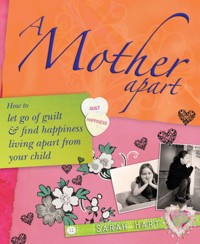
A Mother Apart has been written to relieve the isolation of the many women separated from their child who say, "I thought I was the only one". Moving beyond the stereotype of mothers who leave, A Mother Apart provides insight and practical support for women struggling with their feelings as they adjust and come to terms with living life apart from their children.
Sie lesen das E-Book in den Legimi-Apps auf:
Seitenzahl: 307
Veröffentlichungsjahr: 2008
Das E-Book (TTS) können Sie hören im Abo „Legimi Premium” in Legimi-Apps auf:
Ähnliche



















Praise for A Mother Apart
“An indispensable guide for mothers living without their children: profound, compassionate, realistic, hopeful and creative. A wonderful source for healing and reparation, it holds the wisdom of one who has come through this unique and rarely understood trauma. I wish it had existed years ago.”
Rosie Jackson author of Mothers Who Leave
“In this touching, inspiring and deeply wise book, Sarah Hart has distilled the wisdom of her extensive personal and professional experience. It is a book to treasure, to return to again and again as compassion, insight and useful practical suggestions leap off every page. Sarah covers all the struggles and heartaches mothers in this situation are likely to encounter and shows us how to reach a deeper healing and love than we might ever have imagined possible. I am delighted such a beautiful book has been written at last about such a painful and frequently misjudged subject and wholeheartedly recommend it to anyone interested in the challenges of love, especially mothers, and most of all to those who love their children from afar.”
Anne Geraghty author of In the Dark and Still Moving
“If you are a woman living apart from your children, take this book as your companion on the lumpy, bumpy journey toward a healthier life. Much more than a self-help book, Mothers Apart is rich with insight, compassion and a practical focused plan for developing different patterns of self care. This book is also a superb resource for the practitioner who supports the growing and diverse range of non-resident mothers eager to write their healing stories.”
Diana L. Gustafson, Associate Professor, Faculty of Medicine, MemorialUniversity
“A Mother Apart is an accessible and supportive guide for women who, for whatever reason, no longer have full-time residence of their children. In a thought provoking first chapter, Sarah Hart examines the stereotypical role of mother as primary carer which, despite changes in the position of women in society, continues to cause feelings of guilt and shame in mothers living apart from their children. She effectively dispels the myth that such mothers are selfish or inadequate and explains, on both an emotional and a practical level, how a mother can cope with the implications of living apart from her child. From the perspective of a family lawyer, there are particularly useful chapters in the book on how mothers can deal with the challenges of co-parenting with ex-partners, the impact of a new wife and “mother” figure in the child’s life, how to help children cope with divorce and separation and how to make the most of contact when it takes place. I would highly recommend this book to mothers with shared residence or non-resident mothers whether or not they presently have contact with their children.”
Miranda Fisher, Solicitor, Charles Russell LLP
“A much-needed perspective for women who are re-examining their roles and responsibilities as mothers.”
Maria Housden author of Hannah’s Gift and Unravelled
“A thoughtful and sensitive guide to a difficult issue.”
Psychologies
To my daughter Roxane with deep love.
I would have dedicated this book to you even if you hadn’t asked me to, but it means the world to me that you did.
Contents
Title Page
Dedication
Acknowledgements
Foreword – Penny Cross, Chair of the charity MATCH (Mothers Apart from their Children)
Introduction – Take heart, mother apart: the journey from despair to peace of mind and happiness
Who this book is for
Why this book was written
Will this book help you?
How you will benefit
Chapter 1 – Turning to face the judgement
Outer judgement
Stereotyped motherhood
The universal mother dump
Judgements by others
Inner judgement
Guilt
Shame
Secrets we keep and how we suffer
Wanting to be forgiven
Chapter 2 – Holding up the mirror
Patterns of parenting: a rerun of your history?
De-junking judgements
Out with the fear
Your story of healing
Stage 1 – Holding up the mirror
Stage 2 – The trusted friend reality check
Stage 3 – Share your story with someone you trust
Journaling—your ongoing de-junk
De-junk debrief
Chapter 3 – Opening your heart to be a mother apart
Disenfranchised grief
The legitimacy of suffering
Opening your heart—the foundation of big-hearted mothering
The grief cycle
Grieving as the journey, not the end destination
Chapter 4 – Moving on with dignity
The eight mother apart confidence boosters
1: Daring to drop disaster thinking
2: Setting healthy boundaries
3: Saying sorry when you know you need to
4: Writing a letter that you don’t send
5: Finding the words to talk about being a mother apart
6: Shrinking Supermother
7: Bolstering for blue days
8: Practising the art of happiness
Chapter 5 – How to exit your ex: the roadmap to conscious singlehood and creating a cooperative relationship with your ex-partner
Should you maintain contact with your ex?
Successful singlehood: how to learn from the past and go solo with confidence
Letting go of blame
Walk in his shoes for a while
Co-parenting and managing the difficulty of difference
Who sets the upbringing ethos?
The importance of good communication
Top tips: cornerstones of constructive communication
In-laws or outlaws? Your child’s relationship with your ex’s family
Tips for a truce and trouble-free co-parenting
Chapter 6 – New wife … new mother?
What is the experience of co-parenting like for mothers living apart from their children?
The key to co-mothering without competition
How to co-mother from the inside out
Identifying love sapping beliefs
Building belief boost strategy
Your child’s life with the new wife
What to do when your child tells you they have a ‘wicked stepmother’
Supporting your child to have a successful step relationship
Chapter 7 – In love vs. mother love: how to have the relationship you deserve and be a mother apart
Are you ready for a new relationship?
Moving on, mulling over and moving in
First aid for flashpoints: mothering apart and new relationships
Having a child together
Some points to ponder as you develop your new relationship
Chapter 8 – Changes and challenges: helping your child cope with divorce and separation
The impact of divorce and separation on a child
Helping your child with changes and challenges
Guidance for times of difficulty
If your child becomes worried or anxious
If your child becomes angry
If your child complains about Dad
Some final tips for every age and stage
Chapter 9 – The best of times: making the most of contact with your child
Being together
How to make sure your child has a good time when you’re together and not lose yourself in the process
The need for boundaries and discipline
Being together and apart
Being together barometer
Being apart
Getting through special days
Staying in touch and long distance mothering
Chapter 10 – Keeping strong when there’s no contact
What is parental alienation syndrome?
How to deal with parental alienation
Other reasons for no contact
Chapter 11 – A mother apart over time
The strength of scar tissue
As our children grow up
Love and healing
Keeping the door open
Additional sources of help and advice
Bibliography and further reading
Index
About Sarah Hart
Copyright
Acknowledgements
I would like to say a wholehearted thank you to the mothers apart who have shared both good and tough times with me, over the years.
A very big thank you to the women who contributed their stories to this book—I know what it took for you to do so.
Thanks especially to …
Penny Cross for writing the Foreword and whose own book kept me company while I wrote this one, and Caroline Lenton and Beverley Randell at Crown House Publishing for championing this book and having confidence in me.
I would also like to thank …
All my friends who have supported me over the years, through the bites of lions and the nibbles of rabbits.
Joan Massella, my ‘mominafrica’, who has been my friend and source of instant moral fibre for twenty-two years.
Sue Jarvis for writing to me when I first discovered MATCH and latterly for long talks as I walk in the woods.
Anne Geraghty, my teacher, who inspires and mirrors the deep in me.
Pam Emery for the relief of many a blah-blah.
My father Reg, sisters Felicity and Roberta for having faith in me and Richard for his design ideas.
To my son Brett for his steadfast love, support, youthful energy and music. You are my joy.
Finally, to my partner Simon who has shown me how to climb mountains, observe the oneness in nature and see the wonder in even the tiniest of wild flowers. Your unfailing belief in me is a dream come true.
Foreword – Penny Cross
Chair of the charity MATCH (Mothers Apart from their Children)
This is a book for women with deep, hidden scars who may have been searching, intentionally or unconsciously, for help in healing them. This is also a book for therapists, counsellors, general practitioners, health practitioners and others looking to help such women. Look no further. You’ll find it within this compellingly written self-help book underpinned by a profound compassion for, and deep understanding of, all mothers apart from their children across a wide range of circumstances. The impetus for this book came about because of Sarah Hart’s own painfully acquired personal experience as a mother apart which later impelled her to acquire impressive professional and academic qualifications.
Sarah’s eminently practical, therapeutic advice reflects an astonishing depth of feeling for mothers apart. Her deeply loving, tender approach will help to begin a journey back to happiness and one that people might not believe could ever take place. It will not be easy but it will not be lonely with Sarah to guide you each step of the way. If you ever doubted you’d ‘find happiness living apart from your child’, read Sarah’s dynamic and positive approach to re-evaluating and re-thinking your life.
I wish I’d had this book in 1996 when, as a newly divorced, newly apart mother of four children, my then twelve-year-old daughter asked of a court welfare officer, ‘Can I divorce her, too?’ Searching through my doctor, initially, for individuals or organisations who might offer help, advice or consolation through shared experiences, I found nothing and no one.
Crushed and isolated in the long, harrowing days ahead, with physical and emotional energies becoming diluted by fighting a losing battle in the courts as well as with my ex for the right to remain in my children’s lives, I became convinced I was ‘the only one’, the only mother in the world not living with her children and whose children had rejected her.
Since those far off isolated days, through life-changing, life-affirming experiences, but still apart from my children twelve years later, I’ve finally found that longed-for peace and unexpected happiness deep within myself. But, oh, how I wish I’d had Sarah’s book then to give me hope, inspiration and strength when my motherhood was discredited. It would have made my own healing journey so much easier, perhaps even shorter.
If you’re newly apart or have been apart for a long time after family breakdown, whether your child or children have been adopted or fostered, whether your child has been abducted abroad or whether your adult child has rejected you after a family row, you’ll find tender understanding, practical help and insightful advice from Sarah. Her compassionate tutoring will help ease your sorrow, enabling you to finally reach that place of peaceful harmony within yourself. With Sarah’s help, if you want to, you’ll acquire the skills and knowledge needed to find that happiness you richly deserve.
In my newly apart days when the internet was still relatively in its infancy, one had to be tenacious in searching for help from professionals, self-help groups or through books. Like Sarah, it was through a happy chance I found MATCH (through Families Need Fathers), eventually discovering other mothers apart, and finding that each one of us had been convinced we’d been ‘the only one’, each one was eager to pass on anything that might ease our newly apart pain or the anguish of those who’d been apart for one or more decades.
We were astounded to find books had been written about ‘us’ and that we were not, as we thought, three-headed monsters: Helen Franks’s Mummy Doesn’t Live Here Anymore and Rosie Jackson’s Mothers Who Leave were passed around and devoured. Since then, with the supersonic growth of the web and unprecedented internet activity, one can more easily access help or advice at a very early stage of being apart. More and more mothers apart, counsellors, therapists, self-help groups, mental health and legal professionals are finding and contacting MATCH fairly easily. However, without exception each new MATCH member is still astonished to find (a) that MATCH exists and (b) that they’re ‘not the only ones’. At early MATCH annual general meetings several years ago we used to end our meetings with a cup of tea and a slice of cake, iced with the words, ‘Not the only one’.
Whether newly apart or experienced veterans of several decades, mothers apart have two understandable obsessions: reunion and justice for their children. Such obsessions, if fulfilled, will meet one overriding and overwhelming need: to return to motherhood, which may have been so senselessly and, in some cases, viciously broken. But unfulfilled obsessions, however, after long periods of dwelling on them, have a tendency to make some of us solitary, secretive, hermit-like creatures reluctant to speak about unresolved pain, seemingly unable to find the right place or the right time to do so.
If this sounds like you, or someone you know, and you needing coaxing from your self-imposed bunker, if you’re always wondering who or what you should be without your children, or what lies ahead in a supposedly motherless future, you’ll find Sarah’s practical advice, based, on her long professionalism, invaluable. If you need a friend, a guiding light, trust Sarah to help you to forgive yourself and to take you further than you thought you would go towards that healing place you long to be.
If, despite your sorrows, you’ve blossomed into a fiercely spirited Boudicca-type warrior with a powerful undiminished outrage, determined to return to mothering your children, you may be relentlessly busy educating and informing yourself on the best means to achieve justice for your children as well as for yourself.
As a battling mother fighting for your own rights, too, to continue to be part of a nurturing, loving family network, no matter where or with whom each family member is living, you may have achieved some success but still may be apart from some or all of your children.
You may have been brought up not to question authority, to trust in ‘the law’ to deliver justice. You might have offered yourself up for interrogation by legal and court professionals—and, much later, journalists. You may have been submissive, as a newly apart mother, in an attempt to achieve justice for your children’s best short-term interests and long-term secure future.
Failure to achieve justice, despite a long, hard committed fight, results in two kinds of brave, courageous mothers apart: those who daily battle melancholy, depression, perhaps debilitating physical or emotional ill-health; and those who fight onwards and upwards towards victory over pain. One member, successful in overturning years of deep hurt, said: ‘I reached a very low point after many years of trying to achieve change in my ex and my children when it occurred to me that, if I couldn’t change them, I could change myself and my attitudes towards them.’
Perhaps you’re still struggling to reach that place. If you’re not there yet but want to be, Sarah’s practical exercises, deeply rooted in her innate humanitarianism and wisdom, will help you in your own ‘journey from despair to peace of mind and happiness’ [see her Introduction].
In MATCH there are many stories, told and untold, of courageous battles for justice for children, stories we want to tell widely but have no means to do so. We want to shout from the rooftops, but refrain from doing so that no further damage is inflicted on our children. We keep silent until the press suddenly declare an interest in us, albeit a self-interested, topical one. If we’ve been refused a fair hearing of our case, either by our children or the courts, there is a compulsive need to speak to the media to get the truth out even if it sometimes turns into an unprepared cascading torrent of self-justification.
Sometimes motherhood has been deliberately destroyed by vindictive family members, sometimes through a court or legal professional’s thoughtless negligence or unpreparedness due to heavy caseloads.
However it happens, with the printing of a few hundred words in sometimes trivial publications, the public can make simple judgements on our complex lives, on our fitness to be mothers, before moving on quickly to the next human interest story. As Sarah says in her Introduction, ‘There is so much pressure on women to be supermothers, but I believe it’s much more healthy and constructive for ourselves and our children when we aim to be good enough, when we aspire to live truthfully, to be who we are instead of trying to live up to someone else’s ideal.’
Media interrogations exert a heavy, intensely emotional toll on those who have already undergone lengthy self-interrogation. Stories are retold in our heads so many times as we relive, requestion behaviours or attitudes of everyone involved in our family tragedy to see what could have or might have been done differently to have changed that final, terrible outcome. ‘Could have’, ‘should have’, ‘would have’ frequently occur in MATCH stories.
But when we speak to the media what we’re really doing is speaking to our children because we want our children to know, even if we don’t see them or hear from them, that we love them unconditionally. We also need them to hear ‘our version’ of the truth. And we want them to know they weren’t ‘abandoned’ as many have been untruthfully told. But don’t think our stories are the defeatist wailings of victims or outcasts. They are clarion calls for justice for our children.
If you’ve reached the point of needing to talk to journalists so you can ‘speak’ through them to your children, please read ‘Your Story of Healing’ in Sarah’s consoling Chapter 2 – Holding up the mirror in which she says, ‘The place to start your healing process is to write a story—the story of how you came to live apart from your child.’
There is no doubt that, even in today’s fast-moving, progressive and enlightened world, a mythology still suffocates all mothers, but particularly those not living with their children. Why is a stigma attached to these mothers but not to fathers apart? In the UK those mothers apart who have the status of either a Shared Residence Order or that of Non Resident Parent (custody elsewhere in the western world) bear a heavy burden. As Sarah says in Chapter 1 – Turning to face the judgement: ‘We live in a world of double standards.’
Part of MATCH’s long-term agenda is to challenge such obsolete, some might say narrow-minded, perspectives of mothers, mothering, and motherhood. Many feel strongly that in the first quarter of the twenty-first century a rigorous debate on the cultural transformation of contemporary parenting in general and contemporary mothering in particular is long overdue.
All responsible, loving, mature parents, after their relationship has come to an end, instinctively want their children to be cherished, safeguarded, respected and nurtured by both parents who care, above all, for their children’s long-term best interests. In this the UK government supports them wholeheartedly. On 18 January 2005, the Government published Parental Separation: Children’s Needs and Parents’ Responsibilities, NextSteps. This document responded to the consultation on the Green Paper on the same topic which was launched on 21 July 2004: ‘Parental separation affects many children and their families. Some three million of the twelve million children in this country have experienced the separation of their parents.’ (Ministerial Foreword, 2004 Green Paper) Both parents should be actively encouraging and respecting children’s contact with all loving family members, embodying the government’s view that ‘After separation, both parents should have responsibility for, and a meaningful relationship with, their children, so long as it is safe. This is the view of most people in our society. And it is the current legal position.’
Should it really matter then to our contemporary, fast-changing society which parent children live with? Why should it be necessary to pass judgement on that parent living apart from their children? The ultimate objective of what I would term ‘powerful, passionate equal parenting’ is to ensure that children are loved by both parents in equal measure even if contact time is, for commonsense reasons, unequal. A child’s parents are for life, not just for the duration of his parents’ relationship.
Children’s best interests should be the overarching cornerstone of government policy, as well respected research has shown overwhelmingly the power of a loving family network to transform, sustain and enrich all our lives forever.
Until such time as society reshapes highly judgemental views on mothers living apart from their children, such mothers will need help to come to terms with their pain and sorrow. Sarah Hart has set a gold standard in offering therapeutic support for such mothers and, on behalf of all past, present and future MATCH members, I would like to express our gratitude for her passionate commitment to helping us, our admiration for the courageous honesty she has shown in acknowledging her own story, and in sharing her compassionate wisdom so we can begin to reconstruct our lives and start to be happy. None of us deserves less than this.
Penny Cross
Chair, Mothers Apart from Their Children (MATCH) and author of Lost Children: A Guide for Separating Parents (Velvet Glove, 2000)
Introduction
Take heart, mother apart: the journey from despair to peace of mind and happiness
‘Why did you leave them?’‘How could you have allowed it to happen?’ ‘How do you live with it?’
If you are a mother living apart from your child, I’m certain you will have been asked these questions and other variations. The enquirer is at best surprised and at worst incredulous and shocked when we talk about our circumstances. Sometimes they fall silent, and dealing with their embarrassed confusion and hasty attempts to change the subject can be as difficult as those people who are eager to know more. Questions are thrown quick and fast, and as we try to find the words to explain, we feel judgement soaking into us like dye—the tarnishing proof that we are unnatural mothers. A mother who abandons. The woman who has committed the ultimate taboo.
As a mother apart, I know how you feel. As a counsellor, I understand that the experiences of women in your position can be complicated, and your feelings bewildering and sometimes extreme.
‘If anyone had told me that by the time he was six we’d be separated I’d never have believed them—we were incredibly close.’
Danielle
‘Seeing other mothers enjoying their children is still so upsetting. How did this happen to me? Will we ever have good times together again?’
Jayne
Regret, guilt, high anxiety and depression—many mothers apart feel like they have received a life sentence of pain. Take heart: this book will support you. It will help you make positive changes and find acceptance for what you cannot change.
Who this book is for
A Mother Apart is written for women who have chosen to live apart from their child as well as those who are suffering separation that had nothing to do with a direct, personal decision to leave a child, including:
Mothers with regular contact with their children:
Non-resident mothers. In other words, women who are divorced or separated and are not regarded as the primary carer of her child by the courts.
Mothers who have shared residency. Part-time Mums who consider themselves to be co-parents with the child’s father.
Mothers whose children live with a carer other than their father.
Mothers with irregular contact:
Mothers whose circumstances might be any of the above but for whatever reason, their relationship with their child or the child’s primary carer has become strained and contact has become irregular.
Long distance mothers. Living far away from a child, perhaps in another country, makes regular contact difficult.
Mothers who have no contact with their children:
Circumstances can vary greatly, with some mothers having been granted shared residency and contact by the courts but who still suffer from parental alienation.
Various chapters of A Mother Apart can also support women who have had their children abducted by partners living in another country, mothers whose children are in foster care, women whose children have been adopted, mothers in prison and the like.
While all chapters might not be immediately relevant to all mothers apart, the book will provide guidance and help as personal circumstances change.
Partners, family and friends
The strong feelings and often complex circumstances of mothers living apart from their children is, at times, baffling and difficult for loved ones. The aim of the book is also to help de-mystify the status of being a mother apart and provide insights and solutions to partners, relatives and friends—or anyone wanting to support a woman living apart from a child.
Perhaps you’ll recognise your circumstances in some examples of how a woman becomes or experiences being a mother apart below:
A shared residency order that doesn’t work well in practice. A mother may find the reality of being a part-time parent very difficult or painful: The child’s father could be obstructive and not encourage a good, ongoing relationship between a mother and child. Or a child might blame a mother for the separation and a once loving relationship changes. Or a teenage child becomes less interested in seeing their mother as they gain independence.
A mother was the main breadwinner in the family and, by choice or default, the father was regarded as the primary carer by the courts.
A mother who leaves her children in the family home with their father as she doesn’t want to disrupt their everyday lives.
A mother who leaves the family home for a short period of time because she needs space to make a decision about her marriage and finds that relationships have deteriorated and decisions have been made about residency in her absence.
A mother goes into hospital suffering from depression to find that home life doesn’t return to how it was before she became unwell. Her child might be living with another carer or her relationship with her partner has broken down.
A mother who loses residency because of drug or alcohol addiction.
Some mothers even have a shared residency order but have no contact due to parental alienation.
These scenarios highlight just a few of the many variations of what it means to be a mother apart. Very often, the die is cast rapidly and so I’ll add:
Any situation where decisions are made quickly, in times of high stress and few emotional or financial resources together with a good pinch of guilt, can lead to a life as a mother apart and outcomes that cause pain and regret.
Why this book was written
As many mothers apart will testify, it can be difficult to find understanding and support for our circumstances as women living apart from our children.
‘I want to learn what I need to do to feel better about being separated from my daughter. I want to know how to manage being in a new relationship and to help my partner understand what I’m going through. He tries but he doesn’t really understand.’
Olivia
‘How do I cope with my feelings as I live as resident mother to one child and long distance mother to two others? More than anything, I want to know that I’m not the bad, mad, crazy woman I sometimes feel myself to be.’
Natalie
‘My ex-partner and his new wife make things as difficult as they can for me. It breaks my heart to think that they have so much influence in Sammy’s life.’
Alex
‘I need information on what to expect and how to handle mothering apart as my children grow up. Because I don’t see them regularly I visualise them being younger than they actually are. I always seem to be about five years behind.’
Helen
The purpose of AMother Apart is to help you. Your well-being is its primary focus. I urge you put on hold anything you’ve learnt or heard that concerns itself with how much children suffer without a full-time mother. The combination of what others think of our actions and how we judge ourselves can distort our self-knowledge and personal awareness. In our confusion it’s easy to blur what we imagine our children feel with our own emotions. The book’s contents will help you separate your feelings from those of your child, media views on parenthood and the opinions of child psychologists.
This book is different because it’s not going to tell you that you should have put the needs of your child before your own.
Perhaps the reason you’re separated from your child is because you did put your feelings and desires before your child’s.
‘I needed to get out. I don’t regret leaving, I think it was the right thing to do for all our sakes, but I’m still made to feel guilty.’
Vickie
Maybe the reason you left was because you truly needed to get away for the sake of your emotional health.
‘I only planned to leave for a month to have a rest and sort things out in my mind. I couldn’t believe how much had changed in just four weeks—my husband’s hostility, the children turned against me, even the locks had been changed.’
Jayne
Whatever your reason for leaving, the emphasis of this book is on you, and the effects of the separation on your well-being, self-esteem, your choices, your future. Why? Because if you focus on your needs and feelings, become more aware of what happened, why it happened and its deeper meaning, and learn how to treat yourself with compassion, the change in you will be the best thing for your child.
I HAVE NEVER COME ACROSS A WOMAN WHO JUST UP AND LEFT ONE DAY ON A FLIGHT OF FANCY—EVEN THOUGH IT MIGHT HAVE LOOKED LIKE IT TO THE OUTSIDE WORLD.
So saying, my role on these pages is to help you truly accept your life as a mother apart from her child, to come to terms with your feelings, and challenge any negative beliefs and behaviour that cause you pain. My aim is to show you that you can change how you think about yourself as a mother apart in a way that doesn’t deny what you feel. Chances are you aren’t aware of what a great mother you really are. Your capacity to hold on to your status of being a mother living apart from your child, your ability to hold the space of mother inside you even though you might not have current contact with your child, is quite remarkable. The fact that you’ve picked up this book shows both your commitment to yourself and the strength you have to keep trying, to hang in there, to hold on to loving deeply from afar. I applaud you. However you came to be separated from your child, whatever action or inaction you took, it was not something you did lightly; internal pressures, childhood legacies, oppressive marriages, a lack of self-belief, self-awareness, emotional support and economic means lead to desperate situations and limited options.
This book will show you how to live a full and happy life despite living apart from your child.
Does this sound impossible to you? Maybe you are locked in bitter battles over residency or contact, or are newly separated from your child. My heart goes out to you.
You are not alone.
Twenty years ago, I left my daughter with her father. I imagined I was the only woman in the world who had done such a thing.
There are millions of women around the world who live separately from their children. Your status is more common than perhaps you realise. Living arrangements following divorce and separation vary enormously. However, because of the reactions and responses they receive, many mothers choose not to tell anyone if they have a child that lives elsewhere. Sometimes, women say nothing because their circumstances are just too painful to talk about. Keeping quiet about the fact that we have children means we can spare ourselves from opening up the wound. But denying our children to the world (and sometimes to ourselves), doesn’t serve us. Before long we find we’re living a secret life, an existence split in two by our attempts to protect ourselves, which leaves us feeling increasingly disconnected, deceitful and worn down by having to maintain our public pretence.
WITH SO MANY ‘HIDDEN’ MOTHERS APART, IT’S EASY TO THINK YOU ARE THE ONLY ONE SUFFERING AS A RESULT OF WHAT YOU DID OR DIDN’T DO.
‘I have a double life: a mother on access weekends and at holidays and during 9 to 5, a professional woman. Nobody at work knows I have children.’
Imogen
It doesn’t have to be like this. You can come to terms with decisions you have made, your circumstances as a mother and live truthfully and harmoniously. There is another way.
However far apart, whatever the nature of your separation, you can find serenity and restore lost dignity.
Will this book help you?
To assess whether A Mother Apart can help you, answer the questions below as honestly as you can. Answer true even if the question is somewhat true for you and false if it’s not very true or not at all true.
1. I feel guilty about living apart from my child
2. I feel a sense of shame when I talk or think about having left my child
3. I have feelings of loss and grief about being separated from my child
4. I regret some of the decisions I made which resulted in my child living apart from me
5. I sometimes despair of ever having a good relationship with my child
6. I don’t feel that I’m a good mother
7. I tend to be secretive about the fact that I live apart from my child
8. I feel judged by other people
9. I find it hard to talk about my personal circumstances
10. I have a difficult relationship with the father of the child I live apart from
11. I don’t feel it would work for either of us if my child lived permanently with me
12. I find it hard to communicate with my child
13. My confidence and self-esteem are low
14. I feel rejected by my child
15. It’s painful to think that a stepmother is, or perhaps will be, ‘replacing’ me
16. I feel like I give too much emotionally or materially to my child when we spend time together
17. I feel it’s all my fault when I see my child struggling with life
18. If I’m honest, I sometimes feel relieved that my child doesn’t live with me
19. I want a new relationship with a partner but the difficulties of living apart from my child get in the way
20. Guilt makes me feel like I don’t have the right to be happy
If you’ve answered true to four or more questions, you’re likely to be struggling with your circumstances as a mother living apart from your child. The feelings of mothers apart can be complex and contradictory, so even if you’ve answered true to one or two questions, you are likely to find this book comforting and informative.
How you will benefit
I want to take you gently to the heart of what it means to live separately from your child. I want to confront the taboo and show you how to enrich your life from a very unique position. You will find practical solutions to help you find the best way of dealing with important milestones, as well as little difficulties along the way. Throughout the book, you will find a variety of activities designed to explore how you feel and which will help you to choose more positive and resourceful ways of thinking and living. These processes of personal discovery have the potential to be an illuminating and powerful impetus for change.
As you work through this book, you will find help and support to:
Accept that you did the best you could at the time, under difficult circumstances
Free yourself from guilt and shame
Grieve your loss and move on with an open heart
Learn the art of big-hearted mothering: deep love from afar, over time
Acknowledge and take responsibility for your actions and learn when not to take responsibility
Live your life a day at a time, despite feeling intense sorrow and grief some days
Let go of trying to control anyone but yourself
Learn to love and enjoy your child in the moment, without fearing for tomorrow
Find and maintain your dignity, and be proud of your status of mother
Try again when you forget or struggle to manage any of the above




