


27,99 €
Mehr erfahren.
- Herausgeber: John Wiley & Sons
- Kategorie: Geisteswissenschaft
- Sprache: Englisch
Autism is in the public spotlight now more than ever as new research and information appears almost daily. Although in many ways this is a positive development it also presents challenges to families and practitioners who want to keep up with the latest developments and are left to sift through new information by themselves to see what is credible and relevant for them.Each of us needs a personal research assistant who can determine which information we need to pay attention to and let us know how it might affect our daily work and the children we are living with or serve. Since we each don't have our own research assistants on staff, I am delighted to recommend this wonderful book by Fred Volkmar and Lisa Wiesner. Both of these talented professional leaders have combined their scientific skills and understanding of the field with great practical experience and ideas about how research can be translated into clinical practice. The result is a book that provides the best and most comprehensive information about recent scientific developments and a splendid practical guide for how they are being implemented and what we are learning in the process. The issues are presented in all of their complexity but translated into language that is clear, direct, and easy to follow. The format also lends itself to understanding the complex issues and their implications through excellent charts, question and answer sections, and chapters that vary from describing diagnostic issues to stating very specifically how to expand and evaluate the services one is receiving. The comprehensive references and lists of additional resources also add greatly to the overall package. As a professional dedicated to understanding scientific advances and helping families and teachers to utilize them most effectively, I am very pleased to have an ally like this book available. I am very grateful to the authors for providing a very credible, practical, and relevant addition to our field to help the many advocates and family practitioners to better understand the exciting new developments and how they can be implemented in our day to day work. Those taking the time to read through this superb volume will find it time well spent that pays back dividends in many different ways. --FOREWORD by Gary B. Mesibov, Ph.D., Professor and Director of TEACCH, Treatment and Education of Autistic and Related Communication Handicapped Children University of North Carolina at Chapel Hill
Sie lesen das E-Book in den Legimi-Apps auf:
Seitenzahl: 1335
Veröffentlichungsjahr: 2009
Ähnliche



















Table of Contents
Cover
Title
Copyright
Dedication
Foreword
Preface
CHAPTER 1: What Is Autism?
AUTISM
ASPERGER’S DISORDER
CHILDHOOD DISINTEGRATIVE DISORDER
RETT’S DISORDER
PERVASIVE DEVELOPMENTAL DISORDER NOT OTHERWISE SPECIFIED
HOW COMMON ARE AUTISM AND RELATED CONDITIONS?
SUMMARY
CHAPTER 2: What Causes Autism?
GENETIC CAUSES OF AUTISM
SEIZURE DISORDERS AND ELECTROENCEPHALOGRAPHIC ABNORMALITIES
OTHER NEUROLOGICAL PROBLEMS
NEUROANATOMY AND BRAIN IMAGING STUDIES
NEUROCHEMISTRY
RISKS DURING PREGNANCY AND CHILDBIRTH
ENVIRONMENTAL CAUSES OF AUTISM
MEDICAL CONDITIONS AND AUTISM
PSYCHOLOGICAL MODELS OF AUTISM
UNDERSTANDING THE CAUSES OF PDDS OTHER THAN AUTISM
SUMMARY
CHAPTER 3: Getting a Diagnosis
FIRST CONCERNS
SCREENING AND INITIAL ASSESSMENTS
COMPREHENSIVE ASSESSMENTS FOR AUTISM AND RELATED CONDITIONS
AUTISM/ASD-SPECIFIC TESTS AND RATING SCALES
UNDERSTANDING THE RESULTS
PUTTING IT ALL TOGETHER
DIAGNOSTIC CERTAINTY AND UNCERTAINTY
WHAT HAPPENS AFTER THE ASSESSMENT?
SUMMARY
CHAPTER 4: Getting Services
THE INDIVIDUALS WITH DISABILITIES EDUCATION ACT (IDEA)
KEY CONCEPTS AND PROVISIONS OF IDEA
YOUNG CHILDREN: SPECIAL CONSIDERATIONS
DISCIPLINARY ISSUES
THE IEP—PROCESS AND CONTENT
PRIVATE SERVICES
DEALING WITH INSURANCE
SUMMARY
CHAPTER 5: An Overview of Educational Programs
MODEL PROGRAMS
SPECIAL EDUCATIONAL NEEDS OF THE CHILD WITH AN ASD
MAINSTREAMING
STUDENTS WITH ASPERGER’S
TRANSLATING WHAT WE KNOW TO SCHOOL PROGRAMS
SUMMARY
CHAPTER 6: Educational Interventions
AUTISM-FOCUSED CURRICULA
SOCIAL SKILLS INTERVENTIONS
LANGUAGE AND COMMUNICATION PROGRAMS
ORGANIZATIONAL ISSUES/SUPPORTIVE TECHNOLOGY
ADAPTIVE SKILLS AND GENERALIZATION
SUMMARY
CHAPTER 7: Working With Young Children
SIGNS OF AUTISM BEFORE I YEAR OF AGE
SIGNS OF AUTISM BETWEEN 12 AND 36 MONTHS
ASPERGER’S AND PDD-NOS
SCREENING FOR AUTISM—FIRST STEPS IN GETTING A DIAGNOSIS AND SERVICE
ACCESS TO SERVICES FOR VERY YOUNG CHILDREN
CASE REPORTS
SUMMARY
CHAPTER 8: Working With School-Aged Children
DEVELOPMENT AND BEHAVIOR
SENSORY AND BEHAVIORAL ISSUES
GENDER DIFFERENCES
SCHOOL-RELATED ISSUES
MAINSTREAM ING AND PEER PREPARATION
CASE STUDIES
SUMMARY
CHAPTER 9: Adolescence, Adulthood, and the Future
ADOLESCENCE: BASIC FACTS
ADOLESCENCE IN CHILDREN WITH ASDS
BEHAVIOR PROBLEMS IN ADOLESCENCE
SEXUALITY
HIGH SCHOOL: CHALLENGES AND OPPORTUNITIES
TRANSITION TO COLLEGE OR VOCATIONAL PROGRAM/SCHOOL
HYGIENEAND SELF-CARE SKILLS
MOVING TO ADULTHOOD
VOCATIONAL ISSUES
LIVING ARRANGEMENTS FOR ADULTS
PLANNING FOR THE FUTURE
LEGAL PROBLEMS FOR ADULTS
PSYCHIATRIC COMORBIDITIES IN ADULTS
CASE REPORTS
SUMMARY
CHAPTER 10: Managing Medical Issues and Problems
CHALLENGES IN PROVIDING HEALTH CARE FOR CHILDREN WITH AUTISM
HELPING MEDICAL VISITS BE SUCCESSFUL
OTHER MEMBERS OF THE HEALTH CARE TEAM
MEDICAL CONDITIONS MORE COMMON IN AUTISM AND RELATED DISORDERS
COPING WITH COMMON MEDICAL PROBLEMS
EATING PROBLEMS
COPING WITH THE EMERGENCY DEPARTMENT AND THE HOSPITAL
COPING WITH THE HOSPITAL
DENTAL CARE
IMMUNIZATIONS AND AUTISM
SUMMARY
CHAPTER 11: Ensuring Safety
GENERAL HOUSEHOLD SAFETY
SAFETY AT SCHOOL
COMMUNITY SAFETY
SUMMARY
CHAPTER 12: Dealing With Seizures
WHAT IS A SEIZURE?
How COMMON ARE SEIZURES?
TYPES OF SEIZURES
EVALUATING A SEIZURE DISORDER
OBSERVING A SEIZURE
TREATMENT OF SEIZURES
CONTINUING CARE AND SAFETY CONCERNS
WHAT CAUSES SEIZURES?
SUMMARY
CHAPTER 13: Dealing With Regression
REGRESSION IN AUTISM
CHILDHOOD DISINTEGRATIVE DISORDER(CDD)
RETT’S DISORDER
SUMMARY
CHAPTER 14: Dealing With Behavior Problems
BEHAVIORAL INTERVENTIONS—A BRIEF INTRODUCTION
DRUG INTERVENTIONS—A BRIEF DISCUSSION
TYPES OF BEHAVIORAL AND EMOTIONAL DIFFICULTIES
ATTENTION AND OVERACTIVITY
MENTAL HEALTH ISSUES AND BEHAVIOR PROBLEMS
CASE EXAMPLES
SUMMARY
CHAPTER 15: Considering Medications for Behavior Problems
MENTAL HEALTH ISSUES IN AUTISM
WHEN TO USE A MEDICATION
MEDICATIONS USED IN AUTISM AND RELATED CONDITIONS
SUMMARY
CHAPTER 16: Managing Sensory Issues
SENSORY DIFFERENCES IN AUTISM
EATING AND FEEDING ISSUES
HEARING PROBLEMS
VISUAL PROBLEMS
OTHER SENSORY PROBLEMS
ASSESSMENT OF SENSORY DIFFICULTIES
SOLUTIONS FOR OTHER SENSORY PROBLEMS
SUMMARY
CHAPTER 17: Managing Sleep and Sleep Problems
TYPICAL SLEEP PATTERNS
SLEEP IN AUTISM
DEALING WITH SLEEP PROBLEMS—SOME GENERAL ADVICE
DEALING WITH SPECIFIC SLEEP PROBLEMS
MEDICAL ISSUES AND MEDICATIONS
SUMMARY
CHAPTER 18: Considering Complementary and Alternative Treatments
UNDERSTANDING HOW SCIENCE WORKS
MEDIA AND THE INTERNETAS SOURCES OF INFORMATION
THINKING ABOUT COMPLEMENTARY AND ALTERNATIVE TREATMENTS
COMPLEMENTARY AND ALTERNATIVE TREATMENTS FOR CHILDREN WITH AUTISM
DRUG TREATMENTS AND MEDICAL PROCEDURES
COMMUNICATION AND AUDITORY INTERVENTIONS
OTHER COMPLEMENTARY AND ALTERNATIVE APPROACHES
SUMMARY
CHAPTER 19: Managing Sibling and Family Issues
STRESSES AND SUPPORTS
SUPPORT FROM EDUCATORS AND OTHERS
AGE-RELATED STRESSES
MARITAL ISSUES
SINGLE-PARENT FAMILIES AND DIVORCE
GRANDPARENTS AND FAMILY MEMBERS
TALKING WITH FRIENDS
SIBLINGS
FAMILY ENGAGEMENT, GENERALIZATION, AND LIFE IN THE COMMUNITY
SUMMARY
Resources Lists: Books and Websites
WEBSITES
STATE-SPECIFIC RESOURCES
BOOK AND JOURNAL PUBLISHERS AND VENDORS WITH MAJOR AUTISM AND AUTISM SPECTRUM LISTINGS
APPENDIX 1: Diagnostic Descriptions and Criteria for Autism and Related Pervasive Developmental Disorders from
International Classification of Diseases
, 10th Edition (World Health Organization, Geneva, Switzerland, 2003; Reprinted with Permission)
Glossary
Index
End User License Agreement
List of Tables
CHAPTER 1: What Is Autism?
TABLE 1.1 DIFFERENTIAL DIAGNOSTIC FEATURES OF AUTISM AND NONAUTISTIC PERVASIVE DEVELOPMENTAL DISORDERS
CHAPTER 3: Getting a Diagnosis
TABLE 3.1 WARNING SIGNS OF AUTISM IN THE FIRST AND SECOND YEARS OF LIFE
TABLE 3.2 FREQUENTLY USED SCREENING INSTRUMENTS FOR AUTISM
TABLE 3.3 SELECTED TESTS OF INTELLIGENCE/DEVELOPMENT
TABLE 3.4 COMMONLY USED TESTS OF SPEECH–LANGUAGE–COMMUNICATION
TABLE 3.5 DIAGNOSTIC TESTS/INSTRUMENTS FOR AUTISM
TABLE 3.6 DIAGNOSTIC TESTS/INSTRUMENTS FOR ASPERGER’S
TABLE 3.7 MOTOR AND SENSORY MOTOR TESTS
CHAPTER 5: An Overview of Educational Programs
TABLE 5.1 FEATURES OF COMPREHENSIVE PROGRAMS
TABLE 5.2 INTERACTION OF INSTRUCTIONAL STRATEGIES AND CURRICULUM AREAS
CHAPTER 6: Educational Interventions
TABLE 6.1 SOURCES OF INFORMATION AND CURRICULA FOR STUDENTS WITH AUTISM
TABLE 6.2 USES OF PIVOTAL RESPONSE TRAINING
TABLE 6.3 CHALLENGES FOR ENHANCING SOCIAL COMMUNICATION ABILITIES AT VARIOUS DEVELOPMENTAL LEVELS
TABLE 6.4 EXAMPLES OF MILIEU TEACHING METHODS
TABLE 6.5 AUGMENTATIVE ALTERNATIVE COMMUNICATION STRATEGIES: AN OVERVIEW
CHAPTER 7: Working With Young Children
TABLE 7.1 SYMPTOMS OF AUTISM IN THE FIRST YEAR OF LIFE
TABLE 7.2 SYMPTOMS OF AUTISM: AGES 1 TO 3 YEARS
CHAPTER 9: Adolescence, Adulthood, and the Future
TABLE 9.1 STAGES OF PUBERTY (TANNER)
CHAPTER 12: Dealing With Seizures
TABLE 12.1 COMMON TYPES OF SEIZURES
CHAPTER 13: Dealing With Regression
TABLE 13.1 REGRESSION IN AUTISM SPECTRUM DISORDER–SUBTYPES
TABLE 13.2 MEDICAL CONDITIONS CAUSING DETERIORATION
TABLE 13.3 CLINICAL FEATURES OF CHILDHOOD DISINTEGRATIVE DISORDER
TABLE 13.4 STAGES OF RETT’S DISORDER
CHAPTER 15: Considering Medications for Behavior Problems
TABLE 15.1 SELECTED SECOND-GENERATION (ATYPICAL ANTIPSYCHOTICS)
TABLE 15.2 SELECTED FIRST-GENERATION ANTIPSYCHOTIC MEDICATIONS
TABLE 15.3 SELECTED MEDICATIONS FOR TREATMENT OF ADHD
TABLE 15.4 SELECTED ANTIDEPRESSANTS AND SEROTONIN REUPTAKE INHIBITOR MEDICATIONS
TABLE 15.5 SELECTED MOOD STABILIZERS
TABLE 15.6 SELECTED ANTIANXIETY MEDICATIONS
CHAPTER 18: Considering Complementary and Alternative Treatments
TABLE 18.1 THE SCIENTIFIC METHOD
TABLE 18.2 COMPLEMENTARY AND ALTERNATIVE DIETARY/NUTRITIONAL TREATMENTS IN AUTISM-AN OVERVIEW
Guide
Cover
Table of Contents
Begin Reading
Pages
cover
contents
iii
iv
v
ix
x
xi
xii
xiii
xiv
1
2
3
4
5
6
7
8
9
10
11
12
13
14
15
16
17
18
19
20
21
22
23
24
25
26
27
28
29
30
31
32
33
34
35
36
37
38
39
40
41
42
43
44
45
46
47
48
49
50
51
52
53
54
55
56
57
58
59
60
61
62
63
64
65
66
67
68
69
70
71
72
73
74
75
76
77
78
79
80
81
82
83
84
85
86
87
88
89
90
91
92
93
94
95
96
97
98
99
100
101
102
103
104
105
106
107
108
109
110
111
112
113
114
115
116
117
118
119
120
121
122
123
124
125
126
127
128
129
130
131
132
133
134
135
136
137
138
139
140
141
142
143
144
145
146
147
148
149
150
151
152
153
154
155
156
157
158
159
160
161
162
163
164
165
166
167
168
169
170
171
172
173
174
175
176
177
178
179
180
181
182
183
184
185
186
187
188
189
190
191
192
193
194
195
196
197
198
199
200
201
202
203
204
205
206
207
208
209
210
211
212
213
214
215
216
217
218
219
220
221
222
223
224
225
226
227
228
229
230
231
232
233
234
235
236
237
238
239
240
241
242
243
244
245
246
247
248
249
250
251
252
253
254
255
256
257
258
259
260
261
262
263
264
265
266
267
268
269
270
271
272
273
274
275
276
277
278
279
280
281
282
283
284
285
286
287
288
289
290
291
292
293
294
295
296
297
298
299
300
301
302
303
304
305
306
307
308
309
310
311
312
313
314
315
316
317
318
319
320
321
322
323
324
325
326
327
328
329
330
331
332
333
334
335
336
337
338
339
340
341
342
343
344
345
346
347
348
349
350
351
352
353
354
355
356
357
358
359
360
361
362
363
364
365
366
367
368
369
370
371
372
373
374
375
376
377
378
379
380
381
382
383
384
385
386
387
388
389
390
391
392
393
394
395
396
397
398
399
400
401
402
403
404
405
406
407
408
409
410
411
412
413
414
415
416
417
418
419
420
421
422
423
424
425
426
427
428
429
430
431
432
433
434
435
436
437
438
439
440
441
442
443
444
445
446
447
448
449
450
451
452
453
454
455
456
457
458
459
460
461
462
463
464
465
466
467
468
469
470
471
472
473
474
475
476
477
478
479
480
481
482
483
484
485
486
487
488
489
490
491
492
493
494
495
496
497
498
499
500
501
502
503
504
505
506
507
508
509
510
511
512
513
514
515
516
517
518
519
520
521
522
523
524
525
526
527
528
529
530
531
532
533
534
535
536
537
538
539
540
541
542
543
544
545
546
547
548
549
550
551
552
553
554
555
556
557
558
559
560
561
562
563
564
565
566
567
568
569
570
571
572
573
574
575
576
577
578
579
580
581
582
583
584
585
586
587
588
589
590
591
592
593
594
595
596
597
598
599
600
601
602
603
604
605
606
607
608
609
610
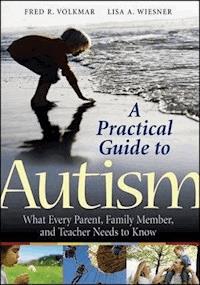
A Practical Guide to Autism
What Every Parent, Family Member, and Teacher Needs to Know
Fred R. Volkmar
Lisa A. Wiesner
Copyright © 2009 by John Wiley & Sons, Inc. All rights reserved.Published by John Wiley & Sons, Inc., Hoboken, New Jersey.
Published simultaneously in Canada.
No part of this publication may be reproduced, stored in a retrieval system, or transmitted in any form or by any means, electronic, mechanical, photocopying, recording, scanning, or otherwise, except as permitted under Section 107 or 108 of the 1976 United States Copyright Act, without either the prior written permission of the Publisher, or authorization through payment of the appropriate per-copy fee to the Copyright Clearance Center, Inc., 222 Rosewood Drive, Danvers, MA 01923, (978) 750-8400, fax (978) 646-8600, or on the web at www.copyright.com. Requests to the Publisher for permission should be addressed to the Permissions Department, John Wiley & Sons, Inc., 111 River Street, Hoboken, NJ 07030, (201) 748-6011, fax (201) 748-6008.
Limit of Liability/Disclaimer of Warranty: While the publisher and author have used their best efforts in preparing this book, they make no representations or warranties with respect to the accuracy or completeness of the contents of this book and specifically disclaim any implied warranties of merchantability or fitness for a particular purpose. No warranty may be created or extended by sales representatives or written sales materials. The advice and strategies contained herein may not be suitable for your situation. You should consult with a professional where appropriate. Neither the publisher nor author shall be liable for any loss of profit or any other commercial damages, including but not limited to special, incidental, consequential, or other damages.
This publication is designed to provide accurate and authoritative information in regard to the subject matter covered. It is sold with the understanding that the publisher is not engaged in rendering professional services. If legal, accounting, medical, psychological or any other expert assistance is required, the services of a competent professional person should be sought.
Designations used by companies to distinguish their products are often claimed as trademarks. In all instances where John Wiley & Sons, Inc. is aware of a claim, the product names appear in initial capital or all capital letters. Readers, however, should contact the appropriate companies for more complete information regarding trademarks and registration.
For general information on our other products and services please contact our Customer Care Department within the U.S. at (800) 762-2974, outside the United States at (317) 572-3993 or fax (317) 572-4002.
Wiley also publishes its books in a variety of electronic formats. Some content that appears in print may not be available in electronic books. For more information about Wiley products, visit our website at www.wiley.com.
Library of Congress Cataloging-in-Publication Data
Volkmar, Fred R.A practical guide to autism : what every parent, family member, and teacher needs to know / By Fred R. Volkmar, Lisa A. Wiesner. p. cm. Includes bibliographical references and index. ISBN 978-0-470-39473-1 (pbk.) 1. Autism. I. Wiesner, Lisa A. II. Title. RC553.A88V65 2009616.85’ 88200835—dc222009021153
To Lucy and Emily,who have taught us about being parents and to the many children and their parents who have taught us about being doctors
Foreword
Autism is in the public spotlight now more than ever as new research and information appears almost daily. Although in many ways this is a positive development it also presents challenges to families and practitioners who want to keep up with the latest developments and are left to sift through new information by themselves to see what is credible and relevant for them. Each of us needs a personal research assistant who can determine which information we need to pay attention to and let us know how it might affect our daily work and the children we are living with or serve.
Since we each don’t have our own research assistants on staff, I am delighted to recommend this wonderful book by Fred Volkmar and Lisa Wiesner. Both of these talented professional leaders have combined their scientific skills and understanding of the field with great practical experience and ideas about how research can be translated into clinical practice. The result is a book that provides the best and most comprehensive information about recent scientific developments and a splendid practical guide for how they are being implemented and what we are learning in the process. The issues are presented in all of their complexity but translated into language that is clear, direct, and easy to follow. The format also lends itself to understanding the complex issues and their implications through excellent charts, question and answer sections, and chapters that vary from describing diagnostic issues to stating very specifically how to expand and evaluate the services one is receiving. The comprehensive references and lists of additional resources also add greatly to the overall package.
As a professional dedicated to understanding scientific advances and helping families and teachers to utilize them most effectively, I am very pleased to have an ally like this book available. I am very grateful to the authors for providing a very credible, practical, and relevant addition to our field to help the many advocates and family practitioners to better understand the exciting new developments and how they can be implemented in our day to day work. Those taking the time to read through this superb volume will find it time well spent that pays back dividends in many different ways.
Gary B. Mesibov, Ph.D.Professor and Director of TEACCHTreatment and Education of Autistic and Related CommunicationHandicapped ChildrenUniversity of North Carolina at Chapel Hill
Preface
We have written this book to provide parents and teachers with information that we hope will help them get the best possible care for their child or the children under their care. The two of us approach this from slightly different perspectives. One of us, Fred Volkmar, is a child psychiatrist whose main area of clinical work and research is in autism. The other, Lisa Wiesner, is a pediatrician who has seen children with autism and other disabilities in her pediatric practice. In addition to bringing our professional perspectives to the book, the two of us are married and parents of two children. We hope that this book will provide parents and teachers of individuals with autism and related disorders some practical and useful information.
Our aim is to provide an understandable guide to what we feel are the most important things for parents and teachers to know. We try, as much as possible, to refer readers to relevant materials—both books, chapters, and research papers. We have tried, as much as we can, to stick with resources that are readily available and written in ways that parents as well as professionals can understand. It is, in some ways, gratifying to be able to say that we are by no means exhaustive in this regard. There are many excellent resources not included here, although we’ve tried to give a reasonable sample of the best things available.
We have tried to think very broadly about the kinds of information that parents and teachers need to know. Accordingly, we have chapters focused on a wide range of topics. Given our interest in the medical as well as behavioral and educational aspects of autism, we’ve included chapters on medical issues, safety, and medications, as well as what would be the more usual chapters in a book of this kind.
We are very much aware that, for parents, the rewards of raising a child with an autism spectrum disorder are just as great as for any other parents. However, the challenges can be more daunting because parents have to take the child’s difficulties into account in almost all decisions made about his or her education and health care. This book reviews basic information about autism and related conditions and how these disorders are diagnosed and treated. Keep in mind that in this book we are trying to provide important general information that will help parents and teachers provide good care. This book can’t (and won’t) Substitute for having a good working relationship with the various professionals who can advise you about what is best for your child in particular. The information provided in this book should supplement but does not replace the need for the child and family to have an ongoing relationship with educators, health and mental health care providers, and legal professionals who know the child and specifics of the situation very well. Laws, for example, can vary significantly from state to state, and this knowledge may be important as parents and others think about long-term planning. Similarly, keep in mind that while we’ve made every effort to be accurate and up to date, knowledge changes over time, and with the increasing amount of research on autism, the pace of change has quickened considerably.
Over the past decade there have been important advances in understanding the syndrome and in treating its symptoms. We know now that we can recognize and reduce the negative effects of these conditions on the child’s development and behavior. In considering any intervention, it is always important to weigh the risk against the possible benefit of the intervention. As the saying goes, “The perfect is sometimes the enemy of the good.” That is, sometimes it is better not to strive for perfection but for reasonable care and quality of life. As discussed in this book, many new treatments for autism also periodically become available. Sometimes these are well evaluated scientifically. Unfortunately, much of the time they are not. In a later chapter in this book, we will review some of these treatments and discuss how parents and teachers can make informed decisions about using them.
In each chapter we include questions from parents and our answers. We hope that these are a helpful way for you to learn from the experience of others. Throughout the book, we also include some tables and boxed material with additional information. The final sections of the book include a glossary as well as a list of additional resources. A reading list is included at the end of every chapter. Again, remember that in reading this or any book, it is important to interpret the information with the specific child in mind. In this effort, various professionals can be important allies.
We are grateful to a number of our colleagues who have reviewed parts of this book in our efforts to make it helpful to parents. We have profited from their wisdom and comments. They include, in alphabetical order: Karyn Bailey, Leah Booth, Rebecca Carman, Kasia Chawarska, Mark Durand, Tina Goldsmith, Debbie Hilibrand, Ami Klin, Kathy Koenig, Andrés Martin, Prisca Marvin, Nancy Moss, Rhea Paul, Michael Powers, Brian Reichow, Terrell Reichow, Penn Rhodeen, Celine Saulnier, Larry Scahill, Alison Singer, Tristam Smith, Kathy Tsatsanis, and Sally Zanger. We also thank our various colleagues who kindly allowed us to reprint, sometimes with modifications, materials from other sources, particularly the Handbook of Autism. Gary Mesibov merits special thanks for his willingness to contribute a foreword. We also are grateful to our editor, Patricia Rossi, and the staff at Wiley for their unflagging support and help in making this book as parent friendly as possible. We also thank a dedicated staff of professionals who helped us assemble the final copy—Lori Klein and Rosemary Serra, and, in particular, Emily Deegan, who went above and beyond the call of duty in coping with the many demands of producing this book. Finally, we thank our children, who have taught us much about child development, and, of course, our patients and their families, who have taught us much about autism.
Fred Volkmar, MDLisa Wiesner, MD
CHAPTER 1What Is Autism?
This chapter gives some background on autism and related autism spectrum disorders (ASDs). The recognition of autism as a disorder is a relatively recent one, first described in 1943 but not “officially” used as a diagnosis until 1980. Other conditions such as Asperger’s disorder were “officially” recognized even more recently. In this chapter we discuss these disorders and how our understanding of them has changed over the years. This is important for several reasons. One is that you may hear many different terms used to describe a child’s difficulties. Second, because knowledge has changed over the years, there are some misconceptions about autism that you may encounter (particularly among people who haven’t kept up with the field!). Finally, if you are looking at this book, you are probably wondering if a child you know has autism. We think it would be helpful for you to know something about autism!
Lesen Sie weiter in der vollständigen Ausgabe!
Lesen Sie weiter in der vollständigen Ausgabe!
Lesen Sie weiter in der vollständigen Ausgabe!
Lesen Sie weiter in der vollständigen Ausgabe!
Lesen Sie weiter in der vollständigen Ausgabe!
Lesen Sie weiter in der vollständigen Ausgabe!
Lesen Sie weiter in der vollständigen Ausgabe!
Lesen Sie weiter in der vollständigen Ausgabe!
Lesen Sie weiter in der vollständigen Ausgabe!
Lesen Sie weiter in der vollständigen Ausgabe!
Lesen Sie weiter in der vollständigen Ausgabe!
Lesen Sie weiter in der vollständigen Ausgabe!
Lesen Sie weiter in der vollständigen Ausgabe!
Lesen Sie weiter in der vollständigen Ausgabe!
Lesen Sie weiter in der vollständigen Ausgabe!
Lesen Sie weiter in der vollständigen Ausgabe!
Lesen Sie weiter in der vollständigen Ausgabe!
Lesen Sie weiter in der vollständigen Ausgabe!
Lesen Sie weiter in der vollständigen Ausgabe!
Lesen Sie weiter in der vollständigen Ausgabe!
Lesen Sie weiter in der vollständigen Ausgabe!
Lesen Sie weiter in der vollständigen Ausgabe!
Lesen Sie weiter in der vollständigen Ausgabe!




