


19,99 €
Mehr erfahren.
- Herausgeber: John Wiley & Sons
- Kategorie: Fachliteratur
- Sprache: Englisch
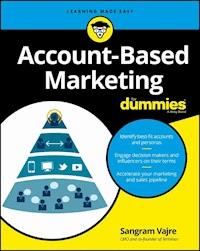
Grow your account list with an effective account-based marketing strategy Buyers have changed the B2B marketing game. Account-Based Marketing For Dummies is here to give you the tools to transform your current approach to find, reach, and engage with your potential customers on their terms to meet their ever-changing demands. Packed with expert tips and step-by-step instructions, this book shows you how to analyze current data to identify the accounts with the biggest ROI opportunities and execute effective, account-specific techniques that get results. This practical guide takes the intimidation out of account-based marketing in today's highly digitized world. You'll be armed with the knowledge you need to increase your reach in real time, giving you greater exposure to other decision-makers and influencers within an account. You'll discover how, through a combination of marketing technology and online advertising, your messages can be displayed where and when your customers already engage online. * Align your sales and marketing teams for greater success in your ABM efforts * Analyze data to identify key accounts * Target your messages for real-time interaction * Integrate your campaign with marketing automation software If you're a member of a sales or marketing team already using a CRM tool who's looking to increase your reach, Account-Based Marketing For Dummies has you covered! "Account-Based Marketing For Dummies clears away the confusion surrounding this much-hyped topic. It offers simple, direct explanations of what account-based marketing is, why it's important, and how to do it. Any business marketing professional will benefit from a look at this book." --David Raab, Founder at Raab Associates "If you're reading this book and just getting started with ABM, welcome to the future of what b-to-b marketing can be: insight-led, technology-enabled and, above all, customer focused. Our clients are delighted with the business impact they deliver using account-based marketing, and you will be, too." --Megan Heuer, Vice President and Group Director, SiriusDecisions "Like a Hollywood agent, marketing's job is to get sales the 'audition,' not the part. Account-based marketing is the key to maximizing the number of the 'right' auditions for your sales team, and Account-Based Marketing For Dummies explains how." --Joe Chernov, VP of Marketing at InsightSquared "Ever-advancing marketing technology is enabling a new generation of sales and marketing strategies to thrive, changing the playing field for companies of all sizes. This modern wave of account-based marketing has tremendous potential to improve your business, and Sangram Vajre is an insightful and enthusiastic guide to show you how." --Scott Brinker, Author of Hacking Marketing "Account-based marketing is shifting how businesses use customer insights to capture more upmarket revenue. This book teaches a new wave of data-driven marketers how to embrace an enlightened quality-vs-quantity approach and execute a scalable ABM strategy that delivers real results." --Sean Zinsmeister, Senior Director of Product Marketing, Infer "The book may be titled '...for dummies', but ABM is proving to be a smart approach for B2B marketers charged with generating sales pipeline and acquiring and delighting customers. Use this book to help you get started and advance your account-based marketing strategies and tactics that will thrill your sales colleagues, executive team and customers alike." --Scott Vaughan, CMO, Integrate
Sie lesen das E-Book in den Legimi-Apps auf:
Seitenzahl: 528
Veröffentlichungsjahr: 2016
Ähnliche



















Account-Based Marketing For Dummies®
Published by: John Wiley & Sons, Inc., 111 River Street, Hoboken, NJ 07030-5774, www.wiley.com
Copyright © 2016 by John Wiley & Sons, Inc., Hoboken, New Jersey
Media and software compilation copyright © 2016 by John Wiley & Sons, Inc. All rights reserved.
Published simultaneously in Canada
No part of this publication may be reproduced, stored in a retrieval system or transmitted in any form or by any means, electronic, mechanical, photocopying, recording, scanning or otherwise, except as permitted under Sections 107 or 108 of the 1976 United States Copyright Act, without the prior written permission of the Publisher. Requests to the Publisher for permission should be addressed to the Permissions Department, John Wiley & Sons, Inc., 111 River Street, Hoboken, NJ 07030, (201) 748-6011, fax (201) 748-6008, or online at www.wiley.com/go/permissions.
Trademarks: Wiley, For Dummies, the Dummies Man logo, Dummies.com, Making Everything Easier, and related trade dress are trademarks or registered trademarks of John Wiley & Sons, Inc. and may not be used without written permission. All trademarks are the property of their respective owners. John Wiley & Sons, Inc. is not associated with any product or vendor mentioned in this book.
LIMIT OF LIABILITY/DISCLAIMER OF WARRANTY: THE PUBLISHER AND THE AUTHOR MAKE NO REPRESENTATIONS OR WARRANTIES WITH RESPECT TO THE ACCURACY OR COMPLETENESS OF THE CONTENTS OF THIS WORK AND SPECIFICALLY DISCLAIM ALL WARRANTIES, INCLUDING WITHOUT LIMITATION WARRANTIES OF FITNESS FOR A PARTICULAR PURPOSE. NO WARRANTY MAY BE CREATED OR EXTENDED BY SALES OR PROMOTIONAL MATERIALS. THE ADVICE AND STRATEGIES CONTAINED HEREIN MAY NOT BE SUITABLE FOR EVERY SITUATION. THIS WORK IS SOLD WITH THE UNDERSTANDING THAT THE PUBLISHER IS NOT ENGAGED IN RENDERING LEGAL, ACCOUNTING, OR OTHER PROFESSIONAL SERVICES. IF PROFESSIONAL ASSISTANCE IS REQUIRED, THE SERVICES OF A COMPETENT PROFESSIONAL PERSON SHOULD BE SOUGHT. NEITHER THE PUBLISHER NOR THE AUTHOR SHALL BE LIABLE FOR DAMAGES ARISING HEREFROM. THE FACT THAT AN ORGANIZATION OR WEBSITE IS REFERRED TO IN THIS WORK AS A CITATION AND/OR A POTENTIAL SOURCE OF FURTHER INFORMATION DOES NOT MEAN THAT THE AUTHOR OR THE PUBLISHER ENDORSES THE INFORMATION THE ORGANIZATION OR WEBSITE MAY PROVIDE OR RECOMMENDATIONS IT MAY MAKE. FURTHER, READERS SHOULD BE AWARE THAT INTERNET WEBSITES LISTED IN THIS WORK MAY HAVE CHANGED OR DISAPPEARED BETWEEN WHEN THIS WORK WAS WRITTEN AND WHEN IT IS READ.
For general information on our other products and services, please contact our Customer Care Department within the U.S. at 877-762-2974, outside the U.S. at 317-572-3993, or fax 317-572-4002. For technical support, please visit www.wiley.com/techsupport.
Wiley publishes in a variety of print and electronic formats and by print-on-demand. Some material included with standard print versions of this book may not be included in e-books or in print-on-demand. If this book refers to media such as a CD or DVD that is not included in the version you purchased, you may download this material at http://booksupport.wiley.com. For more information about Wiley products, visit www.wiley.com.
Library of Congress Control Number: 2016935142
ISBN 978-1-119-22485-3 (pbk); 978-1-119-22486-0 (epub); 978-1-119-22488-4 (epdf)
Account-Based Marketing For Dummies®
To view this book's Cheat Sheet, simply go to www.dummies.com and search for “Account-Based Marketing For Dummies Cheat Sheet” in the Search box.
Table of Contents
Cover
Foreword
Introduction
About This Book
Foolish Assumptions
Icons Used in This Book
Beyond the Book
Where to Go from Here
Part 1: Getting Started with Account-Based Marketing
Chapter 1: Introducing the Basics of Account-Based Marketing
Defining Account-Based Marketing
Flipping the Funnel
Chapter 2: Making the Case for Account-Based Marketing
Understanding Why B2B Companies Need Account-Based Marketing
Starting the Conversation about ABM
Driving More Revenue from Account-Based Marketing
Chapter 3: Aligning Sales and Marketing
Setting the Right Marketing Goals
Driving Revenue through Teamwork
Renewing the Vows between Marketing and Sales
Chapter 4: Selecting Tools
Understanding Marketing Technology
Setting Up Your Platforms
Types of Marketing Activities
Part 2: Identifying Accounts for Marketing
Chapter 5: Targeting Your Best-Fit Accounts
Focusing on the Right Market
Creating an Ideal Customer Profile
Making a Value Proposition
Building Your List of Target Accounts
Chapter 6: Fueling the Account-Based Marketing Engine
Managing Your Existing CRM Data
Obtaining New Data on Target Accounts
Creating New Accounts
Protecting Data Quality
Chapter 7: Qualifying Your Target Accounts
Gauging Interest
Converting Accounts to Opportunities
Qualifying a Revenue Opportunity
Part 3: Expanding Contacts Into Accounts
Chapter 8: Reaching the Right People in Target Accounts
Preparing Your Account-Specific Plan
Using Tools for Expansion
Adding Contacts to an Account
Chapter 9: Using Marketing Automation for Your Account Strategy
Strategizing Your Expansion Tactics
Learning the Fundamentals of Scoring and Grading
Flowing Data Back into Your CRM
Chapter 10: Distilling the Key Roles of “Smarketing ”
Making Sales Your Marketing Team’s Number 1 Customer
Benefitting from “Smarketing” Alignment
Banking on Your Strengths
Part 4: Engaging Accounts on Their Terms
Chapter 11: Generating Velocity for Sales
Accelerating Your Pipeline from Click to Close
Advancing Opportunities to Closed-Won Deals
Growing Revenue Using ABM
Chapter 12: Personalizing the Buyer’s Channel
Mobilizing Your Message
Advertising on the Right Platforms
Engaging on Social Media
Chapter 13: Developing Content for Campaigns
Creating a Content Library
Humanizing Content
Reaching Through Technology
Chapter 14: Executing ABM: A Playbook
Centering a Strategy
Coordinating Your Efforts
Ranking Your “smarketing” Success
Part 5: Turning Customers Into Advocates
Chapter 15: Elevating the Buyer to Customer Journey
Prospecting to Contacts
Establishing a Customer Journey
Selling to Existing Customers
Chapter 16: Valuing Customer Advocacy
The Rising Influence of the Customer Voice
Making Your Customers Your Marketers
Engineering Product Development
Chapter 17: Aligning Marketing, Sales, and Customer Success
Nurturing Never Stops
Collaborating with Customer Success
Planning Your User Conference
Part 6: Putting It All Together
Chapter 18: Measuring the Success of Campaigns
Setting Key Performance Indicators
Testing Your Campaigns
Knowing You Aren't Wasting Money
Chapter 19: Tracking Metrics for Every Account
Ongoing Account Maintenance
Gauging Potential Opportunities
Providing Value Add
Part 7: The Part of Tens
Chapter 20: Ten Reasons B2B Companies Need Account-Based Marketing
Doing the Math
Needing a Strategy
Focusing on Sales Productivity
Utilizing Your Technology Stack
Prioritizing Tech Investments
Building New Skills
Leveraging Customer Experience
Treating Clients Differently
Developing ABM Relationships
Measuring More Than Leads
Chapter 21: Ten Obstacles Facing Account-Based Marketing
Measuring Leads as Success
Blasting Emails Too Quickly
Expecting to Engage Every Time
Relying on Marketing to Do It All
Sending All Leads to Sales
Asking for More Leads
Not Paying Attention to Customer Retention
Forgetting About Your Customer Advocates
Selling Instead of Serving
Changing the C-Suite’s Assumptions
Chapter 22: Ten Account-Based Marketing Blogs to Read
MarketingProfs
ClickZ
Funnelholic
Business2Community
CustomerThink
MediaPost
Heinz Marketing
Chief MarTec
MarketingLand
MarTech Advisor
Chapter 23: Ten ABM Thought Leaders to Follow
Jill Rowley
David Raab
Craig Rosenberg
Jon Miller
Chris Engman
Ann Handley
Matt Heinz
Megan Heuer
Scott Brinker
Jim Williams
About the Author
Advertisement Page
Connect with Dummies
End User License Agreement
Guide
Cover
Table of Contents
Begin Reading
Pages
iii
iv
vii
viii
ix
x
xi
xii
xiii
xiv
xv
xvii
xviii
1
2
3
4
5
7
8
9
10
11
12
13
14
15
16
17
19
20
21
22
23
24
25
26
27
28
29
30
31
32
33
34
35
36
37
38
39
40
41
42
43
44
45
46
47
48
49
50
51
52
53
54
55
56
57
58
59
60
61
62
63
64
65
66
67
68
69
70
71
72
73
74
75
76
77
78
79
80
81
82
83
84
85
86
87
88
89
90
91
92
93
94
95
96
97
98
99
100
101
102
103
104
105
106
107
108
109
110
111
112
113
114
115
116
117
118
119
120
121
122
123
125
126
127
128
129
130
131
132
133
134
135
136
137
138
139
140
141
142
143
144
145
146
147
148
149
150
151
152
153
155
156
157
158
159
160
161
162
163
164
165
166
167
168
169
170
171
172
173
174
175
176
177
178
179
180
181
182
183
184
185
186
187
188
189
190
191
192
193
194
195
196
197
198
199
200
201
202
203
204
205
206
207
208
209
210
211
212
213
214
215
216
217
218
219
220
221
222
223
224
225
226
227
228
229
230
231
232
233
234
235
236
237
238
239
240
241
242
243
244
245
246
247
248
249
250
251
252
253
254
255
256
257
258
259
260
261
262
263
264
265
267
268
269
270
271
272
273
274
275
276
277
278
279
280
281
282
283
284
285
286
287
288
289
290
291
292
293
294
295
296
297
298
299
301
302
303
304
305
306
307
308
309
310
311
312
313
314
315
316
317
318
319
320
321
322
323
324
325
326
327
328
329
331
332
333
334
335
357
358
359
360
361
362
363
364
365
366
Foreword
Nothing makes me happier than seeing the market embrace a good idea that works. For account-based marketing (ABM), that time is now. Why is ABM the new big thing in business-to-business (B2B), especially when it’s not really a “new” idea at all? There are a number of reasons why you may be opening this book and starting on the road to ABM. Here are my thoughts on why reading it and deploying ABM will be a smart investment for you.
The first reason that ABM is getting so much attention these days is that marketing and sales leaders have determined that the natural next step in their relationship requires account focus. Marketing has made great strides over the last few years toward building credibility with sales. Unfortunately, the last mile to ideal alignment with sales has eluded marketing, because they’ve maintained a focus on delivering volumes of leads. What’s the problem with that model? If you ask a sales person where growth will come from, he or she will name a list of accounts. Marketing, on the other hand, typically starts talking about personas and segments. Now, with ABM, marketing is speaking the language of sales. Efficient revenue growth requires focus on the specific accounts, and the people in them, who are most likely to deliver that growth. To sales, and now for those who embrace account-based marketing, anything else is a waste of time.
The second reason is the reality of how buyers buy. Marketing and sales finally agree it’s no longer a battle for who plays the most critical role in the buying cycle. Instead, common sense and ample research evidence show that marketing and sales together are needed to support buyers on their journey. This requires a balanced strategy, where sales and marketing understand their respective roles and how those need to be coordinated in every stage of buying. ABM is the way to operationalize that strategy as a partnership that's focused on delivering growth.
The third reason for ABM’s rise, which Sangram points out in this book, is that both sales and marketing have been ignoring the most critical driver of B2B buying: the post-sale customer experience. Fully 71 percent of the reason that B2B buyers choose to buy from a specific company is based on either their own direct experience with a company, or what they hear about the experience others have with the company. This means that the funnel as we know it makes very little sense. The real battle for customer hearts, minds, and investments happens after customers buy. It’s essential to balance pre- and post-sale requirements when building an account-based plan, because those non-selling investments in customer success deliver both retention and growth. Marketing’s toolkit is essential to both customer acquisition and customer engagement.
The fourth reason is around technology. You may wonder why now there’s so much fuss about a marketing concept that has been around for more than a decade. That’s a fair question. In the past, ABM had to be executed as a one-to-one, customized approach, with a focus on just a small number of very significant accounts. This custom approach was, and remains, labor-intensive and not the right model for every business. What’s changed to support the current wave of ABM adoption is the availability of technology and analytics to make one-to-few (or more than a few) much more realistic, even for small teams with limited budgets. The current wave of ABM is fueled by a data-driven approach to marketing that begins with the identification of ideal companies and contacts to target, and then uses technology to engage with them at scale in useful ways, both pre- and post-sale. The traditional one-to-one model still makes sense, and is successfully used by many companies who commit the resources to do it, but technology has democratized ABM.
If you’re reading this book and just getting started with ABM, let me be the first to welcome you to the future of what B2B marketing can be: insight led, technology enabled and, above all, customer focused. Happy reading!
Megan Heuer (@megheuer)
Vice President & Group Director, SiriusDecisions
Introduction
Our world is becoming increasingly connected. Today, the modern marketer is an innovator, creating new ways to connect with potential customers that defy the status quo. Technology has given a platform for business-to-business (B2B) marketers to reach customers, but it’s a blessing and a curse, because buyers are inundated with thousands of messages every day. This is why it’s essential for marketers to identify their best-fit customers before ever creating that first message. By targeting your ideal customers and determining how to engage them on digital channels such as mobile, social media, display advertising, and video, you can connect with your buyers on their own terms. This is called account-based marketing (ABM).
B2B marketing and sales teams have been doing ABM as a side project for years, but now it’s time to take ABM mainstream by making it a core part of your company’s go-to-market strategy. ABM is a program of various marketing activities, not using a particular software product. There are many elements to engaging individual accounts on their terms that go beyond just online or offline conversations. The question to ask is “Are you a B2B company that knows which accounts you want to target?” Focusing your marketing efforts on the best-fit accounts will allow your team to become more efficient and grow sales revenue faster.
In this book, I tell you all about account-based marketing: how it has evolved from traditional lead generation and why you should strongly consider using ABM in your B2B marketing and sales efforts. I show you how to use marketing technology (MarTech) and software to target your best-fit prospects, create contacts that expand into accounts, and engage them through content and marketing activities generating sales velocity to drive new revenue for your company. I discuss how to retain your accounts through customer advocacy, continuously engaging your clients throughout the customer lifecycle (and reducing churn). I will walk through a game plan with real-life examples based on my experience in seeing how more than 100 companies implemented ABM in their go-to-market strategies.
About This Book
This book exists to help you understand this new trend called account-based marketing. Whether you are new to the world of B2B marketing, work as a salesperson for a B2B organization, or you’re an experienced CMO, having a strong understanding of account-based marketing is a must. The reason account-based marketing has become such a buzzword in the B2B marketing world is because it solves an issue of how to target and engage your best-fit prospects and customers at scale.
I will give you an overview and blueprint of how to do account-based marketing unlike any other publication available on the market. I’ve laid out this book to give you a foundation of B2B marketing, how account-based marketing takes your efforts to the next level utilizing readily available MarTech solutions, and increase new and existing revenue for your company.
Here are some terms used in this book that you should know:
ABM is the abbreviation of account-based marketing. I interchange with this across the start of each chapter.
When possible, I’ve included the Twitter handles of key people, companies, or technology solutions when possible so you can follow them on social media. Using social media is an essential part of ABM.
Web addresses and programming code appear in monofont. If you’re reading a digital version of this book on a device connected to the internet, you can click the web address to visit that website.
Foolish Assumptions
The most foolish assumption you can make about this book is that you already know all the intricacies about B2B marketing and therefore can do account-based marketing. The basic concepts for account-based marketing are different than the traditional lead-based marketing techniques used in B2B marketing, especially for the sales funnel. With account-based marketing, I literally flip the funnel on its head so B2B marketing teams are no longer concerned with generating tons of leads to pour into the top of the funnel. I show you how to think correctly about account-based marketing so you identify your best-fit contacts, expand those contacts into accounts, and engage them on their terms through digital channels to accelerate pipeline velocity and close deals faster.
If you’re a beginner in the field of B2B marketing, I want to encourage you to start reading from the beginning of this book to understand the basics of our industry. The world of B2B marketing is different from business-to-consumer (B2C) marketing, or the world of mass consumer advertising. B2B marketing is about selling your company’s products and services to companies who can and want to use what you’re selling successfully. B2B and B2C marketing require different activities and tactics, and account-based marketing adds another layer of complexity. However, if you're new to the world of B2B marketing, starting your experience with account-based marketing early will help put you ahead of the curve. Because you aren't used to the old ways of lead-based marketing, you can start your career in B2B marketing as an innovator who already understands the principles of ABM.
If you've already established a career and are experienced in the world of B2B marketing, you can skip around the different chapters of this book. Make use of the information you want to learn to help improve your existing marketing and sales techniques. If you’re doing traditional lead-based marketing, which most B2B marketers are, then approach this book as a new way of taking the good data you already have about your customers and prospects and make it work even better using targeted account-based marketing strategies.
Lastly, if you work for a B2B organization that's using a customer relationship management (CRM) software (such as Salesforce), plus a marketing automation tool (such as Marketo, HubSpot, Eloqua, or Pardot), and you have a website and social media, then you must read this book. You already have all the tools to do account-based marketing. I will show you how to use these technologies to impact your marketing efforts for increased sales revenue.
If you approach account-based marketing without having an appreciation and understanding of marketing technology solutions such as a CRM, marketing automation system, and digital presence on the web then you will not accomplish your goal as a B2B marketer, which is to help drive business for sales. In the end, you will end up having to hire a consultant who can set up your CRM and create a process for your marketing and sales teams to do account-based marketing, which could potentially cost tens of thousands of dollars. Reading this book will save you time and resources as it will give you the steps to implement account-based marketing strategies: the basic elements of identifying accounts, targeting them using technology, and how to improve your marketing campaigns over time.
The B2B marketing industry has new buzzwords every day. Account-based marketing is more than just a buzzword because it’s a proven strategy to make more money for your business. ABM is laser-focused B2B marketing.
Icons Used in This Book
The Tip icon marks tips and tricks which you can use to make account-based marketing even more successful.
The Remember icon notes the pieces of information which are especially important to keep in mind. You’ll need this information while you read this book, and as you go beyond this book to implement your own account-based marketing campaigns.
The Warning icon tells you what not to do (like wasting time in a Dummies book explaining a Warning icon). Seriously though, you should keep an eye out for the Warning icons because I give you useful information which can help you from making mistakes as you do account-based marketing.
The Technical Stuff icon notes where I call out certain technology providers which you will need for ABM. It is also an icon to note where I tell you how to set up data in your CRM, create workflows, and segment lists.
Beyond the Book
I have written extra articles you won’t find in the book itself. Go online to find the following
Online articles covering additional topics: www.dummies.com/extras/account-based-marketing
Here you’ll find resources such as the ten ways to get started with account-based marketing, building a game plan for your company to switch from lead-based marketing to ABM, and much more.
The Cheat Sheet for this book at
www.dummies.com/cheatsheet/account-based-marketing
Here you’ll find additional articles about the stages of account-based marketing, including how to identify, engage, and accelerate your accounts across all stages of the buyer’s journey, creating customer advocates.
Where to Go from Here
I wrote this book with the goal of having you read modularly. You can jump between different parts of this book to find the information you need to be successful with account-based marketing. Use it as a guide to start doing B2B marketing campaigns from scratch, or to take the contacts you already have in your CRM to create accounts and segment into lists to tailor your messaging based on the particular needs of your best-fit customers or personas. Keep it on your desk at the office or where your marketing and sales teams sit so they can have it handy.
If you follow me on Twitter (@sangramvajre) and Tweet a photo of yourself (even a “selfie”) reading this book, then I’ll send you an autographed copy to help share the good news about account-based marketing and how it will revolutionize the B2B marketing world.
Part 1
Getting Started with Account-Based Marketing
IN THIS PART …
Understanding ABM and how it’s changing the status quo of B2B marketing and sales
Flipping the traditional lead-based funnel on its head for an account-based approach
Unifying marketing and sales for one “smarketing” team to drive more revenue
Leveraging marketing technology (MarTech) to remove manual processes
Lesen Sie weiter in der vollständigen Ausgabe!
Lesen Sie weiter in der vollständigen Ausgabe!
Lesen Sie weiter in der vollständigen Ausgabe!
Lesen Sie weiter in der vollständigen Ausgabe!
Lesen Sie weiter in der vollständigen Ausgabe!
Lesen Sie weiter in der vollständigen Ausgabe!
Lesen Sie weiter in der vollständigen Ausgabe!
Lesen Sie weiter in der vollständigen Ausgabe!
Lesen Sie weiter in der vollständigen Ausgabe!
Lesen Sie weiter in der vollständigen Ausgabe!
Lesen Sie weiter in der vollständigen Ausgabe!
Lesen Sie weiter in der vollständigen Ausgabe!
Lesen Sie weiter in der vollständigen Ausgabe!
Lesen Sie weiter in der vollständigen Ausgabe!
Lesen Sie weiter in der vollständigen Ausgabe!
Lesen Sie weiter in der vollständigen Ausgabe!
Lesen Sie weiter in der vollständigen Ausgabe!
Lesen Sie weiter in der vollständigen Ausgabe!
Lesen Sie weiter in der vollständigen Ausgabe!
Lesen Sie weiter in der vollständigen Ausgabe!
Lesen Sie weiter in der vollständigen Ausgabe!
Lesen Sie weiter in der vollständigen Ausgabe!
Lesen Sie weiter in der vollständigen Ausgabe!
Lesen Sie weiter in der vollständigen Ausgabe!
Lesen Sie weiter in der vollständigen Ausgabe!
Lesen Sie weiter in der vollständigen Ausgabe!
Lesen Sie weiter in der vollständigen Ausgabe!
Lesen Sie weiter in der vollständigen Ausgabe!
Lesen Sie weiter in der vollständigen Ausgabe!
Lesen Sie weiter in der vollständigen Ausgabe!
Lesen Sie weiter in der vollständigen Ausgabe!
Lesen Sie weiter in der vollständigen Ausgabe!




