


9,99 €
Mehr erfahren.
- Herausgeber: 50Minutes.com
- Kategorie: Lebensstil
- Serie: Economic Culture
- Sprache: Englisch
A pioneer of modern economics
This book is a practical and accessible guide to understanding the life and works of Adam Smith.
In 50 minutes you will be able to:
• Recognize and understand the main ideas behind the works of Adam Smith on philosophy and economics
• Identify the impact his contributions had on future neoclassical economists and how
The Wealth of Nations laid the foundations for modern economics
• Understand the limits and criticisms of his contributions highlighted by other economists
ABOUT 50MINUTES | Economic Culture
50MINUTES provides the tools to quickly understand the main theories and concepts that shape the economic world of today. Our publications are easy to use and they will save you time. They provide elements of theory and case studies, making them excellent guides to understand key concepts in just a few minutes. They are the starting point for readers to develop their skills and expertise.
Das E-Book können Sie in Legimi-Apps oder einer beliebigen App lesen, die das folgende Format unterstützen:
Seitenzahl: 26
Veröffentlichungsjahr: 2015
Ähnliche
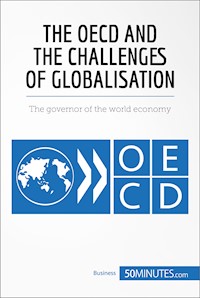











Adam Smith
Key information
Name: Adam Smith.Born: Kirkcaldy (Scotland) in 1723.Died: Edinburgh in 1790. Context and background: Adam Smith lived at the same time as the Industrial Revolution in the United Kingdom and the American Revolution, which brought about many socio-economic changes. He is generally considered to be the leading thinker of classical economics, the principles of which are based on liberalism.Notable works:The Theory of Moral Sentiments, 1759.An Inquiry into the Nature and Causes of the Wealth of Nations, 1776.Lectures on Jurisprudence, Glasgow Edition, 1976.Works and Correspondence of Adam Smith, Glasgow Edition, 1976.Key concepts:Absolute advantage: Smith supported the idea that each country should specialise in the production of goods for which its productivity is higher than that of its trading partners.Division of labour: According to Smith, the specialisation of each worker in a specific task leads to significant productivity gains.Invisible hand: Smith believed that the market economy allows individuals to reconcile their individual interests with the public interest, and that it supports a self-regulating economic process that allows each person to meet their own needs while serving the common good.Introduction
Adam Smith is widely – although not universally – regarded as the father of modern economics. He was, however, influenced by many other philosophers, including the Physiocrats, who advocated a natural and free economy without state intervention. Furthermore, the Industrial Revolution had a decisive impact on the writing of The Wealth of Nations. For example, in this book Smith examines in detail the example of the production of pins in a factory.
Smith was a true leader, and his ideas had a lasting impact on the thinking of most of the economists who followed him, especially the classical economists who he is often mentioned alongside.
Did you know?
Economists are generally divided into different categories, depending on their school of thought. From a conceptual point of view, the classical economists share the belief that the exchange value of goods reflects the cost of labour necessary for their production. In this sense, they are very different from their predecessors (the Physiocrats, who thought that value was derived solely from the exploitation of natural resources) and their successors (neoclassical economists, who thought that value reflected the utility derived by individuals from the consumption of a good). The classical trend emerged at the start of the Industrial Revolution. However, since the late 19th century, neoclassical economists have predominated. They adopted a very different methodological approach and used mathematics extensively, whereas classical economists were content to use logical reasoning. This had the effect of making the economic theory comprehensible to a very limited audience.
David Ricardo (English economist, 1772-1823) drew on Smith’s ideas to develop his theory of comparative advantage (the principle that it is in every country’s interests to specialise in the production of the goods which have the lowest opportunity cost), which he would later use as a Member of Parliament to oppose protectionism. Even Karl Marx (1818-1883) – known for his anti-liberal ideology – was influenced by Adam Smith. In fact, both men shared the idea that labour is the source of value.




