


128,99 €
Mehr erfahren.
- Herausgeber: John Wiley & Sons
- Kategorie: Fachliteratur
- Sprache: Englisch
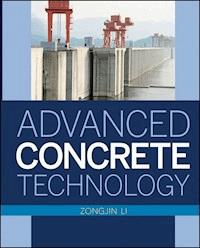
Over the past two decades concrete has enjoyed a renewed level of research and testing, resulting in the development of many new types of concrete. Through the use of various additives, production techniques and chemical processes, there is now a great degree of control over the properties of specific concretes for a wide range of applications. New theories, models and testing techniques have also been developed to push the envelope of concrete as a building material. There is no current textbook which brings all of these advancements together in a single volume. This book aims to bridge the gap between the traditional concrete technologies and the emerging state-of-the-art technologies which are gaining wider use.
Sie lesen das E-Book in den Legimi-Apps auf:
Seitenzahl: 940
Veröffentlichungsjahr: 2011
Ähnliche



















Table of Contents
Title Page
Copyright
Dedication
Preface
Chapter 1: Introduction to Concrete
1.1 Concrete Definition and Historical Development
1.2 Concrete as a Structural Material
1.3 Characteristics of Concrete
1.4 Types of Concrete
1.5 Factors Influencing Concrete Properties
1.6 Approaches to Study Concrete
1.7 Discussion Topics
References
Chapter 2: Materials for Making Concrete
2.1 Aggregates
2.2 Cementitious Binders
2.3 Admixtures
2.4 Water
2.5 Discussion Topics
Problems
References
Chapter 3: Fresh Concrete
3.1 Workability of Fresh Concrete
3.2 Mix Design
3.3 Procedures for Concrete Mix Design
3.4 Manufacture of Concrete
3.5 Delivery of Concrete
3.6 Concrete Placing
3.7 Early-Age Properties of Concrete
3.8 Discussion Topics
Problems
References
Chapter 4: Structure of Concrete
4.1 Introduction
4.2 Structural Levels
4.3 Structure of Concrete in Nanometer Scale: C–S–H Structure
4.4 Transition Zone in Concrete
4.5 Microstructural Engineering
4.6 Discussion Topics
References
Chapter 5: Hardened Concrete
5.1 Strengths of Hardened Concrete
5.2 Stress–Strain Relationship and Constitutive Equations
5.3 Dimensional Stability—Shrinkage and Creep
5.4 Durability
5.5 Discussion Topics
Problems
References
Chapter 6: Advanced Cementitious Composites
6.1 Fiber-Reinforced Cementitious Composites
6.2 High-Strength Cementitious Composites
6.3 Polymers in Concrete
6.4 Shrinkage-Compensating Concrete
6.5 Self-Compacting Concrete
6.6 Engineered Cementitious Composite
6.7 Tube-Reinforced Concrete
6.8 High-Volume Fly Ash Concrete
6.9 Structural Lightweight Concrete
6.10 Heavyweight Concrete
6.11 Discussion Topics
Problems
References
Chapter 7: Concrete Fracture Mechanics
7.1 Introduction
7.2 Linear Elastic Fracture Mechanics
7.3 The Crack Tip Plastic Zone
7.4 Crack Tip Opening Displacement
7.5 Fracture Process in Concrete
7.6 Nonlinear Fracture Mechanics for Concrete
7.7 Two-Parameter Fracture Model
7.8 Size Effect Model
7.9 The Fictitious Model by Hillerborg
7.10 R-Curve Method for Quasi-Brittle Materials
7.11 Discussion Topics
Problems
References
Chapter 8: Nondestructive Testing in Concrete Engineering
8.1 Introduction
8.2 Review of Wave Theory for a 1D Case
8.3 Reflected and Transmitted Waves
8.4 Attenuation and Scattering
8.5 Main Commonly Used NDT-CE Techniques
8.6 Noncontacting Resistivity Measurement Method
8.7 Discussion Topics
Problems
References
Chapter 9: The Future and Development Trends of Concrete
9.1 Sustainability of Concrete
9.2 Deep Understanding of the Nature of Hydration
9.3 Load-Carrying Capability–Durability Unified Service Life Design Theory
9.4 High Toughness and Ductile Concrete
References
Index
This book is printed on acid-free paper.
Copyright © 2011 by John Wiley & Sons, Inc. All rights reserved
Published by John Wiley & Sons, Inc., Hoboken, New Jersey
Published simultaneously in Canada
No part of this publication may be reproduced, stored in a retrieval system, or transmitted in any form or by any means, electronic, mechanical, photocopying, recording, scanning, or otherwise, except as permitted under Section 107 or 108 of the 1976 United States Copyright Act, without either the prior written permission of the Publisher, or authorization through payment of the appropriate per-copy fee to the Copyright Clearance Center, 222 Rosewood Drive, Danvers, MA 01923, (978) 750-8400, fax (978) 646-8600, or on the web at www.copyright.com. Requests to the Publisher for permission should be addressed to the Permissions Department, John Wiley & Sons, Inc., 111 River Street, Hoboken, NJ 07030, (201) 748-6011, fax (201) 748-6008, or online at www.wiley.com/go/permissions.
Limit of Liability/Disclaimer of Warranty: While the publisher and the author have used their best efforts in preparing this book, they make no representations or warranties with respect to the accuracy or completeness of the contents of this book and specifically disclaim any implied warranties of merchantability or fitness for a particular purpose. No warranty may be created or extended by sales representatives or written sales materials. The advice and strategies contained herein may not be suitable for your situation. You should consult with a professional where appropriate. Neither the publisher nor the author shall be liable for any loss of profit or any other commercial damages, including but not limited to special, incidental, consequential, or other damages.
For general information about our other products and services, please contact our Customer Care Department within the United States at (800) 762-2974, outside the United States at (317) 572-3993 or fax (317) 572-4002.
Wiley also publishes its books in a variety of electronic formats. Some content that appears in print may not be available in electronic books. For more information about Wiley products, visit our web site at http://www.wiley.com.
Library of Congress Cataloging-in-Publication Data:
Li, Zongjin, Dr.
Advanced concrete technology / Zongjin Li.
p. cm.
Includes index.
ISBN 978-0-470-43743-8 (cloth); ISBN 978-0-470-90239-4 (ebk); ISBN 978-0-470-90241-7 (ebk);
ISBN 978-0-470-90243-1 (ebk); ISBN 978-0-470-95006-7 (ebk); ISBN 978-0-470-95166-8 (ebk);
ISBN 978-0-470-95188-0 (ebk)
1. Concrete. I. Title.
TP877.L485 2011
620.1'36 dc22
2010031083
To students, teachers, researchers, and engineers in the field of concrete, who are the driving forces for the development of the science and technology of concrete, including the personnel working on the China 973 project, Basic Study on Environmentally Friendly Contemporary Concrete (2009CB623200).
Preface
Concrete is the most widely used material in the world. It plays an important role in infrastructure and private buildings construction. Understanding the basic behaviors of concrete is essential for civil engineering students to become civil engineering professionals. There have been some very good books regarding concrete, including Concrete by Mindess, Young, and Darwin, Concrete: Structure, Properties, and Materials by Mehta and Monteriro, and Concrete Technology by Neville and Brook. The motivation to write this book is to introduce new methodologies, new developments, and new innovations in concrete technology. The unique features of this book include the introduction of end use guided research strategy for concrete, unification of materials and structures studies, and an emphasize on fundamental exploration of concrete structures, state of art of concrete development, and innovations. This book provides more comprehensive knowledge on concrete technology, including the systematic introduction of concrete fracture mechanics and nondestructive evaluation for concrete engineering.
The book is divided into nine chapters. Chapter 1 gives a brief introduction of concrete, including its historic development and advantages. Chapter 2 provides the knowledge of raw materials used for making concrete, covering aggregates, binders, admixtures, and water. Chapter 3 discusses the properties of fresh concrete, including workability and the corresponding measurement methods. Chapter 4 focuses on the structure of concrete at different scales, especially the calcium silicate hydrate at nanometer scale. Chapter 5 covers the properties of hardened concrete, including strength, durability, stress–strain relation, and dimension stability. Chapter 6 provides updated knowledge on various cement-based composites, including self-consolidation concrete, ultra-high-strength concrete, and extruded and engineered cementitious composites. Chapter 7 focuses the fracture behavior of concrete and provides the basic knowledge of fracture mechanics of concrete. Chapter 8 covers the essential knowledge of nondestructive testing of concrete engineering, including wave propagation theory in 1-D case, detecting principles of different NDT methodologies and techniques of different NDT methods. In Chapter 9, the issues regarding the future and development trend of concrete have been discussed.
Although the book is designed and written primarily to meet the teaching needs for undergraduate students at senior level and graduate students at entry level, it can serve as a reference or a guide for professional engineers in their practice.
In the process of writing this book, the authors received enthusiastic help and invaluable assistance from many people, which is deeply appreciated. The authors would like to express his special thanks to Dr. Garrison C. K. Chau, Dr. Biwan Xu, and Dr. Jianzhong Shen for their help in editing the book draft. Mr. Mike Pomfret is acknowledged for his professional page proofreading. The photos provided by Profs. Wei Sun, Tongbo Sui, Linhai Han, and Zhen He; Drs. Xiaojian Gao, Herbert Zheng, and Jinyang Jiang; Mr. Peter Allen; and the companies of Ove Arup and Gammon are greatly appreciated.
The support from China Basic Research Grant, Basic Research on Environmentally Friendly Contemporary Concrete (2009CB623200) is greatly acknowledged.
Finally, I would like to thank for my wife, Xiuming Cui, my daughters Yexin Li and Aileen Li for their love, understanding, and support.
Chapter 1
Introduction to Concrete
1.1 Concrete Definition and Historical Development
Concrete is a manmade building material that looks like stone. The word “concrete” is derived from the Latin concretus, meaning “to grow together.” Concrete is a composite material composed of coarse granular material (the aggregate or filler) embedded in a hard matrix of material (the cement or binder) that fills the space among the aggregate particles and glues them together. Alternatively, we can say that concrete is a composite material that consists essentially of a binding medium in which are embedded particles or fragments of aggregates. The simplest definition of concrete can be written as
1.1
Depending on what kind of binder is used, concrete can be named in different ways. For instance, if a concrete in made with nonhydraulic cement, it is called nonhydraulic cement concrete; if a concrete made of hydraulic cement, it is called hydraulic cement concrete; if a concrete is made of asphalt, it is called asphalt concrete; if a concrete is made of polymer, it is called polymer concrete. Both nonhydraulic and hydraulic cement need water to mix in and react. They differ here in the ability to gain strength in water. Nonhydraulic cement cannot gain strength in water, while hydraulic cement does.
Nonhydraulic cement concretes are the oldest used in human history. As early as around 6500 bc, nonhydraulic cement concretes were used by the Syrians and spread through Egypt, the Middle East, Crete, Cyprus, and ancient Greece. However, it was the Romans who refined the mixture's use. The nonhydraulic cements used at that time were gypsum and lime. The Romans used a primal mix for their concrete. It consisted of small pieces of gravel and coarse sand mixed with hot lime and water, and sometimes even animal blood. The Romans were known to have made wide usage of concrete for building roads. It is interesting to learn that they built some 5300 miles of roads using concrete. Concrete is a very strong building material. Historical evidence also points out that the Romans used pozzalana, animal fat, milk, and blood as admixtures for building concrete. To trim down shrinkage, they were known to have used horsehair. Historical evidence shows that the Assyrians and Babylonians used clay as the bonding material. Lime was obtained by calcining limestone with a reaction of
1.2
When CaO is mixed with water, it can react with water to form
1.3
and is then further reacted with CO2 to form limestone again:
1.4
The Egyptians used gypsum mortar in construction, and the gypsum was obtained by calcining impure gypsum with a reaction of
1.5
When mixed with water, half-water gypsum could turn into two-water gypsum and gain strength:
1.6
The Egyptians used gypsum instead of lime because it could be calcined at much lower temperatures. As early as about 3000 bc, the Egyptians used gypsum mortar in the construction of the Pyramid of Cheops. However, this pyramid was looted long before archeologists knew about the building materials used. Figure 1.1 shows a pyramid in Gaza. The Chinese also used lime mortar to build the Great Wall in the Qin dynasty (220 bc) (see Figure 1.2).
Figure 1.1 Pyramid built with gypsum mortar in Gaza, Egypt
Figure 1.2 The Great Wall, built in the Qin dynasty
A hydraulic lime was developed by the Greeks and Romans using limestone containing argillaceous (clayey) impurities. The Greeks even used volcanic ash from the island of Santorin, while the Romans utilized volcanic ash from the Bay of Naples to mix with lime to produce hydraulic lime. It was found that mortar made of such hydraulic lime could resist water. Thus, hydraulic lime mortars were used extensively for hydraulic structures from second half of the first century bc to the second century ad However, the quality of cementing materials declined throughout the Middle Ages. The art of burning lime was almost lost and siliceous impurities were not added. High-quality mortars disappeared for a long period. In 1756, John Smeaton was commissioned to rebuild the Eddystone Light house off the coast of Cornwall, England. Realizing the function of siliceous impurities in resisting water, Smeaton conducted extensive experiments with different limes and pozzolans, and found that limestone with a high proportion of clayey materials produced the best hydraulic lime for mortar to be used in water. Eventually, Smeaton used a mortar prepared from a hydraulic lime mixed with pozzolan imported from Italy. He made concrete by mixing coarse aggregate (pebbles) and powdered brick and mixed it with cement, very close to the proportions of modern concrete. The rebuilt Eddystone Lighthouse lasted for 126 years until it was replaced with a modern structure.
After Smeaton's work, development of hydraulic cement proceeded quickly James Parker of England filed a patent in 1796 for a natural hydraulic cement made by calcining nodules of impure limestone containing clay. Vicat of France produced artificial hydraulic lime by calcining synthetic mixtures of limestone and clay. Portland cement was invented by Joseph Aspdin of England. The name Portland was coined by Aspdin because the color of the cement after hydration was similar to that of limestone quarried in Portland, a town in southern England. Portland cement was prepared by calcining finely ground limestone, mixing it with finely divided clay, and calcining the mixture again in a kiln until the CO2 was driven off. This mixture was then finely ground and used as cement. However, the temperature claimed in Aspdin's invention was not high enough to produce true Portland cement. It was Isaac Johnson who first burned the raw materials to the clinkering temperature in 1845 to produce modern Portland cement. After that, the application of Portland cement spread quickly throughout Europe and North America. The main application of Portland cement is to make concrete. It was in Germany that the first systematic testing of concrete took place in 1836. The test measured the tensile and compressive strength of concrete. Aggregates are another main ingredient of concrete, and which include sand, crushed stone, clay, gravel, slag, and shale. Plain concrete made of Portland cement and aggregate is usually called the first generation of concrete. The second generation of concrete refers to steel bar-reinforced concrete. François Coignet was a pioneer in the development of reinforced concrete. (Day and McNeil, 1996). Coignet started experimenting with iron-reinforced concrete in 1852 and was the first builder ever to use this technique as a building material (Encyclopaedia Britannica, 1991). He decided, as a publicity stunt and to promote his cement business, to build a house made of , a type of reinforced concrete. In 1853, he built the first iron-reinforced concrete structure anywhere; a four-story house at 72 Rue Charles Michels (Sutherland et al., 2001). This location was near his family cement plant in St. Denis, a commune in the northern suburbs of Paris. The house was designed by local architect Theodore Lachez (Collins, 2004).
Lesen Sie weiter in der vollständigen Ausgabe!
Lesen Sie weiter in der vollständigen Ausgabe!
Lesen Sie weiter in der vollständigen Ausgabe!
Lesen Sie weiter in der vollständigen Ausgabe!
Lesen Sie weiter in der vollständigen Ausgabe!
Lesen Sie weiter in der vollständigen Ausgabe!
Lesen Sie weiter in der vollständigen Ausgabe!
Lesen Sie weiter in der vollständigen Ausgabe!
Lesen Sie weiter in der vollständigen Ausgabe!




