


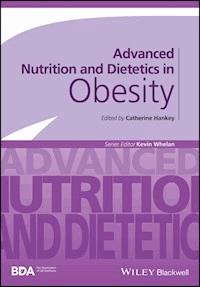
Advanced Nutrition and Dietetics in Obesity E-Book
51,99 €
Mehr erfahren.
- Herausgeber: John Wiley & Sons
- Kategorie: Fachliteratur
- Serie: Advanced Nutrition and Dietetics (BDA)
- Sprache: Englisch
This addition to the British Dietetic Association Advanced Nutrition and Dietetics book series is written for clinicians and researchers who work with any aspect of obesity and its comorbid conditions. Featuring contributions from leading researchers and practitioners from around the globe Advanced Nutrition and Dietetics in Obesity offers a uniquely international perspective on what has become a worldwide public health crisis.
Chapters cover a full range of new ideas and research on the underlying drivers of obesity in populations including discussions on the genetic and clinical aspects of obesity, along with expert recommendations on how to effectively manage and prevent this chronic and persistent disease.
Providing a comprehensive overview of the key literature in this field, Advanced Nutrition and Dietetics in Obesity is an invaluable resource for all those whose work should or does embrace any aspect of obesity.
Sie lesen das E-Book in den Legimi-Apps auf:
Seitenzahl: 1028
Veröffentlichungsjahr: 2017
Ähnliche




















Advanced Nutrition and Dietetics in Obesity
Edited by
Catherine Hankey PhD RD
Series Editor
Kevin Whelan PhD RD FBDA
This edition first published 2018 © 2018 by John Wiley & Sons Ltd
All rights reserved. No part of this publication may be reproduced, stored in a retrieval system, or transmitted, in any form or by any means, electronic, mechanical, photocopying, recording or otherwise, except as permitted by law. Advice on how to obtain permission to reuse material from this title is available at http://www.wiley.com/go/permissions.
The right of Catherine Hankey to be identified as the author the editorial material in this work has been asserted in accordance with law.
Registered Office(s)John Wiley & Sons, Inc., 111 River Street, Hoboken, NJ 07030, USAJohn Wiley & Sons Ltd, The Atrium, Southern Gate, Chichester, West Sussex, PO19 8SQ, UK
Editorial Office9600 Garsington Road, Oxford, OX4 2DQ, UK
For details of our global editorial offices, customer services, and more information about Wiley products, visit us at www.wiley.com.
Wiley also publishes its books in a variety of electronic formats and by print‐on‐demand. Some content that appears in standard print versions of this book may not be available in other formats.
Limit of Liability/Disclaimer of WarrantyThe contents of this work are intended to further general scientific research, understanding, and discussion only and are not intended and should not be relied upon as recommending or promoting scientific method, diagnosis, or treatment by physicians for any particular patient. In view of ongoing research, equipment modifications, changes in governmental regulations, and the constant flow of information relating to the use of medicines, equipment, and devices, the reader is urged to review and evaluate the information provided in the package insert or instructions for each medicine, equipment, or device for, among other things, any changes in the instructions or indication of usage and for added warnings and precautions. While the publisher and authors have used their best efforts in preparing this work, they make no representations or warranties with respect to the accuracy or completeness of the contents of this work and specifically disclaim all warranties, including without limitation any implied warranties of merchantability or fitness for a particular purpose. No warranty may be created or extended by sales representatives, written sales materials or promotional statements for this work. The fact that an organization, website, or product is referred to in this work as a citation and/or potential source of further information does not mean that the publisher and authors endorse the information or services the organization, website, or product may provide or recommendations it may make. This work is sold with the understanding that the publisher is not engaged in rendering professional services. The advice and strategies contained herein may not be suitable for your situation. You should consult with a specialist where appropriate. Further, readers should be aware that websites listed in this work may have changed or disappeared between when this work was written and when it is read. Neither the publisher nor authors shall be liable for any loss of profit or any other commercial damages, including but not limited to special, incidental, consequential, or other damages.
Library of Congress Cataloging‐in‐Publication data applied for
ISBN: 9780470670767(PB)
Cover Design: Wiley
ADVANCED NUTRITION AND DIETETICS IN OBESITY
Dietary recommendations need to be based on solid evidence, but where can you find this information? The British Dietetic Association and the publishers of the Manual of Dietetic Practice present an essential and authoritative reference series on the evidence base relating to advanced aspects of nutrition and dietetics in selected clinical specialties. Each book provides a comprehensive and critical review of key literature in the area. Each covers established areas of understanding, current controversies and areas of future development and investigation, and is oriented around six key themes:
Disease processes, including metabolism, physiology and genetics
Disease consequences, including morbidity, mortality and patient perspectives
Clinical investigation and management
Nutritional consequences of disease
Nutritional assessment, including anthropometric, biochemical, clinical, dietary, economic and social approaches
Nutritional and dietary management of disease
Trustworthy, international in scope, and accessible, Advanced Nutrition and Dietetics is a vital resource for a range of practitioners, researchers and educators in nutrition and dietetics, including dietitians, nutritionists, doctors and specialist nurses.
Preface
Obesity, which is often described using terms such as fat, stout or corpulent, is in fact derived from the Latin word obesus. Obesity is a disease, and as such has had an International Classification of Disease code since just after World War II. Despite having the status and recognition as a disease, obesity treatment has often been overlooked as a regular component of medical management. Comorbidities associated with obesity, such as type 2 diabetes, hypertension and hyperlipidaemia, have themselves been treated, while interventions that aim to reduce body weight are less rigorously and consistently employed.
The first clinical guidelines for obesity were published in 1996, advocating roles and responsibilities for a range of health professionals – including doctors (general practitioners/family physicians), nurses and dietitians – to manage obesity. In the light of these clinical guidelines, researchers sought the views of health professionals whose practice was either in the community (primary care) or in a speciality based in a hospital (secondary care). Hospital consultants across all specialities agreed that effective weight management could, without exception, improve treatment outcomes. However, none had a treatment protocol in place, suggesting that obesity management was ad hoc. A majority felt unable to resource weight management, suggesting that community (primary care) and general practice were more suitable as locations for treatment. General practice staff, general practitioners and practice nurses also felt that reduction in body weight would improve the health of many adults who consulted them. Once more, they themselves felt unable, for the same reasons, to address the need for weight loss as part of their care. Many considered obesity an inevitable result of aging, an intractable and persistent condition and a time‐consuming issue that they were unable to treat effectively. Any treatments they considered were long term, resource intensive and only poorly effective. Sadly, these data from the 1990s have been replicated many times.
Advanced Nutrition and Dietetics in Obesity takes on the huge task of describing the aetiology of obesity across the life course. There are large sections devoted to the disease in children and in adults. Treatments including surgical, pharmacological and lifestyle interventions are considered. Prevention of weight gain and obesity, the role of the environment, new town design and transport policy too are discussed. The occurrence of obesity has reached epidemic proportions worldwide, and this text aims to provide the reader with a broad understanding of the multifactorial causes of excessive and unwanted weight gain. After reading this book, I hope the reader will feel that obesity is not a simple problem, but a global phenomenon that is multifactorial in nature, requiring a multidisciplinary approach for management and prevention. Much effort, commitment and research are still required to challenge this chronic and persistent disease.
This book is aimed at all those whose work embraces any aspect of obesity. This includes clinicians, researchers, public health experts, educators and health economics specialists. Those undertaking further studies in health and disease too may find this a useful reference and resource.
Catherine Hankey PhD RDSenior Lecturer in Human NutritionUniversity of Glasgow, UKEditorAdvanced Nutrition and Dietetics in Obesity
This book is the third title in a series (Advanced Nutrition and Dietetics Book Series) commissioned as part of a major initiative between the British Dietetic Association and Wiley. Each book in the series provides a comprehensive and critical review of the key literature in a clinical area. Each book is edited by one or more experts who have themselves undertaken extensive research and published widely in the relevant topic area. Each book chapter is written by experts drawn from an international audience and from a variety of disciplines as required of the relevant chapter (e.g. dietetics, medicine, public health, psychology, biomedical sciences). A future title in this series will cover nutritional support.
The editor and I are proud to present the third title in the series, Advanced Nutrition and Dietetics in Obesity. We hope that it will impact on health professionals’ understanding and application of nutrition and dietetics in the management and prevention of obesity. Effective weight management improves the health of both adults and children. Prevention of the chronic weight gain of adulthood in many parts of the world are essential, and approaches to address this issue so far are discussed.
Kevin Whelan PhD RD FBDAProfessor of DieteticsKing’s College London, UKSeries EditorAdvanced Nutrition and Dietetics Book Series
Foreword
This book is a very timely synthesis of the dimensions of the problems of obesity and how to manage them in what is rapidly now becoming the most intractable issue in both clinical management and public health across the globe. This book, written by contributors from the UK, Europe and throughout the world, comes at a time when it looks as though politicians are finally waking up to the fact that health services are already overwhelmed by the numbers of people with multiple obesity‐related conditions. As healthcare professionals become ever more sophisticated at coping with the immediate risk factors of type 2 diabetes and cardiovascular disease, we still see most clinical teams neglecting obesity as the underlying driver, with all its proximal causes. Given the magnitude of the currently escalating health burden, it is timely that this book, essentially geared to the clinical teams involved in obesity prevention and treatment, is now published. The descriptions cover the full range of new ideas and evidence of both the underlying pressures on the majority of our population and how to begin to effectively manage such a challenging organisational and multidimensional problem.
Many of these expert contributors have decades of experience in trying to establish effective approaches to the management and prevention of obesity. The historical account emphasises the struggle that has gone on for decades, with the first semi‐official reports on appropriate clinical schemes for managing the problem only emerging 20 years ago in both Scotland and the USA. Much of the drive, as is usual in medical management, has come with the search for suitable pharmacological strategies; nevertheless, as other chapters emphasise, the neglect of the transformation of both the dietary modification and physical activity required necessitates not only an understanding of the underlying features of appetite control but also the need for routine physical activity incorporated into most individuals’ normal habits. There are very authoritative accounts of the genetic, endocrinological and clinical aspects of the epidemic in adults as well as in children, in whom obesity only emerged in the last 20 years as a major burden in paediatric practice. Although the childhood obesity epidemic seems to be slowing in many European countries, the overall prevalence of childhood overweight and obesity are still horrifying. Hence, we can expect to see vicious combinations of genetic and epigenetic influences as these children and the next generation enter adulthood, with their clinical care becoming ever more difficult. Thus, young overweight women now entering pregnancy seem unaware of the challenges that new research suggests lies in wait for their families and family practitioners. With rapidly rising rates of gestational diabetes, especially in Europe’s ethnic minorities, we are already witnessing far earlier onsets of adult abdominal obesity and type 2 diabetes, with its sustained challenges for maintaining medical care of chronically sick patients. The chapters on the co‐morbidities should therefore help to amplify a broader approach to the management of an array of risk factors, and this book benefits from adding musculoskeletal and psychological comorbidities to the traditional cardiovascular foci of concern.
There are very appropriate chapters first on the diagnostic criteria that should be used in both screening and monitoring clinical progress in children and adults, followed by a comprehensive description and analysis of dietary approaches that have been tried and progressively evaluated. Then come assessments of the value of pharmacological and surgical management, as well as interventions to improve physical activity levels.
Fitting all this together with the issues of obesity prevention and how this can link into clinical practice is a real challenge. This book therefore gives us both an overview and the detail that is so necessary if we are to engineer a revolution in clinical practice. One just wishes that the many integrated contributions could have been produced a decade ago, but then we would not have benefitted from so much of the new research and analyses that are presented here.
W. Philip T. JamesProfessor, London School of Hygiene and Tropical MedicinePast president of the World Obesity Federation
Editor biographies
Catherine Hankey PhD RDCatherine Hankey is a Senior Lecturer in Human Nutrition in the School of Medicine at the University of Glasgow. Her research investigates clinical and public health aspects of obesity and weight management. Examples of research include the optimization of weight management during smoking cessation and in those with intellectual disabilities. Dr Hankey was a group member for the Scottish Intercollegiate Guidelines Network (SIGN) guideline for the Management of Obesity and the update of the SIGN prevention and management of cardiovascular disease. She is the author of the Weight Management chapter in the Manual of Dietetic Practice and is co‐editing the forthcoming version of the ABC of Nutrition.
Kevin Whelan PhD RD FBDAKevin Whelan is the Professor of Dietetics and the Head of Department of Nutritional Sciences at King’s College London. He is a Principal Investigator leading a research programme exploring the interaction between the gastrointestinal microbiota, diet and health and disease. In 2012 he was awarded the Nutrition Society Cuthbertson Medal for research in clinical nutrition and in 2017 was appointed a Fellow of the British Dietetic Association. Prof Whelan is on the editorial boards of Alimentary Pharmacology and Therapeutics and the Journal of Human Nutrition and Dietetics and is the Series Editor for the British Dietetic Association Advanced Nutrition and Dietetics book series.
Contributors
Ghalia Abdeen PhDLecturer in NutritionKing Saud UniversityRiyadh, Saudi Arabia
Karen Allan PhD RDAHP Practice Education CoordinatorNHS Education for ScotlandEdinburgh, Scotland, UK
Werd Al‐Najim PhDPostdoctoral ResearcherUniversity College DublinDublin, Ireland
Annie S Anderson PhD RDProfessor of Public Health NutritionUniversity of DundeeDundee, UK
Daryll Archibald PhDResearch FellowUniversity of EdinburghEdinburgh, UK
Alison Avenell MD FRCPProfessor of Health Services ResearchUniversity of AberdeenAberdeen, UK
Amanda Avery PhD RDAssistant Professor in Nutrition and DieteticsUniversity of NottinghamNottingham, UK
Panagiotis Balaskas MScUniversity of GlasgowGlasgow, UK
John E Blundell PhDProfessor of PsychobiologyUniversity of LeedsLeeds, UK
Emma J Boyland PhDLecturer in Psychological SciencesUniversity of LiverpoolLiverpool, UK
Wendy J Brown PhDProfessor of Physical Activity and HealthUniversity of QueenslandQueensland, Australia
Duff Bruce MBChB FRCSVisiting Professor of SurgeryRobert Gordon UniversityAberdeen, UK
Johannes Brug PhDProfessor of EpidemiologyEMGO Institute for Health and Care ResearchAmsterdam, Netherlands
Janet Cade PhD RNutrProfessor of Nutritional Epidemiology and Public HealthUniversity of LeedsLeeds, UK
Magdalin Cheong MPH RDHead of Department of Dietetics and Food ServicesChangi General HospitalSingapore
Pia Christensen PhD RDPostdoctoral Research AssociateUniversity of CopenhagenCopenhagen, Denmark
Peter Clifton PhD FRACPProfessor of NutritionUniversity of South AustraliaAdelaide, Australia
Gianluca Lo Coco PhDAssociate Professor of Clinical PsychologyUniversity of PalermoPalermo, Italy
Angela M Craigie PhD RNutrLecturer in Cancer PreventionUniversity of DundeeDundee, UK
Helen Croker PhD RDClinical Research DietitianUniversity College LondonLondon, UK
Michelle Dalton PhDResearch Fellow in Psychology and NutritionUniversity of LeedsLeeds, UK
Sandra Drummond PhD RPHNutrSenior Lecturer in NutritionQueen Margaret UniversityEdinburgh, UK
Ulf Ekelund PhDProfessor in Physical Activity and HealthNorwegian School of Sport SciencesOslo, Norway
Alison Gahagan PG Dip RDSpecialist Weight Management DietitianNHS South West LondonLondon, UK
Paul Gately PhDProfessor of Exercise and ObesityLeeds Beckett UniversityLeeds, UK
Ekavi N Georgousopoulou PhDAdjunct Research ProfessionalUniversity of CanberraCanberra, Australia
Nazim Ghouri MDSenior Lecturer in Cardiovascular SciencesUniversity of GlasgowGlasgow, UK
Catherine Gibbons PhDResearch FellowUniversity of LeedsLeeds, UK
Sjaan R Gomersall PhDResearch FellowUniversity of QueenslandQueensland, Australia
Eleanor Grieve BA MPHResearch AssociateUniversity of GlasgowGlasgow, UK
Catherine Hankey PhD RDSenior Lecturer in Human NutritionUniversity of GlasgowGlasgow, UK
Katherine Hart PhD RDLecturer in Nutrition and DieteticsUniversity of SurreyGuildford, UK
Marion Hetherington DPhilProfessor of BiopsychologyUniversity of LeedsLeeds, UK
Mark Hopkins PhDSenior Lecturer in Exercise PhysiologyLeeds Beckett UniversityLeeds, UK
Kathleen B Hrovat MS RDLead Nutritionist for Surgical Weight LossCincinnati Children’s Hospital Medical CenterCincinnati, OH, USA
Adrienne Hughes PhDLecturer in Physical Activity for HealthUniversity of StrathclydeGlasgow, UK
Thomas H Inge MD PhDDirector of Surgical Weight LossCincinnati Children’s Hospital Medical CenterCincinnati, OH, USA
Maria E Jackson PhDSenior LecturerUniversity of GlasgowGlasgow, UK
Nathalie Jones MSc RDResearch AssistantUniversity of GlasgowGlasgow, UK
Louise A Kelly PhDAssociate Professor of Exercise ScienceCalifornia Lutheran UniversityThousand Oaks, CA, USA
Joan Khoo MBBS MRCPChief and Consultant in EndocrinologyChangi General HospitalSingapore
Neil A King PhDDirector of Research TrainingQueensland University of TechnologyBrisbane, Australia
Linda M Kollar MSN RNClinical Director of Surgical Weight LossCincinnati Children’s Hospital Medical CenterCincinnati, OH, USA
Peter Kopelman MD FRCP FFPHPrincipal and Professor of MedicineSt George’s, University of LondonLondon, UK
Jeroen Lakerveld PhDSenior ResearcherEMGO Institute for Health and Care ResearchAmsterdam, Netherlands
Mike Lean FRCPProfessor of Human NutritionUniversity of GlasgowGlasgow, UK
Anthony R Leeds MBBS CBiol FSBiolVisiting Senior FellowUniversity of SurreyGuildford, UK
Wilma S Leslie PhD RGNResearch AssociateUniversity of GlasgowGlasgow, UK
Joreintje D Mackenbach PhDEpidemiologistEMGO Institute for Health and Care ResearchAmsterdam, Netherlands
Louise McCombie BSc RDResearch AssistantUniversity of GlasgowGlasgow, UK
Janet McNally MScDoctoral Research FellowUniversity of LeedsLeeds, UK
Bethan R Mead PhDResearch FellowUniversity of LiverpoolLiverpool, UK
Duane D Mellor PhD APD RDSenior Lecturer in Human NutritionUniversity of CoventryCoventry, UK
Craig A Melville MDProfessor of Intellectual Disabilities PsychiatryUniversity of GlasgowGlasgow, UK
Rebecca Mete MND APDPhD StudentUniversity of CanberraCanberra, Australia
Jillian M Morrison MSc RDSpecialist Paediatric DietitianRoyal Hospital for ChildrenGlasgow, UK
Aileen Muir MScLead Pharmacist for GovernanceNHS Greater Glasgow and ClydeGlasgow, UK
Chandani Nekitsing MScDoctoral Research FellowUniversity of LeedsLeeds, UK
Mary O’Kane MSc RDClinical Specialist DietitianLeeds Teaching Hospitals NHS TrustLeeds, UK
Thomas Reinehr MDHead of the DepartmentUniversity of WittenWitten, Germany
Lina A Ricciardelli PhDProfessor of PsychologyDeakin UniversityMelbourne, Australia
Clare Robertson MScResearch FellowUniversity of AberdeenAberdeen, UK
Natasha P Ross MBChB MRCSSpeciality Trainee in SurgeryNHS GrampianAberdeen, UK
Carel W le Roux PhD FRCP FRCPathProfessor of Experimental PathologyUniversity College DublinDublin, Ireland
Harry Rutter MB BChirSenior Clinical Research FellowLondon School of Hygiene and Tropical MedicineLondon, UK
M Guftar Shaikh MDConsultant Paediatric EndocrinologistRoyal Hospital for ChildrenGlasgow, UK
Netalie Shloim PhDLecturer in Counselling and PsychotherapyUniversity of LeedsLeeds, UK
Dimitrios Spanos PhD RDManager of Clinical DieteticsCleveland Clinic Abu DhabiAbu Dhabi, UAE
Laura Stewart PhD RDNutrition and Dietetics Service LeadPerth Royal InfirmaryPerth, UK
Gareth Stratton PhDProfessor of Paediatric Exercise ScienceSwansea UniversitySwansea, UK
Louise Waters PhDResearch AssistantUniversity of GlasgowGlasgow, UK
Kevin Whelan PhD RD FBDAProfessor of DieteticsKing’s College LondonLondon, UK
Chris Williams PhDProfessor of Psychosocial PsychiatryUniversity of GlasgowGlasgow, UK
Abbreviations
AT
Adaptive thermogenesis
AGB
Adjustable gastric band
AgRP
Agouti‐related protein
AHO
Albright’s hereditary osteodystrophy
ADF
Alternate‐day fasting
ADMF
Alternate‐day modified fasting
AAIDD
American Association on Intellectual and Developmental Disabilities
ACS
American Cancer Society
ACP
American College of Physicians
ACR
American College of Rheumatology
ACSM
American College of Sports Medicine
ADA
American Diabetes Association
ASMBS
American Society for Metabolic and Bariatric Surgery
ANGELO
ANalysis Grid for Elements Linked to Obesity
ARC
Arcuate nucleus
ACMOMS
Asian Consensus Meeting on Metabolic Surgery
ALSWH
Australian Longitudinal Study on Women’s Health
BEBQ
Baby Eating Behaviour Questionnaire
BLW
Baby‐led weaning
BBS
Bardet‐Biedl syndrome
BMR
Basal metabolic rate
BOCF
Baseline observation carried forward
BDI
Beck depression inventory
BT
Behavioural therapy
ADRB3
Beta‐3 adrenergic receptor
BED
Binge eating disorder
BIA
Bio‐electrical impedance analysis
BBSRC
Biotechnology and Biological Sciences Research Council
BCS
Body contour surgery
BMI
Body mass index
BMI‐SDS
Body mass index standard deviation score
BDNF
Brain‐derived neurotrophic factor
BOMSS
British Obesity and Metabolic Surgery Society
CPS‐I
Cancer Prevention Study I
CVD
Cardiovascular disease
CADM2
Cell adhesion molecule 2
CDC
Centers for Disease Control and Prevention
CEBQ
Child Eating Behaviour Questionnaire
CHASE
Child Health Heart Study in England
CHEW
Children Eating Well
CCK
Cholecystokinin
COPD
Chronic obstructive pulmonary disease
CART
Cocaine‐ and amphetamine‐related transcript
CBT
Cognitive behavioural therapy
CWMO
Commercial weight management organisation
COMPX
Compensation index
CT
Computer tomography
CI
Confidence interval
CER
Continuous energy restriction
CNVs
Copy number variants
CAD
Coronary artery disease
CARDIA
Coronary Artery Risk Development in Young Adults
CUA
Cost utility analysis
CBA
Cost‐benefit analysis
CEA
Cost‐effectiveness analysis
CRP
C‐reactive protein
CRM
Customer relationship management
DHHS
Department of Health and Human Services
DPS
Diabetes Prevention Study
DSM‐IV
Diagnostic and Statistical Manual of Mental Disorders
DIT
Diet‐induced thermogenesis
DALY
Disability‐adjusted life year
DEXA
Dual‐energy X‐ray absorptiometry
DS
Duodenal switch
EAH
Eating in the absence of hunger
EF
Ectopic fat
ER
Endoplasmic reticulum
EE
Energy expenditure
EI
Energy intake
EnRG
Environmental Research framework for weight Gain prevention
EIN
Epode International Network
EFNA
European Federation of Neurological Associations
EFSA
European Food Safety Authority
EULAR
European League Against Rheumatism
EMAS
European Male Aging Study
EMA
European Medicines Agency
ENERGY
Exercise and Nutrition to Enhance recovery and Good Health for You
FBBT
Family‐based behavioural treatment
FANCL
Fanconi anaemia, complementation group L
FAIM2
Fas apoptotic inhibitory molecule 2
FTO
Fat mass and obesity–associated
FFM
Fat‐free mass
FDA
Food and Drug Administration
FFIT
Football Fans in Training
FEV1
Forced expiratory volume in the first
FFA
Free fatty acids
GP
general practitioner
GWA
Genome wide association
GWAS
Genome‐wide association studies
GCWMS
Glasgow and Clyde Weight Management Service
GLP‐1
Glucagon‐like peptide‐1
GCKR
Glucokinase regulatory protein
GNPDA2
Glucosamine‐6‐phosphate deaminase 2
QPCTL
Glutaminyl‐peptide cyclotransferase‐like
HR
Hazard Ratio
HBSC
Health Behaviour in School‐Aged Children
HBM
Health belief model
HSE
Health Survey for England
HTA
Health technology assessment
HDL
High‐density lipoprotein
HIF3A
Hypoxia inducible factor 3A gene
IWQOL
Impact of Weight on Quality of Life
ICER
Incremental cost‐effectiveness ratio
INSIG2
Insulin‐induced gene‐2
IGF
Insulin‐like growth factor
ID
Intellectual disabilities
ITT
Intention‐to‐treat
IL‐6
Interleukin 6
IER
Intermittent energy restriction
IF
Intermittent fasting
ICAD
International Children’s Accelerometry Database
IOTF
International Obesity Task Force
IPT
Interpersonal psychotherapy
IWHS
Iowa Women’s Health Study
IRX3
Iroquois homeobox protein
kb
Kilobase
LAGB
Laparoscopic adjustable gastric band
LOCF
Last observation carried forward
LEP
Leptin
LEPR
Leptin receptor
LMCP
Leptin‐melanocortin pathway
LRRN6C
Leucine‐rich repeat neuronal 6C
LPS
Lipopolysaccharide
LCDs
Low‐calorie diets
LCLDs
Low‐calorie liquid diets
LCKD
Low‐carbohydrate ketogenic diet
LDLR
Low‐density lipoprotein receptor gene
LRP1B
Low‐density lipoprotein receptor‐related protein 1B
LUTS
Lower urinary tract symptoms
LYPLAL1
Lysophospholipase‐like 1
MRI
Magnetic resonance imaging
MCT
Medium‐chain triglyceride
MC3R
Melanocortin 3 receptor
MC4R
Melanocortin 4 receptor
MET
Metabolic energy turnover
METs
Metabolic equivalents
MSRA
Methionine sulfoxide reductase gene A
miRNA
microRNA
MEAL
mindful eating and living
MB‐EAT
mindfulness‐based eating awareness training
MTCH2
mitochondrial carrier 2
MTIF3
Mitochondrial translational initiation factor 3
MAP2K5
Mitogen‐activated protein kinase 5
MVPA
Moderate‐vigorous‐intensity physical activity
MI
Motivational interviewing
MDT
Multidisciplinary team
NCEP
National Cholesterol Education Program
NHMRC
National Health and Medical Research Council
NHANES
National Health and Nutrition Examination Survey
NHS
National Health Service
NHLBI
National Heart, Lung, and Blood Institute
NICE
National Institute for Health and Clinical Excellence
NOO
National Obesity Observatory
NWCR
National Weight Control Registry
NRXN3
Neurexin
NCAN
Neurocan
NEGR1
Neuronal growth regulator 1
NPY
Neuropeptide Y
NGS
Next‐generation DNA sequencing
NES
Night eating syndrome
NAFLD
Non‐alcoholic fatty liver disease
NASH
Non‐alcoholic steatohepatitis
NEFAs
Non‐esterified fatty acids
NEAT
Non‐exercise activity thermogenesis
NUDT3
Nucleoside diphosphate‐linked moiety X‐type motif 3
NDR‐UK
Nutrition and Diet Resources UK
OSCA
Obesity Services for Children and Adolescents
OR
Odds ratios
OPRM1
Opioid receptor mu‐1 gene
OA
Osteoarthritis
PP
Pancreatic polypeptide
PTH
Parathyroid hormone
Peds QL
Pediatric Quality of Life Inventory
PYY
Peptide tyrosine tyrosine
PNPLA3
Phospholipase domain‐containing protein 3
PA
Physical activity
PAEE
Physical activity energy expenditure
PAL
Physical activity level
PAI‐1
Plasminogen activator inhibitor‐1
PCOS
Polycystic ovarian syndrome
PTBP2
Polypyrimidine tract binding protein 2
PAGE
Population architecture using genomics and epidemiology
15KCTD15
Potassium channel tetramerisation domain containing
PWS
Prader–Willi syndrome
POMC
Proopiomelanocortin
PMT
Protection motivation theory
PRKD1
Protein kinase D1
PPP1R3B
Protein phosphatase 1 regulatory subunit 3b
QALY
Quality‐adjusted life year
QEWP‐R
Questionnaire on Eating and Weight Patterns – Revised
RBJ
Rab and DnaJ domain‐containing protein A
RCTs
Randomised controlled trials
RT
Resistance training
REE
Resting energy expenditure
RMR
Resting metabolic rate
RPL27A
Ribosomal protein L27a
RC
Rosemary Conley
RYGB
Roux‐en‐Y gastric bypass
RCPCH
Royal College of Paediatrics and Child Health
SCOTT
Scottish Childhood Overweight Treatment Trial
SIGN
Scottish Intercollegiate Guidelines Network
SSRI
Selective serotonin reuptake inhibitor
SDCCAG8
Serologically defined colon cancer antigen 8
SCFAs
Short‐chain fatty acids
SNP
Single nucleotide polymorphism
SG
Sleeve gastrectomy
SW
Slimming World
SCT
Social cognitive theory
SES
Socioeconomic status
SLC39A8
Solute carrier family 39 (zinc transporter), member 8
SFT
Solution‐focused therapy
SH2B1
Src homology 2 domain‐containing adapter protein 1
SBT
Standard behavioural therapy
SD
Standard deviation
SDS
Standard deviation score
STOP Regain
Study To Prevent weight Regain
SAT
Subcutaneous adipose tissue
SCOTS
SurgiCal Obesity Treatment Study
SR
Sustained‐release
SOS
Swedish obesity study
TNKS
Tankyrase
TPB
Theory of planned behaviour
TRF
Time‐restricted feeding
TLR
Toll‐like receptor
TDEE
Total daily energy expenditure
TEE
Total daily energy expenditure
TCF7L2
Transcription factor 7‐like 2
TFAP2B
Transcription factor AP‐2 beta
TMEM160
Transmembrane protein 160
TMEM 18
Transmembrane protein 18 gene
TTM
Transtheoretical model
TNF
Tumour necrosis factor
UKPDS
United Kingdom Prevention of Diabetes Study
VTE
Venous thromboembolism
VBG
Vertical banded gastroplasty
VSG
Vertical sleeve gastrectomy
VLCD
Very‐low‐calorie diet
VLDL
Very‐low‐density lipoprotein
VLED
Very‐low‐energy diet
VAT
Visceral adipose tissue
VF
Visceral fat
WC
Waist circumference
WHR
Waist‐to‐hip ratio
WTR
Waist‐to‐thigh ratio
WLMRCT
Weight Loss Maintenance Randomised Controlled Trial
WW
Weight watchers
WAT
White adipose tissue
WHS
Women’s Health Study
WHEL
Women’s Healthy Eating and Living
WINS
Women’s Intervention Nutrition Study
WCRF
World Cancer Research Fund
WHO
World Health Organization
ZNF608
Zinc finger protein 608
SECTION 1Introduction
Chapter 1.1Definition, prevalence and historical perspectives of obesity in adults
Peter Kopelman
St George’s, University of London, London, UK




