


Erhalten Sie Zugang zu diesem und mehr als 300000 Büchern ab EUR 5,99 monatlich.
- Herausgeber: Saqi Books
- Kategorie: Geisteswissenschaft
- Sprache: Englisch
Osama bin Laden is dead but al-Qa'ida remains the CIA's 'number one threat'. With branches in strategic hotspots from Yemen and Somalia to North Africa and an increasing influence among 'home grown jihadis' in the West, journalist and al-Qa'ida expert Abdel Bari Atwan investigates how the organisation has survived all attempts to destroy it. Al-Qa'ida after bin Laden has expanded its reach by cementing new alliances and exploiting the opportunities regional turmoil affords. The Arab Spring has opened new battlegrounds for jihadists, particularly in Libya, the Sahel, Syria and Egypt. As the extremist zeal for a global caliphate shows no sign of abating, Atwan profiles the next generation of foot soldiers and leaders and explores the new methods they embrace in the pursuit of jihad in a digital age.
Sie lesen das E-Book in den Legimi-Apps auf:
Seitenzahl: 543
Veröffentlichungsjahr: 2012
Das E-Book (TTS) können Sie hören im Abo „Legimi Premium” in Legimi-Apps auf:
Ähnliche




















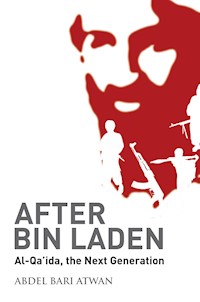
After bin Laden
Al-Qa‘ida, The Next Generation
ABDEL BARI ATWAN
SAQI
Contents
Abbreviations
Introduction: After bin Laden
1. The Arab Spring and al-Qa‘ida
2. Al-Qa‘ida in the Arabian Peninsula
3. Somalia’s al-Shabaab
4. The Taliban–al-Qa‘ida Nexus: Afghanistan
5. The Taliban–al-Qa‘ida Nexus: Pakistan
6. Al-Qa‘ida in the Islamic Maghreb: Algeria, Morocco, Tunisia and the Sahel
7. Al-Qa‘ida in the Islamic Maghreb: Libya
8. Ongoing and New Alliances
9. The Digital Battleground
Conclusion: The Next Generation
Notes
Select Bibliography
Acknowledgements
Index
Abbreviations
AIS
Islamic Salvation Army (Algeria)
AMISON
African Union Mission in Somalia
AQAM
al-Qa‘ida and Associated Movements
AQAP
al-Qa‘ida in the Arabian Peninsula
AQIM
al-Qa‘ida in the Islamic Maghreb
AQSP
al-Qa‘ida in the Sinai Peninsula
AQY
al-Qa‘ida in Yemen
ARS
Alliance for the Re-Liberation of Somalia
DDoS
Distributed Denial of Service
DRS
Directorate of Intelligence and Security (Algeria)
EIJ
Egyptian Islamic Jihad
EIJM
Eritrean Islamic Jihad Movement
ETIM
East Turkistan Islamic Movement
FATA
Federally Administered Tribal Areas (Pakistan)
FCR
Frontier Crimes Regulation (Pakistan)
FIS
Islamic Salvation Front (Algeria)
FJP
Freedom and Justice Party (Egypt)
FLN
Front de Libération National (Algeria)
FSA
Free Syria Army
FSF
Facilities Security Force (Saudi Arabia)
GIA
Armed Islamic Group (Algeria)
GID
General Intelligence Department (Jordan)
GICM
Moroccan Islamic Combatant Group
GSPC
Salafist Group for Preaching and Combat (Algeria)
HN
Haqqani Network
HuM
Harkat ul-Mujaheddin (Pakistan)
ICU
Islamic Courts Union
IEC
Islamic Emirate of the Caucasus
IFT
Islamic Front in Tunisia
IMG
International Monitoring Group (UN)
IMU
International Movement of Uzbekistan
ISAF
International Security Assistance Force
ISI
Inter-service Intelligence (Pakistan)
ISOI
Islamic State of Iraq
JeM
Jaish-e-Mohammad
JI
Jamaa al-Islamiya
LCC
Local Coordination Committees (Syria)
LeT
Lashkar-e-Taiba
LIFG
Libyan Islamic Fighting Group
LIMC
Libyan Islamic Movement for Change
LNA
Libyan National Army
MDJC
Movement for Democracy and Justice in Chad
MEI
Movement for an Islamic State (Algeria)
MFO
Multinational Force and Observers
MIA
Islamic Armed Movement (Algeria)
MICG
Moroccan Islamic Combatant Group
MMA
Muttahida Majlis-e-Ama
MSC
Mujahideen Shura Council (Iraq)
MSP
Movement for a Peaceful Society (Algeria)
NCC
National Coordination Body for Democratic Change (Syria)
NFSL
National Front for the Salvation of Libya
NMLA
National Movement for the Liberation of Azawad
NRO
National Reconciliation Ordinance
NTC
National Lransitional Council (Libya)
OSAFA
Office for Supervising the Affairs of Foreign Agencies
PJD
Justice and Development Party (Morocco)
SCAF
Supreme Council of the Armed Forces (Egypt)
SSIS
State Security Investigation Service (Egypt)
SNC
Syrian National Council
SNM
Somali National Movement
SOFA
Status of Forces Agreement (Iraq)
SSP
Sipah-e-Sahaba (Pakistan)
TFG
Transitional Federal Government (Somalia)
TIP
Turkistan Islamic Party
TMC
Tripoli Military Council
TTP
Tehrek-e-Taliban (Pakistani Taliban)
Introduction: After bin Laden
Our jihad … cannot be stopped, disrupted, or delayed bythe death or capture of one individual, no matter whohe is or how elevated his status ...Abu Yahya al-Libi, June 2011
They're still a real threat, there's still al-Qa‘ida out there. And we've gotta continue to put pressure on them wherever they're at.Leon Panetta, US Defence Secretary, 26 January 2012
Osama bin Laden is dead, but the movement he co-founded more than two decades ago is stronger and more widespread than ever, with a presence across much of the Middle East, parts of Africa and Asia and even in Europe and North America. Pursued by the world’s most formidable intelligence organisations and an army of bounty hunters, Osama bin Laden was effectively a fugitive and in deep hiding from November 2001 onwards. Whilst he continued to make some strategic and operational decisions, he had already become a figurehead rather than an active commander long before his assassination in Abbottabad in May 2011. For his followers, Osama bin Laden’s ‘martyrdom’ enhances his legend and has immortalised him as an icon, a role model and a rallying point for jihad.
Before 9/11, al-Qa‘ida was a relatively small, centralised and hierarchical group, based in Afghanistan; it was almost destroyed when the US pounded its hideouts with massive bombs in retaliation for the ‘raids on New York and Washington’. Had Osama bin Laden been killed then, the organisation would almost certainly have perished with him. The 2003 invasion of Iraq by Coalition forces breathed new life into the organisation when thousands of young men answered the call to jihad there.
Meanwhile al-Qa‘ida itself gradually transformed into an ideology – Islamist first and foremost but also political – which did not depend upon a centralised leadership. Now a system of regional emirs, local consultative councils and deputies has produced a horizontal organisational paradigm which is much harder to target and destroy.
Over the years, the senior leadership – and in particular the new emir of al-Qa‘ida ‘central’, Ayman al-Zawahiri – has doggedly cultivated a complex network of franchises (such as al-Qa‘ida in the Arabian Peninsula and al-Qa‘ida in the Islamic Maghreb), allies (the Taliban, for example), affiliated groups (such as Nigeria’s Boko Haram), sleeper cells of homegrown terrorists (like the men who carried out the London bombings) and so-called ‘lone-wolf’ attackers (most recently, Mohammed Mehra who murdered seven in Toulouse in March 2012).
In addition, al-Qa‘ida has spent years embedding itself in other causes and insurgencies: in Afghanistan, in Iraq, in Somalia and, most recently, in northern Mali where separatist Tuaregs, supported by fighters from local al-Qa‘ida offshoots, have declared the independent state of Azawad. Having been initially caught on the back foot, al-Qa‘ida-linked groups have also been able to exploit the regional insecurity caused by the Arab Spring to expand their operation room, particularly in Libya and Syria.
A source close to the ideologue told me that al-Zawahiri has long sought to encourage ‘every Muslim land to have its own version of al-Qa‘ida’. International, and favouring horizontal command structures that anticipate the regular loss of leaders, ensuring each has ready, trained deputies in place, al-Qa‘ida no longer resembles the original group. Indeed al-Qa‘ida ‘central’ has become less relevant, more akin to an advisory and consultation group, and al-Zawahiri’s role is one of exhortation and commentary rather than military overlord.
American drones are the biggest danger al-Qa‘ida faces and have killed several key al-Qa‘ida figures, including al-Zawahiri’s deputy Attiyah Abdel Rahman (in August 2011); the ‘Sheikh of the Internet’, Anwar al-Awlaki (in September 2011); and the deputy leader of al-Qa‘ida in the Arabian Peninsula (AQAP), Fahd al-Quso (in May 2012). In addition, the West has made headway by coordinating intelligence efforts with several countries, most notably Saudi Arabia. In May 2012, a three-way CIA, MI6, Saudi ‘sting’ resulted in a double agent successfully infiltrating AQAP and walking away with a newly developed ‘underwear bomb’ which he handed over to forensic specialists for analysis.1
However, the al-Qa‘ida network is like a mature tree whose branches are easily seen but which is supported by an invisible, and increasingly complex, underground root system. The problem for those prosecuting the ‘war on terror’ is that cutting off a branch (even big branches like bin Laden, Rahman, Awlaki and al-Quso) does little to weaken the roots which are nurtured by a fertile mix of grievances and aspirations.
The network has been involved in some notable military achievements. The Iraqi insurgency claimed that it had routed the world’s greatest superpower when the US withdrew the last of its troops in December 2011, and al-Qa‘ida’s closest allies, the Taliban, are likely to return to power in Afghanistan after more than a decade of relentless struggle.
In 2010 US President Barack Obama described al-Qa‘ida as ‘constantly evolving and adapting’2 – characteristics that have enabled al-Qa‘ida-linked jihadi groups to resist vastly superior national and international forces in possession of the very latest weapons and technology.
The significant change in the nature and organisation of the group has been recognised by the Western intelligence community who now refer to the ideologically linked jihadi network as ‘al-Qa‘ida and Associated Movements’ (AQAM) – a practice I will adopt for the purposes of this book.
In his eulogy for Osama bin Laden in June 2011, Ayman al-Zawahiri detailed ‘the Sheikh’s’ legacy – which he packaged as ‘disasters for America’. The first was the 9/11 ‘raids on New York and Washington’; the second, ‘America’s defeat in Iraq at the hands of the mujahideen’; the third, ‘Afghanistan, where NATO troops are mired in the mud of defeat and bleeding from a constant onslaught’; the fourth, ‘the fall of America’s corrupt agents’ in Tunisia, Egypt, Libya and Yemen and the ‘imminent collapse of her slave in Syria’.
Whilst al-Qa‘ida cannot reasonably claim to have provoked the ‘Arab Spring’ revolutions, it is true that the organisation has always identified its two main targets as the ‘far’ and ‘near’ enemies – the former being America and her allies, the latter the region’s ‘apostate’ dictators and tyrannical regimes.
It is tempting to process al-Qa‘ida pronouncements on recent events as opportunism; the truth is quite the opposite – the leadership has pursued a clear strategy for more than a decade. This was eventually condensed into a short document entitled ‘al-Qa‘ida’s Strategy to 2020’ which I received (by email) from al-Qa‘ida in 2005 and published in al-Quds al-Arabi. It is remarkable, in retrospect, to compare the document’s seven posited ‘stages’ towards re-establishing the Islamic Caliphate with actual events on the ground over the past ten years.
The first stage – and Osama bin Laden told me this when I met him in 1996 – was to ‘Provoke the ponderous American elephant into invading Muslim lands where it would be easier for the mujahideen to fight them’. This, of course, has been under way since October 2001 when US troops occupied Afghanistan in retaliation for 9/11, and then invaded Iraq in 2003.
Stage 2: ‘The Muslim nation (the umma), wakes from its slumbers and is enraged at the sight of a new generation of “crusaders” intent on occupying large parts of the Middle East and stealing its valuable resources. The umma arms itself and organizes widespread jihad.’ The seeds of the hatred towards America that al-Qa‘ida was banking on were planted when the first bombs dropped on Baghdad in 2003. When the Iraqi insurgency began, thousands of recruits from all over the Muslim world flocked to join the fight, and continue to offer themselves to the growing list of jihadi causes. Western economic, diplomatic and military targets have been subject to attack in every country where AQAM has a presence.
Stage 3: ‘The confrontation between the mujahideen and NATO expands throughout the region, engaging the West in a long-term war of attrition. A jihad Triangle of Horror is created in Iraq, Syria and Jordan.’ The jihadis claim they have already won the war of attrition in Iraq and NATO have fared no better in Afghanistan: with the conflict in its eleventh year, the Taliban are back in control of more than two-thirds of the country.
Attacks inside Iraq have continued long after the departure of NATO troops, suggesting that al-Qa‘ida maintains a strong presence there; in May 2012 UN Secretary-General Ban Ki Moon declared that al-Qa‘ida had managed to establish a stronghold in the heart of the Syrian revolution. Also in 2012, an AQAM group in Jordan, led by abu-Mohammad al-Tahawi, renounced a previous commitment to non-violence.
Stage 4: ‘Al-Qa‘ida becomes a global network, a set of guiding principles, an ideology, transcending national boundaries and making affiliation or enfranchisement exceptionally easy.’ This process has already begun, as outlined above and as we will see in more detail in the course of this book.
Stage 5: ‘The US, fighting on many fronts to maintain its oil supplies from the Middle East and to guarantee the security of Israel, is stretched beyond its limits and capabilities. The US military budget is crashed into bankruptcy and economic meltdown ensues.’ Al-Qa‘ida leader Ayman al-Zawahiri has long insisted that the war on America is economic as well as military, frequently citing The Rise and Fall of the Great Powers by Yale historian, Paul Kennedy. Kennedy’s thesis posits three major causes for the downfall of empires, based on historical observations: one, the spiralling costs associated with an expanding military presence around the world; two, the costs of ensuring security at home; three, powerful competition in trade and commerce. All of these can be said to apply to America today and it is a striking coincidence that the amount of the 2011 US deficit ($1.3 trillion) exactly equates with the amount spent, to the end of 2011, on the wars in Iraq and Afghanistan together with ‘enhanced security’.3
Stage 7: ‘The overthrow of the hated Arab dictators and the establishment of an Islamic Caliphate throughout the Middle East.’ We will be examining the Arab Spring in the next chapter but the strong participation of the Islamists, both among the rebel forces in Libya and in the post-revolutionary landscape regionally, was as unanticipated as the revolutionary events themselves. It is not inconceivable that the Islamist parties will prevail in elections across the region, setting a new political default system with unknown consequences. The Taliban already refer to the whole of Afghanistan as an ‘Islamic Emirate’ and several smaller emirates have been established across the Middle East in areas where the jihadis hold sway – in southern Yemen, for example, or the Sahel.
The final stage: ‘The ultimate clash of civilizations and a mighty, apocalyptic battle between the “Crusaders” and the “Believers” which is won by the latter who then establish a global caliphate.’ However farfetched this may seem, this is what al-Qa‘ida, its allies, and affiliates, believe, and this is what they are fighting for.
AQAM seemingly has the resources to maintain a relentless onslaught and we will be looking at the main theatres of conflict in more detail in the course of this book. The following is a snapshot of the range of current AQAM activity.
The group that causes the West most concern is in Yemen, where al-Qa‘ida in the Arabian Peninsula (AQAP) controls large swathes of the south and centre of the country, threatening to take control of the strategic port of Aden. On the other side of the Gulf of Aden, al-Shabaab (which formally joined al-Qa‘ida in February 2012) is also in control of significant parts of the country.
The withdrawal of US troops from Iraq has seen the al-Qa‘ida-led insurgent umbrella, the Islamic State of Iraq (ISOI), step up attacks on government and domestic security targets as well as escalating sectarian tensions in the country. The Taliban, in collaboration with al-Qa‘ida and the Haqqani network, appear to have gained the upper hand against NATO forces in Afghanistan. The Pakistani Taliban (TTP) is increasingly powerful on the other side of the border and often collaborates with its Afghan counterpart.
Al-Qa‘ida in the Islamic Maghreb (AQIM) controls much of the Sahel and is actively involved with Boko Haram and the Tuareg insurgency in Mali. The Islamic Emirate of the Caucasus (IEC) continues to target the Russian homeland, with three major attacks on its transport system between November 2009 and January 2011 in which nearly 200 people were killed. AQAM groups in Indonesia, Thailand and China remain active as do affiliates in Uzbekistan and other ex-Soviet Muslim states.
Attacks of the magnitude of 9/11, the March 2004 Madrid bombings or the July 2005 suicide attacks on London transport have been prevented by increased security and greater vigilance. However, AQAM remains an active threat in Europe and the US homeland. In March 2012, ‘lone-wolf’ operative Mohammed Mehra killed three soldiers, three Jewish children and a rabbi in Toulouse. On 5 November 2009, another ‘lone wolf’, Major Nidal Hassan, opened fire on colleagues at Fort Hood military base in Texas, killing thirteen and wounding thirty.
A report by the US Congressional Research Service published in November 2011 warned of a significant increase in ‘lone-wolf’ jihadistattacks, and said that individuals had been arrested in connection with thirty-two actual, planned or failed attacks on US soil in just seventeen months from May 2009 until October 2010.
In addition to realised attacks, there were several thwarted attempts to commit atrocities in the West. On Christmas Day 2009, 23-yearold Umar Farouq Abdulmutallab tried to set off a bomb hidden in his underpants on board a flight bound for Detroit. In April 2012, the CIA foiled an identical plot involving a more sophisticated version of the underpants bomb – one that had no metal parts and would have passed unnoticed through airport security allowing the suicide bomber to board a US-bound flight of his choosing.4 Both bombs are believed to be the work of AQAP’s Ibrahim Hassan al-Asiri, al-Qa‘ida’s infamously ingenious ‘master bomb-maker’.
In September 2010, al-Qa‘ida in the Arabian Peninsula (AQAP) claimed responsibility for the explosion on board a UPS cargo plane in Dubai – which downed the plane and killed two – saying it was a ‘test run’. Two months later explosives hidden in printer ink cartridges were sent from Yemen to be shipped by UPS planes; one package, addressed to a Chicago synagogue, was discovered in Dubai while the other was defused in Britain with just seventeen minutes left to go before it detonated. Forensic experts believe that these attacks were also designed by Ibrahim Hassan al-Asiri and that he remains the single most potent threat to the US.
In June 2007 a doctor, Bilal Abdullah (who was born in Britain of Iraqi descent), and a Phd student, Kafeel Ahmed (an Indian Muslim), drove a burning jeep loaded with propane canisters into Glasgow airport; fortunately they were prevented by police and members of the public from detonating the gas. The same men had left a bomb, which did not explode, outside a London nightclub the day before. In May 2010 a car bomb failed to detonate in New York’s Times Square, where it had been left by 30-year-old Pakistan-born Faisal Shahzad who had obtained US citizenship just one year earlier. Shahzad told investigators that he had been trained for his mission in Pakistan. In December 2010, the residents of Stockholm experienced their first suicide bombing which thankfully only killed its perpetrator, Taimour Abdel Waheb al-Abdali, an Iraqi-Swede.5
The Life and Death of Osama bin Laden
Osama bin Laden joined the ranks of ‘martyrs’ on 2 May 2011. This – as he told me fifteen years before his death – was a long-cherished ambition and one that is shared by many jihadis. It is still not clear what happened on the night of 2 May 2011 when two specially adapted Black Hawk helicopters landed in Osama bin Laden’s Abbottabad compound, but the man was tried, judged and executed without ever having set foot in the International Criminal Court which the international community upholds as the preferred judicial apparatus to deal with war crimes. In May 2012, Amnesty International published a report which criticised the assassination as ‘illegal and extrajudicial’.6
I met Osama bin Laden briefly on several occasions and in November 1996 was invited to interview him in his mountain hideout in a series of caves in the Tora Bora mountains of Afghanistan. I spent the best part of three days there in his company. I found him to be a humble, quietly spoken individual who had a gently mocking sense of humour.
I am probably the only journalist who can claim to have slept in the same cave as Osama bin Laden. It was a terrifying experience because our mattresses were perched on planks slung over cases of hand grenades while above our heads dozens of machine guns and rifles hung from the roof. I feared that any – or all – of them could go off at any moment and hardly dared move, lying rigidly, wide awake. Osama bin Laden, however, slept like a baby all night long with his Kalashnikov by his side.
We went for a long walk through the mountains one afternoon and he talked about his life in jihad and his desire to die a martyr. He loved poetry and recited verses at length; he also wrote many poems himself. I would never have imagined that this man would be behind one of the most devastating terrorist attacks in history just five years on, although plans for 9/11 were already under way, as I later learnt.
Following my trip to Tora Bora his close colleagues, like Abu Hafs al-Masri, would contact me with news and information every so often; when the 1998 ‘Declaration of the Global Islamic Front for jihad against the Crusaders and Jews’ was drawn up, my paper al-Quds al-Arabi was the first to receive the faxed announcement.
Osama bin Laden was born in Riyadh, Saudi Arabia, on 10 March 1957. He was the forty-third of fifty-three siblings, the twenty-first of twenty-nine brothers. His father, Mohammad Awad bin Laden, originally came from Hadramut in Yemen and, having started out as a labourer on Saudi building sites, created a construction empire which became the biggest in the Arab world. He was a close adviser to the ruling al-Saud family, lending them a fortune in the mid-1960s when the national Treasury ran out of liquid cash. He was rewarded with lucrative contracts, including extensive works at Mecca and Medina, Saudi Arabia’s two most sacred places.
Osama’s mother, Aliyah Ghanem, was a renowned beauty who came from a Sunni family in the Alawite-dominated region of Latakia in northeastern Syria. Aliyah Ghanem was Mohammad bin Laden’s fourth wife and Osama was very attached to her. Osama married his cousin, Najwa Ghanem, when he was 17. He studied economics and business administration at King Abdul-Aziz University in Jeddah where he attended lectures by renowned radical Islamic scholars such as Mohammed Qutb and Dr Abdullah Azzam, who would have a lasting influence on him.
In 1982, Osama joined the Afghan jihad. In 1988 he established an office to record the names of the mujahideen and inform the families of those who were killed. The name of this register was ‘al-Qa‘ida’ (‘the base’ or ‘foundation’), and that is how the organisation got its name. Most Islamist sources say that the embryonic al-Qa‘ida network was established at this point.
Bin Laden preferred to live an austere lifestyle which he expected his wives and children to share. He was bitterly disappointed when two of his sons, Abdullah and Omar, decided to return to Saudi Arabia and a life of luxury. Bin Laden married five times in all, having divorced his second wife, Khadijah Sharif (Um Ali), in the 1990s after she begged him to allow her to leave their life of hardship in Sudan.
His third wife, Khairiah Sabar, who holds a doctorate in child psychology and is from a well-known Saudi family, joined the ménage in 1985 – by all accounts she was chosen by Najwa and is seven or eight years bin Laden’s senior. She had one son, Hamza, who made headline news round the world in 2008 when, aged just 16, he appeared in a video inciting other youths to join the jihad. Khairiah was living in her own apartment in the Abbottabad compound when the US SEALs raided in the middle of the night.
Bin Laden’s fourth wife is the sister of one of his closest comrades in the Afghan jihad. From another well-known Saudi family, Siham al-Sharif was married to bin Laden in 1987. She is well educated and a teacher of Arabic. She had four children, including Khalid (who was killed with Osama in the raid) and was also taken into custody in Abbottabad.
Najwa, Khadijah and Siham had been by the al-Qa‘ida leader’s side in Sudan through the 1990s and at Tarnak farm in Kandahar, where he would live until 2001. When 17-year-old Amal al-Sadah arrived from Yemen to become bin Laden’s fifth bride in 2000, the other three wives were reportedly upset and this may be one of the factors that contributed to Najwa’s decision to leave just before 9/11. Bin Laden had not met Amal before their wedding and said that he had been told she was much older, that her youth was as much a shock to him as to them, but that he couldn't now send her back as to do so would dishonour her. This failed to mollify the older women.
Interviewed by the Pakistani investigators following her arrest in Abbottabad, Amal has provided several key pieces of information, filling in some ‘gaps’ in the bin Laden narrative. When the Taliban were ousted by the US in November 2001, it is now known that Osama fled alone to Kunar, a remote province in northern Afghanistan. He had worked out a meticulous plan for the safety of his remaining wives and many children and warned them he would not be able to make contact for a long time.
Khairiah went to Iran, along with several other members of the extended family, including her own son Hamza and bin Laden’s third son, Saad. Khairiah was kept under house arrest until 2010. Amal and Siham went first to Karachi, Pakistan’s largest sea port, where they spent several months before Amal was smuggled back into Yemen in 2002. She was interviewed in Sanaa by both al-Majallah and The Times of London and was briefly held in custody after a mysterious gun battle at her father’s house.7
Amal reported that she was reunited with bin Laden in 2003 in a remote part of Pakistan’s Swat district before moving to a safe house in Haripur later the same year where she gave birth to a daughter, Aasia. A boy, Ibrahim, followed in 2004. Bin Laden drew up the plans for the compound in Abbottabad which was built in the middle of a large parcel of agricultural land he paid for and which was bought in the name of one of his Pakistani comrades. The family moved in in early summer 2005 and Amal had two more children, Zainab, who was born in 2006, and Hussein, 2008. It is believed that Osama bin Laden had sired a total of thirteen sons and fifteen daughters by the end of his life. Siham also moved to Abbottabad at some point, with Khalid and three other children, and Khairiah arrived in 2010, accompanied by Hamza.
Amal was sleeping in the same room as Osama when the SEALs arrived under cover of darkness, broke down the door and shot him dead. Amal threw herself between bin Laden and the gunmen, sustaining a serious leg injury. Her brother reports that she still walks with a limp. Hamza escaped during the raid but the three wives and a total of eleven children and grandchildren were taken into custody by Pakistani police. The SEALs had cuffed their hands behind their backs (even the smallest four-year-old) before bundling the corpses of bin Laden and Khalid into the remaining helicopter (one had crashed when trying to land) and taking off.
The US claims it buried Osama bin Laden at sea, something that is totally unacceptable in the rigid form of Islam he espoused and will breed resentment and anger for years to come. Presumably this was so that there could be no shrine or place of pilgrimage for followers of the al-Qa‘ida leader. In April 2012 all three widows and a total of eleven children and grandchildren were deported to Saudi Arabia.
In my first book on the subject, The Secret History of al-Qa‘ida, published in 2006, I noted that, alive or dead, Osama bin Laden ‘will remain one of the key historical figures of our times’. The al-Qa‘ida leader played a leading role in reviving the concept of the umma (global community of Muslims) and demonstrated, in the most dramatic way, that it was possible to attack the ‘far’ enemy – America – and greatly damage the morale of her troops and civilians as well as her economy.
America thrives on the simplistic ‘good guys/bad guys’ paradigm and shifted the focus of national enmity onto Osama bin Laden after 9/11. In the Abbottabad shoot-out bin Laden was the one who ‘bit the dust’ but no realistic commentator has yet suggested that the death of Osama bin Laden, however it is spun, will mark the end of ‘the war on terror’. The USSR’s ultimate implosion had nothing to do with America's sustained campaign against communism, or the wars it fought to defeat it (in Vietnam for example). Saddam Hussein’s execution did not vindicate America’s invasion of Iraq but saw the insurgency enter a much bloodier phase.
Historical precedents suggest that, far from extinguishing a militant Islamist movement, eliminating its leader can have the opposite effect. When the Egyptian Muslim Brotherhood’s theologian Said Qutb was hanged in 1966, Islamism enjoyed a region-wide renaissance – both Osama bin Laden and his deputy, Ayman al-Zawahiri, revered Qutb and subscribed to his radical ideology. The Israelis assassinated Hamas leader Sheikh Yassin in 2004, hoping his death would lead to a decline in the movement’s fortunes, but by 2006 Hamas was sufficiently popular to win the majority of seats in Palestinian parliamentary elections.
A spokesman for the Islamic State of Iraq, Abu Mohammad al-Adnani, described Osama bin Laden thus: ‘he became a Glory for our umma, the religious Muslim leader of his age; the most blessed to have walked on earth in our time.’ Osama bin Laden himself expressed this wish: ‘that my blood would become a beacon that arouses the zeal and determination of my followers’. The mythical aura of invincibility that surrounded Osama bin Laden during the ten years it took the US to track him down will now be replaced by the glow of martyrdom and a treasury of legends.
I was not surprised that Osama bin Laden was tracked down in Pakistan. The Pakistani Inter-services Intelligence (ISI) have a long history of supporting jihadi movements, many of them established to further the Pakistani government’s own geo-political agenda (in Kashmir, for example). A whole year before the raid on bin Laden’s compound, US Secretary of State, Hillary Clinton, stated clearly in an interview with CBS that, ‘Somewhere in this [Pakistani] government are people who know where Osama bin Laden and the [sic] al-Qa‘ida is.’8
Al-Qa‘ida has had a significant presence in Pakistan for at least a decade – thousands of fighters fled to what has become known as the Emirate of Waziristan in late 2001 as American planes bombarded their Tora Bora headquarters in retaliation for 9/11.
Subsequently, many travelled further afield inside Pakistan and several high-profile al-Qa‘ida leaders have been captured in the country’s teeming cities: Abu Zubayda, allegedly head of operations, was captured in Faisalabad in March 2002; Khalid Sheikh Mohammad was found in Rawalpindi in March 2003; Abu Musab al-Suri, a key strategist and propagandist who was implicated in the Madrid bombings, was caught in Quetta in November 2005; and Amir al-Huq, the coordinator of Osama bin Laden’s security team, was arrested in Lahore in 2008. As we have seen, two of Osama bin Laden’s wives found refuge in Karachi in 2001, and Amal al-Sadah told investigators that she had also lived with her husband in Peshawar and Haripur.9
The fugitive al-Qa‘ida leaders enjoyed the protection of long-standing friends and allies in the Haqqani network which, allegedly, operates under the aegis of the Pakistani Army and ISI. Leaked diplomatic cables reveal that by 2008 the Haqqani leadership had moved from north Waziristan to two locations, one near Rawalpindi and one near Peshawar (both within easy driving distance of Abbottabad).10 Abbottabad is home to the Pakistani equivalent of Sandhurst and has a strong ISI presence. It is all but inconceivable that the security establishment did not know who was living in the conspicuously large compound.
In the months following bin Laden’s death, the regional government sacked seventeen doctors and fifteen female health workers who had (probably unwittingly) participated in the elaborate CIA ‘sting’ which eventually confirmed bin Laden’s presence in the Abbottabad compound. The team called at every house in the area offering children free vaccinations. The project’s leading medic, a surgeon called Dr Shakeel Afridi, was a CIA agent who identified bin Laden by DNA samples collected from the compound. In May 2012, Afridi was sentenced to thirty-three years in jail for ‘conspiring against the state’.11
Locals referred to the bin Laden compound as Waziristan Haveli (haveli meaning mansion), presumably in reference to the connection of both its inhabitants and their visitors to the Islamic Emirate of Waziristan. It is reasonable to assume that many Haqqani and al-Qa‘ida personnel relocated from Waziristan to escape increasingly accurate US drone strikes on their bases there. This assumption is further endorsed by the fact that a secret meeting of 300 jihadists took place in Rawalpindi (not more than 100 km from Abbottabad) in early June 2008, as reported by Associated Press and Express India.
Ensconced in Abbottabad, Osama bin Laden tried to resume his role as an active, hands-on leader. In early June 2008 he issued instructions for planned attacks on US interests that would culminate in something ‘greater than 9/11’; reliable sources affirmed that he had managed to personally contact al-Qa‘ida-affiliated groups in several countries, instructing them to cease all negotiations with government agencies and move onto the offensive.12 One result was the 17 September 2008 attack on the US Embassy in Sanaa, Yemen, in which sixteen people lost their lives. It may well be that the 26 November 2008 massacres in Mumbai were also the bitter fruit of Osama bin Laden’s incitement.
Furthermore we know that he was visited in Abbottabad in the months leading up to his assassination by leaders of al-Qa‘ida-linked groups – for example, Umar Patek, the leader of Indonesian Jemaa Islamiya, who was arrested there in January 2011 (a fact that Pakistani authorities did not disclose until March 2011).13
Taliban leader, Mullah Omar, is presumed to be based in the Pakistani city of Quetta – from where his ‘Quetta shura’ directs and coordinates attacks inside Afghanistan and elsewhere. Pakistan was one of only three countries in the world to recognise the legitimacy of the Taliban’s former rule in Afghanistan and there is no reason to think that Mullah Omar, in semi-exile, would not enjoy the protection and support of (at least an element within) the Pakistani security services. Since the two organisations are so close, it is logical that that protection would extend to al-Qa‘ida leaders.
Osama bin Laden’s one-time chief bodyguard Nasser al-Bahri described the relationship between the Taliban and al-Qa‘ida in unequivocal terms in 2010: ‘The Taliban and al-Qa‘ida have become a single entity, but the American media seeks to obscure this inconvenient truth.’14 Papers found in the Abbottabad compound include regular communications between bin Laden and al-Zawahiri with the Taliban in which the leaders discuss joint actions and plans.15
Regarding cooperation between Pakistan’s military and security establishments and al-Qa‘ida, al-Bahri makes the extraordinary claim that there was ‘an agreement between al-Qa‘ida and the Islamabad army’ whereby bin Laden could send recruits for professional training. According to al-Bahri, forty young jihadis spent between six months and a year with the Pakistani Army and four received top-level commando training which they imparted to others on their return. The ISI also apparently sent instructors to the training camps and provided al-Qa‘ida with ‘modern equipment and information’; al-Bahri adds that the ISI convinced the Taliban to ask Osama bin Laden to hand over control of the al-Qa‘ida training camps to them in 1999 – ‘in this way Islamabad could exert even more influence, via the Taliban’. When Pakistan tested its nuclear weapons in 1998, al-Bahri recalls, ‘al-Qa‘ida sent messages of congratulation to the Pakistani president as well as to the head of the ISI.’16
Operationally, too, AQAM has expanded its reach inside Pakistan, largely through its alliance with the Pakistani Taliban (TTP) and Lashkar-e-Taiba (LeT). In May 2011, in revenge for the security forces ‘allowing’ the assassination of Osama bin laden, al-Qa‘ida fighters mounted a spectacular attack on Pakistani Navy base Mehran in Karachi. A group of fifteen men armed with machine guns and rocket-propelled grenade launchers (RPGs) stormed the base and killed at least four Navy personnel. They also destroyed two Lockheed aircraft (worth $36 million each) and a helicopter, all of which had been given to Pakistan by the US as part of the ‘war on terror’.17
Other attacks avenging the death of the al-Qa‘ida leader demonstrated the undiminished capacity the Taliban and AQAM possess on both sides of the border: eighty-nine Pakistani recruits and officers were killed when twin suicide bombers struck a paramilitary academy in the North-Western Frontier town of Charsadda on 14 May 2011;18 in Afghanistan a Chinook helicopter carrying members of the same SEAL team that killed bin Laden was shot down in the Tangi valley in August 2011, killing all thirty-two men on board – the worst loss of US military personnel in a single incident in the whole war.19
A New Leadership
After some delay, Osama bin Laden’s deputy, the sexagenarian Dr Ayman al-Zawahiri was appointed al-Qa‘ida’s new emir in June 2011. According to reliable sources, al-Zawahiri had been in charge of strategy and forward planning for many years prior to bin Laden’s death.
Ayman al-Zawahiri is a hard-liner who follows the Takfir ideology whereby those who do not follow the narrow Salafist interpretation of Sharia are considered ‘apostates’. Al-Zawahiri was the main driver behind expanding the AQAM network, encouraging the formation of new organisations and persuading existing groups to come under the al-Qa‘ida umbrella – his most recent success in this respect saw Somalia’s al-Shabaab officially announce that it had joined al-Qa‘ida, pledging allegiance to al-Zawahiri in February 2012.
Al-Zawahiri was the leader of Egyptian Islamic Jihad (EIJ) when it formally merged with al-Qa‘ida in 1998. He was greatly irritated and frustrated by the debilitating in-fighting that went on among Egypt’s jihadi groups in the 1990s. Despite al-Zawahiri’s exhortations to maintain unity, squabbling and breakaway splinter groups continue to destabilise AQAM.
On a personal level, al-Zawahiri lacks the ‘charm’ of bin Laden; most people who have spent time with him describe him as overbearing and uncompromising. Al-Bahri writes, ‘Bin Laden always tried to convince us whereas al-Zawahiri sought to impose his ideas. Bin Laden listened to us, al-Zawahiri didn’t let us speak … the Sheikh [bin Laden] tried to change al-Zawahiri’s character but did not succeed.’20 It is unlikely that al-Zawahiri will draw new recruits to the organisation simply on the basis of personal charisma, as Osama bin Laden and, latterly, Anwar al-Awlaki undoubtedly did. His personal failings may also undermine his authority over the wider AQAM network in time, especially if he does not make his mark by overseeing ‘spectacular’ attacks on Western targets or Israel.
Al-Zawahiri described Osama bin Laden as ‘the man who said “no” to America’21 and the latter’s focus was always on the ‘far enemy’. Analysts have observed that 70 percent of bin Laden’s speeches and messages concerned America, Israel or the West. Al-Zawahiri, on the other hand, has historically concerned himself more with regional struggles. Even before the ‘Arab Spring’ only 15 percent of al-Zawahiri’s utterances were directed at the West. Al-Zawahiri’s focus is likely to be on harming Western interests locally, by attacking economic, diplomatic and military targets and by exploiting the opportunities offered by the Arab Spring. Al-Zawahiri has also made it clear that Israel remains a key issue, saluting the ‘heroes’ who regularly blow up the gas pipeline from Egypt to Israel and asserting that postrevolutionary Egypt must focus on liberating ‘our people in Palestine’.22 Al-Zawahiri is a highly intelligent man and has modified his tone of late; some of his most recent video and audio postings suggest he does not wish to alienate the ‘man on the Arab street’ with vitriolic outpourings. In November 2011, for example, al-Zawahiri declared that he would like the Coptic Christians to live in peace alongside the Muslims in Egypt.23 It is possible, as we will consider in more depth in the next chapter, that al-Qa‘ida intends to develop a political wing in order to participate more effectively in the post-revolutionary landscape.
Meanwhile the Afghan Taliban’s ‘emir of the faithful’, Mullah Omar, is emerging as the supreme spiritual leader of the wider jihadi movement. During his eulogy for Osama bin Laden, al-Zawahiri affirmed that all those who are fighting jihad are under the command of Mullah Omar; he renewed al-Qa‘ida’s bayat (oath of allegiance) to him, ‘We promise to listen to him and obey him in good times and in bad and in the course of jihad for the sake of Allah and establishing Sharia and uplifting the oppressed.’24
In November 2011 TTP leader Hekimullah Mehsud also urged ‘all jihadis to rise above their differences and unite under the banner of the emir of the believers, Mullah Omar’.25 The shadowy Ilyas Kashmiri, a top al-Qa‘ida military commander and leader of the 313 Brigade, opined in a rare 2009 interview that Osama bin Laden and Mullah Omar were the chosen leaders of the umma.26 In August 2011 Abu Mohammad al-Adnani, the spokesman for the Islamic State of Iraq referred to ‘The high, honourable, mountain-like and mighty leader; the zealous, as generous as the oceans, Mullah Mohammad Omar’ and said that the Taliban were ‘our protectors’.27 Deputy AQAP leader Said al-Shihri pledged his organisation’s allegiance to Mullah Omar in a January 2012 posting on jihadi forums.
Since the death of Osama bin Laden, several wealthy Gulf donors have preferred to send funds to the Taliban rather than the diminished al-Qa‘ida ‘central’ group, according to sources in Pakistan. It is increasingly likely that the Taliban will return to, or at least share, power in the near future. Given the close ties and loyalties between a widening spectrum of AQAM groups and the Taliban, this could have serious security and political implications both for the region and for the West.
Al-Qa‘ida’s Second Generation
Like many of the first generation of al-Qa‘ida leaders, Ayman al-Zawahiri (who was born in 1951) has spent the best part of his adult life in jihad. His first wife, Azza Nweir, and three children (one of them a daughter with Down’s syndrome) were killed in a US air strike on the family’s Afghan home in December 2001 – an event which is said to have ‘sharpened his hatred’ of America. (Al-Zawahiri subsequently married the widow of Tariq Anwar, an operations chief in al-Qa‘ida who had been killed in an earlier US air raid.)
Most long-standing AQAM members have brought up families and their children form a second generation which has never known anything other than a fugitive lifestyle fraught with danger, receiving their education in military training camps and with no other prospect in life but jihad.
Nasser al-Bahri has provided some fascinating information about the lives of Osama bin Laden’s children – all of whom stayed with him into adulthood with the exception of Abdullah, the eldest, and Omar. How were these children brought up? According to al-Bahri, bin Laden was not ‘harsh’ with them. The children were given ‘tasks, religious instruction, prayers and military training’ and were forbidden to play computer games. All bin Laden’s sons are good horsemen like their father, al-Bahri reports, and they were allowed to mix freely with the other jihadis’ children, playing football and swimming in the river which flowed past the Kandahar compound inhabited by the al-Qa‘ida leadership from 1996 to 2001. When they were older they were encouraged to spend their free time cultivating pieces of land provided for them and some, like Saad, established businesses.
The second son, Abdelrahmane, was as tall as his father (6 feet 5 inches) and was often used as a decoy by bin Laden’s bodyguards when the leader had to travel; as a reward, he was the only son permitted to ride his father’s favourite thoroughbred horse, Adham.
According to al-Bahri, bin Laden’s favourite sons were Mohammad and Saad and they were constantly at his side. Mohammad was the one who resembled bin Laden the most in character, while Saad ‘always had a smile on his lips and was the most mischievous; he loved to give his unsuspecting companions hedgehog to eat’.28
In the aftermath of 9/11, Mohammad and Othman stayed by their father’s side. Saad bin Laden went to Iran, while Hamza and Khalid, who were still young children, were found a safe haven with their mothers in Pakistan. By the mid-2000s however, the sons had regrouped in Waziristan. A letter dated April 2011 by bin Laden which was seized in the Abbottabad compound suggests that Saad had been killed while Mohammad and Othman were still alive.29 Khalid was killed with Osama bin Laden in May 2011 in Abbottabad.
Osama bin Laden’s daughters were married within the jihadi community in Kandahar.30 Marriages within AQAM are frequently strategic, designed to cement alliances between leaders, organisations, tribes or factions and to ensure the continuation of jihad. Saad bin Laden married a Yemeni girl in order to develop tribal links – bin Laden had long harboured notions of relocating al-Qa‘ida to Yemen. Mohammad bin Laden married Khadija, the daughter of abu-Hafs al-Masri, aka Mohammad Atef, the infamous al-Qa‘ida military planner and bin Laden’s right-hand man until his death in November 2001. Hadi al-Ordoni, a Jordanian member of al-Qa‘ida’s military committee, married one of al-Zawahiri’s daughters.31 AQIM’s southern emir Mokhta Belmokhtar married within the indigenous Tuareg tribes of the Sahara desert, thus assuring himself and his organisation of their loyalty.
AQAM members come from a wide range of nationalities, tribes, class and educational backgrounds – something which is unusual in the Arab world where such differences often prevent social contact, let alone marriage. This ‘open door’ policy, coupled with shared ongoing grievances against Israel and the West, may explain why there is no apparent shortage of new recruits after more than two decades and despite the death of bin Laden. The new generation of AQAM is tougher, more ruthless and even more extremist than their predecessors who, in turn, lament a widespread lack of what they consider to be ‘real Islamic scholarship’ among these hot-headed young men.
As well as youths from the Arab countries, Africa and Pakistan, disaffected second- and third-generation Muslims from Western countries continue to make the long journey to ‘the fields of jihad’ in significant numbers; men from this group are also responsible for attacks at home – Mohammed Mehra who shot seven dead in Toulouse in March 2012, for example, was the son of Algerian immigrants; the men who perpetrated the 2005 London transport bombings were second-generation British Pakistanis, as was their handler, Birmingham-born Rachid Rauf, who was killed by a drone in Pakistan in 2008.
The past few years have witnessed another new phenomenon: Caucasian converts from non-Muslim backgrounds in Western countries. Some commentators claim these constitute up to 20 percent of the organisation’s membership.32
Why the ‘War on Terror’ Has Failed
Despite the more than a trillion dollars which have been spent on the ‘war on terror’, al-Qa‘ida is not only still here, but is expanding its reach and influence. In my opinion, there are several reasons for the ‘success’ of this historically unprecedented network, or ideological movement.
We have already considered the horizontal leadership structure and system of deputisation which ensure that, whilst undeniably damaging, the deaths of individual leaders can be absorbed by the movement. We have seen, too, that the sheer number of enfranchised groups and individuals, and the network of alliances, collaboration and loyalties, make the movement’s infrastructure, the ‘roots’, impossible to target.
AQAM groups, as well as individual fighters, are able to survive by virtue of extreme mobility, both within a country and internationally. An effective military device, this strategy also has a deeply religious connotation, that of hijra – best translated as ‘migration’ or ‘flight’ – which derives from the hijra of the Prophet Muhammad and his companions from Mecca to Medina in ad 638 to evade an assassination attempt. This was seen as such a significant moment in the history of Islam that the year in which it occurred was designated the first year of the Islamic calendar by the Caliph Umar.
Once engaged in conflict, mujahideen battalions will abandon a fight if it becomes apparent that they cannot imminently prevail, migrating to a new one or going into hiding. Often, the original battle is resumed when the enemy is off guard or complacent. The strategy is successful because, on departure, the fighters leave behind them a logistical infrastructure, ready for a possible return. This is how it works: in 2006, America’s twin policies of the so-called ‘Awakening’ and a military ‘surge’ in Iraq made al-Qa‘ida’s position in that country untenable and thousands of jihadismigrated to Afghanistan where the Taliban had regained control over much of the country; here al-Qa‘ida already had allies, training camps, safe houses and secure communication channels. By 2009, the bulk of al-Qa‘ida fighters had again migrated, and this time, because the AQAM network had expanded, the choice was wider: some returned to Iraq where they launched several devastating attacks within Baghdad’s Green Zone; some went to the Pakistani side of the border where the Taliban leadership was ensconced and from where attacks inside Afghanistan were launched; others went to Yemen to join the newly fledged al-Qa‘ida in the Arabian Peninsula (AQAP), while still others travelled to Somalia where al-Shabaab was gathering pace.
At the end of 2011 al-Qa‘ida fighters announced a return to Afghanistan with a hallmark sectarian massacre of Shi‘i Muslims celebrating Ashura.33 April 2012 saw the worst violence in the history of the present conflict as al-Qa‘ida, Haqqani and Taliban fighters joined forces to simultaneously lay siege to the Afghan parliament, NATO headquarters and the US, British, German and Russian Embassies in Kabul as well as other targets in Logar, Paktia and Jalalabad.
In recent years, groups such as AQIM have developed mobile training camps involving small numbers of recruits (often not more than five) who never stay in one location for more than a few hours, sleeping in caves and other naturally occurring shelters at night.
In October 2009, Yemen-based AQAP’s online journal, Sada al-Malahim, carried an article by its leader, Nasir al-Wahaishi, with the title ‘War is Deception’. Al-Wahaishi identified unpredictability, the surprise element, as one of al-Qa‘ida’s greatest and most successful weapons and I believe he is correct. Al-Qa‘ida pioneered the widespread use of suicide bombing – the most deadly ‘surprise’ – among jihadi groups from the late 1990s onwards and have deployed increasingly sophisticated and cunning Improvised Explosive Devices (IEDs) since they were first appraised of the techniques to manufacture them by Saddam Hussein’s Republican Guard during the Iraqi insurgency.
The phrase ‘War is Deception’ became something of a slogan and was taken up by other AQAM leaders. Mustafa Abu al-Yazid, al Qa‘ida's leader in Afghanistan, used it to hail the 31 December 2009 attack at Fort Chapman in Kosht by a triple agent, Jordanian Humam Khalil Abu-Mulal al-Balawi, for example. This incredibly complicated ‘sting’ operation resulted in the deaths of seven top CIA agents. Similar deceptions involving jihadists posing as policemen or soldiers before turning on their erstwhile ‘comrades’, as well as the infiltration of security services, are now quite commonplace, particularly in Afghanistan and Iraq, jeopardising the effective transfer of security from NATO to indigenous governments.
The most serious attack on US soil since 9/11 took place on 5 November 2009 at one of the largest US military bases in the world, Fort Hood in Texas. A high-ranking military figure and psychiatrist, Major Nidal Hassan, was meant to be assessing a group of officers and men due to depart for a tour of duty in Afghanistan when he opened fire on them with a semi-automatic weapon, killing thirteen and wounding thirty. Hassan’s parents came from Palestine and it transpired that he had been in regular email contact with the late Anwar al-Awlaki, AQAP’s American-born cleric, who commended the attack and called Hassan a ‘jihadi hero’. The American establishment sought to downplay the incident, with Barack Obama describing it as ‘an incidence of workplace violence’ when Hassan’s trial began in November 2011.34
The element of surprise is also present in the type and calibre of person recruited for suicide missions. Humam Khalil Abu-Mulal al-Balawi, the CIA bomber, was a quietly spoken doctor; London university-educated 23-year-old Umar Farouq Abdulmutullab (the failed Detroit bomber) was the polite son of a wealthy Nigerian banker. The failed attempt to explode a jeep laden with propane gas canisters inside Glasgow International Airport on 30 June 2007 was carried out by an Indian engineering PhD student, Kafeel Ahmad, and a doctor of Iraqi descent, Bilal Abdullah, who was working in an NHS hospital.
AQAM groups continue to find ever more cunning ways of concealing explosives. In August 2009, AQAP’s notorious master bomb-maker, Ibrahim Hassan al-Asiri, sent his own brother to assassinate Saudi Prince Nayaf with explosives hidden in his rectum – Prince Nayaf survived the blast, Abdullah, clearly, did not; bombs in underpants and ink cartridges, as we have seen, provided at least four near misses. In September 2011, a Taliban suicide bomber assassinated former Afghan Prime Minister Burhanuddin Rabbani with a bomb hidden in his turban.
In both Iraq and Afghanistan, deadly IEDs have been cunningly concealed under rocks, dug into the road, hidden in potholes, hidden in rubbish, taped to bicycles, and stuffed inside human cadavers, dead animals and, on one occasion at least, inside living sheep which were then herded towards a US foot patrol.35
Observers of AQAM groups have noted a greatly increased intelligence capacity in recent years – the Fort Chapman attack, for example, was the result of months of surveillance and collaboration between three major AQAM groups (the Pakistani Taliban, the Afghan Taliban and al-Qa‘ida ‘central’) and was described by intelligence journal Stratfor as ‘worthy of a state actor’. This operation is described in more detail in the chapter on Afghanistan.
Meanwhile the use of spies, double agents, imposters and infiltrators is a particular problem in Afghanistan where so-called ‘Green on Blue’ attacks – whereby an Afghan soldier or policeman turns fire on his Western ‘comrades’ – claimed twenty-two NATO soldiers’ lives in the first four months of 2012.
AQAM attacks can also achieve a high body-count by their sheer ruthlessness and tenacity. During the final days of November 2008, gunmen from Lashkar-e-Taiba (LeT) set a gruesome precedent when they laid siege simultaneously to ten different locations across Mumbai for three days, shooting and hurling hand grenades in an indiscriminate massacre which left at least 173 dead, with 308 wounded. Anwar al-Awlaki and other leaders praised the attack and urged others to emulate it. Several ‘Mumbai-style’ attacks were thwarted in the UK and Europe in 2010,36 but in Afghanistan and Pakistan they have become part of the Taliban repertoire. In November 2011, at least 150 were killed in simultaneous attacks lasting more than twenty hours in two different locations in northern Nigeria when large groups of Boko Haram jihadists, who say they were trained in Somalia, went on the rampage.37
The Causes Remain
The West is increasingly keen to engage the Taliban in diplomacy – something the mujahideen interpret as NATO’s concession of defeat. To date the results have been disastrous: in September 2011 the main negotiator, ex-Afghan President Burhanuddin Rabbani, was assassinated by the al-Qa‘ida-affiliated Haqqani Network. The message was clear: AQAM and the Taliban do not intend to give up their fight against America and her allies until their grievances are addressed.
In his ‘eighth statement to the Egyptian People’ in December 2011, Dr Ayman al-Zawahiri gave a concise reminder of what these are: ‘Crusader Westerners have killed hundreds of thousands of our sons, brothers, women and elders, occupied our lands, stolen our resources, aided their agents [i.e. tyrannical regimes] in suppressing us and implanted Israel in our midst as their advance force, guarding their interests and threatening our existence and future with her nuclear bombs.’38
In June 2011 President Obama announced the start of the withdrawal of NATO troops from Afghanistan by the end of 2011. When August 2011 turned out to be the bloodiest month yet for US troops (sixty-six died in a series of bombings and ambushes) that decision was reversed and now the administration says US troops will stay until at least 2014. The US has escalated drone attacks against insurgency targets in Yemen, Somalia and Pakistan, often with unintended consequences. In November 2011 a drone accidentally killed twenty-four Pakistani soldiers, resulting in a serious breakdown in diplomatic relations already strained after the apparent collusion between the ISI and Osama bin Laden.
In Pakistan alone, drones have killed over 4,000 civilians.39 There is plenty of anecdotal evidence that civilian deaths increase recruitment to, and re-energise, insurgencies. The US think-tank, the National Bureau of Economic Research, produced a paper on the subject in 2010 and concluded, ‘We find strong evidence that local exposure to civilian casualties caused by international forces leads to increased insurgent violence over the long-run, what we term the “revenge” effect.’40
Losses are heavy on both sides of the ‘war on terror’. NATO casualties in Afghanistan now total nearly 3,000 and 2011 saw the biggest loss of life among Coalition troops in the ten-year history of the conflict.41 Civilian deaths in Afghanistan were also at their highest in 2011 with nearly 1,500 killed in the first six months alone.42 In Iraq, more than 4,800 Coalition soldiers had been killed by the end of 2011 and estimates put civilian casualties at well over 100,000.
It is an indication of just how militarily significant the Taliban and AQAM have become that the casualty statistics cited above are more suggestive of international conflict than terrorism. During the ‘troubles’ in Northern Ireland which lasted the best part of thirty years, 3,600 military and civilian deaths were attributable to IRA and loyalist attacks. ETA, the Basque separatist movement, has killed 800. The Abu Nidal group and its associates were responsible for 900 deaths in terror attacks. The Japanese Aum Shinrikyo, which used a weapon of mass destruction (sarin nerve gas) in the Tokyo underground, injured 6,000 but only twelve people actually died.
Conclusion
The deaths of bin Laden and other key leaders, such as Anwar al-Awlaki, have not destroyed al-Qa‘ida as some commentators have suggested. Instead, the organisation has expanded its reach by cementing new alliances and exploiting the opportunities regional turmoil affords. It has also fundamentally changed in nature, becoming an ideology and a network of associated local movements with a shared, global, agenda.
The new al-Qa‘ida is harder for security services to track down and destroy – drones can target the leadership, but not a mind-set. In response to the increasingly sophisticated instruments of war deployed against them, the jihadis are turning to cunning and deceit, developing their own intelligence capabilities, migrating and hiding in difficult terrain and in cities, in Muslim lands and the West … in short, becoming what al-Qa‘ida cleric, Abu Saad al-Amili, describes as ‘soldiers of a new type that the enemy has not met before and cannot find.’43
AQAM is an unprecedented phenomenon; a terror network with the clout – and many of the resources – of a state actor. It has battalions and weapons, it has the apparatus of government and its own judicial system, it has funding and fiscal policies. In territorial terms it has yet to dominate an entire country, although two-thirds of Afghanistan is Taliban-controlled and AQAP have taken over much of southern and central Yemen in the course of the Arab Spring.
As we have seen, apart from Yemen and Afghanistan, AQAM is a notable force in Pakistan, Somalia, Iraq and Libya; it is expanding in Syria, Jordan, Gaza, the Maghreb, Indonesia, Chechnya and Uzbekistan. It is seeping further eastwards into the Muslim former Soviet republics and China where the Uyghur Islamists in Xinjiang region have been active since 2009.




