


20,99 €
Mehr erfahren.
- Herausgeber: John Wiley & Sons
- Kategorie: Geisteswissenschaft
- Sprache: Englisch
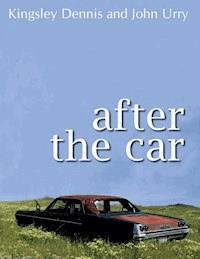
It is difficult to imagine a world without the car, and yet that is exactly what Dennis and Urry set out to do in this provocative new book. They argue that the days of the car are numbered: powerful forces around the world are undermining the car system and will usher in a new transport system sometime in the next few decades. Specifically, the book examines how several major processes are shaping the future of how we travel, including:
- Global warming and its many global consequences
- Peaking of oil supplies
- Increased digitisation of many aspects of economic and social life
- Massive global population increases
The authors look at changes in technology, policy, economy and society, and make a convincing argument for a future where, by necessity, the present car system will be re-designed and re-engineered.
Yet the book also suggests that there are some hugely bleak dilemmas facing the twenty first century. The authors lay out what they consider to be possible 'post-car' future scenarios. These they describe as 'local sustainability', 'regional warlordism' and 'digital networks of control'.
After The Car will be of great interest to planners, policy makers, social scientists, futurologists, those working in industry, as well as general readers.
Some have described the 20th Century as the century of the car. Now that century has come to a close – and things are about to change.
Sie lesen das E-Book in den Legimi-Apps auf:
Seitenzahl: 299
Veröffentlichungsjahr: 2013
Ähnliche




















AFTER THE CAR
AFTER THE CAR
KINGSLEY DENNIS AND JOHN URRY
polity
Copyright © Kingsley Dennis and John Urry 2009
The right of Kingsley Dennis and John Urry to be identified as Authors of this Work has been asserted in accordance with the UK Copyright, Designs and Patents Act 1988.
First published in 2009 by Polity Press
Polity Press
65 Bridge Street
Cambridge CB2 1UR, UK.
Polity Press
350 Main Street
Malden, MA 02148, USA.
All rights reserved. Except for the quotation of short passages for the purpose of criticism and review, no part of this publication may be reproduced, stored in a retrieval system, or transmitted, in any form or by any means, electronic, mechanical, photocopying, recording or otherwise, without the prior permission of the publisher.
ISBN-13: 978-0-7456-5873-5
A catalogue record for this book is available from the British Library.
Typeset in 10.75 on 14 pt in Adobe Sabon
by Servis Filmsetting Ltd, Stockport, Cheshire
Printed and bound by MPG Books Group, UK
The publisher has used its best endeavours to ensure that the URLs for external websites referred to in this book are correct and active at the time of going to press. However, the publisher has no responsibility for the websites and can make no guarantee that a site will remain live or that the content is or will remain appropriate.
Every effort has been made to trace all copyright holders, but if any have been inadvertently overlooked the publisher will be pleased to include any necessary credits in any subsequent reprint or edition.
For further information on Polity, visit our website: www.polity.co.uk
CONTENTS
Preface
1 Changing Climates
2 The Century of the Car
3 Systems
4 Technologies
5 Organizations
6 Models
7 Scenarios
Notes
Index
PREFACE
We are very grateful to the following colleagues, mostly at Lancaster, with whom we have discussed these various post-car futures: Monika Büscher, Noel Cass, Tim Dant, Sergio Fava, Drew Hemment, Michael Hulme, Bob Jessop, John Law, Will Medd, Tom Roberts, Daniela Sangiorgi, Andrew Sayer, Dan Shapiro, Mimi Sheller, Elizabeth Shove, Bron Szerszynski, David Tyfield, Sylvia Walby, Laura Watts, James Wilsdon and Brian Wynne. John Urry is grateful for his involvement in the DTi Foresight discussions on Intelligent Information Systems in 2005–6, as well as recent research funding from the Department for Transport, ESRC and the EPSRC.
We also wish to acknowledge the research opportunities afforded to us by the Centre for Mobilities Research (CeMoRe) at Lancaster. This Centre has stimulated much debate on the issues presented in this book. We are especially grateful to Pennie Drinkall for all her hard work for CeMoRe. Many similar issues to those discussed in this book are debated on CeMoRe’s blog at www.new-mobilities.co.uk.
Lancaster, September 2008
1
CHANGING CLIMATES
ENDING THE CAR
This book would seem to have an implausible title. How on earth can we imagine that there could be an end to the car, that we can envisage a system that is ‘after the car’? In some ways the car and its associated activities and technologies is the most powerful product or system there has been over the last century or so. Some have described the twentieth century as the century of the car.1 Over a billion cars have been manufactured and over 650 million currently roam the world’s roads and streets. It is predicted that, if nothing changes, within a couple of decades there will be 1 billion cars worldwide, especially as China fully moves from a bike society to a car society.
Moreover, we do not think that we can turn the clock back and that the individual flexibility, comfort and convenience that the car provides is going to disappear. It is unlikely that everyone in the future will be travelling on foot and by bike, and especially not by public bus and train. So what could we be saying here if we claim that the end might be in sight for the extraordinary car system that has so far ‘driven’ out all its many competitors?
When we talk of ‘after the car,’ we are suggesting that the car as a complete system may be surpassed. The current car system involves a number of key features: cars are made of steel, mostly powered by petrol (or ‘gasoline’ in the US), each can seat four people, they are personally owned, and each is driven independently of others, although certain rules do need to be followed and enforced.
Our argument in this book is that some very powerful forces around the world are undermining this car system and will usher in a new system at some point in this century. The car system is based upon nineteenth-century technologies, of steel bodies and internal combustion engines, incidentally showing how old technologies can remarkably endure. We believe that this mass system of individualized, flexible mobility will be ‘redesigned’ and ‘re-engineered’ before the end of this century. This book argues that a new system is coming into being. It is a bit like the period around 1900 when the current car system was being formed: it was emergent, although no one at the time could imagine exactly what it was going to be like.
So, similarly, we hold that a wide array of changes are occurring across the world – changes of technology, policy, economy and society, which are all elements of this new system that is as yet nowhere actually in place. And it will be through the dynamic interdependence of the various parts that will bring into being this new system that is ‘after the car’. This book thus explores a new ‘socio-technical’ system that we believe is in the making.
In this chapter, we consider various dynamic changes ‘in the climate’ within which travel and transportation are being organized and implemented in the twenty-first century. If these changes converge and impact upon each other, they may generate shifts beyond the car that would involve a low carbon economy and society. We begin with an analysis of climate per se. This is followed by an analysis of the apparent peaking of the supply of oil around the world. We then examine some of the changes in the nature of the virtual world, of computers, software and security, before considering the growth of population and especially of mega-cities in the contemporary world.
This chapter thus examines the changing climates of change surrounding transport and energy and how they may be engendering a new system that will be ‘after the car’ and hence could entail a lower carbon future society, albeit one which is by no means a simply positive future. We will examine various futures and see that all possess a dark side due to the constrained choices that the high carbon twentieth century provided as a legacy going into the new century.
Lesen Sie weiter in der vollständigen Ausgabe!
Lesen Sie weiter in der vollständigen Ausgabe!
Lesen Sie weiter in der vollständigen Ausgabe!
Lesen Sie weiter in der vollständigen Ausgabe!
Lesen Sie weiter in der vollständigen Ausgabe!
Lesen Sie weiter in der vollständigen Ausgabe!
Lesen Sie weiter in der vollständigen Ausgabe!
Lesen Sie weiter in der vollständigen Ausgabe!




