


Erhalten Sie Zugang zu diesem und mehr als 300000 Büchern ab EUR 5,99 monatlich.
- Herausgeber: Birlinn
- Kategorie: Geisteswissenschaft
- Sprache: Englisch
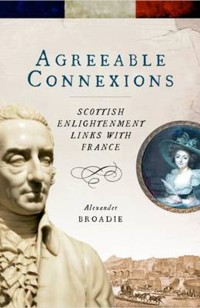
Scotland has played an immense role in European high culture through the centuries, and among its cultural links none have been greater than those with France. This book shows that the links with France stretch back deep into the Middle Ages, and continue without a break into the eighteenth century, the Age of Enlightenment. In one way or another all of the major figures of the Scottish Enlightenment were in close relation to France, and though this book attends to the broad picture of the cultural links binding the two countries, the focus is on certain individuals, especially David Hume, Thomas Reid, Adam Smith and Adam Ferguson, and certain of their French counterparts such as Montesquieu, Madame de Condorcet, Victor Cousin and Theodore Jouffroy. Prominent among the areas under discussion are scepticism and common sense, morality and the role of sympathy, and civil society and the question of what constitutes good citizenship. The book should appeal to all with an interest in the broad sweep of Scottish cultural history and more particularly in the country's Age of Enlightenment and its links with France.
Sie lesen das E-Book in den Legimi-Apps auf:
Seitenzahl: 464
Veröffentlichungsjahr: 2012
Das E-Book (TTS) können Sie hören im Abo „Legimi Premium” in Legimi-Apps auf:
Ähnliche



















AGREEABLE CONNEXIONS
This eBook edition published in 2013 by
Birlinn Limited
West Newington House
Newington Road
Edinburgh
EH9 1QS
www.birlinn.co.uk
Copyright © Alexander Broadie 2012
First published in 2012 by John Donald, an imprint of Birlinn Ltd
The moral right of Alexander Broadie to be identified as the author of this work has been asserted by him in accordance with the Copyright, Designs and Patents Act 1988
All rights reserved. No part of this publication may be reproduced, stored or transmitted in any form without the express written permission of the publisher.
ISBN: 978-1-906566-51-7
eBook ISBN: 978-1-907909-08-5
British Library Cataloguing-in-Publication Data
A catalogue record for this book is available from the British Library
For Patricia Stewart Martin
A man, in the decline of life, to be expelled a country, which he had chosen for the place of his residence, and where he had formed a number of agreeable connexions, must suffer a violent shock . . . However, I cannot yet renounce the idea, which was long so agreeable to me, of ending my days in a society which I love, and which I found peculiarly fitted to my humour and disposition.
David Hume writing on 27 November 1767 to the Comtesse de Boufflers about his love for France
Contents
Acknowledgements
1 THE NATURE OF ENLIGHTENMENT
2 SCOTLAND TOWARDS FRANCE PRE-1700
1 Richard Scotus to James Liddell
2 The circle of John Mair
3 Scotland approaches the Enlightenment
4 The Scottish Enlightenment in waiting
3 PIERRE-DANIEL HUET, HUMEAN SCEPTICISM AND ‘THE SCIENCE OF MAN’
1 David Hume: From Edinburgh to La Flèche
2 Pierre-Daniel Huet, sceptic precurser of Hume
3 Hume’s scepticism
4 David Hume: From France and back to France
5 Huet, Hume and scepticism in the field of religion
4 SCOTTISH COMMON SENSE AND THE FRENCH RESPONSE
1 Introduction
2 Common sense philosophy à la française
3 Thomas Reid’s career
4 Principles of common sense
5 Does the external world exist?
6 Théodore Jouffroy’s concept of common sense
7 Jouffroy on Reid and the scientific study of the mind
5 MORALITY AND SENTIMENT
1 Introduction
2 Adam Smith and Sophie de Grouchy
3 Adam Smith, sentiment, sympathy and morality
4 Sophie de Grouchy: an ideologue’s perspective on sympathy
6 CIVIL SOCIETY AND THE VIRTUES OF CITIZENSHIP
1 Introduction
2 Montesquieu: philosophe
3 Adam Ferguson: literatus
4 Montesquieu on law and republican virtue
5 Ferguson on law and republican virtue
6 Adam Ferguson’s republicanism
7 Adam Ferguson: magistrates and militias
7 CONCLUSION
Bibliography
Index
Acknowledgements
I thank Isabelle Bour, Jean-François Dunyach, Giovanni Gellera, Laurent Jaffro, Christian Maurer, Daniel Schulthess and Silvia Sebastiani for conversations concerning Scotland’s Enlightenment links with France. I am grateful to Patricia S. Martin for help with many aspects of the book, including her suggestion of Hume’s phrase ‘Agreeable Connexions’ as the title.
A. BROADIE
Glasgow
A note on the text
Except where otherwise stated all the translations from Latin and French texts are my own.
A. BROADIE
CHAPTER ONE
The nature of Enlightenment
Scotland has played an immense role in European high culture through the centuries, and among the cultural ties it has had with the various European countries none have been greater than those with France. This is particularly true in respect of the eighteenth century, the Age of Enlightenment, and this book will principally be focused on aspects of these eighteenth-century ties. However, lest it be thought that the links during the Enlightenment arose from nowhere, Chapter 2 will demonstrate that the ties stretch back in an unbroken line into the Middle Ages. As will also become clear, on the other side of the temporal divide, the ties remained in place well into the nineteenth century. Indeed, it is not difficult to show that today they are still in place and still full of vigour, but I shall not take my story so far. The ties are wide-ranging but I shall pay particular attention to philosophical, moral and social matters; other aspects of high culture, however, including scientific, will also be on display.
That Scotland and France were major players in the European Enlightenment is not in dispute – arguably the only country to match their achievement is Germany – and since the Enlightenment is here centre stage, it is appropriate to begin by unpacking the concept of Enlightenment. Germany will provide my guide to the concept: not just my guide but almost everybody’s in this area. Immanuel Kant, greatest philosopher of the European Enlightenment, wrote a short essay entitled ‘Was ist Aufklärung?’ (‘What is Enlightenment?’), which is the starting point for most philosophical discussions of the concept.1
Kant identifies two features of Enlightenment. The first is people’s use of their own faculty of reason as a means of reaching conclusions, as contrasted with people’s turning to authorities for guidance on what to think, and the second is the tolerance that those in authority show to people with ideas. If people cannot put their ideas into the public domain without fear of being silenced by authorities who do not like the ideas that have been published, an Enlightenment is less likely to arise and may be impossible. I should like to add a third feature, which depends on the two just mentioned: namely, the presence of robust public debate. The Age of Enlightenment was marked by the fact that people who were thinking for themselves were also disputing with each other, motivated by the thought that public debate enhances the prospects for progress in the whole range both of intellectual disciplines and also of civic practices. The relation between debate and progress is clear. For we cannot be sure of the quality of our ideas if we do not pass them to others who will criticise them or defend them and thereby help us to decide whether our ideas should be retained, abandoned or modified. Hence, and deploying the most distinctive term in Kant’s technical vocabulary, it may be said that central to Enlightenment is ‘critique’ or ‘critical analysis’ carried out in the public domain. The most prominent examples of critique that Kant himself offers in his seminal essay are a pastor’s critique of his church’s theology, a soldier’s critique of strategic thinking by his military leaders, and a citizen’s critique of the tax system. If the critiques are in each case hostile, motivated by a wish to see improvements in thinking and in practice, and if, despite being criticised, the religious, military and political leaders tolerate the fact that the critiques have been published, their toleration is a sign of Enlightenment.
The role of authorities in this narrative is crucial. People must be able to publish their ideas without fear of the reaction of those in authority. This central fact about Enlightenment prompts the question why authorities should be minded to move against those with whom they disagree, and one obvious answer is that they judge their authority to be under threat. Put otherwise, intolerant authorities will seek to silence public debate, and since public debate is a core feature of an enlightened society, intolerant authorities are anti-Enlightenment.
Kant was giving an account of the spirit of the age through which he was living. It is this same spirit, that of Enlightenment, that was articulated by David Hume, an acknowledged inspiration to Kant, when he wrote: ‘The spirit of the age affects all the arts; and the minds of men, being once roused from their lethargy, and put into a fermentation, turn themselves on all sides, and carry improvements into every art and science. Profound ignorance is totally banished, and men enjoy the privilege of rational creatures, to think as well as to act, to cultivate the pleasures of the mind as well as those of the body.’2 Minds ‘roused from their lethargy’ do not simply say ‘yes’ to authorities. Putting themselves into a ‘fermentation’, ‘turning themselves on all sides’, and thereby ‘enjoying the privilege of rational creatures’ – these are acts of critiquing authorities, not of mindlessly accepting the word of others.
The foregoing accounts of the spirit of the age suggest that Enlightenment is on the side of modernity and may indeed be what modernity is. I shall offer a brief defence of this claim. Modernity is a distinct kind of attitude to the modern, not just our attitude to the modern of our day but any person’s attitude to his modern. What makes the attitude modernist is that the agent observes in a creative way, thinking for himself, and seeing the world as open to change to which he can and should contribute. In that sense modernity implies an attitude of engagement with the world, and a recognition that such engagement is not a moral option but is instead a demand that morality makes on us. As such, modernism implies critique of the present for the sake of a better future. Its target can be anything that is in the agent’s presence; he can critique institutions, whether of law, politics, religion, education or industry, and so on, and seeks change in response to a moral demand that arises from the critique. Because moral demands flow from these critiques, there is an ‘imperative of modernity’, the demand that we improve what it is in our power to improve. Modernity is therefore a reflective and also active participation in the real world, by which the agent aims to inform the future through his present reflections. Intolerance is an impediment to such acts, and it is hard to think of an imperative more pressing than that which demands a tolerant society in which people with ideas can safely publish their ideas. On this account modernity is very close to Enlightenment, and arguably modernity is what Kant had in mind when he defined Enlightenment in and for his own day.3 Montesquieu arguing for the separation of powers in a political state, Adam Smith arguing the case for free trade, Voltaire campaigning for justice for the Calas family, David Hume denouncing ‘superstition’ and ‘enthusiasm’ in the field of religion, Rousseau proposing a given form and content for education for children, were all responding to the imperative of modernity – their ‘modern’ being the Age of Enlightenment.
In light of all this, there can be no doubt that Scotland during the eighteenth century was living through an Age of Enlightenment. Things were, as always and everywhere, far from perfect, but the country had come a considerable distance over a short period. If there was a critical moment, a tipping point, then arguably it came in 1697 with the execution of Thomas Aikenhead, a young theology student at Edinburgh University, who had been found guilty of blasphemy. The execution, an awesome judicial act, must have led many to reflect on the failings of a society and of a church whose values, moral and religious, could have such an outcome. In the following century, and demonstrably from early in that century, there were certainly many people in Scotland who were thinking for themselves, enjoying a significant measure of free speech, and engaged in vigorous public debate on a wide range of matters, theoretical and practical. There is also good reason to think that there were features or aspects of the Enlightenment in Scotland that were distinctive of the movement’s manifestation in Scotland. Such distinctiveness was in fact inevitable for, overwhelmingly, enlightened activity in Scotland was conducted by members of three great and distinctively Scottish institutions, namely the universities, the Kirk and the law, three institutions that were granted privileged status under the Acts of Union in 1707. Professors, ministers of the Kirk and lawyers, all of them educated into the values of their Scottish vocation, could not write about matters philosophical, religious, legal, and so on as if they were not deeply informed by those same values. Indeed many ‘literati’, the term used to cover participants in the Scottish Enlightenment, held, simultaneously or in sequence, a position in more than one of these great institutions. I have in mind men such as Francis Hutcheson, Adam Ferguson, William Robertson, Hugh Blair, George Campbell and Thomas Reid, each of whom was both an ordained minister of the Kirk and a university professor. The great legal figure Henry Home, Lord Kames, was not a minister, but he did hold the position of Lord High Commissioner to the General Assembly of the Church of Scotland, the Kirk’s governing body. Among the comparatively few major figures of the Scottish Enlightenment who were not employed in any of the three institutions were David Hume and the geologist James Hutton, both of whom, however, spent much of their lives in the company of people who were employed in them.
It is no less demonstrable that France also was living through an Age of Enlightenment, though France’s was an Enlightenment very different from Scotland’s in respect of institutional participation. First, as regards the universities in France, they played a very different role in relation to the French Enlightenment from their counterparts in Scotland. In the French Enlightenment, no first, second or even third rank figure was a professor. France’s universities were under the control of the Catholic Church, and nothing was taught that did not have the Church’s sanction. The universities of France were, in a word, anti-Enlightenment, hostile to the autonomous exercise of reason, and friendly only to the exercise of reason carried out entirely within the intellectual framework set out by the Church. In consequence the great lumières, the French literati, such as Montesquieu, Voltaire, Condillac, La Mettrie, Diderot, d’Alembert, Nicolas-Antoine Boulanger, Helvétius, Baron d’Holbach and Lavoisier did not hold university chairs. None of these intellectual free spirits would have been permitted to teach from an academic chair, for the universities did not approve of intellectual free spirits.
Second, whereas the vast majority of the Scottish literati were believing Calvinists, in France most of the leading lumières were deists, religious sceptics, or even atheists, some of whom wrote ill-disguised attacks on Christianity, and none of whom was an active member of the priesthood. Since the Church and the absolutist monarchy were in close harmony with each other, in practice hardly separable, and since the Enlightenment in France was not kindly disposed to the Church, nor to the institution of absolutist monarchy, the lumières were living dangerously, as witness the fact that Diderot was incarcerated in the fortress of Vincennes on account of his Lettre sur les aveugles (Letter on the Blind). The text was interpreted, no doubt correctly, as sceptical about religion in general and about the idea of a providential God in particular, and Diderot remained in prison till he signed a declaration agreeing to publish nothing more that was hostile to religion. And Voltaire, who had already twice suffered incarceration in the Bastille for mocking the powerful, fled from Paris when his Lettres philosophiques (1734) was banned. No literatus was imprisoned in Scotland for saying something that those in authority objected to.
It might be said that the literati were not as sceptical about religion and the political constitution under which they lived as were the lumières, and that therefore the fact that the lumières lived dangerously and the literati did not is readily explained. But this response misses the point that even if the literati had been hostile to the Kirk or to major aspects of the constitution they would, even so, not have suffered the treatment meted out to the lumières. Hume was widely thought to be an atheist, yet there was never any question of his being imprisoned on account of his unbelief. People enjoyed his presence in Edinburgh and he was a much appreciated member of many societies and clubs. To this it should be added that many of his friends were ministers of the Kirk, and that, to speak very generally, the Kirk was as much a friend of the Enlightenment in Scotland as the Catholic Church was hostile to the Enlightenment in France. Still speaking generally, Scotland, as contrasted with France, was blessed with relatively tolerant ecclesiastical and political authorities. In short, there is some reason to believe that though the kingdoms of Scotland and France were both blessed with many enlightened people, Scotland during the Age of Enlightenment was the more enlightened of the two countries.
CHAPTER TWO
Scotland towards France pre-1700
1 RICHARD SCOTUS TO JAMES LIDDELL
Evidently Scotland and France in the eighteenth century were very different from each other, with the former, far more closely than the latter, respecting the ideals of religious and political toleration. But the two countries had this much in common, that they were main players in the European Enlightenment. As this book develops we shall see not only that they shared a host of intellectual interests and concerns, but also that they were in discussion and debate with each other throughout the century of Enlightenment. In preparation for a discussion of the relations between the two countries and cultures, I shall first focus on the fact that these close relations have a long history, and especially on the fact that for many centuries Scots have engaged in several crucial sorts of cultural activity in France. One small indication of the depth of these activities is the fact that by about 1600, at least seventeen Scots were rectors of the University of Paris. There may well have been far more.4
About the time of this David [sc. David I of Scotland] lived Richard of St Victor, a Scot by birth, a religious of the Augustinian order, and he was second to no one of the theologians of his generation; for both in that theology of the schools where distinction is gained as wrestler meets wrestler on the battlefield of letters and in that other where each man lets down his solitary pitcher, he was illustrious.5
There is rich symbolism in the fact that the earliest known person to have been active in the Scottish philosophical tradition spent a large part of his life in France. He is Richard of St Victor (d.1173), whose Latin name, which tells us his country of birth, is Ricardus de Sancto Victore Scotus. In earlier centuries the term ‘Scotus’ could refer to someone from either Scotland or Ireland, but by the twelfth century it was used unambiguously of people from Scotland.6 We know neither when Richard was born, nor when he arrived in France, nor when he arrived at the Abbey of St Victor just beyond the walls of Paris. The Order of St Victor was established in 1113, with Gilduin appointed by Bishop William of Champeaux as the Order’s first abbot. It was Gilduin who received Richard Scotus into the Order at a date now unknown. Richard studied under Hugh of Saint Victor, was appointed subprior of the abbey in 1159 and prior in 1162, the post he held until his death eleven years later. He was buried in the cloister of the abbey.7
The Victorines were dedicated to a life of contemplation and study, and Richard’s writings fit perfectly the values of the Order. Among his chief works are Benjamin Major (or The Twelve Patriarchs) and Benjamin Minor (or The Mystical Ark), which are on mystical contemplation and which John Mair may well have had in mind when he referred, in the passage quoted at the head of the previous paragraph, to the theology ‘where each man lets down his solitary pitcher’. Richard’s best known work today however is his De Trinitate,8 in which he wrote as both a theologian and a philosopher, deploying a sophisticated philosophy in an attempt to gain greater understanding of concepts and propositions that he accepted as an act of faith. His Christianity was the space in which he philosophised. To use a phrase of St Anselm of Canterbury, whose work Richard knew, the De Trinitate is an instance of fides quaerens intellectum, faith seeking understanding. In his investigation of the Trinity one concept at the forefront is that of love, a concept at the heart of his theology since the three persons of the Trinity are related by acts of love. The first person, as a perfect being, must love perfectly, but a love that is not reciprocated is less perfect than one which is, and hence in relation to the first person there must be a second to whom his love is directed and from whom love is received in return. These two persons are therefore bound each to each in a bond of mutual love. However, this mutual love would itself be imperfect if there were not a third person to whom it is directed, and the perfection of the divine love requires therefore a community of three persons. We need not follow Richard through his argument by which he seeks to demonstrate that there cannot be a fourth person in this eternal bond of love, but it has at least to be noted that the divine love, so to say, spills out into the created world, in the sense that Richard believed the act of creation to be an act of love, one which again required reciprocity, hence the commandment that we love the Lord with all our heart.
Richard’s theology of love was written approximately four decades before the founding of the Order of Friars Minor, the Franciscan Order, and his teaching on love quickly came to inform the Order’s attitude to God, nature and humankind. The relation between Richard and the Franciscan Order is of more than passing interest given that about six decades after the founding of the Order, the man who was to become the greatest Scottish philosopher of the Middle Ages, and who is perhaps the greatest Scottish philosopher tout court, became a Franciscan. I am speaking of John Duns Scotus (c.1266–1308), who went up to the University of Paris in 1302 to lecture on Peter Lombard’s Sentences, the greatest pedagogical work of theology of the Middle Ages. Whether he had studied at Paris before his arrival in 1302 is a contested issue, but it is not contested that he studied at Oxford before working in Paris. John Mair, whose words introduce the above discussion of Richard of St Victor, may fairly be permitted also to introduce us to Duns Scotus who was, after all, a close neighbour of Mair’s:
Near to [Richard Middleton] in date, only later, wrote John Duns, that subtle doctor, who was a Scottish Briton, for he was born at Duns, a village eight miles distant from England, and separated from my own home by seven or eight leagues only. When he was no more than a boy, but had already been grounded in grammar, he was taken by two Scottish Minorite friars9 to Oxford, for at that time there existed no university in Scotland.10 By the favour of those friars he lived in the convent of the Minorites at Oxford, and he made his profession in the religion of the Blessed Francis. As he was a man of the loftiest understanding and the keenest powers in debate, his designation of ‘the subtle’ was fully justified.11
Within a year of beginning his Paris lectures on the Sentences he fell victim to a dispute between the French king, Philip IV (Philip the fair), and Pope Boniface VIII. Part of the complex dispute concerned Philip’s wish to tax Church property. On 25 June 1303 royal officials asked every friar at the Franciscan convent whether they were on the king’s side in the dispute and of the approximately one hundred and seventy friars about eighty (most of them foreign nationals), including Duns Scotus, said no. The eighty were given three days in which to go into exile. In April of the following year the sentence of exile was rescinded, Scotus returned to Paris shortly afterwards, and later that year was appointed regent master at the university. His career in Paris ended in 1307 when he was appointed lector at the Franciscan study centre in Cologne. He died there the following year and was buried at the local Franciscan friary. His tombstone bears the inscription: Scotia me genuit, Anglia me suscepit, Francia me docuit, Colonia me tenet (Scotland begot me, England received me, France taught me, Cologne holds me). Scotland, England, France and finally Germany – the path of a European. But in the academies and religious houses of Europe he was known by his place of origin; he was Scotus, the Scot.
While Richard’s ideas were in due course taken up into the broader frame of Franciscan thought, Duns Scotus’s ideas came quickly to be regarded as the great defining statement of what the Order of Saint Francis represents metaphysically, morally and spiritually. Indeed over the centuries his popularity became so great that the seventeenth-century philosopher and logician Johannes Caramuel y Lobkowitz (1606–1682) reported that ‘the school of Scotus is now more numerous than all the other schools combined’.12 It should be said that though Richard and Duns Scotus shared the Franciscan mentalité, Duns Scotus did not agree with his great predecessor about everything – far from it. For example, Richard held that divinity is an attribute that is ‘incommunicable’, that is, cannot be shared by God and humans. He also held that, on account of the absolute unity of God, all the attributes of God, such as wisdom and power, are the same as divinity and therefore are equally incommunicable. Hence he concluded that the terms ‘wisdom’ and ‘power’ when predicated of God cannot have the meaning that they have when predicated of human beings.13 That is to say, the terms are used equivocally of God and human beings. Duns Scotus, however, rejected this line of argument, and held instead that the terms are used univocally of God and human beings. Let us suppose that we agree with Richard that there is an immense difference between the wisdom of God and humans, a difference we often mark by saying that in the one case the wisdom is infinite and in the other it is finite. Duns Scotus’s response is that we can know that God is wise but not know whether he is infinitely wise or finitely wise. In that case we must be able to form a concept of wisdom that is neutral as between these two possibilities, and must be able also to predicate the term ‘wise’ in this neutral sense of God and humans, and that is to use the term univocally, not equivocally, of God and humans.
On the other hand the two great thinkers agreed about many fundamental matters, such as the centrality of love in the universe. Duns Scotus is especially associated with the doctrine of the primacy of love. He held that though the beatific vision involves both knowing God and loving him, if per impossibile we could know God without loving him or love God without knowing him, it would be a greater thing to love God even if we did not know him than to know God even if we did not love him. Duns Scotus located knowledge in the faculty of intellect, and love in the faculty of will, and he concluded from considerations such as the point just mentioned that will, as the place of love, has primacy in relation to the intellect. This characteristic Franciscan doctrine is the precise opposite of the doctrine of Thomas Aquinas and the Thomist school.
Following Duns Scotus, the University of Paris continued to play host to young Scots seeking an education. One, who has a special status in the history of Scottish universities, was Lawrence of Lindores (1372–1437). In 1393 Paris awarded him the degree of master of arts. He became a bachelor of theology in 1403 and then a licenciate in theology by 1406. Following the award of the MA, he taught in Paris in the Faulty of Arts for about eight years, then returned to Scotland as a member of the first group of teachers in the newly founded University of St Andrews, and within that group he was the sole theologian. Rather unusually, he lectured in Arts disciplines and also in theology, in particular delivering courses on the Sentences of Peter Lombard. As to what we have of Lawrence’s work, he commented in Paris on the Physics and the De Anima of Aristotle, and these commentaries still exist. Most of Lawrence’s manuscripts that have survived from his Paris days are held in the Royal Library in Krakow, Poland. Nothing of his work in theology has survived. There is unfortunately a practical dimension to Lawrence’s knowledge of theology, for, sad to report, aside from his academic work Lawrence was also an inquisitor-general, Scotland’s first, and in the exercise of that role he was directly responsible for the burning of two men. He held the position till his death.
Some three years after Lawrence of Lindore’s death John Ireland was born. He went up to the University of St Andrews in the early 1450s but left without being awarded an MA, this because he refused to apologise for public misbehaviour of which the University authorities accused him. By 1459 he was attending the University of Paris, where he received the degree of MA in 1460. He lectured in Arts and also enrolled as a student of theology, becoming bachelor of theology in 1469 and master of theology in 1476. He also occupied the post of rector of the university twice, in 1469 and 1476.
In 1474 Louis XI, probably at the instigation of his confessor, issued an ordinance banning the teaching of philosophical writings that approved of nominalism, a doctrine promoted by (among other philosophers and theologians) William Ockham and Gregory of Rimini, while at the same time the ordinance commended writings that promoted the alternative doctrine, that of realism, which, according to the ordinance, was promoted by Aristotle, Aquinas and Duns Scotus. John Ireland was a member of a delegation that was sent to the king to persuade him to withdraw the prohibition. Louis seems not to have been turned against Ireland by his membership of the deputation, as witness the fact that in 1480 he sent John Ireland to Scotland with instructions to work against the recent renewal of relaxed relations between Scotland and England. The withdrawal of the ban on the teaching of nominalist writings eventually came in 1481. Ireland, with his diplomatic mission accomplished, returned to Paris, but in 1483 was back in Scotland, this time permanently. During the 1480s he wrote a great deal of theology. As an indication of his predilections, John Duns Scotus is the only medieval author mentioned by him in every one of his extant books, and in his extant magnum opus, the Meroure of Wyssdome (Mirror of Wisdom), which is written in Middle Scots, Duns Scotus is mentioned more frequently than any other writer later than Augustine.
Among the contingent of Scottish students at the University of Paris during the 1480s was Jacobus Ledelh [= James Liddell] from Aberdeen, who graduated MA in 1483 and began teaching in Arts at Paris in the following year. Neither the year of his birth nor that of his death is known, though there is evidence in the Duellum epistolare (Lyon, 1519) by Symphorien Champier, physician to the duke of Lorraine, that Liddell was still alive in 1519.14 In 1495 he published a small book containing two treatises, Tractatus conceptuum et signorum and Ars obligatoria logicalis (A Treatise on Concepts and Signs and The Logical Art of Obligations). Though Liddell has never received the honour due him, his book, which is, as far as we know, his only published work, gave this Paris-educated Scot the right to a place of honour in the history of Scottish letters, for he is the first Scot to have had a book of his printed during his lifetime.
2 THE CIRCLE OF JOHN MAIR
I should now like to mention a group of Scots who were prominent at the University of Paris for the first three decades of the sixteenth century and who collectively wrote a considerable number of books across a wide range of disciplines. The group is a circle at whose centre was John Mair (c.1467–1550), who rose from humble beginnings as a farmer’s son in the farmtown of Gleghornie near Haddington, a few miles south of Edinburgh, to become professor of theology at Paris before ending his days as provost of St Salvator’s College, St Andrews. Haddington contained a grammar school and a conventual Franciscan friary. It is not known how much contact he had with the friary, but he certainly attended the grammar school where, as he puts it: ‘I was nourished as a novice with the sweetest milk of the art of grammar.’15 The reference is to Latin grammar. The next educational step that we know he took was to God’s House (later renamed as Christ’s College) in the parish of St Andrew in Cambridge, to which he might have been directed by Haddington’s Franciscan friars, who no doubt knew of the important Franciscan centre at Cambridge. At God’s House Mair advanced from grammar to the study of classical literary texts. Then, in 1491 or 1492, he was registered as a student at Paris, and studied at the Collège de Sainte-Barbe under Jean Bolu (or Bouillache), who may well have introduced him to classical rhetoric. The three dedicatory epistles that Mair published as liminary letters to three books show that he had mastered a florid classical style, as well as suggesting that that was a style he knew Bolu would enjoy reading.
Mair received his MA in 1494 and proceeded to the study of theology under Jan Standonck at the Collège de Montaigu – Standonck was the college’s first principal. Mair also began to teach courses on logic at Montaigu, evidently hugely popular courses. At Montaigu he was immediately among compatriots. We read of some in the dedicatory epistle of his Inclitarum Artium . . . Libri (1508). They include Ninian Hume, dedicatee of the book, who like Mair was from the Scottish borderlands. Hume went on to practise law before becoming prior of Coldingham Abbey. Another colleague at Montaigu was Robert Walterson, from Haddington, who returned to Haddington and introduced a distinctly French element to the town by endowing an alter to St Fiacre (whom Mair believed to be a Scottish saint), to whose shrine near Meaux organised transport left from Paris in Mair’s own time.16 John Annand, a co-regent with Mair at Montaigu, became the first principal of St Leonard’s College, St Andrews. Indeed Montaigu served to some degree as a model for St Leonard’s. Of the two separate houses which composed Montaigu, one was ‘the college of the poor’ and the other was for the comparatively better-off students. When St Leonard’s began in 1512 it had no provision for better-off students. Annand appears as a dramatis persona in a dialogue by Mair in which he is represented as denouncing the extortionate fees charged at Paris in general (though not at Montaigu) as contrasted with the much more modest fees charged at St Andrews. Annand would certainly have approved the St Leonard’s dispensation on behalf of poor students.
One of the students at Montaigu but not in the ‘college of the poor’ was David Cranston (c.1479–1512), a favourite pupil and then colleague of Mair’s, from the diocese of Glasgow, who arrived in Paris in 1495 and began his teaching career there in 1499. Among his several substantial writings was a logic work, Insolubilia, of which two editions were published in 1512. The second contains a moving elegy, De immatura magistri nostri Davidis Cranston Scoti morte (On the premature death of our master David Cranston). He had died just ten weeks after being awarded a doctorate of theology. His wish, to be buried beside Jan Standonck in the chapel of Montaigu, was duly granted.
Among Cranston’s pupils at Montaigu was George Lokert (c.1485–1547), from Ayr in south-west Scotland. He is recorded as attending the University of Paris, along with his half-brother John in 1504. While studying theology he also taught Arts, eventually gaining a doctorate in theology in 1520. Meantime his status at Paris had been rising. In 1512 he became a ‘guest’ (hospes) of the Collège de Sorbonne (the hospes was a college guest awaiting election to the fellowship). In 1514 he was duly elected to the fellowship and in 1519 he was appointed prior of the Sorbonne. This was not an insignificant position: the Sorbonne was the centre of the Faculty of Theology at the university, and that faculty was one of the great centres of theology, frequently consulted on momentous matters that had a theological dimension. Following his doctorate Lokert returned to Scotland, becoming in due course both provost of Crichton Collegiate Church in 1522 (a post he held till his death) and rector of St Andrews University in 1523 (a three-year post). By early 1526 he was again in Paris where, as well as resuming his fellowship at the Sorbonne, he took up the post of overseer of the Scots College, an institution founded in 1325 by the bishop of Moray and supported by funds earned from Moray diocesan property at the village of Grisy south-east of Paris. The purpose of the college was to enable promising students from the diocese of Moray to study at the University of Paris. Whether in Lockert’s day the institution had a college building is unclear, but there is evidence that the members of the college tended to live in the upper part of Mont Sainte-Geneviève, where the rue d’Écosse now is. Lokert continued to teach and as a member of the Faculty of Theology sat on several significant committees; for example, on one established to investigate a book by Erasmus that contained strongly hostile criticism of Noel Beda, the syndic of the faculty. In fact Erasmus had the support of the king, François I, and the committee was prevented from letting the process run its due course. Lokert did not end his days in France. By 1533 he was back in Scotland, where he took up the position of dean of Glasgow Cathedral, the position he held till his death in 1547. On 8 June 1549 the Register of Decisions of the Sorbonne Community declared that, with the consent of all, it was agreed that on the day after Quasimodo Sunday an obit would be recited for ‘our master Loquart’.17
Other Scottish members of Mair’s circle should be mentioned here because of the prominence of the roles that they played in the University of Paris as well as in Scotland. William Manderston (c.1485–1552), from the diocese of St Andrews, graduated from Glasgow University in 1506, then matriculated at the University of Paris where he studied under and then worked as a colleague of Mair. He gained a professorship at the Collège de Sainte-Barbe and in 1525 was elected rector of the university. Five years later, and back in Scotland, he was elected rector of St Andrews, and there he remained. A colleague of his at Paris was Robert Galbraith (c.1483–1544) whom Mair refers to in 1506 as one of those who convinced him he should publish a collection of his logic writings. He rose to become professor of Roman law at the Collège de Coqueret and subsequently returned to Scotland to take up a position as senator of the College of Justice.
One very junior member of Mair’s circle was William Cranston (c.1513–1562) who studied at Paris, became regent in Arts and was elected rector. Back in Scotland he was appointed to the provostship of St Salvator’s College in 1553. A successor of his at St Salvator’s was John Rutherford (c.1520–1577), born in Jedburgh in the Scottish borders and educated at the Collège de Guyenne, Bordeaux, where he studied under Nicolas de Grouchy. He was then at the University of Paris from 1551 until 1555 when he received an invitation to become tutor to Thomas, the younger brother of Michel de Montaigne, at the family’s country home near Périgueux. After four months at Périgueux he accepted a call to teach at St Andrews, and thereafter appears to have spent almost all his time in Scotland. It appears that around the time of his return to Scotland Rutherford converted to the Protestant faith, and from about this same time a significant number of Scottish Protestants began to look to France as a place for them to study and to teach. Most of the Scots I will speak about in the next section were Protestants, all the earlier ones of course becoming Protestant after living as Catholics. A model in this respect was George Buchanan (1506–1582), who first went to Paris aged fourteen and served briefly with the French military, before studying under Mair at St Andrews while the latter was teaching there after his years as Principal of Glasgow University. When Mair returned to Paris in 1525 Buchanan followed, to continue studying under him, and graduated bachelor of arts at Paris in 1527 before going on to teach at the Collège de Sainte-Barbe. These were early days in a long life in which Buchanan’s activities were closely intertwined with many academic and literary figures in France – not only in Paris, but at many other centres also, such as Toulouse, and Bordeaux where he tutored Michel de Montaigne.18
3 SCOTLAND APPROACHES THE ENLIGHTENMENT
After the Reformation many Scots arrived in France, whether as students or as professors, many of them because of the Reformation; this despite the fact that France remained overwhelmingly a Catholic country. A main reason for their arrival was the fact that a substantial number of French became Protestants and required education in Protestant academies.19 The universities of France, largely under the control of the Catholic Church, were not appropriate places, given that Protestantism in its various forms was thought of as a heresy. Academies were particularly required as a means of providing the Protestant communities with pastors, but also more generally as a means to giving young Protestants an education that would deepen and strengthen their faith, and thus enable them to live according to the gospel and the word of God. Consequently a rather large number of academies were established to serve this new kind of French citizen and, given the breadth and depth of the education provided – they provided courses in theology, Hebrew, Greek, mathematics, philosophy, history, eloquence and rhetoric20 – several of these academies were universities in all but name. It should be added that while there is a body of literature regarding the potential for the establishment of a United Provinces of Midi, a kind of Calvinist republic in the south of the country, the academies were in fact rather widespread in France: at Orthez, La Rochelle, Orange, Montbéliard, Sedan, Montpellier, Nîmes, Strasbourg, Saumur, Montauban, and Die. My purpose here is to note that Scots were in these academies in quite large numbers, both as students and as professors. As regards the professors, the Scots were especially sought after because of their erudition, their ability in philosophy and the classical languages, and their pedagogical skills.21 In addition, and crucially, Geneva judged the Scottish divines to be doctrinally sound.
Several Scots may be mentioned here, to indicate the range of talents and experiences at issue. John Sharp (1572–1647), a master of arts at St Andrews and then a minister of the Kirk, was exiled from Scotland for life in 1606 for crossing the king, James VI and I. He went to France and in 1608 was appointed principal of the academy of Die in Dauphiné and taught theology, philosophy and Hebrew. In 1618, still teaching at Die, he published Cursus theologicus, a work he dedicated with placatory intent to King James who, however, was not for relenting. In 1630, as an anti-Protestant act, he was ordered by Richelieu to leave France. The order put an end to Sharp’s career in France, but it enabled him to relaunch his career in Scotland, since the Edinburgh council thought that Richelieu’s hostility should be counted to Sharp’s credit, and offered him the chair of divinity at Edinburgh University.
The academy at Saumur was one of the most prestigious of the French Protestant academies. It was also home to an impressive number of Scots, among whom were Robert Boyd of Trochrig (1578–1627), his cousin Zachary Boyd (c.1585–1653), Mark Duncan (c.1570–1640), John Cameron (c.1579–1625), Ninian Campbell (1599–1657), and Patrick Peebles (teaching at Saumur 1634–42). Mark Duncan, son of a family from Roxburghshire, taught philosophy and Greek at the academy. He was regent, professor, and for twenty-five years the principal of the academy. He also practised medicine, plainly with great success since James VI and I invited him to take up a medical post at the court in London. But Duncan, whose French wife did not wish to leave France, decided not to accept the offer and instead continued to live in France.
However, several of Saumur’s Scottish professors did return to Scotland to serve as professors or ministers. For example, Robert Boyd, son of the archbishop of Glasgow James Boyd of Trochrig, went to France after completing his divinity studies at Edinburgh. He spent five years teaching philosophy at the academy at Montauban, and in 1605 took up a philosophy professorship at Saumur, until in 1614 he obeyed an order from James VI requiring him to take up the principalship of Glasgow University. His cousin Zachary Boyd was a student at Glasgow and at St Andrews before going to Saumur, where he was a regent from 1611 to 1615. He returned to Scotland in 1623, becoming dean of the Faculty of Arts at Glasgow, rector, and finally vice-chancellor. Robert Boyd’s successor as principal of Glasgow University was John Cameron (c.1579–1625), an important participant in Calvinist controversy in both Scotland and France. He was born in Glasgow, studied at the university there and, on receiving his MA at the age of nineteen, was promptly appointed professor of Greek. A year later he went to Bordeaux and from there to Bergerac, where he taught Latin and Greek at the Protestant college. Thereafter he had a series of jobs in France, including professor of philosophy at the Protestant academy of Sedan, Protestant pastor at Bordeaux, and professor of theology at Saumur. James VI and I, ever active in the field of ecclesiastical politics, was responsible for Cameron’s appointment to the principalship of Glasgow, a post he held along with a professorship of theology. However, he was quickly involved in controversy and within a year was back in France, where he took up a professorship of theology at the Protestant academy of Montauban. He died in Montauban two years later, still embroiled in theological controversy. But as well as his brilliance as a controversialist, he was also an important and original thinker on matters theological. He is particularly noteworthy for his development of the doctrine of hypothetical universalism, according to which the doctrine that Christ’s death is universally redemptive is compatible with the doctrine, no less firmly held by Calvinists, that not all human beings are saved.
The Revocation of the Edict of Nantes in 1685, a political-cum-religious act by Louis XIV that was disastrous for France and comprehensively catastrophic for the French Protestants, brought an end to the Protestant academies and colleges in France, and indeed resulted in nearly half a million French Protestants going into exile. By the same token, the contribution of Scottish academics and churchmen to the intellectual and spiritual life of the Protestant community in France, even if it did not cease entirely, became all but invisible. The penalty laid down for educating French Protestants on matters relating to their faith was servitude in the galleys.
It should be noted that during the full length of the seventeenth century there were also many Scots Catholics studying and teaching in France. The century was a highly uncongenial time for Catholics in Scotland, and France was a much more welcoming place for those wishing to receive an education or to educate others. As well as France’s schools and colleges, amongst which should be included the Scots colleges, there were also the religious orders, especially the Dominicans, Franciscans and Jesuits, which had Scottish members. One Scots Catholic who is worthy of note because of his unusual trajectory and his wealth of ideas is William Chalmers (1596–1678), born into an Aberdeen Catholic family.22 He left Scotland because he regarded Protestantism as a heresy and did not intend to subscribe to it. It is possible that when the Scottish Jesuit priest Patrick Anderson left Scotland in 1611, reportedly taking with him one hundred young people who hoped to return as missionaries to Scotland, William Chalmers was one of the number. Chalmers went to the Scots College in Rome and then – and permanently – to France, first to a seminary for Scottish exiles in Champagne, and then to the seminary at Douai, where Scottish exiles were welcome. By this point in his sojourn Chalmers, now a Jesuit, has started to show sympathy for the philosophy of Duns Scotus. This fact is no doubt part of the reason for his discomfort at his membership of the Society of Jesus. Be that as it may, by January 1627 he had left the Jesuits, and in that month he joined the Oratorians. He then became involved in several major controversies and published a number of substantial works, including his masterpiece Selectae disputationes philosophicae (Selected philosophical disputes), published in Paris in 1630, in which there is an extensive, powerfully argued discussion on behalf of a pre-determinist and anti-Molinist conception of human freedom.
In 1633 Chalmers went to Saumur to engage in dispute with members of the Protestant academy, an intention laden with irony given that Jesuit opponents of Chalmers had previously accused him of Calvinism. Two years later he left Saumur, and at about that time he also left the Congregation of the Oratory, becoming a secular priest. He did not, however, stop writing. His Selectae disputationes was followed by Disputationes theologicae (Theological Disputes), published in Paris in 1639, in which he covers topics such as the difference between venal and mortal sin, perfect obedience to divine law, and the worth of acts of contrition. The book also contains a remarkable liminary eulogy on the strength of faith of the Scots, especially the faith of the Scots of Aberdeen, and on the faithfulness to the Church of Rome that had been demonstrated by the line of Scottish monarchs from the first king until Mary Queen of Scots. Chalmers’ pride in his native land is clear for all to see. But so far as is known, he never did return to Scotland. Once in France, he remained till his death six decades later. Shortly after his arrival in the country he took a vow to return to Scotland to promote Catholic life there when it was feasible. That he never did return is a measure of the constraints under which the remnant of the Scottish Catholic community was then living.
One further aspect of the Scottish contribution to French intellectual and spiritual life may be mentioned as taking us into the century of Enlightenment. It concerns Jansenism and the Port-Royal theology. ‘Jansenism’ is the term for a set of doctrines concerning human nature, liberty and grace, doctrines developed by Cornelius Jansen, professor of Holy Scripture at Louvain, in his book Augustinus (1640). At the heart of Jansenism is the teaching that only by divine grace can fallen nature be saved, that we cannot achieve salvation by our own efforts, and that for our part all we can do is pray for salvation. This teaching was defended most prominently by Antoine Arnauld, perhaps the most distinguished theologian of his day at the Collège de Sorbonne, and by Blaise Pascal. Pierre Nicol and, to a significant degree, Jean Racine were also major figures on the side of Port-Royal. Nevertheless, Jansenism was declared by the Vatican to contain heretical elements, was attacked systematically by the Church and especially by the Jesuits, and was also attacked with some ferocity by the king who, amongst various hostile acts, ordered the dispersal of the nuns of Port-Royal. In its relatively pure form it became a spent, or almost spent, force following the publication of the Papal Bull Unigenitus. The important point for our story is that the Scots College in Paris became a Jansenist centre. The college, which had been in the rue des Amandiers, moved in 1665 to what is now the rue Cardinal Lemoine, close by the rue d’Écosse. No doubt its situation in the Latin Quarter, near to the Port-Royal convent and to the Sorbonne, where Arnauld was defending the Jansenist stance, and to the Jansenist church of St Médard, made the Scots College especially susceptible to Jansenist influence. But whatever the reason, the outcome was that the college took up the Jansenist cause with vigour, found itself up against the relentless hostility of the Jesuits – who themselves felt battered by Jansenist attacks, especially (but not only) those made by Pascal in his Les provinciales (Provincial Letters) – and had to defend itself against repeated attempts to have it closed down. The College survived, but its enthusiasm for the purer form of Jansenism disappeared as the French Jansenists in general yielded to overwhelming pressure from the Church and the crown.
These last considerations about the relations between the Jesuits, the Jansenists and the Scots College in Paris take the narrative through to the early decades of the eighteenth century, when the Enlightenment was dawning in Scotland and France.
4 THE SCOTTISH ENLIGHTENMENT IN WAITING
Big cultural movements do not come out of cultural deserts. The European Enlightenment emerged from a century of cultural activity without which the achievements of the Enlightenment itself would have been unthinkable; and much the same can be said regarding Scotland’s Enlightenment, which likewise emerged from a century of cultural activity. At the beginning of the eighteenth century and steadily thereafter ideas came to Scotland from several European countries, and Scots studied the ideas, developed them in creative ways and published the results of their creativity. But this was possible only because there were things in place that made Scotland creatively receptive to the ideas that were coming in. When we investigate the principles of receptivity we discover that Scotland had people who were themselves capable of generating ideas from within their own resources. Here it has to be recalled that by the beginning of the seventeenth century the country had five universities, whose graduates went on to teach not only in Scotland but also, as we have seen, in the Protestant colleges of France, where their pedagogical skills and their expertise in their various disciplines were hugely appreciated. We also have to recall that as well as attending the Scottish universities, Scottish students were in the universities on the continent in large numbers, and this situation had been ongoing for centuries, not decades. The outcome was that when the Enlightenment arrived, Scotland was well placed to play a significant role in it, and when the European Enlightenment came into being it did so partly because of the activities of the Scots. These things can be affirmed equally of France, Germany and the Low Countries.




