


90,99 €
Mehr erfahren.
- Herausgeber: John Wiley & Sons
- Kategorie: Geisteswissenschaft
- Sprache: Englisch
Alexander’s Heirs offers a narrative account of the approximately forty years following the death of Alexander the Great, during which his generals vied for control of his vast empire, and through their conflicts and politics ultimately created the Hellenistic Age.
- Offers an account of the power struggles between Alexander’s rival generals in the forty year period following his death
- Discusses how Alexander’s vast empire ultimately became the Hellenistic World
- Makes full use of primary and secondary sources
- Accessible to a broad audience of students, university scholars, and the educated general reader
- Explores important scholarly debates on the Diadochi
Sie lesen das E-Book in den Legimi-Apps auf:
Seitenzahl: 594
Veröffentlichungsjahr: 2014
Ähnliche




















CONTENTS
Cover
Dedication
Title page
Copyright page
Abbreviations
Chronology
Preface
Maps
1 Introduction
2 The Death of a Conqueror
3 The Funeral Games Begin
4 The End of a Dynasty
Chronology from Spring 318 to Spring 315
5 “War, both the King and Father of All”
Chronology from 314 to 306
6 The End of the Diadochi
Chronology from 306 to 281
7 Epilogue
Bibliography
Index
End User License Agreement
List of Illustrations
Maps
Map 1 Regions of Macedonia
Map 2 Greece and Asia Minor
Map 3 The Hellenistic world
Guide
Cover
Table of Contents
Begin Reading
Pages
ii
iii
iv
vii
viii
ix
x
xi
xii
xiii
xiv
xv
xvii
xix
xx
xxi
1
2
3
4
5
6
7
8
9
10
11
12
13
14
15
16
17
18
19
20
21
22
23
24
25
26
27
28
29
30
31
32
33
34
35
36
37
38
39
40
41
42
43
44
45
47
48
49
50
51
52
53
54
55
56
57
58
59
60
61
62
63
64
65
66
67
68
69
70
71
72
73
74
75
76
77
78
79
80
81
82
83
84
85
86
87
88
89
90
91
92
93
94
95
96
97
98
99
100
101
102
103
104
105
106
107
108
109
110
111
112
113
114
115
116
117
118
119
120
121
122
123
124
125
126
127
128
129
130
131
132
133
134
135
136
137
138
139
140
141
142
143
144
145
146
147
148
149
150
151
152
153
154
155
156
157
158
159
160
161
162
163
165
166
167
168
169
170
171
172
173
174
175
176
177
178
179
180
181
182
183
184
185
186
187
189
190
191
192
193
194
195
197
198
199
200
201
202
203
204
205
206
207
208
209
210
211
212
213
214
215
216
217
218
219
220
221
222
223
224
In MemoriamEdward M. Anson III
In DedicationemLucy Dorothy Meyer Anson
Alexander's Heirs
The Age of the Successors
Edward M. Anson
This edition first published 2014© 2014 John Wiley & Sons, Inc.
Registered OfficeJohn Wiley & Sons, Ltd, The Atrium, Southern Gate, Chichester, West Sussex, PO19 8SQ, UK
Editorial Offices350 Main Street, Malden, MA 02148-5020, USA9600 Garsington Road, Oxford, OX4 2DQ, UK
The Atrium, Southern Gate, Chichester, West Sussex, PO19 8SQ, UK
For details of our global editorial offices, for customer services, and for information about how to apply for permission to reuse the copyright material in this book please see our website at www.wiley.com/wiley-blackwell.
The right of Edward M. Anson to be identified as the author of this work has been asserted in accordance with the UK Copyright, Designs and Patents Act 1988.
All rights reserved. No part of this publication may be reproduced, stored in a retrieval system, or transmitted, in any form or by any means, electronic, mechanical, photocopying, recording or otherwise, except as permitted by the UK Copyright, Designs and Patents Act 1988, without the prior permission of the publisher.
Wiley also publishes its books in a variety of electronic formats. Some content that appears in print may not be available in electronic books.
Designations used by companies to distinguish their products are often claimed as trademarks. All brand names and product names used in this book are trade names, service marks, trademarks or registered trademarks of their respective owners. The publisher is not associated with any product or vendor mentioned in this book.
Limit of Liability/Disclaimer of Warranty: While the publisher and author have used their best efforts in preparing this book, they make no representations or warranties with respect to the accuracy or completeness of the contents of this book and specifically disclaim any implied warranties of merchantability or fitness for a particular purpose. It is sold on the understanding that the publisher is not engaged in rendering professional services and neither the publisher nor the author shall be liable for damages arising herefrom. If professional advice or other expert assistance is required, the services of a competent professional should be sought.
Library of Congress Cataloging-in-Publication data is available for this book
Hardback ISBN: 978-1-4443-3962-8
A catalogue record for this book is available from the British Library.
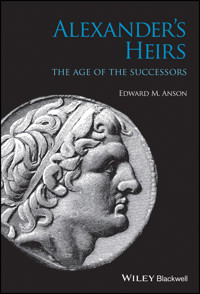
Cover image: Engraving of coin with head of Demetrius Poliorcetes, King of Macedonia.© The Print Collector, London / Scala, Florence
Abbreviations
Ael.
Aelian,
Varia Historia
(
VH
)
Aeschin.
Aeschines, 2 (
On the Embassy
); 3 (
Against Ctesiphon
)
App.
Appian,
Mithridatic Wars
(
Mith
.);
Syrian Wars
(
Syr
.)
Arist.
Aristotle,
Rhetoric
(
Rhet
.)
Aristid.
Aristides,
Orations
(
Or
.)
Arr.
Arrian,
Anabasis Alexandri
(
Anab
.);
Indica
(
Ind
.);
Successors
(
Succ
.)
Astronomical Diaries
Astronomical Diaries and Related Texts from Babylonia
, ed. H. Hunder, vol. V:
Lunar and Planetary Texts
(Vienna: Österreichischen Akademie der Wissenshaften, 2001)
Athen.
Athenaeus,
The Banqueteers
BCHP
Babylonian Chronicles of the Hellenistic Period
BM
British Museum
Curt.
Curtius,
The History of Alexander the Great of Macedon
Dem.
Demosthenes, 15 (
On the Liberty of the Rhodians
); 17 (
On the Accession of Alexander
); 18 (
On the Crown
); 19 (
On the False Embassy
)
Din.
Dinarchus, 1 (
Against Demosthenes
)
Diod.
Diodorus,
Library of History
Ditt.
Syll
.
Wilhelm Dittenberger,
Sylloge Inscriptionum Graecarum
Euseb.
Eusebius [Porphyry],
Chronica
(
Chron
.)
FGrH
Jacoby,
Die Fragmente der Griechischen Historiker
Hdts.
Herodotus,
Histories
Hom.
Homer,
Iliad
(
Il
.)
Hyp.
Hyperides, 4 (
In Defense of Euxenippus
); 5 (
Against Demosthenes
); 6 (
Funeral Oration
)
IG
Inscriptiones Graecae
Isoc.
Isocrates, 4 (
Panegyricus
); 15 (
Antidosis
)
Joseph.
Josephus,
Jewish Antiquities
(
AJ
)
Just.
Justin,
Epitome of the Philippic History of Pompeius Trogus
Liv.
Livy,
From the Founding of the City
LM
Liber de Morte
Memn.
Memnon of Heracleia’s
History of Heracleia Pontica
(
FGrH
434 F-5.7)
Nep.
Nepos,
Life of Eumenes
(
Eum
.);
Life of Phocion
(
Phoc
.)
OGIS
Orientis Graeci Inscriptiones Selectae
Paus.
Pausanias,
Description of Greece
Phot.
Photius,
Bibliotheca
(
Bibl
.)
Pliny
Natural History
(
NH
)
Plut.
Plutarch,
Life of Agesilaus
(
Ages
.);
Life of Alexander
(
Alex
.);
Life of Antony
(
Ant
.);
Life of Camillus
(
Cam
.);
Comparison of the Lives of Eumenes and Sertorius
(
Comp. Eum. et Sert
.);
Life of Demetrius
(
Demetr
.);
Life of Dion
(
Dion
);
Life of Eumenes
(
Eum
.);
Life of Lucullus
(
Luc
.);
Life of Lysander
(
Lys
.);
Moralia
(
Mor
.);
Life of Phocion
(
Phoc
.);
Life of Pyrrhus
(
Pyrrh
.);
Life of Sertorius
(
Ser
.)
Polyaen.
Polyaenus,
Stratagems
Polyb.
Polybius,
Histories
P. Oxy.
Oxyrhynchus Papyri
Schol
.
Demosthenes: Scholia Graeca ex codicibus aucta et emendata
(New York: Arno Press, 1983)
Str.
Strabo,
Geography
Suda
Antipater
,
Basileia
,
Craterus
,
Leonnatus
,
Deinarchus
,
Demetrius
,
Ophellas
Syll
.
Sylloge inscriptionum graecarum
, 3rd edn., 4 vols. (New York: Hildesheim, and Olms, 1982 [1915–24])
Syncellus
Georgius Syncellus, Ecloga Chronographica
, ed. A.A. Mosshammer (Leipzig: Teubner, 1984) (
Chron
.)
Tac.
Tacitus,
Annals
(
Ann
.)
Thuc.
Thucydides,
History of the Peloponnesian War
Trog.
Trogus,
Prologues
(
Prol
.)
Val. Max.
Valerius Maximus,
Memorable Words and Deeds
Vitr.
Vitruvius,
De architectura
Xen.
Xenophon,
Anabasis
(
Anab
.);
Constitution of the Spartans
(
Resp. Lac
.)
Chronology
323
June 11
Death of Alexander the Great
Summer
Philip III and Alexander IV proclaimed kings; revolt of the Greeks in the upper satrapies
Fall
Start of the Lamian War; Thibron attacks Cyrene
323/22
Fall/Winter
Battle of Abydus; crossing of Leonnatus to Europe; death of Leonnatus
322
Late Spring
Craterus crosses to Europe
June
Battle of Amorgus
July
Perdiccas and Eumenes arrive in Cappadocia; defeat Ariarathes in two battles
Late July/August
Battle of Crannon; Antipater arranges affairs in Peloponnesus and Athens
Late Summer/Fall
Eumenes organizes Cappadocia; Perdiccas moves to Cilicia; Neoptolemus moves to Armenia; annexation of Cyrene by Ptolemy
322/21
Late Fall/Winter
Eumenes sent to Armenia; Perdiccas winters in Cilicia; return of Antipater and Craterus to Macedonia; Craterus marries Phila
321
Spring
Perdiccas campaigns in Pisidia; calls for Antigonus to answer charges; arrival of Nicaea and Cleopatra with marriage proposals; marriage of Perdiccas and Nicaea; marriage of Ptolemy and Eurydice; invasion of Aetolia by Antipater and Craterus
Summer
Cynnane arrives in Asia and is murdered; marriage of Adea (Eurydice) and Philip III; Perdiccas determines to seize the monarchy; Alexander the Great’s body begins its journey west
321/20
Late Fall/Winter
Antigonus flees to Macedonia; end of Aetolian campaign; diversion of Alexander’s body to Egypt
320
Spring
First Diadoch War begins. Perdiccas marches to Egypt; Eumenes to the Hellespont; desertion of Cleitus and the fleet to Antipater; crossing of Antipater and Craterus to Asia; Antigonus attempts to intercept Eumenes, then to Cyprus
Late Spring
Eumenes defeats Neoptolemus; later Neoptolemus and Craterus; deaths of Neoptolemus and Craterus
Early Summer
Death of Perdiccas; condemnation of Perdiccans by royal army; Pithon and Arrhidaeus new regents for the kings
Late Summer
Triparadeisus; Antipater regent; marriage of Demetrius and Phila
Fall/Winter
Alcetas defeats Asander; Eumenes winters in Celaenae; failed negotiations among the surviving Perdiccan leaders
319
Winter
Antipater crosses back to Europe with the kings
Spring
Eumenes defeated by Antigonus and enters Nora
Summer
Antigonus defeats Alcetas; death of Alcetas
Late Summer
Death of Antipater; Polyperchon new regent, Cassander chiliarch
Fall
Nicanor made garrison commander in Munychia
319/18
Winter
Flight of Cassander to Antigonus; Polyperchon’s “Freedom of the Greeks” decree
318
Late Winter/Early Spring
Arrhidaeus’ attack on Cyzicus; Eumenes released from Nora and allies with Antigonus; Antigonus takes Ephesus and Cleitus flees
Spring
Nicanor seizes Piraeus; Ptolemy occupies Phoenicia and Syria; Alexander, the son of Polyperchon, arrives in Athens, followed later by Polyperchon
May
Death of Phocion; Cassander arrives in Piraeus
Summer
Antigonus captures all of Lydia; Eumenes allies with Polyperchon; Polyperchon invades Peloponnesus, besieges Megalopolis; Eumenes moves into Cilicia, joined by argyraspids; Menander occupies Cappadocia; Eumenes creates “Alexander Tent”
Fall
Polyperchon returns to Macedonia, orders Cleitus to the Hellespont
Fall/Winter
Eumenes moves into Phoenicia
317
Summer
Sea battles in the Hellespont; defeat of Cleitus
July
Demetrius of Phalerum in charge of Athens
Late Summer
Death of Nicanor; Cassander’s first invasion of Macedonia
September
Eumenes leaves Phoenicia for the east
Fall
Eurydice claims the regency; Olympias returns to Macedonia
Fall/Winter
Philip III Arrhidaeus and Eurydice murdered; Eumenes in Babylonia; revolt of citadel commander in Babylon; Eumenes moves into winter quarters in the “Carian villages”; Antigonus winters in Mesopotamia
316
Spring
Eumenes joins with the forces of the satraps of the upper provinces
Summer
Cassander successfully invades Macedonia; siege of Pydna begins; deposition and exile of Aeacides
July
Eumenes and Antigonus battle on Coprates
August
Antigonus retreats into Media
Late October/Early November
Battle of Paraetacene
December
Battle of Gabene
315
January
Death of Eumenes; Antigonus winters in Media; death of Pithon
“Approach of Spring”
End of siege of Pydna
Spring
Death of Olympias; imprisonment of Roxane and Alexander IV; Cassander marries Thessalonice
Spring/Early Summer
Peucestas replaced as satrap of Persis; flight of Seleucus from Babylon; Cassander founds Cassandreia and Thessalonica
Summer
Cassander refounds Thebes, invades Peloponnesus; Cassander's army invades Asia Minor; [alliance between Asander and Cassander?]
November
Antigonus at Mallus
314
Spring
Ultimatum to Antigonus; start of the Third Diadoch War; Agesilaus to Cyprus; Polemaeus to Cappadocia; Aristodemus to Greece, forms an alliance with Polyperchon; siege of Tyre begins
Late Spring
Antigonus’ capture of Joppa and Gaza
Summer
Polemaeus relieves siege of Erythrae; Cassander moves into Peloponnesus
Fall
Alexander to Tyre; Tyre Proclamation; number of Aegean islands including Samos and Lemnos revolt from Athens
Winter 314/13
Antigonus winters near Tyre; Cassander winters in Arcadia; Alliance between Asander and Ptolemy; Athenian expedition against Samos
313
February
Miletus falls
Spring
Cassander invades Messenia; Acrotatus in northwest Greece
Summer
Siege of Tyre ends; creation of the “League of the Islanders”; Cassander presides over Nemean Games (August), then returns to Macedonia; Aristodemus in Aetolia; Ptolemy sends Menelaus to Cyprus; Polycleitus’ successful campaign in the Aegean
Late Summer/Fall
Alexander deserts Antigonus and allies with Cassander, then is slain; Cassander campaigns in Aetolia and Illyria; Polemaeus invades Caria; Seleucus and the Athenian admiral Aristotle unsuccessfully attack Lemnos
Early Winter
Cassander sends an army to Caria; Antigonus leaves Demetrius in Syria and moves to Phrygia
Winter 313/12
Antigonus in Celaenae; Asander briefly allies with Antigonus; revolt of Pontic cities
312
February
Antigonus gains control of Carian cities
Late Spring/Early Summer
Telesphorus to Greece
Summer
Polemaeus sent to Greece; revolt of Cyrene
Summer/Fall
Polemaeus’ operations in Greece; Cassander in Epirus and Euboea
Fall
Ptolemy to Cyprus: Telesphorus deserts Antigonid cause and attacks Elis; Elis freed and Telesphorus returns to allegiance; Battle of Gaza; Ptolemy occupies Phoenicia
Winter 312/11
Demetrius defeats Cilles; Antigonus in Syria
311
April
Seleucus retakes Babylon
Spring/Summer
Demetrius’ Nabataean campaign
Fall
Seleucus occupies Media and Susiane; Demetrius’ raid on Babylonia
Winter 311/10
Peace between Antigonus, Cassander, Ptolemy, and Lysimachus
310
Spring
Murders of Roxane and Alexander IV
Late Spring/Summer
Antigonus invades Babylonia
309
Late Spring/Early Summer
Polemaeus revolts from Antigonus; Ptolemy’s operations in Cilicia; death of Polemaeus
Summer
Death of Heracles, son of Alexander the Great
Fall/Winter
Founding of Lysimacheia
308
Spring
Ptolemy’s operations in Lycia; his acquisition of Sicyon and Corinth
Summer
Ophellas’ campaign in North Africa; return of Antigonus from the east; murder of Cleopatra, sister of Alexander the Great; Seleucus occupies upper satrapies, makes treaty with Chandragupta
307
Spring
Ptolemy’s operations in the Aegean and Greece; Demetrius “frees” Athens
Fall
Pyrrhus becomes king of Epirus
306
Spring
Demetrius’ operations in Cyprus begin; founding of Antigoneia-on-the-Orontes
June
Battle of Salamis; Antigonus and Demetrius proclaimed kings
Summer
Surrender of Cyprus to Demetrius; death of Philip, son of Antigonus
November
Antigonus and Demetrius’ failed invasion of Egypt
305
Spring
Demetrius launches attack on Rhodes
304
Spring
Cassander captures island of Salamis, besieging Athens; Demetrius abandons siege of Rhodes, and returns to Athens; other Diadochs proclaim themselves kings
Summer
Demetrius’ advance into Boeotia and Euboea
303
Spring
Demetrius invades the Peloponnesus, captures Sicyon and Corinth; new Hellenic league
Summer
Cleonymus captures Corcyra
Late Summer/Fall
Demetrius secures Achaea, all of Arcadia, except Mantinea, and Argos; marries Deidameia and forms as alliance with Epirus
Winter 303/2
Failed attempt by Cassander to make peace with Antigonus
302
Winter
Alliance of Cassander, Lysimachus, Ptolemy, and Seleucus against Antigonus
Spring
Start of Fourth Diadoch War; formation of new League of Corinth; Demetrius initiated into Eleusinian Mysteries
April/May
Lysimachus and Cassander’s general Prepelaus cross to Asia
Summer
Antigonus moves into Asia Minor
Summer/Fall
Demetrius campaigning in Thessaly
Fall
Antigonus and Lysimachus campaigning in Phrygia; Pyrrhus forced from the throne of Epirus and joins Demetrius
Winter 302/1
Demetrius recalled from Greece; Ptolemy seizes Phoenicia and returns to Egypt; Corcyra independent
301
Late Spring
Battle of Ipsus; death of Antigonus
300
Spring
New alliance between Ptolemy, Cassander, and Lysimachus; alliance between Seleucus and Demetrius; Demetrius takes possession of Cilicia; Lachares takes control of Athens
Late Spring/Summer
Alliance between Demetrius and Ptolemy; Pyrrhus to Egypt as a hostage for Demetrius’ good behavior
298?
Demetrius’ failed attempt to “liberate” Athens
298/97
Winter
Death of Cassander, succeeded by son Philip (IV)
297
Spring
Death of Philip IV, ruler of Macedonia; Macedonia divided among Cassander’s surviving sons, Alexander and Antipater
Early Summer
Pyrrhus returns to Epirus
Summer
Demetrius in Peloponnesus
295
Spring?
Demetrius begins siege of Athens
294
Spring
Demetrius “liberates” Athens
Spring/Summer
Demetrius invades Laconia, defeats Spartans twice
Summer
Civil war between the brothers in Macedonia; intervention of Pyrrhus
Late Summer/Early Fall
Demetrius arrives in response to invitation from Alexander
Fall
Murder of Alexander IV; Demetrius (I) king of Macedonia
Winter 294/3
Foundation of Demetrias
293
Marriage of Antiochus and Stratonice
291
Demetrius marries Lanassa
288
Spring
With Demetrius preparing to invade Asia Minor, new coalition of Ptolemy, Seleucus, Lysimachus, and Pyrrhus is formed against him
Fall
Lysimachus and Pyrrhus invade Macedonia; Macedonia divided between Lysimachus and Pyrrhus; Demetrius flees to Cassandreia; death of Phila
Winter
Murder of Antipater
287
Spring
Reestablishment of Athenian democracy; Ptolemy new patron of Nesiotic League
Summer
Ptolemy repudiates Eurydice and Ceraunus; Ptolemy regains Cyprus; Demetrius returns to Asia
286
Demetrius campaigning in Asia Minor
285
Spring
Seleucus captures Demetrius; Lysimachus subverts Pyrrhus’ army and becomes sole king of Macedonia
284
Summer?
Ptolemy Philadelphus made co-ruler of Egypt
283
Winter 283/2
Lysimachus murders his son Agathocles
282
February?
Death of Demetrius
Spring?
Death of Ptolemy I; Ptolemy (II) Philadelphus, sole ruler of Egypt
282/81 Winter
Seleucus invades Lysimachus’ possessions in Asia Minor
281
February/March
Battle of Corrupedium; death of Lysimachus
Summer
Seleucus crosses to Macedonia; Seleucus murdered by Ceraunus (September); Ceraunus, king of Macedonia
280
Death of Ceraunus
276
Antigonus Gonatas king of Macedonia
Preface
This work is not a history of the Hellenistic Age, only those slightly more than forty years that followed Alexander the Great’s death. Its purpose is to look critically at the events which, and the personalities who, set the path upon which the Hellenistic world would proceed, not to examine the resulting journey. It is designed both for scholars and also for the general reader. While presenting a narrative of events, this narrative will be interspersed with the more important scholarly debates that affect so completely this history of the events that occurred more than twenty-three centuries ago. Many of these debates on some of the finer points have been either ignored or relegated to footnotes, so as not to disrupt the flow of the narrative. However, the more important ones will be set forth in their appropriate place in the narrative. Only in the case of certain chronological controversies will the debates appear in a separate section at the end of particular chapters. The ultimate goal is to present a readable and reasoned account of Alexander’s Successors, the Diadochi.
As with all my works, I wish to thank my wife Jeanne for putting up with me in general, and more particularly I am most grateful for her aid in reading and commenting on what I have written. I also wish to thank my colleagues in the field of Alexander and Hellenistic studies, and especially those affectionately known as the “Alexander Group.” To them all goes my appreciation for their support and insights over these many years. I would also like to thank the editors at Wiley Blackwell, Haze Humbert for suggesting the project and working with the prospectus, Allison Kostka for shepherding it to completion, and Janet Moth for proofing the final manuscript. For all of their assistance I am very grateful.
Map 1 Regions of Macedonia
Map 2 Greece and Asia Minor
Map 3 The Hellenistic world
1Introduction
Any history of the Diadochi, the Successors, the generals who inherited the empire of Alexander the Great, will of necessity be an adventure story of larger-than-life characters pursuing glory and empire. This was an age that arose directly out of the conquests of one of the most mercurial figures in world history. It is only by comparison to the great Conqueror himself that these individuals’ exploits pale. After all, they were fighting over an empire, stretching from Greece to Egypt to India, that he had created, and that ultimately none of them singularly could hold. Yet it is in their struggles with each other over what might be called Alexander’s estate that the Hellenistic world was created. This estate over which they contended was both material and mythical. On the one hand, there was the physical, territorial, empire, but on the other was the legend of Alexander himself. This myth that grew with each passing year was often the exemplar by which supporters of the various Diadochi would measure their generals and rulers. Alexander, however, himself was but a catalyst in the creation of this new age (Anson 2013b: 181–8). He set the stage; he conquered the old Persian nemesis that had haunted Greek affairs since the sixth century bc, but then he left that stage. In his leaving, he is supposed to have said, when asked to whom he left his empire, “to the strongest.” He certainly had done little to ensure the empire’s survival. In the words of Ernst Badian (1964a: 203), “Alexander was, essentially, not interested in a future without himself.” He left a legacy of tremendous potential, but also one of administrative ambiguity and a world wedded to warfare as the means to virtually every end.
Lesen Sie weiter in der vollständigen Ausgabe!
Lesen Sie weiter in der vollständigen Ausgabe!
Lesen Sie weiter in der vollständigen Ausgabe!
Lesen Sie weiter in der vollständigen Ausgabe!
Lesen Sie weiter in der vollständigen Ausgabe!
Lesen Sie weiter in der vollständigen Ausgabe!
Lesen Sie weiter in der vollständigen Ausgabe!
Lesen Sie weiter in der vollständigen Ausgabe!
Lesen Sie weiter in der vollständigen Ausgabe!




