


1,99 €
Mehr erfahren.
- Herausgeber: Publisher s22302
- Kategorie: Geisteswissenschaft
- Sprache: Englisch
Alexey Petrovich Bogolyubov (1824 – 1896) was a Russian landscape painter.Bogolyubov was born in the Pomeranie village of Novgorod Gubernia. His father was retired colonel Pyotr Gavriilovich Bogolyubov. Bogolyubov's maternal grandfather was the well-known philosopher and social critic Alexander Radishchev.In 1841, Alexey graduated from military school, serving in the Russian Navy and travelling with the fleet to many countries. In 1849, he started to attend classes of the Saint Petersburg Academy of Arts, where he studied under Maxim Vorobiev. The young painter was greatly influenced by Ivan Ayvazovsky. In 1853, he finished the Academy with a major Gold medal. He retired as a navy officer and was appointed an artist to the Navy headquarters.From 1854 to 1860, he travelled around Europe and worked prolifically. In Rome, he was acquainted with Alexander Ivanov, who convinced Bogolyubov to focus more on drawing. In Düsseldorf, Bogolyubov took classes from the painter Andreas Achenbach. In Paris, he admired the artists of the Barbizon School. French painters Camille Corot and Charles-Francois Daubigny were good friends and collaborators with Bogolyubov. He also painted the frescoes in the Alexander Nevsky Cathedral.Bogolyubov returned to Russia in 1860. He exhibited his works in the Academy and received the title of professor. For some time, he taught in the Academy. In the 1860s, he traveled along the Volga. His paintings lost all traces of Romanticism, replacing that element with staunch realism of the natural. In 1871 he was elected to the Imperial Academy of Arts.From 1870, he became close to the The Wanderers art movement, participated in all their exhibitions. He became a member of their board. Much older than most of the other members of the movement, he had reservations on their social ideas. In 1873, Bogolyubov left the Academy in solidarity with his fellow Itinerants. He even tried to create an alternative Russian Academy of Arts in Rome.After 1873, Bogolyubov lived primarily in Paris, because of his heart condition. His house was like a Russian colony: frequent visitors included Ivan Turgenev, Ilya Yefimovich Repin, Vasily Polenov, Mark Antokolski, Vasili Vasilyevich Vereshchagin.In 1885, Bogolyubov opened an art museum in Saratov, the Radischev Art Museum, named after his grandfather. It was opened to the general public seven years earlier than the Tretyakov Gallery in Moscow and fifteen years earlier than the Russian Museum in Saint Petersburg. The naming of the museum after the "first Russian revolutionary", Alexander Radishchev, was a direct challenge to the authorities: Bogolyubov had to endure a legal battle to get permission.
Das E-Book können Sie in Legimi-Apps oder einer beliebigen App lesen, die das folgende Format unterstützen:
Veröffentlichungsjahr: 2017
Ähnliche




















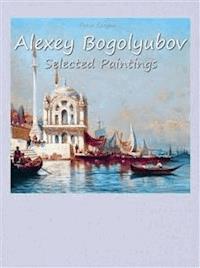
Alexey Bogolyubov
Selected Paintings
By Peter Gergov
––––––––
First Edition
*****
Copyright © 2017 by Peter Gergov
Table of Contents
Title Page
Copyright Page
Foreword
Paintings
Contents
Foreword
Alexey Petrovich Bogolyubov (1824 – 1896) was a Russian landscape painter.
Bogolyubov was born in the Pomeranie village of Novgorod Gubernia. His father was retired colonel Pyotr Gavriilovich Bogolyubov. Bogolyubov's maternal grandfather was the well-known philosopher and social critic Alexander Radishchev.
In 1841, Alexey graduated from military school, serving in the Russian Navy and travelling with the fleet to many countries. In 1849, he started to attend classes of the Saint Petersburg Academy of Arts, where he studied under Maxim Vorobiev. The young painter was greatly influenced by Ivan Ayvazovsky. In 1853, he finished the Academy with a major Gold medal. He retired as a navy officer and was appointed an artist to the Navy headquarters.
From 1854 to 1860, he travelled around Europe and worked prolifically. In Rome, he was acquainted with Alexander Ivanov, who convinced Bogolyubov to focus more on drawing. In Düsseldorf, Bogolyubov took classes from the painter Andreas Achenbach. In Paris, he admired the artists of the Barbizon School. French painters Camille Corot and Charles-Francois Daubigny were good friends and collaborators with Bogolyubov. He also painted the frescoes in the Alexander Nevsky Cathedral.
Bogolyubov returned to Russia in 1860. He exhibited his works in the Academy and received the title of professor. For some time, he taught in the Academy. In the 1860s, he traveled along the Volga. His paintings lost all traces of Romanticism, replacing that element with staunch realism of the natural. In 1871 he was elected to the Imperial Academy of Arts.
From 1870, he became close to the The Wanderers art movement, participated in all their exhibitions. He became a member of their board. Much older than most of the other members of the movement, he had reservations on their social ideas. In 1873, Bogolyubov left the Academy in solidarity with his fellow Itinerants. He even tried to create an alternative Russian Academy of Arts in Rome.
After 1873, Bogolyubov lived primarily in Paris, because of his heart condition. His house was like a Russian colony: frequent visitors included Ivan Turgenev, Ilya Yefimovich Repin, Vasily Polenov, Mark Antokolski, Vasili Vasilyevich Vereshchagin.
In 1885, Bogolyubov opened an art museum in Saratov, the Radischev Art Museum, named after his grandfather. It was opened to the general public seven years earlier than the Tretyakov Gallery in Moscow and fifteen years earlier than the Russian Museum in Saint Petersburg. The naming of the museum after the "first Russian revolutionary", Alexander Radishchev, was a direct challenge to the authorities: Bogolyubov had to endure a legal battle to get permission.
Bogolyubov died on 3 February 1896 in Paris.
Lesen Sie weiter in der vollständigen Ausgabe!
Lesen Sie weiter in der vollständigen Ausgabe!




