


22,99 €
Mehr erfahren.
- Herausgeber: John Wiley & Sons
- Kategorie: Fachliteratur
- Sprache: Englisch
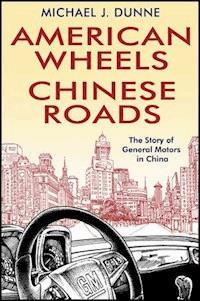
How could one company—General Motors—meet disaster on one continent and achieve explosive growth on another at the very same time?
While General Motors was hurtling towards bankruptcy in 2009, GM’s subsidiary in China was setting new sales and profit records. This book reveals how extraordinary people, remarkable decisions and surprising breaks made triumph in China possible for General Motors. It also shows just how vulnerable that winning track record remains.
No small part of GM’s success in China springs from its management of shifting business and political relationships. In China, the government makes the rules for—and competes in—the auto industry. GM’s business partner, the City of Shanghai, is both an ally and a competitor. How does such an unnatural relationship work on a day-to-day basis? Where will it go on the future?
General Motors also engages in constant battles with other global and Chinese car makers for the hearts of demanding Chinese consumers. Dunne gives us rare glimpses into the mindsets and behavior of this new moneyed set, the worlds newest class of wealthy consumers.
China is already the number one car market in the world. During the next ten years, China will export millions of cars and trucks globally, including to the United States. American Wheels, Chinese Roads presents readers with fascinating illustrations of what to expect when Chinese cars, companies, and business people arrive on our shores.
Sie lesen das E-Book in den Legimi-Apps auf:
Seitenzahl: 351
Veröffentlichungsjahr: 2011
Ähnliche



















CONTENTS
Acknowledgments
Introduction
Part One: Rules of the Chinese Road
Chapter 1: Scaling New Heights
Chapter 2: Many Detroits
Chapter 3: Getting a Foothold—In Quicksand
Chapter 4: The Back Door
Chapter 5: The Hook
Chapter 6: A Reality Show
Part Two: Pole Position, Yellow Flags
Chapter 7: The Kit Price
Chapter 8: Putting Shanghai First
Chapter 9: Signing the Deal
Chapter 10: Two Sons
Part Three: Negotiating the Obstacle Course
Chapter 11: The Launch
Chapter 12: Fiefdoms
Chapter 13: Paper Cups
Chapter 14: The Chery Surprise
Chapter 15: Porsches and Sweet Potatoes
Chapter 16: Getting Their Arms Around China
Part Four: Quick Acceleration, Then a Tight Corner
Chapter 17: The Best and Worst of Times
Chapter 18: Miniature Vehicles
Chapter 19: A Chill Wind
Chapter 20: The Favor
Part Five: The End of the Beginning
Chapter 21: A Memory Palace
Chapter 22: The Great Tide
Chapter 23: Electric Cars and Elevators
Conclusion: The End of the Beginning
Index
Advance Praise For American Wheels, Chinese Roads The Story of General Motors in China
I’ve shared many experiences with Michael Dunne on the front lines of China, and Michael knows China and the automobile market unlike anyone else I’ve met. His personal adventures and experiences give him a brilliant insight into an American icon’s journey into China. He chronicles it with intrigue, analysis, drama and humor. You can’t put it down!
James D. Power IV
Former Executive at J.D. Power and Associates and Co-author of Satisfaction: How Every Great Company Listens to the Voice of the Customer
Michael Dunne has done a superb job of chronicling and analyzing the very important and complex business story of GM in China. He has done this based on his “boots on the ground” experience of many years in Middle Kingdom and his great depth of understanding of the global auto industry. As we increase the speed of globalization, it is imperative to understand the many complex issues involved from the importance of personal relationships to understanding diverse cultures to even have a chance for success. The deep insight into the high stakes drama in the GM–China story reaches well beyond the auto industry and, perhaps, well beyond China. Consequently this is a must-read for all who are involved in global commercial activities.
David Cole
Chairman Emeritus, Center for Automotive Research
American Wheels, Chinese Roads is a fascinating portrait of GM’s rocky road to success in China. Author Michael Dunne takes you on a wild ride, chronicling the failures, the successes, and the sheer random luck of an American company trying to seal the deal with the Chinese. Dunne’s access is unprecedented, his sources second-to-none. This is a book not only about the transformation of an American icon, but about China, revealed in all its complicated beauty.
Rob Schmitz
China Bureau Chief, Marketplace/American Public Media
Copyright © 2011 by John Wiley & Sons (Asia) Pte. Ltd.
Published in 2011 by John Wiley & Sons (Asia) Pte. Ltd.
1 Fusionopolis Walk, #07–01, Solaris South Tower, Singapore 138628
All rights reserved.
No part of this publication may be reproduced, stored in a retrieval system, or transmitted in any form or by any means, electronic, mechanical, photocopying, recording, scanning, or otherwise, except as expressly permitted by law, without either the prior written permission of the Publisher, or authorization through payment of the appropriate photocopy fee to the Copyright Clearance Center. Requests for permission should be addressed to the Publisher, John Wiley & Sons (Asia) Pte. Ltd., 1 Fusionopolis Walk, #07–01, Solaris South Tower, Singapore 138628, tel: 65–6643–8000, fax: 65–6643–8008, e-mail: [email protected].
This publication is designed to provide accurate and authoritative information in regard to the subject matter covered. It is sold with the understanding that the publisher is not engaged in rendering professional services. If professional advice or other expert assistance is required, the services of a competent professional person should be sought.
Neither the authors nor the publisher are liable for any actions prompted or caused by the information presented in this book. Any views expressed herein are those of the authors and do not represent the views of the organizations they work for.
Other Wiley Editorial Offices
John Wiley & Sons, 111 River Street, Hoboken, NJ 07030, USA
John Wiley & Sons, The Atrium, Southern Gate, Chichester, West Sussex, P019 8SQ, United Kingdom
John Wiley & Sons (Canada) Ltd., 5353 Dundas Street West, Suite 400, Toronto, Ontario, M9B 6HB, Canada
John Wiley & Sons Australia Ltd., 42 McDougall Street, Milton, Queensland 4064, Australia
Wiley-VCH, Boschstrasse 12, D-69469 Weinheim, Germany
Library of Congress Cataloging-in-Publication Data
ISBN 978–0–470–82816–8 (Hardcover)
ISBN 978–0–470–82864–9 (ePDF)
ISBN 978–0–470–82862–5 (Mobi)
ISBN 978–0–470–82865–6 (ePub)
I dedicate this book to my parents: Janet for the lilt of her Irish laughter. And Jim, for inspiring the pursuit of a road less traveled.
ACKNOWLEDGMENTS
I was making my way up six flights of concrete stairs to our Shanghai apartment in the old French Quarter one evening in 2005, briefcase in one hand and Chinese grocery bags slipping from the other, when the thought first came to me: there must be a story here. It wasn’t until 2009, though, that I was ready to turn my twenty years of experiences in China into a book.
But how? I had already developed an expertise in China’s car market through my company, Automotive Resources Asia. Could there be a connection between my first-hand experiences in China and the car business? No, China was China and cars were cars. Two entirely different subjects. The book idea got stuck.
That’s when other people started to make things happen.
First came this simple advice from my father, Jim Dunne: “Write it down.” And so I started to record little episodes, the telling details, even though I had no idea what the book would be about. It continued that way for months, until—after a morning coffee meet in Singapore—Sylvia McKaige of CNBC introduced me to Wiley Asia. Nick Melchior at Wiley worked with me to channel my stack of notes into a business book about GM in China.
I was off and running.
Well, not so fast. It is one thing to want to tell what you saw. It is quite another to do it in a way that makes the reader want more. Editors Chris Endres, Kristi Hein, and Debbie Mettenleiter suggested adjustments that improved clarity and flow in huge ways.
General Motors helpfully arranged site visits and many key interviews. Scores of other industry executives, many of whom wish to remain anonymous, contributed invaluable first-hand accounts.
That little devil called “doubt” has a way of slipping uninvited into a writer’s lair from time to time. When that happened, the following talented people stepped in to deliver shots of encouragement and solid advice: John Bonnell, David Collins, Patrick Cranley, Timothy Dunne, Lauren Giglio, Paul Ingrassia, Kerry Ivan, Tina Kanagaratnam, Marian Knappert, Linda Lim, Jane Lanhee Lee, Paul Lienert, Mark Leonard, Geoff Liu, Richard McGregor, Jerry Powers, Frank Rocco, Matthew Schroeder, Paul Stepanek Frances Bauer, Julie Dunne, Patricia Dunne, and Mary Jo Finkenstaedt.
During the journey of my giving life to this book, my wife, Merlien, gave birth to our second child Aurelia and then to our third child, Connor. In a blink of time, our three-year old, Raphael, was joined by a sister and brother.
I am forever grateful to Merlien for being an ocean of serenity in the midst of a beautiful storm of chaos at home.
INTRODUCTION
Taking the first step is so sublime, so enthralling, so utterly enticing that no businessman can resist. The tree-lined, flower-petaled path lures you, like a moth to the light, to the shining entrance of the world’s most promising marketplace: China.
As you approach the gates and prepare to pass through into this lucrative and boundless market, you discover that they are locked. Never mind looking for a key. These forbidding gates can be opened only from the inside. You must be invited to enter. And then you may proceed only in the company of a chaperone. This isn’t a dream sequence. This is the reality of doing business in China.
General Motors found itself in just this position in the early 1990s. It wanted to “open up” the China market, but found that the doors were shut tight. Government officials in Beijing had already issued joint venture car production licenses to a handful of companies, including Chrysler and Volkswagen.
But GM had to wait. And wait some more.
As a student intern at GM headquarters in Detroit in the summer of 1989, I witnessed the waiting period firsthand. I was assigned to devise a distribution strategy for China just in case, one day, China decided to invite GM inside.
GM’s own “culture” was crystallized for me in one unforgettable moment when I was preparing a presentation to the higher-ups at the end of my eight-week tenure. My supervisor walked through the report and then offered only one piece of advice: “Whatever you do, just make sure to C-Y-A.”
“‘C-Y-A’?”
“Cover your ass. The bosses will know little about China,” he explained, “but that won’t stop them from calling you out, just to show they know something about Asia.”
I had little to fear about covering anything. I was born and raised in Detroit, I’d had behind-the-wheel access to every new car in America sold during the previous nine years, and I’d taught and studied in Chongqing’s Institute of Architecture and Engineering for a year before coming to GM.
China at the time was still a tiny car market, with annual sales less than that of the state of Michigan. The Chongqing university where I studied, home to fifteen thousand people, owned a grand total of one car—the Red Flag, a ponderous four-door sedan based on the 1955 Chrysler Imperial.
But the small demand for cars did nothing to deter the appetite for stamping a footprint in the biggest potential market in Asia, a pressing hunger easily fueled by imagination: With all those people, just think how giant China’s car market could one day be! We could make a killing just selling hubcaps!
Even über optimists, however, could not have imagined that twenty years later, China would be the world’s number one car market, handily surpassing the United States. And no one inside GM could have dreamt that in 2010 the company would sell one million cars—Chevys, Buicks, and Cadillacs—to Chinese customers.
Once GM secured passage through the front gates into the Middle Kingdom, the company almost immediately discovered that China is a tough and unpredictable place to do business. For every delicious opportunity to make a fortune, there is an equally dangerous pitfall. For every promise kept, there is a promise broken. And there are shifting government rules at every turn.
The untold story is that GM’s road to success in China has never been straight or easy. The company waited long years just to get permission to build passenger cars in China. It was not until 1999 that Shanghai GM started production of its first model, the Buick Century. GM has prevailed thanks to gutsy leadership, perseverance, and, yes, some good old-fashioned luck.
Never before in the history of the automobile has the industry seen growth as explosive as it’s been in China. That’s where the luck came in. Annual demand for new cars has rocketed from six hundred forty thousand cars in 2000 to more than eleven million in 2010. GM’s operations with its Chinese partners today generate billions of dollars of revenues and hundreds of millions of dollars in profits.
GM’s success in China stands in sharp contrast to the failures in North America and Europe that led the company into bankruptcy in 2009. The fact that GM in China could triumph while its parent company was self-destructing is both remarkable and revealing.
And yet, there remains a certain fragility to GM’s success in China. Buick, Cadillac, and Chevrolet must compete for market share against fifty other marques—Toyota, Honda, Hyundai, Volkswagen, and other industry powerhouses. And GM is vulnerable to unexpected regulations decreed by powerful government officials in Beijing. The path to financial nirvana remains neither straight or certain.
This is the story of how GM got into China, what it confronted, and how it tackled the formidable challenges presented by the Middle Kingdom—an arena of competition entirely different from America. The hard lessons learned will be instructive not just to companies making cars, but to any foreign company with aspirations to make it in China—an enormous market that will remain highly unsettled, and unsettling.
Part One
Rules of the Chinese Road
Chapter 1
SCALING NEW HEIGHTS
The producers of 60 Minutes had unearthed a story, and they wanted the inside scoop: How had General Motors managed to compete—indeed, to thrive—in China, while the rest of the company declined into the shameful bankruptcy of 2009? They put this question to GM executives in China and Detroit during the summer of 2010. But GM wasn’t talking, so the program was shelved.
That’s too bad, because 60 Minutes viewers missed the opportunity to hear a good story. Not a fairy-tale story with a happy ending for all, but a story that would bring to life the strange and unfamiliar rules of the road that make doing business in China a very uncertain endeavor.
If you gauge China accurately and have a little luck, you make a fortune. Get it wrong, and there will be no good Samaritans to help you out of the roadside ditch. For GM, there were many potholes, detours, U-turns, setbacks, surprises, and disappointments before any money was made.
If the executives had spoken on camera, viewers would no doubt have heard a litany of the traditional factors of success: product, pricing, positioning, and placement. Those are all important, of course. But they do not get to the heart of how competition works in China. To understand how GM—or any company—flourishes in China, you must begin with a look at the very different nature of that competition. In China, everything begins with a license.
Lesen Sie weiter in der vollständigen Ausgabe!
Lesen Sie weiter in der vollständigen Ausgabe!
Lesen Sie weiter in der vollständigen Ausgabe!
Lesen Sie weiter in der vollständigen Ausgabe!
Lesen Sie weiter in der vollständigen Ausgabe!
Lesen Sie weiter in der vollständigen Ausgabe!
Lesen Sie weiter in der vollständigen Ausgabe!
Lesen Sie weiter in der vollständigen Ausgabe!
Lesen Sie weiter in der vollständigen Ausgabe!
Lesen Sie weiter in der vollständigen Ausgabe!
Lesen Sie weiter in der vollständigen Ausgabe!
Lesen Sie weiter in der vollständigen Ausgabe!
Lesen Sie weiter in der vollständigen Ausgabe!
Lesen Sie weiter in der vollständigen Ausgabe!
Lesen Sie weiter in der vollständigen Ausgabe!
Lesen Sie weiter in der vollständigen Ausgabe!
Lesen Sie weiter in der vollständigen Ausgabe!
Lesen Sie weiter in der vollständigen Ausgabe!
Lesen Sie weiter in der vollständigen Ausgabe!
Lesen Sie weiter in der vollständigen Ausgabe!
Lesen Sie weiter in der vollständigen Ausgabe!
Lesen Sie weiter in der vollständigen Ausgabe!
Lesen Sie weiter in der vollständigen Ausgabe!
Lesen Sie weiter in der vollständigen Ausgabe!
Lesen Sie weiter in der vollständigen Ausgabe!
Lesen Sie weiter in der vollständigen Ausgabe!
Lesen Sie weiter in der vollständigen Ausgabe!
Lesen Sie weiter in der vollständigen Ausgabe!
Lesen Sie weiter in der vollständigen Ausgabe!




