


1,99 €
Mehr erfahren.
- Herausgeber: Publisher s13381
- Kategorie: Geisteswissenschaft
- Sprache: Englisch
Sir Anthony van Dyck (1599 – 1641) was a Flemish Baroque artist who became the leading court painter in England, after enjoying great success in Italy and Flanders. He is most famous for his portraits of Charles I of England and his family and court, painted with a relaxed elegance that was to be the dominant influence on English portrait-painting for the next 150 years. He also painted biblical and mythological subjects, displayed outstanding facility as a draughtsman, and was an important innovator in watercolour and etching.With the partial exception of Holbein, van Dyck and his exact contemporary Diego Velázquez were the first painters of pre-eminent talent to work mainly as Court portraitists. The slightly younger Rembrandt was also to work mainly as a portraitist for a period. In the contemporary theory of the hierarchy of genres portrait-painting came well below history painting which covered religious scenes also, and for most major painters portraits were a relatively small part of their output, in terms of the time spent on them. Rubens for example mostly painted portraits only of his immediate circle, but though he worked for most of the courts of Europe, he avoided exclusive attachment to any of them.
Das E-Book können Sie in Legimi-Apps oder einer beliebigen App lesen, die das folgende Format unterstützen:
Veröffentlichungsjahr: 2017
Ähnliche




















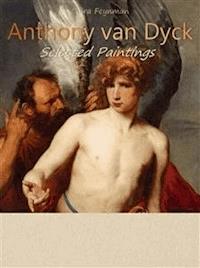
Anthony van Dyck
Selected Paintings
By Clara Feynman
––––––––
First Edition
*****
Copyright © 2017 by Clara Feynman
Table of Contents
Title Page
Copyright Page
Foreword
Paintings
Foreword
SIR ANTHONY VAN DYCK (1599 – 1641) was a Flemish Baroque artist who became the leading court painter in England, after enjoying great success in Italy and Flanders. He is most famous for his portraits of Charles I of England and his family and court, painted with a relaxed elegance that was to be the dominant influence on English portrait-painting for the next 150 years. He also painted biblical and mythological subjects, displayed outstanding facility as a draughtsman, and was an important innovator in watercolour and etching.
With the partial exception of Holbein, van Dyck and his exact contemporary Diego Velázquez were the first painters of pre-eminent talent to work mainly as Court portraitists. The slightly younger Rembrandt was also to work mainly as a portraitist for a period. In the contemporary theory of the hierarchy of genres portrait-painting came well below history painting which covered religious scenes also, and for most major painters portraits were a relatively small part of their output, in terms of the time spent on them. Rubens for example mostly painted portraits only of his immediate circle, but though he worked for most of the courts of Europe, he avoided exclusive attachment to any of them.
A variety of factors meant that in the 17th century demand for portraits was stronger than for other types of work. Van Dyck tried to persuade Charles to commission him to do a large-scale series of works on the history of the Order of the Garter for the Banqueting House, Whitehall, for which Rubens had earlier done the huge ceiling paintings.
A list of history paintings produced by van Dyck in England survives, compiled by Van Dyck's biographer Bellori, based on information from Sir Kenelm Digby. None of these works appear to remain, except the Eros and Psyche done for the King. But many other works, rather more religious than mythological, do survive, and though they are very fine, they do not reach the heights of Velázquez's history paintings. Earlier ones remain very much within the style of Rubens, although some of his Sicilian works are interestingly individual.
A fairly small number of landscape pen and wash drawings or watercolours made in England played an important part in introducing the Flemish watercolour landscape tradition to England. Some are studies, which reappear in the background of paintings, but many are signed and dated and were probably regarded as finished works to be given as presents. Several of the most detailed are of Rye, a port for ships to the Continent, suggesting that van Dyck did them casually whilst waiting for wind or tide to improve.
Paintings
Diego de Mexía, Marquess of Leganés
1599 – 1641, oil on canvas, 2,000 x 1,250 mm
The Betrayal of Christ, 1608/1630, Oil on canvas, 44.5 x 55.88 in
Daedal and Icarus, 1615 – 1625, oil on canvas, 1,153 x 864 mm
Portrait of a Man in Armor
1616/1627, oil on canvas, 137.2 x 121.3 cm




