


98,99 €
Mehr erfahren.
- Herausgeber: John Wiley & Sons
- Kategorie: Fachliteratur
- Serie: World Aquaculture Society Book Series
- Sprache: Englisch
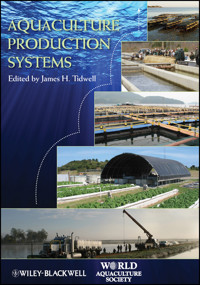
Aquaculture is an increasingly diverse industry with an ever-growing number of species cultured and production systems available to professionals. A basic understanding of production systems is vital to the successful practice of aquaculture.
Published with the World Aquaculture Society, Aquaculture Production Systems captures the huge diversity of production systems used in the production of shellfish and finfish in one concise volume that allows the reader to better understand how aquaculture depends upon and interacts with its environment.
The systems examined range from low input methods to super-intensive systems. Divided into five sections that each focus on a distinct family of systems, Aquaculture Production Systems serves as an excellent text to those just being introduced to aquaculture as well as being a valuable reference to well-established professionals seeking information on production methods.
Sie lesen das E-Book in den Legimi-Apps auf:
Seitenzahl: 818
Veröffentlichungsjahr: 2012
Ähnliche



















Contents
Cover
Title Page
Copyright
Contributors
Preface
Acknowledgments
Chapter 1: The Role of Aquaculture
1.1 Seafood demand
1.2 Seafood supply
1.3 Seafood trade
1.4 Status of aquaculture
1.5 Production systems
1.6 The future and the challenge
Chapter 2: History of Aquaculture
2.1 Beginnings of aquaculture
2.2 Expansion prior to the mid-1800s
2.3 The explosion of hatcheries
2.4 Art becomes science
2.5 Commercial finfish species development
2.6 Shrimp culture
2.7 Mollusk culture
2.8 Controversy
Chapter 3: Functions and Characteristics of All Aquaculture Systems
3.1 Differences in aquatic and terrestrial livestock
3.2 Ecological services provided by aquaculture production systems
3.3 Diversity of aquaculture animals
3.4 Temperature classifications of aquacultured animals
3.5 Temperature control in aquaculture systems
3.6 Providing oxygen in aquaculture systems
3.7 Waste control in aquaculture systems
3.8 Aquaculture systems as providers of natural foods
Chapter 4: Characterization and Categories of Aquaculture Production Systems
4.1 Open systems
4.2 Semi-closed systems
4.3 Closed systems
4.4 Hybrid systems
Chapter 5: Shellfish Aquaculture
5.1 Major species in culture (oysters, clams, scallops, mussels)
5.2 History
5.3 Biology
5.4 Culture basics
5.5 Extensive versus intensive culture
5.6 Spat collection: hatchery, nursery, growout
5.7 Cultured algae
5.8 Spawning
5.9 Larval development
5.10 Setting
5.11 Nursery and growout scale considerations
5.12 Nursery methods
5.13 Growout methods
5.14 Fouling
5.15 Fouling control strategies
5.16 Predation
5.17 Harvest
5.18 Food safety
5.19 Shellfish diseases
5.20 Disease management options
5.21 Genetics: selective breeding
5.22 Triploidy
5.23 Harmful algal blooms
5.24 Site selection
5.25 Carrying capacity
5.26 Permitting challenges
5.27 Non-native species
Chapter 6: Cage Culture in Freshwater and Protected Marine Areas
6.1 Current status of cage culture
6.2 History and evolution of cage culture
6.3 Advantages and disadvantages of cages
6.4 Site selection
6.5 Stocking cages
6.6 Feeding caged fish
6.7 Polyculture and integrated systems
6.8 Problems with cage culture
6.9 Economics of cage culture
6.10 Sustainability issues
Chapter 7: Ocean Cage Culture
7.1 The context for open ocean farming
7.2 Characterization and selection of open ocean sites
7.3 Technologies for open ocean farming
7.4 Finfish species cultivated in open ocean cages
7.5 Environmental considerations
7.6 Future prospects and challenges
Chapter 8: Reservoir Ranching
8.1 Reservoir ranching vs. culture-based fisheries
8.2 Reservoir
8.3 Natural processes of reservoirs
8.4 Selection of reservoirs for reservoir ranching
8.5 Fish species selection
8.6 Stocking density and size
8.7 Status of reservoir ranching around the world
8.8 Summary
Chapter 9: Flow-through Raceways
9.1 Types of raceways
9.2 Physical requirements
9.3 Water requirements
9.4 Carrying capacity
9.5 Water consumption and waste management
9.6 Feeding and inventory management
9.7 Summary
Chapter 10: Ponds
10.1 Species cultured
10.2 Pond types
10.3 Water use
10.4 Pond culture intensity and ecological services
10.5 Food in pond aquaculture
10.6 Life support in pond aquaculture
10.7 Land use and the ecological footprint of pond aquaculture
10.8 Consequences of unregulated algal growth
10.9 Practical constraints on pond aquaculture production
10.10 Comparative economics of culture systems
10.11 Sustainability issues
10.12 Trends and research needs
Chapter 11: Recirculating Aquaculture Systems
11.1 Positive attributes
11.2 Overview of system engineering
11.3 Culture tanks
11.4 Waste solids removal
11.5 Cornell dual-drain system
11.6 Settling basins and tanks
11.7 Mechanical filters
11.8 Granular media filters
11.9 Disposal of the solids
11.10 Biofiltration
11.11 Choice of biofilter
11.12 Aeration and oxygenation
11.13 Carbon dioxide removal
11.14 Monitoring and control
11.15 Current system engineering design
11.16 Recirculation system design
11.17 Four major water-treatment variables
11.18 Summary of four production terms
11.19 Stocking density
11.20 Engineering design example
11.21 Conclusion
Chapter 12: Biofloc-based Aquaculture Systems
12.1 Bioflocs
12.2 Oxygen dynamics
12.3 Resuspension, mixing, and sludge management
12.4 Nitrogenous waste products
12.5 Temperature
12.6 Feeds and feeding
12.7 Economics
12.8 Sustainability
12.9 Outlook and research needs
12.10 Acknowledgment
Chapter 13: Partitioned Aquaculture Systems
High rate ponds in aquaculture—the partitioned aquaculture system
PAS fingerling production
Flow-through PAS: the controlled eutrophication process
Photoautotrophic and chemoautotrophic PAS for marine shrimp production
Alabama in-pond raceway system
Mississippi split-pond aquaculture system
California pondway system
Chapter 14: Aquaponics—Integrating Fish and Plant Culture
System design
Fish production
Solids
Biofiltration
Hydroponic subsystems
Sump
Construction materials
Component ratios
Plant growth requirements
Nutrient dynamics
Vegetable selection
Crop production systems
Pest and disease control
Approaches to system design
Economics
Prospects for the future
Chapter 15: In-pond Raceways
Development of the in-pond raceway
Stocking and feeding
Backup systems and disease treatments
Comparison to other culture systems
Sustainability issues
Future trends
Chapter 16: On the Drawing Board
Future trends
Index
This edition first published 2012 © 2012 by John Wiley & Sons, Inc.
Wiley-Blackwell is an imprint of John Wiley & Sons, formed by the merger of Wiley's global Scientific, Technical, and Medical business with Blackwell Publishing.
Editorial offices: 2121 State Avenue, Ames, Iowa 50014-8300, USA The Atrium, Southern Gate, Chichester, West Sussex, PO19 8SQ, UK 9600 Garsington Road, Oxford, OX4 2DQ, UK
For details of our global editorial offices, for customer services, and for information about how to apply for permission to reuse the copyright material in this book please see our website at www.wiley.com/wiley-blackwell.
Authorization to photocopy items for internal or personal use, or the internal or personal use of specific clients, is granted by Blackwell Publishing, provided that the base fee is paid directly to the Copyright Clearance Center, 222 Rosewood Drive, Danvers, MA 01923. For those organizations that have been granted a photocopy license by CCC, a separate system of payments has been arranged. The fee codes for users of the Transactional Reporting Service are ISBN-13: 978-0-8138-0126-1/2012.
Designations used by companies to distinguish their products are often claimed as trademarks. All brand names and product names used in this book are trade names, service marks, trademarks or registered trademarks of their respective owners. The publisher is not associated with any product or vendor mentioned in this book. This publication is designed to provide accurate and authoritative information in regard to the subject matter covered. It is sold on the understanding that the publisher is not engaged in rendering professional services. If professional advice or other expert assistance is required, the services of a competent professional should be sought.
Library of Congress Cataloging-in-Publication Data
Aquaculture production systems / editor, James Tidwell. p. cm. Includes bibliographical references and index. ISBN 978-0-8138-0126-1 (hardcover : alk. paper) 1. Aquaculture. I. Tidwell, James. SH135.A76 2012 639.8–dc23 2011048340
A catalog record for this book is available from the British Library.
Wiley also publishes its books in a variety of electronic formats. Some content that appears in print may not be available in electronic books.
1 2012
Contributors
Geoff Allan
Department of Primary Industries
NSW Department of Trade and Investment
Regional Infrastructure and Services
Port Stephens Fisheries Institute
New South Wales, Australia
Yoram Avnimelech
Department of Civil and Environmental Engineering Technician
Israel Institute of Technology
Haifa, Israel
Craig L. Browdy
Novus International Inc.
Charleston, South Carolina, USA
D. E. Brune
Department of Agricultural Systems Management
Columbia, Missouri, USA
Jesse Chappell
Fisheries and Allied Aquacultures
Auburn, Alabama, USA
James M. Ebeling
Aquaculture System Technologies
New Orleans, Louisiana, USA
Gary Fornshell
University of Idaho Extension
Twin Falls, Idaho, USA
John Hargreaves
Aquaculture Assessments LLC
Baton Rouge, Louisiana, USA
Jeff Hinshaw
North Carolina State University
Department of Zoology
Raleigh, North Carolina, USA
Richard Langan
University of New Hampshire
Coastal and Ocean Technology Programs
Durham, New Hampshire, USA
John W. Leffler
Waddell Mariculture Center
Marine Resources Research Institute
South Carolina Department of Natural Resources
Charleston, South Carolina, USA
Michael P. Masser
Texas Co-op Extension
College Station, Texas, USA
Michael Massingill
Kent BioEnergy Corporation
San Diego, California, USA
Steven D. Mims
Kentucky State University
Division of Aquaculture
Frankfort, Kentucky, USA
Richard J. Onders
Kentucky State University
Division of Aquaculture
Frankfort, Kentucky, USA
James E. Rakocy
University of the Virgin Islands
Agricultural Experiment Station
St. Croix, US Virgin Islands
Andrew J. Ray
The University of Southern Mississippi
Gulf Coast Research Laboratory
Ocean Springs, Mississippi, USA
Robert Rheault
Shellfish Environmental Services, Ltd.
Wakefield, Rhode Island, USA
Robert R. Stickney
Texas Sea Grant
Texas A&M University
College Station, Texas, USA
James H. Tidwell
Kentucky State University
Division of Aquaculture
Frankfort, Kentucky, USA
Michael B. Timmons
Cornell University
Biological and Environmental Engineering Department
Ithaca, New York, USA
Granvil D. Treece
Texas Sea Grant
Texas A&M University
College Station, Texas, USA
Craig Tucker
National Warmwater Aquaculture Center
Stoneville, Mississippi, USA
Preface
Aquaculture. A simple word but a complex story. It's also a story of contradictions. In some ways aquaculture is very old, having been around in some regions for 4,000 to 5,000 years. However, as a major industry, and source food for mankind, it's been around only about fifty to sixty years. While aquaculture is an industry of several hundred species, the vast majority of production is dominated by less than ten. Also, unlike other livestock crops, we not only raise herbivores and omnivores but also carnivores and even filter feeders. It is a complex story indeed.
The idea for this book began in the 1990s. At Kentucky State University (KSU) aquaculture was initially entirely a research area. We received approval to teach our first course in 1991 and I developed Principles of Aquaculture as an experimental course. Gradually my colleagues and I at KSU developed additional courses to fill out a curriculum. In the Principles of Aquaculture course, I gave an overview of concepts, and then worked through a short but comprehensive overview of some major aquaculture species. However, the systems used to raise the fish were given a very cursory overview of one or two lectures. The more I thought about it the more it seemed to me that the aquaculturist's real job is to manage the environment, and that is the job of the production system. Wouldn't it be productive to develop another course that approached aquaculture not from the direction of the culture species, but from the direction of the culture system itself? The fact is that all species from shellfish to blue fin tuna have certain things they all need. Primary among them is a suitable water temperature, sufficient dissolved oxygen, and a way to remove or detoxify their waste products. The theme of this book is to explain how all of the different production systems we use provide these services, in many diverse ways.
To provide the best coverage of the subject, and a comprehensive explanation of each system, my job was to try to convince one of the most knowledgeable experts on each system to provide a chapter covering that system. To do this I tapped into a network of colleagues and friends, many of whom I had gotten to know during my years or while working with the World Aquaculture Society (WAS) in a number of different roles. If you go through the list of contributors, you will find that there are no less than six former WAS presidents contributing to the book.
The book is intended as a resource for students and researchers. Even within aquaculture there are individuals who know a tremendous amount about one system, but have had limited exposure to other systems. It is also intended as a resource for those outside of aquaculture who wish to understand the industry better. In two of my chapters I have tried to explain in simple terms the basic concepts of the different systems. I have also used extreme examples to help those from other professions appreciate just how hard our job can be with some aquatic species. Examples of non-aquaculture professionals that I hope can benefit from this book include entrepreneurs, investment bankers, feed and equipment salesmen, engineers, and environmentalists.
Environmental groups often use the broad term “aquaculture” when referring to issues related to one particular species or production system. They often paint with a very “broad brush.” With a greater knowledge of the many different systems encompassed by this term, they might better understand aquaculture and all it represents. They might also better understand that the system they take issue with is only a very small portion of the larger aquaculture industry while their comments and criticisms negatively impact ALL parts of the industry. They might also become better able to appreciate the continuing efforts to improve the system's efficiencies and sustainability credentials. They can then come to understand that some of these systems are actually able to improve the environment by filtering out excess nutrients from whatever source.
A final theme of the book is a look ahead. What new types or combinations of systems might we see down the road? How will climate change affect aquaculture and its ability to provide increasing amounts of high quality protein to human populations, especially in regions of the world that need it the most?
I hope this text can serve as a resource for students and practitioners for many years to come and that it inspires them to develop new systems in the future. The Blue Revolution is really just beginning.
Jim Tidwell
Acknowledgments
A first of many thanks goes to Ms. Leigh Anne Bright. Her organizational skills and keen eye as a reviewer/editor of all of the chapter manuscripts kept the project moving forward. Also, her patience in times of crisis kept me from losing mine. Thanks to Ms. Karla Johnson for typing, retyping, and re-retyping my chapters through their many stages of evolution, while keeping our other duties on track as well. My appreciation to Mr. Charles Weibel for his good-natured assistance with figures. He improved many and actually recreated several to ensure the best quality for publication. Thanks to Mr. Shawn Coyle for keeping more than his share of our research responsibilities on track while this project demanded a significant percentage of my attention. My appreciation to the faculty, staff, and students of the Division of Aquaculture at Kentucky State University for their support while this project came together. Many, many thanks to the contributors of the chapters in the book. They have endured hundreds of e-mails and requests with patience and quick responses. I appreciate their support, endurance, and perseverance. I also look back and thank my mentors and fellow students at Mississippi State University in years past who helped me develop a real devotion to this discipline that has not diminished. I thank my friends and colleagues in the World Aquaculture Society who have helped me appreciate how diverse and dynamic this industry is and will continue to be. Finally, I thank my family. This includes my big brother, Bill, who has shown a real interest in the project; my wife, Vicki; and my children, Will, Chandler, and Patrick, who have shared me, and have often helped me, with many aquaculture endeavors over the years.
Chapter 2
History of Aquaculture
Robert R. Stickney and Granvil D. Treece
For purposes of this historical account the concentration is on finfish, shrimp, and mollusks that are reared as food for human consumption. The reader should be aware that aquaculture is much more expansive. In the finfish category alone there is a considerable amount of culture of ornamental fishes, particularly freshwater species. There is also a good deal of interest in marine ornamentals but the number of species that have been successfully cultured is considerably smaller than is the case for their freshwater counterparts. In some parts of the world there is also aquaculture of baitfish, such as minnows, for marketing to the recreational fishing community.
There are a large number of mollusks, crustaceans, and other invertebrate groups that include species currently being produced in aquaculture. Oysters, clams, mussels, and abalone are examples of mollusks being cultured, while various species of marine shrimp and one species of freshwater shrimp, Macrobrachium rosenbergii, are the most important groups of crustaceans being cultured for the human food market. Crabs are also cultured to a limited extent, and there is some culture of lobster. There is also some culture of sea urchins and sea cucumbers as well as a few other invertebrates.
Captive spawning and rearing of fingerlings for stocking recreational fishing waters has a relatively long history. The foundations upon which the science of aquaculture are based can be traced in large part to the pioneering fish culturists who developed the various processes associated with spawning and rearing a variety of both marine and freshwater fishes. Fish continue to be produced for recreational purposes but there are also hatcheries producing fish in many countries to enhance wild capture fisheries. Japan has a history over the past several years of also producing shrimp for enhancement stocking.
Lesen Sie weiter in der vollständigen Ausgabe!
Lesen Sie weiter in der vollständigen Ausgabe!
Lesen Sie weiter in der vollständigen Ausgabe!
Lesen Sie weiter in der vollständigen Ausgabe!
Lesen Sie weiter in der vollständigen Ausgabe!
Lesen Sie weiter in der vollständigen Ausgabe!
Lesen Sie weiter in der vollständigen Ausgabe!
Lesen Sie weiter in der vollständigen Ausgabe!
Lesen Sie weiter in der vollständigen Ausgabe!
Lesen Sie weiter in der vollständigen Ausgabe!
Lesen Sie weiter in der vollständigen Ausgabe!
Lesen Sie weiter in der vollständigen Ausgabe!
Lesen Sie weiter in der vollständigen Ausgabe!
Lesen Sie weiter in der vollständigen Ausgabe!
Lesen Sie weiter in der vollständigen Ausgabe!




