


46,99 €
Mehr erfahren.
- Herausgeber: John Wiley & Sons
- Kategorie: Geisteswissenschaft
- Sprache: Englisch
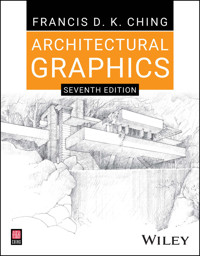
Architectural Graphics is the classic bestselling reference by one of the leading global authorities on architectural design drawing, Francis D. K. Ching. This seventh edition offers a comprehensive introduction to graphic tools and drafting conventions to translate architectural ideas into effective visual presentations, using hundreds of the author’s distinctive drawings to illustrate each topic. Updated throughout, this revised edition presents new beginner-friendly guidance for perspectives and sketching, updates on hand rendering and visual communication, and additional material on transitioning from analog to digital with CAD and digital drawing tools.
Architectural graphics are key tools for conveying design through representation on paper or on screen. This book is the ultimate guide to mastering the skill and applying your talent to create more effective design communication, teaching how to:
- Understand multiview, paraline, and perspective drawing
- Master interior sections using a variety of techniques
- Render tonal value, enhance depth, and convey illumination
- Develop professional-quality layouts for presentations
Architectural graphics both inform the design process and serve as the means by which a design is interpreted and built. Complete mastery of the tools and conventions is essential to the successful outcome of any project, and mistakes can cause confusion, time delays, increased costs, and possible catastrophe. Architectural Graphics is the comprehensive guide to professional architectural drawing, with insight from a leading authority.
Sie lesen das E-Book in den Legimi-Apps auf:
Seitenzahl: 248
Veröffentlichungsjahr: 2023
Ähnliche













Table of Contents
Cover
Table of Contents
Title Page
Copyright
Preface
1 Drawing Tools and Materials
2 Architectural Drafting
3 Architectural Drawing Systems
4 Multiview Drawings
5 Paraline Drawings
6 Perspective Drawings
7 Rendering Tonal Values and Context
8 Architectural Presentations
9 Drawing in the Design Process
10 Architectural Sketching
Index
End User License Agreement
Guide
Cover
Table of Contents
Title Page
Copyright
Preface
Begin Reading
Index
End User License Agreement
Pages
iii
iv
vi
vii
viii
1
2
3
4
5
6
7
8
9
10
11
12
13
14
15
16
17
18
19
20
21
22
23
24
25
26
27
28
29
30
31
32
33
34
35
36
37
38
39
40
41
42
43
44
45
46
47
48
49
50
51
52
53
54
54
55
56
57
58
59
60
61
62
63
64
65
66
67
68
69
70
71
72
73
74
75
76
77
78
79
80
81
82
83
84
85
86
87
88
89
90
91
92
93
94
95
96
97
98
99
100
101
102
103
104
105
106
107
108
109
110
111
112
113
114
115
116
117
118
119
120
121
122
123
124
125
126
127
128
129
130
131
132
133
134
135
136
137
138
139
140
141
142
143
144
145
146
147
148
149
150
151
152
153
154
155
156
157
158
159
160
161
162
163
164
165
166
167
168
169
170
171
172
173
174
175
176
177
178
179
180
181
182
183
184
185
186
187
188
189
190
191
192
193
194
195
196
197
198
199
200
201
202
203
204
205
206
207
208
209
210
211
212
213
214
215
216
217
218
219
220
221
222
223
224
225
226
227
228
229
230
231
232
233
234
235
236
237
238
239
240
241
242
243
244
245
246
247
248
249
250
251
252
253
254
255
256
257
258
259
260
261
262
263
264
265
266
267
268
269
270
271
272
273
274
275
276
277
278
279
280
281
282
283
284
285
286
287
288
289
290
291
292
293
294
295
296
ARCHITECTURAL GRAPHICS
Seventh Edition
Francis D. K. Ching
Copyright © 2024 by John Wiley & Sons, Inc. All rights reserved.
Published by John Wiley & Sons, Inc., Hoboken, New Jersey.Published simultaneously in Canada.
No part of this publication may be reproduced, stored in a retrieval system, or transmitted in any form or by any means, electronic, mechanical, photocopying, recording, scanning, or otherwise, except as permitted under Section 107 or 108 of the 1976 United States Copyright Act, without either the prior written permission of the Publisher, or authorization through payment of the appropriate per‐copy fee to the Copyright Clearance Center, Inc., 222 Rosewood Drive, Danvers, MA 01923, (978) 750‐8400, fax (978) 750‐4470, or on the web at www.copyright.com. Requests to the Publisher for permission should be addressed to the Permissions Department, John Wiley & Sons, Inc., 111 River Street, Hoboken, NJ 07030, (201) 748‐6011, fax (201) 748‐6008, or online at http://www.wiley.com/go/permission.
Trademarks: Wiley and the Wiley logo are trademarks or registered trademarks of John Wiley & Sons, Inc. and/or its affiliates in the United States and other countries and may not be used without written permission. All other trademarks are the property of their respective owners. John Wiley & Sons, Inc. is not associated with any product or vendor mentioned in this book.
Limit of Liability/Disclaimer of Warranty: While the publisher and author have used their best efforts in preparing this book, they make no representations or warranties with respect to the accuracy or completeness of the contents of this book and specifically disclaim any implied warranties of merchantability or fitness for a particular purpose. No warranty may be created or extended by sales representatives or written sales materials. The advice and strategies contained herein may not be suitable for your situation. You should consult with a professional where appropriate. Further, readers should be aware that websites listed in this work may have changed or disappeared between when this work was written and when it is read. Neither the publisher nor authors shall be liable for any loss of profit or any other commercial damages, including but not limited to special, incidental, consequential, or other damages.
For general information on our other products and services or for technical support, please contact our Customer Care Department within the United States at (800) 762‐2974, outside the United States at (317) 572‐3993 or fax (317) 572‐4002.
Wiley also publishes its books in a variety of electronic formats. Some content that appears in print may not be available in electronic formats. For more information about Wiley products, visit our web site at www.wiley.com.
Library of Congress Cataloging‐in‐Publication Data applied for:
Paperback ISBN: 9781394206247
Cover Design: WileyCover image: Francis D. K. Ching
PREFACE
The first edition of this text introduced students to the range of graphic tools, techniques, and conventions designers use to communicate architectural ideas. The prime objective behind its original formation and subsequent revisions was to provide a clear, concise, and illustrative guide to the creation and use of architectural graphics. While retaining the clarity and visual approach of earlier editions, this seventh edition of Architectural Graphics acknowledges the unique opportunities and challenges digital tools offer in the production of architectural graphics and adds a new chapter on the role of drawing in the design process.
The chapter organization remains largely intact from previous editions. Chapters 1 and 2 introduce the essential tools and techniques of drawing and drafting. While digital tools can augment traditional techniques, the tactile, kinesthetic process of crafting lines on a sheet of paper with a pen or pencil remains the most sensible medium for learning the graphic language of drawing.
Chapter 3 introduces the three principal systems of pictorial representation—multiview, paraline, and perspective drawings—and analyzes in a comparative manner the unique viewpoints afforded by each system. Chapters 4 through 6 then focus on the principles and standards governing the conventions and uses of each of the three drawing systems, concepts that apply whether an architectural graphic is created manually or digitally.
The language of architectural graphics relies on the power of a composition of lines to convey the illusion of a three‐dimensional construction or spatial environment on a two‐dimensional surface, be it a sheet of paper or a computer screen. While digital technology may have altered the way we input information and create perspective, paraline, and orthographic projections, a fundamental understanding of what each of the three drawing systems conveys is required of all designers. Each drawing system provides a limited view of what we are designing and representing. And an appreciation for what these viewpoints reveal—and conceal—remains indispensable in the design process.
Although the line is the quintessential element of all drawings, Chapter 7 develops strategies for using tonal values to enhance the pictorial depth of architectural drawings. This chapter now also incorporates the rendering of context, scale, and use in the drawing of design proposals.
Chapter 8 examines the fundamental principles of graphic communication and illustrates the strategic choices available in the planning and layout of architectural presentations.
A new Chapter 9 discusses the role of architectural drawings during the design process itself, from the early, exploratory stages when initial ideas and concepts are formed to the later stages where those ideas and concepts are developed into design solutions. It explores drawing from the imagination, the speculative nature of design drawing, and attitudes important to maintain during the creative process of design.
Finally, Chapter 10 has been renamed Architectural Sketching to more accurately reflect its focus on drawing on location— from direct observation—in our effort to capture the buildings, places, and environments we encounter not only during our travels but also where we live, work, and play.
Despite substantial changes in technology over the past four decades, the fundamental premise of this text endures—drawing has the power to overcome the flatness of a two‐dimensional surface and represent three‐dimensional ideas in architecture in a clear, legible, and convincing manner. To unlock this power, one requires the ability to both execute and read the graphic language of drawing. Drawing is not simply a matter of technique; it is also a cognitive act that involves visual perception, judgment, and reasoning of spatial dimensions and relationships.




