


44,99 €
Mehr erfahren.
- Herausgeber: John Wiley & Sons
- Kategorie: Geisteswissenschaft
- Sprache: Englisch
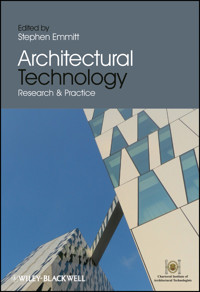
Since the publication of the first edition of Architectural Technology, in 2002, there have been significant developments in the number of courses, the profile of the discipline as well as significant changes in the Construction sector.
The Second edition of Architectural Technology addresses these challenges directly. Much greater emphasis is given to the three core themes of the book - Environmental Sustainability; Innovation; and Design. An increase in the visual material included reinforces the critical role of Design, aiding students to better translate conceptual designs into built artefacts.
Building upon solid teaching practice from the previous edition, Architectural Technology is now more concisely structured to take the reader through the whole life cycle of a building, emphasising sustainability and building performance. Material on digital information, building information modelling (BIM) and information communication technologies has been updated. Most chapters have been re-titled to emphasise the importance of design and make the book more accessible to a wider range of students. Chapters conclude with updated/more extensive links to further reading.
Architectural Technology, 2nd Edition:
-
Bridges the knowledge gap between design and construction
-
Tackles the core subjects of management, technologies and design from a sustainable building angle
-
Addresses the buildability and performance of a design from a whole life perspective
Thoroughly revised and updated this undergraduate level textbook is essential for Architectural Technology courses. Students studying Architectural Engineering, Architecture, Building Surveying; and more general Construction courses, will find the material invaluable.
Sie lesen das E-Book in den Legimi-Apps auf:
Seitenzahl: 357
Veröffentlichungsjahr: 2012
Ähnliche














Contents
Chartered Institute of Architectural Technologists
Foreword
Introduction
Chapter 1 Fundamentals
Sensory engagement
Building innovation
Building characteristics
Enclosure and functional requirements
Philosophies and approaches
Chapter 2 Physical Design Generators
The physical context: a sense of place
Micro climates and weathering
Structure and fabric
Materials
Services
Chapter 3 Social Design Generators
The social context
Communication and language
Design decisions
Risk
Quality
Added value
Chapter 4 Regulatory Design Generators
Town planning and development control
The building regulations
Standards and codes of practice
Trade associations
Testing and research reports
Chapter 5 Humane Design Generators
Perception of our buildings
Physiology and usability
Healthy environments
Safe environments
Secure environments
Fire safety
Chapter 6 Physical Interfaces
Typologies
Transitions
Joints and connections
Tolerances
Chapter 7 The Art of Detailing
Detailing principles
Environmental issues
Performance of the joint
Designing the details
Chapter 8 The Art of Specifying
Specification methods
Selection criteria – fitness for purpose
Writing the specification
Contents of a written specification
Chapter 9 The Art of Informing
Media
Coordinated project information
Drawings
Physical models
Bills of quantities
Digital information and virtual details
Information flow and design changes
Chapter 10 Assembling the Parts
The designer-contractor interface
Flows
Quality of work
Design changes
Practical completion and hand-over
Learning from building projects
Chapter 11 Living with Buildings
Durability and decay
Preservation, restoration, and conservation
Principles of conservation, repair and maintenance
Upgrading existing buildings
Learning from buildings
Chapter 12 Disassembly and Reuse
Reusing redundant buildings
Demolition and disassembly
Reclamation, reuse, and recycling
Stretching the tradition
References
Index
This edition first published 2012© 2012 John Wiley & Sons, Ltd.
Photography by Stephen Emmitt
Blackwell Publishing was acquired by John Wiley & Sons in February 2007.
Blackwell’s publishing program has been merged with Wiley’s global
Scientific, Technical and Medical business to form Wiley-Blackwell.
Registered OfficeJohn Wiley & Sons, Ltd, The Atrium, Southern Gate, Chichester, WestSussex, PO19 8SQ, UK
Editorial Offices9600 Garsington Road, Oxford, OX4 2DQ, UKThe Atrium, Southern Gate, Chichester, West Sussex, PO19 8SQ, UK2121 State Avenue, Ames, Iowa 50014-8300, USA
For details of our global editorial offices, for customer services and for information about how to apply for permission to reuse the copyright material in this book please see our website at www.wiley.com/wiley-blackwell.
The right of the author to be identified as the author of this work has been asserted in accordance with the UK Copyright, Designs and Patents Act 1988.
All rights reserved. No part of this publication may be reproduced, stored in a retrieval system, or transmitted, in any form or by any means, electronic, mechanical, photocopying, recording or otherwise, except as permitted by the UK Copyright, Designs and Patents Act 1988, without the prior permission of the publisher.
Designations used by companies to distinguish their products are often claimed as trademarks. All brand names and product names used in this book are trade names, service marks, trademarks or registered trademarks of their respective owners. The publisher is not associated with any product or vendor mentioned in this book. This publication is designed to provide accurate and authoritative information in regard to the subject matter covered. It is sold on the understanding that the publisher is not engaged in rendering professional services. If professional advice or other expert assistance is required, the services of a competent professional should be sought.
Library of Congress Cataloging-in-Publication Data
Emmitt, Stephen.Architectural technology / Stephen Emmitt. – 2nd ed.p. cm.Includes bibliographical references and index.
ISBN 978-1-4051-9479-2 (pbk. : alk. paper) 1. Architecture–Technological innovations. 2. Architecture and technology. 3. Architectural design–Technique.I. Title.NA2543.T43E46 2012720.1′05–dc23
2011035018
A catalogue record for this book is available from the British Library.
Wiley also publishes its books in a variety of electronic formats. Some content that appears in print may not be available in electronic books.
The Chartered Institute of Architectural Technologists (CIAT) is the only qualifying body for professionals working and studying in the field of Architectural Technology and is internationally recognised. The Institute has its own Royal Charter and under this Charter the objectives are:
to promote, for the benefit of society, the science and practice of Architectural Technology;
to facilitate the development and integration of technology into architecture and the wider construction industry to continually improve standards of service for the benefit of industry and of society;
to uphold and advance the standards of education, competence, practice and conduct of members of the Institute thereby promoting the interests, standing and recognition of Chartered Members within the industry and the wider society.
Chartered Architectural Technologist is a protected title and can only be awarded by CIAT. Chartered Members of the Institute may use the designation MCIAT and the title of Chartered Architectural Technologist. The Chartered qualification demonstrates equality with fellow professionals in the built environment such as architects and surveyors and is recognised by organisations ranging from banks through to government offices and other major clients. The Chartered status allows Members to set up their own practice and provide a full architectural design and contract administration service to the public, as the lead consultant. As such CIAT has a Code of Conduct which all members must comply with. In particular Chartered Members who set up their own practice must register with CIAT and in addition it is a mandatory requirement to hold professional indemnity insurance if providing a service directly to clients. In support of practising Members, CIAT produces a range of documents and information notes and works with sister Institutes in providing additional services.
CIAT works closely with universities in the UK and in other countries and Accredits and Recognises undergraduate degree and postgraduate degrees in Architectural Technology as providing the necessary underpinning knowledge to allow graduates to progress to Chartered Membership. CIAT Accredited Honours degree programmes must also comply with the UK Quality Assurance Agency (QAA) Subject Benchmark Statement for Architectural Technology.
As a membership based organisation, CIAT is owned by and operated on behalf of its members with a growing network of members who are based around the globe. This network is open to all members creating a huge resource and knowledge base. Further details can be found on the Institute’s website, www.ciat.org.uk.
Foreword
As President for the Chartered Institute of Architectural Technologists (CIAT) it gives me pleasure to support, on behalf of CIAT, this second edition of Architectural Technology. CIAT represents professionals working and studying in the field of Architectural Technology, and is internationally recognised as the qualifying body for Chartered Architectural Technologists, MCIAT and professionally qualified Architectural Technicians, TCIAT. This book recognises the distinct professional identities within the discipline of Architectural Technology.
The design and construction process is now more complex than ever before. This is evidenced by the growth of computer based design tools and the development of building information modelling relating to the planning, design, construction and use of buildings. The knowledge of physical and engineering science required by Architectural Technology students and professionals is also increasing in significance as the need to assess the environmental aspects of materials, components and services of buildings is in demand to help innovate and create a low carbon world.
In my time as an Accredited Course Leader, and while in office as CIAT Vice President Education, I have witnessed the continued evolution of the undergraduate programmes in Architectural Technology shaped by the progressive editions of the Quality Assurance Agency (QAA) Subject Benchmark Statement for Architectural Technology. The book identifies the changes in technologies linked to materials and components (design production and performance) and also technology as a design and management tool (process and management), policies and attitudes (greater attention to sustainability) and application in practice (changing methods of procurement and responsibilities). It remains an excellent publication for those engaged in the study of Architectural Technology and providing the necessary underpinning knowledge for students and practitioners.
CIAT, in supporting this publication, is aware of the continued need for books such as this as an aid for both students and those practising within the discipline of Architectural Technology. On behalf of CIAT, I would like to thank Stephen Emmitt and the publishers. It is CIAT’s belief that this book will continue to be a valuable tool for students on Architectural Technology degrees and associated programmes.
Colin Orr PCIATPresident
Introduction
Human beings have a natural tendency to make things. Every time we turn the hot water tap on, every time we go in and out of our front door, we are interacting with products that have been designed, detailed and manufactured to precise standards, products which have then been selected by designers, purchased by a contractor and assembled on a particular site by people (fitters and fixers) using a variety of machinery and tools. Normally we are relatively unaware of such detail until something goes wrong – the tap starts to drip or the door starts to stick – necessitating some form of repair or replacement. Sometimes our attention to detail is focused through the process of re-designing and refitting our kitchens or bathrooms; the choice of units, equipment, finishes, etc., seems endless, limited only by one’s imagination and financial budget.
Inventing, making, using, refining, redefining, abandoning and reinventing require constant effort and organisational skills. We make and remake buildings to house our enterprises, shelter us from the elements and to provide a safe, secure, healthy and stimulating environment. Our buildings and associated engineering works are the result of careful consideration, analysis, compromise, determination, collaboration and coordination: the result of human beings using and applying available technologies, both to realise design intent and to maintain the artefact in a serviceable condition throughout its life. Once a building becomes unsuitable as a result of change of use or obsolescence it will be upgraded, remodelled or disassembled, with materials recycled and reused; and the making and remaking process starts again, albeit in a different context.
With the exception of the do-it-yourself (DIY) market the majority of design decisions are made by professional designers and engineers and implemented by skilled contractors and sub-contractors. Many individuals earn their living by design, manufacture, assembly, maintenance, alteration, demolition and recycling of buildings, or parts of buildings, working in an industrial sector known as ‘building’ or ‘construction’. Construction is a major economic activity throughout the world, employing significant numbers of people, consuming significant quantities of (often finite) resources and adding to the pollution of our natural habitat; partly through the process of building, but mainly through the energy consumption of the building over its lifetime. The balance between improving our built environment, encouraging sustainable economic activity and limiting the environmental impact of our building stock is challenging, requiring considerable effort to see ideas translated into reality.
Architecture involves measurable (tangible) and immeasurable (intangible) elements, which makes the pursuit of good architecture a constant challenge for all project contributors. Indeed, it is often the immeasurable aspects, the intuition and feel for a project, that help to bring about exciting, creative and functional buildings that reflect the best of humanity, time and place. Designing and realising buildings that respond to, rather than compete with, ecological systems, that are humane, timely and of course simple and safe to assemble and use, is the goal. Balancing the holistic with the physical and manipulating abstract ideas towards solid artefact through the use of robust technologies to realise buildings that are beautiful, comfortable and enjoyable, can become addictive. This requires a thorough understanding of building technologies, design and management; the components of architectural technology.
If architecture is concerned with making society, it is the materials, components and fixings – the architectural technologies applied to abstract ideas and concepts – that helps to realise the built fabric in and around which society functions. Architectural technology is the constructive link between the abstract and the artefact (SAAT, 1984). Without the technologies to realise the built form architectural design would only exist in the abstract. The term ‘architectural technology’ is used quite widely in the construction sector, ranging from a rather general use to cover construction technology from an architectural perspective through to the specific use of the term to describe and define a profession; in the UK this is the Chartered Institute of Architectural Technologists (CIAT). Architectural engineering is a closely related discipline; both are hybrid disciplines, representing the fusion of architecture and technology and architecture and engineering respectively.
Architecture has its root in the Greek words archos (chief) and tekton, (builder). Technology comes from the Greek word techne referring to art and skill; the art and science of making practical, functional and aesthetically pleasing buildings.
(a) Sustainable housing, Culemborg, The Netherlands. (b) London Eye detail. (c) Canopy detail. (d) Handrail detail.
Architectural technology is the realisation of architecture through the application of building science. It is a discipline that aims to bring together artistic, practical and procedural skills; the fusion of three separate worlds (Figure I.1). The artistic component is the domain of the designer – creative, difficult to quantify objectively and always subjective. The practical component is the domain of the builder – assembling physical materials, technical, physical and quantifiable. The procedural component is the domain of the manager – pulling together artistic and practical skills in an ordered and effective manner. It is rare for all of these skills to be held by one person, making it necessary for disciplines to have an appreciation of the skills and limitations of the individuals they interact with and collaborate with during the life of the project.
Figure I.1 Architectural technology.
When we start to question how buildings are created, assembled and used, we begin a lifelong process of collecting, assimilating, adjusting and reinventing our practical knowledge base; perpetual students of our subject. Design knowledge is grounded in an understanding of how buildings are put together, used, abused, maintained, repaired and eventually taken apart with the majority of materials reused in a new artefact. This knowledge evolves with every new building project. It is a process of problem identification and analysis; idea generation; gathering, analysing producing and coordinating information; turning it into knowledge and using it to make the process of building more effective, with the ultimate aim of pleasing clients and providing exciting, vibrant, sustainable and healthy environments for all those who use them.
Architectural Technology is a primer for students of building design: architectural engineering, architectural technology, architecture, building, construction, building surveying and interior design. The book brings together artistic, philosophical, social and technical issues with an underlying philosophy of environmental sustainability. Often taught as separate subjects, collectively these issues help to articulate the constructive links in building design and also emphasise the importance of architectural detailing. Chapters are presented in a logical and progressive sequence. The first five chapters address fundamental contextual issues and common design generators. This sets the scene for exploring the heart of architectural technology – architectural detailing and the realisation of design intent – in chapters 6–10. The final two chapters explore the building in use and its eventual disassembly and reuse, emphasising the need for an integrated, whole-life, approach to our built environment.
The book is not designed to provide answers but to highlight some of the challenges and opportunities that make architectural technology such an interesting and engaging subject. In adopting an holistic approach it seemed appropriate to include photographs from a wide range of building types and styles, rather than to concentrate on well known designers or buildings, to help emphasise the creative aspects of architectural technology. It is important that readers take the generic issues raised in this book and apply them to their own particular circumstances, whatever their individual preferences.
Chapter 1
Fundamentals
Building design and construction is largely a collaborative effort in which a range of inputs are assimilated and interrelated tasks are undertaken by a wide range of specialists. Everyone contributing to a construction project is, to lesser or greater extents, concerned with issues concerning the integration of design, technology and management. Building professionals need to understand the relationships between manufacturing, detail design, assembly and disassembly; in short the ability to apply available technologies and manage the process to ensure a quality product. One of the biggest challenges facing practitioners is the enormous range of materials, products, structural solutions and architectural styles from which to choose. The challenge lies in selecting the most appropriate to suit a wide range of (often competing) project parameters. These decisions lie at the heart of the design process during which designers, working individually and/or as part of a team, make decisions which affect architectural expression and which rely on technical knowledge and knowhow for their realisation.
Before the Industrial Revolution the designer’s choice of materials was largely limited to locally sourced materials. The principal structural materials were stone, brick and timber, with organic materials such as reeds used for finishes. These materials had been used for centuries and the knowledge required for working and applying the materials had been handed down from master to apprentice. Legislation and the enforcement of rules were minimal compared with those in place today and shoddy building was commonplace. Buildings could, and did, collapse, and accidents on the building site were only too common in an age when human life was cheap. Although the choice of materials was limited there was a clear understanding of materials’ properties, strengths and limitations by the designers and the craftspeople that used them. Vernacular architecture resulted in harmonious developments which relied for the most part on what could be described as sustainable materials. Necessity, rather than choice, and ease of use resulted in the reuse of materials from redundant buildings, such as timber and stone, to create new artefacts.
With the Industrial Revolution came change. Transportation allowed materials to be moved greater distances relatively cheaply and also created a market for new building types, such as railway stations. Advances in materials and services, combined with increased performance requirements, led to the development of highly serviced buildings, which also had the effect of isolating humans from the natural environment. Writing in 1954 the architect Richard Neutra noted that mankind was becoming too detached from the natural world. In doing so he raised similar concerns expressed some time earlier by Ruskin and his contemporaries; arguments which are still relevant today. Along with preoccupations of style over substance, appearance over functionality, and economy over design quality, it is not unusual to find disconnect between our buildings and their context; with little in the way of sensory engagement between building and user or building and site. With increased awareness of our environment and greater attention to how users interact with technologies and buildings there appears to be a growing move towards greater engagement. Some of this has been driven by increased awareness of environmental issues and greater attention to our health and wellbeing. Some has been driven by advances in technologies and material science.
The digital revolution has brought about rapid advances in manufacturing possibilities and narrowed the gulf between the design and the realisation of buildings. It has also brought about digital tools that provide the means for collaborative working in real time and modelling of design solutions prior to construction. This has stimulated new ways of detailing buildings; sometimes in a high tech manner employing the latest materials, sometimes employing more familiar (low tech) materials in a new way. Either way, the possibilities for designers are many. Increasingly these innovations are being promoted as being sustainable or environmentally friendly. The challenge for designers is to look past the marketing and assess the positive contribution the growing number of technologies and manufactured products make to our built environment.
Sensory engagement
Rachel Carson’s Silent Spring (1962) is widely acknowledged as the catalyst to the world-wide environmental movement and increased public awareness of environmental issues. In 1965 James Lovelock put forward the Gaia hypothesis (Lovelock, 1990), that organisms interact with their environment to produce a self-sustaining equilibrium. The argument is that if humans disturb the environment (e.g. pollute it) they will disturb the equilibrium (e.g. changing weather patterns), something that is only too evident now as we experience more unpredictable and extreme weather conditions around the globe.
During the 1970s government concerns over oil supply resulted in attempts to conserve fuel resources through increased standards for thermal insulation. In the late 1970s and the early 1980s governmental policy shifted towards energy economy. By 1992 concern was focused on the reduction of CO2 emissions. The term ‘sustainable development’ came into common usage following publication of the Brundlandt Report (World Commission on Environment and Development, 1987) and further attention was generated by the Rio Earth Summit conference of 1992 and the widespread adoption of Agenda 21. In 1997 the Kyoto conference resulted in agreement to reduce greenhouse gas emissions by 20% (based on 1990 levels) because of concerns over global warming.
Since Kyoto many governments around the world have undertaken a wide range of measures to try and improve the environmental performance of their building stock, mainly through legislation. Focus is primarily on reducing energy consumption by forcing designers and contractors to reduce the embodied energy of the building and lower its carbon emissions through ever more stringent building regulations and associated guidance. In the UK all new build housing must be zero carbon by 2016 (DCLG, 2007) and other new buildings by 2019. Concerns over climate change have led to a reassessment of how buildings are detailed so that our built environment is more resilient to future shifts in weather patterns. Collectively this has brought about innovations in materials and systems (the architectural technologies) and a re-assessment of how we build. Conventional construction methods rely on a plentiful supply of resources, some of which have started to become scarce and hence expensive. Alternative approaches and attitudes to construction, in the philosophy and use of materials and energy, seek to minimise environmental impact through sensitive design, detailing and specification, construction and maintenance. The mantra is to reduce, reuse, recycle and revitalise.
Reuse of available resources, Avebury.
A home within a home (terracotta air brick and snail sheltering within).
Toward a sustainable vernacular
Architectural design is practiced as a way of thinking and designing by following some fundamental rules (principles); not by conforming to a fixed style or a set of forms (typologies). By working to ethical principles it is possible to realise buildings that are sustainable and add value to society. The aim should be to achieve a sense of economy, enriching daily activities with the least use of materials and energy. Primary design principles are to:
Minimise:
waste, energy consumption, materials use, damage to the environment, unhealthy indoor environments, unethical practice.
Maximise:
value, renewable energy sources, sustainable (natural) materials, quality of life for users, sensory engagement, ethical practice.
With the drive to reduce the carbon footprint of our building stock it would be easy to take a rather narrow view of sustainability (energy reduction only) and overlook the wider picture. Cultural, economic, environmental and social aspects of sustainability need to be considered concurrently and in line with the principles of minimising and maximising:
Cultural sustainability requires sensitivity to the characteristics of the local community. By recognising cultural and religious diversity it should be possible to make a positive contribution to society. This may be as subtle as engaging with the local community and incorporating local detailing traditions into new building styles.
Economic initiatives may relate to affordability and whole life costs; the use of local materials, products and suppliers to sustain the local economy; creation of new markets and products in response to environmental legislation, etc.
Environmental aspects include, for example; efforts to reduce waste; energy efficiency and carbon neutral buildings; improve the quality of the internal environment by eliminating toxins and improving air quality. Other initiatives relate to the use of renewable and natural materials, adaptability and the reuse of materials.
Social aspects relate to ethical sourcing of materials and considerate treatment of the environment and employees; the health, safety, wellbeing and comfort of workers and building users; community involvement and empowerment; and responding to the local cultural context.
Primary drivers behind a more sustainable tradition may simply be to comply with current legislation and guidance. It is, however, possible to push the boundaries and design buildings that go beyond the minimal requirements by being creative and thinking about the fundamental performance requirements of the building and its impact on the environment over its long life. Invariably this may create tensions between cultural, economic, environmental and social factors. But it also stimulates markets for innovations in both process and product. The response to climate change has been to use new materials and products with recycled content, new techniques and new architectural details. It has also resulted in a return to natural and renewable materials and traditional building methods, some of which are being used in conjunction with highly sophisticated off-site manufacturing techniques to create innovative and sustainable buildings. Changes in attitudes to how we build and to how we apply architectural technologies are also related to our better understanding of healthy buildings and our sensory (re)engagement with our immediate environment.
Building innovation
Building has relied heavily on manufacturing processes and mass production for a long time. Clay bricks are perhaps the best example of a mass produced product, although they tended to be manufactured for local use until the development of effective transportation systems allowed their widespread distribution throughout the country and export abroad. Pre-fabricated buildings have also been an essential part of building for a long time. As early as the 1780s portable cottages were being transported to the colonies, first exploiting timber frame technology, then corrugated iron and later cast iron (see Herbert, 1978). Developments in patent glazing and glazed framed buildings can be traced back to the genius of Decimus Burton and Joseph Paxton. Burton worked with the builder Richard Burton to create the Palm House at the Royal Botanic Gardens, Kew. The technology was borrowed from shipbuilding, the design is essentially that of an upturned hull of a ship, maximising the properties of wrought iron to create large clear spans to house the plants. Paxton was the chief gardener at Chatsworth House where he built the Great Conservatory between 1832 and 1848, which provided the experience to supervise and organise the erection of the Crystal Palace. Built as a temporary structure for the Great Exhibition of 1851, Paxton’s design is regarded as the first major pre-fabricated building (Bowley, 1960). Paxton was well versed in the potential of mass production, marketing his Paxtonian glass houses via mail order to the wealthier members of society.
Paxtonian glasshouse detail.
Palm House, Kew Gardens.
New structures, Kew Gardens.
Seaside pleasure piers also relied very heavily on mass produced components. The doyen of pier building, Eugenius Birch, an engineer, worked closely with manufacturers to realise his designs as elegant structures, building 16 pleasure piers between 1853 and 1884, the majority of which relied heavily on mass produced components in cast and wrought iron. These were largely selected from standard components listed in the manufacturers’ catalogues. Birch was an individual who understood the potential and limitations of the materials he selected (timber, cast and wrought iron) and exploited them to produce some elegant structures, most famously Brighton’s West Pier and Blackpool’s North Pier, a trait common among the world’s best designers.
During the 20th century there were many attempts to harness industrial processes for the benefit of building and the building user. The Bauhaus movement is one of the best known, a movement which advocated mass production and repetition at the heart of its design philosophy. In the UK the use of mass production of pre-fabricated homes (‘prefabs’) to house families after the Second World War was a triumph of manufacturing and assembly. Factories dedicated to the war effort soon switched their attention to the domestic housing market and materials not previously associated with house building, such as aluminium, were used because they were readily available. This was followed by the trend for system building in the 1960s when ‘efficiency’ was the main priority, a period when many large panel system tower blocks were assembled, very badly, on site. Poor detailing, inappropriate use of materials, inadequate supervision of construction, combined with the social problems associated with the majority of high-rise blocks in the UK, accelerated the demise of the tower block. The partial collapse of Ronan Point in East London in 1968, following a gas explosion which killed five people, gave system building a bad name.
New structures, Wisley.
More recently attention has turned once again to pre-fabrication techniques in response to the Egan Report’s core message of faster, cheaper and better through the integration of design and production (Egan, 1998, 2002). Developments in information technologies, especially ICT, 3D design packages and building information modelling (BIM), coupled with robotic manufacturing have provided a new dimension (quite literally in the case of BIM) for building designers to realise highly creative buildings (see Kolarevic & Klinger, 2008). It is now possible, budget permitting, to design freeform buildings with every element a slightly different geometry (Eekhout & van Gelder, 2009).
In many respects designs and technologies tend to evolve slowly (Steadman, 2008). Returning to the example of the glasshouse, the giant conservatories at the Eden Project in Cornwall draw on the conservatory tradition pioneered by Burton and Paxton, as well as the creative thinking behind Buckminster Fuller’s geodesic domes. Here the architects have used new materials (e.g. triple glazed ethyltetrafluoroethylene foil instead of glass) in conjunction with lightweight galvanised steel tubular frames to form enormous self-supporting shells. The two giant conservatories reach 45 m at their highest point and span 100 m at their widest, being 200 m and 135 m long respectively. The project also incorporates many sustainable materials and technologies, reflecting the ideals of the client and the society in which it was built.
As the use of mass produced components and products has increased, the labour has shifted from the building site to the factory, to be replaced by robotic manufacturing systems. Now much of the labour on new build sites is concerned with placing and fixing machine-made products to predetermined positions and/or is involved in the supervision of the assembly process; there is little in the way of craftsmanship to be seen. This contrasts with work to existing buildings where off site production technologies are not easy to apply, hence the reliance is still on traditional skills and techniques. Off site principles are sometimes referred to as ‘design for manufacture’ where architectural detailing is concerned as much with the opportunities and constraints of factory production as it is for the overall performance of the building. There has also been a move to integrate sustainable materials (traditionally labour intensive) with modern manufacturing techniques leading to innovative solutions to our environmental challenges. Within this highly creative period of building design it is crucial to understand the properties of materials and components, their interactions and their jointing possibilities, as well as their environmental credentials if future problems are to be avoided.
Building characteristics
Decisions that affect the built environment cannot be divorced from the everyday decision-making processes of the makers and users of buildings. To adopt an environmentally responsible approach to building design, construction, use and reuse requires the commitment of all project stakeholders. It also places an emphasis on designers and users having the relevant information to be able to make informed decisions. For many practitioners it also means doing something different to that which is familiar and routine, breaking existing habits and taking time to consider the consequences of our decisions and actions.
Figure 1.1 Characteristics of building.
Whatever our organisational and individual approach to design and construction there will be a number of constant factors which, to lesser or greater extents, influence our decision-making and hence affect our built environment (Figure 1.1).
Enclosure and functional requirements
Building design is concerned with the creation of space and enclosure of that space is via the building envelope. Separating inside from out, warm from cold, light from dark, results in a building comprised of elements common to all: floor(s), walls, windows, doors and a roof. The completed enclosure may not necessarily be ideal (most of us would like a bigger house or a more comfortable office environment) but functional, i.e. it must be fit for its intended purpose. Design is concerned with building up the separate elements into a connected whole. The skill is putting the various elements together in such a way as to be both functional and aesthetically pleasing, while also satisfying project parameters such as time, budget and health and safety, as expressed in Figure 1.2.
Figure 1.2 Detail design factors.
Barcelona Museum of Modern Art.
Building designers are faced with a new set of problems every time they work on a project. The site will have its own special characteristics (see Chapter 2) and the client’s requirements, expressed in the form of a brief, will also be specific to a particular project. That the design challenge is different from previous projects does not mean that the designer has to start from scratch every time. He or she will draw on existing precedents and previously used details, combining new ideas with old to create the design concept from which the detailed design work follows. This is explored further in Chapters 6 and 7.
There are a number of interrelated elements of every design project which must be considered, and each element carries with it a certain amount of historical baggage which may constrain and inspire the designer. The core elements of the design challenge are expressed in Figure 1.3. They comprise the following:
Figure 1.3 Enclosure and functional requirements.
The brief
. Arguably this is the most important document because it sets the agenda for the events that follow. The brief should clearly identify the functional requirements and technical parameters for the design. Programme, cost, quality and professional relationships are established at this stage. Design life, service life and issues of ecological design should also be addressed here.
Conceptual design
. Achieving synergy between the brief and the conceptual design from which all other, more detailed, design decisions flow is not easy. The design process relies on effective communication, co-operation and collaboration, coloured by a mix of compromise and determination.
Site, shelter, security and safety
. These four factors are essential design generators and are discussed in greater detail later in the book.
The elements are as follows:
Codes and regulations
. Configuring the building design so that it complies with current codes, regulations and standards is a major concern for the design team. Codes, regulations and standards vary with location and are revised and updated over time as knowledge increases. Their roots lie in providing safe accommodation for building users, although the scope of the regulations has widened over recent years.
Structure
. Structural systems need to be considered in abstract while the conceptual design is being developed. Many designers use ‘rule of thumb’ to gauge the approximate spans and the size of structural members before a structural engineer has been appointed, although the earlier the appointment the less the possibility of abortive work. Synergy between designer and structural engineer is important if the scheme is to develop into a cost-effective artefact. Once the concept has been agreed the structural consultant can proceed with the detailed structural design, i.e. the sizing and spacing of structural members in accordance with regulations and codes.
Fabric
. Deciding on the materials which will envelop the building structure and form the external and internal finishes with which we interact is closely related to the structural system employed. This is especially true of the interaction or fixing of the fabric to the structure. Embodied in the choice of surface finishes are that of fire resistance and surface spread of flame, requiring careful selection of materials and components. Aesthetics also plays an important role.
Heating, ventilation and air conditioning (HVAC)
. The provision of a comfortable and healthy internal environment for building users is a primary concern. Natural ventilation and passive design should be encouraged to help reduce the need for mechanical systems. Where mechanical systems are used, the positioning of the mechanical plant and the provision of adequate space to safely service it is necessary.
Servicing
. Access to the site will be determined by the physical constraints of the site, the wishes of the local highway authority and any legal constraints which may directly affect access and development possibilities. Horizontal servicing of the site is required for refuse, deliveries and access for fire fighting equipment in the event of an emergency. Vertical servicing is required for buildings over one storey high. Stairs, ramps, escalators, elevators and dumb waiters provide routes for the transfer of people and equipment.
Lighting
. Light levels are known to affect our health and are important in the workplace. Light can also affect our mood. Daylight is free and preferable to artificial lighting, but it is an unreliable source. Too little and we have to resort to artificial lighting; too much and we suffer from glare and solar gain unless shading is provided. Sizing and positioning of glazing and solar shading, as well as the positioning, type and size of artificial lighting, need careful consideration to maximise the potential of the building design.
Power and telecommunications
. Electricity, gas and telecommunications need to be supplied to most buildings. Renewable sources of power should be considered where feasible. The position of meters and outlet/access points need to be considered against the intended use of the building.
Acoustics
. As a general rule hard surfaces reflect sound energy, while soft materials absorb sound energy. Sound isolation (keeping sound in or keeping sound out) is a major concern in situations where buildings are very close together or joined via a party wall or party floor. Input from acoustic engineers may be required in all but the simplest of designs if a quality acoustic environment is to be achieved.
Plumbing
. Supply and removal lie at the heart of plumbing systems. Buildings require both a cold and hot water supply, while waste (foul) water must be safely removed via the drainage system and/or recycled via some form of grey water system.
Fire protection
. Fire prevention, protection and management are important considerations for designers and for which extensive legislation and guidance are available.
Furnishings and equipment




