


5,99 €
Mehr erfahren.
- Herausgeber: Chelsea House Press
- Kategorie: Fachliteratur
- Sprache: Englisch
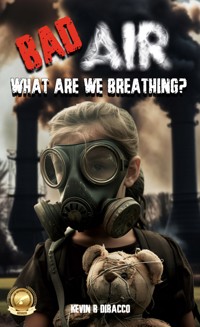
In an age where we obsess over the food we eat and the water we drink, we rarely think about our most immediate environmental interaction: breathing. "Bad Air" pulls back the curtain on the complex cocktail of pollutants we inhale every day, from the subtle chemicals off-gassing from our furniture to the industrial emissions reshaping our atmosphere.
Author Kevin B. DiBacco takes readers on a compelling journey through the science of air quality, breaking down complex concepts into digestible insights that will forever change how you think about the air around you. The book combines cutting-edge research with practical solutions, offering readers both understanding and actionable steps for protection.
From the shocking truth about indoor air (often more polluted than outdoors) to the hidden dangers in "clean" scents, each chapter reveals another layer of our air quality crisis. But rather than just sound alarms, "Bad Air" empowers readers with specific strategies for creating cleaner air spaces in their homes, offices, and communities.
Whether you're a parent concerned about your children's health, a professional looking to optimize your work environment, or simply someone who breathes, this book provides essential knowledge for navigating our increasingly polluted world. With detailed guides for choosing air purifiers, understanding air quality indexes, and recognizing early warning signs of poor air quality, "Bad Air" serves as both a wake-up call and a practical manual for better breathing.
Das E-Book können Sie in Legimi-Apps oder einer beliebigen App lesen, die das folgende Format unterstützen:
Veröffentlichungsjahr: 2024
Ähnliche
















BADAIR
WHAT ARE WE BREATHING?
Kevin B DiBacco
Copyright © 2024 by Kevin B. DiBacco
All rights reserved.
No part of this book may be reproduced in any form without written permission from the publisher or author, except as allowed by U.S. copyright law. Published by Chelsea House Press.
Contents
Introduction
The Invisible Threat Around Us
Chapter 1
The Air We Breathe
Chapter 2
Natural Components and Cycles
Chapter 3
Major Air Pollutants
Chapter 4
Chemical Threats in Our Air
Chapter 5
The Indoor Air Crisis
Chapter 6
Immediate Health Effects
Chapter 7
Long-term Health Consequences
Chapter 8
At-Risk Groups
Chapter 9
Monitoring and Assessment
Chapter 10
Protection and Prevention
Chapter 11
Essential Air Quality Tips and Features
Chapter 12
Key Highlights and Reader Takeaways
Introduction
The Invisible Threat Around Us
Take a deep breath. Go ahead, I'll wait.
Did you think about what just entered your lungs? Probably not. Most of us don't. We breathe about 20,000 times a day, pulling in roughly 2,000 gallons of air, and we barely give it a second thought. That's totally normal – breathing is just something we do, like blinking or walking. But here's the thing: maybe we should be paying more attention to what's floating around in that air we're gulping down all day long.
Let's talk about what's really happening with our air in 2024. We're facing some unprecedented challenges:
Urban Air Quality Crisis:
Megacities struggling with smog
Traffic pollution reaching new heights
Construction dust everywhere
Industrial emissions mixing with urban life
Chemical cocktails from modern living
Think about your typical morning commute. That twenty-minute drive to work? You're not just traveling through space – you're traveling through a complex soup of:
Vehicle exhaust from thousands of cars
Construction dust from that new high-rise
Industrial emissions from nearby factories
Ground-level ozone forming in the sunlight
Particulate matter from brake dust and tire wear
I remember the first time I really thought about air quality. I was stuck in traffic on a sizzling summer day, windows down because my car's AC was on the fritz. The truck in front of me belched out a cloud of black diesel exhaust, and I could actually taste it. Gross, right? But that got me thinking – if I could taste and smell that exhaust, what about all the stuff in the air I couldn't detect? What was I breathing in every single day without even knowing it?
Modern Air Challenges:
Chemical proliferation:
Thousands of new compounds yearly
Unknown long-term effects
Complex interactions
Synthetic materials everywhere
Industrial innovations
Climate change impacts:
Increased wildfire smoke
Rising ground-level ozone
Changed weather patterns
Extended pollen seasons
Heat-pollution interactions
The Indoor Air Crisis:
Building materials:
Off-gassing furniture
Synthetic carpets
Paint and adhesives
Pressed wood products
Flame retardants
Modern lifestyle impacts:
Work-from-home pollution
Electronic device emissions
Cleaning product chemicals
Personal care products
Cooking fumes
You know what's crazy? That nasty truck exhaust moment was actually a gift in disguise. It opened my eyes to something we all take for granted. See, most air pollution is invisible. You can't see it, smell it, or taste it. It's like having a party crasher in your house that you don't even know is there.
Let's break down what's actually in our modern air:
Outdoor Pollutants:
Vehicle emissions:
Carbon monoxide
Nitrogen oxides
Particulate matter
Volatile organic compounds
Heavy metals
Industrial contributions:
Sulfur dioxide
Industrial solvents
Metal particles
Process emissions
Chemical releases
Indoor Pollutants:
Building-related:
Formaldehyde
VOCs from materials
Radon
Asbestos
Lead dust
Activity-generated:
Cooking particles
Cleaning chemicals
Personal care products
Hobby materials
Pet dander
Emerging Concerns:
Microplastics in air:
Synthetic fiber breakdown
Tire wear particles
Industrial processes
Packaging degradation
Textile wear
Nanoparticles:
Engineered materials
Consumer products
Industrial processes
Vehicle emissions
Electronic components
Here's a disturbing thought about what's in your average breath today:
Natural Components:
Traditional elements:
Nitrogen
Oxygen
Argon
Carbon dioxide
Water vapor
Natural particles:
Pollen
Dust
Spores
Sea spray
Volcanic particles
Human-Added Elements:
Chemical compounds:
Industrial emissions
Vehicle exhaust
Consumer products
Building materials
Agricultural chemicals
Synthetic materials:
Microfibers
Plastic particles
Flame retardants
Artificial fragrances
Engineered nanoparticles
The Health Stakes:
Immediate impacts:
Respiratory irritation
Allergic reactions
Headaches
Eye irritation
Throat discomfort
Long-term concerns:
Respiratory diseases
Cardiovascular problems
Cancer risks
Developmental issues
Neurological effects
Environmental Justice:
Unequal exposure:
Low-income communities
Minority neighborhoods
Industrial zones
Traffic corridors
Urban heat islands
Access disparities:
Healthcare resources
Air quality information
Protection measures
Clean air zones
Political voice
Solutions Landscape:
Personal actions:
Air quality monitoring
Filtration systems
Ventilation improvements
Product choices
Lifestyle adaptations
Community efforts:
Policy advocacy
Education initiatives
Monitoring networks
Green spaces
Clean transportation
The Way Forward:
Technology solutions:
Better monitoring
Improved filtration
Clean energy
Smart buildings
Electric vehicles
Policy needs:
Stronger regulations
Environmental justice
Clean air standards
Enforcement
International cooperation
Throughout this book, we'll explore each of these aspects in detail, always focusing on practical solutions and actionable steps. Because while the air quality situation might seem overwhelming, understanding is the first step toward improvement.
Remember, every breath matters. And by the end of this book, you'll understand exactly what's in that breath, why it matters, and most importantly, what you can do to make it cleaner and healthier for yourself and everyone around you.
Ready to dive in? Let's explore what's really in the air we breathe, one breath at a time.
Let's take a look into what's really happening with our air in 2024. We're facing some unprecedented challenges that would have been hard to imagine even a few decades ago:
Urban Air Quality Crisis:
Megacities struggling with smog:
Photochemical smog formation:
NOx and VOC interactions
Temperature inversions
Trapped pollution layers
Peak hour concentrations
Weather pattern impacts
Building density effects:
Street canyon pollution
Reduced air circulation
Heat island intensification
Ventilation blockage
Pollution trapping
Traffic pollution reaching new heights:
Vehicle emission types:
Primary exhaust gases
Secondary formation products
Brake and tire wear
Road dust resuspension
Fuel evaporation
Traffic pattern impacts:
Rush hour peaks
Idle emissions
Stop-and-go effects
Highway corridors
Intersection hotspots
Construction boom impacts:
Dust sources:
Excavation activities
Material handling
Equipment emissions
Concrete cutting
Demolition work
Chemical releases:
Solvent evaporation
Coating emissions
Adhesive off-gassing
Waterproofing compounds
Treatment chemicals
Industrial emissions complexity:
Stack emissions:
Combustion products
Process gases
Particulate matter
Heavy metals
Organic compounds
Fugitive emissions:
Equipment leaks
Storage tank vapors
Loading operations
Waste treatment
Material handling
Modern chemical cocktails:
Consumer product emissions:
Personal care products
Cleaning supplies
Air fresheners
Electronics off-gassing
Furniture treatments
Building material releases:
New construction materials
Renovation products
Interior finishes
Insulation compounds
Waterproofing agents
Now, let's break down exactly what's in our modern air, pollutant by pollutant:
Criteria Pollutants:
Particulate Matter (PM):
PM2.5 (Fine particles):
Composition variations:
Metals
Carbon compounds
Sulfates
Nitrates
Organic matter
Source specifics:
Combustion processes
Chemical reactions
Industrial processes
Vehicle emissions
Agricultural activities
PM10 (Coarse particles):
Material types:
Dust
Pollen
Mold spores
Sea salt
Tire wear
Generation sources:
Construction
Road wear
Natural erosion
Agricultural operations
Industrial processes
Gaseous Pollutants:
Ground-level Ozone (O3):
Formation mechanisms:
NOx and VOC reactions
Sunlight interaction
Temperature dependence
Wind patterns
Seasonal variations
Peak conditions:
Summer afternoons
High traffic periods
Stagnant air
Urban heat islands
Regional transport
Nitrogen Oxides (NOx):
Species breakdown:
Nitrogen dioxide (NO2)
Nitric oxide (NO)
Other nitrogen compounds
Reaction products
Secondary formations
Major sources:
Vehicle exhaust
Power plants
Industrial processes
Home heating
Agricultural burning
Sulfur Dioxide (SO2):
Emission characteristics:
Industrial releases
Power generation
Marine vessel exhaust
Metal processing
Coal burning
Transformation processes:
Acid rain formation
Particle creation
Chemical reactions
Deposition patterns
Atmospheric residence
Carbon Monoxide (CO):
Source profiles:
Vehicle exhaust
Indoor combustion
Industrial processes
Natural sources
Waste treatment
Exposure patterns:
Traffic hotspots
Indoor accumulation
Seasonal variations
Urban concentrations
Microenvironment levels
Emerging Pollutants:
Ultrafine Particles:
Characteristics:
Size < 0.1 micrometers
High number concentration
Large surface area
Deep lung penetration
Blood-brain barrier crossing
Sources:
Combustion processes
Vehicle emissions
Industrial activities
Consumer products
Latest technologies
Novel Organic Compounds:
PFAS (Forever Chemicals):
Consumer products
Industrial processes
Firefighting foam
Water-resistant materials
Food packaging
Emerging VOCs:
New building materials
Advanced electronics
Modern furnishings
Personal care products
Cleaning innovations
Air Toxics:
Industrial Chemicals:
Benzene:
Gasoline evaporation
Industrial processes
Consumer products
Tobacco smoke
Indoor sources
Formaldehyde:
Building materials
Furniture
Consumer products
Combustion processes
Natural sources
Heavy Metals:
Industrial emissions
Waste incineration
Mining activities
Vehicle wear
Historical contamination
Indoor Air Specifics:
Building-Related:
Construction Materials:
Pressed wood
Insulation
Paints
Adhesives
Sealants
Building Systems:
HVAC emissions
Ductwork contamination
Ventilation issues
System maintenance
Operation patterns
Occupant-Generated:
Human Activities:
Cooking emissions
Cleaning products
Personal care items
Hobbies and crafts
Electronic device use
Biological Sources:
Human bioeffluents
Pet dander
Dust mites
Mold growth
Bacterial emissions
The complexity of modern air pollution isn't just about the individual pollutants – it's about how they interact and transform in our atmosphere. Think of it as a giant chemistry experiment happening right over our heads, with new compounds being added to the mix almost daily.
Let's shine a light on the invisible troublemakers lurking in our homes – the indoor air pollutants that most people never even think about. It's like having uninvited guests at a party, except these guests are microscopic and potentially harmful:
Hidden Chemical Emissions:
Electronics and Office Equipment:
Computer heat emissions:
Flame retardant releases
Plastic off-gassing
Circuit board compounds
Dust combustion products
Electronic component degradation
Printer/copier emissions:
Toner particles
Ozone generation
Paper dust
Volatile organic compounds
Heat-induced releases
Charging cables/power strips:
PVC degradation products
Heat-related emissions
Insulation breakdown
Metal particulates
Coating compounds
Silent Bathroom Pollutants:
Hidden sources:
Shower steam effects:




