


6,99 €
Mehr erfahren.
- Herausgeber: Success Publications SAR
- Kategorie: Fachliteratur
- Sprache: Englisch
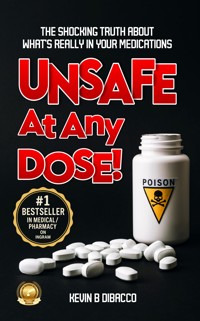
What's really in that pill you just swallowed?
After eighteen surgeries left author Kevin B DiBacco dependent on numerous medications, a shocking discovery changed everything: his prescriptions were packed with hidden allergens that were making him sick. This revelation launched him into an investigation that uncovered a pharmaceutical system built on profit rather than patient safety.
In this explosive exposé, DiBacco reveals:
• How 60-80% of your medication isn't medicine at all, but a cocktail of industrial chemicals never tested for safety
• Why FDA approval doesn't mean what you think it does
• How pharmaceutical manufacturing has moved to countries with minimal oversight, where contamination is common
• Why generic drugs can legally vary by up to 45% from brand names
• How regulatory agencies have been captured by the very industry they're supposed to police
• The hidden allergens and toxins lurking in your medicine cabinet
This meticulously researched book follows the money trail behind pharmaceutical dangers and provides practical strategies to protect yourself and your family. DiBacco combines personal experience with investigative reporting to deliver a wake-up call about the medications we depend on every day.
"Unsafe at Any Dose" isn't just about exposing problems—it's about empowering patients to make informed decisions in a system that profits from their ignorance. Whether you take prescription medications daily or just occasional over-the-counter remedies, this book will forever change how you think about what's in your medicine cabinet.
Das E-Book können Sie in Legimi-Apps oder einer beliebigen App lesen, die das folgende Format unterstützen:
Veröffentlichungsjahr: 2025
Ähnliche












Unsafe At Any Dose
Table of contents
Introduction: The Trust Trap
Chapter 1: Beyond the Active Ingredient
Chapter 2: The Manufacturing Web
Chapter 3: Regulatory Blind Spots
Chapter 4: The Inactive Ingredient Myth
Chapter 5: Colors, Flavors, and Preservatives
Chapter 6: Manufacturing Contaminants
Chapter 7: Generic vs. Brand Name Reality
Chapter 8: The Inspection Game
Chapter 9: Recalls You Never Heard About
Chapter 10: Over-the-Counter Dangers
Chapter 11: The Money Trail
Chapter 12: Reading Between the Lines
Chapter 13: Minimizing Your Risk
Chapter 14: The Path Forward
Conclusion: Your Journey Toward Pharmaceutical Safety
Sources and Further Reading
landmarks
Title page
Cover
Table of contents
Book start
Unsafe at Any Dose:
The Chemical Contamination
of
Modern Medicine
Kevin B DiBacco
TABLE OF CONTENTS
Introduction: The Trust Trap 6
Chapter 1: Beyond the Active Ingredient 17
Chapter 2: The Manufacturing Web 32
Chapter 3: Regulatory Blind Spots 47
Chapter 4: The Inactive Ingredient Myth 67
Chapter 5: Colors, Flavors, and Preservatives 89
Chapter 6: Manufacturing Contaminants 108
Chapter 7: Generic vs. Brand Name Reality 129
Chapter 8: The Inspection Game 144
Chapter 9: Recalls You Never Heard About 165
Chapter 10: Over-the-Counter Dangers 180
Chapter 11: The Money Trail 196
Chapter 12: Reading Between the Lines 213
Chapter 13: Minimizing Your Risk 231
Chapter 14: The Path Forward 252
Conclusion: Your Journey Toward Pharmaceutical Safety 269
Sources and Further Reading 275
Copyright © 2025 Kevin B. DiBacco All rights reserved.
No part of this book may be reproduced, stored in a retrieval system, or transmitted in any form or by any means—electronic, mechanical, photocopying, recording, or otherwise—without the prior written permission of the copyright holder, except for brief quotations used in reviews, academic studies, or articles.
For information or permission requests, contact: [Insert your publisher or imprint name and contact, if applicable]
Disclaimer
The information presented in this book is intended for educational and informational purposes only. It reflects the author’s research, investigative findings, and personal opinions at the time of writing. This book is not intended to provide medical advice or to be a substitute for consultation with a licensed medical professional.
Always seek the advice of a physician, pharmacist, or other qualified health provider with any questions you may have regarding medications, health conditions, or treatment plans. Never disregard professional medical advice or delay seeking treatment based on the content of this book.
While every effort has been made to verify the information provided, the author and publisher make no representations or warranties regarding the accuracy, applicability, or completeness of the content. They disclaim any liability or responsibility for any loss, injury, or damage that may occur as a result of following or applying any of the information presented herein.
References to real individuals, corporations, agencies, or products are for context only and do not imply endorsement or criticism unless expressly stated.
ABOUT THE AUTHOR
Kevin B. DiBacco is a bestselling author, award-winning filmmaker, and former USAF Security Forces veteran whose debut novel Badge of Horror is now being sold worldwide. With multiple international bestsellers to his name and seven traditional publishing deals secured, Kevin has established himself as a formidable voice across both fiction and nonfiction genres.
Over his 37-year career in filmmaking, Kevin's work was showcased at top-tier festivals including Sundance and Cannes, with international distribution in five major territories. But his most compelling story is his own: surviving a life-threatening brain surgery, undergoing a three-year recovery, and losing 60 pounds at age 62. Kevin's journey is a testament to unbreakable willpower, chronicled in his writings that inspire, educate, and empower.
His internationally recognized bestsellers include Being Weird: Unleash Your Inner Weirdo and Conquer the World(Viking House), Single Band Workout (Global Publishing Agency), and The Lost Art of Logical Thinking (Chelsea House Press). Kevin has secured publishing deals with prestigious houses including Viking House, Global Publishing Agency, Chelsea House Press, New Castle Publishing, Urban Viking Publishing UK, Staten House, Success Publications, and Tribune Publishing Company.
His acclaimed titles span diverse subjects:
Microplastics: Poisoning the People – Global Publishing Agency
Bad Air: What Are We Breathing? – Chelsea House Press
Fitness Decoded: Unlocking the Secrets to Healthiness & Happiness at Any Age! – New Castle Publishing
Indie Filmmaking in the Real World – Urban Viking Publishing UK
HYSOMETRICS – Urban Viking Publishing UK
Hold the Power – Urban Viking Publishing UK
Chemicals in Our Food – Staten House
The Handshake: Around the World – Success Publications
Powerlifting with Bands – Urban Viking Publishing UK
Recharge: The Powernap – Tribune Publishing Company
In nonfiction, Kevin has become known for delivering raw, practical, and inspiring content across genres ranging from fitness and mental health to environmental advocacy and media literacy. His powerful book Depression: Understanding and Overcoming reflects his personal battle with clinical depression, while his ISO QUICK STRENGTH program merges mental and physical resilience into one transformative system.
Now turning the page to fiction, Badge of Horror marks the start of a bold new chapter. Combining suspense, realism, and sharp insight, the novel is just the beginning of a storytelling legacy that bridges personal truth with compelling narrative.
Kevin's motto "If you can see it, you can do it" continues to fuel his work and inspire audiences around the world.
Introduction: The Trust Trap
A Patient's Awakening
I've been cut open more times than I care to count.
Eighteen surgeries, to be exact. Torn ACLs, shattered bones, damaged cartilage, reconstructed joints—the inevitable price of a lifetime spent pushing my body to its athletic limits. Each time I found myself in a hospital bed, a different doctor would appear with the same routine: explaining the procedure, discussing recovery time, and handing me a prescription for pain medication.
"Take two of every four hours," they'd say, barely glancing up from their prescription pad. "This will help with the pain."
But I started asking questions that apparently no one else was asking: "What exactly is in these pills? Where are they made? What are the side effects of taking them for weeks or months at a time?"
The answers I got were disturbing in their vagueness.
"It's just a standard pain reliever," one orthopedic surgeon told me after my fourteenth surgery. When I pressed for specifics about the inactive ingredients, he admitted he didn't actually know what else was in the medication he was prescribing. "The FDA approves them," he said with a shrug. "That's good enough for me."
But it wasn't good enough for me anymore.
The Prescription Treadmill
Over the years, I've been prescribed nearly every pain medication in existence: OxyContin, Percocet, Vicodin, Tramadol, Fentanyl patches, Morphine, Codeine, and dozens of others whose names I can barely pronounce. Each surgeon seemed to have their favorite, their go-to drug that they prescribed to every patient regardless of individual circumstances.
What struck me wasn't just the casual way these powerful substances were handed out—it was the complete absence of curiosity about what else these medications contained. The doctors focused entirely on the active ingredient, the part that would dull my pain, while completely ignoring the other 60-80% of each pill's contents.
After my twentieth surgery, I started declining the prescriptions. The pain was manageable, and something about swallowing chemical cocktails that no one could fully explain didn't sit right with me. My doctors thought I was crazy. "Why would you choose to be in pain?" they asked.
Because I was starting to suspect that the pain might be preferable to the unknown consequences of consuming industrial chemicals whose safety had never been thoroughly tested.
The Soy Discovery
My suspicions proved justified in the most unexpected way. Three years ago, after developing mysterious digestive issues that coincided with a period of taking multiple medications, I worked with my doctors to identify potential triggers. We systematically eliminated foods from my diet, but nothing seemed to help.
Then my physician suggested we look at my medications.
What we discovered shocked both of us: nearly every over-the-counter medication I was taking contained soy as a binding agent, filler, or coating ingredient. The Advil I took for minor aches, the Tums for occasional heartburn, even the multivitamin I'd been swallowing daily for years—all contained various forms of soy protein, soy lecithin, or soy-derived compounds.
This wasn't listed prominently anywhere. You had to dig through the fine print on package inserts, and even then, the soy derivatives were often disguised under chemical names that gave no indication of their origin. "Lecithin" doesn't sound like soy. "Polysorbate 80" doesn't sound like soy. But both can be derived from soybeans, and both were in medications I was taking daily.
When we eliminated all soy-containing medications from my routine, my digestive issues disappeared within two weeks.
The Dairy Revelation
Emboldened by this discovery, we started investigating other common allergens hidden in my medications. The next revelation was even more disturbing: dairy products are everywhere in pharmaceuticals.
Lactose—milk sugar—is one of the most common inactive ingredients in prescription and over-the-counter medications. It's cheap, readily available, and works well as a filler and binding agent. But for the millions of Americans who are lactose intolerant or have dairy allergies, this hidden ingredient can cause everything from digestive distress to severe allergic reactions.
My blood pressure medication contained lactose. My antihistamine contained lactose. Even my supposedly "hypoallergenic" supplements contained dairy-derived compounds. And just like with soy, this information was buried in technical ingredient lists that neither my doctors nor my pharmacists had ever bothered to review with me.
The irony was staggering I was taking antihistamines that contained dairy while trying to figure out why I was having allergic reactions. I was consuming lactose in my digestive medications while wondering why my stomach problems persisted.
The System's Willful Blindness
What became clear through this personal investigation was that our entire medical system operates on a foundation of willful ignorance about pharmaceutical ingredients. Doctors are trained to think about active ingredients and primary effects. They learn to match symptoms with drug categories: pain gets opioids, inflammation gets NSAIDs, infection gets antibiotics.
But they're not trained as chemists or toxicologists. They don't learn about manufacturing processes, contamination risks, or the cumulative effects of consuming multiple chemical additives over time. Most importantly, they're not taught to consider that "inactive" ingredients might be causing active problems for their patients.
The system treats these hidden ingredients as irrelevant background noise, despite the fact that they often make up the majority of what patients are actually swallowing. It's like being served a meal where the chef tells you about the main ingredient while keeping the rest of the recipe secret—and then acting surprised when you have an allergic reaction.
The Trust Trap
Your doctor hands you a prescription. You take it to the pharmacy, receive a bottle of pills, and swallow them without question. This simple act of trust happens millions of times every day across America. We trust our doctors to know what they're prescribing. We trust our pharmacists to dispense what's safe. We trust the FDA to ensure what reaches our medicine cabinets won't harm us.
That trust is killing us.
My decades of surgeries and subsequent medication experiences taught me a harsh truth: your doctor doesn't actually know what's in the medication they just prescribed. The pharmacist filling your prescription has never seen the manufacturing facility where your pills were made. The FDA inspector who "approved" your medication hasn't set foot in the factory that produced it in over three years.
This isn't conspiracy theory. This is the documented reality of modern pharmaceutical manufacturing and medical practice.
The Prescription Assembly Line
Walk into any doctor's office today and witness a system designed for speed, not scrutiny. The average primary care physician sees a patient every 15 minutes. In that quarter-hour, they're expected to diagnose your problem, consider your medical history, weigh potential treatments, and write a prescription. What they're not doing—what they literally don't have time to do—is researching the complete chemical composition of the medication they're about to put into your body.
Your doctor learned about medications in medical school from textbooks that focus on active ingredients and primary effects. They receive continuing education from pharmaceutical sales representatives whose job is to sell drugs, not to exhaustively detail every chemical component and manufacturing risk. They rely on the Physicians' Desk Reference and similar resources that list "active ingredients" prominently while relegating the other 60-80% of each pill's contents to fine print labeled as "inactive ingredients."
But here's the critical truth I learned through my own health struggles: there's no such thing as an inactive ingredient when it comes to your body's chemical reactions.
The Illusion of Regulation
The FDA—the agency we've entrusted with keeping our medications safe—operates under a system of assumptions rather than verification. They assume that pharmaceutical companies are telling the truth about their manufacturing processes. They assume that overseas facilities maintain American standards even when inspected infrequently or never. They assume that "inactive" ingredients that were deemed safe decades ago remain safe when combined with new active compounds, consumed by people taking multiple medications, or manufactured under different conditions than originally tested.
These assumptions are built into the very foundation of drug approval. When a pharmaceutical company submits a new drug application, they're not required to prove that every single chemical component is safe for every potential user in every possible combination. They're required to prove that the active ingredient works for its intended purpose and doesn't cause more harm than benefit in clinical trials that typically last a few months and involve carefully selected participants.
The manufacturing facilities where your medications are actually produced? The FDA inspects domestic facilities on average every two to three years. Foreign facilities—which now produce approximately 80% of the active pharmaceutical ingredients in American medications—are inspected even less frequently. Some have never been inspected at all.
The Chemical Reality
Every pill in your medicine cabinet is a complex chemical cocktail. That innocent-looking white tablet contains not just the medication you think you're taking, but a carefully engineered mixture of binding agents, fillers, preservatives, dyes, coatings, lubricants, and stabilizers. Many of these substances are industrial chemicals that happen to be useful in pharmaceutical manufacturing. Some are known allergens. Others are compounds that have never been tested for long-term human consumption.
The manufacturers aren't hiding this information—it's printed right on the package insert that nobody reads. But they're not advertising it either. When was the last time you saw a drug commercial mention that their antidepressant contains formaldehyde, or that their blood pressure medication includes a plastic coating made from the same polymer used in disposable cups?
These aren't accidents or contamination events. These are intentional ingredients, added because they serve specific manufacturing purposes. The formaldehyde prevents bacterial growth. The plastic coating controls how quickly the drug dissolves. The soy lecithin helps bind the tablet together. The lactose makes the pill the right size and weight.
Your body doesn't distinguish between intentional and accidental chemical exposure—it simply responds to whatever you've put into it. As I learned the hard way, even "inactive" ingredients can trigger continually active health problems.
The Hidden Allergen Crisis
My experience with soy and dairy contamination in medications is not unique—it's epidemic. Millions of Americans with food allergies, intolerances, and sensitivities are unknowingly consuming their trigger substances in their daily medications. The reactions are often attributed to their underlying conditions, side effects of the active ingredients, or mysterious unexplained symptoms.
Corn derivatives are in countless medications, threatening people with corn allergies. Gluten appears in many prescription drugs, potentially harmful to those with celiac disease. Artificial dyes derived from petroleum products are added for cosmetic purposes, despite links to behavioral problems in sensitive individuals. Preservatives that are banned in food products for children are routinely included in children's medications.
The medical system's response to these problems is typically to prescribe additional medications to treat the symptoms caused by the original medications—creating a cascade of chemical exposure that compounds the problem.
The Contamination Crisis
Beyond the intentionally added chemicals lies an even more disturbing reality: widespread contamination that's discovered only after millions of people have consumed affected medications. In recent years, we've seen blood pressure medications contaminated with probable carcinogens, antacids laced with rocket fuel components, and generic drugs tainted with glass particles, metal fragments, and bacterial toxins.
These contamination events aren't rare anomalies—they're the predictable result of a system that prioritizes cost and speed over safety and transparency. When pharmaceutical manufacturing moved overseas to countries with lower labor costs and less stringent oversight, we didn't just export jobs. We exported our ability to ensure the safety of our medication supply.
The Prescription Paradox
Here's the paradox that defines modern medicine: the same doctors who advise you to eat organic food, avoid processed chemicals, and read ingredient labels on everything from shampoo to breakfast cereal will prescribe medications without knowing or discussing the complete chemical content of what they're recommending.
They'll spend twenty minutes explaining the side effects of a medication's active ingredient but won't mention that the pill also contains potential allergens, industrial lubricants, or chemical preservatives. They'll carefully consider drug interactions between active ingredients while ignoring how the dozens of inactive ingredients might interact with each other, with your food, or with your other medications.
This isn't malice or incompetence—it's a system that has evolved to treat doctors as drug distributors rather than chemical safety experts. They're trained to match symptoms with active ingredients, not to serve as toxicologists evaluating the safety of complex chemical mixtures.
The Cost of Ignorance
The consequences of this willful ignorance are measured not just in individual health outcomes, but in the broader erosion of public trust in medicine and regulatory institutions. When people discover that their "FDA-approved" medication was manufactured in facilities that have never been inspected, or that their prescription contains chemicals that were never tested for long-term safety, they lose faith in the entire system.
Some turn to alternative medicine, which often lacks any regulation at all. Others simply stop taking necessary medications, risking their health in a unique way. Many continue taking their prescriptions while harboring growing anxiety about what they're really putting into their bodies.
My own journey led me to become increasingly selective about which medications I was willing to take, often choosing to manage pain and other symptoms through non-pharmaceutical means rather than consuming chemical cocktails I couldn't trust.
Why This Book Matters Now
We stand at a crossroads in pharmaceutical safety. The COVID-19 pandemic highlighted both the incredible potential of modern drug development and the fragility of our global supply chains. Shortages revealed how dependent we've become on overseas manufacturing we can't adequately monitor. Emergency authorizations demonstrated that safety testing can be abbreviated when the stakes are high enough.
The question we must now ask is: if the stakes are always high when it comes to the chemicals we put in our bodies, why do we accept abbreviated safety measures as standard practice?
This book will take you inside the world of pharmaceutical manufacturing, regulatory oversight, and medical practice to show you exactly what's in the medications you and your loved ones take every day. You'll discover how the drugs are really made, where the chemicals come from, and why neither your doctor nor the FDA can guarantee their complete safety.
More importantly, you'll learn how to protect yourself and your family by asking the right questions, demanding better information, and making more informed decisions about the chemical risks you're willing to accept in exchange for medical benefits.
My Eighteen surgeries taught me that questioning your medications isn't paranoia—it's necessary self-preservation. The trust trap has caught millions of Americans who believed that someone else was watching out for their safety. It's time to start watching out for yourself.
Your health—and your life—may depend on what you discover in the pages that follow.
Chapter 1: Beyond the Active Ingredient
What's really in that little pill you just swallowed?
Sarah reached for her morning routine: a multivitamin, her blood pressure medication, and two Tylenol for the headache that had been nagging her since yesterday. Like millions of Americans, she performed this ritual without a second thought, trusting that these small capsules and tablets contained exactly what she needed—nothing more, nothing less. But if Sarah had turned over that bottle of Extra Strength Tylenol and really examined the ingredient list, she might have been surprised to discover that the acetaminophen she thought she was taking made up less than half of what she actually swallowed.
Welcome to the hidden world of pharmaceutical chemistry, where the "medicine" in your medicine cabinet tells only part of the story.
The Great Pharmaceutical Illusion
We live in an age of unprecedented medical transparency. We can look up drug interactions online, read about side effects, and even access clinical trial data with a few clicks. Yet most of us remain completely in the dark about one fundamental question: What exactly are we putting into our bodies when we take medication?
The answer might surprise you. That little white pill isn't just medicine—it's a carefully engineered chemical cocktail containing dozens of ingredients you've probably never heard of. Some of these ingredients help the drug work better. Others help it look prettier, taste better, or last longer on the shelf. Still others are there for reasons that have nothing to do with your health and everything to do with manufacturing efficiency and profit margins.
This isn't a conspiracy theory. It's simply a reality that the pharmaceutical industry hasn't been particularly eager to advertise, and one that most doctors don't think to discuss with their patients. After all, when was the last time your physician explained the difference between the "active ingredient" and the other 15-20 substances in your prescription?
The Myth of "Just Medicine"
Most people operate under what we might call the "pure drug myth"—the assumption that medications contain only the therapeutic substance needed to treat their condition, perhaps with a small amount of harmless filler to hold the pill together. This misconception is so widespread that even many healthcare professionals don't fully grasp the complexity of modern pharmaceutical formulations.
The reality is far more complicated. Every medication is actually a sophisticated delivery system, engineered not just to provide a therapeutic effect, but to meet dozens of other requirements: it must be stable enough to survive months or years on a shelf, attractive enough for patients to willingly swallow, consistent enough to pass regulatory standards, and profitable enough to justify manufacturing costs.
To achieve all of these goals, pharmaceutical companies rely on what the industry calls "excipients"—a clinical term for all the ingredients in a medication that aren't the active drug itself. These excipients aren't just harmless fillers; they're active participants in how your medication works, how your body processes it, and sometimes, how it makes you feel.
The 80/20 Rule: When Medicine Isn't Mostly Medicine
Here's a number that might shock you: in most medications, the actual therapeutic ingredient—the part that's supposed to make you feel better—comprises less than 20% of what you're swallowing. Sometimes it's much less.
Take a standard 500mg Tylenol tablet. The acetaminophen that actually relieves your pain. That's exactly 500mg. But the total weight of the tablet is typically around 850mg. That means more than 40% of what you're ingesting consists of other substances entirely. And that's actually on the conservative side for pharmaceuticals.
Consider birth control pills, where the active hormones might represent less than 1% of the total pill weight. Or extended-release medications, where the actual drug might be buried within layers of polymers, waxes, and release-controlling agents that can make up 80% or more of the final product.
This isn't necessarily problematic—many of these additional ingredients serve crucial functions. But it does mean that when you take a medication, you're not just taking medicine. You're taking a complex mixture of chemicals, each chosen for specific reasons, each with its own properties and potential effects on your body.
Dissecting the Medicine Cabinet: What's Really Inside
Let's take a closer look at some common medications to understand exactly what we're dealing with. We'll start with something almost everyone has taken acetaminophen, commonly known by the brand name Tylenol.
Case Study 1: Extra Strength Tylenol
Pick up a bottle of Extra Strength Tylenol and read the "inactive ingredients" list. Depending on the specific formulation, you might see:
Croscarmellose sodium: A "super disintegrant" that helps the tablet break apart in your stomach
Magnesium stearate: A lubricant that prevents the powder from sticking to manufacturing equipment
Microcrystalline cellulose: A filler that gives the tablet bulk and structure
Polyethylene glycol: A polymer that can affect how quickly the drug dissolves
Povidone: A binding agent that holds the tablet together
Pregelatinized starch: Another disintegrant and filler
Sodium starch glycolate: Yet another disintegrant
Stearic acid: Another lubricant
Titanium dioxide: A whitening agent that makes the pill look clean and uniform
That's nine additional chemicals in addition to the acetaminophen—and this is considered a relatively simple formulation. Each of these ingredients was chosen for specific reasons, but none of them are there to treat your headache.
Some of these substances are generally recognized as safe in the amounts used. Others have sparked debate within the scientific community. Titanium dioxide, for instance, has been banned as a food additive in the European Union due to potential health concerns, yet it remains common in American pharmaceuticals.
Case Study 2: Advil (Ibuprofen)
Let's examine another common pain reliever: Advil. A typical 200mg Advil tablet contains:
Active ingredient:
Ibuprofen: 200mg
Inactive ingredients:
Acetylated monoglycerides: Emulsifiers that help ingredients mix properly
Colloidal silicon dioxide: An anti-caking agent that prevents clumping
Corn starch: A disintegrant and filler
Croscarmellose sodium: The same super disintegrant we saw in Tylenol
Methylparaben: A preservative that prevents bacterial growth
Microcrystalline cellulose: The same filler from Tylenol
Pharmaceutical glaze: A coating that gives the pill its smooth finish
Povidone: The same binding agent from Tylenol
Propylparaben: Another preservative
Silicon dioxide: An anti-caking agent
Sodium benzoate: Yet another preservative
Sodium lauryl sulfate: A surfactant that helps the tablet dissolve
Sodium starch glycolate: The same disintegrant from Tylenol
Stearic acid: The same lubricant from Tylenol
Titanium dioxide: The same whitening agent from Tylenol
That's fifteen additional chemicals beyond the ibuprofen itself. Notice how many ingredients appear in both formulations—this isn't coincidence. The pharmaceutical industry relies on a relatively small palette of well-established excipients, which means if you take multiple medications, you're likely consuming the same additives repeatedly throughout the day.
Case Study 3: Birth Control Pills
Birth control pills represent perhaps the most striking example of the 80/20 rule in action. A typical combination birth control pill contains incredibly lesser amounts of active hormones—we're talking about micrograms, not milligrams.
Take a common brand like Ortho Tri-Cyclen. Each "active" pill contains:
Ethinyl estradiol: 35 micrograms (that's 0.035 milligrams)
Norgestimate: 180-250 micrograms (0.18-0.25 milligrams)
The total weight of active hormones? Less than 0.3 milligrams in most cases. But each pill weighs approximately 100 milligrams. That means more than 99% of what women taking birth control pills swallow every day consists of inactive ingredients.
What makes up the rest? A typical list might include:
Lactose monohydrate: A milk sugar used as a filler
Magnesium stearate: The same lubricant we've seen before
Microcrystalline cellulose: The same filler from pain relievers
Povidone: The same binding agent
Pregelatinized starch: Another filler
FD&C Blue No. 2: Artificial coloring
Hypromellose: A coating agent
Polyethylene glycol: A polymer coating
Titanium dioxide: The same whitening agent
For women with lactose intolerance, the lactose in birth control pills can cause digestive issues—a side effect that has nothing to do with the hormones themselves and everything to do with the "inactive" ingredients.
The Language of Obfuscation
One reason most people don't understand what's in their medications is that the pharmaceutical industry has developed its own language to describe these additives. Terms like "excipients," "pharmaceutical aids," and "inactive ingredients" sound technical and harmless, but they obscure the reality of what these substances actually are and do.
Consider some of the more creative names the industry uses:
What they call "microcrystalline cellulose" is essentially processed wood pulp
"Magnesium stearate" is a salt derived from stearic acid, which often comes from animal fat
"Polyethylene glycol" is closely related to antifreeze (though in much different concentrations)
"Sodium lauryl sulfate" is the same foaming agent found in toothpaste and shampoo
None of this means these ingredients are necessarily dangerous in the amounts used in medications, but it does illustrate how technical terminology can make common substances sound more sophisticated—and less questionable—than they might otherwise appear.
The Regulatory Gray Area
Here's where things get particularly interesting from a regulatory standpoint. While the FDA requires extensive testing and approval for active pharmaceutical ingredients, the oversight of excipients operates under a quite separate set of rules.
Most excipients fall under what the FDA calls "Generally Recognized as Safe" (GRAS) status. This designation often dates back decades and was frequently based on food use rather than pharmaceutical use. The assumption has long been that if something is safe to eat, it's safe to include in a pill.
But this assumption doesn't account for several crucial factors:
Concentration differences: The amount of an excipient in a single pill might be small, but people taking multiple medications daily can accumulate significant quantities of the same additives.
Processing differences: Excipients in pills are often chemically modified versions of food-grade substances, with different properties and potentially different biological effects.
Population differences: Regulatory decisions about excipient safety are typically based on healthy adult populations, not on children, elderly patients, or people with compromised immune systems who might process these chemicals differently.
Interaction effects: While individual excipients might be safe, little research has been done on how they interact with each other or with active pharmaceutical ingredients.
The Manufacturing Imperative
To understand why medications, contain so many non-therapeutic ingredients, it helps to understand the realities of pharmaceutical manufacturing. Modern drug production is a high-volume, high-speed industrial process that prioritizes consistency, efficiency, and shelf stability more than anything else.
Consider the challenges facing a pharmaceutical manufacturer:
Consistency: Every pill must contain exactly the same amount of active ingredient, distributed evenly throughout the tablet. This requires carefully chosen fillers and binding agents.
Manufacturing speed: Production lines might turn out thousands of pills per minute. This requires lubricants to prevent sticking and anti-caking agents to ensure smooth powder flow.
Shelf stability: Pills must remain potent for years under varying storage conditions. This requires preservatives and stabilizers.
Patient compliance: Pills must look, taste, and feel acceptable to patients. This requires colorants, flavorings, and coating agents.
Regulatory compliance: Pills must meet strict standards for hardness, dissolution rate, and appearance. This often requires additional processing aids.
Each of these requirements adds more chemicals to the final product. From a manufacturing standpoint, these additives are essential. From a patient's standpoint, they represent a complex chemical burden that most people never consented to—or even knew they were accepting.
The Cumulative Effect
Perhaps the most concerning aspect of pharmaceutical excipients isn't any single ingredient, but rather the cumulative effect of consuming dozens of these chemicals daily, often for years or decades.
Consider a typical American adult taking what might be considered a modest medication regimen:
A daily multivitamin
A prescription for high blood pressure
An occasional pain reliever
A prescription sleep aids a few times per week
This seemingly simple regimen could easily expose someone to 30-40 different excipients daily, some of them in multiple medications. Over the course of a year, this person might consume several grams of titanium dioxide, magnesium stearate, microcrystalline cellulose, and other additives.
We simply don't have comprehensive data on what this kind of chronic, low-level exposure to multiple chemical additives does to human health over time. The research that does exist focuses on individual ingredients in isolation, not on the complex mixtures that people actually consume.
Questions Your Doctor Probably Can't Answer




