


6,49 €
Mehr erfahren.
- Herausgeber: Ink Magic Publishing
- Kategorie: Gesellschafts- und Liebesromane
- Sprache: Englisch
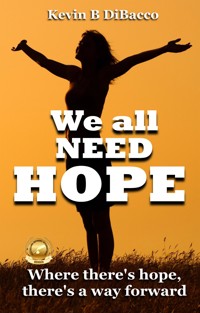
In "We All Need Hope," Kevin B. DiBacco delves deep into the essence of hope and its crucial role in human resilience and progress. Through powerful stories, historical examples, and practical strategies, DiBacco illustrates how hope can be a catalyst for personal transformation and societal change. From Nelson Mandela's fight against apartheid to everyday heroes overcoming personal challenges, the book showcases the indomitable human spirit when fueled by hope. DiBacco offers insights on cultivating hope in our daily lives, relationships, and communities, providing readers with tools to navigate life's challenges and inspire others. This compelling work is a testament to the enduring power of hope in the face of adversity and its potential to shape a better future for all.
Das E-Book können Sie in Legimi-Apps oder einer beliebigen App lesen, die das folgende Format unterstützen:
Veröffentlichungsjahr: 2024
Ähnliche















WE ALL
NEED
HOPE
by Kevin B. DiBacco
WE ALL NEED HOPE Published by: Ink Magic Publishing
Copyright © 2024 by Kevin B. DiBacco All rights reserved.
No part of this book may be reproduced in any form without written permission from the publisher or author, except as allowed by U.S. copyright law.
is registered at the U.S. Patent and Trademark Offices
Cover design © 2024 Yellow Dog Digital Studios. All rights reserved.
Interior Formatting and Cover Design Yellow Dog Digital Studios.
DISCLAIMER
No part of this publication may be reproduced in any form or by any means, including printing, scanning, photocopying, or otherwise without the prior written permission of the copyright holder. The author has attempted to present information that is as accurate and concrete as possible. The author is not a medical doctor and does not write in any medical capacity. All medical decisions should be made under the guidance and care of your primary physician. The author will not be held liable for any injury or loss that is incurred to the reader through the application of any of the information herein contained in this book. The author makes it clear that the medical field is fast evolving with newer studies being done continuously, therefore the information in this book is only a researched collaboration of accurate information at the time of writing. With the ever-changing nature of the subjects included, the author hopes that the reader will be able to appreciate the content that has been covered in this book. While all attempts have been made to verify each piece of information provided in this publication, the author assumes no responsibility for any error, omission, or contrary interpretation of the subject matter present in this book. Please note that any help or advice given hereof is not a substitution for licensed medical advice. The reader accepts responsibility in the use of any information and takes advice given in this book at their own risk. If the reader is under medication supervision or has had complications with health-related risks, consult your primary care physician as soon as possible before taking any advice given in this book.
“The information and advice contained in this book are based upon the research and the personal and professional experiences of the author. They are not intended as a substitute for consulting with a healthcare professional. The publisher and author are not responsible for any adverse effects or consequences resulting from the use of any of the suggestions, preparations, or procedures discussed in this book. All matters pertaining to your physical health should be supervised by a healthcare professional.”
Table of Contents
Author Introduction:
Chapter 1: What Is Hope?
The Power of Hope: A Light in the Darkness
Chapter 2: The Power of Hope in Adversity
The Power of Hope in Overcoming Adversity
Cultivating Hope: Strategies for Nurturing a Hopeful Mindset
The Enduring Legacy of Hope
Chapter 3: Cultivating Hope in Personal Life
Chapter 4: Hope in Relationships and Community
Chapter 5: Hope in the Face of Global Challenges
Chapter 6: Hope and Spirituality
Chapter 7: Hope in Action
Cultivating Hope in Our Daily Lives
The Ripple Effect of Hope:
The Essence of Hope in Action
Chapter 8: The Ripple Effect of Hope:
Chapter 9: Cultivating Hope as a Daily Practice:
Chapter 10: The Transformative Power of Hope:
Chapter 11: Carrying Hope Forward
Chapter 12: The Importance of Hope
Chapter 13: True stories of HOPE that changed the world!
1. The Story of Nelson Mandela:
2. The Story of Malala Yousafzai:
3. The Story of the Tuskegee Airmen:
4. The Story of the Berlin Wall:
5. The Story of the Women's Suffrage Movement:
PERSONAL STORIES OF HOPE AND INSPIRATION
Closing Summary: Keeping the Flame of Hope Alive
Author Introduction:
A Beacon of Hope and Resilience
Kevin B. DiBacco's life is a testament to the indomitable power of hope. As a veteran, filmmaker, author, and self-proclaimed "Life Warrior," Kevin's journey embodies the very essence of resilience in the face of adversity.
From his time serving in the USAF security forces to his 37-year career as an internationally recognized filmmaker, Kevin has faced numerous challenges that would have broken a lesser spirit. His body bears the scars of his dedication - six knee operations, two major back surgeries, two hip replacements, brain surgery, and brain radiation. Yet, through it all, Kevin never lost hope.
Even when confronted with a three-year recovery from back surgery and the prospect of leaving his beloved work at the Production Studio, Kevin's flame of hope continued to burn. He courageously battled depression for two years, working tirelessly with mental health professionals to overcome this formidable obstacle. This experience not only gave Kevin invaluable insight into the nature of depression but also fueled his passion to help others, resulting in his book "Depression: Understanding and Overcoming."
At 62, when many might be considering slowing down, Kevin embarked on a monumental fitness journey to shed 60 pounds, proving that it's never too late to pursue one's goals. His unwavering hope and determination led him to develop "ISO QUICK STRENGTH," a program designed to help others rebound after setbacks.
Kevin's mantra, "Those who quit will always fail," encapsulates his life philosophy. It's this unyielding hope that has driven him to achieve five worldwide film distribution deals, premiere his work at prestigious festivals like Sundance and Cannes, and transition into a successful career as an author with multiple best-selling books.
Through his writing, Kevin now shares the wisdom gained from his diverse experiences, offering hope and inspiration to readers around the world. His books, ranging from "HYSOMETRICS" to "The Lost Art of Logical Thinking," reflect the multifaceted nature of his life and the universal applicability of hope.
Kevin's story is not one of uninterrupted success, but rather of continuous hope in the face of setbacks. It's a narrative of a man who, despite being battered and bruised, stands tall as a shining example of human potential. His journey reminds us that hope is not just a feeling, but a choice - a powerful force that can propel us forward even in our darkest hours.
As you delve into Kevin's words, prepare to be inspired by a true "Life Warrior" who has proven time and again that with hope, perseverance, and an unbreakable spirit, there is no challenge too great to overcome. Kevin B. DiBacco's life and work stand as a beacon of hope for all who face adversity, reminding us that as long as we never give up hope, we never truly fail.
Chapter 1: What Is Hope?
Why Does It Matter?
Have you ever felt lost, discouraged, or ready to give up - but then a small voice inside you whispered, "don't lose hope"? That quiet but powerful feeling is hope, an essential part of being human that gives us the strength to keep going even when things look bleak.
At its most basic, hope is the belief that a positive future is possible, despite the obstacles in our way. It's more than just blind optimism though. Hope means setting meaningful goals for us, mapping out paths to achieve those goals, and trusting in our own ability to make them reality through dedicated effort. Where optimism says, "everything will work out fine," hope says "I can make things better if I try."
So why is hope so important? Well, because life inevitably involves setbacks, loss, failure, tragedy - all those things that make us want to admit defeat. But hope is the force that keeps us putting one foot in front of the other, giving us a reason to get out of bed in the morning. Hope enables us to dream of a brighter future and find meaning and purpose even in our darkest hours.
Stories of hope lifting people out of despair are all around us. Think of a cancer patient who visualizes being cancer-free and summons the will to endure grueling treatments. Or someone who grew up in poverty but imagined a better life and worked tirelessly to get an education and build a successful career. That's the power of hope in action.
Psychologists who study hope draw an important distinction between it and optimism. Optimism is a general rosy outlook, while hope is more focused and tied to achieving specific outcomes. An optimist says, "I just know this job interview will go great!" Someone working from hope says, "I've practiced common interview questions, I've researched the company, I've picked out my most professional outfit - I'm as prepared as I can be to nail this interview."
Philosophers have long contemplated hope's vital role in the human experience as well. In Man's Search for Meaning, psychiatrist and Holocaust survivor Viktor Frankl argued that the ability to find meaning and purpose through hope was essential to enduring unthinkable hardship. Even in Nazi concentration camps, he saw how a sense of hope made the difference between life and death for many. Hope gives us an orienting lighthouse in the stormiest seas, a reason to persevere.
The truth is none of us get through life without our share of adversity. Loved ones die, relationships crumble, health problems strike, dreams get dashed. In those times, it can feel like the light has drained out of the world and it would be easier to just stay down when we fall. But hope is the hand reaching out to pull us back to our feet, whispering "You can get through this. Something better is still possible."
Scientific research backs up how crucial hope is for weathering tough times. Studies have found that hopeful people use healthier coping strategies when stressed, like problem-solving and seeking support. Less hopeful people are more likely to deny problems, avoid dealing with them, and use unhealthy behaviors like substance abuse to numb pain. But hope motivates us to face challenges head-on.
That's not to say hopeful people don't struggle - they absolutely do. But even when they get knocked down, they're more likely to get back up again. Hope is the voice that says "Don't give up" when everything looks broken. It lets us see failure and setbacks as temporary, not permanent. We can learn and grow from them and still move forward.
History is full of stirring examples of the sheer power of hope in overcoming staggering odds. Nelson Mandela spent 27 years unjustly imprisoned, but never lost hope in his vision of a free and equal South Africa. His hopeful leadership united a divided nation and brought apartheid to its knees. Malala Yousafzai refused to let being shot in the head by the Taliban end her hopes for an education. She became a global advocate for girls' rights to go to school. Stories like theirs show us the amazing feats hope can fuel.
That's because along with being a powerful motivating force, hope is also deeply tied to resilience - the ability to bounce back from difficulty. Psychologists define resilience as adapting well in the face of trauma, threats, tragedy, and other major stressors. It's often called "ordinary magic," this astounding capacity people must overcome all kinds of slings and arrows and keep on trucking.
Hope is a major building block of resilience. When we have hope, we believe we have what it takes to get through tough times and land on our feet. We trust that today's struggles are the seeds of growth, not endless misery. This hopeful outlook makes us more likely to look for solutions and take positive action. It prevents us from getting permanently bogged down in despair.
In a fascinating study of resilient people, psychologist Dennis Charney found some common threads. Along with traits like optimism and adaptability, resilient people tended to have a strong moral compass, drawing on deeply held beliefs to find courage and meaning. For many, those beliefs are centered around hope - in their own strength, the goodness of humanity, and the possibility of positive change.
From a mental health angle, hope is like an emotional immune system, helping ward off depression, anxiety and despair. When we lose hope, we become vulnerable to getting stuck in a dark place. But when we have hope, we can see a light at the end of the tunnel, a way out of suffering. Therapists often focus on building hope as part of treatment to give clients encouragement and resources to get better.
One reason hope is so powerful is that humans are meaning-making creatures - we need to feel like our existence has purpose and value. Hope provides that existential lifeline, convincing us that our struggles and strivings aren't for nothing. We hunger for hope that our lives matter. Few things feel scarier than sinking into hopelessness, feeling helpless, aimless and worthless. But hope restores a feeling of agency.
So, if hope is so important, can it be cultivated? Absolutely. Like a muscle, hope can get stronger the more we practice it. Psychologists suggest concrete ways to build hope: setting clear, achievable goals; brainstorming many possible pathways to reach goals; and celebrating small victories along the way. Over time, this hopeful outlook can become a reflex, even in life's storms.
This isn't just feel-good fluff - a strong body of research shows significant, measurable benefits of being a hopeful person. One study of college students found that hopeful students had higher GPAs, even controlling for past academic performance. They were more likely to graduate too. Hopeful athletes bounce back better from injuries and perform more consistently. Hopeful older adults have better physical health.
Hope just makes life better, plain and simple. It's a self-fulfilling prophecy - when we believe good things are possible, we're more likely to make them happen. Think of two people starting a business. The one who believes "this will probably fail like most startups" is already handicapping herself, sapping her motivation. But the hopeful entrepreneur who thinks "this will take a ton of hard work, but I can do this!" will find that very attitude gives her strength.
What's more, hope has interpersonal benefits. Ever notice how some people are just energizing to be around? Chances are, they're hopeful people. Hope is contagious - when we express hope, we spread it to others and become a positive force in the world. Hopeful leaders inspire their teams to achieve great things. Hopeful parents impart optimism and dreams to their kids. Hopeful change-makers rally people around visions of progress.
In a world with no shortage of suffering and injustice, hope can feel like a radical act. It's a defiant refusal to give in to cynicism and apathy. Cornel West said, "I cannot be an optimist, but I am a prisoner of hope." Hope insists that however broken things are, they don't have to stay that way. However long the odds, change is worth fighting for. Hope turns us into agents of redemption.
Of course, hope isn't some panacea - it doesn't make pain and hardship vanish. And I hope without action won't magically fix anything. Empty hope can be undermined, if it convinces people to passively wait for things to get better. The power of hope lies in how it stirs us to act - to show up for our own lives and the world even when we're weary.
At its best, hope acknowledges today's sorrows while envisioning tomorrow's possibilities - and trusting in our ability to bridge that gap. It's Rebecca Solnit's "darkness throwing its question to the sky." Hope dares us to keep reaching for answers in that sky, believing not in perfection, but that something better is possible if we try.
So, the next time you're feeling low and a little voice whisper "don't lose hope" - listen. Hope may start as a fragile flickering, but it's the spark of a remarkable force. Nurture it into a steady flame and you'll be astonished by all it illuminates. In a world forever throwing up reasons for cynicism, choosing hope is a small daily act of courage and conviction in the potential for good.
The Power of Hope: A Light in the Darkness
In the depths of our struggles and the midst of life's storms, hope emerges as a beacon, guiding us towards a brighter future. It is a force that transcends the boundaries of mere words, encompassing a spectrum of emotions and beliefs that sustain us through even the darkest of times. Hope is the unwavering conviction that better days lie ahead, that challenges can be conquered, and that dreams can become reality.
At its core, hope is a profound and complex emotion that defies simple definition. It is a resilient and dynamic mindset, rooted in the belief that positive change is always possible, no matter how daunting the obstacles may seem. Hope is the light that illuminates our path, providing comfort, motivation, and the strength to persevere in the face of adversity.
The psychology and philosophy of hope offer a fascinating lens through which to understand this multifaceted emotion. From a psychological perspective, hope is often viewed as a positive cognitive state that empowers individuals to set meaningful goals, develop effective strategies, and cultivate the resilience needed to pursue their aspirations. It is a mindset that enables us to see beyond our current circumstances and envision a future filled with possibility and potential.




