


4,99 €
Mehr erfahren.
- Herausgeber: Staten House
- Kategorie: Fachliteratur
- Sprache: Englisch
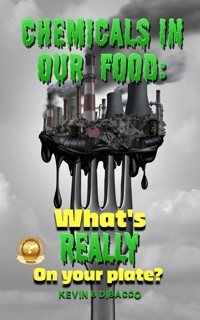
"Chemicals in Our Food: What's Really on Your Plate?" by Kevin B DiBacco is a comprehensive guide to understanding the chemical composition of our food and its impact on our health and the environment. The book begins by introducing readers to the basics of food chemistry, explaining how even natural foods are made up of chemical compounds.
DiBacco explores various aspects of food chemistry, including:
1. Food additives and preservatives, discussing their purposes and potential health effects.
2. Pesticides and herbicides used in agriculture, and their presence in our food supply.
3. Allergens and food sensitivities, explaining how certain chemicals in food can trigger adverse reactions.
4. Environmental contaminants that find their way into our food chain.
5. The impact of food packaging on food safety and quality.
6. The debate surrounding organic food and its purported benefits.
7. Genetically Modified Organisms (GMOs) and their role in modern agriculture.
8. How different cooking methods affect the chemical composition of food.
The book also covers important consumer information, such as how to read and understand food labels, and provides an overview of the regulatory framework governing food chemicals. It addresses emerging concerns in the food industry and looks at the future of food production and consumption.
Throughout the book, DiBacco uses a conversational tone to make complex scientific concepts accessible to the average reader. He includes real-world examples, case studies, and practical tips to help readers apply this knowledge in their daily lives.
The author's goal is not to alarm readers but to educate them, enabling them to make informed choices about their food. By demystifying the science behind what we eat, "Chemicals in Our Food" empowers consumers to navigate the modern food landscape with greater confidence and understanding.
Das E-Book können Sie in Legimi-Apps oder einer beliebigen App lesen, die das folgende Format unterstützen:
Veröffentlichungsjahr: 2024
Ähnliche












Chemicals inOur Food:
What's
Really
on Your Plate?
Kevin B DiBacco
CHEMICALS IN OUR FOOD,Published by STATEN HOUSE
Copyright © 2024 by Kevin B. DiBacco
All rights reserved.
No part of this book may be reproduced in any form without written permission from the publisher or author, except as allowed by U.S. copyright law.
STATEN HOUSE is registered atthe U.S. Patent and Trademark Offices
Trade Paperback
Cover design © 2024 Yellow Dog Digital Studios.
All rights reserved.
Interior Formatting and Cover
Design Yellow Dog Digital Studios.
DISCLAIMER
No part of this publication may be reproduced in any form or by any means, including printing, scanning, photocopying, or otherwise, without the prior written permission of the copyright holder. The author has tried to present information that is as correct and concrete as possible. The author is not a medical doctor and does not write in any medical capacity. All medical decisions should be made under the guidance and care of your primary physician. The author will not be held liable for any injury or loss that is incurred to the reader through the application of the information here contained in this book. The author points out that the medical field is fast evolving with newer studies being done continuously, therefore the information in this book is only a researched collaboration of accurate information at the time of writing. With the ever-changing nature of the subjects included, the author hopes that the reader will be able to appreciate the content that has been covered in this book. While all attempts have been made to verify each piece of information provided in this publication, the author assumes no responsibility for any error, omission, or contrary interpretation of the subject present in this book. Please note that any help or advice given hereof is not a substitution for licensed medical advice. The reader accepts responsibility in the use of any information and takes advice given in this book at their own risk. If the reader is under medication supervision or has had complications with health-related risks, consult your primary care physician as soon as possible before taking any advice given in this book.
“The information and advice contained in this book are based upon the research and the personal and professional experiences of the author. They are not intended as a substitute for consulting with a healthcare professional. The publisher and author are not responsible for any adverse effects or consequences resulting from the use of any of the suggestions, preparations, or procedures discussed in this book. All matters pertaining to your physical health should be supervised by a healthcare professional.”
Contents
INTRODUCTION
CHAPTER ONE
INTRODUCTION TO FOOD CHEMISTRY - THE SECRET SCIENCE OF YOUR SNACKS
CHAPTER TWO
CHEMICAL ADDITIONS TO FOOD - THE HIDDEN INGREDIENTS ON YOUR PLATE
PART I
FOOD ADDITIVES AND PRESERVATIVES
PART II
PESTICIDES AND HERBICIDES IN AGRICULTURE
PART III
FOOD PROCESSING AND ITS CHEMICAL IMPACT
PART IV
HEALTH AND ENVIRONMENTAL CONSIDERATIONS
CHAPTER THREE
ALLERGENS AND SENSITIVITIES - WHEN FOOD FIGHTS BACK
CHAPTER FOUR
ENVIRONMENTAL CONTAMINANTS IN FOOD - UNINVITED GUESTS ON YOUR PLATE
CHAPTER FIVE
FOOD PACKAGING AND CHEMICAL MIGRATION
PART V
SPECIAL TOPICS IN FOOD CHEMISTRY
CHAPTER SIX
ORGANIC FOOD: MYTHS AND REALITIES
CHAPTER SEVEN
GENETICALLY MODIFIED ORGANISMS (GMOS) AND THEIR CHEMICAL PROFILES
CHAPTER EIGHT
THE IMPACT OF COOKING METHODS ON FOOD CHEMISTRY
PART VI
CONSUMER INFORMATION AND REGULATION
CHAPTER NINE
UNDERSTANDING FOOD LABELS AND CHEMICAL INGREDIENTS
CHAPTER TEN
REGULATORY FRAMEWORK FOR FOOD CHEMICALS
CHAPTER ELEVEN
EMERGING CONCERNS: NEW CHEMICALS IN OUR FOOD SUPPLY
CHAPTER TWELVE
PERSONALIZED NUTRITION - THE FUTURE OF EATING
GLOSSARY OF TERMS
INTRODUCTION
Hey there! Ever wonder what's really in that sandwich you're eating? Or why that packaged snack can sit on a shelf for months without going bad?
Welcome to the world of chemicals in our food. Don't worry – we're not talking about test tubes and lab coats. We're talking about the stuff that's in pretty much everything we eat, whether we know it or not.
Now, before you toss that apple or swear off pizza forever, let's get one thing straight: not all chemicals are bad. In fact, everything is made of chemicals – including you! Water? That's a chemical. The vitamin C in your orange? Also, a chemical. But here's the thing: some chemicals in our food might not be so great for us, and that's what this book is all about.
Why Should You Care?
Okay, so why should you bother learning about chemicals in food? Well, for starters, what you eat affects your health. It's that simple. The food you put in your body can make you feel energized or sluggish, help you grow strong or make you sick. And some of the chemicals in our food might be doing things to our bodies that we don't fully understand yet.
But it's not just about you. The chemicals used in growing and making our food can affect the environment too.
They can harm the soil, water, and even other animals. So, when we talk about chemicals in food, we are really talking about the health of our whole planet.
Real Medical Study: The Impact of Food Additives on Gut Health
To illustrate why understanding food chemicals is so important, let's look at a medical study. In 2019, researchers at Georgia State University conducted a study on the effects of common food additives on gut health. The study, published in the journal Nature, focused on two widely used emulsifiers:
carboxymethylcellulose (CMC)
polysorbate 80 (P80)
These emulsifiers are found in many processed foods, including ice cream, bread, and sauces. They help keep ingredients mixed and improve texture. Sounds harmless, right? Well, the study found some concerning results.
The researchers fed mice a diet having these emulsifiers at levels like what humans might consume. They discovered that the emulsifiers altered the mice's gut microbiome – the community of bacteria living in their intestines. This change in gut bacteria led to inflammation and metabolic syndrome, which includes conditions like obesity and diabetes.
But here's where it gets interesting. The researchers then transferred the altered gut bacteria from the mice that ate emulsifiers to mice with no gut bacteria of their own. Guess what? These mice also developed inflammation and metabolic syndrome, even though they never ate the emulsifiers directly!
This study suggests that some common food additives might be affecting our health in ways we didn't expect. It's a perfect example of why we need to pay attention to the chemicals in our food – even ones that seem harmless at first glance.
What Do We Mean by "Chemicals in Food"?
When we say, "chemicals in food," we're talking about a bunch of different things:
Natural chemicals:
These are the ones that are naturally part of the food. Like the caffeine in coffee or the sugar in an apple.
Additives:
These are chemicals added to food on purpose. They might make food last longer, look better, or taste different.
Pesticides:
These are used to kill bugs and other pests that damage crops.
Contaminants:
These are chemicals that get into food by accident, like pollution from factories or packaging materials.
Some of these chemicals are fine and even good for us. Others? Not so much. The tricky part is figuring out which is which.
A Brief History of Food and Chemicals
People have been using chemicals to preserve and change their food for thousands of years. Ancient Egyptians used salt to keep meat from spoiling. Medieval Europeans used sulfur to keep wine fresh. These methods were important – they helped prevent hunger and made it possible to travel long distances with food.
But things really changed in the 20th century. Scientists figured out how to make all sorts of new chemicals, and the food industry started using them like crazy. Suddenly, food could last for months or even years. It could be any color of the rainbow. It could taste like anything you wanted.
At first, everyone thought this was amazing. No more worrying about food going bad! But then people started noticing some problems. Some of these new chemicals seemed to be making people sick. Others were harming the environment.
The Pros and Cons
Like most things in life, chemicals in food have their good and bad sides. Let's break it down:
Pros
Food lasts longer, which means less waste
We can have a wider variety of foods available year-round
Some added chemicals, like vitamins, can make food more nutritious
Food is often safer from harmful bacteria
Cons
Some chemicals might have long-term health effects we don't fully understand yet
The overuse of pesticides can harm the environment
Some people have allergic reactions to certain food additives
Natural nutrients might be lost when food is heavily processed
Real-Life Story: Sarah's Food Detective Journey
To understand how these pros and cons play out in real life, let's meet Sarah, a 35-year-old mom from California. Sarah never gave much thought to the chemicals in her food until her daughter, Emma, was born.
"When Emma started eating solid foods, I suddenly became hyper-aware of everything I was feeding her," Sarah recalls. "I started reading labels and was shocked by how many ingredients I couldn't even pronounce."
Sarah's curiosity led her down a rabbit hole of food research. She learned about pesticides, preservatives, and artificial colors. At first, she was overwhelmed and scared. "I felt like everything in the grocery store was potentially harmful," she says. "I considered going all-organic, but it was so expensive."
As Sarah dug deeper, she realized the issue wasn't black and white. She learned that some food additives, like certain preservatives, help prevent dangerous bacterial growth. She also discovered that organic foods aren't necessarily chemical-free – they just use several types of pesticides.
"I realized I needed to find a balance," Sarah explains. "I couldn't afford to buy everything organic, and I didn't want to make myself crazy worrying about every little thing."
So, Sarah developed a strategy. She focused on buying organic for the "Dirty Dozen" – fruits and vegetables known to have high pesticide residues. For other foods, she carefully read labels and avoided artificial colors and flavors when possible. She also started cooking more meals from scratch.
"It's not perfect, but I feel good about the choices I'm making," Sarah says. "And I'm teaching Emma to be aware of what she eats without being fearful."
Sarah's story shows how understanding food chemicals can empower us to make informed choices. It's not about avoiding all chemicals – that's impossible. It's about being aware and finding a balance that works for you and your family.
The Big Debates
There's a lot of argument about chemicals in food. Some people say we should go back to all-natural, unprocessed foods. Others say modern food technology is necessary to feed the world's growing population. The truth is probably somewhere in the middle.
One big debate is about genetically modified organisms, or GMOs. These are plants that have had their DNA changed to grow better or resist pests. Some people think they're a great solution to world hunger. Others worry they might have unexpected effects on our health or the environment.
Another hot topic is organic food. Organic farmers use fewer synthetic chemicals, but organic food is often more expensive. Is it worth it? That's something you'll have to decide for yourself.
Why It's Complicated
If some chemicals in food might be bad for us, why don't we just get rid of them all? Well, it's not that simple. Here's why:
We don't always know the long-term effects. Some chemicals might seem fine now, but cause problems years later.
Everyone's different. A chemical that's harmless to most people might make some people sick.
It's hard to study. There are so many chemicals in our food and environment that it's tough to figure out which ones are causing problems.
There's a lot of money involved. The food industry is huge, and changing how they do things can cost billions of dollars.
We need to feed a lot of people. Some argue that without modern food technology, we couldn't produce enough food for everyone.
What Can You Do?
Reading this, you might feel a bit overwhelmed. But don't worry – there's a lot you can do to make smart choices about the food you eat:
Read labels:
Get in the habit of checking what's in your food.
Eat a variety of foods:
Don't rely too much on any one type of food.
Cook more:
When you make food yourself, you know exactly what's in it.
Stay informed:
Keep learning about food and nutrition from reliable sources.
Ask questions:
Don't be afraid to ask where your food comes from and how it's made.
Wash your produce:
This can help remove surface pesticide residues.
Consider organic for certain foods:
Prioritize organic for foods known to have high pesticide residues.
Limit processed foods:
These often contain more additives and preservatives.
Support local farmers:
Get to know the people who grow your food and their practices.
Advocate for better food policies:
Make your voice heard on issues like food labeling and pesticide regulations.
The Future of Food Chemistry
As we wrap up this introduction, let's take a quick look at what the future might hold for food chemistry. Scientists are constantly working on new ways to make our food safer, more nutritious, and more sustainable. Here are a few exciting developments:
Smart packaging:
Researchers are developing packaging that can detect when food is spoiling and change color to alert consumers.
Personalized nutrition:
Advances in genetic testing might allow us to tailor our diets to our individual genetic makeup.
Alternative proteins:
From lab-grown meat to insects, scientists are exploring new protein sources that could be more environmentally friendly.
Nanotechnology:
Tiny particles could be used to improve food safety, enhance nutrient absorption, or even deliver medicines through food.
Precision agriculture:
Using data and technology to apply pesticides and fertilizers more precisely, potentially reducing their overall use.
These innovations show that the world of food chemistry is always evolving. As we learn more about how chemicals in food affect our health and the environment, we can develop better ways to produce and consume food.




