


43,99 €
Mehr erfahren.
- Herausgeber: John Wiley & Sons
- Kategorie: Fachliteratur
- Sprache: Englisch
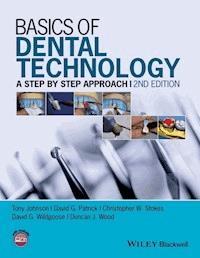
Now available in a second edition, Basics of Dental Technology is a complete reference for the current techniques and materials used in dental technology.
- Retains the accessible, task-based approach and step-by-step guidance of the first edition
- Features updates throughout, as well as a new chapter on digital dental technology and an interactive student website to support self-assessment
- Explains key competencies, concepts, instruments, and equipment, and also introduces more specialist techniques and procedures, such as denture prosthetics, fixed prosthodontics and orthodontic work
- Provides essential information for trainee dental technicians and students learning about dental technology, including study tips and strategies for working effectively within a dental team
Sie lesen das E-Book in den Legimi-Apps auf:
Seitenzahl: 357
Veröffentlichungsjahr: 2015
Ähnliche



















Table of Contents
Title Page
Copyright
About the companion website
Chapter 1: INTRODUCTION
1.1 Introduction
1.2 How to use this book
1.3 Equipment and instruments
1.4 Health and safety in the dental laboratory
1.5 Sterilisation and impression handling
1.6 Introduction to model making
1.7 Models for prosthodontics – casting primary impressions
1.8 Models for prosthodontics – boxing-in impressions
1.9 Models for prosthodontics – casting working (secondary) impressions
1.10 Models for prosthodontics – models for cobalt–chromium frameworks
1.11 Orthodontic study models
1.12 Introduction to sectional models
1.13 Producing a sectional model using a tray system (Figure 1.13.1)
1.14 Producing a sectional model using a pinned system
1.15 Sectioning the model
1.16 Introduction to articulating models
1.17 Articulating models on a simple hinge articulator
1.18 Articulating dentate models using the average position
1.19 Articulating edentulous models using the average position
1.20 Articulating models using a facebow
Chapter 2: COMPLETE PROSTHETICS
2.1 Introduction to complete prosthetics
2.2 Construction of a close-fitting custom impression tray
2.3 Construction of a tray with spacer for edentulous cases
2.4 Construction of a tray for dentate or partially dentate cases
2.5 Construction of a windowed close-fitting tray
2.6 Construction of occlusal registration rims
2.7 Setting up denture teeth
2.8 Denture processing
2.9 Grinding and finishing the dentures
2.10 Denture repair
2.11 Relining a denture in the laboratory
2.12 Copy dentures
Chapter 3: PARTIAL PROSTHETICS
3.1 Introduction to partial prosthetics
3.2 Classification
3.3 Component parts of partial dentures
3.4 Surveying
3.5 Designing partial dentures
3.6 Partial denture construction – acrylic resin
3.7 Partial denture construction – cobalt–chromium
Chapter 4: FIXED PROSTHODONTICS
4.1 Restoration design
4.2 Metal restorations
4.3 Ditching the die
4.4 Producing a wax pattern
4.5 Investing the wax pattern
4.6 Casting and de-vesting the pattern
4.7 Finishing the casting
4.8 Metal-ceramic restorations
4.9 Producing a wax pattern for a metal bonded to ceramic framework
4.10 Investing the wax pattern
4.11 Casting the pattern
4.12 De-vesting and surface preparation
4.13 Ceramic application and build-up
4.14 Ceramic restorations
4.15 Producing a high-strength ceramic substructure
4.16 Veneering a high-strength ceramic substructure
4.17 Producing a resin-bonded crown on a refractory die
4.18 Post crowns
4.19 Bridges
4.20 Producing a cast metal fixed–fixed restoration
4.21 Producing a soldered metal fixed–fixed restoration
4.22 Soldering
4.23 Minimal preparation bridges
4.24 Producing a minimal preparation bridge (Maryland technique)
4.25 Digital dentistry
4.26 Using a laboratory-based CAD–CAM system
4.27 Producing a posterior single-unit substructure or restoration using a reduction technique
4.28 Producing a bridge substructure
4.29 Removable Partial Denture Design
4.30 Implant-supported prosthodontics
Chapter 5: ORTHODONTICS
5.1 Introduction to orthodontics
5.2 Classification of malocclusions
5.3 Theory of tooth movement
5.4 Basic wire bending techniques
5.5 Making passive components
5.6 Producing ball-ended clasps
5.7 The Adams clasp
5.8 Producing a southend clasp
5.9 Active appliances
5.10 Palatal finger spring (guarded)
5.11 Making a T-spring
5.12 Double cantilever or Z-spring
5.13 Buccal canine retractor
5.14 The Roberts retractor
5.15 Producing baseplates
5.16 Producing biteplanes
5.17 Extra-oral anchorage
5.18 Functional appliance design
5.19 Producing an Andresen appliance
5.20 Twin-block appliance
5.21 Fixed orthodontic appliances
5.22 Retainer appliance design
5.23 Repair and modification of orthodontic appliances
5.24 Making tooth positioners
5.25 Sports Mouthguards
Chapter 6: OCCLUSION
6.1 Introduction to occlusion
6.2 Occlusal schemes
6.3 Articulators
6.4 Facebows
6.5 Summary
Chapter 7: SHADE, COLOUR AND SIZE DETERMINATION FOR DENTAL APPLIANCES
7.1 Introduction to aesthetics
7.2 Colour terminology
7.3 Shade guides
7.4 Selecting teeth for complete denture patients
Appendix: TOOTH MORPHOLOGY
Glossary
Index
End User License Agreement
Pages
iv
ix
1
2
3
4
5
6
7
8
9
10
11
12
13
14
15
16
17
18
19
20
21
22
23
24
25
26
27
28
29
31
32
33
34
35
36
37
38
39
40
41
42
43
44
45
46
47
48
49
50
51
52
53
54
55
56
57
58
59
60
61
62
63
64
65
66
67
68
69
70
71
72
73
74
75
76
77
78
79
80
81
82
83
85
86
87
88
89
90
91
92
93
94
95
96
97
98
99
100
101
102
103
104
105
106
107
108
109
110
111
112
113
114
115
116
117
118
119
120
121
122
123
124
125
126
127
128
129
130
131
132
133
134
135
136
137
138
139
141
142
143
144
145
146
147
148
149
150
151
152
153
154
155
156
157
158
159
160
161
162
163
164
165
166
167
168
169
170
171
173
174
175
176
181
182
183
184
185
186
187
Guide
Cover
Table of Contents
Begin Reading
List of Illustrations
Chapter 1: INTRODUCTION
Figure 1.3.1
Figure 1.3.2
Figure 1.3.3
Figure 1.3.4
Figure 1.3.5
Figure 1.3.6
Figure 1.3.7
Figure 1.3.8
Figure 1.3.9
Figure 1.3.10
Figure 1.3.11
Figure 1.3.12
Figure 1.3.13
Figure 1.3.14
Figure 1.3.15
Figure 1.3.16
Figure 1.3.17
Figure 1.3.18
Figure 1.3.19
Figure 1.3.20
Figure 1.3.21
Figure 1.3.22
Figure 1.3.23
Figure 1.6.1
Figure 1.6.2
Figure 1.6.3
Figure 1.7.1
Figure 1.8.1
Figure 1.13.1
Figure 1.15.1
Figure 1.17.1
Chapter 2: COMPLETE PROSTHETICS
Figure 2.2.1
Figure 2.3.1
Figure 2.4.1
Figure 2.5.1
Figure 2.6.1
Figure 2.6.2
Figure 2.7.1
Figure 2.7.2
Figure 2.7.3
Figure 2.7.4
Figure 2.7.5
Figure 2.7.6
Figure 2.7.7
Figure 2.8.1
Figure 2.9.1
Figure 2.10.1
Figure 2.11.1
Figure 2.12.1
Chapter 3: PARTIAL PROSTHETICS
Figure 3.1.1
Figure 3.1.2
Figure 3.1.3
Figure 3.2.1
Figure 3.2.2
Figure 3.2.3
Figure 3.2.4
Figure 3.2.5
Figure 3.2.6
Figure 3.2.7
Figure 3.2.8
Figure 3.2.9
Figure 3.3.1
Figure 3.3.2
Figure 3.3.3
Figure 3.3.4
Figure 3.3.5
Figure 3.3.6
Figure 3.3.7
Figure 3.3.8
Figure 3.3.9
Figure 3.3.10
Figure 3.3.11
Figure 3.3.12
Figure 3.3.13
Figure 3.3.14
Figure 3.3.15
Figure 3.4.1
Figure 3.4.2
Figure 3.4.3
Figure 3.4.4
Figure 3.4.5
Figure 3.4.6
Figure 3.4.7
Figure 3.4.8
Figure 3.4.9
Figure 3.4.10
Figure 3.4.11
Figure 3.4.12
Figure 3.5.1
Figure 3.5.2
Figure 3.5.3
Figure 3.5.4
Figure 3.5.5
Figure 3.5.6
Figure 3.5.7
Figure 3.5.8
Figure 3.5.9
Figure 3.5.10
Figure 3.5.11
Figure 3.5.12
Figure 3.5.13
Figure 3.5.14
Figure 3.5.15
Figure 3.5.16
Figure 3.5.17
Figure 3.5.18
Figure 3.5.19
Figure 3.5.20
Figure 3.5.21
Figure 3.6.1
Chapter 4: FIXED PROSTHODONTICS
Figure 4.1
Figure 4.2
Figure 4.3
Figure 4.4
Figure 4.5
Figure 4.6
Figure 4.7
Figure 4.1.1
Figure 4.1.2
Figure 4.1.3
Figure 4.3.1
Figure 4.4.1
Figure 4.5.1
Figure 4.6.1
Figure 4.7.1
Figure 4.9.1
Figure 4.9.2
Figure 4.12.1
Figure 4.12.2
Figure 4.12.3
Figure 4.13.1
Figure 4.13.2
Figure 4.13.3
Figure 4.13.4
Figure 4.13.5
Figure 4.13.6
Figure 4.13.7
Figure 4.13.8
Figure 4.13.9
Figure 4.13.10
Figure 4.13.11
Figure 4.13.12
Figure 4.13.13
Figure 4.14.1
Figure 4.14.2
Figure 4.14.3
Figure 4.14.4
Figure 4.14.5
Figure 4.14.6
Figure 4.14.7
Figure 4.14.8
Figure 4.14.9
Figure 4.18.1
Figure 4.18.2
Figure 4.18.3
Figure 4.18.4
Figure 4.18.5
Figure 4.18.6
Figure 4.18.7
Figure 4.18.8
Figure 4.18.9
Figure 4.18.10
Figure 4.18.11
Figure 4.19.1
Figure 4.19.2
Figure 4.19.3
Figure 4.19.4
Figure 4.19.5
Figure 4.19.6
Figure 4.19.7
Figure 4.19.8
Figure 4.19.9
Figure 4.19.10
Figure 4.20.1
Figure 4.21.1
Figure 4.22.1
Figure 4.23.1
Figure 4.24.1
Figure 4.25.1
Figure 4.25.2
Figure 4.25.3
Figure 4.25.4
Figure 4.25.5
Figure 4.26.1
Figure 4.26.2
Figure 4.26.3
Figure 4.26.4
Figure 4.26.5
Figure 4.26.6
Figure 4.26.7
Figure 4.26.8
Figure 4.26.9
Figure 4.27.1
Figure 4.27.2
Figure 4.27.3
Figure 4.27.4
Figure 4.27.5
Figure 4.27.6
Figure 4.27.7
Figure 4.27.8
Figure 4.28.1
Figure 4.28.2
Figure 4.29.1
Figure 4.29.2
Figure 4.29.3
Figure 4.29.4
Figure 4.29.5
Figure 4.29.6
Figure 4.29.7
Figure 4.29.8
Figure 4.29.9
Figure 4.29.10
Figure 4.29.11
Figure 4.30.1
Figure 4.30.2
Figure 4.30.3
Figure 4.30.4
Figure 4.30.5
Figure 4.30.6
Figure 4.30.7
Figure 4.30.8
Chapter 5: ORTHODONTICS
Figure 5.2.1
Figure 5.2.2
Figure 5.2.3
Figure 5.2.4
Figure 5.4.1
Figure 5.4.2
Figure 5.4.3
Figure 5.4.4
Figure 5.4.5
Figure 5.4.6
Figure 5.4.7
Figure 5.4.8
Figure 5.4.9
Figure 5.4.10
Figure 5.4.11
Figure 5.4.12
Figure 5.4.13
Figure 5.4.14
Figure 5.4.15
Figure 5.4.16
Figure 5.7.1
Figure 5.8.1
Figure 5.9.1
Figure 5.9.2
Figure 5.9.3
Figure 5.9.4
Figure 5.9.5
Figure 5.9.6
Figure 5.10.1
Figure 5.11.1
Figure 5.12.1
Figure 5.13.1
Figure 5.14.1
Figure 5.16.1
Figure 5.16.2
Figure 5.17.1
Figure 5.19.1
Figure 5.20.1
Figure 5.21.1
Figure 5.21.2
Figure 5.21.3
Figure 5.21.4
Figure 5.21.5
Figure 5.21.6
Figure 5.22.1
Figure 5.22.3
Figure 5.22.4
Figure 5.25.1
Figure 5.25.3
Chapter 6: OCCLUSION
Figure 6.1.1
Figure 6.1.2
Figure 6.1.3
Figure 6.1.4
Figure 6.1.5
Figure 6.1.6
Figure 6.1.7
Figure 6.1.8
Figure 6.1.9
Figure 6.2.1
Figure 6.2.2
Figure 6.3.1
Figure 6.3.2
Figure 6.3.3
Figure 6.3.4
Figure 6.3.5
Figure 6.3.6
Figure 6.3.7
Figure 6.3.8
Figure 6.3.9
Figure 6.3.10
Figure 6.3.11
Chapter 7: SHADE, COLOUR AND SIZE DETERMINATION FOR DENTAL APPLIANCES
Figure 7.1.1
Figure 7.4.1
Figure 7.4.2
Figure 7.4.3
Figure 7.4.4
Figure 7.4.5
List of Tables
Chapter 2: COMPLETE PROSTHETICS
Table 2.4.1 Space requirement for impression materials
Chapter 4: FIXED PROSTHODONTICS
Table 4.19.1
Basics of Dental Technology
A Step by Step Approach
Second edition
Tony Johnson
PhD, MMedSci, LCGI, MCGI, FETC, FHEASenior LecturerSchool of Clinical DentistryAcademic Unit of Restorative DentistryUniversity of SheffieldUK
David G. Patrick
PhD, PgDip, FHEAUniversity TeacherSchool of Clinical DentistryAcademic Unit of Restorative DentistryUniversity of SheffieldUK
Christopher W. Stokes
BMedSci, PCHE, MEd, PhD, FHEASenior University TeacherSchool of Clinical DentistryAcademic Unit of Restorative DentistryUniversity of SheffieldUK
David G. Wildgoose
MPhil, LCGI, MCGI, FETCHonorary Research FellowSchool of Clinical DentistryAcademic Unit of Restorative DentistryUniversity of SheffieldUK
Duncan J. Wood
BMedSci, PhD, FHEASenior University TeacherSchool of Clinical DentistryAcademic Unit of Restorative DentistryUniversity of SheffieldUK
This edition first published 2016© 2011, 2016 by John Wiley & Sons Ltd.
Registered office: John Wiley & Sons, Ltd, The Atrium, Southern Gate, Chichester, West Sussex, PO19 8SQ, UK
Editorial offices: 9600 Garsington Road, Oxford, OX4 2DQ, UKThe Atrium, Southern Gate, Chichester, West Sussex, PO19 8SQ, UK1606 Golden Aspen Drive, Suites 103 and 104, Ames, Iowa 50010, USA
Lesen Sie weiter in der vollständigen Ausgabe!
Lesen Sie weiter in der vollständigen Ausgabe!
Lesen Sie weiter in der vollständigen Ausgabe!
Lesen Sie weiter in der vollständigen Ausgabe!
Lesen Sie weiter in der vollständigen Ausgabe!
Lesen Sie weiter in der vollständigen Ausgabe!
Lesen Sie weiter in der vollständigen Ausgabe!
Lesen Sie weiter in der vollständigen Ausgabe!
Lesen Sie weiter in der vollständigen Ausgabe!
Lesen Sie weiter in der vollständigen Ausgabe!
Lesen Sie weiter in der vollständigen Ausgabe!
Lesen Sie weiter in der vollständigen Ausgabe!




