


Erhalten Sie Zugang zu diesem und mehr als 300000 Büchern ab EUR 5,99 monatlich.
- Herausgeber: The Lilliput Press
- Kategorie: Geisteswissenschaft
- Sprache: Englisch
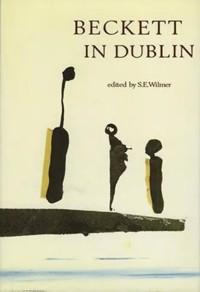
Ireland, and in particular Dublin, was Samuel Beckett's cradle, a place, in Eoin O'Brien's words, he revisited 'with the same intensity that Proust went back to Combray'. It was fitting, then, shortly after Beckett's death, that his birthplace – through the good offices of the Gate Theatre, Trinity College and Radió Telefís Éireann – should have decided to honour the 1969 Nobel prize-winner by staging all of his dramatic productions over three weeks during October 1991 and hosting a series of visual displays, lectures, seminars and discussions by local and international scholars, friends and colleagues, of which Beckett in Dublin is the fruit. Part One, 'A Man of Theatre', concerns Beckett's stagecraft, with learned essays by his English editor James Knowlson and American collaborator S.E. Gontarski, and a lively reminiscence by French actor Jean Martin, who played Lucky in the original production of En attendant Godot in 1953. Part Two, 'Themes and Structures', ranges from a feminine focus in Beckett examined by the American academic Linda Ben-Zvi, through pieces by Katherine Worth, Declan Kiberd and Rosemary Pountney, to the post-modernist reckonings of reader in English at the University of London, Stephen Connor. Part Three, 'At Heart a Dubliner', reaffirms the writer's human dimensions with recollections by his publisher John Calder and friend Georges Belmont, concluding with appreciations of Beckett as a poet and Irishman by Brendan Kennelly and James Mays. One of the book's most striking features is a sequence of Rembrandtesque photographs by Tom Lawlor of each of Beckett's plays, taken at the Gate Theatre performances. They form a visual tribute to this powerful dramatist and writer
Sie lesen das E-Book in den Legimi-Apps auf:
Seitenzahl: 296
Veröffentlichungsjahr: 1992
Das E-Book (TTS) können Sie hören im Abo „Legimi Premium” in Legimi-Apps auf:
Ähnliche




















BECKETT INDUBLIN
EDITED INTRODUCED BY S.E.WILMER
THE LILLIPUT PRESS
CONTENTS
Title Page
ILLUSTRATIONS
ACKNOWLEDGMENTS
INTRODUCTION
A MAN OF THEATRE
JAMES KNOWLSON BECKETT AS DIRECTOR
JEAN MARTIN CREATING GODOT
S.E. GONTARSKI WORKING THROUGH BECKETT
THEMES AND STRUCTURES
LINDA BEN-ZVI FEMININE FOCUS IN BECKETT
KATHARINE WORTH BECKETT’S GHOSTS
DECLAN KIBERD BECKETT AND THE LIFE TO COME
ROSEMARY POUNTNEY BECKETTS STAGECRAFT
STEVEN CONNOR OVER SAMUEL BECKETT’S DEAD BODY
AT HEART A DUBLINER
GEORGES BELMONT AND JOHN CALDER REMEMBERING SAM
BRENDAN KENNELLY THE FOUR PERCENTER
J.C.C. MAYS IRISH BECKETT, A BORDERLINE INSTANCE
NOTES ON CONTRIBUTORS
INDEX
Plates
Copyright
ILLUSTRATIONS
Photographs by Tom Lawlor of Beckett Festivalproductions at the Gate Theatre, Dublin, 1-20 October 1991
1 Barry McGovern as Vladimir in Waiting for Godot
2 Alan Stanford as Hamm and Barry McGovern as Clov in Endgame
3 Derek Chapman as Man in Act Without Words I
4 Tomás Killeen as B in Act Without Words II
5 David Kelly as Krapp in Krapp’s Last Tape
6 John Olohan as B and Phelim Drew as A in Rough for Theatre I
7 John Olohan as B and Phelim Drew as A in Rough for Theatre II
8 Fionnula Flanagan as Winnie in Happy Days
9 Bernadette McKenna as Woman 2 and Stephen Rea as Man in Play
10 Helene Montague as Flo, Susan FitzGerald as Ru and Bernadette McKenna as Vi in Come and Go
11 Adele King as Mouth in Not I
12 Stephen Rea as Listener in That Time
13 Susan FitzGerald as May in Footfalls
14 Stephen Rea as Speaker in A Piece of Monologue
15 Maureen Potter as Woman in Rockaby
16 Kevin McHugh as Listener and Johnny Murphy as Reader in Ohio Impromptu
17 Johnny Murphy as Protagonist in Catastrophe
18 O.Z. Whitehead as Bem, Barry Cassin as Bam, Seamus Forde as Bim and Micheál Ó Briain as Bom in What Where
ACKNOWLEDGMENTS
The Beckett Festival in Dublin in October 1991 was the brainchild of Michael Colgan, director of the Gate Theatre, and it proved to be one of the most successful features of Trinity College’s 400th anniversary celebrations. The festival was the result of close co-operation between the Gate Theatre, Trinity College and Radio Telefís Éireann, with much support from many other organizations. Over a three-week period the Gate Theatre produced all nineteen of Samuel Beckett’s stage plays, Trinity College hosted lectures, seminars, readings and exhibitions, and RTE broadcast the television and radio plays.
The board of directors of the festival, which helped to determine the programme and make it possible, was chaired by Michael Colgan and included Edward Beckett, Anthony Cronin, Mary Finan, T.V. Finn, John P. Kelly, David McConnell, Barry McGovern, Thomas Mitchell, Cathal Mullan, Tony Ó Dálaigh and Patrick Sutton. The Gate Theatre, under the direction of Michael Colgan, with Anne Clarke and Marie Rooney, produced the plays in addition to overseeing the progress of the festival as a whole. The Festival Co-ordinator, Rupert Murray, with Eileen O’Halloran, Aisling Milton and Eamonn Crudden, provided the link between the Gate Theatre, TCD, RTE and the various activities. The committee responsible for the lectures and seminars in Trinity College included Terence Brown, Gerry Dukes and Ben Barnes. Other TCD staff participating in the events were Nicholas Grene, John McCormick, Barbara Wright, Peter Fox and Bernard Meehan of the TCD Library, Thomas Murtagh, Alex Anderson, Daphne Gill, Mary Hegarty and the Quatercentenary Committee, particularly David Scott, Gerry Giltrap, Peter Boyle and Marcella Senior. Others responsible for specific aspects of the festival included Caroline Murphy, Eoin O’Brien, Jim Sheridan, James Knowlson, Medb Ruane, Susan Schreibman, Alan Stanford, Marie Donnelly, George Hutton, Teresa Mooney, Jane Doolan, Michael Garvey and Donald Taylor Black.
Organizations which contributed greatly to the festival included Aer Lingus, the Arts Council, Dublin 1991 – European City of Culture, Irish Life Dublin Theatre Festival, the British Council, the French Cultural Institute, the Goethe Institute and Bord Fáilte.
This book is made possible by grants from the TCD Association and Trust, the TCD Arts and Social Sciences Benefactions Fund and the TCD Quatercentenary Committee. I would like to thank Antony Farrell and Mari-aymone Djeribi of the Lilliput Press, Marie Rooney of the Gate Theatre, and Aisling Milton and Eamonn Crudden for their help in the preparation of this book. I would also like to thank Tom Lawlor for allowing us to use his photographs.
S.E. WilmerDirector of the Samuel Beckett Centrefor Drama and Theatre StudiesTrinity College Dublin
INTRODUCTION
In October 1991 Trinity College Dublin celebrated the work of one of its best-known graduates, Samuel Beckett, in a three-week festival. Michael Colgan, the director of the Gate Theatre and himself a Trinity College alumnus, had told Beckett of his desire to produce all of his stage work in a single season, something which had never been done. Beckett approved of this idea but it was not possible to achieve it while he was still alive.
Beckett died in December 1989. With the coincidence of Trinity’s 400th anniversary and Dublin’s being selected as European City of Culture, Michael Colgan’s idea grew into a more ambitious plan: to produce all of the nineteen stage plays, while RTE (the Irish broadcasting service) transmitted much of Beckett’s radio and television work. At the same time Trinity College would host a series of lectures, seminars and events. To enhance the festival a number of works relating to Beckett by such artists as Louis le Brocquy, Jasper Johns, Robert Ryman, S.W. Hayter, Avidgor Arikha and Brian Bourke were assembled in the Douglas Hyde Gallery. An audio-visual unit was established to enable people to listen to and watch Beckett’s recorded work for radio and television. Trinity College Library displayed a number of Beckett manuscripts, including the newly acquired prompt book of En attendant Godot (in which Beckett had made notes during its first rehearsal period) as well as manuscripts on loan from Reading University. Enlarged reproductions from Eoin O’Neill’s The Beckett Country were mounted in the foyer of the Gate Theatre.
Beckett in Dublin attempts to recapture some of the highlights from an enterprise which spiritually brought Beckett home after his death, and celebrated his life while the memory of him was still vivid. The chapters in the book examine different aspects of his life and work, and are roughly divided into three areas: Beckett as man of theatre; Beckett as artist; and Beckett as friend and Irishman.
The unique presentation of all of Beckett’s published stageplays by the Gate Theatre is recorded in a single photograph of each production (except Breath, which has no visible characters). The photographs are included in the chronological order in which he wrote the plays and reflect the increasing minimalism of the work.
The first section, ‘A Man of Theatre’, contains three points of view by people who worked with Beckett in different capacities. James Knowlson discusses Beckett’s artistic vision, which led him, possibly out of frustration with directors, to direct his own plays. In his productions he emphasized repetitions, variations and counterpoint rather like a choreographer, causing Billie Whitelaw and other actors to feel like musical instruments. In many of the plays these patterns relate to his themes by emphasizing repetitive lifestyle, the echoes of memory and the variations caused by aging. Knowlson also examines the paintings which influenced Beckett as a writer and director and added a religious dimension to certain dramatic moments. At the same time as showing Beckett’s specific vision, Knowlson demonstrates that Beckett was not inflexible as a director. His purpose, furthermore, was not to make a clear statement but, as in music or poetry, to leave an impression, to suggest rather than to define.
Jean Martin, who played Lucky in the first production of Godot in Paris, witnessed Beckett’s development from amateur to experienced man of the theatre. In the rehearsals of Godot, Martin remembers the author sitting quietly, intervening only rarely, allowing the director, Roger Blin, to go for circus effects. Rather than indicating how Lucky was to be played, Beckett left Martin to formulate his own interpretation. He remembers Beckett objecting, however, when he saw Vladimir being played too emotionally. By the time of Fin de partie (Endgame), Beckett had gained sufficient confidence to indicate how lines were to be delivered.
Stan Gontarski in a sense begins where Martin leaves off and proposes that Play marked a turning-point in Beckett’s aesthetics at a time when he was changing roles from writer to writer/director. Gontarski argues that, in this transition, Beckett shifted emphasis from the text to the performance and that in examining Beckett’s variant texts one should ascribe greater legitimacy to production scripts than to published versions. Gontarski also shows how Beckett’s aesthetic moved from conventional theatrical characterization to dehumanized, ‘non-particularized’ pieces. Later, when Beckett returned to directing his earlier plays, he applied this new aesthetic by making them more abstract. Gontarski regrets that in denying the validity of the changes which Beckett made to his plays after directing them, Beckett’s critics have accepted him as a writer but not as a man of the theatre.
In the second section, various scholars examine some of the themes and structures in Beckett’s œuvre. Linda Ben-Zvi demonstrates that far from being a misogynist, as has sometimes been suggested, Beckett reveals a predominantly feminine sensibility. Sociologically, Beckett presents characters who are powerless, waiting passively, unable to control their own destinies, in a manner somewhat similar to the traditional role ascribed to women. He uses language to undermine itself, to render itself powerless, to deny authorial omniscience, to undo the rules. Aesthetically the characters in his stage plays are often reduced to objects of observation, thereby being denied their own sense of self.
This feminine sense of character, language and aesthetics is taken to a metaphysical plane by Katharine Worth, who analyses the supernatural aspects of Beckett’s stage, radio and television work. She sheds light on the spirit world in Beckett which is closely allied with Yeats’s notion of restless ghosts (as in his Noh plays) that need to converse and ruminate. In some cases, such as Eh Joe, unwelcome ghosts terrify the living. In others, as in …but the clouds… and Ghost Trio, the living seek out the dead. In Footfalls the ghosts of May and her daughter merge, trapped in each other’s trauma. But amidst the rituals, repetitions and haunting presences, a notion of spiritual regeneration sometimes obtains, a sense of birth in the presence of death, as in APiece of Monologue.
Declan Kiberd attributes Beckett’s notion of the supernatural to his Protestant formation, complicated by an interest in Eastern religion. He perceives a Buddhist-Protestant synthesis in the stark stage images of plays such as Waiting for Godot. Kiberd suggests that Beckett’s impositions on his actors reveal a puritan mistrust of the theatre, and that his love of minimalism is linked with a Protestant-Buddhist disapproval of luxury.
Rosemary Pountney and Steven Connor discuss structural elements in Beckett’s work. Pountney highlights a number of features of his stagecraft, noting that as the characters become progressively dehumanized in Beckett’s plays, there is a corresponding animation of objects—the tape recorder in Krapp’s Last Tape, the light in Play, and the camera in Film. She also describes the constraints placed on the actor, and the use of the human voice not for intelligibility but for rhythm and tone. Above all she focuses on the endings in his work. She analyses the variety of devices used: circular endings in Waiting for Godot and Endgame, linear endings as in That Time, Rockaby and possibly Krapp’s Last Tape, and what she calls ‘linear cycles’ such as in Happy Days and Footfalls where the recurring images are so potent that they continue to reverberate after the play has ended.
Steven Connor, in approaching Beckett from multiple standpoints, demonstrates the writer’s postmodern and elusive qualities. Beckett’s philosophical position was self-contradictory. He mixed genres in such a way that Company, for example, falls between prose and drama. He wrote simultaneously in two or more languages so that he defies conventional linguistic analysis. As an exile, he was neither fully Irish nor French, and his political convictions remain vague. Moreover, Connor warns against trying to categorize Beckett now that he is dead, and encourages, instead, the exploitation of his contradictions.
The third section of the book, ‘At Heart a Dubliner’, moves from the abstract to the personal. The dialogue between Georges Belmont and John Calder, edited from a seminar session during the festival called ‘Remembering Sam’, presents an intimate portrait of Beckett at home and in college, in pubs and in cafés. Belmont, a fellow writer from France, describes how he met Beckett in the 1930s as a student and became a friend of his family. Calder, his prose and poetry publisher from the 1950s, also became a close friend. They exchange anecdotes revealing the human side of Beckett.
Brendan Kennelly, a poet and Professor of English at Trinity College Dublin, argues that Beckett was essentially a poet and that his writing style mirrored his position in Dublin society as a member of a self-conscious minority group, a privileged Dublin Protestant who would have been taught to ‘button his lip’ after Irish independence.
Finally, James Mays roots Beckett’s work in Dublin, uncovering the Irish nuances in some of his seemingly anonymous later work. But at the same time he emphasizes the distance that Beckett created between his roots and his art in inventing his past. He utilized not only his own memories but also those of a former generation. He distanced his characters, distorted their language, counterpointed word and image, subverting intelligiility in the process, thereby leaving an unresolved tension between the abstract and the personal.
Beckett in Dublin portrays a shy, self-absorbed man who struggled for recognition as a writer and who lived for a long time under the shadow of James Joyce. After World War II, he began writing in French. When Godot went into rehearsal, he embraced the collaborative process of drama, possibly as a relief from the loneliness of writing. With his later plays, he became more determined to shape his own works on the stage and eventually took over as director. Beckett experimented with music, poetry and the visual arts, pushing back the artistic frontiers in the various media and creating new forms in French, English and German. Although he left Ireland in the 1930s, memories of his childhood continued to echo throughout his work. In celebrating his life, we remember him not only as an international figure but also as a Dubliner.
A MAN OF THEATRE
BECKETT AS DIRECTOR
JAMES KNOWLSON
‘There are elements of the sound that cannot be indicated on the score and that is why one makes recordings oneself.’ The words were those of the composer Sir Michael Tippett, in Tippett at 85, a BBC television programme broadcast in September 1991. But they could equally well have been Samuel Beckett’s own and, if one were to add to ‘elements of the sound’ the phrase ‘and of the visuals’, they could be applied most appropriately to his work as director (or recorder) of his own plays.
Beckett once complained to me of the failure of a famous English actor to capture the poetry of his lines (and, out of discretion, I shall not name him): ‘You hear it a certain way in your head, and he just can’t do it.’ ‘He’s doing it ahl whrang,’ he said, squirming in his seat, to Alan Schneider of another actor’s performance as they attended the British première of Waiting forGodot,1 and, through the director, Peter Hall, he went on to proffer words of advice to the actors after the performance. He listened to his wife’s or his friends’ accounts of various productions, read reviews, or simply looked at photographs or listened to records of productions of his plays (like the Columbia Arts recording of Waiting for Godot) and found that often they simply did not work, sometimes for the most obvious, practical reasons, sometimes for much more complex, sophisticated ones: the urns were too far apart in Play; the chair was not the right height in Endgame or the windows were wrongly placed; the tempo was quite wrong in parts of Godot; there was not enough silence, and so on.
It is not, contrary to what many people persist in believing, that Beckett thought that there was only one way of doing his plays. Indeed, the differences in his own productions of the same play disprove this allegation totally. But he did have a vision to which certain elements of certain productions were clearly not being faithful, or against which they were actively working. I also think that he, too, like Sir Michael Tippett, felt that the words of the text, taken along with the stage directions (however precise these may be – and, in Beckett’s own case, they are remarkably precise), still only partially conveyed the way that he saw his own plays. For what was not written down counted for Beckett almost as much as what was written down on the printed page.
By what was not written down, I mean, among other things, the echoing or contrasting tones of balancing or differing voices, the pace and the rhythms of the dialogue, the frequency and the duration of the pauses, the quality of the voices and the looks, the variety of the gestures, the volume, and again the quality, of the lighting. To take only one example for the moment, that of pace, one of Billie Whitelaw’s chief memories of rehearsing Play at the Old Vic when George Devine was directing with Beckett in attendance was of Beckett saying ‘faster, faster’ when Kenneth Tynan and Laurence Olivier wanted them to go for intelligibility by slowing it down.2 Devine agreed with Beckett and in the end the play went at an enormous speed.
It was for these, among other, reasons that Beckett chose to direct his own plays. In discussing his work as a director, I want to explore a few of these elements that are not written down, while at the same time trying to uncover the main principles that may be seen at work in his directing. My approach is not that of a participant like the actor Pierre Chabert or the director Walter Asmus, who have both worked with Beckett and written well on this subject,3 but of the writer on Beckett who often attended rehearsals in his company, who talked to him about specific production problems and who has worked on virtually all of his directorial notebooks in order, with S.E. Gontarski and Dougald McMillan, to publish them and prepare a set of revised production texts for publication.4 There are now over twenty such notebooks or annotated copies that Beckett used in productions directed by himself.5
Beckett had been closely involved with the actual staging of his plays from the very beginning of his career as a dramatist. He started by attending rehearsals of En attendant Godot late in 1952, discreetly advising Roger Blin. And he did the same, only with much more self-assurance, with Fin de partie in 1957. Then, for a further period of ten years, he went to rehearsals of first productions of his plays in London, Paris and Berlin, learning from, as well as advising, experienced directors like Blin, George Devine (founder of the English Stage Company and an expert on lighting design), Donald McWhinnie, Jean-Marie Serreau and, later, Anthony Page. But, although he had a due sense of all that he could learn from these talented directors, he also retained a very clear perception of what, as author, he wanted from a theatrical realization of his plays. So, from the mid-sixties onwards, until he was nearly eighty years old, he directed many productions of his own plays, mostly at the Schiller Theater in Berlin but also at three theatres in Paris and at the Royal Court Theatre and the Riverside Studios in London.
What then are Beckett’s special characteristics as a director? First, as I have already implied, he pays scrupulous attention to every minute detail of the production in order to make it part of an overall conception of the play. Beckett’s rigour and absolute meticulousness as a director are legendary. A glance at his production notebook of Warten auf Godot shows how intensively he worked on the text prior to rehearsal.6 The book contains detailed lists of repetitions, repetitions with variation, Wartestellen (waiting points), sketches of moves, arrows to indicate the direction of these moves and their shape, changes of voice and tone, synchronizations of text with moves, parallels and echoes between different moments of the play. The meticulousness reveals an enormous effort of concentration and a very precise, obsessive, almost pedantic visualization of every moment of the play. The same was true of Beckett’s other productions. I choose a few (deliberately extreme) examples from these productions to show just how far Beckett goes in his planning and attention to detail, recalling in passing that one of the first notes he gave to Billie Whitelaw was ‘Billie, would you make those three dots, two dots.’
At rehearsals of Krapp’s Last Tape with the San Quentin Drama Workshop, he spent an enormous amount of time and trouble trying to establish exactly what noise the boots worn by Krapp should make, as Krapp shuffles slowly across the stage. One pair of boots was rejected, because the sound was wrong. They next tried attaching sandpaper or a piece of metal to the soles of the boots. But this did not work either. The next day, Beckett came in with his own black leather slippers. ‘Try these,’ he told the actor, Rick Cluchey, who found that they made exactly the right quality of sound.7
When, in Happy Days, Winnie is buried in her mound of earth, Willie, her husband, tries to crawl back into his hole in a parody of a reversed breeeh birth; ‘Not head first, stupid,’ she says.8 Now, at this point, Willie is totally invisible to the audience, hidden as he is behind the mound. And yet Beckett’s production notebook for the 1979 Royal Court Theatre production has every move that Willie makes in the course of his crawl plotted very carefully according to numbers and figures.9 Clearly the purpose of this is so that his partner, Winnie, may know precisely where he is supposed to be at every moment of her own text so that she can speak with absolute conviction, gesturing, for example, like a policeman in a market-place: ‘ … now … back in’. Beckett is, of course, drawing here on the same technique of unseen visual comedy that he had used with Mrs Rooney’s famous assisted climb into Mr Slocum’s car in the radio play All That Fall.
At the beginning of each act of Happy Days, Winnie is wakened from her sleep by a bell. But what kind of bell, one needs to know when one is directing? How loud should it be? How long should it last? ‘Bell’, writes Beckett in his production notebook for the 1979 Royal Court production, is the ‘wrong word’.10 Knife or gouge is clearly more appropriate. ‘I’m after a searing, cutting quality,’ he said at rehearsal; ‘It [the bell] should be brief and cut off suddenly like a blow or a knife on metal.’ If one has a bell that is as loud or as cutting as that, it simply cannot be allowed to last for the ten seconds of the English printed text or even the five seconds of the French edition. This is too long to have an audience’s ears assaulted at this volume in this way. So there were lengthy experiments with different kinds of bells at the Royal Court Theatre, and, finally, the theatre fire-bell was used for one and a half and two and a half seconds for bells 1 and 2 respectively. Be ckett s olved the problem, then, in a most pragmatic way.
For there is one myth that ought to be dispelled about Beckett. He certainly did not belong to the improvisational school of directors, those who create virtually spontaneously on the rehearsal studio floor. He liked to have the text fully by heart himself and his mise en scène blocked out in intricate detail before he ever began to rehearse. But he was not inflexible or impractical as a director, insisting on doing things exactly as he had first envisaged, disregarding the practical difficulties involved or at the expense of the feelings or wishes of the actor or actress. Indeed, the notebooks have numerous erasures, with, on one occasion, in his notebook on Godot, ‘unrealizable’ written across the page. He would abandon ideas as being too complex or unduly intellectual: the idea, for instance, that Krapp should turn only in one direction when he moves, and never to the left. Several actors have explained how patiently he worked with them on stage actions that would more satisfactorily replace something that they felt was not working.
Sometimes, of course, the writer and the director in Beckett did clash. He was visibly pained by mistakes made in the text by one British actress because of corrections he had introduced only after she had already learned the script by heart. Earlier in his career as a dramatist there were disagreements with actors who found it hard to accept that rhythm counted for more than expression with Beckett and who felt that he was trying to dehumanize them. Brenda Bruce, who played Winnie in the first British production, felt that acutely and Dame Peggy Ashcroft disagreed vociferously with Beckett on this very issue when she was playing Winnie for the National Theatre. Yet several actors-Patrick Magee, Jack MacGowran, Billie Whitelaw among them-have discovered what David Warrilow pointed out when he drew attention to the findings of a child psychologist who stressed that children play most happily in a restricted space, say a space three by three, like a sandpit, and that for an actor there is a great freedom to be found in working within strictly defined limits. None of the actors that I have named above produced a dehumanized performance – emotion was there, restrained but still expressed.
‘We are not doing this play realistically or psychologically, we are doing it musically,’ Beckett said at rehearsal to Rose Hill, who was playing Mother in Footfalls. And all of Beckett’s productions followed musical rather than realistic or psychological principles, that is, they are dominated by the concept that he announced early in the 1960s when he said:
Producers don’t seem to have any sense of form in movement, the kind of form one finds in music, for instance, where themes keep recurring. When, in a text, actions are repeated, they ought to be made unusual the first time, so that when they happen again – in exactly the same way – an audience will recognize them from before.11
It is worth pointing out that, from his early youth, Beckett had been an accomplished pianist and an admirer of Schubert, Beethoven and Haydn. He loved going to concerts in Berlin with Herbert von Karajan conducting the Berlin Philharmonic. And, of course, he lived for fifty years with a pianist even more accomplished than himself and was a personal friend, as was Suzanne, his wife, of the composer, Marcel Mihalovici, and his well-known concert pianist wife, Monique Haas.
As he discussed Mother’s monologue in Footfalls with the musically trained Rose Hill, Beckett quite naturally employed terms like scherzo, andante or piano, just as in his own Krapp’sLast Tape production notebook, he described the vocal principle as constituting a slide from the major key which expresses an initial tone of assurance into the minor key which betrays its artificiality whenever three themes appear to disrupt this initial tone: solitude, light and darkness and Woman.12 It is not just that Beckett used the vocabulary of music in his notebooks or at rehearsals with those actors who understood his vocabulary. His own productions followed very closely the musical principles outlined earlier. They provided often repeated echoes of gestures and movements, rhythms and intonations that correspond to repetitions and repetitions with variation within the printed text.
Repetition, contrast and balance were, indeed, among Beckett’s principal concerns as a director. To take Beckett’s many productions of Krapp’s Last Tape as my sole example at this point, numerous small actions and looks were picked up and repeated, sometimes in very different contexts. At the Schiller Theater, for instance, when Krapp closed the dictionary on the ‘vidua-bird’ after looking up the word ‘viduity’ he adopted exactly the same look that he had used earlier to accompany the ledger entry ‘Farewell to love.’13 Every time Krapp went into a dream at the memories of a woman (and particularly the beauty of her eyes), he adopted the same position of the head and the same look.
Many of the repetitions of postures, actions, looks and ways of saying certain phrases in Krapp’s Last Tape function in terms of balanced opposites. ‘[The] play’, wrote Beckett in his Schiller production notebook, ‘[is] composed therefore of 2, fairly equal parts – listening and non-listening’:14 the listening was equated with immobility (which elsewhere was equated with silence) and the non-listening with movement (which elsewhere was equated with noise). And so in sections headed ‘Motionlessness listening’ and ‘Listening actions’,15 Beckett worked out the many contrasts in Krapp’s acting between listening and non-listening, movement and stillness, dream and feverish activity and elaborated in the most intricate detail the physical expression of these opposites in terms of opening and closing the eyes, raising and lowering the head, and so on.
Yet if Beckett acknowledged the dramatic value of repeated actions, particularly in so short and concentrated a play as Krapp’s Last Tape, he also recognized that an excess of stylization would produce an artificial, unnatural dramatic structure and would lead to an unsatisfactory style of acting. So Krapp’s gestures, looks, grunts, curses and sounds of impatience were all carefully varied and timed to avoid that particular pitfall. The degree of stylization that was involved in Beckett’s famous 1975 Schiller production of Waiting for Godot has, I think, been greatly overestimated in the English-speaking world.
In his writing as a whole, Beckett pays, of course, great attention to echo and analogy, to rhythm and balance. And, as a director, he worked just as hard as he had as a writer to establish verbal echoes and parallels. On occasion he was quite prepared to change the words of his text or his stage directions to establish verbal or visual patterns to echo from one section of the play to another. For example in Happy Days, when Winnie takes a strand of her hair from under her hat, by changing the text, Beckett creates one of the simplest, yet most moving moments of the play. In the revised text she now does not let the strand of hair fall—as she did in the original printed text—but holds it in her left hand, as she says nostalgically, ‘Golden you called it that day, the last guest gone (hand up in gesture raisinga glass) to your golden … may it never (voice breaks) … may it never … That day … What day?’ Both the gestures and the text have been changed in Beckett’s productions, so that when in the second act we hear ‘That day. (Pause) The pink fizz. (Pause) The flute glasses. (Pause) The last guest gone,’16 we recall with remembered emotion the earlier gestures and words that echo movingly over a long stretch of the play.
In Waiting for Godot the text was changed frequently by Beckett to pick up echoes of earlier lines. The most obvious example of this is, in the San Quentin production, directed by Walter Asmus with Beckett’s very active supervision, whenever Estragon responds to Vladimir’s statement that they cannot leave because they are ‘waiting for Godot’, the answer was given an identical ‘Ah yes’ reply. So, of the English printed text, ‘Fancy that,’ ‘True’ and ‘Good idea’ become invariably ‘Ah yes,’ a phrase that picks up an additional burden of lassitude every time it is spoken. And, at the end of the play, when Vladimir tells Estragon to pull on his trousers, instead of saying as in the printed text ‘True,’ he replies ‘Ah yes,’ finishing then with the laugh that Beckett wanted, but a laugh line which, by its enhanced association with the ‘We’re waiting for Godot’ that it has so often followed, resonates with melancholic associations. Not only does Beckett the director work to get the echoes of words, rhythms and sounds and even gestures exactly right, he also establishes counterpoints, often ironic ones, between one part of the play and another. In Endgame, ‘The play is full of echoes’ said Beckett to his cast, They all answer each other.’17
Now, in reading Beckett’s texts, we are relatively accustomed to responding sensitively to a form of verbal poetry that is based principally on echo, balance and rhythm. ‘All the dead voices./ They make a noise like wings./Like leaves./Like sand. /Like leaves.’ (Silence.) /They all speak together. /Each one to itself.’ (Silence.) /‘Rather they whisper. /They rustle. /They murmur. / They rustle.’18 Beckett’s own productions reveal, however, that such principles may also be used with the arrangements of forms in space or the movements of living actors to provide something which, akin to ballet, provides a form of visual poetry. In HappyDays, Winnie frequently reaches into her bag to take out an object – her mirror, toothbrush, magnifying glass, lipstick, even a gun. In Beckett’s productions these movements were orchestrated into a very precise choreography of repeated actions. ‘You peer in, see what things are there and get them out. Peer, take, place; peer, take, place,’ he said. Her movements were, Beckett once commented to me, ‘like those of a bird’. ‘What a precise manipulator she is,’ he remarked to Billie Whitelaw playing Winnie. In this way a structure of echoing movements was established that echoed the repeated ‘notes’ of the text but also created its own ‘subliminal imagery’ (to use Beckett’s own phrase).
In Waiting for Godot, the two tramps moved away from and towards each other in repeated patterns of movements (often, as Ruby Cohn has described,19 in patterns of three) which with the arcs, chords and cruciform patterns of their other moves constituted, if only subliminally for the spectator, the essential armature of the play’s visual beauty. Beckett provided for his own use in his production notes little diagrams of the figures as they move around the stage and even drew parallels between one set of patterns and another. For instance, while Estragon is sleeping, Vladimir does not ‘pace agitatedly to and fro’ as in the printed text. Instead, he follows, but in an anti-clockwise direction, the exact route that Estragon has taken earlier but in a clockwise direction as he inspected the spot in which they found themselves and the exact route that he himself will follow at the beginning of the second act.
Let me take one final example to show how precisely both sound and visual elements were interrelated to form in this case a marked rhythmical patterning. In the printed text, Vladimir first takes off his bowler hat, feels about inside it, shakes it, then twice knocks on the crown ‘as though to dislodge a foreign body’. Estragon then takes off his boot and similarly ‘feels about inside it, turns it upside down and shakes it’.20




