


35,99 €
Mehr erfahren.
- Herausgeber: John Wiley & Sons
- Kategorie: Fachliteratur
- Serie: J-B CCL (Center for Creative Leadership)
- Sprache: Englisch
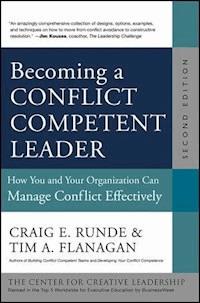
The Second Edition of this classic resource on conflict resolution combines research, conceptual models, practitioner experience, and stories that highlight the core conflict competencies. The book underscores the importance for leaders to develop the critical skills they need to help them, their colleagues, and their organizations deal more effectively with conflict and move their organizations forward. This new edition expands on the conflict competence model, includes new tools and techniques, shows how to develop conflict competent teams and organizations, and offers a new online assessment.
Sie lesen das E-Book in den Legimi-Apps auf:
Seitenzahl: 442
Veröffentlichungsjahr: 2012
Ähnliche


















Table of Contents
Cover
FREE Premium Content
Title page
Copyright page
A Joint Publication of The Jossey-Bass Business & Management Series and The Center for Creative Leadership
Dedication
Preface to the Second Edition
1 The What and Why of Conflict Competent Leaders
Individual Conflict Competence
Team and Organizational Conflict Competence
Why Conflict Competent Leaders Are Needed
Summary
2 Understanding the Dynamics of Conflict and Your Responses to It
What Is Conflict?
The Nature of Conflict
Retaliatory Cycles
Roles and Outcomes
Responses to Conflict
Summary
3 Cool Down
The Origin and Nature of Conflict Emotions
Regulating Emotions
Managing Others
Summary
4 Slow Down and Reflect
Reflecting on Your Own Experience
Reflecting on Others’ Experiences of Conflict
Looking at the Bigger Picture
Moving Ahead
Reflection in Action
Summary
5 Preventing Destructive Responses to Conflict
Intensity Levels
Destructive Behaviors
Summary
6 Fostering Constructive Responses to Conflict
Weathering the Storm of Conflict
Constructive Behaviors
Summary
7 Developing and Leading Conflict Competent Teams
Establishing the Right Climate
Engaging in Constructive Communication
Getting and Staying on Track
A Note About Virtual and Global Teams
Summary
8 Creating Conflict Competent Organizations
Benefits of Organizational Conflict Competence
Paths to Conflict Competence
Characteristics and Components of an Integrated Conflict Management System
Creating an ICMS for Your Organization
Leader Roles in Building Organizational Conflict Competence
Summary
Epilogue
Resources
The Becoming Conflict Competent Course
Books
Programs
Organizational Conflict Management System Design Resource
References
The Authors
Index
About the Center for Creative Leadership
Copyright © 2013 by John Wiley & Sons, Inc. All rights reserved.
Published by Jossey-Bass
A Wiley Imprint
One Montgomery Street, Suite 1200, San Francisco, CA 94104-4594—www.josseybass.com
Cover design by Adrian Morgan
No part of this publication may be reproduced, stored in a retrieval system, or transmitted in any form or by any means, electronic, mechanical, photocopying, recording, scanning, or otherwise, except as permitted under Section 107 or 108 of the 1976 United States Copyright Act, without either the prior written permission of the publisher, or authorization through payment of the appropriate per-copy fee to the Copyright Clearance Center, Inc., 222 Rosewood Drive, Danvers, MA 01923, 978-750-8400, fax 978-646-8600, or on the Web at www.copyright.com. Requests to the publisher for permission should be addressed to the Permissions Department, John Wiley & Sons, Inc., 111 River Street, Hoboken, NJ 07030, 201-748-6011, fax 201-748-6008, or online at www.wiley.com/go/permissions.
Limit of Liability/Disclaimer of Warranty: While the publisher and author have used their best efforts in preparing this book, they make no representations or warranties with respect to the accuracy or completeness of the contents of this book and specifically disclaim any implied warranties of merchantability or fitness for a particular purpose. No warranty may be created or extended by sales representatives or written sales materials. The advice and strategies contained herein may not be suitable for your situation. You should consult with a professional where appropriate. Neither the publisher nor author shall be liable for any loss of profit or any other commercial damages, including but not limited to special, incidental, consequential, or other damages. Readers should be aware that Internet Web sites offered as citations and/or sources for further information may have changed or disappeared between the time this was written and when it is read.
Jossey-Bass books and products are available through most bookstores. To contact Jossey-Bass directly call our Customer Care Department within the U.S. at 800-956-7739, outside the U.S. at 317-572-3986, or fax 317-572-4002.
Wiley publishes in a variety of print and electronic formats and by print-on-demand. Some material included with standard print versions of this book may not be included in e-books or in print-on-demand. If this book refers to media such as a CD or DVD that is not included in the version you purchased, you may download this material at http://booksupport.wiley.com. For more information about Wiley products, visit www.wiley.com.
Library of Congress Cataloging-in-Publication Data
Runde, Craig E., 1951–
Becoming a conflict competent leader : how you and your organization can manage conflict effectively / Craig E. Runde, Tim A. Flanagan.—2nd ed.
p. cm.
Includes bibliographical references and index.
ISBN 978-1-118-37042-1 (cloth), ISBN 978-1-118-42048-5 (ebk), ISBN 978-1-118-41722-5 (ebk), ISBN 978-1-118-43437-6 (ebk)
1. Leadership—Psychological aspects—Study and teaching. 2. Conflict management—Study and teaching. 3. Interpersonal conflict—Study and teaching. I. Flanagan, Tim A., 1955– II. Title.
HD57.7.R86 2013
658.4'092—dc23
2012027910
A Joint Publication of The Jossey-Bass Business & Management Series and The Center for Creative Leadership
To Mac, Lindsay, Kyle, Kathy, and Matthew
Preface to the Second Edition
Since the completion of the first edition of Becoming a Conflict Competent Leader in the fall of 2006, much has transpired in the world—some good, some not so good. In six short years, we’ve seen unprecedented upheaval in the world economy, bank failures across the United States, government bailouts for major corporations, jobless rates at their highest levels since the Great Depression, military interventions in multiple countries, ousters of dictatorial leaders in the Middle East, defaults of entire countries, the demise of the U.S. housing market, and oil prices topping $100 per barrel. National politics seemed to reach new low points as bipartisanship all but disappeared. The explosion of technology continued to create opportunities for instant and constant information exchange while making face-to-face communication apparently less necessary. These issues, among many others, helped fuel rising stress levels and despair, creating a perfect storm for an increase in conflict.
It would be easy to dwell on the negatives. But we’ve also witnessed many amazing and inspirational events. In the wake of natural disasters, we saw communities come together in ways unimaginable just days before. We witnessed the historic election of President Barack Obama. Electric and hybrid cars have become a practical alternative. We store and share information “in the cloud.” Medical advances have made organ replacement almost routine, giving new hope to those suffering from previously incurable diseases and disabling injuries. Even complete face transplants have become possible. Astronomers have discovered countless new galaxies and biologists dozens of new species.
Through it all, we learned a lot. We’ve always been passionate about conflict, and we had much to share. We wrote two additional books, Building Conflict Competent Teams (2008) and Developing Your Conflict Competence (2010). With our colleague Sherod Miller, we designed a unique two-day course, Becoming Conflict Competent (2010). We believe that conflict brings opportunities at least as often as it stirs challenges, especially because it’s not a spectator sport. When you’re in conflict with someone, the only way to get the best out of it is to fully engage. We say that with absolute acknowledgment that it’s easier said than done. With that in mind, we have polished our message and introduced our conflict competent model: Cool Down, Slow Down and Reflect, and Engage Constructively.
The second edition features two completely new chapters: one that addresses the model and one that offers guidance for conflict in teams. We’ve added references to recent research and many new suggestions for “staying in the zone.” Examples are updated throughout. We’ve added a new constructive behavior, listening for understanding. We’re especially proud of the enhancements (including tips and exercises at the end of each chapter) that make this edition much more user friendly as a personal resource or a text for teaching others.
Craig continues to serve as a thought-leader in the field as director of the Center for Conflict Dynamics at Eckerd College. Tim and his wife, Mac, have launched their own firm, Custom Leadership Solutions, specializing in conflict resolution, team building, and leadership development training. Together, we have appreciated the acceptance and proliferation of conflict competence throughout the leadership development and executive education industry.
We have many people to thank for their support, assistance, and views. Our wives, Kathy Runde and Mac Flanagan, once again became expert reviewers, proofreaders, and book widows. Without their support, we’d be lost. Our children again inspired us, our colleagues grounded us, and our clients challenged us. Craig wants to thank his friend John Rogers for his helpful conversations and insights. Our editor, Kathe Sweeney, and her staff at Jossey-Bass have once again surpassed our expectations with advice, guidance, and encouragement.
We hope you find this new edition to be a valuable addition to your library. Even more, we hope you use it to enhance your personal leadership journey. If you discover just one single tip that enables you to address conflict in more successful and satisfying ways, we’ll be thrilled. After all, the world with no conflict would be a pretty boring place.
Craig Runde and Tim FlanaganAt the Chattaway St. Petersburg, Florida (our unofficial “office”)October 2012
1
The What and Why of Conflict Competent Leaders
Difficulties are meant to rouse, not discourage. The human spirit is to grow strong by conflict.
—William Ellery Channing
The basic nature of human beings is to avoid painful or unpleasant experiences whenever possible. How many different versions of “I’d rather go to the dentist than [fill in the blank]” have you heard in your life? For most of us, dealing with conflict ranks right up there with impromptu public speaking or firing an employee. If you’ve ever filled in the blank above with anything resembling “deal with conflict,” you’re in exceptionally good company.
So what might motivate you to strive toward conflict competence? First, we believe that conflict in the workplace is bound to occur, so you may as well equip yourself with the skills to deal with it. Your workplace may be a Fortune 500 company or a family-owned small business. It may be a government office, a school, or a nonprofit agency. It really doesn’t matter, because conflict occurs in all workplaces. In our work, we have had the opportunity to interact with thousands of executives, directors, managers, and team leaders engaged in their personal leadership development processes. What we have learned from them about leadership and conflict, stated simply, is this: conflict is inevitable for leaders, and it exists at the root of some of their best ideas and at the core of many of their worst failures.
Second, the effects of conflict on both human resources and the bottom line are dramatic. So there is a level of leadership responsibility involved in addressing conflict. Effective leaders hold themselves accountable for establishing work environments that provide safety and respect while helping the organization meet business and financial goals. Effectively handling conflict encompasses both of these objectives.
Third, despite the avoidance response most of us experience when engaging in conflict, not all conflict is negative, painful, or unpleasant. On the contrary, conflict, if harnessed effectively, can be the catalyst for new ideas and creative solutions to challenging business issues. Jeff Weiss and Jonathon Hughes (2005) suggest that “executives underestimate not only the inevitability of conflict but also—and this is key—its importance to the organization. The disagreements sparked by differences in perspective, competencies, access to information, and strategic focus within a company actually generate much of the value that can come from collaboration across organizational boundaries. Clashes between parties are the crucibles in which creative solutions are developed and wise trade-offs among competing objectives are made” (p. 2). In other words, wise leaders should embrace conflict and find ways to encourage the proliferation of differences as a strategy that enables the organization to get and stay ahead.
Both the science and art of leadership have been studied and chronicled for decades. There are a myriad of leadership models, definitions, theories, and concepts. Who among us doesn’t recall the great discussions focused on leadership versus management? Is a leader a manager? Is a manager a leader? Do leaders manage? Can managers lead? Today most of us agree that there are key differences between leadership and management. Nevertheless, the study of leadership and management shows no sign of slowing. In fact, over thirty-five hundred new management books are published each year (Pfeffer, 2005). In order to describe the conflict competent leader effectively, it seems appropriate to begin with a brief discussion of leadership.
Because we work in the field of leadership development, we prefer to think in terms of experiences, growth, and learning rather than a linear definition of leadership. It makes sense, though, to identify our broad definition of leaders. We believe that leaders are those whose roles in organizations include accountability for influencing others or establishing structure for others to follow, or those who are recognized for developing priorities for the organization. In most cases, leaders have formal role designations or titles: team leader, supervisor, manager, director, vice president, or president. In short, we believe that leaders are best identified by those who look to them for leadership. If you are a person who is consistently looked to for leadership, you are most likely a leader.
Leaders constantly learn from their experiences and actively seek opportunities for development. Leadership development has been defined at the Center for Creative Leadership (CCL) as the “expansion of a person’s capacity to be effective in leadership roles and processes” (McCauley, Moxley, and Van Velsor, 1998, p. 25). The expansion of these capabilities occurs over time and is usually maximized through a variety of experiences that provide challenge, support, and opportunities to learn. And certainly context is important in shaping the development process. The most successful leaders continue to learn throughout their careers. They become aware of their most effective strengths and use them relentlessly. They are just as aware of their limitations, or “developmental opportunities,” and strive to improve or, in some cases, to minimize the effects of these limitations.
For many leaders, the area of conflict presents one of their most demanding challenges. This makes sense considering the sheer volume of conflict opportunities that leaders face. Leaders can find themselves in personal conflicts with others in the organization. They are also sought out to mediate conflicts among their direct reports or peers. Leaders are often asked for advice about how to handle conflicts or are looked to for conflict coaching. At times, they must grapple with conflict involving vendors, clients, or other stakeholders. At other times, they must consider the culture in their organization, which may include assessing how conflict is treated at a strategic or systems level. Furthermore, the costs and opportunities associated with conflict demand leaders’ attention. Because conflict is so often emotionally charged, there is a sense of urgency when it occurs, so it attracts leadership attention immediately. And conflict is frequently not resolved quickly, so leaders find themselves involved for substantial periods of time. Conflict definitely qualifies as a demanding leadership challenge.
The relationship between leadership and conflict appears natural and inevitable. It is our belief that defining conflict in broad terms makes the most sense for discussing its relationship to leadership. With this in mind, we refer to the work of our colleagues Sal Capobianco, Mark Davis, and Linda Kraus, the creators of the Conflict Dynamics Profile (CDP). The CDP is a groundbreaking assessment instrument that provides feedback on an individual’s behaviors before, during, and after conflict. Its creators define conflict as “any situation in which people have incompatible interests, goals, principles or feelings” (Capobianco, Davis, and Kraus, 1999, p. 1). This definition certainly encompasses many different situations and contexts, as do a leader’s role and scope. Leaders confront conflicts that arise regarding both short-term and long-standing issues, handle disagreements about strategies and tactics, and referee struggles for resources. They also discover conflict resulting from misperceptions, misinterpretations, misunderstandings, and miscommunications among people. It appears that conflict can result from almost anything that puts at least two people in opposition.
As mentioned, in addition to handling conflicts among others, leaders often find themselves in disagreement with somebody about something. This is not to disparage those wonderful moments when everybody is “on board,” the team is “flying in tight formation,” or the entire organization is “marching in the same direction.” These are times to savor and reinforce. Realistically, though, the notion of 100 percent buy-in is a lofty goal. When complete buy-in or agreement isn’t possible, why not respond as one of our close associates does with a hearty, “That’s great! We see it differently!” As we have already suggested, conflicts and disagreements present opportunities and should not be avoided. Some kinds of conflict can be productive and are at the very heart of creative ideas, innovative approaches, and previously unseen possibilities. Differing opinions and diverse perspectives can lead to new solutions and unexpected breakthroughs. Or conflict can become destructive when the disagreeing parties don’t handle their differences effectively. This dichotomy is at the fulcrum of the leader’s most crucial challenges when developing conflict competence. How do leaders encourage the exploration of differing viewpoints while minimizing the hazards of polarization? How do they know when to intervene in a dispute between or among others? What are the signs that a conflict is getting out of control? How do leaders stay attuned to their personal reactions and behaviors when they are involved in a conflict? Are there ways to construct effective organizational approaches to conflict? We believe that conflict competent leaders understand the dynamics of conflict, are aware of their strengths and developmental opportunities for handling personal conflict, model appropriate behaviors when engaged in conflict, find ways to foster constructive responses among others while reducing or avoiding destructive responses, and encourage the development of a conflict competent organization through systems and culture.
How does a leader acquire the skills and experience to develop this area of competency? Acquiring experience, if you agree with the notion that conflict is inevitable, will not be a problem. Lead long enough (we suspect a few days at most will be enough), and you will encounter conflict. A participant in one of our conflict workshops commented in the program evaluation, “I won’t have to look very hard to find opportunities to practice the approaches I’ve learned in this class.” Acquiring experience is not the issue.
Acquiring the skills is the primary challenge. And leaders who are conflict competent don’t just “acquire” skills. They study, hone, and develop their skills over time as they encounter experience after experience. True to our leadership development roots, we believe that the most effective practices for developing competence are centered on exposure to a variety of developmental experiences coupled with the ability to learn. In one of the most extensive and revered studies of executive development, The Lessons of Experience, McCall, Lombardo, and Morrison (1988) categorized the key developmental experiences of leaders into three sets of lessons: assignments, the impact of others, and hardships.
Anyone using this framework can begin to imagine the variety of conflict experiences associated with each category. The assignments people accept during a career can be rife with conflict. How often are aspiring leaders given the challenge to “fix” an existing problem? Or “take over” a floundering project? Or present to an unfriendly audience? Or accept a new role with little or no training? A leader in any one of these cases can be instantly engulfed by the conflicting viewpoints of resistant workers, unhappy customers, or feuding colleagues. During a recent workshop, the general manager of a restaurant described the conflicting priorities she faced while opening a new facility: “I needed to keep the pressure on my assistant managers to complete the hiring of new employees by the deadline while at the same time insisting that they manage the training of existing employees in order to open the restaurant on time. I’m sure they thought I was unfair, unfeeling, and uncompromising in my approach. But what choice did I have? We had to have a critical mass hired, and we had to have the staff trained. There was no way I was going to be unprepared to open on time. As it turned out, we had a great opening, but I worry that I damaged some relationships along the way.”
When considering the impact of others, most leaders are able to quickly identify people who provided positive models of accomplishment as well as those who were negative models. In later chapters, we explore the impact of constructive and destructive behaviors on conflict situations. For most of us, it is easy to recall the actions of others that demonstrate both sets of behavior.
Finally, lessons learned as a result of hardships can be associated readily with conflict situations. Most leaders are able to identify events or periods of time they describe as personal or career setbacks. A senior vice president at a major high-tech firm with whom we worked described his greatest challenge over the final few months of his tenure like this: “I’d estimate that 70 percent of my work-related energy was spent on managing the lousy relationship I had with my boss. We just didn’t seem to see anything eye to eye. Not only did I constantly battle him at work, but I found that I’d carry the negativity home with me every day, and it began to spill over with my family and friends. I didn’t know it at the time, but my wife later told me I was like a flea carrying the plague. Every person I touched was likely to be infected by the conflict I was bringing home from work.” Although not all setbacks and hardships are the direct result of conflict, it is reasonable to assert that they can provide the precipitating event or starting point for a conflict to develop.
We are certain that all leaders will experience conflict as they lead. In leadership development terms, those with an adequate ability to learn will be in positions to acquire, analyze, and apply knowledge to their experiences. Experience and ability to learn are the ingredients that lead to skill development, which is necessary for becoming competent—in this case, conflict competent. Our purpose is not to review the extensive research and documentation about best leadership development practices. Rather, the bulk of this book explores what we have learned about conflict and how leaders develop the skills to become conflict competent.
Individual Conflict Competence
Conflict competence is the ability to develop and use cognitive, emotional, and behavioral skills that enhance productive outcomes of conflict while reducing the likelihood of escalation or harm (Runde and Flanagan, 2010). Conflict competence improves relationships and leads to creative, lasting solutions. Fortunately, the skills needed for conflict competence can be learned.
We believe that developing skills, learning mental models, and applying basic principles are the keys to developing conflict competence. Our model is simple and involves three key steps: Cool Down, Slow Down and Reflect, and Engage Constructively. The model suggests that those who deal well with emotions, are mindful of the ramifications of conflict, and use effective skills during conflict have the best chance of productive outcomes.
A number of principles (adapted from Runde and Flanagan, 2010, pp. 3–5) focus on the essence of individual conflict competence:
Figure 1.1 Individual Conflict Competence Model
We encourage leaders who want to be conflict competent to learn more about the dynamics of conflict and their responses to it, enhance their emotional intelligence, reflect on what is happening in the conflict, and improve their constructive communication skills. In the next few pages, we provide an overview of these skill areas.
Understanding the Dynamics of Conflict and Your Responses to It
Conflict competent leaders do not have to be experts in the study of human behavior. They will benefit, though, from understanding the nature of some basic human responses such as “fight or flight” and the “retaliatory cycle.” Many of us experience strong emotional reactions to conflict. At times our instinct is to dig in and defend our positions at all costs. When confronted with arguments different from our own, we respond by arguing equally or more vehemently for our side. This is the “fight” response. In other situations, we find our emotional barometer urging us to escape the conflict situation, avoiding the confrontation or disagreement as best we can. Removing ourselves from the conflict as completely as possible and avoiding the other party seems the only reasonable choice. This is the “flight” response.
There are times when despite our intentions (and the best intentions of our conflict partner), the conflict seems to spin more and more out of control into the ever-deepening chasm of irreconcilable differences. The nature of our communication and the perceptions of our conflict partner contribute insidiously to a pattern of responses that leads us down a path of negativity and destruction with little hope for resolution. This “retaliatory cycle” is observable, manageable, and reversible.
The key to applying this understanding of the dynamics of conflict lies in the ability to observe and detect a myriad of subtle human interaction cues. A raised eyebrow here or strain in the voice there may be the clues that alert the conflict competent leader to the potential conflict lurking just below the surface. The real trick is to monitor the clues and decide just how to respond. The conflict competent leader is adept at encouraging constructive conflict and equally skilled at handling conflict that becomes destructive.
It is especially crucial for conflict competent leaders to understand and embrace their own strengths and developmental opportunities in regard to conflict. The most effective leaders are known for being models of exemplary behavior. This notion has never been truer than as it applies to conflict. Self-awareness is critical.
As human beings, we experience emotions. As individuals, we experience emotions in unique and profound ways. In addition, as human beings, we have the ability to reason. Each of us has our own “wiring” when it comes to thinking and reasoning. We are uniquely individual. In our individuality, we respond to conflict in cognitive and emotional ways. For leaders, it is of utmost importance to be aware of their personal reactions to conflict so that they can manage their responses and model the most effective behaviors before, during, and after conflict. The way leaders are seen handling conflict sends strong signals to those around them about their ability to assist them when they experience conflict. In order to establish credibility as a conflict competent leader, you must model constructive engagement in conflict. In Chapter Two, we will explore these subjects in more depth.
Managing Your Emotions
It is only recently that significant attention has been paid to the role of emotions in conflict. Our experience is that conflict is all about emotions, and enhancing your capacity to manage them effectively can make the difference between well-managed conflict and disaster. Emotional regulation is a challenge, but one that is essential to becoming conflict competent. Yet people generally try to suppress emotions and look as though they are “playing it cool.” This tendency is influenced by culture; many cultures prefer emotional reserve, and others support being more direct about emotions.
In many Western countries, it is as though there were an invisible sign outside the front of the headquarters building that reads “Check Your Emotions Here.” People feel that they need to repress emotions. Yet research has found that repression is the worst of all emotional management techniques (Gross, 1998a). It is essential to find a way to manage your emotions so that you can be more balanced when you face conflict. In Chapter Three, we will explore several approaches for doing this.
Reflecting on Conflict
Confusing and chaotic—these two terms describe the landscape of conflict. When your emotions get aroused, your thoughts can become scattered. It is easy to go into defense mode to protect yourself from perceived threats to your interests. When you’re dealing with conflict is the very time, though, when you need clarity in order to discover insights and solutions.
Taking time to reflect about how you are experiencing a conflict is critical before engaging with others to find solutions. Thinking about other people’s perspectives and interests can deepen your understanding of why people may be behaving the way they are. People rarely spend enough time reflecting on and preparing for conflict conversations. This work can lessen the tension associated with such discussions by helping you think through possible approaches and potential responses from the other person. We will look more deeply into slowing down and reflecting in Chapter Four.
Fostering Constructive Responses (and Reducing Destructive Responses)
One of the basic tenets of our work is this: people who are most effective at handling conflict behave in constructive ways. These constructive behaviors are identifiable, learnable, and applicable. The more you employ these behaviors before, during, and after conflict, the more effective you become at handling conflict.
The work of Capobianco, Davis, and Kraus (1999) presents two sets of behaviors associated with responses to conflict: constructive behaviors, which tend to reduce tension and keep the conflict focused on ideas and information rather than people; and destructive behaviors, which tend to make things worse and escalate the conflict. The focus shifts to personalities and people and away from ideas. Capobianco, Davis, and Kraus suggest thinking of conflict as a fire: constructive behaviors help control the fire; destructive behaviors fan the flames.
Capobianco, Davis, and Kraus have identified seven constructive behaviors and eight destructive behaviors. The constructive behaviors are perspective taking, creating solutions, expressing emotions, reaching out, reflective thinking, delay responding, and adapting. In this book, we have added an additional constructive behavior, listening for understanding. The destructive behaviors are winning at all costs, displaying anger, demeaning others, retaliating, avoiding, yielding, hiding emotions, and self-criticizing.
Chapter Five deals with destructive behaviors, and Chapter Six focuses on constructive ones. In these chapters, we will explore in depth how the use of constructive behaviors leads to favorable outcomes as well as a reduction of destructive behaviors. Conflict competent leaders will not only discover how to use constructive behaviors themselves but also see the desirability of coaching others to do the same.
Team and Organizational Conflict Competence
The most effective leaders do more than just enhance their own conflict competence. They model effective behaviors and influence or develop others. They also find ways to transform their teams’ conflict climate and their organization’s conflict culture. They champion the establishment of processes and systems that enable team and organizational conflict competence. This can include supporting training, coaching, and mentoring at all levels. It also involves the development of norms or agreements for how people will deal with each other when conflict arises. Conflict competent leaders espouse a systems approach to handling conflict and the use of a wide variety of approaches to resolving conflict.
In team settings, conflict competence includes creating the right climate to support the use of the Cool Down, Slow Down and Reflect, and Engage Constructively model among teammates so that they can have open and honest discussions of issues. Creating the right climate includes developing trust and safety, promoting collaboration, and enhancing team emotional intelligence.
In order to manage conflict effectively, team members need to be able to discuss issues openly and honestly. When they can robustly debate issues without turning a task-focused conflict into one involving relationship conflict, they can develop better, more creative solutions. This is not easy to do and requires developing norms that produce the right climate for managing conflict constructively. This includes changing attitudes about conflict so that it is not just something to avoid. It also means creating a safe environment in which team members trust that what they say won’t be used against them. Working together with team spirit produces collaborative effort that can enable people to give others the benefit of the doubt when conflict emerges. Managing emotions is important in team settings as well as in individual contexts, because emotions are contagious and, if not addressed, can spread tension throughout the team. Team members also need to use constructive behaviors when addressing conflicts so as to maintain a solution-oriented focus to their discussions. We will address team conflict competence in Chapter Seven.
In organizational contexts, conflict competence involves creating a culture that supports the Cool Down, Slow Down and Reflect, and Engage Constructively model. This includes aligning mission, policies, training programs, performance standards, and reward structures to reinforce the conflict competence model. It also includes creating integrated conflict management systems to support these cultural changes (Runde and Flanagan, 2010).
In order to be conflict competent, an organization needs its leaders, managers, supervisors, and employees to be individually conflict competent. At the same time, the organization needs to align its conflict management processes with its mission, values, policies, performance standards, and reward structures in order to reinforce the kind of conflict behaviors it wants its personnel to use with each other and with its vendors and customers. This involves creating systems to reinforce its conflict model and to provide multiple avenues for employees to address conflicts, preferably at the lowest possible level at the earliest possible time.
We believe that talented leaders make lasting, significant contributions to organizations. When they harness the tremendous upside of conflict while minimizing the potential for harm, the organization will reap benefits perhaps previously unimaginable. We will look at how they can do this in Chapter Eight.
Why Conflict Competent Leaders Are Needed
Organizations have long recognized that they need leaders with intelligence and technical proficiency. Recently, attention has increasingly been paid to the importance of the emotional aspects of leadership (Goleman, 1995). Our experience confirms this trend. When executives and managers are asked about their toughest challenges, their responses frequently focus on an issue that strikes at the heart of emotional intelligence: conflict management. They found conflict hard to handle because it is filled with difficult emotional issues that sometimes flare up and at other times go underground.
Research suggests that leaders who are more effective are better able than less effective leaders to address conflict. A study of more than three hundred managers found that the participants’ bosses, peers, and direct reports rated them as more effective leaders when they were seen as exhibiting higher levels of constructive responses to conflict (Capobianco, Davis, and Kraus, 2005). Conversely, those who engaged in destructive types of responses were not seen as effective leaders. Similar connections have been drawn by other researchers based on field observations suggesting that those who have developed constructive approaches to conflict are viewed as leaders even when they do not hold formal leadership positions (Patterson, Grenny, McMillan, and Switzler, 2002).
We believe that competency in dealing with organizational conflict is a hallmark of effective leaders and crucial to organizational success. The organizational costs associated with poorly handled conflict are too high to ignore.
The Costs of Conflict Incompetence
When conflict is mismanaged, costs mount. Some out-of-pocket costs like absenteeism and lawsuits are relatively easy to see and compute. Others, like poor decision making, lost opportunities, and diminished quality of working relationships, can prove more costly, though they are more difficult to quantify.
One obvious cost concerns management time wasted dealing with conflict rather than addressing more productive issues. Surveys by the CCL and Eckerd College show that most managers estimate that between 20 and 40 percent of their time is spent dealing with conflict (Center for Creative Leadership, 2003; Runde, 2003), figures that are consistent with earlier management studies (Thomas and Schmidt, 1976; Watson and Hoffman, 1996). How and why does so much time get consumed?
One of our clients, whom we will call Mary, was frustrated because she was unable to focus on her main tasks. When asked what was diverting her attention, she complained that her subordinates were constantly coming to her to resolve conflicts. Mary was a good problem solver, so they approached her to fix their problems rather than resolving the issues by themselves. Although this worked well for the employees, it became a major drain on Mary’s time and energy until she was finally able to use techniques described later in this book to lessen her burden. Her predicament illustrates one way that ineffective conflict management can waste managers’ time.
A second conflict-related cost is the loss of employees. It has been estimated that more than half of employee retention problems are related to poorly handled conflict (Dana, 2005). When conflict creates morale problems and interferes with employees’ abilities to do their jobs, they may look for a better place to work, particularly when the job market is strong. Many of these problems occur with the employee’s manager. The replacement costs of finding, training, and bringing a new person up to speed can often exceed the annual salary of the employee who leaves. It certainly costs more than addressing conflicts in the first place so that employees do not get frustrated and leave. If turnover becomes an organizational problem, an effective leader needs to determine if poorly managed conflict is at least partially at fault.
Absenteeism and health costs related to work stress also contribute to the financial toll exacted by ineffectively managed conflict. One form of absenteeism represents an attempt to avoid dealing with conflict: the employee takes a sick day in order to delay or escape dealing with the unpleasant problem. Another aspect of absenteeism relates to actual physical or emotional distress or illness associated with conflict. Research has demonstrated a connection between workplace conflict and stress as well as the detrimental health effects of workplace stress (Quick, Quick, Nelson, and Hurrell, 1997; Yandrick, 1999). Health claims and their effects on insurance premiums as well as the productivity losses associated with absenteeism can constitute significant financial drains on organizations.
A variation on absenteeism is presenteeism. In this case, the employees will be physically at work but will not be focused on their job. Instead they will be thinking about the conflict while at work. Research suggests that presenteeism may have a more profound effect on productivity than absenteeism (Hemp, 2004).
Grievances, complaints, and lawsuits often stem from ineffectively managed conflict. Many times, the complainant just wants an opportunity to talk about the problem or receive an apology for a perceived wrong. If it is handled effectively at the start, the issue can be resolved informally with much less cost. Yet problems are often ignored or not handled well. Then the conflict spirals out of control and becomes a dispute that requires more formal third-party intervention, which can increase the time, effort, and cost required for resolution. Even if an organization prevails in such a dispute with an individual employee, vendor, or customer, it hasn’t truly won. The process, whether litigation or a less complicated approach such as mediation, can still take costly time for preparation and participation. In addition, there is always the possibility of losing on the merits, which can cost a great deal more.
Workplace conflict can lead to an even more extreme problem: workplace violence. The National Institute of Occupational Safety and Health (1997) estimates that more than one million workers are assaulted each year at work. A significant number of these assaults are perpetrated by disgruntled customers, patients, coworkers, and employees. The emotional toll on the targets of the violence as well as on their coworkers can be enormous and can increase the costs associated with retention, absenteeism, and health care.
Many of these costs directly affect organizational productivity. When managers are spending their time dealing with conflict rather than developing new products or helping their employees serve customers, productivity lags. When workers brood at their desk about conflict issues, spend time complaining to coworkers about the conflict, stay home to avoid it, or even leave the organization when conflict becomes unbearable, the organization suffers too.
In one of our programs, we have participants estimate how much conflict currently costs their organization. We use the Dana Measure of Financial Cost of Organizational Conflict survey (Dana, 2006), which enables users to provide their own estimates for cost categories described in this chapter. Although they are encouraged to use conservative estimates for each of the cost categories, our participants are constantly surprised at the high cost of conflict their organizations incur. They say that their surprise comes in part because they had never systematically reviewed conflict-related expenses or at least had never consciously attributed those expenses to poor conflict management.
Beyond Costs
Although cost savings alone make a compelling case for leaders who can address conflict in an effective manner, there are additional reasons for leaders to be conflict competent. People operate differently in situations where conflict becomes destructive. These changes can disrupt the effective functioning of an organization. For example, when facing conflict, some people begin withholding information from those with whom they have conflict. When sharing begins to dry up, decisions may be made based on inadequate information. When the relationships become too tense, managers may feel compelled to reorganize work groups so as to separate individuals. This tactic may temporarily relieve the tension, but it can be counterproductive to bringing the best talents to bear on the issues faced by a work group.
Although most people think of conflict as negative, conflict theory suggests that there are creative opportunities that can emerge from conflict when it is managed effectively. Imagine what an organization would look like if it had absolutely no conflict at all—pretty boring and static. Some suggest that leaders need to make sure that there is sufficient debate and conflict in their organization to ensure that varying approaches to important issues are considered and appropriately vetted. The key in these cases is to stimulate debate without letting it become destructive or focused on personalities as opposed to the task at hand (Roberto, 2005). Conflict that involves the airing of different opinions can stimulate creativity as ideas feed off one another and new concepts emerge. When conflict can be used constructively to elicit ideas and appropriately challenge them, it can help prevent teams from falling into the trap of groupthink, where extreme concurrence seeking can lead to suppression of conflict and a consequent drop in the quality of decision making (Turner and Pratkanis, 1997). A classic example of groupthink was the failure of the Swiss watchmaking industry to grasp the cutting-edge digital technology that became the new standard. The Swiss watchmakers decided that the new technology was a fad that wouldn’t last. The Swiss experts needed little debate. They were convinced that the technology was fallible because a watch without a mainspring certainly wouldn’t work. Their decision resulted in a massive loss of market share from which the industry never fully recovered.
Effective strategic planning requires sharing information and debating the ideas developed from that information. Conflict avoidance causes both the information sharing and the vetting to dry up and undermines the rigorous debate required for superior strategic decision-making quality (Amason and Schweiger, 1997). In one example, a group of executives was examining the company’s mission and vision. After several days, it became apparent to the facilitators that most of the executive team members refused to engage in any meaningful debate with the senior member of the team. They deferred to his opinions and yielded to his suggestions. The facilitators intervened by providing feedback about the lack of debate and suggested that the team examine how they handled conflict before proceeding with their primary objective. Eventually the team began sharing observations about their lack of open communication. They chose to table their examination of the mission and vision until after they had resolved their communication issues.
Effective conflict management can also be a key to stimulating a collaborative workplace environment. Disagreements inevitably arise when people from different parts of an organization begin working together. If these disagreements cannot be addressed in a successful manner, they will undermine collaboration and prevent the realization of the benefits that conflict can bring (Weiss and Hughes, 2005). Our conflict programs frequently focus on engaging participants in exercises and simulations that elicit disagreements. Participants are taught to employ approaches, techniques, and behaviors that enable successful resolution of differences. As participants find that they can be successful in the classroom, they gain confidence that they can use the same approaches, techniques, and behaviors in the workplace.
When an organization is able to develop a culture that emphasizes the use of constructive conflict management and resolution internally, it also helps create an environment where employees will interact with customers, vendors, and other external parties in a more effective manner. If an organization espouses high customer service values but ignores or mismanages internal conflicts, employees are likely to look at these actions as their cues for how they are to deal with others. Once poor habits such as ignoring internal conflicts become ingrained, they can become a major obstacle to development of successful customer relations. But if an organization can align its internal conflict management strategies with the way it wants to treat its clients, then it can achieve higher-quality client interactions (J. Lynch, conversation with Craig Runde on Dec. 12, 2005).
Knowing how to engage and resolve conflict also helps build stronger relationships—with clients, with vendors, among employees, and between managers and employees. These relationships can help these interdependent parties become more creative and productive and can make work life more enjoyable. Strong relationships can better weather problems and allow people to look for ways to resolve conflicts that enable all parties to gain. The first step along this path is to become familiar with the basic dynamics of conflict.
Summary
Conflict competence is a term we use to describe skills that leaders can develop to improve their personal ability to manage conflict and to help their teams and organization address it more effectively. Becoming conflict competent involves developing cognitive, emotional, behavioral, and normative skills in order to address the inevitable conflicts faced in organizational life. Motivation for beginning this effort can come from examining the high costs of conflict incompetence as well as reflecting on the substantial gains that can come from conflict competence.
2
Understanding the Dynamics of Conflict and Your Responses to It
Conflict is inevitable, but combat is optional.
—Max Lucado
Leaders do not need to become conflict experts, but it is important that they appreciate how and why people respond to conflict in the manner they do. This understanding will help illuminate the way to new, more effective kinds of responses that can turn conflict from a problem into an opportunity. In this chapter, we look at what conflict is, how people think about it, how it arises and unfolds, and how people respond to it. This basic grounding in conflict dynamics and self-awareness about one’s responses to it can help leaders better understand why they need to engage conflict rather than avoid it: to lessen its harmful effects while taking advantage of the opportunities inherent within conflict.
What Is Conflict?
In Chapter One, we introduced one definition of conflict: “any situation in which people have incompatible interests, goals, principles or feelings” (Capobianco, Davis, and Kraus, 2001). Underpinning this and many other definitions of conflict is the notion of differences. These differences come in many forms. They include differences about fundamental values and principles. Often they focus on how to solve problems and get interests met. They may also involve differences in objectives, as well as tactics to meet them. Many differences come with a history laden with emotional baggage.
Think about a conflict that you’ve experienced recently. How would you describe the differences at play in it? Although it is relatively easy to come up with reasons why the other person is wrong, it usually takes more effort to consider what lies behind the conflict in the first place. Taking time to think about the differences rather than focusing immediately on who is right or wrong can be beneficial.
The differences can come from a variety of sources. Sometimes they involve personal preferences people may have for the ways they like to do things or even the things they like to do. Some of these may be closely related to different personality traits. Have you ever been in conflict with others about how to solve a problem and wondered, How in the world could they see things the way they do? The other person may be thinking the same thing. In many cases, it may be that his or her preferred style of problem solving is different from yours. People can have legitimate differences in the way they approach things, and these differences can lead to conflict.
People can also have different values. These may lead to some of the most difficult conflicts, because values make up an important part of a person’s identity. Many major social conflicts (abortion, same-sex marriage, capital punishment) stem from value differences. These are so closely connected to people’s identities that they can easily arouse strong emotions. At times it seems impossible to concede because it would threaten one’s sense of identity. In some cases, this can lead to intractable conflicts that require fundamentally different approaches than traditional conflicts (Coleman, 2011).




