


39,59 €
Mehr erfahren.
- Herausgeber: Packt Publishing
- Kategorie: Fachliteratur
- Sprache: Englisch
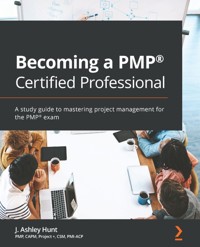
One of the five most prestigious certifications in the world, the PMP® exam is said to be the most difficult non-technical certification exam. With this exam guide, you'll be able to address the challenges in learning advanced project management concepts.
This PMP study guide covers all of the 10 project management knowledge areas, 5 process groups, 49 processes, and aspects of the Agile Practice Guide that you need to tailor your projects. With this book, you will understand the best practices found in the sixth edition of the PMBOK® Guide and the newly updated exam content outline. Throughout the book, you'll learn exam objectives in the form of a project for better understanding and effective implementation of real-world project management tasks, helping you to not only prepare for the exam but also implement project management best practices. Finally, you'll get to grips with the entire application and testing processes in PMP® and discover numerous tips and techniques for passing the exam on your first attempt.
By the end of this PMP® exam prep book, you'll have a solid understanding of everything you need to pass the PMP® certification exam, and be able to use this handy, on-the-job desktop reference guide to overcome challenges in project management.
Das E-Book können Sie in Legimi-Apps oder einer beliebigen App lesen, die das folgende Format unterstützen:
Seitenzahl: 1163
Veröffentlichungsjahr: 2021
Ähnliche

















Becoming a PMP® Certified Professional
A study guide to mastering project management for the PMP® exam
J. Ashley Hunt
PMP, CAPM, Project +, CSM, PMI-ACP
BIRMINGHAM—MUMBAI
Becoming a PMP® Certified Professional
Copyright © 2021 Packt Publishing
All rights reserved. No part of this book may be reproduced, stored in a retrieval system, or transmitted in any form or by any means, without the prior written permission of the publisher, except in the case of brief quotations embedded in critical articles or reviews.
Every effort has been made in the preparation of this book to ensure the accuracy of the information presented. However, the information contained in this book is sold without warranty, either express or implied. Neither the author, nor Packt Publishing or its dealers and distributors, will be held liable for any damages caused or alleged to have been caused directly or indirectly by this book.
Packt Publishing has endeavored to provide trademark information about all of the companies and products mentioned in this book by the appropriate use of capitals. However, Packt Publishing cannot guarantee the accuracy of this information.
Group Product Manager: Ashwin Nair
Publishing Product Manager: Pavan Ramchandani
Senior Editor: Keagan Carneiro
Content Development Editor: Divya Vijayan
Copy Editor: Safis Editing
Project Coordinator: Kinjal Bari
Proofreader: Safis Editing
Indexer: Manju Arasan
Production Designer: Nilesh Mohite
First published: February 2021
Production reference: 1260221
Published by Packt Publishing Ltd.
Livery Place
35 Livery Street
Birmingham
B3 2PB, UK.
ISBN 978-1-83898-930-9
www.packt.com
To my mother, who has given everything so willingly and asked for nothing in return. You are my inspiration to keep on keeping on.
To my daughter, Izabella, I am so proud of everything you have accomplished. Keep on keeping on!
To my husband, Chris, for understanding the hours it takes to write and work full-time. Thank you for your love and patience.
Finally, thank you to my students. You make all of this worthwhile. Thank you for choosing me to help guide you on your professional journey.
Contributors
About the author
J. Ashley Hunt is currently the senior project management instructor at StormWind Studios for Waterfall and Agile project management. A nationally and internationally renowned subject-matter expert in the areas of project management and professional development, she has created training offerings for, and delivered project management training to, more than 10,000 people working for enterprise clientele around the world. Ashley has developed an admirable reputation as a consultative trainer and engaging speaker in several disciplines, consistently receiving exemplary evaluations from her students and clientele. This is her second published study guide. Her relevant technical experience includes PMP®, Project+, PMI-ACP®, CSM, MCAS, and LSSGBC certified.
About the reviewers
Mahjooba Bianchi is the CEO of Three T Institute Inc., an innovative professional development training company that focuses on providing an e-learning and classroom experience that is personable, hands-on, and effective.
The "3T System" approach enables busy professionals to understand, retain, and recall learned information to pass the certification exams at their first attempt.
Ms. Bianchi has over 15 years of project management experience, and an MBA in IT project management, with an undergraduate degree from George Mason University in government and international relations. Her passion in life is to drive motivation and enable individuals to reach their career heights through education.
Manickavel Arumugam has more than two decades of experience in the construction industry, with an emphasis on project management and site control. He has managed several prestigious projects, including the construction of underground metro rail stations and cut-and-cover tunnels in tricky environments. He also has extensive hands-on experience of precast component fabrication and installation.
He is an enthusiastic project management trainer, consultant, and blogger. He regularly conducts training programmes for candidates aspiring to obtain the industry-recognized Project Management Professional (PMP) certification. He has given several guest lectures and conducted training programmes at prestigious institutions and organizations.
He is a certified Project Management Professional (PMP) and Risk Management Professional (PMI-RMP).
Table of Contents
Preface
Section 1: Introduction to Project Management and People
Chapter 1: Introduction to the PMP® Exam
Why get a Project Management Professional (PMP)® certification?
What will you learn about?
Who is this book for?
Frequently asked questions
Who exactly is the PMI®?
What is The PMBOK® Guide – 6th Edition?
I heard Agile is included – what is the deal with that?
Predictive and adaptive? What does that mean?
I heard the PMP® exam is super difficult, is that true?
Can I cram for this exam? I have like zero time to study
100 hours of study???
Will your practice exams match my exam?
Am I going to pass the exam the first time?
Do I need other study materials?
I heard the application is difficult. Are you going to cover that in this guide?
What are the qualifications for the PMP® exam?
What does project management education mean?
I took a PMP® boot camp 4 years ago, does that count?
How to apply for the exam
What if the organization has closed or the people I worked with are gone and I can't find them?
The application
What to expect on exam day – if you take the exam at a testing center
What to expect on exam day if you take your PMP® exam online at home… in your pajamas…
Common questions you may be thinking to yourself after all of that
Do I need to be proficient in everything? How will I know?
Will anyone be able to see my results? As in, will PMI® post my results anywhere?
If I get below target in any domain, will I fail the exam?
What score should I be aiming for in practice exams?
I have zero time to study and that study for 100 hours bit is making me nervous. How can I still work and have a life, but also still study?
Study tips
Learning styles
The seven learning styles
Summary
Assessment exam
Chapter 2 :Introduction to Project Management
What are process groups?
Overview of knowledge areas
Introduction to the 49 processes
Inputs, tools/techniques, and outputs
Inputs – what do I need before I can make a PB&J?
Tools and techniques – what tools/techniques will I use to create my sandwich?
Outputs – what will I have when I am finished?
Organizational process assets and enterprise environmental factors
Enterprise environmental factors
Organizational process assets
The documents and plans
The project management plan and project documents
Summary
Assessment exam
Chapter 3: Pre-Project Initiation
Defining a project
Temporary
Unique
What is a program?
What is a portfolio?
Key phrases that pay
What is project management?
Spot check exercise
Spot check exercise answers
Types of project management
Predictive or waterfall project management
Adaptive or agile project management
Project and development life cycles
Project phases
Phase gates
Spot check exercise
Spot check exercise answers
Project management data and information
Work performance data
Work performance information
Work performance reports
Key phrases that pay
Project selection techniques
Creating a case for business
Constrained optimization
Expert judgment
Spot check exercise
Spot check exercise answers
Feasibility analysis
The business case
Key phrases that pay
Key project stakeholders
Project management offices (PMOs)
Change control board (CCB)
Sponsor
Spot check
Spot check answers
Functional manager
Procurement administrator/vendors
Customers/end users
Key phrases that pay
Understanding organizational structures
Organizational structures and their elements
Spot check exercise
Spot check exercise (possible) answers
The role of the project manager
Summary
Assessment exam
Chapter 4: Charters and Stakeholders
Politics, power, and leadership
Leadership versus management
Spot check
Personality traits
The project manager and project integration
The process level
The cognitive level
The context level
Goals and objectives of a project charter
Documenting high-level requirements
Spot check
Criteria of a project charter
Typical headings in a project charter
Agile project charters
Typical heading on an Agile charter
Project stakeholder management
Identifying the stakeholder's process
Project coordinator
Scheduler
Project team
Project Management Office (PMO)
Change Control Board (CCB)
Functional managers
Sellers, vendors, and suppliers
Procurement managers
Data analysis
Data representation
Power/interest grid, power/influence grid, or impact/influence grid
Stakeholder cube
Salience model
Directions of influence
Prioritization
Stakeholder register
Spot check
Wrapping up
Summary
Assessment exam
Chapter 5: Introduction to Agile Considerations
The history of Agile and the Agile Manifesto
The Agile Manifesto
Key phrases that pay
The 12 principles of the Agile Manifesto
Scrum and empirical process control
Spot check
Spot check solution
Agile versus predictive project management
The benefits of using Agile approaches in any industry
The Agile mindset
Scrum overview
Transparency
Inspection
Adaptation
Agile team roles
The product owner
The development team
Scrum master/coach/Agile project manager
The Agile life cycle
Sprint planning
The Sprint
Daily Scrum or stand-up meetings
Sprint reviews
The retrospective
Summary
Assessment exam
Chapter 6: Creating and Leading a Team
Interpreting the source and stage of the conflict
Analyzing the context of the conflict
Conflict resolution strategies
Collaborate and problem-solve
Compromise/reconcile
Smooth/accommodate
Force/direct
Withdraw/avoid
Negotiate
Setting a clear vision and mission
Leadership
Team-building
Communication
Active listening
Supporting diversity and inclusion
Responsibility – aspirational standards
Responsibility – mandatory standards
Respect – aspirational standards
Respect – mandatory standards
Fairness – aspirational standards
Fairness – mandatory standards
Honesty – aspirational standards
Honesty – mandatory standards
Value servant leadership
Inspiring, motivating, and influencing
Motivational theories
Maslow's hierarchy of needs
Douglas McGregor's Theory X and Theory Y
Dr. William Ouchi's Theory Z
Frederick Herzberg's theory of hygiene
David McClelland's theory of needs
Reward and recognition
Analyzing team members' and stakeholders' influence
Key phrases that pay
Summary
Assessment exam
Section 2: Project Management Processes
Chapter 7: Scope Management
Key concepts and scope management trends
Tailoring considerations
Agile considerations
Developing a scope and requirements management plan
Collecting requirements
Defining the scope and creating the scope statement
The Work Breakdown Structure
The WBS dictionary
Monitoring and controlling scope
The Validate Scope process
The Control Scope process
Key phrases that pay
Summary
Assessment exam
Chapter 8: Schedule and Cost Management
Key concepts for schedule management
Trends and emerging best practices in scheduling
Tailoring considerations for scheduling
Considerations for Agile and adaptive environments
Developing a schedule management plan
Schedule management plan considerations
Define activities
Sequencing activities
Dependencies
Relationships
Finish to Start relationships
Start to start relationships
Finish to finish relationships
Start to finish relationships
Lead and lag time
Estimating durations
Dates
Effort
Duration
Developing the project schedule
Critical path
Critical chain
Monte Carlo technique
Schedule compression
Resource optimization
Schedule baseline
Key concepts for project cost management
Trends and emerging best practices of cost management
Tailoring considerations for cost management
Considerations for Agile and adaptive environments
Plan cost management
Estimating costs
Determining budget
Controlling schedule and budget
Tracking and reporting cost/schedule performance
Earned value management (EVM)
Key phrases that pay
Summary
Assessment questions
Chapter 9: Quality Management
Key concepts for quality management
Quality versus grade
Precision versus accuracy
Other considerations for quality management planning
Trends and emerging practices in quality management
Tailoring considerations
Agile/adaptive environments – retrospectives
Spot check
Planning for quality management
Data representation
The quality management plan
Quality metrics
Quality checklists
The gurus of quality management
W. Edwards Deming and Walter A. Shewhart
Joseph Juran
Vilfredo Pareto
Bill Smith
Phillip Crosby
Genichi Taguchi
Key phrases that pay
The Manage Quality process
The Control Quality process
Histograms
Fishbone diagrams
Pareto diagrams
Run charts
Scatter diagrams
Control charts
Summary
Assessment exam
Chapter 10: Resources and Communication Management
Key concepts in resource management
Trends and emerging best practices
Resource management planning
Plan resource management
Key phrases that pay
Estimating activity resources
Key phrases that pay
Acquiring resources, developing, and managing a team
Acquiring resources
Developing and managing a team
Supporting your team's performance
Peter Drucker's MBO
Controlling resources
Key concepts in communications management
Trends and emerging best practices
Tailoring
Agile considerations
Communication considerations
Communications management planning
Key phrases that pay in communications management
Spot check
Managing communications
Monitoring communications
Summary
Assessment questions
Chapter 11: Risk Management
Key concepts for risk management
Trends and emerging best practices in project risk management
Non-event risks
Tailoring considerations for risk management
Considerations for Agile and Adaptive environments
Plan risk management
The risk management plan
Identify risks process
Root cause analysis
SWOT analysis
Prompt lists
Creating the risk register
The risk report
Performing qualitative risk analysis
Key phrases that pay
Performing quantitative risk analysis
Expected monetary value (EMV)
Plan risk responses
Creating risk responses for threats
Opportunity responses
Strategies for overall project risk
Issue logs
Spot check
Spot check answers
Implement risk responses
Secondary risks
Residual risk events
Monitor risks
Summary
Assessment exam
Chapter 12: Procurement Management
Key concepts for procurement management
Trends and emerging best practices in project procurement management
Considerations for Agile/Adaptive environments
Planning procurement management
Contract types
Roles in procurement
Key phrases that pay
Conduct procurements
Bidder conferences
Proposal evaluation
Partner-centric procurement documents
Letter of intent
Memorandum of Understanding (MOU)
Breach of contract
Service Level Agreements (SLAs)
Purchase Order (PO)
Nondisclosure agreement (NDA)
Cease and desist letter
Control procurements
Claims administration
Data analysis
Inspections and audits
Seller surveys
Warranty
Waivers
Summary
Assessment questions
Chapter 13: Stakeholder Engagement
Planning stakeholder engagement
Managing stakeholder engagement
Monitoring stakeholder engagement
Summary
Assessment questions
Chapter 14: Integration Management
Developing the project management plan
Directing and managing project work
Managing project knowledge
Monitoring and controlling project work
Performing integrated change control
Closing the project or phase
Spot check
Summary
Assessment questions
Section 3: Revision
Chapter 15: Next Steps and Study Tips
Why project management certification?
Where can I find the information?
Other changes and information
Study tips
Stuff to know about projects
Why projects are necessary
What is the difference between a portfolio, program, and project?
Project management documents
Skills of a project manager
Organizational structure types
Other important terms to be aware of
Final thoughts
On exam day
Question types
Summary
Chapter 16: Final Exam
Questions
Answers
Assessment
Assessment exam answers (Chapter 1)
Assessment exam answers (Chapter 2)
Assessment exam answers (Chapter 3)
Assessment exam answers (Chapter 4)
Assessment exam answers (Chapter 5)
Assessment exam answers (Chapter 6)
Assessment exam answers (Chapter 7)
Assessment exam answers (Chapter 8)
Assessment exam answers (Chapter 9)
Assessment exam answers (Chapter 10)
Assessment exam answers (Chapter 11)
Assessment exam answers (Chapter 12)
Assessment exam answers (Chapter 13)
Assessment exam answers (Chapter 14)
Why subscribe?
Other Books You May Enjoy
Preface
Congratulations on beginning your journey toward PMP® certification! This guide will prepare you to take and pass your exam as well as providing you with an understanding of the best practices and processes of predictive and Agile project management.
Who this book is for
This book is for experienced project managers looking for a common language and best practices in the project management space and who wish to gain certification and improve their careers and growth potential. A minimum of 5 to 7 years of experience in leading and directing projects in a variety of industries will be useful for understanding the best practices and processes as well as providing the necessary experience to apply for and sit the PMP® exam.
What this book covers
Chapter 1, Introduction to the PMP® exam, provides an overview of the process in terms of applying for and sitting the exam, as well as useful information and answers to common questions.
Chapter 2, Introduction to Project Management, provides an overview of project management best practices and terminology.
Chapter 3, Pre-Project Initiation, provides an overview of project selection techniques and how organizations determine which projects to charter.
Chapter 4, Charters and Stakeholders, explains how the proper kick-off of a project begins with a project charter and the identification of stakeholders. This chapter will review the best practices for both.
Chapter 5, Introduction to Agile Considerations, goes through everything you need to know about Agile project management.
Chapter 6, Creating and Leading a Team, focuses on the people side of project management and best practices to reward, recognize, and build an effective team of individuals.
Chapter 7, Scope Management, focuses on collecting requirements, creating a scope baseline, and gaining formal acceptance of the deliverables.
Chapter 8, Schedule and Cost Management, includes the best practices of breaking requirements to the activity level, sequencing, estimating, and creating a schedule and baseline. Many techniques are covered, overlapping with cost estimating and budgeting to produce a cost baseline.
Chapter 9, Quality Management, offers a review of planning for quality requirements, managing the execution of the process to produce deliverables within specifications, and controlling defects through quality control.
Chapter 10, Resources and Communication Management, explains how effective resource management and communication is an integral piece of project management. This chapter will cover the best practices in each area.
Chapter 11, Risk Management, explains how any moment during a project may entail risk, and so planning for risk and analyzing and creating responses to risk will allow better management of threats and opportunities.
Chapter 12, Procurement Management, focuses on best practices for agreements and contracts, including the project manager's responsibilities in procurement management.
Chapter 13, Stakeholder Engagement, reviews best practices for stakeholder engagement, given that keeping your stakeholders happy and informed is a large part of what project managers do.
Chapter 14, Integration Management, puts everything covered thus far into a project management plan that will be executed, and includes formal change control best practices as well as closing out the project or phase.
Chapter 15, Next Steps and Study Tips, is designed to help you prepare for your studying and plan for exam day, as well as tips and tricks to help you pass the exam first time.
Chapter 16, Final Exam, puts all of your knowledge to the test as you take the final exam. The higher your score, the closer you are to passing the PMP® exam!
To get the most out of this book
This book is based on the 6th edition PMBOK Guide. The 7th is not out yet and is not expected until Summer, this will not change the exam. It will be a supplemental guide of standards.
It is best to work your way through the chapters in the order they occur when reading this book for the first time. This will give you a project management framework and allow you to focus on each section's review questions. Then, after completing each chapter's assessments, you can go back and review what you missed before moving on to other chapters. After completing the final exam, you can then go back and review those areas where your knowledge is lacking. Study what you don't know, not what you do! Good luck!
Conventions used
There are a number of text conventions used throughout this book.
Bold: Indicates a new term, an important word, or words that you see on screen.
Tips or important notes and references
Appear like this.
Get in touch
Feedback from our readers is always welcome.
General feedback: If you have questions about any aspect of this book, mention the book title in the subject of your message and email us at [email protected].
Errata: Although we have taken every care to ensure the accuracy of our content, mistakes do happen. If you have found a mistake in this book, we would be grateful if you would report this to us. Please visit www.packtpub.com/support/errata, selecting your book, clicking on the Errata Submission Form link, and entering the details.
Piracy: If you come across any illegal copies of our works in any form on the internet, we would be grateful if you would provide us with the location address or website name. Please contact us at [email protected] with a link to the material.
If you are interested in becoming an author: If there is a topic that you have expertise in and you are interested in either writing or contributing to a book, please visit authors.packtpub.com.
Reviews
Please leave a review. Once you have read and used this book, why not leave a review on the site that you purchased it from? Potential readers can then see and use your unbiased opinion to make purchase decisions, we at Packt can understand what you think about our products, and our authors can see your feedback on their book. Thank you!
For more information about Packt, please visit packt.com.
Section 1: Introduction to Project Management and People
In this part, we will take a deep dive into the exam experience and provide an overview of project management best practices. Then, we will begin to suss out project selection methods and what happens prior to a project kicking off. Once that has been done, a project charter can be created and we can begin to identify who the stakeholders are for the project we have been assigned to. Since the new exam is 50% Agile best practices, understanding Agile life cycles and team roles is an integral section for review. The last chapter in this section focuses on people and how a project manager can create and lead a team successfully.
This section comprises the following chapters:
Chapter 1, Introduction to the PMP® ExamChapter 2, Introduction to Project ManagementChapter 3, Pre-Project InitiationChapter 4, Charters and StakeholdersChapter 5, Introduction to Agile ConsiderationsChapter 6, Creating and Leading a Team




