


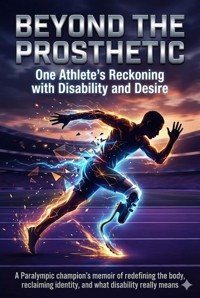
Beyond the Prosthetic: One Athlete's Reckoning with Disability and Desire E-Book
Adrian Carmichael
Erhalten Sie Zugang zu diesem und mehr als 300000 Büchern ab EUR 5,99 monatlich.
- Herausgeber: epubli
- Kategorie: Sachliteratur, Reportagen, Biografien
- Sprache: Englisch
She lost her leg in a car accident at seventeen. Within five years, she was racing toward Paralympic gold. Everyone called it inspirational. Inside, she was fighting a different battle entirely—one with her own reflection, her worth, and what it meant to inhabit a body the world had suddenly decided was tragic. This is the unflinching memoir of a British Paralympic athlete whose journey defies the sanitized "triumph over tragedy" narrative that dominates disability storytelling. Yes, she trained relentlessly. Yes, she competed at elite levels. But the real story—the one rarely told—is about learning to live in a body that didn't match the cultural image of an athlete, navigating medical professionals who treated her disability as problem to solve rather than identity to honor, and confronting the deep internalized ableism that whispered she was "inspiring" precisely because she was disabled. Through visceral training scenes, unflinching conversations with other disabled athletes, and moments of raw vulnerability, the narrator exposes the gap between external achievement and internal struggle. She explores the parasport world's peculiar dynamics—where disability becomes spectacle, where her body is simultaneously hyper-visible and entirely dehumanized, where she's simultaneously celebrated and pitied. She confronts body image trauma inherited from able-bodied beauty standards, the pressure to perform inspiration rather than pursue excellence, and the complicated grief of reimagining physical identity.
Sie lesen das E-Book in den Legimi-Apps auf:
Seitenzahl: 248
Veröffentlichungsjahr: 2025
Das E-Book (TTS) können Sie hören im Abo „Legimi Premium” in Legimi-Apps auf:
Ähnliche



















Table of Contents
Chapter 1: Before the Accident
A Carefree Youth
The Day Everything Changed
Shifting Identity
Community and Isolation
Chapter 2: The Long Road to Recovery
The Shock of Injury
Learning to Embrace Change
The Grind of Physical Therapy
Confronting Internalized Ableism
Shifts in Perspective
Chapter 3: Finding the Athlete Within
Rediscovering a Lost Passion
The Grueling Training Process
Racing as a Metaphor
Transforming Pain into Purpose
Chapter 4: Reclaiming My Identity
The Impact of Labels
Redefining Athleticism
The Journey of Acceptance
Embracing My Narrative
The Intersection of Identity and Ability
Chapter 5: The Paralympics - A Dream or a Nightmare?
The Thrill of Training
The Pressure to Perform
The Joy of Competition
The Dark Side of Elite Sports
Redefining Success
Chapter 6: Body Image and Ableism
Understanding Body Image
The Weight of Ableism
Conversations with Fellow Athletes
The Social Expectations of Beauty
Reframing Our Narrative
Chapter 7: Inspiration Stereotypes
The Label of Inspiration
The Facade of Inspiration
The Cultural Context of Disability
Beyond the Stereotype
From Inspiration to Empowerment
Chapter 8: Friendship Beyond Limits
The Power of Connection
Celebrating Diversity in Experiences
Vulnerability as a Strength
Learning Through Collaboration
Overcoming Isolation through Shared Goals
A Legacy of Friendship
Chapter 9: The Politics of Disability Sports
Understanding the Structure of Disability Sports
The Commercial Side of Paralympic Sports
The Politics of Recognition
The Intersection of Identity and Athletics
The Future Landscape of Disability Sports
Chapter 10: Celebrating Small Victories
The Power of Daily Progress
The Role of Support Systems
Learning from Setbacks
The Importance of Introspection
The Celebration Rituals
Inspiring Others Through Small Victories
Chapter 11: Redefining Winning
The Real Meaning of Victory
Facing Loss with Grace
Shifting Perspectives
Redefining Competition
The Role of Mindset
Finding Purpose in Passion
Chapter 12: Life After the Medal
Transitioning from Athlete to Advocate
Using My Story as a Catalyst
Navigating Misconceptions About Disability
The Role of Sports in Advocacy
Looking Forward: Vision for Change
Chapter 13: Embracing Imperfection
Redefining Perfection
The Power of Vulnerability
Accepting My Body
Embracing Community
Redefining Success
Chapter 14: Community and Connection
The Power of Belonging
Finding My Tribe
Advocacy Through Connection
Solidarity in Struggle
Chapter 15: The Future of Disability Athletics
The Evolving Landscape of Disability Sports
Redefining Success in Sports
The Role of Advocacy in Change
The Importance of Mentorship
Chapter 16: A Call to Action
Understanding the Landscape of Disability
The Importance of Advocacy
Redefining Success
Challenging Ableism in Sports
Cultivating Empathy Through Education
Taking Personal Responsibility
Conclusion: Embracing the Journey
Chapter 1: Before the Accident
In this first chapter, we’ll reflect on life before everything changed. I share memories of being a carefree teenager, the day of the accident, and the profound shift in identity that came with such a sudden tragedy. You’ll see how the world of a young athlete, full of possibility, turned into a battle for understanding and acceptance.
A Carefree Youth
This section paints a vivid picture of my life before the accident. I was a typical teenager, full of dreams, energy, and a love for sports. Memories prior to the tragedy remind me of the joy and camaraderie I experienced during those formative years.
Life as an aspiring athlete
Before the accident, my life revolved around sports. I was that typical teenager, fueled by dreams of greatness and the adrenaline of competition. Each morning was filled with the excitement of training, where I pushed my body to its limits in pursuit of my athletic aspirations. I embraced every moment, whether it was running races or honing my skills in team sports.
This was a time characterized by ambition— I wanted to excel, and I believed I could. The hours spent practicing felt less like work and more like an exploration of my capabilities. I thrived in the fast-paced, exhilarating environment of local matches and competitions. Every victory was a step closer to realizing my dreams, and every loss taught me resilience. It was in these moments that I shaped not only my physical abilities but also my identity as an adolescent navigating the complexities of youth.
Friendship and support within sports communities
Sport provided me with a community unlike any other. My fellow athletes weren’t just teammates; they were my friends, my support system. We shared laughter, frustrations, and celebrations, creating bonds that transcended the competitive landscape. These friendships were crucial as they helped instill a sense of belonging during a pivotal time in my life.
Whether it was cheering each other on during meets or providing encouragement during early morning practices, we became a family. I cherished the support from coaches who believed in us equally, fostering a spirit of collaboration over competition. This camaraderie was integral to my creativity and passion, driving me to strive not just for personal excellence but also for our collective success.
The thrill of competition and goal setting
There was nothing quite like the thrill of competition. Each race ignited a fire within me, a mixture of nerves and exhilaration that was unmatched. I vividly remember the anticipation of waiting for the starting gun to fire, a moment when the world faded away, and all that mattered was the race ahead. This adrenaline rush was my beacon, guiding me toward not just my athletic goals but also personal growth.
Setting goals was my secret weapon. Each small milestone, whether it was improving my time or mastering a new skill, became a stepping stone to larger ambitions. I learned to map out my targets, embracing the process of strategizing, training, and executing. Each achievement fueled my desire to push harder and dream bigger, creating a future that felt bright and full of possibilities.
Moments of self-discovery through sports
Sports were a catalyst for self-discovery, revealing layers of my identity I hadn’t yet explored. Through the sweat, effort, and occasional setbacks, I learned valuable lessons about determination, discipline, and self-acceptance. The challenges I faced shaped me, helping me realize that my worth was not tied to victory alone but to the journey itself.
Participating in various sports taught me important life skills— the value of teamwork, the importance of resilience, and the joy of camaraderie. I discovered strengths I never knew I had and cultivated a mindset focused on growth. These moments of self-reflection became crucial as I began to understand who I truly was, forming a solid foundation for the difficult path that lay ahead.
The Day Everything Changed
The surreal experience of the accident
The day of the accident was a blurring mix of mundane and surreal. I was just seventeen, a carefree teenager caught in the rhythm of everyday life. One moment I was laughing with my friends; the next, everything shifted. The sound of screeching tires and shattering glass is seared into my memory, echoing like a haunting refrain. Time warped around me, each second stretching painfully as I lost control.
In that moment, I wasn’t just a young athlete; I was a survivor facing a terrifying unknown. The world moved in slow motion, and I could feel the adrenaline pumping through my veins even as chaos unfolded. It felt like I was watching my life from a distance, just outside my own body, as if someone had hit ‘pause’ on my reality. It was the kind of surreal you read about, yet never expect to experience. The crash marked the start of a life I couldn’t have imagined.
Initial reactions and immediate aftermath
The seconds following the accident were filled with action and panic. Initially, there was confusion; I could hear distant voices trying to make sense of what had just happened. As I lay there, trapped in the wreckage, disbelief swept over me like a cold wave. Would I ever be able to walk again? Would I ever return to my life as an athlete?
When the first responders arrived, their urgency contrasted sharply with my shock. I remember their focused faces, their voices breaking through my haze with questions. They were kind, but every inquiry felt like a reminder of my new reality. In those first moments, I felt the gravity of loss settling over me, an unsettling premonition of everything that lay ahead. This was not just a physical injury; it was as if a door had been slammed shut on my old life.
How the accident altered my perception of reality
In the days that followed the accident, my perception of reality shifted dramatically. I no longer saw myself as merely an athlete full of potential; instead, I became a person defined by my loss. Every reflection in the mirror was a stark reminder of the leg I would never regain, twisting the way I viewed my body and identity.
This new reality was layered with complexities. I grappled with the notion of normalcy and what it meant for my future. The accident had not just taken away my limb; it forced me to confront a world that often perceives disability through a narrow lens—a lens that saw my life as diminished rather than transformed. I began to question everything—I was no longer just a runner; I had to redefine what it meant to be me.
Encounters with first responders and medical personnel
My interactions with first responders and medical personnel were defining moments in my journey. While they acted swiftly, their clinical demeanor often left me feeling more like a case study than a person. Their questions, while necessary, felt detached, reducing my emotions to merely medical jargon.
The hospital became a place of mixed feelings for me. On one hand, I was grateful for their life-saving efforts; on the other, I felt like I was trapped in an assembly line of procedures and treatments that stripped me of agency. Each encounter was a reminder of the battle I now faced—not just with my body, but with the overwhelming challenge of reclaiming my sense of self amidst a sea of strangers who viewed my circumstance through a lens of sympathy rather than understanding.
Shifting Identity
The struggle against a new reality
Adjusting to my new reality was like trying to navigate a ship in uncharted waters. The day of the accident, everything I thought I knew about myself shattered like glass. I was no longer just a teenage athlete with dreams; I had suddenly become a definition of tragedy for those around me. My friends and family were well-meaning but often missed the emotional turmoil that accompanied my physical change. They saw a young girl who had lost a leg, yet I was struggling with the loss of my identity.
The world expected me to embrace this narrative of strength and inspiration, but I often felt suffocated by it. I fought against being seen as a symbol; I just wanted to reclaim my human experience. Each day was a new test in understanding who I was within this new framework. I grappled with grief over my previous life, yearning for the carefree days that felt like a distant dream.
Understanding the implications of my disability
Coming to terms with my disability involved more than accepting the physical loss; it meant understanding how it altered perceptions of me and my capabilities. Initially, I viewed my prosthetic limb as a mere tool—a technical marvel that helped me walk again. Soon, however, I realized it represented a deeper shift in identity, forcing me to confront societal attitudes towards disability.
My disability placed me in a complex web of expectations. Medical professionals often spoke about fixing the problem, focusing on what could be improved, rather than acknowledging who I was becoming. With each passing day, I understood that my journey was not solely about learning to use my new leg, but also navigating a world that often viewed disability as something tragic and needing repair. This increased my awareness of how society often overlooks the rich, multi-faceted lives of disabled individuals, reducing them to a singular narrative of overcoming hardship.
The conflict between past achievements and future uncertainties
Reflecting on my past achievements was both a comfort and a source of anxiety. I had been a star athlete in my own right before the accident, and the accolades I received felt both distant and haunting. How could I reconcile that past success with my uncertain future? There was an aching dissonance between who I had been and who I would become.
The fear of what lay ahead loomed large in my mind. Would I ever return to competing at a high level, or was that a relic of a past life? As I stood at the crossroads of my former self and the new reality, I felt the weight of expectations—both external and internal. This tension pushed me to examine what evidence there was of my identity beyond accolades, leading to a deeper understanding of resilience that extended beyond physical prowess.
Feeling like a shadow of my former self
Every passing day brought moments when I felt like a mere echo of my former self, navigating a world that seemed to look through me rather than at me. The confidence I once carried was replaced by an unsettling self-doubt. My reflection turned into a painful reminder of what I had lost; I struggled to see an athlete staring back at me, and instead faced a fragmented version of who I once was.
This feeling was exacerbated by the contrasting reactions I received from those around me. Some idolized my journey, labeling me as 'inspirational' while others offered pity that felt undeserved. It left me grappling with an overwhelming sensation of being trapped in a box, where I was defined by my disability rather than celebrated for the person I still aspired to be. It took time to recognize that reclaiming my identity would require both embracing my past and forging a new path forward—one that honored all facets of my experience.
Community and Isolation
The role of relationships in my recovery
After the accident, the significance of relationships in my recovery became profoundly clear. The support of friends and family served as both a lifeline and a source of strength. They held space for my grief and allowed me to express my frustrations, fears, and hopes. Their unwavering belief in my potential helped me reclaim my sense of identity, which I feared was lost.
However, it wasn’t just familial support that played a role; I learned to lean on my community of athletes as well. These connections often provided a unique understanding that those outside of this world simply couldn't grasp. It was through shared experiences that I began to see my journey as not just an individual fight but a shared collective struggle. In many ways, these relationships forged my path to resilience.
Experiencing sympathy versus genuine understanding
Walking the line between sympathy and genuine understanding was one of the hardest parts of my journey. Many people approached me with pity, often driven by societal views that labeled my disability as a tragedy. Through their sympathetic glances, it felt as if they were distancing themselves, focusing on what was ‘wrong’ rather than recognizing my spirit and ambitions.
Conversely, genuine understanding emerged only in moments spent with those who lived similar experiences. They recognized my struggles without reducing my identity to merely being 'disabled.’ Those conversations were crucial—they transformed the narrative of my life from one of mournful reflection to one of empowerment and shared resilience.
Moments of connection with other disabled individuals
Connecting with other disabled individuals was transformative. In these moments of shared experience, I found comfort and clarity. It was in the candid discussions about our struggles—the awkwardness of navigating public spaces or the complexities of adaptive sports—that I felt seen and validated.
For example, during a training session, I struck up a conversation with another athlete who, like me, battled the internalized notions of what it meant to be 'normal.' We laughed, cried, and expressed vulnerabilities that only fellow travelers on this path could truly understand. These connections breathed life into my recovery, reminding me that I wasn’t alone in my journey.
How isolation impacted my mental health
Despite the support of loved ones, there were moments when isolation crept in, deeply impacting my mental health. As I navigated my new reality, I often felt like an outsider, both in the athletic community and the world at large. This sense of disconnection intensified the feelings of inadequacy and self-doubt that emerged after my accident.
Isolation affected every aspect of my life, from training to social interactions. I found myself spending more time alone, consumed by thoughts that tortured my spirit. It was a darker phase of my recovery, and it became clear that I needed to reach out, find community, and harness the power of connection to combat the mental toll of feeling isolated.
Chapter 2: The Long Road to Recovery
Recovery was not just about healing my body; it was about understanding who I was becoming. Join me as I navigate hospital stays, physical therapy, and the emotional rollercoaster that came with learning to walk again. This chapter highlights the pivotal moments that shaped my perspective on disability and strength.
The Shock of Injury
The moment the accident happened, my life changed forever. It was a jolt that shook the very foundation of my identity. In this section, I share my initial experiences in the hospital and the first thoughts that crossed my mind when I learned I would lose my leg.
The impact of the car accident on my life
The moment the accident occurred, all the dreams and plans I held were shattered in an instant. I went from envisioning a bright future filled with opportunities to grappling with a daunting new reality—one that involved navigating life without my leg. The physical aspect of this change was obvious, but the emotional toll was equally significant. I felt as though I had been expelled from my own life, thrust into an unwelcome narrative where I was perceived through a lens of pity and tragedy.
This injury wasn't just a part of my body that was lost; it felt like a piece of my identity had been forcibly extracted. I struggled to reconcile who I had been with who I was now becoming. The familiar rhythms of life I once knew were replaced by hospital routines and recovery timelines, leaving me to wonder if I could still belong in any of the spaces I previously occupied. The accident taught me that life could change in a heartbeat and positioned me at the beginning of a long and challenging journey of self-discovery.
The feelings of disbelief and denial in the hospital
As I lay in the hospital bed, a whirlwind of emotions overwhelmed me. Disbelief gripped my heart like a vice; I couldn’t fully accept what had happened. The doctor’s words echoed in my mind, but I struggled to comprehend their full weight. I kept thinking, "This can’t be real." Denial became my shield, a protective barrier that kept the harshness of my new reality at bay.
In those initial hours, I oscillated between moments of clarity and waves of confusion. I desperately wanted to wake up from this nightmare and return to the life I once knew. Yet, deep down, I was aware of the truth. My denial was merely a phase, a natural response to an unimaginable situation. Each day unfolded with added uncertainty and lingering questions about my future, which left me feeling exposed and vulnerable. I learned that embracing my new reality would take time, patience, and a brutal honesty I was not yet ready to confront.
Initial interactions with medical staff and their tone
The interactions I had with medical staff during those early days were a mixed bag of compassion and clinical detachment. Some nurses were warm and supportive, treating me as a person rather than just another patient. However, many others spoke in a tone that felt cold and impersonal, which left me feeling more like a case study than a human being. Their focus was often on the medical aspects of my care, discussing my prognosis in terms that felt sterile and distant.
It was perplexing to me that they seemed unaware of the emotional devastation I was experiencing. While they were busy prescribing treatments and planning rehabilitation, I often found myself yearning for acknowledgment of my pain, both physical and emotional. The dichotomy of feeling like a medical curiosity rather than an individual with fears and dreams only deepened my sense of isolation. I wanted them to see beyond my injury—to recognize me for who I was and who I aspired to be, not just as someone who had lost a leg.
How the loss of my leg represented a loss of normalcy
The trauma of losing my leg extended far beyond the physical; it marked the end of my sense of normalcy. In the blink of an eye, the everyday routines that shaped my life were thrown into disarray. The simple act of walking, once taken for granted, became a monumental challenge. I was thrust into a world where everything felt unfamiliar and daunting, and I faced an anxiety that accompanied every effort to regain my former self.
This loss meant much more than just the absence of a limb; it symbolized the loss of a life I had always known—the freedom, the spontaneity, and the joy of movement. Each day presented a reminder that my life had irrevocably changed. Coping with this cascade of losses forced me to confront my deepest fears and question how I would fit into a society that often separates people into ‘able’ and ‘disabled’ categories. The struggle to redefine my identity within this new framework was as complex as the physical challenges that lay ahead.
Learning to Embrace Change
As I began the journey of recovery, I faced not just the physical challenges, but also the emotional ones. This section discusses how I gradually learned to accept the changes in my body and what it meant for my identity.
The emotional toll of adjusting to life with a prosthetic
Adjusting to life with a prosthetic limb was an emotional journey filled with ups and downs. In the early days, I often felt overwhelmed, as if my identity had been stripped away along with my leg. Each time I looked in the mirror, I was confronted by a body that no longer matched my self-image. The emotional toll was heavy; grief over my lost limb mingled with the frustration of learning how to navigate a world that felt constantly changed.
Yet, with each physical therapy session, I began to find a way forward. I learned the importance of patience with myself and that embracing this new chapter of my life was vital. As I adjusted to the routine of putting on my prosthetic before every workout, I started to see it not just as a replacement, but as a tool empowering me to redefine my limits. This shift in perspective marked the beginning of my journey towards acceptance and self-love.
Confronting the fear of being seen as 'different'
Fear often crept in when I thought about how others perceived me, especially in social settings. The worry that people would see me as 'different' swirled in my mind, making me hesitate to engage fully with those around me. I grappled with the societal stereotypes attached to disability, feeling the weight of expectations to be an 'inspiration' rather than just myself.
This fear barred me from exploring social interactions, and many moments passed by without真正的 connection. Over time, I came to understand that those who truly mattered would embrace me for the person I was becoming. By gradually sharing my story, I opened doors not only for myself but also for those around me to redefine what it means to be 'normal.' Facing my fears became a crucial part of my healing, allowing me to embrace my identity with confidence.
Finding small moments of joy in my new reality
In the midst of significant change, it was the small moments of joy that became my lifeline. Whether it was feeling the wind on my face during a bike ride or sharing laughter with friends over coffee, these seemingly trivial experiences began to reshape my perspective on life after the accident. I discovered that joy could coexist with grief, creating a powerful space for growth.
These moments served as reminders of what was still possible, helping me cultivate gratitude for the present. I began keeping a journal to document these joys, noting everything from a successful physical therapy session to a compliment from a fellow athlete. This practice shifted my focus from what I had lost to what I could still achieve, nurturing a newfound appreciation for my life and my evolving identity.
How supportive friends and family helped me navigate change
Supportive friends and family played an indispensable role during my recovery. Their unconditional love and encouragement helped me traverse the rocky path of adjusting to my new reality. They became my sounding board for fears and frustrations, reminding me that I wasn’t alone in this journey.
Visits from loved ones were often bright spots in my journey. Whether they joined me at physical therapy appointments or simply offered a listening ear, their presence empowered me. They reminded me what truly mattered—connection and understanding. These interactions reinforced that my worth was not tied to my physical abilities but to the essence of who I am. Their unwavering support became a powerful testament that love transcends the physical, helping me better navigate the emotional landscape of change.
The Grind of Physical Therapy
Physical therapy became my new battlefield. It was intense and often exhausting, but it also offered glimmers of hope. In this section, I recount my experiences during those grueling sessions and how they shaped my determination.
The challenges of relearning to walk
Relearning to walk after my accident was not just a physical challenge; it was a profound psychological journey. At first, the sensation of my prosthetic limb felt foreign and daunting. Each step was a painful reminder of what I had lost, accompanied by a cacophony of doubts swirling in my mind. Had I truly become a different person? Could I ever regain the independence I once took for granted?
Struggling to synchronize my new leg with my mind was akin to dancing with a partner who wasn’t in sync. My muscles trembled with exertion, and every session often left me frustrated and exhausted. There were moments when falling felt inevitable, both literally and metaphorically. Yet, it was this struggle that ignited an unexpected resolve within me. Each session brought with it a glimmer of hope, a reminder that I was more than just my disability. Progress came slowly, but it was significant, teaching me resilience in the face of adversity.
Physical therapists as coaches and cheerleaders
The role of my physical therapists transcended traditional boundaries; they became my coaches, cheerleaders, and unwavering supporters. Their encouragement was invaluable, pushing me to embrace each difficult moment during therapy. They celebrated my small victories like they were monumental, which fueled my determination to keep going, even when pain threatened to overwhelm me.
They understood the delicate balance of being tough yet compassionate, which made a world of difference in my recovery. Through their tailored exercises and motivational words, I learned that rehabilitation wasn't merely about regaining physical strength, but also about building mental fortitude. Their belief in my potential inspired me to believe in myself, transforming the sterile environment of therapy into a vibrant arena of possibility.
The moments of frustration and triumph in therapy
The journey through physical therapy was a rollercoaster of emotions. There were days filled with intense frustration, where every attempt to walk felt like I was dragging the weight of the world. The struggle to master simple movements often felt disheartening, amplifying my insecurities. I confronted moments of doubt that challenged my spirit; was I ever going to prevail?
Yet, nestled within these struggles were moments of sheer triumph that became the lifeblood of my journey. The first time I took a few steps unassisted, the pure exhilaration flooded my heart—a taste of freedom I thought I had lost forever. Those fleeting moments of success became antidotes to my frustration, a source of motivation that propelled me forward. With every tiny victory, I began to reshape my identity, seeing the power in the struggle itself.
Setting goals that pushed me beyond my limits
Goal-setting in therapy became a catalyst for my transformation. Rather than just aiming to walk again, I began setting ambitious targets that challenged my physical and mental limits. Whether it was mastering a specific technique or increasing my endurance levels, each goal served as a milestone on my journey toward reclaiming my body.
These aspirations were not without fear; they often scared me, pushing me right out of my comfort zone. But with every goal accomplished, I learned how to redefine ‘success.’ This approach nurtured not only my body but also my spirit, allowing me to experience growth beyond what I thought possible. More than just rehabilitation, this process became a lesson in resilience, instilling in me a fierce determination to embrace and thrive within my new identity.
Confronting Internalized Ableism
As I made strides in my recovery, I also faced inner battles that were just as daunting. This section explores my confrontations with internalized ableism—how societal views influenced my self-worth and identity.
The societal narrative of 'inspiration' and its weight
The label of 'inspiration' is often bestowed upon disabled athletes, but it carries a heavy burden. While society may see my achievements as uplifting, the term often reinforces stereotypes that diminish the complexity of my experience. Being called 'inspiring' for merely existing as a disabled person can feel patronizing. It suggests that my worth is tied to how my struggles affect others rather than my inherent value or accomplishments.
This narrative can create an internal conflict: I wanted to be recognized for my skills and dedication, not just my disability. The constant celebration of my story as a triumph over adversity meant that my real struggles were often overlooked. I found myself questioning whether I was perceived as an athlete or simply a symbol of hope. Thus, confronting this societal expectation became a crucial part of my recovery, as I sought to redefine what it meant to be truly inspiring on my own terms.
Understanding my worth beyond physical ability




