


22,99 €
Mehr erfahren.
- Herausgeber: John Wiley & Sons
- Kategorie: Geisteswissenschaft
- Sprache: Englisch
Completely updated and expanded, Black Hawk and the Warrior's Path is a masterful account of the life of the Sauk warrior and leader, and his impact on the history of early America.
- The period between 1760 and 1840 is brought to life through vivid discussion of Native American society and traditions, Western frontier expansion, and US-Native American politics and conflicts
- Updates include: 1 new map, 8 new images, a revised bibliographic essay incorporating the latest research, a timeline, and 8 concise, reorganized chapters with key terms and study questions
- Accessibly written by a noted expert in the field, students will understand key themes and find meaningful connections among historical events in Native American and 18th century American history
Sie lesen das E-Book in den Legimi-Apps auf:
Seitenzahl: 335
Veröffentlichungsjahr: 2017
Ähnliche




















BLACK HAWK AND THE WARRIOR’S PATH
SECOND EDITION
Completely updated and expanded, Black Hawk and the Warrior's Path is a masterful account of the life of the Sauk warrior and leader, and his impact on the history of early America. Black Hawk chose the warrior's path for over 40 years, leading groups of Sauks against other tribes white pioneers, state militiamen, and US Army regulars. His final stand against the United States in 1832, in what became known as the Black Hawk War, proved to be disastrous for his people and ultimately opened the Old Northwest to a torrent of white settlement. The period between 1760 and 1840 is brought to life through vivid discussion of Native American society and traditions, Western frontier expansion, and US-Native American politics and conflicts. Accessibly written by a noted expert in the field, students will understand key themes and find meaningful connections among historical events in Native American and 18th century American history.
This second edition includes: 1 new map, 16 new images, a revised bibliographic essay incorporating the latest research, a timeline, and 8 concise, reorganized chapters with key terms and study questions. The ideal supplement to any study of Native American or early US history, this biographical narrative is an engaging introduction to one of the most tumultuous periods in US history.
ROGER L. NICHOLS is Professor Emeritus of History and Affiliate Professor in American Indian Studies at the University of Arizona, USA. A past President of the Pacific Coast Branch of the American Historical Association, he received three Fulbright appointments in Europe, one in Canada, and three awards from the National Endowment for the Humanities. He is author of eleven books that discuss frontier and Western America, and Native American affairs in the US and Canada, including Warrior Nations (2013), American Indians in US History (2003), and Indians in the United States and Canada (1998).
Black Hawk and the Warrior’s Path
Second Edition
Roger L. Nichols
This edition first published 2017 © 2017 John Wiley & Sons, Inc.
Edition History: 1e: Harlan Davidson, Inc., 1992
Registered OfficeJohn Wiley & Sons, Ltd, The Atrium, Southern Gate, Chichester, West Sussex, PO19 8SQ, UK
Editorial Offices350 Main Street, Malden, MA 02148-5020, USA 9600 Garsington Road, Oxford, OX4 2DQ, UK The Atrium, Southern Gate, Chichester, West Sussex, PO19 8SQ, UK
For details of our global editorial offices, for customer services, and for information about how to apply for permission to reuse the copyright material in this book please see our website at www.wiley.com/wiley-blackwell.
The right of Roger L. Nichols to be identified as the author of this work has been asserted in accordance with the UK Copyright, Designs and Patents Act 1988.
All rights reserved. No part of this publication may be reproduced, stored in a retrieval system, or transmitted, in any form or by any means, electronic, mechanical, photocopying, recording or otherwise, except as permitted by the UK Copyright, Designs and Patents Act 1988, without the prior permission of the publisher.
Wiley also publishes its books in a variety of electronic formats. Some content that appears in print may not be available in electronic books.
Designations used by companies to distinguish their products are often claimed as trademarks. All brand names and product names used in this book are trade names, service marks, trademarks or registered trademarks of their respective owners. The publisher is not associated with any product or vendor mentioned in this book.
Limit of Liability/Disclaimer of Warranty: While the publisher and author have used their best efforts in preparing this book, they make no representations or warranties with respect to the accuracy or completeness of the contents of this book and specifically disclaim any implied warranties of merchantability or fitness for a particular purpose. It is sold on the understanding that the publisher is not engaged in rendering professional services and neither the publisher nor the author shall be liable for damages arising herefrom. If professional advice or other expert assistance is required, the services of a competent professional should be sought.
Library of Congress Cataloging-in-Publication Data applied for.
9781119103424 (paperback)
A catalogue record for this book is available from the British Library.
Cover image: © King, Charles Bird (1785–1862) / Bridgemanimages
To Mathew and Amy Hawk
CONTENTS
Preface
Timeline
1: Who is Black Hawk? 1600–1804
2: The Americans were coming to take possession 1804–1812
3: They made fair promises but never fulfilled them 1812–1816
4: We were a divided people 1816–1828
5: Nothing was talked about but leaving our village 1828–1831
6: The British would assist us 1831–1832
7: My object was not war 1832
8: Once I was a great warrior 1832–1838
Bibliographical Essay
Index
EULA
List of Illustrations
1
Figure 1.1
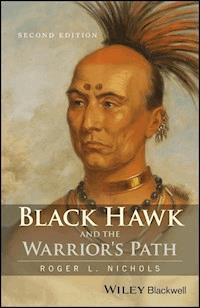
Black Hawk: Charles Bird King, 1833.
Figure 1.2
The Sauk homeland.
2
Figure 2.1
William Clark: Charles Wilson Peale.
3
Figure 3.1
Keokuk: George Catlin, 1832.
4
Figure 4.1
Fort Armstrong.
Figure 4.2
1825 Prairie du Chien Treaty.
Figure 4.3
Henry Atkinson: Sketch.
5
Figure 5.1
White Cloud: George Catlin, 1832.
6
Figure 6.1
The Black Hawk War.
7
Figure 7.1
Battle of Bad Axe: Henery Lewis, 1830s.
Guide
Cover
Table of Contents
Preface
Pages
xi
xii
xiii
xiv
1
2
3
4
5
6
7
9
10
11
12
13
14
15
16
17
18
19
20
21
22
23
24
25
26
27
28
29
30
31
32
33
34
35
36
37
38
39
40
41
42
43
44
45
46
47
48
49
50
51
52
53
54
55
56
57
58
59
60
61
62
63
64
65
66
67
68
69
70
71
72
73
74
75
76
77
78
79
80
81
82
83
84
85
86
87
88
89
90
91
92
93
94
95
96
97
98
99
100
101
102
103
104
105
106
107
108
109
110
111
112
113
114
115
116
117
118
119
120
121
122
123
124
125
126
127
128
129
130
131
132
133
134
135
136
137
138
139
140
141
142
143
144
145
146
147
148
149
150
151
152
153
154
155
156
157
158
159
160
161
162
163
164
165
166
167
168
169
170
171
172
173
174
175
176
177
178
179
180
181
182
183
184
185
Preface
Writing this is a pleasure because it means that at least the book's prose is ready for production. My special thanks goes to Andrew Davidson, former senior editor for history at Wiley. He instigated the project, and added an encouraging editorial hand along the way. All history depends on the work of others, and this new edition has benefitted from at least ten new books on topics related to it written since the first one appeared. Professor Kevin Gosner, chair of the History Department at the University of Arizona, helped by providing office space for me as an unofficial “writer in residence” for some semesters. At Wiley, Allison Kostka, senior project editor, effectively took charge early in the process. Other Wiley staff whose help I am aware of are Roy Kelsey, Julia Kirk, and Maddie Koufogazos.
My sincere thanks to people from many organizations who helped locate images and photos considered for the book. These include Andrew Ashby, Karie Diethorn, and Wade V. Myers, National Park Service; Bill Bailey, Ogle County, Illinois Historical Society; Debbie Dixon, Oregon, Illinois Chamber of Commerce; Jonathan Eaker, Photographic Division, Library of Congress; Roberta Fairburn, Abraham Lincoln Presidential Library and Museum, Springfield, Illinois; May Lou Johnsrud, Illinois State Historical Society; Lisa Marine, Wisconsin Historical Society; and Robbie Siegel, Art Resources, Inc. David Michael served as the copy editor. As the project manager Joanna Pyke steered the manuscript through its final steps to publication effectively. Finally, as always, thanks to my wife Marilyn who has read far more of my prose than anyone should have to, and who never avoids a chance to give one last editing.
Roger L. Nichols Tucson, Arizona
Timeline
1804
November 3
Treaty surrenders Illinois land
1805
Fall
Zebulon Pike locates sites for forts
1808
Fall
Construction of Ft. Madison begins
1809
Summer
Sauk raids at Ft. Madison
1812
Summer
William Clark takes chiefs to Washington
September
Attack at Ft. Madison
Fall
Black Hawk and other Sauks join British
1813
Summer
Fight alongside British
Summer
Some Sauk villages move to Missouri
October
Keokuk becomes Saukenuk war leader
1814
July
Attack John Campbell's boats on Mississippi
September
Defeat Zachary Taylor's troops
1815
October
Treaties of Portage des Sioux
1816
May
Sauks sign Treaty of Portage des Sioux
Summer
Construction of Forts Armstrong and Crawford begins
1816–1831
Annual visits to British at Ft. Malden
1817–1831
Intertribal raiding continues
1822
Spring
White miners enter lead region
1824
Summer
William Clark takes chiefs to Washington
1825
Summer
Treaties of Prairie du Chien signed
1827
Summer
Squatters arrive at Saukenuk
1828–1832
Development of the British Band as separate group
1829
Fall
Land at Saukenuk sold
1830
May
Mesquakie peace chiefs massacred
1830
July
New Treaty of Prairie du Chien
1831
June
British Band forced west across Mississippi
1832
April 4
British Band returns to Illinois
April 8
Gen. Atkinson brings troops north
May 14
Battle of Stillman's Run begins the war
May 20–
Frontier raiding
May–July
Army and militia hunt for Indians
July 19
Dodge and Henry find Sauk trail
July 21
Indians successful defense at Battle of Wisconsin Heights
August 1
Steamer
Warrior
attacks British Band at Mississippi
August 2
Battle of Bad Axe—British Band destroyed
August 27
Black Hawk and other leaders surrender at Prairie du Chien
September 10
Black Hawk imprisoned at Jefferson Barracks
1833
April
British Band captives sent to Washington
May 1
Imprisoned at Fort Monroe
June 4
Released and sent on tour of eastern cities
June 30
Begin return to Iowa
August 3
Brought to Fort Armstrong
August 5
Released to civil chiefs
Fall
Dictated autobiography to LeClair
1838
October 3
Black Hawk dies
1Who is Black Hawk? 1600–1804
General Edmund P. Gaines, a veteran frontier soldier, had issued the call for an urgent council. His orders directed him to move the troublesome segment of Sauk and Mesquakie Indians, known as the British Band, out of Illinois and west across the Mississippi River into Iowa. As Gaines and his aides waited, Indian leaders arrived at the Rock Island agency house. Keokuk and Wapello, two of the principal chiefs, and their followers, entered the meeting place, crowding it to the doors. Then Black Hawk and his partisans appeared. Armed with their lances, spears, and war clubs, and carrying their bows strung with arrows at the ready, they marched up to the door chanting a war song. Seeing that the supporters of his competitor, Keokuk, had already filled the room, Black Hawk refused to enter. Instead, the taciturn warrior waited until General Gaines had ordered some of the others from the room. Then Black Hawk and a few of his adherents stalked into the chamber.
Figure 1.1 Black Hawk: Charles Bird King, 1833.
Source: New York Public Library.
Gaines had remained seated until the latecomers filed in and then rose to address the tribal leaders. Although aware that some of his listeners carried more than the usual number of weapons into the council house, he had taken no notice except to increase the guard quietly. As he spoke, the general reminded the Indians that nearly three decades earlier they had sold the land on which their major village stood and that they had signed several other treaties with the United States recognizing the validity of that cession. He lectured them about the expense of having to bring troops up the Mississippi River from Jefferson Barracks, near St. Louis, just to get them to do what they had already promised. Urging them to think of their own best interests by cooperating and keeping the peace, he encouraged the Indians to move west across the Mississippi immediately.
According to his own account, Black Hawk began speaking almost before the General could retake his seat. “We had never sold our country,” he insisted. “We never received any annuities from our American father! And we are determined to hold onto our village.”
Bolting to his feet, the angry Gaines demanded, “Who is Black Hawk? Who is Black Hawk?”
After a moment's hesitation, a flushed Black Hawk retorted, “I am a Sauk! My forefather was a SAUK! and all the Nations call me a SAUK!” With that exchange, the council lost even the façade of civility. Bluntly, General Gaines gave the Indians two days to move west across the Mississippi, threatening to use his troops against them if they refused. To this, the aging warrior responded that “I never could consent to leave my village,” and he remarked that he was determined not to leave it. With those words, the meeting ended as the angry participants separated. During the next year, 1832, American forces destroyed the British Band, and incarcerated Black Hawk and the other Indian leaders in chains at Jefferson Barracks.
Black Hawk's shouted insistence on his identity as a Sauk provides a key to his years as a youth and young adult, as well as to his self-image and relationship to the Indian past. He grew to manhood at a time when traditional customs remained in place. These included everything from the naming ceremony for a baby to the burial rites and mourning practices for the dead. Although clearly affected by long-time white presence in eastern North America, the Sauks and their close neighbors the Mesquakies had maintained rich cultural traditions and strong tribal identities well into the beginning of the nineteenth century. In the decades after the American War of Independence, growing white influence and economic pressures began to buffet many native groups, and the tribes of the upper Mississippi Valley could no longer ignore the turbulence that swirled around them.
These pressures came at the time young Black Hawk was growing to manhood, and they clearly upset him. Whether or not consciously aware that the changes resulted the actions of whites, the young Sauk came to see himself as a defender of his village and tribal traditions. When his father died, Black Hawk proudly announced that he “now fell heir to the great medicine bag of my forefathers, which had belonged to my father.” He stood, then, at a watershed in history for the Sauk and Mesquakie people. Fundamental changes in economics, diplomacy, and society swept across eastern North America as the British replaced the defeated French after 1763 and the British and Americans competed bitterly with each other after 1776. During those decades, Black Hawk saw few of the invading whites. While he may have heard about some of their actions, his world rarely went beyond family or village affairs. As a result, he had little experience to help him understand events that would soon destroy much of tribal life as he knew it. He tended to look backward, to favor long-established traditions and practices rather than to accommodate the present. He had learned the lessons of his forefathers well. Unfortunately, these lessons did not always fit the new situations he would face as a mature adult.
The almost willful self-destructiveness Black Hawk had displayed at the June 1831 meeting with General Gaines illustrated a long-demonstrated trait of the Sauk people. Since first encountering Europeans in the early seventeenth century, the actions taken by the Sauks and their allies the Mesquakies (or Foxes) appear to have been shortsighted, even ruinous. Nevertheless, their behavior resulted from well-thought-out motivations and clearly recognized principles of conduct. By the late eighteenth century, the whites considered the Sauks and Mesquakies a single tribe. That was incorrect. Although related by language and culture, and enjoying substantial cooperation and even intermarriage, the two peoples always remained separate entities in their own minds.
The Osakiwugi or Sauks called themselves the yellow-earth people, while their neighbors the Mesquakies were known as the red-earth people. Both tribes spoke closely related language variations of what ethnologists call the Central Algonquian group, and during the late prehistoric era they used the technology of many eastern woodland peoples. They hunted, fished, gathered, farmed, and mined for lead, as did some of their aboriginal neighbors. They erected permanent villages with multiple-family lodges built of poles, mats, and bark, living in them during the summer while their nearby crops matured. Their technology remained simple, based primarily on the use of wood, bone, and stone implements. Adept at weaving mats, they also fashioned animal skins into clothing, and made earthenware pottery. Except when unusual weather, such as a severe winter or a particularly late spring, brought hardship, these people conducted their affairs in relative stability prior to the European invasion of North America. Thousands of foreigners came to the continent, and with them came disease, demands for land, and fundamental economic, political, and diplomatic changes in the tribes’ relationships with each other.
Sauk traditions told of Black Hawk's great grandfather Na-na-ma-kee, or Thunder, meeting a French explorer, perhaps Samuel de Champlain, near what is now Montreal at the beginning of the seventeenth century. Increasing warfare with their Indian neighbors drove the Sauks westward from their probable home in southern Ontario, and a few decades later they lived in the Saginaw Bay area in eastern Michigan. From there they followed several other Central Algonquian peoples, including the Mesquakies, into western and southern Michigan and beyond into Wisconsin. By the period of the Iroquois Wars, extending from the 1640s through the 1670s, other Indians fled before the ever wider ranging Iroquois war parties, the entire pattern of tribal locations undergoing major disruptions. By the 1660s, Jesuit missionaries reported that several of the Algonquian tribes had forced their way into the Green Bay region of eastern Wisconsin, an area formerly claimed almost exclusively by the Ho-Chunk or Winnebago people. The Ho-Chunk gave way grudgingly, but the invading groups remained relatively small, here being plenty of land, with ample resources for the natives and the newcomers alike.
The Sauks migrated west to the shores of Green Bay, as did the Mesquakies, Potawatomis, and others. The new tribal homes, seemingly out of the reach of the dreaded Iroquois war parties, turned out to be good ones for the refugees. By the 1680s, the Sauks and Mesquakies had erected stable villages, cleared and cultivated land, and learned to exploit the local resources effectively. They soon became successful farmers and soon sold their surplus corn and other foodstuffs to the French traders who traveled from Green Bay up the Fox River, down the Wisconsin, and west to the Mississippi and beyond in their never-ending quest for furs. From their earliest contacts with the whites, the Indians of this region experienced frequent changes in their economic, social, and diplomatic / military relations. Driven from their eastern homes, and forced to invade the territory of other tribes, they had learned well how to shift their allegiances and alter their economic practices to fit new circumstances.
Nevertheless, these immigrant tribes continued to face disruptions of their economies and societies as the pressures to find new sources of furs and the ongoing European imperial competition complicated life for then and all the other native peoples of eastern North America. The endemic warfare, trade, and diplomatic rivalries forced many Indian groups into several generations of changing locations. Certainly the Sauks experienced their share of resettling during the eighteenth century as they established new villages, abandoned others, and joined neighboring Algonquian groups in multitribal settlements in Wisconsin, Michigan, Illinois, and Iowa. For example, by 1711 the Sauks had villages at Green Bay but at least some of them had moved to the St. Joseph River in southwestern Michigan to live among the Potawatomis and Kickapoos.
That same year, 1711, a large Mesquakie group moved east and attacked Detroit. This action disrupted the fur trade there, so French troops from the garrison led Huron and Ottawa warriors against the invaders. Having suffered several hundred fatalities, the Mcsquakies fled back west to Wisconsin but the incident set off the several decade-long “Fox Wars” between the French and the Mesquakies and their allies, who repeatedly attacked French traders trying to use the Fox–Wisconsin waterway. Between 1719 and 1726, warriors from the Sauk, Mascoutcn, Kickapoo, and even Dakota Sioux joined in raids against the French. The Europeans arranged a peace in 1726 but, just a year later, renewed Mesquakie raids against the Illinois tribes and threats to divert the supplies of furs flowing from Wisconsin and Illinois to the English in Pennsylvania and New York enraged French officials. Hoping to end this disruption of their trade, the French launched what they assumed would be a final war to exterminate the tribe. For the next ten years invading forces of French and their Indian allies ravaged the Mesquakie settlements, destroying crops, burning villages, and killing as many people as possible.
For some years, the Sauks aided the French in this war, but during the mid-1730s they joined their Mesquakie neighbors in raiding south into Illinois as well as in their defense against the French. Gradually members of the two tribes intermarried and moved into each other's villages. By 1730 some of the Sauks had joined the earlier migrants who had settled along the St. Joseph River in southwestern Michigan. Other Sauks remained in Wisconsin and that same year joined the Mesquakies in a major attack on the nearby Winnebagoes. Enemy raids continued as well, and in 1731, 1732, and 1733, bands of Hurons, Ottawas, Potawatomis, and Illinois warriors destroyed most of the Mesquakies and killed many Sauks too. These raids so weakened the Mesquakies that they fled to the Sauk villages for protection. Both peoples then retreated further west to the Mississippi River and even beyond to escape their enemies.
Their migrations shifted the center of Sauk population south and gradually west, away from Green Bay and toward the Mississippi. The Mesquakies established new villages along the lower Wisconsin River and south on both sides of the Mississippi. The Sauks settled near the mouth of the Rock River at present Rock Island, Illinois, as well as in eastern Iowa and at Prairie du Sauk in southern Wisconsin for much of the rest of the eighteenth century. Even during this confused era of repeated warfare and migration, Indian trade with the French at Green Bay and in central Illinois continued. Although ethnologists differ over the founding of what became Saukenuk, the principal tribal village, by the late 1730s some Sauks lived in its vicinity. It was there that Black Hawk was born in 1767, and the village remained at the center of his experiences and personal identification as a Sauk.
Figure 1.2 The Sauk homeland.
As an old man, Black Hawk recalled days of peace and plenty while he grew to adulthood. The village stood on the north side of the Rock River, just below the rapids, and on a broad point of land between that stream and the Mississippi. A rich prairie stretched from the front of the lodges to the larger river, while behind the village a bluff extended gradually in the other direction. On the gently sloping land near the bluff, the Sauk women cultivated some 800 acres of fertile fields where they raised large crops of corn, beans, pumpkins, and squash. A heavy mat of bluegrass covered the uncultivated area nearby, and the villagers pastured several hundred horses there. Local springs provided good drinking water, while the Rock River rapids proved an excellent spot for fishing. In the village itself, the Indians lived in large, permanent lodges built of poles, with bark and mats for the sides and roofs. By the late eighteenth century, Saukenuk, with up to several thousand residents and at least a hundred lodges, had become the center of tribal activity.
From there, and smaller villages like it, Sauk warriors crisscrossed parts of eastern Iowa, northern Illinois, and southern and central Wisconsin as they hunted and raided. Despite their hatred of the French, which grew out of the Fox Wars, the Sauks liked the British little better at first, and in 1763 they joined Pontiac's rebellion against them. The Sauk's first hostile actions toward the British came at Michilimackinac, where they played lacrosse with the local Ojibwas outside the gates of the British fort. While the men played ball, the Indian women slipped into the fort, carrying weapons hidden under their loosely worn blankets. At an agreed on time in the game, one of the Indians threw the ball over the wall and the braves rushed through the open gate and into the garrison, ostensibly to retrieve the lost ball. Once they entered the fort, the warriors ignored the errant ball, grabbed their weapons, and, before the soldiers realized what had happened, captured the entire garrison. It remains unclear how much of the fighting they did that summer day, or if they participated at all, but it does seem unlikely that Sauk warriors, who prized military honors highly, would have stayed away from the fight.
War parties left Saukenuk and other villages to do battle with Indian foes, too, as the tribe considered a host of other native peoples its enemies. To the south and east they raided the Kaskaskias and Cherokees, while beyond the Mississippi they attacked the Pawnees occasionally and the Osages frequently.
Many factors caused these intermittent conflicts, including: Sauk ideas about honor for successful warriors; a fairly loose tribal and village political structure; and religious-social beliefs about individual fasting and visions. Tribal government included both peace and war chiefs. The tribal council represented twelve clans or sibs within the Sauk nation, with each one having at least one member to represent it. Operating alongside this “formal” structure were village or band leaders who had no official standing as chiefs. For example, neither Black Hawk nor Keokuk, his main rival, held the rank of civil chief despite their prominence in tribal affairs. Although not supreme, the tribal council exercised considerable authority, particularly when dealing with other Indians, the Europeans, or, later, the United States.
Often the tribal council sought to oversee inter-racial meetings with traders, soldiers, or government officials. Once the Sauk lands became a part of the United States, the council participated in negotiations with the government on issues including states of war, trade alliances, and land cessions. When considering important matters, the council included at least a representative sample of the tribal or village population, including the warriors, women, and even children. In this way, major decisions were made with at least some participation from tribal members, who could then spread knowledge of the council's actions. Thus, this system of government worked more often through persuasion and social pressure than physical or economic coercion. The villages had no police to enforce agreements, and when tribal members objected strongly to council decisions they were always free to leave for another village. This option kept public debate to a minimum but it also meant that the fabric of tribal life might be disrupted at any time by major disputes that could not be settled by persuasion.
While the Sauk chiefs and their tribal council directed civil intra- and intertribal relations, their authority did not extend to decisions regarding the beginning or conduct of war; because of the modest social controls civil leaders exercised over individual warriors, conflict remained endemic for generations.
Wars began in different ways. Occasionally the tribal council received messengers from other tribes who carried wampum belts, asking the Sauks to join them in a war against a particular enemy. Generally, the enemies were other Indian groups or one or more of the competing European imperial powers, and the resulting conflicts often lasted several years or more.
The most frequent warfare, however, consisted of scattered or even isolated raids against traditional enemies such as the Sioux, Osages, or Cherokees. Far more common than major wars, these raids frequently resulted from the actions of single individuals. If someone killed or injured any Sauk, custom demanded a response. Even such things as personal insults or dreams of injury or death might set the war machinery in motion. When the incident happened within the village or involved people considered to be allies, the band leaders usually could prevent violent retaliation by getting the family responsible for the injury to offer gifts to the victim's family “to cover the blood,” as they described the process. However, if a member of another tribe, particularly a traditional rival or enemy, proved to be responsible for the incident, tribal custom required the adult male relatives of the family to seek revenge. Although the family members needed some public support, the process for organizing a war party remained relatively simple. A respected warrior in the family announced that he would be leading a war party in response to the incident or dream and asked for help. Volunteers, often young men eagerly seeking war honors, agreed to follow the leader's direction. Even when the tribal council objected to a raid, the participants individually fasted and prayed to purify themselves. To be at full strength for their venture, the warriors held a sacred ceremony prior to leaving the village, seeking spiritual power. If the raid was successful, they returned to report victory, bringing captives and scalps for a celebration in their home village. Casualties and fatalities of their own brought mourning at the same time. Unfortunately, each time Sauk warriors triumphed over their enemies, the other tribe felt honor-bound to retaliate, and so a cycle of raids and counter-raids developed, making intertribal peace almost impossible to achieve.
Sauk and Mesquakie economic practices further complicated a peaceful existence for the groups. The villagers had to move often during the year. Each spring the people returned to their permanent villages where they opened the caches of food stored the preceding autumn, repaired the lodges, cleared the weeds from the fields, planted their crops, and then held their annual medicine feast, or feast of the dead. Black Hawk recalled that during the early summer the villagers held what he called “our national dance.” This ceremony honored the successful hunters and warriors and helped fuel the desires of the boys and young men hoping to gain fame as noted warriors. With the entire village participating, the chiefs and headmen sat at one end of the dance area while the drummers and singers remained at the other end. The men lined one side of the square while the women stood across from them. Then the warriors entered the square individually, each one recounting his actions in past warfare to the applause of the villagers. The young men and teenage boys who lacked warrior status could only stand on the edges of the gathering; they were not allowed to enter the ceremonial square. As a young boy, Black Hawk felt “ashamed to look where our young women stood, before I could take my stand in the square as a warrior.”
When the ceremonies ended, the cropland had been prepared, and the corn stood about knee high, most of the adult men rode west to hunt buffalo on the plains. During the summer hunt, the Sauks often collided with similar parties of Sioux or Pawnees as each of them tried to defend their claim to the best hunting grounds. Thus the hunts often led to increased intertribal violence and warfare. With most of the young men away, the remaining villagers split their tasks. Some of the women traveled north to the lead-mining region between Galena (Illinois) and the Dubuque mines (near present-day Dubuque, Iowa) and into southwestern Wisconsin, where they spent six to eight weeks of the summer digging and smelting lead to sell to their traders later in the year. Others stayed home and spent their time fishing in the Rock River, gathering reeds from which they made mats, or tending the crops.
The various groups all returned to Saukenuk during August, or the Moon of the Elk, when they exchanged meat, hides, lead, dried fish, and mats. Black Hawk remembered the late summer as the best time of the year, as the villagers feasted and enjoyed good weather and plenty of food. When time came for the corn harvest, the Sauks held a big celebration, with dancing, feasting, ball games, horse races, and gambling. Then they awaited the arrival of their traders. The whites brought much-wanted hunting, trapping, and household goods, as well as cloth and blankets that the Indians needed in the winter. During the autumn and winter the villagers broke into small hunting groups as they crossed the Mississippi again in search of game. As winter ended, they headed back to the maple groves to make sugar and hunted the numerous waterfowl then migrating back north. Then they returned to the village to start the annual cycle anew.
Little is known of Black Hawk's family or childhood, although scraps of information suggest little about the youngster that would have been unusual for a Sauk boy at the time. A member of the Eagle Clan, Pyesa, his father, claimed to be the grandson of Na-na-ma-kee. Of the boy's mother, Kneebingke-mewoin, or Summer Rain, even less is known. Black Hawk had one younger brother but it is not clear if he had any other brothers or sisters; if he did, they left no marks on the historical record. At his baby-naming ceremony his father chose to call him Ma-ka-tai-me-she-kia-kiak or Black Sparrow Hawk, rather a long name for such a small person. As an adult he was known as Black Hawk, perhaps because of the Sauk custom of allowing warriors to modify or entirely change their names after displaying some heroics in battles.
Living at Saukenuk, the youngster experienced the seasonal moves of the villagers as they hunted, farmed, fished, trapped, mined lead, and gathered sap (for maple sugar) each year. He saw the villagers deal with Spanish, French, British, and American traders and must have heard talk of wars between competing groups of whites. During the American War of Independence, he learned firsthand of the results of dealing with the whites. In the spring of 1780, British officials gathered a force of Winnebago, Sauk, Mesquakie, and Menominee warriors in southern Wisconsin and then set off down the Wisconsin and Mississippi rivers to attack the Spanish settlement at St. Louis and the French community of Cahokia, just across the river in Illinois. This force of some 950 Indians and traders passed Saukenuk on its way south. It is not possible to know how many Sauk warriors from the village joined but by late May the raiders reached their destination. On May 26 the British and Indian force attacked St. Louis but failed to overrun the town. Their attack at nearby Cahokia in Illinois also failed, although both communities suffered casualties.
The British thrust in the Mississippi Valley caused George Rogers Clark, the tough Virginian then commanding American forces in Illinois, to strike back immediately. He gathered a force of some 350 American troops, French militiamen, and Spanish civilians from the nearby towns and, under the command of Colonel John Montgomery, sent them after the retreating enemy. The small army moved up the Illinois River by boat as far as Peoria but their foes eluded them. Then Montgomery led his troops northwest to the Rock River, where they hoped to attack the Sauks and Mesquakies. However, scouts from the villages alerted the Indians well before the attackers arrived, so the Sauks and their neighbors fled. Angry at having missed their quarry, the whites burned Saukenuk and the nearby villages to the ground. Fortunately for the Indians, the early June attack meant that some of their crops probably survived.
A rumor suggests that Black Hawk's mother, Summer Rain, too sick to travel when the villagers left, died in the flames of the burning lodges. That seems highly unlikely because the family would have moved her to safety by canoe or horse-drawn travois. Whatever the case, the June 1780 destruction of his village may well have been the youngster's first personal experience with Americans. Later he said nothing about his reactions when he returned to help rebuild the village he had known as home from his earliest memories; still, it seems likely that the impressionable youth could not escape feeling a strong hatred toward Americans for a time.
During the next couple of years, the young teenager's life changed drastically. At age fifteen, Black Hawk accompanied a war party, and during the battle he wounded one of the enemy. This did not bring him the coveted status of warrior, but when emissaries from the Mascouten tribe visited Saukenuk recruiting warriors for a raid against the Osages, Pyesa and his son volunteered. Eager to prove his bravery to his father, Black Hawk killed one of the Osages. After tearing off the victim's scalp, he ran to show Pyesa his trophy. Black Hawk reported fondly years later that his father “said nothing, but looked pleased.” Killing the Osage warrior proved to be a life-changing experience for the teenager. The victorious war party hurried home with scalps to display and stories of valor and excitement to share. At Saukenuk, the warriors chanted their victory songs as they marched proudly into the town. That evening Black Hawk took part in his first scalp dance, an early high point for any young Sauk male. While the entire village watched expectantly, each warrior danced individually, chanting a description of his actions in the battle. Those few who actually returned with enemy scalps received special recognition and applause from the gathering. Having proven himself as a warrior, Black Hawk not only participated in the scalp dance for the first time but he received the coveted feather that only recognized, experienced braves could wear. Of equal importance, his accomplishment showed that his medicine (spiritual power) was strong, and should he choose to lead a war party in the future others might well follow his lead despite his youth.




