


Erhalten Sie Zugang zu diesem und mehr als 300000 Büchern ab EUR 5,99 monatlich.
- Herausgeber: Kamera Books
- Kategorie: Geisteswissenschaft
- Sprache: Englisch
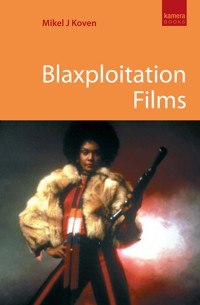
What is Blaxploitation? In the early 1970s a type of film emerged that featured all-black casts, really cool soul, R 'n' B and disco music soundtracks, characters sporting big guns, big dashikis, and even bigger 'fros, and had some of the meanest, baddest attitudes to shoot their way across our screens. More than that, for African-American audiences these films were an antidote to the sanitised 'safe' images of blackness that Sidney Poitier and Bill Cosby presented to America. These films depicted a reality about the world which African-American audiences could identify with, even if the stories themselves were pure fantasy. Blaxploitation Films considers Blaxploitation from the perspective of class and racial rebellion, genre - and Stickin' it to the Man, with over 60 Blaxploitation films reviewed and discussed. Sections include Blaxploitation horror films, kung-fu movies, Westerns and parodies and it is fully up to date, including Baadassss and The Hebrew Hammer and covers the deaths of Isaac Hayes and Rudy Rae Moore.
Sie lesen das E-Book in den Legimi-Apps auf:
Seitenzahl: 216
Veröffentlichungsjahr: 2010
Das E-Book (TTS) können Sie hören im Abo „Legimi Premium” in Legimi-Apps auf:
Ähnliche




















Mikel J. Koven
BLAXPLOITATION FILMS
For My Dad
This book is dedicated to the memory of these African-American pioneers who have died since the publication of Blaxploitation Films (2001). They will be missed.
James Brown (composer) – (1933–2006)
Roscoe Lee Browne (actor) – (1925–2007)
Don Chastain (actor) – (1935–2002)
Ossie Davis (actor/director) – (1917–2005)
Ivan Dixon (actor/director) – (1931–2008)
Tamara Dobson (actor) – (1947–2006)
Robert DoQui (actor) – (1934–2008)
Teresa Graves (actor) – (1948–2002)
Julius Harris (actor) – (1923–2004)
Isaac Hayes (composer, actor) – (1942–2008)
James Hinton (cinematographer) – (1916–2006)
Willie Hutch (composer/musician) – (1944–2005)
William Marshall (actor) – (1924–2003)
Rudy Rae Moore (actor) – (1927–2008)
Ron O’Neal (actor) – (1937–2004)
Gordon Parks (director) – (1912–2006)
Brock Peters (actor) – (1927–2005)
Billy Preston (composer/musician) – (1946–2006)
Richard Pryor (actor) – (1940–2005)
Cirio Santiago (director) – (1936–2008)
Mel Stewart (actor) – (1929–2002)
Paul Winfield (actor) – (1939–2004)
CONTENTS
Introduction
1 Baadasssss
2 The Man
3 Genre Films
Conclusion: Spoofing the Genre
Bibliography
Copyright
INTRODUCTION
When I wrote the first edition of this Blaxploitation book for what was then the Pocket Essentials series (2001), I thought I knew what the term meant. ‘You know,’ I said, ‘like Shaft and shit.’ Not only was writing the 2001 edition a tremendous learning curve, but in the seven or so years since its publication, I have had to rethink a number of my assumptions about these films, particularly in light of some of my other work on exploitation cinema – specifically La Dolce Morte:Vernacular Cinema and the Italian Giallo Film (2006). My understanding of exploitation cinema as ‘vernacular’, my perception of these films and what they were trying to do back in the 1970s has substantially altered. Since I began thinking of these kinds of movies as ‘vernacular’, I have felt the need to revisit a number of the films in this book and rethink much of my understanding of Blaxploitation in general. And yet, this book still needs to stand on its own as an introduction and attempt at cataloguing the phenomenon of Blaxploitation films.
The first thing to note, rather obviously perhaps, is that this genre, this period of filmmaking if you prefer, is a fusion of two different words – black and exploitation. Blaxploitation films are, by definition, ‘black exploitation’ films. But the problem comes when we ask who is being exploited? We know that most forms of exploitation cinema – for example, splatter movies or pornography – exploit images of violence and/or sexuality; the raison d’être of the films is the presentation of sex or violence, not their discourse or analysis. Any semblance to plot or story is purely accidental. These filmmakers exploit our desire to watch violence and/or sex, and if producers could get away with it they would give us nothing more than scenes of what we’ve paid to see. Extending this to include Blaxploitation films, these must be films that exploit our desire to see black people, specifically African-Americans, on screen, doing presumably what one expects or wants to see African-Americans doing.
And yet, as Blaxploitation star Fred Williamson notes in the documentary Baadasssss Cinema, discussed below, the fusion of ‘black’ and ‘exploitation’ was a political manoeuvre designed to discredit these ‘vernacular’ films in favour of greater political autonomy for the middle-classes. The actor notes: ‘NAACP and CORE – they’re the ones who created this terminology: black exploitation. That has to be clear, on the record. It came from them. It didn’t come from the white press. Who was being exploited? All the black actors were getting paid. They had a job. They were going to work. The audience wasn’t being exploited. They were getting to see things on their screen they’d longed for.’
Suddenly, this definition becomes even more problematic. Blaxploitation films fulfilled African-American filmgoers’ desire to see black actors and actresses on screen in leading roles. However, what we see those African-Americans doing on screen in those leading roles gives a warped view of black culture in the early 1970s. The roles for black characters within Blaxploitation films, although more diverse than what had previously been seen (as explained in Donald Bogle’s seminal work on the representation of blacks in American cinema, Toms, Coons, Mulattoes, Mammies and Bucks [2001]), did not necessarily reflect the lives of African-Americans in the United States at that time. The films contain the dreams and aspirations of American blacks and also sell images back to them. This means that I am drawing a faint line between Blaxploitation films made by black filmmakers and ones made by white filmmakers. This is not to say that black filmmakers never pandered to white stereotypes, nor that white filmmakers are necessarily insensitive to black representation but, as I examine the films in this book, certain differences occur frequently enough that a preliminary pattern emerges.
As for the term ‘exploitation’, in this case it refers to the actual marketing of a film, i.e. using the publicity to have a specific impact (see, for example, Eric Schafer’s Bold! Daring! Shocking! True! [1999]). In theory, Baz Luhrmann’s Romeo and Juliet (1996) was presented as an exploitation film through its poster art, music-video advertisements and images of its teen stars in publicity photos doing daring, adventurous and romantic things. The marketing for Luhrmann’s film played down Shakespeare and played up (exploited) the teen dimension of the story to get that audience to see the film. Likewise, Franco Zeffirelli marketed his Hamlet (1990) as an action-adventure film by highlighting the revenge theme and Mel Gibson. John McTiernan parodies this exploitation of Shakespeare in his Last Action Hero (1993) by having the film’s young hero fantasise about Arnold Schwarzenegger in Hamlet with an announcer saying: ‘There’s something rotten in the state of Denmark. And Hamlet’s takin’ out the trash!’ Comparing Blaxploitation films to films about Shakespeare may be an extreme comparison to make, but the point is that anything can have exploitative marketing.
Turning to the Blaxploitation films themselves, one can see how these films were marketed by looking at the advertising from three Pam Grier films: Coffy, Foxy Brown and Friday Foster. All three are produced by American International Pictures (AIP), the low-budget masters of exploitation cinema. The design of all three posters is more or less the same: they feature a large image of Grier, slightly off-centre, and at her feet is a collage of artists’ renderings of various scenes in the picture, some romantic and the others action-oriented. The large images of Grier have her dressed sexily: for Coffy, she is wearing skintight leggings and a halter top, accentuating her breasts; for Foxy Brown, she is in a long yellow dress, but crossing her legs, giving a thigh-high flash of her leg; and likewise for Friday Foster, Grier is standing, wearing a dress slit to her waist and revealing as much leg as is possible. In both the posters for Coffy and FridayFoster, Grier is holding a gun, while for Foxy Brown she is reaching for a small Derringer-like pistol concealed at her ankle. So what do all these images mean? The mixture of romantic and action scenes indicates that the movies are full of sex and violence. The large picture of Grier suggests not only that the lead character is a beautiful woman whose sexy body you’ll be seeing a lot of, but that she’s armed and dangerous too. The camera around Grier’s neck on the Friday Foster poster looks like an afterthought, as if someone in AIP’s art department finally read the script and realised that the character Grier plays is a photographer. These posters exploit the desires of the movie-going public so that they will pop their money down at the box-office window to see these films.
Exploitation cinema also uses topical subject matter – whatever is in the news. When everyone was terrified that the Russians were going to drop the atomic bomb on America, AIP and others made lots of movies about radioactive mutations and giant bugs that threaten our way of life. In the late 1960s and early 1970s, race-related violence in places like Watts, as well as militant political movements like the Nation of Islam and the Black Panthers, fuelled the fear that blacks could disrupt and destroy the safe, suburban existences of middle-class whites. Drug addiction started making headlines because it stopped being just a black problem. Whites came into contact with drugs through the hippie movement and Vietnam War veterans who experimented with narcotics in integrated military units. So in these Blaxploitation films drug use is ubiquitous. Blaxploitation films also exploit the sex industry (prostitutes, pimps and bordellos). In many of these films we see the industrial side to drugs and prostitution in great detail. This potentially gives audiences an education in how the whole illegal system operates. This is not to say these are accurate portrayals, although some of the depictions of prostitution that I discuss throughout certainly feel accurate, but they give the impression that, by watching these movies, we will have a better understanding about what we hear on the news.
So Blaxploitation both markets itself into an emerging African-American vernacular film market with promises of ample sex and violence, and draws on contemporary fears and anxieties that, one assumes, have a direct relevance for black communities. Film scholar Jesse Algeron Rhines (1996) has noted the following: ‘The film industry hoped simply to make money by indeed exploiting an audience need. These films were released during the height of the civil rights/black liberation movement, yet their subject matter of sex, violence and “super-cool” individualism was the antithesis of what contemporaneous black political organisations, like SNCC, the NAACP, or SCLC, supported for black people, hence the name “Blaxploitation”, a term coined by Variety.’ While Fred Williamson states, in Baadasssss Cinema, that the term ‘Blaxploitation’ was invented by political groups like the NAACP, the other ‘origin myth’ of the term (as cited by Rhines) is that it was thought up by a white film critic writing in Variety.
Based on that particular description, the spate of ‘in the hood’ movies that emerged in the early 1990s would also be Blaxploitation films. Movies like New Jack City (1989), Boyz N the Hood (1991) and Menace II Society (1993) attempted to lure young African-American film audiences with their promises of guns and action. Surprisingly, the sex angle is not marketed. There is possibly a gender split in exploitation-film marketing if you consider films like Waiting to Exhale (1995) and Soul Food (1997) as women’s Blaxploitation. I have a problem with this classification – it doesn’t reflect the overall feeling one gets from the films themselves. It also puts contemporary African-American filmmaking into an easily dismissed secondary category of film. The vast majority of Blaxploitation films were not very good movies – at best, some could be considered ‘interesting’. However, the vast majority of contemporary African-American films are quite excellent. Spike Lee and John Singleton are two of the best American filmmakers working today. Something feels wrong about calling today’s black filmmakers Blaxploitation filmmakers. It just doesn’t feel accurate.
Jesse Algeron Rhines noted another aspect of Blaxploitation films when compared with today’s African-American filmmakers: ‘The Blaxploitation period was not an example of African-American filmmaking. Much more often than not, whites were in control behind the camera reproducing their own point of view. In fact, of the hundred or so films featuring significant numbers of African-American characters and/or an African-American-derived storyline and produced during the Blaxploitation period, roughly 1970 through 1974, fewer than one-fifth were under African-American control. Even fewer came from black-owned production houses and fewer still were financed and/or distributed by African-Americans.’ Rhines’ perspective is reflected by the title of his book, Black Film/White Money – in the book he looks at white financial control of black filmmaking opportunities from the very beginning with Oscar Micheaux in the 1920s and 1930s up to Spike Lee today. There is another theme that Rhines alludes to, but doesn’t develop: in spite of white domination of Blaxploitation, either behind the camera or behind the money, there is a distinct difference between the images of African-Americans when directed by white filmmakers and when directed by black filmmakers. I shall be outlining these differences as I go through the films.
And yet, despite white control, many young people went to see these movies, white and black, and enjoyed them. To finish this ‘introductory’ section, I want to consider the following documentary film made by esteemed British filmmaker Isaac Julien on the Blaxploitation movement.
Baadasssss Cinema(2002)
Director: Isaac Julien
Cast: Larry Cohen (Himself), Pam Grier (Herself), Ed Guerrero (Himself), Gloria Hendry (Herself), bell hooks (Herself), Samuel L Jackson (Himself), Quentin Tarantino (Himself), Melvin Van Peebles (Himself), Fred Williamson (Himself)
55 mins
Story
Documentary film which chronicles the rise of Blaxploitation cinema in the 1970s from the near collapse of the Hollywood studios in the late 1960s, through to Hollywood’s co-option of Blaxploitation in the mid-1970s, using both archive footage from the time and new interviews with some of the key actors and directors from the classics of Blaxploitation. Also included are interviews with academics like Guerrero and hooks, who discuss the cultural significance of this period of filmmaking.
Subtext
Coming from such a renowned black filmmaker as Isaac Julien, the film is formally pretty conservative. Subtextually, however, it seems significant that the first interviews are with such non-Blaxploitation names as Quentin Tarantino and Samuel Jackson (a good few years after Jackie Brown), whose inclusion and placement up front in the film seems a tad disingenuous. While, of course, Tarantino is largely responsible for the resurgence of interest in Blaxploitation cinema, if not for 70s genre filmmaking as a whole, there’s just something a little too commercially contrived about his inclusion.
But the film does give some very interesting background information regarding these films, for example Blaxploitation’s clash with representatives of a variety of African-American communities. Various speakers in the film recognise that Blaxploitation gave black communities the kinds of heroes they needed at the time, but community leaders, like the NAACP, were afraid that the kinds of stereotyping in which these films indulged could ultimately do more harm than good to black communities. Fred Williamson notes in the film that the term ‘Blaxploitation’ was actually given to these films by groups like the NAACP in order to discredit these films. Julien’s film even goes so far as to argue that one of the reasons for Blaxploitation’s decline by the mid-1970s was because of the pressure the NAACP put on Hollywood and the studios fear of a black backlash against their bigger-budget productions.
Background Information
Originally made for cable TV and broadcast on the IFC (Independent Film Channel) network in the US.
The Verdict
Despite my reservations regarding the film’s commercial conservatism, this is an excellent introduction to Blaxploitation cinema, and for the uninitiated, this is possibly the best place to start. An excellent and fascinating documentary. Rating 4/5.
BAADASSSSS
The term ‘baadasssss’ is synonymous with Blaxploitation: it connotes a rebellious spirit in African-American thinking, of ‘sticking it to the Man’, of misbehaving. Baadasssss-ness permeates African-American culture, from the oral folklore of Brer Rabbit to the ‘toasts’ made famous by the late Rudy Rae Moore, such as ‘The Signifying Monkey’. Being a baadasssss doesn’t just mean being a tough-guy – not all baadassssses are tough (or guys) – but they are all literally ‘outlaws’ – beyond, or outside of, the law. They work in those liminal spaces between the law, between illegality and vice on the one side and harmless decadence and pleasure-seeking on the other. What these baadasssss characters cannot be is the law; they cannot be the Man, or his representatives; and while some of the later Blaxploitation heroes, including Shaft, may have a certain baadasssss attitude, they are not real baadassssses, as they’re part of the same system of law and order. They are the Man.
ORIGINAL BAADASSSSSES
Sweet Sweetback’s Baadasssss Song (1971)
Director/Writer: Melvin Van Peebles
Cast: Melvin Van Peebles (Sweet Sweetback), Simon Chuckster (Beetle), Hubert Scales (Mu-Mu), John Dullaghan (Commissioner), Rhetta Hughes (Old Girlfriend), Mario Van Peebles (Young Sweetback)
97 mins
Story
Sweet Sweetback is a male prostitute working in a bordello. He is the star performer of theatrical sex acts, and has been since he was a young boy. The White Racist Cops (WRC) need a token black to take in for a completely unrelated crime, and Sweetback seems to be a convenient stooge. While out with the WRC, they arrest another black youth on some disturbance charge. While he is in their custody, the cops pistol-whip the young man. This is too much for Sweetback, who beats the cops into a coma. Because of this, Sweetback goes on the run. But everywhere Sweetback goes for succour, he is betrayed – sometimes on purpose by his supposed friends, sometimes just because of fate.
Subtext
The film is dedicated to the ‘brothers and sisters who have had enough of the Man’. In this respect we see many of the themes that play out in the Blaxploitation genre. The ‘Man’ – in this case explicitly the WRC, but more generally all white folk – tries to ‘bleed’ Sweetback (as one of the Van Peebles-written songs goes: ‘They bled my brother, they bled my sister, but they won’t bleed me!’). Sweetback was the first film to show WRC and their unapologetic corruption, but while movie audiences might have been shocked by this depiction in 1971, for some African-American communities this was their reality. As the archetypal black renegade, Sweetback will stick it to ‘the Man’ before ‘the Man’ sticks it to Sweetback. Here, Van Peebles’ character is represented as the metonym for the whole of black America in 1971. The first cast credit in the film references that the film is ‘starring The Black Community’ – that the Black Community itself is the real star of the film. It functions as a witness to the realities of contemporary black life; and, as Sweetback himself is played by the film’s director, Van Peebles functions likewise as such a witness.
Van Peebles was a self-taught filmmaker; never having been to film school, much of the aesthetic of Sweetback was motivated largely by doing the opposite of what (white) Hollywood would have done. According to Van Peebles himself, the film is a conscious rejection of ‘the technological colonialism of the white aesthetic in cinema’ (i.e. the Hollywood studio films). And, to this end, Van Peebles rejects the label as the father of black cinema and instead sees himself as the father of independent cinema.
At the first screenings of the film, so the Van Peebles self-constructed mythology tells us, while the images shocked some members of the audience, it was recognised by the Black Panthers as the first Black Power film, and an entire issue of the Panther newsletter was dedicated to it. Within all the chapters of the Black Panthers across America, Sweetback became essential viewing. However, the more mainstream magazine, Ebony, while it respected what Van Peebles was trying to do, felt that the cinematic sexual exploitation of his own son in the first few seconds of the film was inexcusable. The Panthers saw this exploitation as a rebirth (the sequence is musically accompanied by the hymn ‘Wade in the Water’ and, to be sure, this moment functions as Sweetback’s baptism), and part of the film’s radical agenda was to smash down the doors of white-imposed, middle-class morality, which, by extension, the Panthers seem to be suggesting that Ebony was supporting.
Background
Van Peebles found it exceptionally difficult to find funding for an all-black film, so he borrowed $50,000 from Bill Cosby. Van Peebles refused to submit the film to the Motion Picture Association of America (MPAA), which grants American films their certificates, on the grounds that this ‘all-white jury’ had no jurisdiction over what African-Americans could watch in cinemas. Therefore Van Peebles self-imposed on Sweet Sweetback an X-rating in 1971. This, with the exception of John Schlesinger’s Midnight Cowboy (1969), is a certificate reserved only for pornographic films. Noting the racial homogeneity of the review panel, Van Peebles used this to his advantage, advertising the fact that this movie was ‘rated X by an all-white jury’. In other words, for Van Peebles at least, this was the film which contained the truth about the American black experience that the white establishment tried to censor. It was released a few weeks before Shaft.
This was also John Amos’s first film role; he would later go on to play James Evans Sr, father to Jimmy ‘JJ’ Walker, on Good Times and Admiral Fitzwallace on The West Wing.
Soundtrack
Although Melvin Van Peebles is credited with some of the songs in the film, most of the noteworthy parts of the score are by Earth, Wind and Fire. And, with Sweetback, Earth, Wind and Fire really got their first big break.
The Verdict
As I said in the introduction, it would behove an arrogant academic and film buff to admit in a second edition of his first book that he was originally wrong in his critical assumption about certain films. Since the first edition of Blaxploitation Films was produced, I have studied a variety of exploitation cinemas, and the maturity I have gained, together with my viewing of further ancillary films – like Mario Van Peebles’ Baadasssss, about the making of Sweetback – means that some re-evaluation of this film is required. In other words, I was totally wrong in my initial (and admittedly superficial) reading. Today, looking back at a film made in 1971, there is a naive belief reflected in it that cinema could truly effect revolution; and that naivety is kind of refreshing to experience. Why have we, as movie watchers, lost the belief that we can change the world through art? Sweetback is naive in this respect, in thinking that it could change anything; but, as with other radical filmmakers of the time, Van Peebles’ film is exciting for its naiveté. Sweet Sweetback’s Baadasssss Song has a purity in its vernacular spirit; it is a film made by the Black Community for the Black Community. And I think it was this vernacular voice which the Panthers responded to so enthusiastically.
And yet the sexual exploitation of thirteen-year-old Mario, on screen for posterity, having his first sexual experience with a much older woman, is reprehensible. That sequence, which is shocking enough, in that it isn’t simulated sex, so turned me off the film, in my initial reading of it, that there was nothing Van Peebles could do later on to redeem himself or his picture in my eyes. The following sequences, which are also of an explicitly sexual nature, left me feeling like I was watching nothing more than a porn film. The film’s political agenda was completely lost on me in that first viewing as I could not get beyond the film’s pornography. On subsequent viewings of Sweetback, having prepared myself for the shock of that opening sequence, I’ve been able to see beyond the pornographic images (of a child) to the film’s message of Black Power, but that is hard to do. If one can do it, Sweet Sweetback’s Baadasssss Song is one of the most radical films made in the United States. 5/5
Other than this film, Van Peebles has made a number of underground and independent films over the years. The success of Sweetback was unprecedented, causing a sensation even among white filmgoers. Hollywood suddenly saw the greater potential of the African-American market and, desiring black money, but not the black politics of Van Peebles and the Black Panthers, kept the urban ethos of the films, but removed the potentially volatile political material. Rather than ‘sticking it to the Man’, Blaxploitation cinema gradually became more counter-revolutionary, having the black heroes working for the Man, rather than ‘sticking it to’ him, as I discuss in the second chapter.
The irony is that Van Peebles’ son Mario is now perhaps seen as a more accomplished filmmaker than his father, having made NewJack City (1991), Posse (1993) and Panther (1995), the latter based on his father’s novel. In 2003, Mario, in the most fitting homage to his father and the birth of American independent cinema, made a ‘making-of’ docudrama about the struggle to make Sweetback.
How to Get the Man’s Foot Outta Your Ass/Baadasssss (2003)
Director: Mario Van Peebles
Writers: Mario Van Peebles and Dennis Haggerty, based on the book Sweet Sweetback’s Baadasssss Song: A Guerilla Filmmaking Manifesto by Melvin Van Peebles
Cast: Mario Van Peebles (Melvin Van Peebles), Joy Bryant (Priscilla), David Alan Grier (Clyde Houston), Nia Long (Sandra), Paul Rodriguez (Jose Garcia), Saul Rubinek (‘Howie’ Kaufman), Adam West (Bert), TK Carter (Bill Cosby), Terry Crews (Big T)
108 mins
Story
Based on Melvin Van Peebles’ book about the making of his seminal black film, Sweet Sweetback’s Baadasssss Song, Baadasssss tells the story of Van Peebles’ struggle to make the film. Coming off the moderate success of The Watermelon Man, Columbia offers the upcoming Van Peebles a three-picture deal to make ‘race’ comedies. Instead, motivated by his disgust at the kinds of black stereotypes Hollywood has been perpetuating since the days of DW Griffith, Van Peebles rejects Hollywood in favour of a film which actually reflects the black experience.
For a maverick filmmaker like Van Peebles, the only way he can portray the reality of black America in 1970 is to produce a film where the black hero gets away at the end. To do this, he says, ‘Fuck studio control’, even ‘Fuck the audience’ in their expectations and demands of a genre film. To make something truly revolutionary, Van Peebles knows that he will have to ‘fuck all the rules’. To this end, he avails himself of the porno industry in LA. Porn films, while lucrative, aren’t worthy of studio or union interference at the time; so, by promising to make a black porn film, he ensures that the white power-brokers – ‘the Man’ – won’t fuck with his film.




