


19,99 €
Mehr erfahren.
- Herausgeber: John Wiley & Sons
- Kategorie: Fachliteratur
- Sprache: Englisch
Michael Bloomberg rose from middle-class Medford, Massachusetts to become a pioneer of the computer age, mayor of New York, one of the world's most generous philanthropists, and one of America's most respected--and fearless--voices on gun violence, climate change, public health, and other issues. And it all happened after he got fired at the age of 39. This is his story, told in his own words and in his own candid style. After working his way through college and graduating from Harvard Business School, Bloomberg landed on the bottom rung of a Wall Street firm and worked his way up to partner. But in 1981, he was forced out of the firm. With an idea for computerizing financial data, Bloomberg started his own company. And, since personal computers barely existed, he built his own. Specially designed for Wall Street traders and analysts, the Bloomberg Terminal revolutionized the world of finance. Under Bloomberg's leadership, his company grew rapidly, playing David to the Goliaths of finance and media--and making Bloomberg one of the world's wealthiest men. Bloomberg by Bloomberg offers an intimate look at the creative mind and driven personality behind the Bloomberg brand. He describes in vivid detail his early Wall Street career, both the victories and frustrations, including a personal account of what it was like to be fired and given $10 million on the same day. He combines personal stories with penetrating insights into business and technology, while also offering lessons from his unique approach to management. There is no one in business or politics quite like him--or who has had more success in both areas.
Sie lesen das E-Book in den Legimi-Apps auf:
Seitenzahl: 403
Veröffentlichungsjahr: 2018
Ähnliche



















Bloomberg
BY
Bloomberg
REVISED AND UPDATED
Michael R. Bloomberg
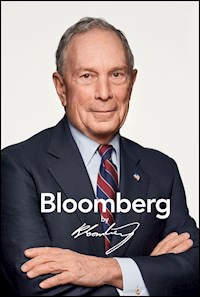
Cover image: Gregory Heisler Cover design: Bloomberg
Copyright © 2019 by Michael Bloomberg. All rights reserved.
Published by John Wiley & Sons, Inc., Hoboken, New Jersey.
Published simultaneously in Canada.
No part of this publication may be reproduced, stored in a retrieval system, or transmitted in any form or by any means, electronic, mechanical, photocopying, recording, scanning, or otherwise, except as permitted under Section 107 or 108 of the 1976 United States Copyright Act, without either the prior written permission of the Publisher, or authorization through payment of the appropriate per-copy fee to the Copyright Clearance Center, Inc., 222 Rosewood Drive, Danvers, MA 01923, (978) 750-8400, fax (978) 646-8600, or on the Web at www.copyright.com. Requests to the Publisher for permission should be addressed to the Permissions Department, John Wiley & Sons, Inc., 111 River Street, Hoboken, NJ 07030, (201) 748-6011, fax (201) 748-6008, or online at www.wiley.com/go/permissions.
Limit of Liability/Disclaimer of Warranty: While the publisher and author have used their best efforts in preparing this book, they make no representations or warranties with respect to the accuracy or completeness of the contents of this book and specifically disclaim any implied warranties of merchantability or fitness for a particular purpose. No warranty may be created or extended by sales representatives or written sales materials. The advice and strategies contained herein may not be suitable for your situation. You should consult with a professional where appropriate. Neither the publisher nor author shall be liable for any loss of profit or any other commercial damages, including but not limited to special, incidental, consequential, or other damages.
For general information on our other products and services or for technical support, please contact our Customer Care Department within the United States at (800) 762-2974, outside the United States at (317) 572-3993, or fax (317) 572-4002.
Wiley publishes in a variety of print and electronic formats and by print-on-demand. Some material included with standard print versions of this book may not be included in e-books or in print-on-demand. If this book refers to media such as a CD or DVD that is not included in the version you purchased, you may download this material at http://booksupport.wiley.com. For more information about Wiley products, visit www.wiley.com.
Library of Congress Cataloging-in-Publication Data
Names: Bloomberg, Michael, author. | Winkler, Matthew, author. Title: Bloomberg by Bloomberg / Michael R. Bloomberg. Description: revised edition. | Hoboken, New Jersey : Wiley, 2019. | Identifiers: LCCN 2018046908 (print) | LCCN 2018047878 (ebook) | ISBN 978-1-119-55456-1 (Adobe PDF) | ISBN 978-1-119-55458-5 (ePub) | ISBN 978-1-119-55426-4 (hardback) Subjects: LCSH: Bloomberg, Michael. | Capitalists and financiers—United States—Biography. | Investments—United States. | Businessmen—United States—Biography. | Telecommunication—United States. | Mayors—New York (State) —New York—Biography. | New York (N.Y.) —Politics and government—1951– | BISAC: BIOGRAPHY & AUTOBIOGRAPHY / Business. Classification: LCC HG172.B56 (ebook) | LCC HG172.B56 A3 2019 (print) | DDC 384.092 [B] —dc23 LC record available at https://lccn.loc.gov/2018046908
ToEveryone at Bloombergwho helped make the company what it is today,and for making Bloomberg Philanthropies possible.
Contents
Preface
Chapter 1 The Last Supper: The Thrill of Getting Fired: Tarrytown 1981
Chapter 2 Capitalism, Here I Come: School, Work, and Hard Knocks
Chapter 3 I Love Mondays: Entrepreneurship: Vocation and Avocation
Chapter 4 We Can Do That: Elementary Journalism, Not Rocket Science
Chapter 5 “No” Is No Answer: Establishment Ignorance and Arrogance
Chapter 6 Money Talks: Textbook Multimedia
Chapter 7 Man vs. Machine: Technology: Politics and Promises
Chapter 8 Management 101: The Bloomberg Way
Chapter 9 Coming Up Next: America’s a Wonderful Country
Chapter 10 Out of the Office: Character and Consistency
Chapter 11 Wealth, Wisdom, and Work: Philanthropy and Public Service
Index
Wiley End User License Agreement
Pages
iii
iv
v
vii
viii
ix
1
2
3
4
5
6
7
8
9
10
11
12
13
14
15
16
17
18
19
20
21
22
23
24
25
26
27
28
29
30
31
32
33
34
35
36
37
38
39
40
41
42
43
44
45
46
47
48
49
50
51
52
53
54
55
56
57
58
59
60
61
62
63
64
65
66
67
69
70
71
72
73
74
75
76
77
78
79
80
81
82
83
84
85
86
87
88
89
90
91
92
93
94
95
96
97
98
99
100
101
102
103
104
105
106
107
108
109
110
111
112
113
114
115
116
117
118
119
120
121
122
123
124
125
126
127
129
130
131
132
133
134
135
136
137
138
139
140
141
142
143
144
145
146
147
148
149
150
151
153
154
155
156
157
158
159
160
161
162
163
164
165
166
167
168
169
170
171
172
173
174
175
177
178
179
180
181
182
183
184
185
186
187
188
189
190
191
192
193
194
195
196
197
198
199
200
201
202
203
204
205
206
207
208
209
210
211
212
213
214
215
216
217
218
219
220
221
222
223
224
225
226
227
228
229
230
231
232
233
234
235
236
237
239
240
241
242
243
244
Preface
Two decades after Bloomberg by Bloomberg first appeared on bookshelves, so much has changed at the company. We have grown from 3,500 employees in 50 countries to 19,000 employees in more than 120 countries, and from 87,500 Bloomberg Terminals to 325,000, with Asia as our fastest-growing market. We’ve expanded to include a wide variety of products and services beyond the Terminal, including those that help companies manage their own operations and systems. News stories once published exclusively on the Terminal are now read by millions on the Web and social media platforms, with many syndicated internationally. And along the way, we became the first global news service to win every major journalism award in print and broadcast media, including the Pulitzer Prize.
What started in 1981 with four guys and a coffee pot—and not one customer—has grown beyond our wildest imaginations. And yet on the most important measures, Bloomberg has not changed at all. The culture that we created at the very beginning continues to define who we are: We are still a company that will outwork our competitors, take more risks than they will, serve our customers better, invest more in the long term, and place greater emphasis on transparency and teamwork. The design of our physical environment is still the same—no private offices. I have the same desk space as everyone else in the company. We have never stopped believing that our greatest asset is our own people, and we invest in them and reward them accordingly.
We remain deeply committed to using our success to benefit others. The vast majority of our profits go to support philanthropic causes—only now both our profits and ambitions are much larger than they once were, and the giving is managed by Bloomberg Philanthropies. Giving back has always been a big part of our company’s identity, and as long as I’m in charge, it always will be.
The technology that we pioneered in the early 1980s has long been ancient history. But we never made the error that so many others have: mistaking their product for the device that delivers it. Executives at Eastman Kodak, for instance, thought they were in the camera and film business, instead of the photography business. The digital photography revolution passed them by, and after more than a century as one of the most innovative companies in the world, they filed for bankruptcy in 2012. At Bloomberg, we got out of the business of building physical computers as soon as PCs began taking off. We knew our core product was data and analytics, not hardware.
Look ahead or fall behind. We’re still looking ahead.
When we started the company in a small room on Madison Avenue, we were refugees from Wall Street motivated by an idea that we could build something new that just might make a difference in the world of finance. People told me I was crazy to think we could overturn the status quo on Wall Street and challenge the giants of financial information. Maybe I was. But within a few years, we had our first customer. And from an initial bond product, we branched out into stocks, commodities, and news. We added magazines, radio, and television—all built upon the mountain of data and information generated by the Terminal and demanded by the world’s most influential business and financial professionals. Before the Internet existed, we had created the world’s most powerful intranet. And before the phrase “social network” came to be, we had created one for the financial services industry.
A few years after writing the first edition of this book, I stepped away from running the company to run for mayor of New York City—another idea that people thought was crazy. But it had been twenty years since we started the company, and I was ready for a new challenge. Besides, I’ve always believed that the next person can do it better. If a company can’t survive a change at the top, the top person hasn’t done her or his job. Talent development is one of a CEO’s most important responsibilities.
The talented team of people who led the company in my absence—with Peter Grauer, Tom Secunda, Dan Doctoroff, and Lex Fenwick playing key roles—did an extraordinary job. They even managed to grow the business during the worst economic recession in decades. As most of our customers (those that survived anyway) slashed their payrolls, we found new markets by offering new services. Diversifying the business positioned us for a new era of growth. After twelve years in office, I returned to find the company stronger than ever, and resumed leading it.
This new edition brings the story of Bloomberg into the twenty-first century. It’s my story, but it’s one that thousands of Bloomberg employees have helped write. And that, truthfully, is the real story behind nearly every success: Teams make it all possible. Leaders get the credit, but the best ones are quick to share it. I’ve tried to do that throughout my career. I could fill a whole book acknowledging all the people who’ve played vital roles in our success, and I’d still miss some. But I hope everyone who has contributed to Bloomberg over the years takes pride in what we have been able to do together.
For all that we’ve accomplished, I still believe that tomorrow will be better than today, and the best is yet to come.
Michael R. Bloomberg
New York, NY
July 2018
1The Last SupperThe Thrill of Getting Fired: Tarrytown 1981
So there I was, thirty-nine years old and essentially hearing, “Here’s $10 million; you’re history.” One summer morning, John Gutfreund, managing partner of Wall Street’s hottest firm, and Henry Kaufman, then the world’s most influential economist, told me my life at Salomon Brothers was finished.
“Time for you to leave,” said John.
On Saturday, August 1, 1981, I was terminated from the only full-time job I’d ever known and from the high-pressure life I loved. This, after fifteen years of twelve-hour days and six-day weeks.
Out!
For a decade and a half, I’d been an integral part of the country’s most successful securities trading firm, even of Wall Street itself. Not just in my head. If my press was to be believed, in everyone’s. Suddenly, though, needed no longer. I was a general partner. An owner rather than an employee. Nevertheless:
Fired!
I wasn’t going to know what was happening, wasn’t going to be making decisions, wasn’t going to share in “my” company’s profits and losses, wasn’t going to be part of it at all. “We” had become “them and me.”
“What do you think about us selling the company?” asked Henry.
“If I’m being thrown out, better now than later,” I replied.
Of course, there was the $10 million I was getting. America’s a wonderful country.
* * *
The Salomon Brothers Executive Committee had decided to merge the seventy-one-year-old partnership with a publicly held commodities trading firm, Phibro Corporation (previously part of Engelhard Minerals and Chemicals). We found this out on a hot, summer Friday night at a hastily called, “mandatory attendance, utmost-secrecy required,” mysterious partners’ meeting at the Tarrytown Conference Center, the former New York estate of society hostess Mary Duke Biddle. Security guards surrounded the complex, checking in each participant as he arrived. (Unfortunately, security missed seeing a Fortune magazine photographer who’d been tipped off and was hiding in a tree. So much for confidentiality!) For sixty-three of us, it was our last meeting as Salomon partners and the occasion when Gutfreund and Kaufman told me my time at Salomon Brothers was over.
We got together in a big conference room before dinner. Expensive lawyers and accountants, being paid at overtime rates, hovered to the side. Exchanging furtive glances, they oozed a nervousness, perhaps in fear that some prewritten script would go awry. Tables and chairs were arranged in rows with the Executive Committee seated in front, facing “the troops.” At each partner’s seat was a dark gray personalized leather folder. I sat at my assigned place and, though we had been told to wait, like everyone else I immediately opened the book in front of me. The first enclosures were financial projections for our company after a proposed merger with Phibro, this almost unknown oil, metals, and agricultural commodities dealer. Pro forma income statements, balance sheets, legal documents, and other corporate gibberish were attached. But the second presentation in the book was infinitely more interesting: the effect of the deal on me as an individual. It meant millions of dollars in my pocket!
The pointless speeches went on and on. The Executive Committee was determined to sell the assets of the Salomon partnership. This transaction was a foregone conclusion: The process, a jury trial parody, where witnesses saw the accused pull the trigger, no mitigating circumstances are entered as evidence, and the judge instructs the jurors to deliberate. Everybody walks into the jury room and the foreman asks, “Did he do it?”
Twelve people instantaneously answer, “Guilty.”
“Let’s go back.”
“We can’t. We’ve got to give the accused some consideration. Let’s sit around and talk for an hour.”
So at Tarrytown we talked for sixty minutes. We were solemn. We were serious. Some asked about differences in corporate culture, others about earnings potential, a few about management structure and duplication of staff functions.
Irrelevant! The Executive Committee wanted this merger and could have voted it through on its own. Yes, we were presented with a fait accompli. But, make no mistake. There was 100 percent approval from the rest of the general partners. Nobody in that meeting gave a moment’s thought to rejecting the sale, including me. It was such a lucrative deal for us, as owners.
By the time we sat down to eat, everything was said and done. We were all as serious and businesslike as we possibly could be while trying to stifle the enormous grins on our faces. Everybody attending this meeting was now wealthy beyond his dreams. Previously, partners’ money had just been numbers in a capital account ledger book, “funny money.” We could give it to charity, or retire, and wait another ten years to get at it. Other than that (and 5 percent interest paid out to us yearly), our fortune was only on paper. That was then. But this was now. All of a sudden, it was real. And ours. In our pockets. In cash!
We were told not to tell anyone until the public announcement the coming Monday. Nobody, inside the company or outside, had known that a sale was even being considered. (Still, my friend and partner Bob Salomon guessed, the day before, that whatever was brewing involved Phibro Corp. He showed me the company’s symbol on his stock monitor before we drove to the Tarrytown meeting. Smarter than the rest of us!) The Executive Committee hadn’t told the retired limited partners. Not even Billy Salomon, the grand old man of the company. He was informed personally in a much criticized surprise helicopter visit to his Southampton summer home two days later.
Strict instructions to the contrary notwithstanding, some partners did telephone their wives that Friday night. I thought it was nonsensical to make your spouse a possible leak suspect. What difference would it make if she didn’t know for an extra day? Others didn’t share my view. One partner called his wife while she was at their country club. She ran back into the club’s dining room screaming, “We’re rich, we’re rich!” Fortunately, nobody paid any attention to her.
After the meeting, we ate greasy steaks and drank hard liquor. We shot pool, smoked Cuban cigars, played poker, and laughed uproariously. It was a great big wonderful fraternity party. Boozing and carousing into the wee hours. No thoughts of others. A moment just for us. We had worked for it; and whether or not we deserved it, we got it!
* * *
The next day, Saturday, with enormous hangovers evident all around, each partner sat down with two members of the Executive Committee. My meeting was with Gutfreund and Kaufman. Most of the sixty-three partners were asked to stay on as employees of the new company. Not me, though. A half a dozen other guys were pushed out at that time as well.
“Since you don’t need me anymore, I’m going home.”
There was no reason to stay for the meetings with the new owners. I wasn’t going to be involved.
Was I sad on the drive home? You bet. But, as usual, I was much too macho to show it. And I did have $10 million in cash and convertible bonds as compensation for my hurt feelings. If I had to go, this was the time. I was getting my money out of the firm then instead of ten years later. With Phibro paying a merger premium, I was doubling my net worth. Since somebody else had made the decision, I’d even avoided agonizing over whether to stay at Salomon—a timely question, given my then-declining prospects in the company.
Still, it was unsettling that future discussions would be about someone else’s company, a firm that until then had been mine. If they’d said, “We have another job for you”—say, running the Afghanistan office—I’d have done it in a second, just as I did at an earlier career turning point in 1979, when Billy Salomon and John Gutfreund told me to give up my sales/trading responsibilities and supervise the computer systems area. I was willing to do anything they wanted. It was a great organization and I would have been happy to stay. I’d never have left voluntarily: There’d be no reason to in good times, and I couldn’t have abandoned them in bad times. Unfortunately (or fortunately for me, as it turned out), staying wasn’t an option.
Afterward, I didn’t sit around wondering what was happening at the old firm. I didn’t go back and visit. I never look over my shoulder. Once finished: Gone. Life continues!
* * *
Although Phibro technically bought Salomon, Salomon soon ran the combined companies. The power shifted with record speed. Phibro took over when the transaction occurred, and Phibro became Phibro-Salomon. As the securities business boomed, the commodities business collapsed. Soon the entity became Salomon Inc., with Phibro Energy and Philipp Brothers as subsidiaries. The Philipp name went back to the obscurity it had had five years earlier. The acquirer never knew what hit it. The acquiree dominated almost from day one. A total mismatch.
With the merger, the Salomon partners got their freedom and their fortunes, but in the process they ended their own firm as it had existed for decades. By losing control of its key employees, Salomon destroyed its greatest strength. Until then, partners had a long-term, firmwide perspective insured by the golden handcuffs of a ten-year capital “lock-in.” After the merger, everyone was just a hired gun. By the 1990s, at Salomon, as at Phibro, virtually all who were there at the time of the merger were gone. The then-partners may have gotten rich, but both old-line companies “lost” in the end.
* * *
I went to see Billy Salomon a week after the merger was announced. “So long, thanks for everything, and goodbye” was the purpose. He was not happy. He was, in fact, furious and embittered that “his” firm had been sold and that he had had no part in the decision.
“You screwed me,” he said.
“Billy, these were your rules. You dictated years ago that nonexecutive general partners and all limited partners [as he had then become] had no say. You decided that the Executive Committee ruled absolutely. You personally picked every one of its members. Rightly or wrongly, they’re your legacy. They made this decision to merge, not the rest of us.”
I never thought Billy had a real complaint. One of style maybe, but not of substance. John and the Executive Committee had a responsibility to do what they thought was right for the firm, which is to say, for its owners. Billy had selected the people who made the decision. They followed the rules he had set. He just didn’t anticipate or like the results.
Although I did say “So long” to Billy Salomon, my recollection is that John Gutfreund didn’t say goodbye to me. The next time I saw him was seven years later at the surprise fiftieth birthday party for Jack Kugler, our former partner. “Hello, young man, and how are you?” he said to me.
“Fine, and younger than you.”
“You always were a wiseass.”
That was it. Thanks, John. He had hired me as a fresh MBA when I needed a job, and he had fired me when my era there had really passed. In both instances, his timing was impeccable.
Even though my Salomon career ended involuntarily, I owe a great debt to William Salomon and John Gutfreund. They were my mentors. They taught me ethics, philanthropy, hard work, and to take care of others. They encouraged me to strive for success and supported me fully, even when I failed. They gave me the opportunity to prove myself, not to mention the chance to walk away with an almost unseemly fortune, which I used later to start my own firm. Given all the people Salomon Brothers employed over the years, there are myriad others who must feel the same about both of them.
Though their careers ended very differently, Billy (who retired voluntarily) and John (forced out when an underling cooked the books) both made their respective contributions. Wall Street is a better place because of their efforts—and I’m a smarter, better (and richer) person because of them. Billy died in 2014. John followed him a little more than a year later. It was not easy to speak at their funerals.
* * *
During the week after the Salomon partners’ last supper in Tarrytown, I went to a furrier on Third Avenue and ordered a sable jacket for my wife, Sue. We had been married for five years at that point, during which time I was a Wall Street star. Unfortunately, from that Tarrytown dinner onward, when she met somebody in the street and was asked, “What does your husband do?” she’d be tempted to answer something like, “Well, he used to be a very important Salomon Brothers partner.” The sable would be a surprise to get her mind onto something else.
I was never embarrassed to say that I’d been fired and was now running a small start-up business. I’m tougher than many others (or, perhaps as a psychological defense mechanism, I convinced myself not to care what others thought). But I was worried that Sue might be ashamed of my new, less visible status and concerned I couldn’t support the family. A sable jacket seemed to say, “No sweat. We can still eat. We’re still players.”
I asked the furrier to stay open until 7:30 p.m. on my last day of work, September 30, 1981, and I put in my normal twelve hours. On the way home, I picked up the jacket. Sue was delighted. We drank a bottle of champagne, gave our daughter, Emma, a kiss, and went out to dinner. Next morning, I started Bloomberg, the company. The rest remains a work in progress.
2Capitalism, Here I ComeSchool, Work, and Hard Knocks
It was a long way to that Tarrytown conference center from the place I began my journey. The child of hardworking middle-class parents—my father was an accountant at a dairy, my mother a woman of liberal views and independent mind—I wasn’t exactly preordained from birth to make a big success of myself on Wall Street or anywhere else. But from them, as a child, I learned hard work, intellectual curiosity, and the ambition to strive relentlessly for the goals I set—all of which would serve me in good stead at school, during my capitalist education at Salomon, and in creating my own company later on.
The town of Medford, Massachusetts, was a blue-collar community outside of Boston. Its city-run high school (I was class of 1960) had 250 students in each grade. Very few went to college. Vocational training was the main mission. I was totally bored until my senior year, when the school started two “honors” courses—one in history and one in literature. For the first time, I was interested in and challenged by my studies.
The history teacher made current events come alive, especially those politically controversial events in America’s past that he told us had never before been taught in government-supported education. One event was the labor struggle in the 1920s, exemplified by the trial of anarchists Sacco and Vanzetti. He described how his mother went each day to the courthouse to listen, how some thought them heroes and others thought them the Antichrist. But by bringing his own family into it, the instructor made history real and relevant, not just something to read and memorize. Similarly with literature: The English teacher helped us analyze the world’s great books instead of teaching spelling and grammar (two things I never did learn thoroughly). Discussing the meaning of the story versus memorizing the plot made the difference—fascinating versus boring. Both classes broadened my perspective: The exposure to history and culture opened my eyes to a whole new world. What a shame all the preceding time was partially wasted. It was an early lesson for me in how we, as a society, must find a way to better engage our children in the joys of learning.
Outside of school, in my early years, I remember reading Johnny Tremain, a novel about a teenage messenger and spy for the Yankee rebels in Boston in 1776. I must have read it a hundred times and often took the subway (the “T,” as it’s called) downtown to visit the Revolutionary War sites the story mentioned. I thought of myself as the hero patriot, sticking it to old George III—a maverick role I still try to emulate. I developed a sense of history and its legacy, and remain amazed at how little people seem to learn from the past; how we fight the same battles over and over; how we can’t remember what misguided, shortsighted policies led to depression, war, oppression, and division. As citizens, we continually let elected officials pander for votes with old, easy, flawed solutions to complex problems. As voters, we repeatedly forget the lessons of others who didn’t hold their chosen officials accountable. God help us if George Santayana was right and we’re doomed to repeat it all again.
Being a Boy Scout brought together my sense of community with my ambitions of personal accomplishment. I loved it. I savored earning every merit badge, took pride in achieving every rank. I was one of the youngest Eagle Scouts in that organization’s history. Boy Scout summer camp was the highlight of the year. I paid for my lodging there by selling our troop’s Christmas wreaths door-to-door (my first selling experience). Accommodations were two-man tents under the stars for six weeks in the wilds of New Hampshire. A bugle blew reveille in the morning. We showered under ice-cold water. The food was hot dog and hamburger fare in a big mess hall where everyone took turns peeling potatoes, setting the tables, doing the dishes. I remember loving meals, particularly the grape-flavored punch called “bug juice.” Daily, there were riflery, archery, rowing, canoeing, swimming, art, ceramics, and dozens of other games and skills. Hikes and river trips were the highlight of the week—and parents came to bothersome visiting days only once or twice in the whole summer. It was the time I learned both to be self-sufficient and, simultaneously, to live and work with others.
On Saturday mornings in the winter, I went to the Boston Museum of Science for lectures that introduced the natural and physical world in a way my school could not. Each week, for two hours, I sat spellbound as an instructor brought snakes, porcupines, and owls for us to hold; demonstrated the basic laws of physics with hands-on experiments; and quizzed us on every museum exhibit. All the kids—including me—tried to show off by having every answer. This competition taught the value of precise observation, attention to detail, and careful listening. Once the question concerned the age of a tree whose five-foot cross section was displayed in the museum upstairs. The exhibit had great historical events marked by a light bulb at each appropriate tree ring, from the current-day outside circle back to the tree’s germination, centuries earlier, at the center of the display. The question was asked about “the redwood tree.” We were suitably frustrated by an instructor who refused to accept what we all knew was the “right” answer, until someone realized the tree cross section was not from a redwood at all, but rather from a giant sequoia—a related but slightly different variety. Listen, question, test, think: Those instructors taught me the value of intellectual honesty and scholarship years before college.
* * *
While in high school, I worked after class, on weekends, and during summers for a small electronics company in Cambridge, Massachusetts. The technical genius of the company recommended Johns Hopkins University in Baltimore. I was interested in science, and she knew people at the school’s Applied Physics Laboratory. Since I had to go to college someplace, why not? I sent in an application and was accepted in due course. The way things worked out, Hopkins probably isn’t sorry it gave me a chance. And I was never sorry I matriculated there.
Academically, I was a mediocre student in college, more from a lack of motivation than natural aptitude, or so I hope. Mostly, my grades were Cs (average) in engineering, but during my senior year, I took double the normal course load and earned almost all top-of-the-class As. Nevertheless, I did little more than read the books, listen to the lectures, understand what was said, and parrot it back. Never did I think I could have gone out and originated the material. I hadn’t the interest or intellect to be a real engineer, physicist, or mathematician. What I really liked doing—and what I was good at—was dealing with people. I became president of my fraternity, president of the Inter-Fraternity Council, class president, and all-around Big Man on Campus. I learned how to campaign for office while seeking elected school positions. I developed organizational abilities when I planned school dances and fraternity parties. I practiced building consensus and getting people to work together as I ran various school-related extracurricular organizations. All these skills helped me later in life, not only in running for office, but also at Salomon Brothers on Wall Street and with my own company.
When I began thinking about life after graduation, it was obvious that administration was the career for me. I probably would have looked for a job straightaway but for the fact that most people at Hopkins went on to get graduate degrees. Under this communal social pressure, I applied to business school. When the acceptance arrived, I was with friends in the campus mail room and noticed a large brown envelope from Harvard Business School in my mailbox.
“Great. Got in. Let’s go get a cup of coffee,” I said.
“Don’t you want to open it?” someone asked.
“What’s the point?” I responded. “They’re not sending me a thick package if it was a rejection. That comes in a very thin letter.”
* * *
My two years at Harvard were well spent. I learned the basics of accounting, marketing, production, management, control, finance, and behavioral science. Harvard’s “case method” teaching honed my analytic skills and sharpened my communications abilities. There’s nothing as educational as the instantaneous feedback of a hundred classmates shouting you down when you’re caught unprepared or can’t justify a position.
The academic standards there were superior, but not what I’d call outstanding. There were some very bright students in my class, some classmates I thought “not exactly intellectually gifted,” and a few that I considered total frauds who could only talk a good game. As it turned out, those whom I thought were smart generally did well later in life; those whom I considered dummies did less well. The bull-shitters faded away. Street smarts and common sense, it turned out, were better predictors of career achievements after graduation than academic success. Given that I received average grades at “The B School,” I don’t exactly mind.
Embarrassingly, I remember being more impressed by whom I was matriculating with than by their abilities. As a kid from working-class Medford, never before had I met people as close to the limelight. Many were the sons of famous business leaders I’d read about in the newspapers. Did I think they’d rise to the top just because their dads did? (Generally, they didn’t.) Was I secretly hoping for a career-enhancing introduction to their parents? (Few of their fathers’ companies even survive today.) Was I looking for glamour by association? (Now, around our offices, celebrities are a dime a dozen.) In fact, although many Harvard relationships helped me, almost none were with those who impressed me so much back then.
* * *
Preparing to finish The B School with a Master’s in Business Administration in 1966, I really hadn’t pondered where my life and work would take me. Like most young men of my generation, I expected to go straight to Vietnam after graduation. Nobody I knew was actually in favor of the war, and I certainly didn’t relish the idea of getting shot while walking through the jungle, but in those days the thought of rebelling against our country never entered our minds. Virtually no one went to Canada to avoid the draft—this was still 1966, before anti-war sentiment had galvanized. Home, school, Boy Scouts, sports, politics, newspapers—everything in life taught us duty, loyalty, responsibility, sacrifice, patriotism. As time went on, some marched, got riled up, and wrote about civil disobedience. But generally, Uncle Sam called, and we went.
I had a commitment from an army unit that would make me a second lieutenant after Harvard. Three months before graduation, I went for my standard-issue military physical. It was a pro forma thing; I was in perfect health. To my great surprise, the doctor told me, “You have flat feet. You’re not going.”
Now, not having to go and possibly get killed was good news. But I was given a draft classification that didn’t disqualify me. Instead, it would let the government change its mind later if the war effort needed those of us with this dreaded podiatric deformity. And down the road, who knew what unit I’d be conscripted into or how my career would be going? So I tried hard to secure a lA classification that would get me into the military right away. I wrote my senators and congressmen for assistance, trying to do the right thing—serve my country—but also trying to maintain a measure of control over my own life. The legislators’ offers of help were my first taste of politicians’ promises that never seem to arrive. Other than the form letters written by staffers (“We’ll try to help”), none of them ever appeared to intervene on my behalf. And as it turned out, even though in the mid-1960s everyone under age twenty-five was potentially marching off to war, I never heard from my draft board again. Eventually, we declared victory, and lost the war.
* * *
What would I do with my life? With twelve weeks until graduation, I had no plan for how I’d turn an expensive education into a living. I hadn’t given it any thought, nor had I signed up for recruiting interviews. My good friend, Steve Fenster, a Harvard classmate who later would become a member of my company’s board of directors (five years before he died of cancer), told me to call the firms of Salomon Brothers & Hutzler, as it was then named, and Goldman, Sachs & Co., and to say I was desperate to be an institutional salesperson or equity trader.
“Who are they?” I asked. “What would I be doing?” Busy as I was learning the details of Keynesian economic theory and the intricacies of textbook finance, I wasn’t exactly familiar with the jobs and people of Wall Street. I had always assumed I’d go to work in general management for some engineering or manufacturing company, or perhaps even into real estate as my best friend from Harvard, Ron Burks, was doing. (Wall Street did not become the magnet for newly minted MBAs until the 1980s.)
“Don’t worry about it,” Fenster told me. “Just do it.”
Steve had worked at the Pentagon as a Robert McNamara “whiz kid” and then at Morgan Stanley for a summer. My resident expert on both the military and the Street, he said I’d fit in and be happy at either place, doing either thing. Not having any better ideas of my own, I made the calls.
Fortunately for me, as someone who hadn’t exactly hobnobbed with Rockefellers during his wonder years or had a mogul for a father, securities trading and sales were considered second-class occupations in those days. Relatively few Ivy League graduates wanted them. Unlike investment banking or research analysis, they were definitely not the prestigious jobs; not the kind of work that the more privileged kids would deign to do. Both involved getting your hands dirty by actually picking up the telephone and talking to customers. Forget the fact that almost all occupations have a big selling component—selling your firm, your ideas, yourself. Never mind that the deans of investment banking depend on their contacts as much as their analytical skills. Overlook the fact that a good trading mentality is synonymous with the ability and discipline to compartmentalize, focus, and compete for success. In those days, no self-respecting research analyst or banker ever thought of working the phones, actually bringing in business. Soliciting was undignified. Trading and sales jobs were going begging. The “swells” were heading elsewhere.
But I came from a background where none of those class distinctions mattered. I didn’t know better, and I wouldn’t have understood if someone had tried to explain the social niceties. I grew up with the civics-class traditional American ethic, with my parents as role models: Work hard, value education, and do things yourself, whether the labor was mental or physical. For me, with college loans to pay off, a good job was a good job. And, as I would learn later on in my life—at Salomon Brothers and in my own company—it’s the “doers,” the lean and hungry ones, those with ambition in their eyes and fire in their bellies and no notions of social caste, who go the furthest and achieve the most.
As a Harvard Business School graduate willing to go into the Wall Street trenches, I got an interview at both firms that Steve had suggested. Invited to New York as one of those relatively few MBAs wanting a Goldman Sachs sales/trading position, I was introduced to Gustave Levy, managing partner of the firm and a true legend. “Mike, this is Mr. Levy.”
Standing in front of me was this ordinary guy, at once cordial and distant, whose circle of friends and acquaintances, while including world political and financial leaders, until then hadn’t included me. I shook his hand and exchanged the usual pleasantries. Ignorant of his true importance, I wasn’t as impressed as I should have been. Gus, as he was called, really was somebody and had done great things as one of the Street’s top arbitrageurs and philanthropists. Decades after his death, he’s still revered as an innovative banker, trusted adviser, and brilliant risk taker. I wish I’d had the smarts to ask him a few questions and, later in my career, spend some time with him before he died. But I didn’t.
Then I trotted off to my Salomon Brothers & Hutzler interview. I was the only one at Harvard who’d signed up to meet the folks from this little bond trading firm that lacked the high-and-mighty profile MBA types typically sought. While being shown around by their personnel manager, Stuart Allen, I started talking to some man named Billy whose full name I didn’t catch. We talked about school, New York, the weather, whatever. He seemed friendly, like a distant cousin at a family wedding.
“What did you think of Billy?” my escort asked after the guy had ambled away.
“Who was that?” I asked.
“Well, that was William R. Salomon.”
I didn’t know. He was just some easy-to-talk-to nice person. But since I was now on a first-name basis with “Billy,” the managing partner at one firm, and I had encountered “Mr. Levy,” the senior person at the other, I knew where I fit in.
My actual job interview at Salomon was not with Billy, but with three other people: the sales manager, Harry Nelson; the head of equity trading, Sandy Lewis (son of Bear Stearns’s then–managing partner, Cy Lewis); and the number-two partner at Salomon, John Gutfreund. It took place in a windowless conference room that opened into the firm’s Partners’ Barber Shop, a standard owners’ perk in those days. Equally impressive was the art (all rented, it turned out). I can still picture the massive famous oil color of the Dempsey-Firpo prize fight hanging in their lounge. I’d never seen real art outside of a museum before. It made an impression—and at Bloomberg, we’ve long featured art in our offices.
When I went back for the obligatory second interview with the same group, they offered me a job for $9,000 a year. In the meantime, I’d been offered employment at Goldman Sachs by its sales manager, Dick Menschel, starting at $14,000 a year—the going rate in those days for a Harvard MBA graduate.
“Look, I can’t afford to work at Salomon,” I told Nelson, Lewis, and Gutfreund. “I want to. I’d love it. But I don’t own another suit of clothes.” For those who sat back row in a Harvard class, the dress was jeans—called dungarees in those days—and your college jacket. “I don’t have an apartment to live in. I have no cash in the bank. All I’ve got are outstanding National Defense loans I took for tuition when my part-time campus job as a school parking-lot attendant didn’t pay enough.”
“How much do you need?” Gutfreund queried.
Instantly, I decided asking for $14,000 would look greedy. Requesting less would get them to give me more. They’d obviously see that, with enough money, I could focus on the job rather than on paying for three meals each day.
“I need $11,500,” I blurted out.
“Fine,” said Gutfreund. “That’s $9,000 salary and a $2,500 loan.” He got up and left the room. So much for my trading ability.
“Well, that’s done,” said Sandy Lewis.
“But I didn’t say yes or no,” I protested.
“It doesn’t matter.”
And that was that. I signed the loan agreement (at least it carried no interest). The first year, my bonus was $500 forgiveness of the loan’s principal, followed twelve months later by forgiveness of the remaining loan balance. In 1973, I would frame the note with Gutfreund’s signature showing it had been paid off, along with the newspaper announcement of my entry into the firm as a general partner.
* * *
To say that I fit into Salomon and loved the industry is an understatement. I reveled in it, every minute of the day. In 1966, Wall Street wasn’t the impersonal, corporate business it is today, where it’s not uncommon for someone to change jobs six times in ten years. People then didn’t move around. They were or quickly became a “Morgan Stanley type,” an (A.G.) “Becker person,” a “KL-er” (Kuhn Loeb), and so on. People were not only identified with their employers, but actually picked up the personalities of their firms, which ranged from haughty and pedigreed to breezy and disarming. The firms in turn were a collection of their staffs’ characteristics. From the moment I was hired, no question, I was “Salomon.” While many of the top firms coveted distinguished lineages, manners, accents, and Ivy League educations, Salomon was more of a meritocracy that prized go-getters, tolerated eccentricities, and treated both PhDs and high school dropouts disinterestedly. I fit in. It was me.
There was a reason each of us took on the protective coloration of our employer: What mattered on Wall Street in those years was not the individual but the organization. We never used the first person singular. (Billy Salomon once overheard a stock trader saying to a customer, “I’ll buy 50,000 shares.” In a very loud voice, Billy asked him how he got that kind of money in his personal account.) Today, with many companies having lost the family attitude, hiring and firing hundreds of people at a stroke, company spirit has disappeared and personal ambition is rampant. Employees are out for “Number 1.” Everybody’s a cowboy. Even the most junior- varsity assistant traders consider themselves individual, self-centered superstars. Today’s Wall Streeters admit little value from their support people, their company’s balance sheet, the franchise name, or their colleagues. Rather than join an organization, they “accept” employment. The company is merely a vehicle, something that offers them a venue for their irreplaceable (and always undercompensated) talents; they declare their free agency status almost on day one.
But when I began, if you could get into an investment banking firm—not an easy thing to do for a nondirect descendant of the founding family—you thought of it as a job for life. You would work your way up, eventually become a partner, and die at a ripe old age in the middle of a business meeting (that’s how both Cy Lewis and Gus Levy left this world). You may not have liked all your coworkers and/or partners, but success was “joint and several.” Their success helped ensure yours; your achievements abetted theirs. And when that important rule was forgotten by the end of the 1970s, the community that was “the Street” shattered. Charles Darwin told us what would happen: It may be survival of the fittest as nature meant it to be, but lots of good and worthy creatures die in the process.
* * *
The Salomon partnership was a unique organization. It didn’t have the normal politics and infighting of the typical commercial enterprise. It was the ultimate “what you see is what you get” environment. Everyone important worked in the same room, sitting shoulder to shoulder, trading or selling stocks and bonds. Disagreements flared, as they did with any group of excitable Type A employees. People who were adversaries on an issue screamed at each other.




