


6,49 €
Mehr erfahren.
- Herausgeber: BQB Publishing
- Kategorie: Gesellschafts- und Liebesromane
- Sprache: Englisch
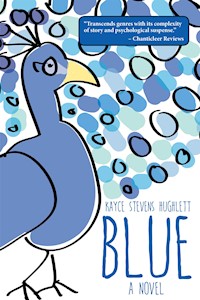
Intrigue, mystery, vivid imagery, fascinating dialogue, and complex characters quickly draw the reader into this "subtle psychological mind-bender."
One insecure perfectionist. One guilt-ridden artist. One child-woman who talks to peacocks. A trio of complex heroines on separate journeys toward a single intertwined truth.
Imagine living exclusively for others and waking up one day with a chance to start over. The terrifying new beginning reeks of abandonment and betrayal. The choice for Seattle resident Monica lingers between now and then... them and her.
Izabel's idyllic existence on Orcas Island is turned upside down during the birth of a friend's child. Suddenly, pain rips through her own body, and life as she knows it shifts, hinting at a forgotten past and propelling her toward an uncertain future.
On another island, young Daisy awakens surrounded by infinite shades of blue. Is she dreaming or has she stepped through the portal into a fantastical land where animals spout philosophy and a gruesome monster plots her destruction?
Blue—a subtle psychological mind-bender where each heroine is her own worst enemy. Eccentric. Lovable. Unforgettable.
Das E-Book können Sie in Legimi-Apps oder einer beliebigen App lesen, die das folgende Format unterstützen:
Veröffentlichungsjahr: 2023
Ähnliche




















Blue: A Novel
© 2015 Kayce Stevens Hughlett. All rights reserved.
No part of this book may be reproduced in any form or by any means, electronic, mechanical, digital, photocopying, or recording, except for the inclusion in a review, without permission in writing from the publisher.
This is a work of fiction. All of the characters, names, incidents, organizations, and dialogue in this novel are either the products of the author’s imagination or are used fictitiously.
Published in the United States by BQB
(Boutique of Quality Books Publishing Company)
www.bqb.com
Printed in the United States of America
ISBN 978-1-939371-72-0 (p)
ISBN 978-1-939371-73-7 (e)
Library of Congress Control Number: 2015904507
Book design by Robin Krauss, www.bookformatters.com
Cover illustration by Debbie Patrk Vinyard
Also by Kayce Stevens Hughlett
As I Lay Pondering: daily invitations to live a transformed life, 2012
Blue is the only color which maintains its own character in all its tones . . . it will always stay blue.
Raoul Dufy
French artist (1877–1953)
CONTENTS
PART ONE
DAISY
MONICA
IZABEL
MONICA
DAISY
IZABEL
MONICA
DAISY
MONICA
IZABEL
DAISY
MONICA
IZABEL
DAISY
MONICA
IZABEL
DAISY
MONICA
IZABEL
DAISY
MONICA
IZABEL
DAISY
MONICA
IZABEL
PART TWO
DAISY
MONICA
IZABEL
DAISY
IZABEL
MONICA
IZABEL
MONICA
IZABEL
MONICA
IZABEL
MONICA
IZABEL
DAISY
MONICA
IZABEL
MONICA
DAISY
DAISY - MONICA - IZABEL
GRATITUDE
DAISY
Blue. Everywhere. As the dawn light began to flicker through her sable-tinted lashes, all Daisy could see or sense was the color blue. Faint shadows distinguished themselves, and as her eyes adjusted, she began to notice shades of green moving toward black with strands of deep violet woven within. Aqua. Amethyst. Navy almost turned to black. The colors enveloped her vision. The primary variation in hue was between multiple shades of sapphire. No white or distinct light. It was like her corneas were covered in some outrageous version of that awful plastic wrap that came in different colors and made your food look anything but appealing.
Slowly, she turned her head from side to side, hoping for a different view. Nada. Nothing. Zip. Only the changing shades of blue appeared in her vision. It was mildly disconcerting and slightly alarming. She wondered what could possibly have happened since she’d last opened her eyes.
Twilight shone ever so slightly as her eyes adjusted to the new sight. Her senses expanded until she felt a light touch she could only describe as more blue. It whispered to her heart. Her olfactory sense began to twitch with a hint of an aviary-like scent. Her nose crinkled and her thoughts ran rampant. What’s happening here? It feels like a dream, but I can smell it. And taste it and hear it. Weird! The beating of her heart thrummed in response.
Daisy imagined rubbing her taste buds against the scene that enveloped her: this object of blue with shadings of violet, green, and black. Brown, too, she noticed on another round of observation. Her mouth watered and her tongue thrust outward, struggling for momentum toward any point of contact. Something tacky brushed against it and stuck to the sparse moisture. Eww. What is that?
She bristled at the gummy touch, but her instincts were tinged with an element of excitement and extreme curiosity. Somehow, she knew this wasn’t a tragic event. Nevertheless, the ability to experience only shades of blue was not how she’d ever imagined her day unfolding.
“Hmmm. Whaddya do when you can only see blue?” she mumbled aloud.
What if the sky has fallen and this is the result? What if I had a brain aneurysm and my vision is messed up? What if I stay like this forever? Would that be so bad? I do like the color blue. Except it’s only the color—nothing else. Only that weird hint of something, I don’t know what. Maybe this is what blind looks like?
So it went for a while: the wondering and musing, approaching panic and calming down again, as Daisy vacillated between amusement and concern. Finally, exhausted from her mental gymnastics, she closed her eyes and drifted back to sleep.
MONICA
“Does Your Name Fit?” Monica read the headline aloud. Yes. No. I don’t know. She sighed, wagging her head from side to side. Does it even really matter?
She sat alone at her kitchen table reading a survey in Ladies Home Journal, the kind she usually skimmed over because they were too personal or ridiculous to give merit. Moving her gaze away from the magazine, she examined the teacup in her hand as if it might hold the answer to the question. Does Your Name Fit?
The first syllable of her name was “mon,” the French masculine possessive. Masculine possessive? Ha. She shuddered at the thought.
“I” was the fourth letter of her name. “I lost myself a long time ago, didn’t I?” This time she spoke to the slice of toast between her fingers. She observed the bread like a scientist, thought about how “I” united with a masculine possessive, and then took a voracious bite out of her crusty confidante.
Munching away, she considered the last two letters, “CA.” California? No. She’d never been south of Portland. Cats Anonymous? It sounded like a support group for octogenarian women with feline-infested homes. At this particular moment, she was grateful for the allergies that would save her from becoming a pledging member of the CA society she’d just envisioned.
Ça? There, or that? Again, she was thinking in French. She wondered if she would ever make that journey across the ocean.
Monica tucked her bobbed auburn hair behind her ear, pushed her heavy-framed glasses up on her nose, and turned her attention back to the survey.
Question #1: If you could name yourself at this moment, what would your name be?
Pathetic, forty-three-year-old spinster. It wasn’t the first time this self-flagellating image had popped into her mind. Her shoulders slumped and her spine curled inward as she dropped the magazine onto the table.
Rename Yourself, beckoned the glossy image on the page. Be Who You Are Destined to Be.
“Oh, please,” she groaned. “I tried reinventing myself once, didn’t I? Look where that got me.”
Does Your Name Fit? The magazine was relentless.
M.O.N.I.C.A. She sounded out each letter inside her mind. Possessed by a man. I am that. Evidently, it does fit. She sighed as her thoughts drifted back to another place and the time of her so-called reinvention.
IZABEL
“Puuuussshhhh, Shannon. Come on, honey. You can do this. One more good one and you’ll be holding that beautiful baby girl in your arms.”
“Tired, Izzy. Can’t.”
“Come on, sweet woman. You know we talked about this. It’s always hardest before the beauty arrives.” Izabel squeezed Shannon’s hand and leaned in with her best “doula” tone.
“Oh, cut the crap! Put yourself in my place and then tell me ‘It’s beauty.’ It feels like Farmer Ryan’s calf is trying to push its way out!”
“Now, Shannon honey, you know Farmer Ryan has the sweetest calves on the island,” Izabel purred. “Give us one more strong push, okay?” She stroked the laboring mother’s forehead, then bent over, wincing, as a rogue contraction gripped her own belly.
“No way! Grrrrrr . . . oowwwwww . . . eeeeeeeeee . . . ”
“I see the head, Shannon,” announced the midwife, Jaylene.
“Push, sweetie,” Izabel offered through her own shortened breath.
“Yoooowwwwwww . . . eeeeeeeee . . . oooooohhhhh!”
“Here’s the shoulders. You’re doing great. Keep it up.”
“Hooooooooly cooowwwww!”
“And here’s our girl!” Jaylene announced.
“Way to go, Shannon. Oh, honey, this little angel looks just like her beautiful mama. Come on, Jaylene, hand the baby over to Shannon.”
“Hold your horses, Izzy. Give me a minute to clean the mucus out of her nose and cut the cord. Hey, Papa Roy, you want to do the honors?”
Roy, the only man in the room, blinked as if he were the one who’d just emerged from the birth canal.
“Are you okay, Roy? Do you need to sit down?” Izabel looked at him with concern.
“Um. I think maybe I just need a bowl of cereal.” Roy turned his glazed eyes away from the women and staggered toward the kitchen.
“Cereal?” Jaylene and Izabel lifted their eyebrows and spoke in unison, but Roy was long gone.
“He always eats cereal when he’s stressed out,” Shannon murmured, as she reached toward the infant Jaylene had swaddled in a cotton blanket. “It’s a miracle we have any left in the house after the labor I’ve had.”
“Hey, I heard that,” Roy said as he reentered the room, holding a soupspoon and a large mixing bowl filled with Cheerios.
Izabel patted him on the shoulder. “No offense, but your wife did a bang-up job with the delivery. My hunch is she could use a few Cheerios herself.”
Roy hung his head sheepishly, perched on the edge of the bed next to his wife, and offered her his cereal-filled spoon.
“My hero,” the contented mom said, beaming.
Izabel and Jaylene moved about the room, tidying up extra blankets and pillows, storing Jaylene’s medical instruments in her tapestry satchel, and changing the sheets of the bed while the new family cuddled on the living room sofa.
“So, are you all set now, Shannon?” Izabel asked.
The new mother nodded, focusing her dreamy gaze on the tiny infant nuzzled against her chest.
“Think you’ve got a handle on breastfeeding and your man Roy can stay upright for a while?”
“Oh, she’s an angel, Izzy, and Roy’s more helpful than he looks. I’m pretty sure we’ll all be okay, especially since you’re close by.”
“I’m just a phone call away if you need me. Now you three snuggle up and get some rest. It’s hard work getting born.”
“Thanks for everything, Iz. You’re the best doula on Orcas Island.”
“Thanks, honey. I’ll take that as a compliment, even though you know I’m the only doula on this island, unless you count Farmer Ryan’s wife,” Izabel replied, with a twinkle in her eye. “I’m going to take off now. You call me if that little angel gives you any trouble. I’ll check back with you in a day or two unless I hear otherwise. Love you guys!”
“We love you, too, Izzy. And thanks again!”
It had been a long night helping the Andersons birth their baby girl. Any other person would have been exhausted and ready to sleep for hours, but not Izabel. She was always exhilarated after assisting with a birth, although today she felt a twinge of melancholy that she didn’t understand. Shaking it off, she exited the shake-shingled cottage and went to the side of the house, where she’d left Rosie, her bicycle, leaning against the clapboard shingles.
Her strawberry blonde hair fell in soft ringlets to her narrow waist. Her white embroidered peasant top flowed over the camisole she wore beneath it. Last night, she’d foregone her usual African print skirt for narrow capris that skimmed her slim yet curved hips. Her features tended more toward quirky than classic, but overall she was a striking presence. Men adored her, and in the normal scheme of things, women would have despised her, but her ethereal spirit and genuine love of others could not be ignored. Everyone on the island seemed to like Izabel Nivel: doula, artist, yogini, and cyclist.
“Hello Rosie.” She smiled and her eyes brightened as she greeted her two-wheeled companion.
Rosie, the current love of Izabel’s life, was an extravagant gift from a grateful client: two wheels of streamlined grace and beauty. The color of a clear and unclouded sky, her official hue was called azure, a word that made Izabel’s heart purr whenever she said it out loud. The three-speed wonder shifted gears automatically on the rolling hills of Orcas Island and left its rider feeling like she was sailing atop cotton puffs in the sky.
“What’s it going to be, Rose? A ride through the countryside or coffee at Brooke’s before we head home?” Izabel’s stomach rumbled and she put her hand on it, a brief flash of concern crossing her face. Shaking her head as if to clear it, she returned her attention to Rosie. “Coffee, you think? Me too. Brooke’s it is.”
With that decision, Izabel and Rosie exited the Andersons’s front yard and headed west toward Deer Harbor.
MONICA
Breathe, Monica thought as she closed the door to her unoccupied office behind her. Releasing her typically erect posture, she slumped into the cheap, padded chair and wheeled herself to face the metal and faux-wood desk. Reaching to straighten the plaque near the front of her workspace, she impulsively turned it around to read: Assistant Director of Patient Affairs.
What the heck does that even mean? She shook her head and closed her eyes in disgust. It sounds like the patients need help directing their illicit and nonexistent love lives.
Pushing her heavy-framed glasses higher up her upturned nose and tucking a stray strand of hair behind her ear, she freed a deep sigh from her chest. The only “affairs” she’d been directing today were the persistent complaints from a visiting daughter-in-law. The brash woman from Orcas Island had asserted that her mother-in-law’s closet was filled with indistinguishable KMart clothes instead of the designer tracksuits she’d provided for her mentally deteriorating in-law.
Monica had pasted a look of compassion on her face and explained for the nth time about one resident’s penchant for “shopping” in other patients’ closets. But the woman had been more concerned that her mother-in-law was dressed shabbily rather than the potentially serious issue of one resident’s stealing other people’s possessions.
Shortly after breakfast, the cockatiel had escaped from its cage in the game room. This had caused a ruckus only Monica could quell, by tossing her sweater over the quivering bird and returning it to its safe haven. During the commotion, patients had watched from wheelchairs and wrung their hands, while others had shouted encouragement in rasping voices. Moments later, as she’d continued her rounds, she’d heard the hullabaloo rise again, announcing that the bird was once more flying free.
Monica had also wasted a serious chunk of time trying to convince Mrs. Johnson, another resident, that she wasn’t her daughter Ethel. Monica berated herself for the uncharacteristic need to argue the moot point. She knew from years of experience that there was no derailing Alzheimer’s patients’ train of thought once they had the track programmed for a destination.
Monica had tried everything she knew to defuse the situation: nodding in agreement, evasion tactics, pretending she didn’t hear the conversation, and (the least helpful) explaining that Ethel had actually died several years before. This strategy had set Mrs. Johnson weeping until one of the nurses was able to console her.
Monica had continued on her rounds and altered her customary path throughout the Center, hoping to steer clear of Mrs. Johnson’s unyielding pursuit, but it was as if Monica had been tagged with a homing device and Mrs. Johnson held the control. Instead of a woman with deteriorating mental capacities, the patient had taken on the persona of a diabolical tracker. If Monica had had a bounty on her head, Mrs. Johnson would certainly have collected the prize. If she tells me one more time I’m the spitting image of her dear daughter Ethel, I’ll scream bloody murder! Monica thought.
Monica’s patent reserved manner and painstaking attention to detail normally fit with the tasks required of her at Stratford Estates Memory Care Facility. Today, however, she found herself muttering under her breath, exasperated with the tidy office she called her sanctuary, and wanting to pummel sweet old Mrs. Johnson for initiating an elaborate game of hide and seek for the past few hours.
How had this come to be her life? Listening to moderately functioning Alzheimer’s patients loop their ingrained stories through an auto-rewind every fifteen minutes, trapping elusive cockatiels, and wanting to dive under her perfectly ordered desk when anyone approached the door?
A flash of her days at Briar Cliff College rose in her mind. She smiled as she remembered her English Lit studies. What would her favorite heroine do in this situation? Monica found slight comfort in imagining herself at the center of an Elizabethan tragedy, instead of a modern-day woman stuck in a soul-sucking job and lonely existence.
I’m only forty-three. There could still be time for me. I’m supposed to be somewhere, anywhere else, doing anything but being a pitiful director of patient affairs. Oh hell, not even director, just a lame-o assistant director. Oh God, help me!
KNOCK. KNOCK.
Monica jumped as she heard the sharp tapping on the door. Reflexively, she smoothed her freshly cut hair and waited for someone to enter, until she remembered that she’d locked the door when she slipped behind it moments ago.
“Monica? Monica, honey? Are you in there?” Mrs. Johnson cooed from the other side of the door.
“Breathe,” Monica whispered to herself, before responding. “Yes, Mrs. Johnson. How may I help you?”
“Someone let the birdie out of its cage and it’s making horrible noises.”
Again. “Okay. I’ll be right there,” she said, as breezily as she could manage.
Like a soldier preparing for battle, Monica adorned her face with the armor of a good girl smile, straightened her weary shoulders, and opened the door of her refuge. Mrs. Johnson stood like a sentry guarding the passage. A helmet of salon-teased bluish hair topped her head, and turned-up crimson lips punctuated her lined face.
“Ethel? Is that you?” she whispered, tender hope in her voice.
“No, ma’am. It’s me. Monica.”
“Monica? Oh, yes.” Mrs. Johnson shook her head as if waking from a dream. “Have I ever told you that you’re the spitting image of my daughter Ethel?”
Monica thought: Dear Lord, I’m living in the morning that won’t end.
As she drove south on Greenwood Avenue after leaving Stratford Estates for the night, Monica heard her stomach rumble. She knew she should stop by Northwest Hospital and check in, but today had been interminable with the escaping birds, ranting daughters, and erratic patients. She couldn’t face seeing the night nurse on call, who would only shake her head with downcast eyes and say, “No change.”
No change. It seemed as though they were all stuck in the same endless loop. Monica thought about her own perpetual days of drudgery and boredom. Her days were so regimented it wasn’t even funny. She was up at six each morning, followed by a quick shower and twenty minutes of yoga, if there was time. Special K, a banana, and skim milk for breakfast. An autopilot drive to Stratford Estates, where she filled the mornings with staff meetings, mounds of paperwork, and the same conversations dozens of times over with the clients.
Lunch consisted of Caesar salad with skinless chicken breast, if she managed to stop for lunch at all. More of the morning’s blandness continued throughout the afternoon. Her norm was working past dinnertime until she decided to move the monotony from one space to the next.
The most hopeless hours of her day came when she stopped by the hospital and sat in silence next to the unresponsive figure until she could cope no longer. Then she’d make the autopilot drive home to her empty duplex near Holman Road.
That night, after arriving home bleary-eyed at 9 p.m., Monica turned on the television, put a Lean Cuisine in the microwave, and poured a glass of Two Buck Chuck wine from Trader Joe’s. Tonight she felt like she could use a little indulgence. Instead of setting her place at the table, she took her food and wine and climbed into bed with the remote control.
She considered that she really was no different from Mrs. Johnson. The main difference between the two of them was that Mrs. Johnson seemed to be enjoying her life, or was at least oblivious to the dull repetitiveness of it all, whereas Monica was becoming acutely more aware of her own mortality with each passing day. She tried to put the depressing thought out of her head, flipped through a dozen channels, and watched mindlessly until she fell asleep during The Daily Show.
The next morning, as Monica headed toward her car with slumped shoulders and her gaze focused on the sidewalk, she cringed at the sudden sound of her neighbor’s voice.
“Hey, Monica! Hey, how are ya?”
Oh no, Monica silently swore under her breath. Please go away.
“I hate to be the bearer of bad news, but something got ahold of one of those wild cats from the park and left it on your driveway. It’s dead, ya know?” The woman scrunched her mustached upper lip to her nose and shook her head. “I would’ve had Matt take care of it, but he’s gone off huntin’ this week.”
Monica turned her deadpan face toward her well-meaning neighbor, Jenny. The woman had thinning hair plastered to her head and a strange rosacea-like rash sprinkled across her left cheek. She couldn’t have been more than thirty-five, based on all the little kids running around her yard, but her weathered skin and stooped form spoke of someone who’d lived a harder life than many of the patients at Stratford Estates.
Monica stepped closer to where Jenny pointed. A lifeless creature sprawled, limbs askew, on the cracked concrete path less than ten feet from her front door. Just this past weekend she’d meticulously replanted her flowerpots in an effort to brighten the appearance of the sixties-style duplex. The animal’s once-gray fur was plastered to its skin by blood from a gaping wound in its throat. Its body was contorted, with feet splayed out as if there were no bones inside, and bright red entrails poured from a hole in its stomach.
Monica lifted her hand to cover her mouth and nose, and swallowed hard as her gag reflex jerked like a caged animal. A cat’s rage is beautiful, burning with pure cat flame . . . William S. Burroughs.
“No. No. No. I can’t take this! Why does everything die?” The words poured out from behind her hand.
Jenny shifted from foot to foot, questioning furrows forming on her brow. “Like I said, sorry to be the bearer of bad news. You want me to go fetch a shovel from my storage shed?”
Jenny’s earnest, twanging voice made Monica cringe. She was starting to feel ungrateful, because Jenny was only trying to help. But the thoughts came anyway: If she’d wanted to be really helpful, she could have taken care of the cat when she found it instead of leaving it for me to deal with.
Monica turned toward Jenny, squaring her shoulders in an attempt to gain her composure. Behind her fixed façade, her mind went wild. What do you do with a dead cat in the middle of the city, for Christ’s sake? Call Animal Control? Toss it in the garbage bin? Is that even legal? Bury it? Maybe set up a bonfire and have a private cremation? Offer a royal ceremony for the dead? Oh geez, I’m losing my grip. Hold on, Monica. It’s going to be okay.
Monica believed that if you just did the right thing, everything would be fine. She couldn’t fall asleep at night if there were dirty dishes in the sink, and she wanted to send apology notes to the city hall if she accidentally ran a red light. At work she filed her reports on time and kept her desk neat and orderly. Her home was the picture of perfection, even if it was a little shabby around the edges. A place for everything and everything in its place. There was no place for a dead cat in her tidy world. This was messy, disgusting, and more than a little disturbing. Not orderly at all.
On the outside, Monica was the picture of a professional woman heading to work: tidy auburn hair, black button-down shirtdress, sensible one-inch pumps. Inside, however, she felt like the cat raging in her last moments before death: fur flying, teeth barred, and insides tumbling out. A persistent gnawing in her gut murmured that this was not about the cat.
“Shovel? You want me to fetch it now?” Jenny offered again.
DAISY
Daisy began to stir groggily, remembering the weird dream she’d experienced earlier. Whether hours or days had passed, she couldn’t tell. She smiled at the ridiculous notion that the sky had fallen and the whole world had been wrapped in blue. As she stretched her arms, feeling the warmth of waking up, she pretended she was in high school gym class, getting ready for the next exercise.
With blood flowing through her youthful body, she purred like a sanguine and content cat, until the moment she opened her eyes. Blue. Everywhere blue. Her vision was still sheathed in blue-tinted plastic wrap.
She jerked up to a seated position, her alarm intensifying as her senses kicked into overdrive. Vision was a bust. She still couldn’t see anything but blue. She strained her ears and thought she detected something that sounded like a pigeon cooing. The rapid pounding was, no doubt, her own heart. It felt like it might try to escape from the center of her chest.
Her olfactory sense again noticed something slightly bird-like. It was strange and foreign. Mystified, she began to stretch her arms and legs, and wiggle her fingers to see if there was anything she could touch or feel. Smoothness. Nice. Something soft. Ouch! Something pinpricked her finger. Since her tongue had offered the most tangible clue before—the tacky thing—Daisy decided to try that again.
Gingerly her tongue peeked out from its hiding place inside her mouth. At first, it met only air. Then, there it was again, the thing that made her want to rub her tongue against her teeth and pucker her lips and spit. What the heck is going on? Is this for real? Clearly, I’m not dreaming.
Her tongue was attached to something plume-like and she couldn’t shake it loose. Her mind flew in a hundred different directions, none of them making sense, until finally reality came into focus. She was stuck to what appeared to be a feather, and not just any feather, but a resplendent peacock feather of brilliant cobalt.
“Pfftt. Pfftt,” she sputtered as she tried to disengage herself from the cottony surface. She shook loose and broke free only to discover herself eye to eye with the bird in question: a royal peacock of grand stature.
Holding her gaze with his crystal-clear eyes, the peacock kept Daisy immobile with a mere twinkle. As her own vision came more clearly into focus, she began to distinguish other shades of color she hadn’t been able to see when she’d been buried inside the nest of his feathers.
Blue turned to green that moved toward black and back again. There were two parallel lines of ivory feathers on either side of the glistening eye, and they folded seamlessly into the pointed beak that punctuated the graceful head. Daisy found herself in a state of spellbound fascination. She was so caught up in the beauty and grandeur of this elegant creature that she forgot to be either confused or frightened. Relaxing slightly, she continued staring at this glorious phenomenon that she was suspended upon.
“Hello.” The fabulous beast spoke with elegance and a voice of kind authority. Astounded by that single word, Daisy tumbled from her perch near the base of his neck (it must have been at least five feet long) and landed with a thud on the earth.
“Goodness gracious, my dear. Are you all right?” the peacock queried.
“What’s happening to me?”
“Well, it appears that you’ve taken a fall. I’ll ask again, are you all right?”
“All right? Are you kidding me? I’m talking to a giant peacock! How could I possibly be all right? I’m obviously going crazy, and you’re not helping!” Daisy flapped her arms like an awkward baby bird, and her bottom burrowed into the mossy blue ground beneath her.
“Well then, please let me know how I might be of assistance and I’ll do my best to comply.”
“Stop talking!” Daisy closed her eyes tightly and shook her head, golden hair flying, before sneaking another peek at the animal. “You’re still here? I thought you were a dream or something. What is going on?”
“May I please speak now?”
“What?”
“Well, when I asked how I could be of assistance, you told me to stop talking. You must realize, however, that it’s impossible for me to answer your questions if I can’t speak. My goal is to help you in the best way possible, so do you want me to talk or not?” The bird tilted his head toward the girl.
“Oh geez. Clearly you’re able to talk whether I want you to or not, but I appreciate you being so considerate. I’m sorry for yelling, please go on. I really need to know what’s going on here. Let’s start with, where the heck am I?”




