


6,84 €
Mehr erfahren.
- Herausgeber: Loving Healing Press
- Kategorie: Geisteswissenschaft
- Serie: New Horizons in Therapy
- Sprache: Englisch
Are you ready to heal?
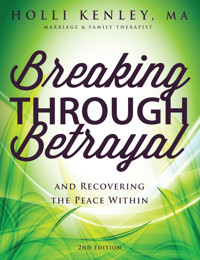
Breaking Through Betrayal: And Recovering the Peace Within is for any individual who has experienced betrayal and is struggling to break through its bonds. Through a proven process tailored for recovery from betrayal injury, readers are invited to: Explore and connect with the different kinds of betrayal: rejection or abandonment; a violation of trust; a shattered truth or belief. Identify and move through betrayal's three States of Being - confusion, worthlessness, and powerlessness - while uncovering contributors of symptom intensity and duration. Revive and restore mind, body, and spirit with a 5-part recovering process for "righting oneself" and attend to re-occurrence or re-injury.
New in this Second Edition of Breaking Through Betrayal, readers are offered a unique perspective on a timeless topic -- relapse. By reframing relapse as a familiar experience and redefining it as an issue of self-betrayal, readers are: Drawn into a safe conversation while breaking through the stigma, secrecy, and shame of returning to any kind of unhealthy pattern of thinking, behaving, or feeling. Invited to partake in an empowering 6-part recovering process in moving from self-betrayal to self-discovery.
Therapists Praise Breaking Through Betrayal
"Useful for anyone caught in self-blame, shame or repeated victimization...this empowering 'in-control' approach can help readers take charge, assess injury, gauge healing and find excellent strategies to protect themselves from future trauma when relating to one's betrayer."
--Beth Hedva, Ph.D. author of award-winning Betrayal, Trust and Forgiveness
"Holli Kenley shares her comprehensive approach to a situation most of us experience at least once in our lifetimes - betrayal. As a former therapist, I appreciate the author's ability to take a complex topic and turn it into an uncomplicated and well-organized read, including easy-to-follow exercises at the end of each chapter. This book is an important resource for anyone experiencing grief and loss as the result of betrayal. Read it and 'recover the peace within.'"
--Janet A. Hopkins, Editor-in-Chief, In Recovery Magazine
About the Author
Holli Kenley, M.A., is a California Licensed Marriage and Family Therapist. Specializing in the areas of sexual trauma, abuse, addiction, codependency, betrayal and cyber bullying, Holli currently works in the field of psychology as an author, speaker, and workshop presenter.
Self-Help : Abuse - Psychological
Das E-Book können Sie in Legimi-Apps oder einer beliebigen App lesen, die das folgende Format unterstützen:
Seitenzahl: 437
Veröffentlichungsjahr: 2016
Ähnliche



















Breaking Through Betrayal: And Recovering the Peace Within, 2nd Edition
2nd Edition copyright © 2016 by Holli Kenley. All Rights Reserved.
Author photo by Julianna Calin
Learn more about the author at www.HolliKenley.com
From the New Horizons in Therapy Series
Library of Congress Cataloging-in-Publication Data
Names: Kenley, Holli, 1951- author.
Title: Breaking through betrayal : and recovering the peace within / Holli
Kenley.
Description: 2nd edition. | Ann Arbor, MI : Loving Healing Press, [2015] |
Series: New horizons in therapy series | Includes bibliographical
references and index.
Identifiers: LCCN 2015036067| ISBN 9781615992850 (pbk. : alk. paper) | ISBN
9781615992843 (ebook)
Subjects: LCSH: Betrayal.
Classification: LCC BJ1500.B47 K46 2015 | DDC 158.2--dc23
LC record available at http://lccn.loc.gov/2015036067
Distributed by Ingram (USA/CAN), Bertram’s Books (UK/EU)
Published by
Loving Healing Press
5145 Pontiac Trail
Ann Arbor, MI 48105
www.LHPress.com
Phone 888-761-6268
Fax 734-663-6861
Recovery Experts Applaud Updated Second Edition
“In her book, Breaking Through Betrayal, Holli Kenley creates a fresh look at self-betrayal or relapse through a compassionate lens. The reader is given the opportunity to embrace the process with empathy and understanding. This books gives the reader a road map to move through self-betrayal or relapse to a deeper level of self-discovery. Holli shares her insights about relapse in a distinctive manner with clearly defined concepts and activities to engage the reader and further their learning. Betrayal and Relapse [Section IV] is a must read for anyone experiencing relapse.”
Cathy Taughinbaugh, Certified Parent Coach
“Holli Kenley is on a mission to heal the pain and shame associated with relapse. Whether you are recovering from years of self-betrayal or substance use, through her professional insights and personal experience Holli will gently guide you to a place of healing and understanding. I can’t think of a more qualified person to walk with you on your journey back from the heartbreak of relapse. If you are ready to embrace the gift of self-discovery, Breaking Through Betrayal: And Recovering The Peace Within was written for you.”
Dawn Clancy, Writer & International Speaker
Founder & Creator of Growing Up Chaotic
“The Second Edition of Breaking Through Betrayal offers an empathic, insightful and compassionate look at the universal pain of betrayal and relapse. Like an experienced wilderness guide who can skillfully navigate treacherous terrain, Holli Kenley points out the steep cliffs and the quicksand, while gently encouraging each traveler to claim their own unique vistas and hidden treasures on this journey. The process outlined through narrative and activities includes restorative practices that lead to increased hope and resiliency. Like its author, this book is a wise companion on the journey.”
Rajani Venkatraman Levis, LMFT, PPS, CTS
Psychotherapist & Certified Trauma Specialist
“Holli Kenley shares her comprehensive approach to a situation most of us experience at least once in our lifetimes – betrayal. As a former therapist, I appreciate the author’s ability to take a complex topic and turn it into an uncomplicated and well-organized read, including easy-to-follow exercises at the end of each chapter. This book is an important resource for anyone experiencing grief and loss as the result of betrayal. Read it and “recover the peace within.”
Janet A. Hopkins, Editor-in-Chief, In Recovery Magazine
Therapists Praise Breaking Through Betrayal
“This volume deals with the subject of betrayal, and is appropriate as a self-help aid for clients. It also contains useful suggestions for therapists dealing with those who have experienced betrayal of trust of several kinds: interpersonal, familial, sexual, and financial. The steps in the healing process are well outlined and make clear that relapse is to be expected. Overlap with loss and the grief process is also well discussed.”
Lucy R. Ferguson, Ph.D., Member, AFTNC
Faculty Member and Dean Emerita, CSPP, Alliant University
“Holli Kenley brings to light aspects of betrayal with passion and storytelling, clarifying its phases and processes’ complexities and resolution. She gives perspectives on work with this tangled, distressing and often missed theme in therapy, reaching out to people with tools and resources to work through the pain of betrayal.”
Lani B. Stoner,
Marriage & Family Therapist
“With an all-encompassing definition of betrayal, Holli Kenley provides support and guidance through conflicted relationships of all kinds including institutions and destructive natural events. She helps us with empowering cognitive-behavioral methods to examine numerous losses and wounds that are often minimized or denied. She is able to guide us through the pain of awareness and feelings with compassion and insight, and develops solutions, hope and growth that is needed to go beyond the victim and survivor roles. An excellent read and powerful workbook for unresolved feelings and losses that need to be addressed in the treatment of addicts/alcoholics (and their loved-ones) in order to examine relapse triggers and will contribute to long-term sobriety.”
Melissa Yarbray, MA,
Marriage & Family Therapist, Chemical Dependency Counselor
“Holli Kenley’s Breaking Through Betrayal makes a complicated issue of dealing with betrayal easy to understand and more importantly strategies that really work to recover the peace within. Everyone has had to deal with one form of betrayal; rejection and abandonment to violations of trust or a truth that becomes a lie. Ms Kenley’s experience as therapist and her openness to share her own feelings will help anyone to move past their pain to peace.”
Gary Jeandron,
Marriage & Family Therapist
“Holli Kenley’s Breaking Through Betrayal is useful for anyone caught in self-blame, shame or repeated victimization. Though almost the antithesis of my inner-transformation approach, this empowering ‘in-control’ approach can help readers take charge, assess injury, gauge healing and find excellent strategies to protect themselves from future trauma when relating to one’s betrayer.”
Beth Hedva, Ph.D.
author of award-winning Betrayal, Trust and Forgiveness
“Are you ready to heal? Have you experienced trauma, violence, or abuse? Most of us can answer ‘yes’ to the questions above—Breaking Through Betrayal and Recovering the Peace Within can be the answer. This healing workbook is filled with guidance, sacred empathy, self-analytical exercises, and directional steps to help one begin their path to recovery from being betrayed. Holli Kenley’s book offers its reader a journey which travels from self-acknowledgement to self-forgiveness and reframing instruction to elicit creative healing. Reading Breaking Through Betrayal is a gift, read it for yourself or gift it to someone who is reaching for freedom from the pangs of betrayal.”
Barbara Sinor, Ph.D., author
Gifts From The Child Within and Tales of Addiction and Inspiration for Recovery
“This book amounts to an in-depth (possibly the first such) study of betrayal in a variety of situations and as the root cause of numerous mental health conditions and disorders. As a ‘background’ emotion, it is often overlooked by practitioners and well-meaning laymen alike. Betrayal is pernicious and all-pervasive. The author’s use of a strong vocabulary (‘dark’, ‘cancerous’) to describe it is justified: betrayal comprises the entire gamut of rejection and hurt. Nor is betrayal limited to the interpersonal realm; one can and is often betrayed by bosses, political leaders, pillars of the community, and institutions.
This book is the outcome of the author’s own experiences as a marriage and family therapist and as a person who has been betrayed by a member of her family. When autobiographical epiphany gives rise to intellectual rigor, we usually have a winner and this book is no exception: as promised by the author, it is a riveting, well-written tour of hitherto largely uncharted waters, replete with numerous case studies, a systematization of the emotional and cognitive components of betrayal and its consequences, a plethora of self-help measures, and self-evaluation questionnaires. About half the book is dedicated to recovery from betrayal. It belongs in the libraries of mental health practitioners, people who suffer or have suffered from betrayal (and who hasn’t?), and those who monitor intriguing and promising emergent ideas in psychotherapy and clinical psychology.”
Sam Vaknin, author Malignant Self-love: Narcissism Revisited
Table of Figures
Fig. 6-1: Map of the five parts of the recovery process
Fig. 6-2: Recovering does not look like a smoothly groomed ski slope
Fig. 7-1: Right Yourself—Healing Continuum
Fig. 7-2: Right Yourself—Next Actions after Reassessment
Fig. 8-1: Readiness and Rigor—Healing Continuum
Fig. 8-2: Readiness and Rigor—Next Actions after Reassessment
Fig. 9-1: Subsection One—Healing Continuum
Fig. 9-2: Subsection Two—Next Actions after Reassessment
Fig. 9-3: Subsection Two— Healing Continuum
Fig. 9-4: Betrayal Barometer
Fig. 9-5: Subsection Two—Next Actions after Reassessment
Fig. 9-6: Subsection Three—Healing Continuum
Fig. 9-7: Subsection Three—Next Actions after Reassessment
Fig. 10-1: Release and Renew—Healing Continuum
Fig. 10-2: Release and Renew—Next Actions after Reassessment
Fig. 11-1: Reframe and Refine— Healing Continuum
Fig. 13-1: Redefine Relapse—Healing Continuum
Fig. 13-2: Redefine Relapse—Next Actions after Reassessment
Fig. 14-1: Unravel Emotions and Life Message—Healing Continuum
Fig. 14-2: Unravel Emotions and Life Messages—Next Actions after Reassessment
Fig. 15-1: Recognize and Remove Masks—Healing Continuum
Fig. 15-2: Recognize and Remove Masks—Next Actions after Reassessment
Fig. 16-1: Recognize and Restore Areas—Healing Continuum
Fig. 16-2: Trigger Thermometer
Fig. 16-3: Recognize and Restore Areas—Next Actions after Reassessment
Fig. 17-1: Recognize and Release Restraints—Healing Continuum
Fig. 17-2: Recognize and Release Restraints—Next Actions after Reassessment
Fig. 18-1: Reclaim and Rediscover Truths—Healing Continuum
In Loving Memory David Joseph Miller (1987-2009)
~ The goodness in David, simply and beautifully, brought out the good in everyone ~
Acknowledgements
There is one person with whom I have always openly shared my own betrayal experiences and whose heart has always responded with unconditional regard and respect. There is one person to whom I first unveiled the ideas and thoughts behind the curtain of betrayal recovering. There is one person who listened patiently and tirelessly to every word that I wrote, again and again. There is one person whom I trusted to be brutally honest with feedback, editing, and revision, and who did so with untold precision, compassion, and insight. There is one person who has always been my strongest cheerleader, my most loyal companion and friend, and the love of my life—my husband Dan. Thank you, sweetheart, for sharing this journey with me!
There is another person from whom I probably inherited my right-brained abilities and from whom I learned to risk putting that creativity down on paper. There is one person whose perseverance and whose polished performances in all aspects of life taught me to respect my craft and to deliver the best I had to give. There is one person whom I trusted to read the first complete draft of my manuscript and whose keen eye I knew would scan for clarity, coherence, and quality of work. Thank you, Dad, for the hours of reading and editing and most importantly, for putting your paternal print on my work.
Lastly, there are so many amazing people who have come to mind during the writing of this book and for whom I have untold admiration and respect. These are people who were willing to trust their pain in the hands of another and who were willing to take the recovery journey by embracing a path of wellness and wholeness. These were everyday people who made the decision to leave the bitter taste of betrayal behind them and to better themselves because of it. For all my former clients and for those of you yet to come, I acknowledge your good work and I acknowledge you.
Preface
“The first wealth is health.”
—Ralph Waldo Emerson
A Note to the Clinician/Counselor
In Breaking Through Betrayal: And Recovering the Peace Within, I approach “betrayal” as a singular entity—a presenting issue with a therapeutic approach tailored specifically for recovery from it.
From my many years of practice in the areas of abuse and trauma, “betrayal” often came into the room. However, time and time again working with a multitude of presenting disorders, as the client and I peeled away the layers of pain and shame, we came face to face with “betrayal”. As I became more aware of betrayal’s ubiquitous and insidious nature, I entertained a theory of causation and challenged my recovery thinking around the idea of “it all boils down to betrayal”.
As I have continued to grow my thinking around “betrayal”, I am not suggesting “betrayal” serves as a catch-all or substitute for any disorder or presenting issue. As is the case in many professions, health care professionals are constantly being challenged by new ideas and approaches with the intent of raising the standard of care, increasing successful outcomes, and improving the lives of our clients. As a former English teacher, I remember the “waves of change” (often referred to as “fads” among educators), which were marketed as the new promise for educational reform. Many of these movements would come and go, making little or no difference on student achievement or growth. From my experience as a teacher and as a therapist, it is wise and necessary to embrace change and remain open to new ideas. At the same time, I believe it is unwise to say, “This is the cause or the remedy”, or “This is a panacea for recovery.” Therefore, when stating “it all boils down to betrayal,” I am not suggesting we should all jump on the betrayal bandwagon and discount physiological and/or psychological factors of causation and/or issues of co-morbidity.
Quite the contrary, what I am suggesting is for “betrayal” to be given some well-deserved attention. It is time to widen our lens, viewing “betrayal” as a universal experience by comprehensively examining its connotations and applications as discussed in Chapter 1: What is Betrayal? It is an opportunity to increase our understanding of betrayal’s anatomy which manifests in three distinct States of Being as thoroughly analyzed in Chapter 2: What Am I Feeling and Why? And in Chapter 3: To What Degree and How Long Will I Feel This Way?, it is the uncovering of distinct critical “underlying principles of betrayal” which affords us the opportunity to increase our awareness as to why some clients remain stuck in their betrayal experiences and why others do not.
Further, what I am suggesting is when the waters of pain are calming down within our clients or perhaps during their personal storms, clinicians and therapists take another look underneath the surface. “Betrayal” is frequently embedded within other presenting disorders or issues such as depression, addiction, grief/loss, anxiety, and anger. Because we, as health care professionals, are anxious to see our clients experience some degree of relief, we address what is in front of us—a crisis situation, a disorder ravaging an individual’s life, a relationship/family being torn apart. Of course, we must continue to do so, and yet at the same time, let’s challenge ourselves to look deeper.
Have our clients mentioned the word “betrayal”? Have we asked about it? If it has been brought into the room, have we missed it or dismissed it? And, if we have confronted “betrayal”, what have we done with it and has that been enough? Do we really know what to do with betrayal’s three deeply debilitating States of Being—Confusion, Worthlessness, and Powerlessness—and their accompanying dark destructive manifestations? And, do we possess the courage and the compassion to guide our clients through the process of “righting themselves” when their betrayal experiences tell them otherwise? Most importantly, have we acquired the knowledge of specific therapeutic strategies to do so effectively?
We can’t afford to wait any longer. Our clients are waiting to begin “Breaking Through Betrayal: And Recovering their Peace Within”.
Come join me. Let’s find out how. It is time.
Preface to the Second Edition
The Second Edition of Breaking Through Betrayal now includes a brand new section about the timeless issue of relapse as a form of self-betrayal. Although the word “relapse” has most often been used in the addiction literature to refer to a return to substance abuse, we expand upon its definition and application to include all forms of self-betrayal. In the new chapters 12 through 15, we connect with multiple meanings of self-betrayal and uncover its debilitating emotions, self-deprecating life messages, and the masks of denial, disguise, and detachment. In chapters 16 through 18, our discussion continues as we move out of self-betrayal by recognizing areas of vulnerability as well as releasing the restraints of relapse, positioning us in a place of renewal and rediscovery.
“When it is dark enough, you can see the stars.”
—Charles A. Beard
Introduction
This is a book about betrayal, a dark human experience that is uninvited, unwanted, and most commonly unexpected. It is a timeless, costly, and ever-reaching experience. Almost no one is exempt from its infectious fabric. Its historic infamous fibers weave their way back even as far as the Greek gods and goddesses. The Greeks’ rich elaborate myths, based on their pantheon, are filled with tales of deception: Zeus betraying Hera, Hera betraying Zeus, Zeus along with the aid of Poseidon casting Odysseus (from Homer’s Odyssey) out to a ten-year exile from his homeland for betraying them. The Greeks at once feared and revered their gods, never knowing how, when, where, or why their loyalties to them may be tested.
The timeless myths are just as relevant today as we read them and tap into the common emotional fabric of deception. Through the threads of time, we continue to see that even Jesus was not left unscathed by betrayal, not just by a vast army of Romans or, more personally, by his own people, but more intimately by one of his loyal disciples—Judas. Those of us who know the story are both sickened and moved by its outcome and implications. Sadly, most of us can relate to the story because we have come face to face with this cancerous emotion. It can rear its ugly head at any time, in any place, and with anyone. And if it doesn’t infect us, it is probably targeting someone we know or know of. There is no sanctuary from betrayal; it touches every aspect of our lives: spiritual, relational, political, environmental, behavioral, and the list goes on.
As I write this book, the word “betrayal” is being thrown around every day, on almost every news story. Populations in the United States and around the world face both internal and external injustices being waged against them by forces out of their control. Tragically, on a daily basis, the fallout from these betrayals is seen and heard in the lost visions of its peoples.
•“We were lied to by our leaders, again. Their abuse of power is unconscionable. We are not better off than before; things are much worse.”
•“No, you are the one who is disloyal. You need to stand by the decisions made. By not doing so, it shows others we are weak and vulnerable.”
This is not a book about who is right and who is wrong, but about the depth and prevalence of betrayal in our society and about its implications for us.
•“We don’t feel safe living here anymore. Who is going to stand with us? Who is going to help us?”
•“I don’t know who to trust anymore. I have always believed that we were a government for the people and by the people. But when I don’t believe that my voice or my vote matters, I don’t see much hope anymore. We have every right to feel betrayed. Where do we turn? Who can we believe?”
Political, social, and economic violations exemplify the vast scope of betrayal, those deep dark injustices and injuries rebuking all reasoning. Betrayal is an emotional state of being, commonly felt and yet uncommonly dealt with. When betrayal is expressed, it is heard and then in the whisper of a moment, it is dismissed. It is uncomfortable and unsettling; we are uneasy to confront it. But it swarms around us daily, not just in our political and financial lives, but in our personal, relational, and professional ones as well.
•“My husband was just diagnosed with inoperable lung cancer; how could this happen to me? We are so young!”
•“My dear friend’s son was killed in a tragic car accident over the weekend. I can’t make sense out of it; he was just beginning his life.”
•“My best friend went behind my back and started dating my boyfriend. How can I ever trust anyone?”
•“I gave this job the best ten years of my life, only to be looked over for the promotion—again!”
•“The justice system did it again! That ‘scum of the earth’ walked after assaulting more young children! I’ve lost all faith in our legal system.”
•“If he hits me one more time, I swear, I’ll leave. In the meantime, I’ll try to be a better wife, or maybe he will change.”
From the vast political arena to the personal scope of our relationships and encounters, betrayal penetrates through our barriers and boundaries. Sometimes, we don’t know what is festering within us or even what to name it. And even if we do name it, we don’t know what to do with it. What we do know is that it doesn’t just go away. We hold onto the darkness and the darkness holds onto us.
How this book came about
I am a Licensed Marriage and Family Therapist (LMFT) in the state of California. Although I have been treating clients since becoming an intern in 1998, it wasn’t until the fall of 2003 that the issue of betrayal really began to tug at me. I was practicing in a counseling center that had been established at a large church in my community. Over a period of two years, I counseled with a steady stream of clients (mostly women) who, even though they were working through their respective recovery programs, remained stuck. As their therapist, I felt frustrated that these intelligent, successful, dynamic women were debilitated, to varying degrees, by the rejection, violation, and abandonment of their unfaithful spouses. They could not fully climb out of their pits of betrayal. They were surviving, but certainly not thriving.
In the fall of 2005, I moved into private practice. In addition to my regular client load, I facilitated a codependency group. It was a closed group of women only, all of whom had experienced infidelity in their marriages and had been or were in the process of separation/divorce. During the six-month duration of the group as well as in the follow-up sessions, their anguish resurfaced time and time again.
•“How could he? Why would he choose her over his family?”
•“Don’t his children matter?”
•“I gave him everything—doesn’t that count for anything?”
•“I ‘now’ realize it was all a lie.”
•“And to make it worse, he blames me!”
•“I just want to hear him say he is sorry—or just explain why.”
Betrayal, betrayal, betrayal—the dark emotional presence penetrated the room like thick tule fog on a cold winter night. These remarkable women couldn’t get through it or past it. Betrayal remained the noose around their neck; at times, it choked them. It suffocated them. And because they couldn’t find peace or make sense out of their pain, they couldn’t fully heal. Thus, these women remained vulnerable, continuing to feel betrayed and even re-betrayed by their ex-spouses’ actions, words, and behaviors, or lack of them.
As their therapist/facilitator, I pulled out all the stops. In addition to the group process work, I gave them homework: journal assignments, grief work, anger management exercises, letters to write (to send or not), emotive-creative work—such as collages of themselves and their feelings (past and present and future)—“twelve-step” assignments (where appropriate), bibliotherapy and cinematherapy, and many other cognitive / behavioral tools that seemed timely and therapeutic. There was some degree of release and relief from the betrayal. It varied on an individual basis. Overall, I remained frustrated; they remained fragile and their spirits fragmented. The group concluded in the summer of 2006.
Throughout the ensuing year of July 2006–August 2007 of private practice, I continued to work with clients presenting a myriad of disorders. As an LMFT, I work under the umbrella of “relationship issues”. My areas of specialty include trauma/abuse (especially sexual abuse), mood and anxiety disorders, addiction and codependency issues, and spiritual and faith issues. Most of my practice is comprised of counseling individuals and couples; periodically, I work with families. Believing strongly in, and working from primarily a Cognitive Behavioral therapeutic approach (where the therapist functions in a coaching role), I have been privileged to witness clients embrace the therapeutic process and their treatment plan. And because clients were committed and worked hard, many experienced a change in their thoughts, feelings, and behaviors. Their relationships evolved into healthier ones; they experienced a well and more vibrant life.
At the same time, it was during this period of time that I witnessed, over and over again, clients plateau in their recovery. They reached a level of relief and well-being and then got stuck. In some cases, clients regressed and worked their way back. Others regressed and remained in their dark place.
I examined their respective treatment plans. I moved into therapeutic approaches of family-of-origin work, transference work, object-relations work, and tapped into Rogerian as well as Gestalt principles, where appropriate. I reminded myself that all this was normal—a part of the therapeutic process. I kept telling myself, “clients proceed at their pace—what is safe, what is comfortable, what their egos can handle.” But was I missing something? I thought I was, and it began to haunt me.
As I continued to reflect, think, and process the missing piece, I tapped into a personal struggle of my own. During the winter months of 2006–2007, I was deeply wounded by a family member. It was a relationship comprised of complex and complicated twists and turns. Over many years, it was strained, broken, bandaged, and then damaged again. In February 2006, it took its final turn, spiraling downward. It shook me to the core. I felt like a knife was rammed into my gut and twisted. My insides felt numb, yet nauseous. I carried around this anchor of despair inside the pit of my soul. For weeks, every day I would awake and feel the dark weight filled with anger, sadness, despair, confusion, and what-ifs. There were no answers, no remedies, just a debilitating state of being—betrayal.
Revisiting this experience allowed me open my mind and to feel the feelings again. The emotions were quick to surface as I replayed many of the exchanges in the relationship. Perhaps, this was “it”—the missing piece—betrayal. I logged the insight into my memory box. It seemed so important; I didn’t want to forget it. I didn’t have to worry; the “found” piece wouldn’t let go of me.
One late, cool evening last spring, I began straightening up my office after finishing with my client. I was exhausted. I was frustrated. Yet, I remained determined and intrigued. Over the past two weeks, I had seen a dozen or so clients presenting with various disorders/issues:
•Depression
•Bipolar
•Abuse and trauma recovery (especially sexual abuse/assault)
•Anxiety disorders
•Substance abuse and dependence
•Codependency issues
•Relationship issues: infidelity, anger management, communication problems, parenting problems, blended family issues, separation/divorce
•Grief and loss issues
Again, most were progressing well. Presenting symptoms were relieved; cognitions were more realistic and in-check; behaviors changed and were continuing to become healthier. But there was a void; there was a hole. There was a residual darkness that dwelled in the depths of some clients. Every now and then, I got a glimpse of it, or maybe I inadvertently overlooked it. Perhaps the client felt it was gone, dealt with, and in the past. Embarrassed or reluctant to speak up, it was still there, like a shadow lurking in the dark. My mind began to reel through the Rolodex of past clients. I had seen it, heard it, and been witness to it so many times. I had listened, empathized, reflected feelings, and processed pain, but it wasn’t enough.
I gathered up my belongings and stared at the soft white loveseat where individuals and couples had nestled themselves among the lavender suede throw pillows. Their faces were etched in my mind—their smiles, their tears, and their unresolved pain. I reached over and turned out the last light. The room was dark. I stood in my doorway, almost in a daze. I walked over to open the blinds on the large window across the room to let the moonlight in. But I decided against it. The room remained completely dark. For a moment, I felt lost. I found my hands feeling for the loveseat, the pillows, for things familiar and safe. As I sat down on the loveseat, I remained in the emotion and in the feeling of darkness. My mind went to my injury, the family member who had scarred my soul. The feeling became a thought, a deep and haunting thought: “This is what my clients are feeling; it is what dwells within their deepest recesses. Someone or something has injured them, injured them to their core. Darkness has penetrated their being.” I sat for several minutes as tears of release and relief made their way down my cheeks. Taking a deep, relaxing breath, I slowly made my way to the door again. I relished a sweet moment of understanding and revelation. The swirling thoughts from moments before settled down like calm water after a crashing wave. I locked my office door, went down the elevator, and then out of the building into the cool desert night. I looked up at the silky moon and the stars spoke my very mind: “Underneath the intricately and uniquely formed layers of your clients’ feelings—it all boils down to betrayal.”
The purpose of the book
The purpose of this book is to address the issue of betrayal and to give it some much-needed attention and investigation. To the say the word is no longer enough; it needs to be fully named, explained, and proclaimed! We, clinicians and clients alike, need to know what it looks like, feels like, and what to do with it. We need to explore it and examine it. We need to take apart its anatomy, educating ourselves about its meaning, prevalence, manifestations, sources, and impact on our lives. We need to get comfortable with getting acquainted with our enemy. Knowledge is the conqueror of fear; we need not to be afraid of our betrayal or betrayer anymore and what it has done or is doing to us.
The purpose of this book is to take you, the reader, on a journey—an invitation into uncharted waters to become intimately acquainted with your own experience with betrayal. At times, the process may take some real digging. The betrayal may be buried, repressed, or residing underneath a myriad of emotional and behavioral camouflage. We need to know how and when to get to it, and then what to do next? Through a series of exercises and activities at the end of each chapter, I encourage you to make your journey an interactive process, no longer sitting on the sidelines of the playing field. One thing I have learned as a therapist, teacher, and a betrayed person, is that betrayal does not just go away or heal by itself over time. While betrayal takes residence within your soul and spirit, it disrupts and interrupts your quality of life. I have witnessed hurt people who have become cynical, resentful, and bitter; others become more vulnerable, self-doubting, and thus easily re-injured; still other injured persons resort to unhealthy, destructive means to cope. And sadly, some pain-filled people invite additional harm to themselves after becoming less resistant to debilitating physical and mental illness.
Some time ago, during a counseling session, a young married mother of two sat across from me with tears streaming down her face. We had spent months working together. She was a survivor of childhood sexual abuse perpetrated by her older brother. She had endured the unimaginable for years; she had worked tirelessly on her recovery to become a more vibrant and whole woman. She thought she was navigating on safe ground. But recently, her mother, who had never believed the abuse took place, betrayed my client, again.
“I thought that after all this time and all the trouble my brother had had with the law, my mom would believe me. I mean, my brother has just been arrested again, after sexually abusing his girlfriend’s daughter. My mom still thinks he is innocent! She is putting up his bail money and paying for his attorney. I told her he is sick! He is guilty! I told her he did the same thing to me! All she said was to ‘get out’. She wants nothing more to do with me. How can this happen…what is wrong with her?”
My client dissolved in front of my very eyes. Betrayal had engulfed her, suffocated her, and sucked the life out of her. At this moment, the bundle of benign scar tissue that dwelled within her began to explode, fueled by the most recent injection of rejection. Clearly, our work was not done and, if left unattended, this client would succumb to the malignancy of despair.
This book is for anyone who has known betrayal and who has been left scarred from its acquaintance. My intention is, at the very least, to give your heart a rest and your spirit a repose. At the very most, I intend to provide you with knowledge and insight about the issue of betrayal along with validation of your feelings and experiences. And, I intend to provide you with tools and strategies to enable and empower you to move into a healthier, peaceful place of release, relief, and recovery.
Come join me now as we begin this journey. Get ready for a rocky but rewarding ride. Get comfortable in a soft cozy chair and grab a soothing cup of tea. Let’s dig into the first layer of betrayal and find out what it is. Let’s identify this cancerous culprit and move ahead armed in the knowledge of betrayal. It has known us far longer than we have known it; it is time to change that!
Section I: Knowledge and Awareness
1 What is Betrayal?
“Betrayal is the only truth that sticks.”
—Arthur Miller
Definitions and Explanations
I find that with my clients, as well as with myself, there is almost always a small degree of relief when I understand what I am feeling. When I can give a client a diagnosis, an explanation, a reason for why he/she is feeling the emotions or symptoms being experienced, there is a level of comfort that allows for further investigation and intervention. If we can define our pain, we can explain our feelings and not just feel like we are going crazy!
After researching specific definitions/explanations for betrayal and finding hundreds of interpretations as well as applications, I have decided for our discussion to narrow down the definitions/explanations into three categories. These three categories are based on my work with dozens of clients whose personal stories and their manifestations of betrayal seemed to lend themselves to one of the areas. Although there is some overlap in their respective explanations and implications, there is enough disparity among them to give each one attention.
As you read through them with me and learn about them, you may find that you can relate to more than one explanation. There is no problem with this. The important thing is that you can connect with at least one of them and that you have the opportunity to experience that what you have been feeling and/or are feeling is real. You will be able to say to yourself, “Yes, that is what I went through; that is how I felt; I now know why I am feeling the way I do!”
I also suggest at this point that you grab a notebook or journal. There are times where I encourage you to write down some thoughts and feelings. And, there might be moments where you need to unleash or unravel your emotions. Or, perhaps you may just want to note something for more investigation at a later time. In any case, have some writing materials ready for whatever the need may be.
Here are the three areas we will be investigating:
•An investment into someone or something met with rejection and/or abandonment
•A profound trust in someone or something which is profoundly violated
•A truth that becomes a lie/ a belief that is shattered
1. An investment met with rejection and/or abandonment
This area of betrayal is extremely common. As healthy human beings, it is natural for us to give and invest into our relationships, into our work, and into those arenas of life that bring us meaning and value. Some of us are taught at an early age that it is “better to give than to receive” or that “the reward is in the giving”, and so on. There is certainly truth in these statements. However, when the investment is lost or when it is not received in the manner in which it was intended, we feel the pain of rejection or abandonment, or at the very least we do not feel appreciated. This wounds us because our intentions or actions become meaningless; we become valueless. And it is we, not they, who are left holding the bag of betrayal.
Several years ago, a couple came in to see me. Their marriage was on rocky ground. In years past, it had survived an affair, and now, the same issue had resurfaced. Although the female had every right to be angry with her unfaithful spouse, I sensed there was something more to her pain. I suggested that she and I spend some sessions together. Over a period of time, I learned that this woman lived under a blanket of betrayal. Each and every investment that she had made into those whom she cared about had been met with rejection and/or abandonment.
“My mom died when I was about ten. We were so close; she was my ‘protector’. She was the only person who made me feel safe. I loved her and she left me… My dad was an abusive alcoholic. As a little girl, and even now, I have always tried to please him. But I was never good enough, and I couldn’t do anything right. When I tried to reach out to my siblings, they taunted and abused me—verbally and physically. I was even bullied at school because of my weight. When my dad remarried, I did everything possible to make my step-mom like me. She hated me, and I was forced to leave home as soon as I graduated from high school. When I married, I thought it would be ‘forever’. I gave selflessly to him, to our children, and to our home. I thought I had finally found someone who loved me and cherished me, only to be discarded, again!”
This illustrates an extreme case of multiple betrayals—one that left the client with deeply embedded scars. The common denominator is that each betrayal involved her investment into someone, each one leaving her emotionally cheated and depleted. Although this client was layered with wounds of betrayal, she worked tirelessly on her recovery. Over a period of several months, she was able to experience a much needed level of healing.
With this definition of betrayal, there is no set time period required for the investment or for the feelings of rejection or abandonment to present themselves. The investment may be short or long term; it is quite individual. However, I tend to find that the longer the investment has transpired or been left unattended, the more severe the manifestations of betrayal, and thus, the recovery work may need to be longer or more in-depth.
It is important to point out that this explanation of betrayal includes the investment into something. This covers a myriad of meanings, but the one that I most commonly have addressed with clients involves their work or professions. Because most adults work in or outside of the home, there is opportunity to come face to face with betrayal. It spans the spectrum from being unappreciated, to being over-looked for a promotion, to outright being laid off, fired, demoted, or phased out! This kind of betrayal tends to wreak havoc on one’s self-esteem and worth. Many times, its consequences are far-reaching, affecting families’ financial security and their faith “in the system”.
Several years ago, I worked with a client who recently had taken on a new position in a large prominent organization. Although we were working on a separate issue, he began to struggle with the dynamics of personalities within the organization. Although his evaluations over a significant period of time were superior, his work ethic and performance professional, and his product impeccable, he was abruptly asked to tender his resignation. This amazingly strong individual crumpled up in my office. This tower of strength fell before my very eyes. His endless hours of commitment, quality work, and perseverance were met with the reward of rejection. Pain was his only payoff.
Therefore, as you are reading through this explanation of betrayal, think not only of your investments in people, but also in any relationship or thing.
Other examples might also include:
•A romantic relationship
•A friendship
•A family relationship or dynamic
•A marriage or partnership
•A job, career, or profession
•An educational opportunity or position
•A personal ability, talent, or gift
•A business relationship or partnership
•An organization or group involving people of common interests, beliefs, or abilities
•A faith-based organization
•The death of someone or the demise of something
Before we leave this area of betrayal, I want to highlight two of the above examples because I witnessed so many clients struggle in these arenas, and their deep seated feelings of inadequacy were often dismissed or minimized by well-intentioned friends or family members. First, let’s take a closer look at the personal ability, talent, or gift. Being a former high-school teacher where I worked with juniors and seniors applying to colleges as well as a therapist working with adolescents and teens, I was deeply moved by young vibrant students who had invested so much of themselves into their education, their sports, their theatre/ music, and so on, only to be gravely disappointed by college rejection letters or by talent scouts and the such. Some, at the very least, felt misled by the system; others felt outright crushed as they watched their dreams fade into the dust. Comments such as these are etched into my memory: “It was all a waste; why did I even bother; I would have been better off just enjoying high school more like most of my friends; instead, I gave all this up and for what?” This type of betrayal is so common, especially among young people, and it is devastating. Because they have spent so much time investing into their identity which has been shaped and transformed by their respective achievements (academics, athletics, talents/gifts), they internalize the rejection and suffer with deep wounds of self-doubt and lack of worth.
The other example that needs mentioning is that of investing into an organization or group involving people of common interests, beliefs, or abilities. To evolve and grow as human beings, many of us choose to belong, join, or support certain organizations. For the most part, these experiences can bring us much personal satisfaction and fulfillment. Selfless humans feel the intrinsic rewards as they serve in their respective places of worship, service clubs, and/or non-profit organizations. Others raise countless amounts of money through their charities and foundations of choice, and in turn, reach out to help thousands in need. Others give of their time, their influence, and their own personal resources with the sole motivation being improvement in the welfare of others. Although there are numerous implications of betrayal in this type of investment, it typically occurs when an investment into someone or something is not received with the same intention or spirit with which it was given. It is not honored as it was meant to be, causing injury and injustice for the investor.
Many years ago, I was working with several clients who attended a large church in our community. Each of them was an active member of the congregation who gave of his/her time and resources, each in their unique ways utilizing their respective talents and gifts. When a scandal occurred which led to the downfall of the pastor which then prompted an investigation into the business dealings of the church, each of these clients felt terribly betrayed. Their eagerness and willingness to serve, along with their varying venues of generosity, had been misused, mishandled, and misdirected. What shattered these clients the most was that they were misinformed; they were led to believe their investments were of a worthy nature, never thinking they would be treated as worthless by another.
Sadly, each of us can probably think of at least one person, if not ourselves, who has experienced this deep sting of betrayal. Because our intentions are of the purest nature and our investments are of such personal sacrifice, the absence of regard for them leaves us blindsided and bewildered.
As we leave this definition of betrayal, I would like you to spend a few moments thinking about your past and with experiences that may connect with this explanation.
•Was there someone or something where you freely and openly gave of yourself—emotionally, physically, intimately, sexually, financially, professionally, intellectually, and/or spiritually?
•Was that investment of yourself (your personal as well as external resources) met with rejection, abandonment, or utter disregard for the value of the giver?
•Were you left feeling bankrupt from the experience?
•Were you left broke and broken, navigating through a fog of shattered emotions?
Although it is hurtful to recall these memories, I encourage you, for now, to log this experience (and any others that connect with this explanation). Writing it down is a good idea (notating it in a journal or notebook). We will get back to it later in the activity section of the chapter.
2. A profound trust in someone or something that is profoundly violated
This second definition may seem, at first glance, all too similar to the first one. However, I have chosen to separate it from the first because I believe there are some significant differences. The premise from which we want to work from with this explanation is that one component of a healthy relationship is trust (but there are other components as well). Some believe that trust is the only basis of a relationship; without it, there is not much to build upon or that the two are entirely intertwined. For the purposes of this book and our study on betrayal, I am suggesting that we examine trust as a separate entity but with two important considerations.
Trust as an innate emotion
In some of our encounters, relationships, dynamics with people and things, trust is not a seed lying dormant in a relationship which is then nurtured, fostered, and matured by the development of the relationship. Instead, it is a natural innate emotion. It is a preconceived bond, an almost supernatural current within us and/or between us. This kind of trust comes with the entitlement shared by the title of the trustee and the trustor.
Let us take a look at an example of this kind of trust issue, and it will become clearer. Perhaps, you will be able to connect to this explanation, or perhaps you know someone who does. Some examples that I want to share with you cover extremely fragile and tender territory. Please know that this can be difficult for some readers. So take your time, pace yourself, and keep a pulse on your emotional responses. This area of betrayal carries with it deeply embedded wounds, ones that can be easily reopened and re-injured.




