


4,00 €
Mehr erfahren.
- Herausgeber: G2 Rights
- Kategorie: Geisteswissenschaft
- Sprache: Englisch
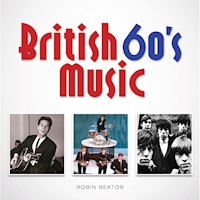
The 1960s was simply the most exciting decade in music history known to man. The eruption of talent after the discovery of the Mersey Sound, spearheaded of course by the Fab Four, changed the world. What was special was that for a glorious and colourful short period of time, hardly a week went by without some new creative talent emerging on our airwaves, some new direction in music being created; something fresh to excite us being presented for our edification. Looking back at the charts week by week you realise that there was an explosion in song writing, a huge growth in people being interested in music and, as a result, some really great sounds were made. In this book we have not tried to quantify that, or even order those bands and artists who helped to change our society and our way of looking at it, but we have created a top 40 of artists that can simply not be ignored for what they did. From artists such as Cliff Richard to The Kinks and Pink Floyd, The Rolling Sones and, of course, The Beatles!
Das E-Book können Sie in Legimi-Apps oder einer beliebigen App lesen, die das folgende Format unterstützen:
Veröffentlichungsjahr: 2020
Ähnliche




















Contents
Introduction: The Sounds of the 60’s - The British Top 40
Special Feature: The Beatles
1 Adam Faith
2 The Animals
3 The Bachelors
4 Bee Gees
5 Billy Fury
6 Billy J Kramer
7 Cat Stevens
8 Cilla Black
9 Cliff and the Shadows
10 Dave Clark Five
11 Dave Dee Dozy Beaky Mick and Titch
12 Donovan
13 Dusty Springfield
14 Englebert Humperdinck
15 Fleetwood Mac
16 Freddie and the Dreamers
17 Georgie Fame
18 Gerry and the Pacemakers
19 Herman’s Hermits
20 Hollies
21 The Jimi Hendrix Experience
22 The Kinks
23 Lulu
24 Manfred Mann
25 The Moody Blues
26 The Move
27 Peter and Gordon
28 Pink Floyd
29 Procol Harum
30 The Rolling Stones
31 Sandie Shaw
32 The Searchers
33 Small Faces
34 The Spencer Davis Group
35 Tom Jones
36 Wayne Fontana and the Mindbenders
37 The Tremeloes
38 The Troggs
39 The Who
40 The Yardbirds
It is amazing looking back to the start of the 1960’s to see just how much has changed in that time. Of course there has been a huge technological shift since then-my Thank Your Lucky Stars annual for 1963 is produced by a TV station that no longer exists (ABC TV) and is full of references to “spinning discs” and when they mention a disc jockey it is a Pete Murray type (i.e. a middle aged man) usually wearing a suit or –heavens above- a roll neck sweater. Now the digital age means we will never see a programme like “Stars”, “Top of the Pops” or “Ready Steady Go!” again. Never will clandestine hours under the bedclothes be spent listening to the like of Radio Luxembourg, Radio Geronimo or the pirate stations like Caroline.
Now we have access to everything, all the time. We don’t even buy records now. And never will young people define themselves simply by what music they listen to. Keith met Mick on that railway platform in Dartford and became friends because they recognised the albums each was carrying, they knew they had an affinity.
But the whole of society has changed from those days and if you step back to the actual start of the decade in question-1960 - then the change is even greater because what we mean now by the 60’s actually kicked off rather neatly right at the end of 1962 with the release of one 7 inch record “Love Me Do”.
“What was special was that for a glorious and colourful short period of time, hardly a week went by without some new creative talent emerging on our airwaves”
The advent of The Beatles and everything that followed on from them, meant that allied to changes in society such as (and in no particular order) the birth control pill, cheap foreign holidays, mass produced cars and televisions, satellite technology, the end of rationing, greater rights for gay people, women, children and the spread of good education for ordinary families, the power of the trade unions and a host of other landmark leaps of progress that the UK was ready for something special.
We became a different society from the class ridden, grey, economically humbled Britain of the 1950’s. From gazing enviously across the Atlantic to our far richer cousins we suddenly were transformed into a nation of achievers and World-beaters. The British invasion, when our groups went over to the States and took their charts by storm, reset the balance -where The Beatles led, we were happy to follow as our empire grew based not on economic might but on wit, talent and style. The 1960’s was the UK’s decade and we enjoyed it, we drove our Mini’s down the King’s Road, wearing flower power clothes, made great films, wrote great books, we won the world cup, the decade ended with Monty Python on top of the comedy world and our music was unrivalled.
The original title screen for ‘Top of the Pops’
The chance to catch a glimpse of a Beatle or one of the many other emerging music stars during the 60’s brought hysteria to fans (mainly girls) all over the world
What was special was that for a glorious and colourful short period of time, hardly a week went by without some new creative talent emerging on our airwaves, some new direction in music was created; something new to excite us was presented for our edification. Looking back at the charts week by week you realise that there was an explosion in song writing, a huge growth in people being interested in music and as a result some really great sounds were made.
In this book we have not tried to quantify that, or even order those bands and artists who helped to change our society and our way of looking at it, but have created a top 40 of artists that simply could not be ignored for what they did. Some of them barely had a hit at all-Pink Floyd for example had two top twenty singles in the decade but who could deny them a place in the top division?
We have also included only those acts that were either British or predominately British-so Frank Ifield is left out as an Aussie whereas the Bee Gees who were born here and based here are in. There is no room for the Beach Boys or Roy Orbison because of their origins, and despite their undoubted influence we have had to omit the likes of Marc Bolan and David Bowie who have been deemed 70’s artists, the Barron Knights and the Bonzo Dogs due to our lack of humour, and a slew of bands like Soft Machine, Caravan, King Crimson, Yes, Chicken Shack and Fairport Convention who although part of the landscape did not do quite enough by 1969 to warrant inclusion.
Then there are the shooting stars like Badfinger, Honeybus, Thunderclap New-man and others like them who were brilliant but are maybe for inclusion next time.
So that’s the 40 artists. There is one other name missing from the main list, and that is the name that everyone would put top of the pile, the one group who every single person would assume is there and that, of course, is The Beatles themselves. And that’s because they start this book because without them then the other 40 would probably not be here at all.
Robin Bextor
It is pretty much impossible to over emphasise the role of The Beatles in creating the amazing explosion that happened right across the Western World in the arts, and especially in music and in particular songwriting.
The 60’s began in earnest on December 15 1962 when Love Me Do entered the UK charts and for the next eight years during the course of the decade we witnessed the transformation of just about every element of life socially, morally, politically and artistically. At the forefront of every sea change were the fab four as they became our cultural pathfinders picking a way through the ever increasing and ever more complex strands of philosophy, politics, artistic expression and showmanship that came our way.
The Mersey Sound wasn’t created just in Liverpool but in Hamburg and it was a unique synthesis that made the Beatles. To begin with at its heart were John and Paul. Their story has become show biz legend- it began with a chance meeting at Woolton Parish Church on June 15th 1956, when McCartney who was 13 and just a couple of days away from his 14th birthday, was introduced to the leader of the schoolboy skiffle band-The Quarrymen-who were about to entertain the milling crowd at the church fete. He was John Lennon, a couple of years older, beer on his breath and a confident swagger in his step.
Now when you visit the church there are souvenir reproduction fete programmes to buy as mementoes of that day, you can go on a Beatles tour (in fact several) taking in Mathew Street and what is left of The Cavern, ride on Beatles’ buses and stay in Beatles’ hotels. Buy Beatles mugs and T-shirts and photograph Beatles’ statues. Visit their old homes, which have become National Trust memorials, walk down Penny Lane and look through the gates at Strawberry Fields. You can walk past LIPA, the academy Paul set up at the old art school and meet taxi drivers who can remember the Casbah, Mona Best (Pete’s Mum), Bob Wooler (the Cavern DJ) Allan Williams (the first manager) and Brian Epstein and the other characters who populate the amazing story.
“They represented a whole class and generation of young people who were baby boomers, who had grown up after the Second World War”
The Beatles’ hairstyles amd fashion sense brought them almost as much attention as their music
Before The Beatles... John and Paul as the Quarrymen play the Rainbow Room of the Casbah Club. August 29th, 1959
That chance meeting was the start of the greatest musical partnership the world has ever known. Between them Lennon and McCartney re-wrote the rulebook on how to create music and how to approach the whole business of music. But we often forget just how good they were. After recruiting the even younger George Harrison to the cause the boys practiced endlessly, they honed their skills; they soaked up the musical tradition that was on their doorsteps and despite the hardships they encountered economically they came through it. They represented a whole class and generation of young people who were baby boomers, who had grown up after the Second World War in a Britain experiencing a grey rationing after losing an empire and a way of life. They were adventurous setting off for Hamburg when under the legal limit, and when they got there they embraced everything that city had to offer.
They were not afraid to befriend the avant-garde German art students they met, and soak up the cultural differences offered. They saw the prostitutes and the pills, the punters and the playboys. They played great long five hour sets, crammed full of every type of music and they immersed themselves in the music of the US GI’s they met in Hamburg-the Blues music of the deep south, the great legends of John Lee Hooker, Carl Perkins, Chuck Berry, Little Richard and the rest. They came home because George was too young, played a storming gig at Litherland Town Hall at the end of 1960 that put them in the forefront of Liverpool bands, then returned for another stint in Hamburg.
It was that second trip that created the real Beatles. Stu Sutcliffe. left the group to stay with Astrid and become an artist, Lennon and McCartney wrote songs and just became as tight as two could be, and George became the master guitarist. They came back penniless but wise -Hamburg had been their music college and university in one go, next was the Cavern, a brief recording session where My Bonnie was laid down-leading to a fan asking in the Nems record store for a copy. That lead its owner Brian Epstein to manage them…every step of this story is so well known and documented. He saw them in the Cavern one lunchtime and realised how they had now amassed a huge local following. Liverpool was ready for the Beatles- pretty soon Brian realised Britain was ready for them too. Fed on a diet of manufactured pop stars by bosses like Larry Parnes that had produced a production line of Elvis clones the UK was living on a diet of tin pan alley songs or US covers. All that changed virtually overnight.
Producer George Martin with the Beatles in April 1963 as they collect their first of many sales awards, this one for a silver disc for the ‘Please Please Me’ single
The Beatles London Palladium poster, 1963
The record industry finally caught up with what was going on, and thank goodness it was George Martin and his little comedy label Parlophone where they landed, because it gave the Beatles a bit of room and a great collaborator. George Martin indirectly got Ringo on board just before the space rocket of success took off, and by then the country was ready. There were thousands of young, mostly men, up and down the country who wanted to be like them. They wanted to travel the world, to be in a family style gang, to be creative and to taste what the new powerful media of television was giving the Beatles-fame, real intercontinental fame and it was a tremendous draw. And through all this you have to remember that they were the first, when Love Me Do crept into the chart in December 1962 there were literally no other guitar/vocal groups on the chart-Cliff and the Shadows was the extent of what we knew. The Beatles’ voices were the first regional and working class voices we heard on radio and on TV, they were funny, witty and irreverent and that became the fashion too. It was hip to be clever.
Playing the Top Ten Club during their second Hamburg stint
The eruption of Beatlemania in 1963 ensured that never again would the public get as close to the group as this Swedish fan did in Stockholm on October 26th
What happened next changed everything, because in less than eight months by which time Please Please Me, From Me To You and She Loves You had all hit number one, the chart was literally awash with new groups from all over the country. And what was more important, like Lennon and McCartney people were writing and creating their own music.




