


4,99 €
Mehr erfahren.
- Herausgeber: A.J.Kingston
- Kategorie: Sachliteratur, Reportagen, Biografien
- Sprache: Englisch
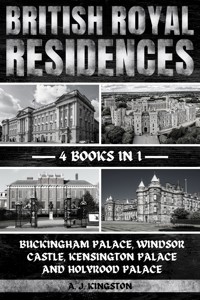
Introducing "British Royal Residences" - A Majestic Journey Through Time and Tradition
Step into the enchanting world of British royalty with our exclusive book bundle, "British Royal Residences." Immerse yourself in the rich history, captivating tales, and architectural wonders of four iconic royal abodes that have shaped the United Kingdom's cultural heritage.
🏰 Book 1: "Buckingham Palace: A Regal Legacy - From Cottage to Crown Jewel" Discover the remarkable transformation of a humble cottage into the crown jewel of the British monarchy. Follow the evolution of Buckingham Palace as it reflects the endurance and adaptability of the British royal family.
🏰 Book 2: "Windsor Castle: A Fortress Fit for Royalty - Through the Ages" Embark on a historical odyssey spanning centuries at the world's oldest inhabited castle. Windsor Castle's enduring majesty and significance offer a glimpse into the very heart of Britain's royal heritage.
🏰 Book 3: "Kensington Palace: A Stately Home with Royal Tales" Explore a palace that has witnessed centuries of history, from royal births and romances to political intrigue and artistic expression. Kensington Palace's elegant gardens and distinguished inhabitants reveal a captivating narrative of love, power, and transformation.
🏰 Book 4: "Holyrood Palace: A Scottish Royal Retreat - From Abbey to Palace" Journey to Scotland and delve into the unique history of Holyrood Palace, with its origins in a medieval abbey. Holyrood embodies Scotland's cultural identity and its connection to its sovereigns.
What Awaits You: 📜 Secrets Unveiled: Discover hidden stories, legends, and intrigues that have unfolded within these hallowed walls. 👑 Lives Lived: Explore the lives of monarchs, residents, and the cultural tapestry that defines each palace. 🌿 Cultural Heritage: Experience the art, culture, and traditions that have thrived within these royal residences. 🏛 Architectural Marvels: Immerse yourself in the grandeur and elegance of these extraordinary palaces.
Whether you're a history enthusiast, architecture aficionado, or simply curious about the royal experience, "British Royal Residences" promises an unforgettable journey through time and heritage.
Preserve your piece of British history and order this limited-time book bundle today. Dive into the world of royalty and explore the stories that have shaped a nation. Don't miss your chance to own this captivating collection of books that celebrate the enduring legacy of British royal residences.
Order now and embark on a majestic journey through the annals of history and tradition!
Das E-Book können Sie in Legimi-Apps oder einer beliebigen App lesen, die das folgende Format unterstützen:
Veröffentlichungsjahr: 2023
Ähnliche




















BRITISH ROYAL RESIDENCES
BUCKINGHAM PALACE, WINDSOR CASTLE, KENSINGTON PALACE AND HOLYROOD PALACE
4 BOOKS IN 1
BOOK 1
BUCKINGHAM PALACE: A REGAL LEGACY - FROM COTTAGE TO CROWN JEWEL
BOOK 2
WINDSOR CASTLE: A FORTRESS FIT FOR ROYALTY - THROUGH THE AGES
BOOK 3
KENSINGTON PALACE: A STATELY HOME WITH ROYAL TALES
BOOK 4
HOLYROOD PALACE: A SCOTTISH ROYAL RETREAT - FROM ABBEY TO PALACE
BY A.J. KINGSTON
Copyright © 2023 by A. J. Kingston
All rights reserved. No part of this book may be reproduced or transmitted in any form or by any means, electronic or mechanical, including photocopying, recording, or by any information storage and retrieval system, without permission in writing from the publisher.
Published by A. J. Kingston
Library of Congress Cataloging-in-Publication Data
ISBN 978-1-83938-491-2
Cover design by Rizzo
Disclaimer
The contents of this book are based on extensive research and the best available historical sources. However, the author and publisher make no claims, promises, or guarantees about the accuracy, completeness, or adequacy of the information contained herein. The information in this book is provided on an "as is" basis, and the author and publisher disclaim any and all liability for any errors, omissions, or inaccuracies in the information or for any actions taken in reliance on such information.
The opinions and views expressed in this book are those of the author and do not necessarily reflect the official policy or position of any organization or individual mentioned in this book. Any reference to specific people, places, or events is intended only to provide historical context and is not intended to defame or malign any group, individual, or entity.
The information in this book is intended for educational and entertainment purposes only. It is not intended to be a substitute for professional advice or judgment. Readers are encouraged to conduct their own research and to seek professional advice where appropriate.
Every effort has been made to obtain necessary permissions and acknowledgments for all images and other copyrighted material used in this book. Any errors or omissions in this regard are unintentional, and the author and publisher will correct them in future editions.
Join Our Productivity Group and Access your Bonus
If you're passionate about history books and want to connect with others who share your love of the subject, joining our Facebook group (search for “History Books by A.J.Kingston”) can be a great way to do so. By joining a group dedicated to history books, you'll have the opportunity to connect with like-minded individuals, share your thoughts and ideas, and even discover new books that you might not have come across otherwise. You can also access your FREE BONUS once you joined our Facebook group called “History Books by A.J.Kingston”.
>> Click Here to Join Our Productivity Group <<
One of the biggest advantages of joining our Facebook group is the sense of community it provides. You'll be able to interact with other history book enthusiasts, ask questions, and share your own knowledge and expertise. This can be especially valuable if you're a student or someone who is just starting to explore the world of history books.
>> Click Here to Follow A.J. Kingston <<
>> Click Here to Download your Free Bonus <<
If you love audiobooks, then joining our YouTube channel that offers free audiobooks on a weekly basis can be a great way to stay entertained and engaged. By subscribing to our channel, you'll have access to a range of audiobooks across different genres, all for free. Not only this is a great opportunity to enjoy some new audiobooks, but it's also a chance to discover new authors and titles that you might not have come across otherwise.
>> Click Here to Join our YouTube Channel <<
Lastly, don’t forget to follow us on Facebook and YouTube by searching for A.J. Kingston.
TABLE OF CONTENTS – BOOK 1 - BUCKINGHAM PALACE: A REGAL LEGACY - FROM COTTAGE TO CROWN JEWEL
Introduction
Chapter 1: The Humble Beginnings
Chapter 2: From Townhouse to Palace
Chapter 3: Residences of Royalty
Chapter 4: Buckingham at War
Chapter 5: A Royal Restoration
Chapter 6: The Queen's Domain
Chapter 7: The Crown Jewel
Chapter 8: Behind Closed Doors
Chapter 9: The Palace in Pop Culture
Chapter 10: A Palace for Generations
TABLE OF CONTENTS – BOOK 2 - WINDSOR CASTLE: A FORTRESS FIT FOR ROYALTY - THROUGH THE AGES
Chapter 1: Ancient Foundations
Chapter 2: The Castle's Medieval Roots
Chapter 3: A Royal Residence Emerges
Chapter 4: Civil War and the Castle's Role
Chapter 5: Restoring Grandeur
Chapter 6: Modern Royalty at Windsor
Chapter 7: The Castle's Enduring Majesty
Chapter 8: Hidden Passages and Untold Stories
Chapter 9: Windsor Castle in Literature and Art
Chapter 10: Preserving the Fortress for the Future
TABLE OF CONTENTS – BOOK 3 - KENSINGTON PALACE: A STATELY HOME WITH ROYAL TALES
Chapter 1: A Mansion Takes Shape
Chapter 2: Kensington Palace Through the Centuries
Chapter 3: Inhabitants of Kensington
Chapter 4: Kensington Palace During Historical Moments
Chapter 5: Renovation and Restoration
Chapter 6: Kensington Palace in the Modern Era
Chapter 7: The Secrets Within
Chapter 8: Kensington Palace in Literature and Culture
Chapter 9: A Palace of Art and Splendor
Chapter 10: Preserving the Stately Home's Legacy
TABLE OF CONTENTS – BOOK 4 - HOLYROOD PALACE: A SCOTTISH ROYAL RETREAT - FROM ABBEY TO PALACE
Chapter 1: The Sacred Ground
Chapter 2: The Abbey's Transformation
Chapter 3: Scottish Sovereigns and Their Palace
Chapter 4: Holyrood During Historic Events
Chapter 5: Renovations and Reimagination
Chapter 6: Modern Royalty at Holyrood
Chapter 7: Intrigues and Legends
Chapter 8: Holyrood Palace in Literature and Art
Chapter 9: A Palace of Scottish Culture
Chapter 10: Preserving Scotland's Royal Retreat
Conclusion
About A. J. Kingston
Introduction
Welcome to the enchanting world of British Royal Residences, a captivating journey through four iconic abodes that have played pivotal roles in the history, tradition, and culture of the United Kingdom. In this exclusive book bundle, we invite you to explore the opulence of Buckingham Palace, the timeless grandeur of Windsor Castle, the stately elegance of Kensington Palace, and the uniquely Scottish charm of Holyrood Palace.
Each of these royal residences boasts a rich tapestry of stories, secrets, and legends that have been woven over centuries. They stand not only as architectural marvels but as living witnesses to the triumphs and challenges of a nation, the evolution of its monarchy, and the enduring spirit of its people.
Our journey begins with "Buckingham Palace: A Regal Legacy - From Cottage to Crown Jewel," where we trace the remarkable transformation of a modest cottage into the crown jewel of the British monarchy. From its humble beginnings to its status as a symbol of regal power and continuity, Buckingham Palace reflects the resilience and adaptability of the British monarchy.
In "Windsor Castle: A Fortress Fit for Royalty - Through the Ages," we embark on a historical odyssey spanning centuries. Windsor Castle, the world's oldest inhabited castle, has been a steadfast presence in the lives of monarchs and the nation itself. Its enduring majesty and significance offer a glimpse into the very heart of Britain's royal heritage.
"Kensington Palace: A Stately Home with Royal Tales" invites us to explore a palace that has witnessed centuries of history, from royal births and romances to political intrigue and artistic expression. Its elegant gardens and distinguished inhabitants reveal a captivating narrative of love, power, and transformation.
Finally, we journey to Scotland in "Holyrood Palace: A Scottish Royal Retreat - From Abbey to Palace." This unique residence, with its origins in a medieval abbey, holds a special place in the hearts of the Scottish people. Holyrood Palace embodies the spirit of Scotland's cultural identity and its connection to its sovereigns.
As we delve into the pages of these books, we will uncover the secrets, legends, and intrigues that have unfolded within the hallowed halls of these royal residences. We will explore the lives lived within their walls, the traditions upheld, and the enduring legacies they represent.
Beyond their architectural splendor, these palaces are symbols of a nation's history and heritage, repositories of art and culture, and living monuments to the enduring legacy of British royalty. Their stories are intertwined with the annals of history, offering us a unique window into the past and a deeper understanding of the present.
We invite you to embark on this royal odyssey, to immerse yourself in the grandeur and elegance of these extraordinary palaces, and to celebrate the rich tapestry of British history, tradition, and culture that they represent. Whether you are a history enthusiast, a lover of architecture, or simply someone with a passion for the royal experience, "British Royal Residences" promises to be an unforgettable journey through time and heritage.
BOOK 1
BUCKINGHAM PALACE: A REGAL LEGACY
FROM COTTAGE TO CROWN JEWEL
BY A.J. KINGSTON
Chapter 1: The Humble Beginnings
Early property ownership in the vicinity of what would eventually become Buckingham Palace can be traced back to the Norman Conquest of England in the 11th century. Following the Battle of Hastings in 1066, William the Conqueror redistributed land, including the future site of Buckingham Palace, to his loyal supporters and nobles in the form of feudal grants. These early landholders played a crucial role in shaping the area's development.
The land that Buckingham Palace now stands on was originally part of a larger region known as Ebury Manor. Ebury Manor covered a significant portion of modern-day central London and included areas such as Pimlico, Belgravia, and Mayfair. The area that would become Buckingham Palace was just a small parcel within this extensive manor.
Over the centuries, the ownership of Ebury Manor and the land surrounding it changed hands multiple times. It passed through various noble families and aristocrats, each leaving their mark on the land through estate developments and renovations. However, it wasn't until the 17th century that the area began to take on the form that would later become Buckingham Palace.
One notable early owner of the land was Lord Goring, who acquired the Ebury Manor estate in the mid-17th century. Lord Goring was responsible for initiating the construction of a large townhouse on the site, which laid the foundation for what would eventually become Buckingham House. The house was designed by the architect William Winde in the English Baroque style, featuring red-brick facades and imposing symmetry.
The estate changed hands once again in the early 18th century when it was purchased by Sir Charles Sheffield. During his ownership, significant additions and alterations were made to the house. These changes included the expansion of the main building and the creation of formal gardens. The house became known as Sheffield House during this period.
In 1761, Buckingham House underwent another change in ownership when it was purchased by King George III as a private residence for his wife, Queen Charlotte. This marked a pivotal moment in the history of the property, as it became associated with the British royal family.
It wasn't until the early 19th century, during the reign of King George IV, that the transformation of Buckingham House into Buckingham Palace truly began. George IV engaged the renowned architect John Nash to redesign and expand the building, turning it into a grand palace befitting a monarch. Nash's design incorporated elements of the emerging neoclassical style, with a grand colonnaded entrance and a central dome.
The renovations and expansions of Buckingham Palace continued throughout the 19th century, with each successive monarch leaving their architectural imprint on the palace. Queen Victoria, who ascended to the throne in 1837, played a significant role in the palace's development. She oversaw the addition of the East Wing and the construction of the Marble Arch, which initially served as the palace's main entrance.
Buckingham Palace also saw important historical events unfold within its walls. It was here that Queen Victoria held her first Council of State and received foreign dignitaries. The palace was at the center of various state functions and ceremonies, cementing its role as a symbol of British monarchy and power.
The 20th century brought both challenges and transformations to Buckingham Palace. It endured damage during World War II but was subsequently repaired and refurbished. The palace's state rooms were opened to the public during the summer months, allowing visitors to experience its opulence firsthand.
In recent decades, Buckingham Palace has undergone extensive restoration and renovation efforts to ensure its structural integrity and preserve its historical significance. These efforts have included updates to the electrical and plumbing systems, as well as improvements to accessibility and sustainability.
Today, Buckingham Palace stands as not only a royal residence but also a symbol of British history and tradition. It continues to serve as a venue for state banquets, official receptions, and ceremonial events. Visitors from around the world flock to the palace to witness the Changing of the Guard ceremony and explore its magnificent State Rooms during the annual summer opening.
In summary, the history of Buckingham Palace is a testament to the evolution of a piece of land from early property ownership through the hands of various owners and architects to its current status as an iconic royal residence and symbol of British monarchy. The palace's journey from a small parcel of land in medieval England to the grand architectural masterpiece we know today is a fascinating narrative of architectural innovation, historical significance, and enduring tradition.
"The Cottage on the Outskirts" represents a significant chapter in the early history of Buckingham Palace, a chapter that unveils the humble beginnings of what would eventually become one of the world's most iconic royal residences.
Long before the grandeur of Buckingham Palace graced the city of London, the site was home to a simple cottage. This unassuming structure, located on the outskirts of London, stood in stark contrast to the opulent palace that stands today. The cottage's history is a testament to the transformation of the land and the ambitions of those who shaped it.
The origins of the cottage date back to the early 17th century. During this time, the area surrounding Buckingham Palace was primarily rural, with open fields and meadows stretching out into the countryside. It was a location chosen for its tranquility and proximity to nature, far removed from the bustling heart of London.
The cottage itself was a modest dwelling, constructed with practicality in mind rather than architectural splendor. It likely served as a residence for estate workers or tenants who tended to the land and livestock in the surrounding area. The cottage's inhabitants lived a life closely connected to the rhythms of rural existence, far removed from the intrigues and grandeur of the royal court.
As the centuries passed, the fate of this humble cottage became intertwined with the changing fortunes of the surrounding land. The ownership of the estate shifted from one landowner to another, and each had their own vision for the property. While the cottage remained, it was gradually dwarfed by the ambitious architectural projects that would eventually transform the landscape.
It wasn't until the 18th century that the cottage on the outskirts began its transformation into something greater. Under the ownership of Lord Goring, the house saw significant expansion and improvements, setting the stage for what would later become Buckingham House. This marked the beginning of the transition from cottage to palace, though it was a transition that would take several more decades to complete.
The cottage on the outskirts, with its rustic charm and unassuming presence, serves as a poignant reminder of the palace's modest origins. It stands in stark contrast to the grandeur that Buckingham Palace represents today. The journey from this simple cottage to the magnificent royal residence that Buckingham Palace has become is a testament to the enduring history and evolution of this iconic landmark.
"A Royal Acquisition" signifies a pivotal moment in the history of Buckingham Palace, as it reflects the transition of the property from private ownership to the hands of the British monarchy, setting the stage for its transformation into a royal residence.
The acquisition of Buckingham Palace by the British monarchy can be traced back to the 18th century. At that time, the property was known as Buckingham House and was owned by a series of private individuals and noble families. The house, while significant, was not yet the grand palace that we know today; it was an elegant townhouse situated on the outskirts of London.
The turning point came in 1761 when King George III purchased Buckingham House as a private residence for his wife, Queen Charlotte. This marked the first step in the property's journey toward becoming a royal palace. The acquisition of Buckingham House was part of a broader trend among European monarchs during this period to establish grand residences in or near their respective capitals.
The decision to acquire Buckingham House was influenced by various factors, including its convenient location, proximity to St. James's Palace (the principal royal residence at the time), and the desire to have a more private and comfortable home for the royal family. The purchase of the property was also seen as a strategic move to strengthen the monarchy's presence in London.
After the acquisition, significant changes and renovations were made to Buckingham House to make it more suitable for royal use. However, it was still primarily used as a private residence for the reigning monarch and their family, rather than an official royal palace.
It wasn't until the early 19th century, during the reign of King George IV, that the transformation of Buckingham House into a palace truly began. George IV commissioned the renowned architect John Nash to redesign and expand the building, incorporating elements of the neoclassical style that was popular at the time. This marked a significant shift in the property's purpose and identity.
Nash's architectural vision for Buckingham Palace included a grand colonnaded entrance and a central dome, giving the palace its iconic facade. The renovations and expansions continued throughout the 19th century, with each successive monarch leaving their mark on the palace's design and layout.
Buckingham Palace also played a role in various historical events and ceremonies during its evolution into a royal residence. It was here that Queen Victoria held her first Council of State, and it became a venue for significant state banquets and receptions.
Today, Buckingham Palace stands not only as a symbol of British monarchy and power but also as a representation of the transition from private ownership to royal acquisition. The journey of this property, from an elegant townhouse to a grand palace, reflects the changing fortunes and aspirations of the British monarchy over the centuries. The acquisition of Buckingham Palace was a pivotal moment that set the stage for its transformation into the iconic royal residence it is today.
Chapter 2: From Townhouse to Palace
"Architectural Transformations" represents a crucial phase in the history of Windsor Castle, where the castle's design, structure, and appearance evolved over the centuries, reflecting the changing tastes, needs, and aspirations of the British monarchy.
The architectural transformations of Windsor Castle began with its origins as a motte-and-bailey castle during the reign of William the Conqueror in the 11th century. This early design featured a wooden keep atop a mound (motte) and a surrounding fortified enclosure (bailey). It served primarily as a military stronghold and symbol of Norman authority over the region.
However, as the castle's role shifted from a military stronghold to a royal residence, significant architectural changes were introduced. During the reign of Henry II in the 12th century, the wooden keep was replaced with a stone Round Tower, which still stands at the center of the castle today. This marked the beginning of Windsor Castle's transformation into a more comfortable and functional royal residence.
Subsequent monarchs continued to expand and renovate Windsor Castle. King Edward III, in the 14th century, initiated a program of expansion that included the construction of St. George's Chapel, a masterpiece of medieval architecture that remains a highlight of the castle complex. The chapel's stunning Gothic design and decorative features added a new level of architectural grandeur to Windsor Castle.
The Tudor era also left its mark on the castle, with significant additions and renovations carried out during the reigns of Henry VII and Henry VIII. These changes included the creation of new royal apartments and the construction of the Great Hall, which featured an impressive hammerbeam roof and intricate heraldic designs.
In the 17th century, during the reign of Charles II, Windsor Castle underwent further transformations. Sir Christopher Wren, the renowned architect behind St. Paul's Cathedral in London, was commissioned to redesign and modernize parts of the castle. His work included the remodeling of the state apartments and the construction of the South Wing.
The Georgian era brought about another wave of changes to the castle's appearance. George III and his architect, James Wyatt, oversaw the renovation and expansion of Windsor Castle, adding the iconic George IV Gateway and the Royal Library.
The 19th century saw extensive restoration efforts under the guidance of architect Sir Jeffry Wyatville. His work included the remodeling of the State Apartments in the Gothic Revival style, giving them the grandeur that visitors can still witness today.
The most devastating transformation to Windsor Castle occurred in 1992 when a fire broke out, causing significant damage to the Upper Ward. This event led to a massive restoration effort to repair and rebuild parts of the castle, with careful attention to preserving its historical and architectural integrity.
In recent times, Windsor Castle has undergone further renovation and modernization projects to ensure its structural integrity, accessibility, and sustainability.
Today, Windsor Castle stands as a testament to the centuries of architectural transformations it has undergone. Its architectural evolution reflects not only the changing tastes and styles of different eras but also the enduring importance of the castle as a symbol of British royalty and a functioning royal residence.
"The Influence of George IV" represents a significant period in the architectural history of Buckingham Palace, as King George IV's reign had a profound impact on the palace's design, style, and overall appearance.
George IV, who reigned from 1820 to 1830, was known for his extravagant and lavish lifestyle. He had a deep appreciation for art, culture, and architecture and was determined to transform Buckingham House, as it was then known, into a grand and opulent royal residence that would reflect his taste and status.
One of the most notable influences of George IV on Buckingham Palace was his engagement of the renowned architect John Nash. George IV appointed Nash as the principal architect responsible for the redesign and expansion of Buckingham House. Nash was already well-known for his work in the emerging Regency style, which emphasized classical and neoclassical design elements.
Under George IV's patronage, Nash embarked on an ambitious project to transform Buckingham House into a palace that would rival the grandeur of European royal residences. The existing structure underwent a dramatic architectural transformation. Nash's design incorporated elements of the emerging neoclassical style, characterized by symmetry, columns, and elegant proportions.
The most iconic feature of Nash's design was the creation of a grand colonnaded entrance facing St. James's Park. This imposing entrance, known as the Marble Arch, gave Buckingham Palace its distinctive facade and sense of grandeur. The palace's central dome and other architectural elements also contributed to its regal appearance.
Nash's vision for Buckingham Palace extended beyond the exterior. He redesigned and expanded the interior to accommodate the royal family's needs and the grandeur befitting a monarch. Lavish state rooms, reception halls, and private apartments were all part of Nash's grand design.
The interior decor of Buckingham Palace during George IV's reign reflected the opulence of the Regency period. Luxurious materials such as marble, silk, and gilded woodwork were used to adorn the palace's rooms. Elaborate chandeliers, fine artworks, and exquisite furnishings were also part of the palace's decor.
In addition to the architectural and interior design changes, George IV's influence extended to the gardens and surroundings of Buckingham Palace. He commissioned landscaping projects that transformed the palace grounds into a beautiful and serene setting, complete with gardens, lawns, and pathways.
It is important to note that George IV's extravagant vision for Buckingham Palace came at a significant cost. The extensive renovations and construction efforts resulted in substantial expenses, leading to financial challenges for the monarch and criticisms from the public and Parliament.
George IV did not live to see the completion of all of his architectural plans for Buckingham Palace. He died in 1830, and his successor, King William IV, continued some of the work but also faced financial constraints. The palace's transformation into its present form took several more decades, with successive monarchs leaving their architectural imprint on the building.
Today, Buckingham Palace stands as a testament to the influence of George IV on its architectural design and style. His ambitious vision and patronage of John Nash played a pivotal role in shaping the palace into the grand and iconic royal residence that it is today, representing an enduring legacy of the Regency era in British architecture and culture.
"The Palace Takes Shape" marks a significant phase in the architectural evolution of Buckingham Palace, as it details the construction and development of the palace during the reigns of various monarchs and architects.
The palace's transformation from Buckingham House into a grand royal residence began in earnest during the early 19th century, under the patronage of King George IV and the architectural guidance of John Nash. This period was marked by the ambitious expansion and redesign of the existing structure.
One of the most iconic features that emerged during this phase was the creation of the grand colonnaded entrance, known as the Marble Arch, facing St. James's Park. This entrance, designed by Nash, would become synonymous with Buckingham Palace and symbolized its regal stature. The Marble Arch was a testament to Nash's neoclassical design sensibilities, characterized by symmetry and classical architectural elements.
As the palace took shape under Nash's direction, it underwent significant alterations both inside and out. Nash designed and remodeled numerous rooms and spaces within the palace to accommodate the needs of the royal family and official functions. Lavish state rooms, reception halls, and private apartments became integral parts of the palace's interior.
The exterior of Buckingham Palace, with its imposing colonnades and central dome, continued to evolve during this period. Nash's vision for the palace's architecture extended to the gardens and surroundings, where landscaping projects transformed the palace grounds into a beautiful and serene setting.
Despite the grandeur of the plans, financial constraints and challenges emerged as the palace took shape. The extensive renovations and construction efforts incurred substantial expenses, leading to criticisms and financial difficulties for the monarch. This aspect of the palace's history reflects the complex interplay between architectural ambition and fiscal responsibility.
The reign of King George IV did not see the completion of all the architectural plans for Buckingham Palace. He passed away in 1830, and his successor, King William IV, continued some of the work. However, it would take several more decades and the involvement of subsequent monarchs and architects for Buckingham Palace to reach its present form.
The architectural transformations of Buckingham Palace also reflected the changing architectural styles and sensibilities of the times. While Nash's neoclassical design left a lasting imprint on the palace, later renovations and additions would incorporate elements of Victorian and Edwardian architectural styles.
Today, Buckingham Palace stands as a testament to the palace's evolution and the architectural vision of various monarchs and architects. "The Palace Takes Shape" encapsulates the grand ambition and enduring legacy of Buckingham Palace as it transitioned from a modest townhouse on the outskirts of London to the iconic royal residence and symbol of British monarchy that it is today.
Chapter 3: Residences of Royalty
"Notable Royal Residents" is a fascinating chapter in the history of Kensington Palace, chronicling the distinguished members of the British royal family who have called the palace home over the centuries. Their occupancy has left an indelible mark on the palace's history and legacy.
Kensington Palace's association with British royalty can be traced back to the late 17th century when it was acquired by King William III and Queen Mary II. Their decision to make Kensington Palace their primary residence elevated its status to that of a royal palace. It was during their reign that significant renovations were carried out to transform the palace into a comfortable and fitting royal residence.
One of the most renowned residents of Kensington Palace was Queen Victoria, who ascended to the throne in 1837. Victoria was born at Kensington Palace in 1819 and spent much of her early life there. It was also at Kensington Palace that she received the news of her accession to the throne. Her connection to the palace is commemorated today by the statue of Queen Victoria in the gardens.
Queen Victoria's association with Kensington Palace extended to her family as well. She married Prince Albert at the palace in 1840, and they raised their children there. The palace became a hub of family life for the royal couple, and it is closely associated with the upbringing of their children, including future King Edward VII.
Another notable royal resident was Princess Diana, who lived at Kensington Palace during her marriage to Prince Charles and after their separation. The public's affection for Princess Diana made Kensington Palace a place of pilgrimage and tribute following her tragic death in 1997. The palace's Sunken Garden, renamed the "White Garden," was dedicated to her memory and remains a place of remembrance.
Kensington Palace also saw the residency of other prominent members of the royal family, including King George II and Queen Caroline, as well as various princes and princesses throughout history.
In addition to its royal residents, Kensington Palace has been associated with numerous historical events and royal ceremonies. It has served as a venue for official receptions, state banquets, and diplomatic meetings.
Today, Kensington Palace continues to play a significant role in the life of the British royal family. It is the official residence of several members of the royal family, including the Duke and Duchess of Cambridge, and serves as their London residence. The palace also houses the offices of various royal charities and organizations.
The history of "Notable Royal Residents" at Kensington Palace serves as a testament to the palace's enduring significance in the life of the British monarchy. It is a place where royal history and contemporary life intersect, making it a symbol of the monarchy's continuity and connection to the past.
"The Changing Face of Buckingham Palace" offers a glimpse into the palace's architectural transformations and evolution over the centuries, reflecting the evolving tastes, needs, and aspirations of the British monarchy.
Buckingham Palace's history can be traced back to its humble beginnings as a simple cottage on the outskirts of London. The property underwent various architectural changes as it passed through different owners and nobles, gradually taking on a more substantial form.
The palace's transformation into a grand royal residence began during the reign of King George IV in the early 19th century. George IV engaged the architect John Nash to redesign and expand Buckingham House, as it was then known. Nash's vision incorporated elements of the neoclassical style, featuring a grand colonnaded entrance and a central dome, giving the palace its iconic facade.
Subsequent monarchs, including Queen Victoria, made their own contributions to the palace's architecture and layout. Victoria oversaw the addition of the East Wing and the construction of the Marble Arch, which initially served as the palace's main entrance.
The palace's interior underwent significant renovations and redesigns, reflecting the changing tastes of each era. Lavish state rooms, reception halls, and private apartments were added to accommodate the needs of the royal family and official functions.
The 20th century brought both challenges and transformations to Buckingham Palace. It endured damage during World War II but was subsequently repaired and refurbished. The palace's state rooms were opened to the public during the summer months, allowing visitors to experience its opulence firsthand.
In recent decades, Buckingham Palace has undergone extensive restoration and renovation efforts to ensure its structural integrity and preserve its historical significance. These efforts have included updates to the electrical and plumbing systems, as well as improvements to accessibility and sustainability.
The palace continues to serve as the official residence and administrative headquarters of the British monarch in London. It is also a venue for state banquets, official receptions, and ceremonial events, symbolizing the enduring role of the monarchy in British society.
"The Changing Face of Buckingham Palace" is a testament to the palace's architectural journey, from its modest beginnings to the grand royal residence that stands today. It reflects the intersection of history, tradition, and modernity, making Buckingham Palace not only a symbol of British monarchy but also a living piece of architectural heritage.
"Lives Lived within the Palace Walls" delves into the rich tapestry of individuals and families who have resided at Kensington Palace, providing a glimpse into the personal stories, experiences, and contributions of those who called it home.
Kensington Palace's history as a royal residence can be traced back to the late 17th century when it was acquired by King William III and Queen Mary II. Their residency elevated the palace's status to that of a royal residence, and it became a hub for significant moments in British history.
One of the most notable residents of Kensington Palace was Queen Victoria, who was born there in 1819 and spent her early years within its walls. Victoria's ascension to the throne in 1837 marked a pivotal moment in British history, and her life and reign left an indelible mark on the palace's legacy. Kensington Palace was also where she received the news of her accession to the throne.
Victoria's association with the palace extended to her family as well. She married Prince Albert at the palace in 1840, and they raised their children there. The palace played a central role in the upbringing of the royal children, including future King Edward VII.
Princess Diana, another prominent figure in Kensington Palace's history, lived there during her marriage to Prince Charles and following their separation. Her presence at the palace made it a place of great public interest, and the outpouring of grief and tributes that followed her untimely death in 1997 turned the palace into a focal point for commemorating her memory.
Kensington Palace also housed other members of the royal family, including King George II and Queen Caroline, as well as various princes and princesses throughout history. These residents left their own marks on the palace's history through their personalities, contributions, and legacies.
In addition to its royal residents, Kensington Palace has been associated with significant historical events and royal ceremonies. It has served as a venue for official receptions, state banquets, and diplomatic meetings.
Today, Kensington Palace continues to play a significant role in the life of the British royal family. It serves as the official residence of several members of the royal family, including the Duke and Duchess of Cambridge. The palace is also home to the offices of various royal charities and organizations.
"Lives Lived within the Palace Walls" offers a multifaceted view of Kensington Palace, showcasing its historical, personal, and cultural significance. It serves as a reminder of the enduring connection between the palace and the individuals who have shaped the course of British history and society.
Chapter 4: Buckingham at War
"Buckingham Palace During World War I" delves into a pivotal period in the palace's history, highlighting its role and experiences during one of the most significant global conflicts of the 20th century.
World War I, which raged from 1914 to 1918, had a profound impact on Buckingham Palace and the British royal family. At the outbreak of the war, Buckingham Palace was the official London residence of King George V and Queen Mary.
The war brought about a series of changes and challenges for Buckingham Palace. One of the most notable transformations was the palace's adaptation to wartime conditions. The palace became a hub of activity related to the war effort. It was used as a base for the Royal Army Medical Corps, and the Victoria Memorial in front of the palace was used for recruitment drives and rallies.
Buckingham Palace also faced the impact of the war on a personal level. Many members of the royal family were directly affected by the conflict. King George V's cousin, Tsar Nicholas II of Russia, was overthrown during the Russian Revolution, leading to significant changes in European geopolitics.
The war had a profound impact on public sentiment and the monarchy's role. As anti-German sentiments rose, the royal family, which had German roots, faced challenges in navigating public opinion. In response to this, King George V changed the family's surname from the House of Saxe-Coburg and Gotha to the House of Windsor in 1917.
The war also saw Buckingham Palace coping with the effects of air raids and bombings on London. Like many parts of the city, the palace was not immune to the threat of aerial attacks. In 1917, a German Gotha bomber conducted a daylight raid over London, and Buckingham Palace was among the targets. The palace was damaged during the raid, serving as a stark reminder of the war's impact on London and its landmarks.
Despite the challenges and changes brought about by World War I, Buckingham Palace remained a symbol of stability and continuity during a time of great upheaval. The royal family's steadfast presence and support for the war effort contributed to the palace's role in maintaining morale and national unity.
After the war's conclusion in 1918, Buckingham Palace continued to be a focal point for various events and ceremonies related to the conflict's aftermath, including memorial services and remembrance events.
"Buckingham Palace During World War I" serves as a reminder of the palace's resilience and the royal family's role in navigating the challenges of a world at war. It underscores the palace's historical significance as a symbol of national unity and continuity during a time of unprecedented global conflict.
"The Palace in World War II" unveils the significant role and experiences of Buckingham Palace during one of the most tumultuous periods in modern history, World War II.
World War II, which spanned from 1939 to 1945, had profound effects on Buckingham Palace and the British royal family. At the outbreak of the war, Buckingham Palace was the official residence of King George VI and Queen Elizabeth (later known as the Queen Mother).
The war brought about dramatic changes to the daily life and routines of Buckingham Palace. As London became a target for German air raids, the palace faced the threat of bombings. It was not immune to the destruction caused by the Blitz, a series of sustained bombing raids on London by Nazi Germany. In September 1940, a bomb struck the palace, causing significant damage to the north side, including the Royal Chapel.
During the Blitz and subsequent air raids, King George VI and Queen Elizabeth chose to remain at Buckingham Palace, despite the risks. Their decision to stay in London and share in the hardships and dangers faced by the British people garnered immense respect and admiration.
The palace also played an active role in the war effort. It was used as a center for war planning and coordination. The Royal Family, including Princesses Elizabeth (now Queen Elizabeth II) and Margaret, supported the war effort by making morale-boosting visits to bombed areas and military hospitals.
Buckingham Palace's role extended to the broader war effort as well. The balcony of the palace became the site of numerous iconic moments, including the celebration of Victory in Europe (VE) Day on May 8, 1945, when large crowds gathered outside the palace to celebrate the end of the war in Europe. The image of King George VI, Queen Elizabeth, and the royal family appearing on the balcony remains an enduring symbol of that historic moment.
The palace also hosted various wartime leaders and dignitaries during the war, including Allied commanders and political leaders who came to London for important war conferences.
After World War II, Buckingham Palace continued to play a role in post-war rebuilding and recovery efforts. The palace's resilience and the steadfast presence of the royal family served as a symbol of continuity and unity during a time of immense challenge and change.
"The Palace in World War II" serves as a reminder of Buckingham Palace's enduring significance during times of adversity. It underscores the royal family's commitment to sharing the experiences of the British people during a period of unprecedented global conflict and the palace's role as a symbol of strength, hope, and continuity in the face of great challenges.
"The Palace as a Target" sheds light on the vulnerability of Buckingham Palace during times of conflict, as it became a prominent target for enemy forces, particularly during World War II.
Buckingham Palace, as the official residence of the British monarch, has always been a symbol of the British monarchy and a significant cultural and historical landmark. However, its symbolic importance also made it a target for attacks during times of war.
During World War II, London endured a relentless campaign of aerial bombardment by Nazi Germany, known as the Blitz, which aimed to demoralize and cripple the city. Buckingham Palace, situated in the heart of London, was not immune to these attacks.
One of the most notable incidents occurred on the night of September 13, 1940, when a German Luftwaffe bomber dropped a bomb that struck Buckingham Palace. The impact caused extensive damage to the north side of the palace, including the Royal Chapel. Fortunately, King George VI and Queen Elizabeth (the Queen Mother) were unharmed, having sought refuge in a safer part of the palace.
The attack on Buckingham Palace sent shockwaves throughout the country. The damage to this iconic symbol of British sovereignty served as a poignant reminder that no place in London was immune from the horrors of war.
The palace's vulnerability to attacks was not only a result of its symbolic significance but also its location in the heart of London. During the Blitz, enemy aircraft targeted strategic locations, including landmarks, government buildings, and transportation hubs. Buckingham Palace's central location made it a prime target.
Despite the damage inflicted upon the palace, King George VI and Queen Elizabeth chose to remain at Buckingham Palace throughout the war, a decision that resonated with the British people and conveyed a sense of solidarity and resilience. The royal family's presence during these trying times played a crucial role in boosting morale and uniting the nation.
The palace's situation as a target was not limited to World War II. During World War I, as well, concerns arose about the palace being exposed to air raids, leading to certain precautionary measures.
In the post-war years, efforts were made to restore and repair the damage to Buckingham Palace. Today, the scars of wartime attacks are largely gone, but the history of the palace as a target serves as a poignant reminder of the challenges and sacrifices faced by the British people during times of conflict.
"The Palace as a Target" underscores the resilience of Buckingham Palace and the British monarchy in the face of adversity. It also highlights the enduring symbolism and historical significance of the palace, which remains an iconic representation of British heritage and continuity.
Chapter 5: A Royal Restoration
"Post-War Rehabilitation" illuminates the determined efforts undertaken to restore Buckingham Palace to its former grandeur in the aftermath of World War II.
World War II had taken a toll on Buckingham Palace, particularly during the Blitz when the palace was bombed and suffered significant damage. The rehabilitation and restoration of the palace represented a significant undertaking, reflecting the determination to rebuild and recover after the war.
After the war ended in 1945, a comprehensive restoration plan was put in place to repair the damage sustained by Buckingham Palace. The restoration work encompassed not only the structural repairs but also the preservation of the palace's historical and architectural integrity.
One of the most visible aspects of the post-war rehabilitation was the repair of the bomb-damaged areas, including the north side of the palace and the Royal Chapel. Skilled craftsmen and artisans were employed to meticulously reconstruct the damaged sections, ensuring that the palace's original appearance was faithfully restored.
Beyond the physical repairs, the interior of Buckingham Palace also underwent extensive restoration work. Lavish state rooms, reception halls, and private apartments that had been damaged during the war were meticulously refurbished and redecorated. These spaces were returned to their former splendor, utilizing historical records and original designs to recreate their regal interiors.
The restoration efforts extended to the gardens and surroundings of the palace as well. The landscaping and exterior areas were rehabilitated to their pre-war condition, ensuring that the palace maintained its grandeur both inside and out.
The successful completion of the post-war rehabilitation of Buckingham Palace was a testament to the commitment to preserve the historical and cultural significance of this iconic royal residence. The palace's restoration served as a symbol of renewal and resilience in the face of the devastating impact of the war.
Today, Buckingham Palace stands as a shining example of post-war rehabilitation, showcasing the dedication to preserving a national treasure and ensuring that it continues to serve as a symbol of British heritage and continuity. The restoration of the palace reflects not only the physical reconstruction but also the enduring importance of the monarchy and its traditions in the life of the nation.
"Modernization and Preservation" explores the delicate balance between updating and preserving Buckingham Palace to meet contemporary needs while safeguarding its historical and cultural significance.
Buckingham Palace has evolved over the centuries, with various monarchs and architects leaving their marks on the palace's design and layout. This evolution has often involved a careful blend of modernization and preservation.
In the modern era, the demands placed on Buckingham Palace have evolved. It serves as the official London residence of the British monarch and plays host to various state events, official receptions, and ceremonies. The palace also houses the offices of the royal household, serving as the administrative hub for various royal functions and charities.
The need to modernize the palace's facilities to accommodate these contemporary functions has been evident. Upgrades to electrical, plumbing, and security systems have been necessary to ensure the safety and functionality of the palace. These modernizations are often carried out with utmost care to minimize the impact on the palace's historic fabric.
Preservation efforts have been equally crucial in maintaining Buckingham Palace's historical and architectural significance. The palace's historical interiors, including the lavishly decorated state rooms, reception halls, and private apartments, have been meticulously maintained and preserved. Skilled craftsmen and conservators have worked to restore and safeguard the palace's artistic and architectural treasures.
The balance between modernization and preservation has also extended to the palace's gardens and surroundings. Landscaping projects have aimed to enhance the palace's exterior spaces while preserving the historical character of the gardens and their features.
In recent years, sustainability and energy efficiency have become essential considerations in the modernization efforts at Buckingham Palace. These initiatives aim to reduce the palace's environmental impact while ensuring its long-term sustainability as a royal residence.
While the need for modernization is evident, there is a commitment to preserving Buckingham Palace's historical integrity. The delicate balance between these two objectives underscores the palace's role as a symbol of British heritage and continuity.
Today, Buckingham Palace stands as a testament to the successful interplay between modernization and preservation. It continues to serve as a functioning royal residence, a venue for state events, and a symbol of the monarchy's enduring presence. The careful stewardship of Buckingham Palace ensures that it remains a living piece of architectural heritage and a cherished national symbol for generations to come.
"The Greening of Buckingham Palace" delves into the efforts to make Buckingham Palace more environmentally sustainable and eco-friendly, reflecting contemporary concerns about environmental conservation and sustainability.
In recent years, there has been a growing recognition of the need to address environmental issues and reduce carbon footprints across various sectors, including heritage and historic buildings like Buckingham Palace. The initiative to "green" Buckingham Palace has aimed to align the historic royal residence with modern sustainability goals.
One of the key aspects of the greening effort has been to improve the palace's energy efficiency. This has involved updating and modernizing the palace's heating, cooling, and lighting systems to reduce energy consumption. The installation of energy-efficient technologies and renewable energy sources, such as solar panels, has been considered to decrease the palace's reliance on non-renewable energy.
Another focus of the greening initiative has been waste reduction and recycling. Buckingham Palace has implemented recycling programs and initiatives to minimize waste production and promote responsible disposal practices. These efforts contribute to reducing the palace's environmental impact and promoting sustainable waste management.
The palace's gardens and surrounding areas have also been a part of the greening effort. Landscaping projects have incorporated eco-friendly practices such as water conservation, native plantings, and sustainable gardening techniques. These changes not only enhance the aesthetics of the palace grounds but also promote biodiversity and conservation.
Furthermore, Buckingham Palace has sought to raise awareness and educate visitors and the public about sustainability and environmental conservation. Exhibitions, educational programs, and initiatives focused on sustainable practices have been introduced to engage and inform those who visit the palace.
The greening of Buckingham Palace is in line with broader efforts to promote sustainability and environmental stewardship in the United Kingdom and beyond. It reflects a commitment to reducing the ecological footprint of historic and iconic landmarks while preserving their historical and cultural significance.
Ultimately, "The Greening of Buckingham Palace" represents a proactive response to the pressing challenges of climate change and environmental degradation. By modernizing its systems, embracing sustainable practices, and raising awareness, Buckingham Palace aims to serve as a model for responsible environmental stewardship, ensuring that this iconic royal residence continues to stand for centuries to come in harmony with the planet.




