


4,99 €
Mehr erfahren.
- Herausgeber: A.J.Kingston
- Kategorie: Geisteswissenschaft
- Sprache: Englisch
Uncover the Rich Tapestry of the Silk Road's Past and Present
Are you ready to embark on an extraordinary journey through time and across continents? Dive into the captivating world of the Silk Road with our exclusive book bundle, the "SILK ROAD CHRONICLES." This meticulously curated collection delves deep into the heart of one of history's most iconic and influential trade networks.
BOOK 1 - SILK ROADS OF ANTIQUITY: Trade and Cultural Exchange in the Ancient World
Step back in time to explore the origins and early routes of the Silk Road. Discover how ancient civilizations engaged in the exchange of goods, ideas, and cultures that shaped the world we know today. Unearth the secrets of the fabled Silk Road caravans, the timeless allure of silk, and the crossroads where art, religion, and ideas converged.
BOOK 2 - SILK ROAD EMPIRES: The Medieval Era of Silk and Spice
Travel through the medieval era of the Silk Road, a time when empires rose and fell, and the scent of spices filled the air. Journey alongside merchants and explorers as they navigate the treacherous routes, uncovering the riches of distant lands. Immerse yourself in the stories of thriving Central Asian trading capitals and the crossroads of faith where religions mingled and transformed.
BOOK 3 - SILK ROAD REVIVAL: From Marco Polo to the Age of Exploration
Experience the Renaissance of the Silk Road as adventurers like Marco Polo embark on epic journeys. Discover the tales of exploration, diplomacy, and innovation that reshaped the world. From Venice to Xi'an, follow in the footsteps of those who bridged East and West, creating a legacy that still resonates today.
BOOK 4 - MODERN SILK ROAD: Globalization and the 21st Century Belt and Road Initiative
Fast forward to the 21st century and witness the revival of the Silk Road on a global scale. Delve into the ambitious Belt and Road Initiative, where nations are connected by vast infrastructure projects and economic cooperation. Explore the digital Silk Road, environmental sustainability, and the challenges and controversies surrounding this modern marvel.
Why Choose the SILK ROAD CHRONICLES?
- Comprehensive Exploration: This bundle offers a comprehensive exploration of the Silk Road's history, culture, and its enduring impact on the modern world.
- Expertly Curated: Each book is authored by experts in their respective fields, ensuring accuracy and depth of knowledge.
- Rich Visuals: Immerse yourself in the Silk Road's beauty with stunning visuals, maps, and illustrations that bring history to life.
- Timeless Relevance: The Silk Road's legacy continues to shape global trade, diplomacy, and cultural exchange, making this bundle a valuable resource for understanding our interconnected world.
Whether you're a history enthusiast, a cultural explorer, or simply curious about the world's most famous trade network, the SILK ROAD CHRONICLES will take you on an unforgettable voyage through time and across continents. Grab this exclusive bundle today and embark on an adventure that will forever change the way you see the world. Don't miss out on this opportunity to own a piece of history – order now!
Das E-Book können Sie in Legimi-Apps oder einer beliebigen App lesen, die das folgende Format unterstützen:
Veröffentlichungsjahr: 2023
Ähnliche













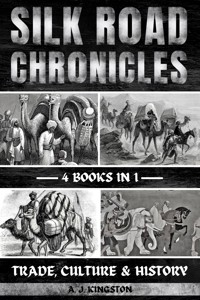
SILK ROAD CHRONICLES
TRADE, CULTURE & HISTORY
4 BOOKS IN 1
BOOK 1
SILK ROADS OF ANTIQUITY: TRADE AND CULTURAL EXCHANGE IN THE ANCIENT WORLD
BOOK 2
SILK ROAD EMPIRES: THE MEDIEVAL ERA OF SILK AND SPICE
BOOK 3
SILK ROAD REVIVAL: FROM MARCO POLO TO THE AGE OF EXPLORATION
BOOK 4
MODERN SILK ROAD: GLOBALIZATION AND THE 21ST CENTURY BELT AND ROAD INITIATIVE
BY A.J. KINGSTON
Copyright © 2023 by A. J. Kingston
All rights reserved. No part of this book may be reproduced or transmitted in any form or by any means, electronic or mechanical, including photocopying, recording, or by any information storage and retrieval system, without permission in writing from the publisher.
Published by A. J. Kingston
Library of Congress Cataloging-in-Publication Data
ISBN 978-1-83938-458-5
Cover design by Rizzo
Disclaimer
The contents of this book are based on extensive research and the best available historical sources. However, the author and publisher make no claims, promises, or guarantees about the accuracy, completeness, or adequacy of the information contained herein. The information in this book is provided on an "as is" basis, and the author and publisher disclaim any and all liability for any errors, omissions, or inaccuracies in the information or for any actions taken in reliance on such information.
The opinions and views expressed in this book are those of the author and do not necessarily reflect the official policy or position of any organization or individual mentioned in this book. Any reference to specific people, places, or events is intended only to provide historical context and is not intended to defame or malign any group, individual, or entity.
The information in this book is intended for educational and entertainment purposes only. It is not intended to be a substitute for professional advice or judgment. Readers are encouraged to conduct their own research and to seek professional advice where appropriate.
Every effort has been made to obtain necessary permissions and acknowledgments for all images and other copyrighted material used in this book. Any errors or omissions in this regard are unintentional, and the author and publisher will correct them in future editions.
Join Our Productivity Group and Access your Bonus
If you're passionate about history books and want to connect with others who share your love of the subject, joining our Facebook group (search for “History Books by A.J.Kingston”) can be a great way to do so. By joining a group dedicated to history books, you'll have the opportunity to connect with like-minded individuals, share your thoughts and ideas, and even discover new books that you might not have come across otherwise. You can also access your FREE BONUS once you joined our Facebook group called “History Books by A.J.Kingston”.
>> Click Here to Join Our Productivity Group <<
One of the biggest advantages of joining our Facebook group is the sense of community it provides. You'll be able to interact with other history book enthusiasts, ask questions, and share your own knowledge and expertise. This can be especially valuable if you're a student or someone who is just starting to explore the world of history books.
>> Click Here to Follow A.J. Kingston <<
>> Click Here to Download your Free Bonus <<
If you love audiobooks, then joining our YouTube channel that offers free audiobooks on a weekly basis can be a great way to stay entertained and engaged. By subscribing to our channel, you'll have access to a range of audiobooks across different genres, all for free. Not only this is a great opportunity to enjoy some new audiobooks, but it's also a chance to discover new authors and titles that you might not have come across otherwise.
>> Click Here to Join our YouTube Channel <<
Lastly, don’t forget to follow us on Facebook and YouTube by searching for A.J. Kingston.
TABLE OF CONTENTS – BOOK 1 - SILK ROADS OF ANTIQUITY: TRADE AND CULTURAL EXCHANGE IN THE ANCIENT WORLD
Introduction
Chapter 1: The Birth of the Silk Road: Origins and Early Routes
Chapter 2: Caravans and Camels: Ancient Trade Networks and Logistics
Chapter 3: Silk and Spice: Commodities that Shaped the Ancient World
Chapter 4: Cultural Crossroads: Art, Religion, and Ideas along the Silk Road
Chapter 5: Silk Road Empires: From the Han Dynasty to the Roman Empire
Chapter 6: The Role of Oasis Cities: Trading Hubs of the Ancient Desert
Chapter 7: Diplomacy and Conflict: Empires' Interactions along the Silk Road
Chapter 8: The Silk Road's Maritime Connections: From East to West by Sea
Chapter 9: The Silk Road's Enduring Legacy: How It Shaped Our Modern World
Chapter 10: Revival and Rediscovery: Tracing the Silk Road in the 21st Century
TABLE OF CONTENTS – BOOK 2 - SILK ROAD EMPIRES: THE MEDIEVAL ERA OF SILK AND SPICE
Chapter 1: Rise of the Khans: Mongol Conquests and the Silk Road
Chapter 2: Silk, Spices, and Sufis: Cultural Flourishing along the Silk Road
Chapter 3: The Road to Samarkand: Central Asian Trading Capitals
Chapter 4: Crossroads of Faith: Religious Encounters and Transformations
Chapter 5: The Silk Road under Siege: Mongol Invasions and Turbulence
Chapter 6: From Venice to Xi'an: European and Chinese Explorations
Chapter 7: Artisans of the Silk Road: Craftsmanship and Innovation
Chapter 8: The Silk Road's Fragile Threads: Plagues and Pandemics
Chapter 9: The Legacy of Silk and Spice: Modern Resonance of Medieval Trade
Chapter 10: Rediscovering Forgotten Routes: Modern Expeditions along the Silk Road
TABLE OF CONTENTS – BOOK 3 - SILK ROAD REVIVAL: FROM MARCO POLO TO THE AGE OF EXPLORATION
Chapter 1: Marco Polo's Odyssey: An Italian Explorer on the Silk Road
Chapter 2: The Silk Route Rediscovered: European Intrigue and Interest
Chapter 3: In Search of Spice: Vasco da Gama and the Maritime Silk Road
Chapter 4: The Silk Road's Renaissance: Cultural Exchange and Innovation
Chapter 5: East Meets West: Diplomacy and Conflict along the Silk Road
Chapter 6: Trading Empires: The Ottoman and Safavid Silk Road Connections
Chapter 7: The Silk Road's Cartographers: Navigating New Horizons
Chapter 8: Silk and Silver: The Economics of Global Trade
Chapter 9: Silk Road Dreams: Myths and Realities of Exploration
TABLE OF CONTENTS – BOOK 4 - MODERN SILK ROAD: GLOBALIZATION AND THE 21ST CENTURY BELT AND ROAD INITIATIVE
Chapter 1: The Belt and Road Vision: Reimagining the Silk Road for the 21st Century
Chapter 2: China's Economic Silk Road: Trade and Investment Across Continents
Chapter 3: The Digital Silk Road: Technology and Connectivity in the Modern Era
Chapter 4: Infrastructure Diplomacy: Building Bridges, Ports, and Rails
Chapter 5: The Cultural Silk Road: Soft Power and Exchange in a Globalized World
Chapter 6: Challenges and Controversies: Debates Surrounding the Belt and Road Initiative
Chapter 7: Geopolitical Chessboard: The Silk Road's Impact on International Relations
Chapter 8: Silk Road Sustainability: Environmental Concerns and Initiatives
Chapter 9: Voices from the Silk Road: Stories of People and Communities
Chapter 10: The Future of the Silk Road: Projections and Possibilities in a Changing World
Conclusion
About A. J. Kingston
Introduction
The Silk Road, a vast network of ancient trade routes, is not just a chapter in history; it's a tapestry of human civilization woven across time and space. A journey along these routes reveals the profound impact of trade, culture, and history on our world. Welcome to the "SILK ROAD CHRONICLES: Trade, Culture & History," an extraordinary book bundle that invites you to explore the rich, interconnected history of the Silk Road.
In this captivating collection, we embark on an odyssey that spans millennia, from the origins of the Silk Road in antiquity to its resurgence in the 21st century. Across four meticulously curated volumes, we delve deep into the heart of this iconic trade network, revealing the stories of merchants, explorers, and cultures that shaped our global heritage.
BOOK 1 - SILK ROADS OF ANTIQUITY: Trade and Cultural Exchange in the Ancient World
Our journey begins at the dawn of history, tracing the birth of the Silk Road and the early routes that connected civilizations. Uncover the mysteries of ancient trade networks, the allure of silk and spice, and the vibrant exchange of art, religion, and ideas that defined the ancient world.
BOOK 2 - SILK ROAD EMPIRES: The Medieval Era of Silk and Spice
Next, we step into the medieval era, where empires rise and fall, and the fragrance of spices fills the air. Join merchants and explorers on treacherous journeys, as they traverse the Silk Road's winding paths, discovering the riches of distant lands. Immerse yourself in the stories of thriving Central Asian trading capitals and the crossroads of faith where religions converged.
BOOK 3 - SILK ROAD REVIVAL: From Marco Polo to the Age of Exploration
Our odyssey continues with the revival of the Silk Road during the age of exploration. Venture alongside legendary figures like Marco Polo as they embark on epic journeys, forging diplomatic connections and sparking innovation. From Venice to Xi'an, witness the pivotal moments that bridged East and West, leaving a lasting legacy.
BOOK 4 - MODERN SILK ROAD: Globalization and the 21st Century Belt and Road Initiative
Fast forward to the 21st century, where the Silk Road experiences a renaissance on a global scale. Dive into the ambitious Belt and Road Initiative, where nations are linked by vast infrastructure projects and economic collaboration. Explore the digital Silk Road, environmental sustainability, and the contemporary debates surrounding this modern marvel.
With the "SILK ROAD CHRONICLES," you'll embark on a journey that transcends time, connecting ancient traditions to modern realities. This bundle offers a comprehensive exploration of the Silk Road's history, culture, and its enduring influence on our interconnected world. Each volume, expertly authored and richly illustrated, invites you to uncover the mysteries and wonders of this iconic trade route.
So, join us on this remarkable expedition through the ages, where the Silk Road's vibrant tapestry of trade, culture, and history awaits. It's time to unravel the secrets of the past and discover the enduring legacy of the Silk Road in the present. Let the adventure begin.
BOOK 1
SILK ROADS OF ANTIQUITY
TRADE AND CULTURAL EXCHANGE IN THE ANCIENT WORLD
BY A.J. KINGSTON
Chapter 1: The Birth of the Silk Road: Origins and Early Routes
Silk, an exquisite and luxurious fabric known for its softness and sheen, has a history steeped in ancient Chinese culture. The production of silk dates back to the Neolithic period, with China being the birthplace of this remarkable textile. This fascinating journey into the origins and techniques of ancient Chinese silk production reveals the ingenuity of early Chinese civilization.
The Legend of Silk's Discovery
The legend of silk's discovery is a captivating tale in Chinese folklore. According to legend, Empress Leizu, the wife of the mythical Yellow Emperor, was wandering in the palace garden when a cocoon fell into her cup of tea. As she tried to retrieve it, she discovered that the cocoon's thread could be unwound. Fascinated by this revelation, she began to cultivate silkworms and unravel their cocoons, thus pioneering the art of silk production.
Sericulture: The Art of Raising Silkworms
Silk production begins with sericulture, the practice of rearing silkworms. The primary species used in ancient China was the Bombyx mori silkworm. These silkworms feed exclusively on the leaves of the mulberry tree, which was cultivated extensively to support the silk industry.
The silkworm's life cycle consists of several stages, including egg, larva, pupa, and adult. The eggs are carefully stored and hatched when the mulberry leaves are in season. Once hatched, the larvae, or silkworms, are voracious eaters, consuming large quantities of mulberry leaves to fuel their growth. As they grow, they molt, shedding their outer skin, until they reach their final larval stage.
Spinning Silk: The Secret of the Cocoon
It is during the final larval stage that the silkworms spin their remarkable cocoons. Each silkworm secretes a fluid containing proteins through small openings in its head, which hardens upon contact with air. This secretion forms a continuous thread that the silkworm winds around itself, creating a protective cocoon. The length and quality of the thread depend on factors such as the silkworm's diet and environmental conditions.
Harvesting Silk Thread
Once the silkworms have completed their cocoons, they enter the pupal stage. To obtain the silk thread, the cocoons are carefully harvested. Traditional methods involved boiling the cocoons in hot water to soften the sericin, a protein that cements the thread. This process allows the silk thread to be unraveled in long, continuous strands. The unraveled silk thread, often several hundred meters in length, is then wound onto spools for weaving.
The careful handling of the cocoons during harvesting and the precise control of the boiling process were essential to producing high-quality silk thread. Any damage to the thread during these stages would reduce its value and quality.
Weaving Silk: Creating Exquisite Fabrics
With the silk thread ready, it was time to move to the next stage of production: weaving. Chinese silk weavers were highly skilled artisans who transformed the raw silk thread into intricate and beautiful fabrics. The weaving process involved the use of traditional wooden looms, where skilled weavers meticulously created patterns and designs.
Silk fabric came in various textures, ranging from fine, lightweight weaves to heavier, more durable textiles. Different weaving techniques, such as plain weave, twill weave, and satin weave, were employed to achieve various patterns and textures in the fabric.
Dyeing and Decoration
After weaving, the silk fabric could be dyed in a variety of vibrant colors using natural dyes extracted from plants, insects, and minerals. Ancient Chinese artisans were renowned for their mastery of dyeing techniques, creating a stunning array of colors that adorned their silk garments.
Decoration of silk fabric often included intricate embroidery, appliqué, and hand-painted motifs. These decorative elements added to the richness and beauty of Chinese silk textiles, making them highly sought after not only within China but also along the Silk Road trade routes.
Silk and the Silk Road
Silk production in ancient China was not only a cultural and artistic achievement but also a significant economic driver. The demand for silk, known as "the fabric of kings," extended far beyond China's borders. The Silk Road, a vast network of trade routes connecting China to the Mediterranean and beyond, played a pivotal role in the spread of silk and other goods.
Chinese silk was highly coveted by neighboring cultures, including the Roman Empire, India, Persia, and Central Asia. Silk became a symbol of luxury and status, with demand fueling extensive trade along the Silk Road. Merchants, travelers, and explorers traversed the arduous routes to exchange goods, ideas, and cultures, with silk being one of the most sought-after commodities.
Silk production and trade were closely guarded secrets in ancient China. The penalty for revealing the secrets of sericulture or smuggling silkworms out of the country was death. Despite these strict regulations, silk production eventually spread to other regions, thanks in part to the efforts of Chinese princesses who married foreign rulers and carried the precious silkworm eggs with them.
Legacy of Ancient Chinese Silk Production
The legacy of ancient Chinese silk production continues to be celebrated and revered to this day. Silk remains a symbol of Chinese culture and craftsmanship, representing both the historical significance of the Silk Road and the artistic achievements of ancient China.
Today, China remains a major producer of silk, and sericulture continues to be practiced using modern techniques. The traditional methods of silk production and weaving have evolved, combining age-old craftsmanship with contemporary technology.
The allure of silk endures, with Chinese silk garments, textiles, and products sought after by people around the world. From the delicate threads spun by silkworms to the intricate patterns woven by skilled artisans, the story of ancient Chinese silk production is a testament to the ingenuity, artistry, and enduring beauty of one of the world's most prized textiles.
The story of trade along the Silk Road, a network of interconnected routes that spanned thousands of miles across Asia, is one of immense historical significance. While the Silk Road conjures images of bustling marketplaces and grand caravans, its early history is intrinsically linked to the nomadic tribes that inhabited the vast expanses of Central Asia. This exploration delves into the dynamic relationship between nomadic tribes and the emergence of early trade routes.
The Nomadic Way of Life
Nomadic tribes, often characterized by their mobility and reliance on herding livestock, were a prominent feature of the Central Asian landscape. These tribes, including the Xiongnu, Scythians, and Huns, roamed the steppes and deserts, living in portable dwellings such as yurts and tending to their herds of horses, sheep, and camels.
Their nomadic way of life was shaped by the harsh and unforgiving terrain of Central Asia. The nomads possessed an intimate knowledge of the land, which enabled them to navigate the vast expanses, find water sources, and exploit seasonal grazing opportunities. This mobility allowed them to adapt to changing environmental conditions and sustain their livelihoods.
Nomads on the Move
The nomadic lifestyle fostered a culture of self-sufficiency, as these tribes needed to produce and carry all their necessities with them. However, their mobility also brought them into contact with settled civilizations along the fringes of their territories. It was at these intersections that early trade interactions began to take shape.
As nomadic tribes crisscrossed the steppes, they encountered sedentary communities engaged in agriculture, crafting, and trade. These encounters often led to the exchange of goods and knowledge. The nomads, with their extensive networks and trade connections, acted as intermediaries between different settled cultures.
The Role of Nomads in Early Trade
Nomadic tribes played a crucial role in the emergence of trade routes across Central Asia for several reasons:
Trade Facilitation: Nomads served as conduits for goods, both luxury and essential, traveling between settled regions. Their knowledge of the terrain and the ability to navigate challenging environments made them indispensable in early trade.
Cultural Exchange: Interaction with settled civilizations exposed nomads to new ideas, technologies, and artistic influences. This cultural exchange enriched the tapestry of nomadic cultures and contributed to their own development.
Security and Protection: The presence of nomadic tribes along trade routes provided a degree of security for merchants and travelers. Nomads often formed alliances with settled powers, offering protection in exchange for tribute or goods.
Mobility and Adaptability: The nomadic lifestyle allowed for swift adjustments to changing trade dynamics. They could easily redirect their routes or shift their focus to exploit emerging opportunities.
Silk Production: Some nomadic tribes, such as the Xiongnu and the later Turkic Khaganates, became involved in the production of silk. This valuable commodity became a cornerstone of trade along the Silk Road.
Early Trade Goods
The goods exchanged along these early trade routes were diverse and often reflected the unique strengths of each culture involved. Nomadic tribes contributed items such as furs, hides, livestock, and horses to trade, while settled civilizations offered agricultural products, pottery, and craftwork.
As trade expanded, luxury items gained prominence. Chinese silk, spices from India, gemstones from Central Asia, and glassware from the Mediterranean became highly sought after commodities. These valuable goods were not only symbols of wealth and prestige but also held cultural and religious significance.
The Silk Road Emerges
The interactions between nomadic tribes and settled cultures laid the foundation for what would become the Silk Road. Over time, these sporadic exchanges evolved into more structured trade networks. The nomadic tribes became key players in the flow of goods, connecting China to the Mediterranean, the Indian subcontinent, and beyond.
Trade routes, both overland and maritime, began to take shape, fostering the exchange of not only goods but also ideas, religions, and technologies. The Silk Road became a conduit for the movement of people, cultures, and knowledge, transforming the world's understanding of connectivity and trade.
Legacy of Nomadic Tribes in Silk Road History
The early contributions of nomadic tribes to Silk Road trade are an essential part of the road's rich history. Their role as intermediaries, protectors, and facilitators of trade paved the way for the grand caravans and cultural exchanges that would come to define the Silk Road in later centuries.
As trade along the Silk Road flourished, the nomadic tribes adapted to changing circumstances. Some, like the Mongols under Genghis Khan, would go on to establish vast empires that controlled vast portions of the Silk Road. Others continued their nomadic way of life, forever influencing the flow of goods and ideas across the Eurasian continent.
In the annals of history, the nomadic tribes of Central Asia stand as enduring witnesses to the birth and evolution of one of humanity's greatest trading networks. Their early trade interactions were the first steps on a journey that would span centuries and bridge the gaps between civilizations, leaving an indelible mark on the world's cultural and economic tapestry.
The Silk Road, renowned for its historical significance as a trade network connecting the East and West, has deep roots in prehistory. Long before the establishment of the grand caravanserais and bustling marketplaces that characterize the Silk Road of antiquity, there existed a web of interconnected routes and early exchanges that laid the foundation for this iconic trade network. This exploration delves into the prehistoric origins of the Silk Road, uncovering the ancient pathways and interactions that paved the way for one of the world's most enduring trade routes.
The Birth of Early Exchange
The story of the Silk Road's prehistoric foundations begins with the earliest human migrations out of Africa and across Eurasia. As these ancient peoples journeyed across vast landscapes, they developed a system of exchange driven by survival and adaptation. The routes they traversed and the resources they exchanged formed the rudimentary threads of what would later become the Silk Road.
Nomadic Movement: Nomadic hunter-gatherer tribes were among the earliest travelers along these routes. They moved in search of food sources, following the migrations of animals and the changing seasons. Their nomadic lifestyles led to interactions with neighboring tribes, marking the beginnings of trade.
Resource Exchange: The exchange of vital resources, such as flint for toolmaking, skins for clothing, and obsidian for weaponry, was integral to early human societies. These exchanges laid the groundwork for understanding the benefits of trade and cooperation.
Emergence of Trails: Over time, well-trodden trails emerged as nomadic routes and paths of movement. These trails connected regions with differing resources and provided the infrastructure for trade. Some of these early paths would eventually evolve into segments of the Silk Road.
Early Crossroads and Cultural Encounters
The prehistoric Silk Road was not merely a conduit for material goods but also a meeting point for diverse cultures and peoples. It was at these crossroads that early cultural exchanges occurred, laying the seeds for the rich tapestry of cultures that would flourish along the Silk Road in later centuries.
Language and Ideas: As nomadic tribes encountered settled communities, linguistic exchange and the sharing of ideas became apparent. Language, myths, and early technologies were transmitted through oral traditions, contributing to the gradual diffusion of cultures.
Material Culture: The exchange of material culture, such as pottery styles and artistic motifs, reflected the merging of different societies. Pottery from one region might be found thousands of miles away, highlighting the long-distance exchanges that were taking place.
Ceremonial Artifacts: Precious and symbolic items, such as ceremonial ornaments and religious artifacts, were traded across vast distances. These items held spiritual and cultural significance, emphasizing the depth of cultural interactions.
Innovations in Transportation and Technology
The prehistoric Silk Road was not confined to footpaths and trails; it was also shaped by early innovations in transportation and technology. These innovations were driven by the practical necessity of facilitating trade and transportation across the challenging terrain of Eurasia.
Domestication of Pack Animals: The domestication of pack animals, such as donkeys, camels, and horses, revolutionized long-distance trade. These animals could carry heavier loads and cover greater distances, making trade more efficient and reliable.
Early Wheeled Vehicles: The development of wheeled vehicles, such as carts and wagons, improved the transport of goods. The invention of the wheel allowed for larger quantities of goods to be moved overland.
Early Metallurgy: Advances in metallurgy led to the creation of metal tools and implements, enhancing the efficiency of agriculture and transportation. This technology facilitated the extraction of resources and the development of trade.
Emerging Trade Routes
While the prehistoric Silk Road lacked the formalized trade networks and organized infrastructure of later eras, it was characterized by a web of emerging trade routes. These routes began to connect distant regions and lay the foundation for the future Silk Road.
Trans-Eurasian Pathways: As early as the Bronze Age, routes began to traverse the Eurasian continent. These paths linked the steppes of Central Asia with the fertile river valleys of Mesopotamia and the Mediterranean, marking the initial steps toward transcontinental trade.
Northern and Southern Routes: Early routes developed both to the north and south of the Eurasian mountain ranges. Northern routes often skirted the northern edge of the Tibetan Plateau, while southern routes navigated the mountainous terrain to access the Indian subcontinent.
Emergence of Hubs: Certain regions began to emerge as trade hubs, facilitating the exchange of goods between distant cultures. These hubs would later evolve into key cities and centers of commerce along the Silk Road.
The prehistoric Silk Road was a tapestry woven from the threads of early human interactions, resource exchanges, and cultural encounters. It was a dynamic network of routes that connected peoples across vast distances, foreshadowing the grandeur of the Silk Road of antiquity.
The emergence of trade, the exchange of ideas, and the early innovations in transportation and technology set the stage for the Silk Road's transformation into a global phenomenon. The prehistoric foundations of the Silk Road remind us that the history of trade and cultural exchange is as ancient as human civilization itself, and its impact endures to this day.
Chapter 2: Caravans and Camels: Ancient Trade Networks and Logistics
The Silk Road, a vast network of trade routes that spanned thousands of miles across Asia, was a lifeline of commerce, culture, and communication between the East and West. Along these ancient trade routes, caravanserais played a pivotal role in facilitating trade and travel. These waystations, often likened to inns or rest stops, were integral to the Silk Road's success and left an enduring mark on the historical landscape. This exploration delves into the significance, functions, and architecture of Silk Road caravanserais.
The Heart of Silk Road Trade
Caravanserais were the beating heart of Silk Road trade. They were strategically positioned at regular intervals along the routes, providing essential support for merchants, travelers, and their caravans of goods. These oasis-like structures offered a range of functions that were vital to the success of long-distance trade.
Lodging and Shelter: Caravanserais provided a safe and comfortable place for travelers and their animals to rest. The architecture of these complexes often featured a central courtyard surrounded by guestrooms, stables, and storage areas. Travelers could find refuge from the elements and fatigue within their protective walls.
Commerce and Trade: Caravanserais were bustling hubs of commerce. Merchants from diverse regions congregated to buy, sell, and exchange goods. This vibrant marketplace atmosphere contributed to the cross-cultural exchange of goods and ideas.
Protection and Security: Security was paramount along the Silk Road, where caravans faced threats from bandits and natural hazards. Caravanserais offered a fortified and guarded environment, enhancing the safety of travelers and their cargo.
Cultural Exchange: These waystations were more than just places of commerce; they were centers of cultural exchange. Travelers from various regions and backgrounds converged at caravanserais, sharing stories, languages, and traditions. This cross-cultural interaction enriched the tapestry of the Silk Road.
Architectural Marvels
Caravanserais were architectural marvels, designed to cater to the practical needs of travelers and the demands of the trade. Their designs incorporated several distinctive features:
Central Courtyard: The heart of a caravanserai was its central courtyard, which provided a secure space for animals and goods. It often featured a well for water and a mosque for prayer, emphasizing the importance of both practical and spiritual needs.
Covered Arcades: Surrounding the central courtyard, covered arcades offered shelter and storage space. Merchants could display their goods in these areas, creating a lively marketplace atmosphere. The arcades also provided shade from the sun and shelter from inclement weather.
Bastions and Fortifications: Caravanserais were fortified structures, complete with thick walls, towers, and defensive features. These elements served to protect travelers and their possessions from threats, be they human or natural.
Multiple Levels: Some caravanserais featured multi-story designs, with guestrooms and additional storage areas on upper levels. These designs maximized the use of space within the confines of the caravanserai.
Architectural Diversity: While there were common elements in caravanserai design, architectural styles and features varied across regions. Persian caravanserais, for instance, often showcased intricate tilework and elaborately designed gateways.
Legacy of Caravanserais
Caravanserais were more than just functional structures; they were symbols of connectivity and cultural exchange. They left an indelible mark on the regions they occupied, serving as focal points for trade and cultural interactions.
Economic Significance: Caravanserais stimulated economic activity, fostering trade and regional development. They played a vital role in the exchange of commodities such as silk, spices, precious metals, and textiles.
Cultural Exchange: These centers of cross-cultural interaction contributed to the dissemination of ideas, religions, and artistic influences. They were crucibles of cultural exchange, where travelers from distant lands shared stories, knowledge, and traditions.
Historical Significance: Many caravanserais have stood the test of time, and some have been designated as UNESCO World Heritage Sites. They serve as tangible reminders of the Silk Road's historical significance and enduring legacy.
Architectural Inspiration: The architectural features of caravanserais have influenced subsequent building designs and served as a source of inspiration for contemporary structures. Elements such as covered arcades and central courtyards can still be found in modern buildings today.
Silk Road caravanserais were vital to the flourishing of one of the world's most iconic trade networks. They provided essential services, fostered cultural exchange, and protected travelers and their cargo. These architectural marvels were not just waystations; they were the lifeblood of the Silk Road, embodying the spirit of connectivity and cooperation that defined this ancient trade route. Their legacy endures as a testament to the enduring significance of trade, cultural exchange, and human ingenuity.
In the arid and unforgiving landscapes of deserts around the world, camels have long been hailed as the "ships of the desert." These remarkable animals have played a pivotal role in the history and survival of desert-dwelling communities, serving as dependable modes of transportation and embodying the resilience required to thrive in some of Earth's harshest environments. This exploration delves into the significance of camels as desert transport, their unique adaptations, and their enduring cultural and historical impact.
Adaptations for Desert Life
Camels are uniquely adapted to desert life, making them ideal candidates for traversing the harsh terrain of arid regions. Their adaptations are marvels of evolutionary engineering:
Water Storage: Camels can survive for extended periods without water, thanks to their ability to store water in their humps. Contrary to popular belief, camels do not store water in their humps; instead, they store fat, which can be converted into water and energy as needed.
Efficient Thermoregulation: Camels have thick fur that provides insulation during cold desert nights and reflects sunlight during the scorching days. They also possess specialized sweat glands that minimize moisture loss, allowing them to tolerate high temperatures.
Strong Limbs and Feet: Camels have sturdy limbs and padded feet, enabling them to walk on shifting sands without sinking. Their strong leg muscles help them endure long treks through the desert.
Energy Conservation: Camels are highly efficient at conserving energy. They can slow their metabolism to reduce water and energy consumption during periods of scarcity.
Dromedaries and Bactrians: There are two primary species of camels used for transport: the dromedary (Camelus dromedarius), with one hump, and the Bactrian camel (Camelus bactrianus), with two humps. Both have been domesticated for thousands of years and serve as valuable resources for desert communities.
Role as Dependable Transport
Camels have served as dependable modes of desert transportation for millennia, fulfilling a range of critical roles:
Caravans and Trade: Camels played a central role in the ancient Silk Road, facilitating trade between the East and West. They carried goods such as silk, spices, precious metals, and textiles across vast desert expanses.
Nomadic Lifestyle: Nomadic cultures, such as the Bedouin of the Arabian Peninsula, have relied on camels as their primary means of transport. These cultures have roamed the desert with their camel herds, supporting a way of life that spans generations.
Exploration and Expeditions: Explorers and adventurers have often turned to camels to navigate uncharted desert territories. Famous expeditions, such as those led by Lawrence of Arabia, employed camels as their mode of transport.
Modern Desert Travel: Even in the modern era, camels continue to play a role in desert travel. Tourists seeking to experience the desert often embark on camel treks, immersing themselves in the timeless beauty of these landscapes.
Cultural and Historical Significance
Camels have left an indelible mark on the cultural and historical fabric of desert regions:
Symbol of Resilience: Camels are revered as symbols of resilience and endurance. Their ability to thrive in harsh environments embodies the spirit of desert-dwelling communities and has inspired countless stories and legends.
Cultural Icons: Camels are cultural icons in regions like the Arabian Peninsula, where they are celebrated in poetry, art, and folklore. They are often portrayed as symbols of hospitality and generosity.
Religious Significance: In some cultures, camels hold religious significance. In Islam, they are mentioned in the Quran and are considered valuable creatures created by Allah.
Economic Assets: Camels are economic assets, providing milk, meat, leather, and wool in addition to their role as transport animals. They are highly valued in the livelihoods of desert-dwelling communities.
Preservation Efforts: Efforts are ongoing to preserve and protect camel populations and their cultural significance. Organizations work to ensure the sustainability of camel husbandry and the welfare of these vital animals.
Camels, with their remarkable adaptations and historical importance, have been indispensable to the desert regions they call home. They are more than just practical transportation; they are living symbols of endurance, cultural heritage, and the profound connection between humanity and the world's most challenging landscapes. Whether they are trekking through shifting sands, carrying precious cargo, or forging bonds with desert communities, camels continue to be the dependable transport of the desert, embodying the spirit of resilience in the face of adversity.
Trade Routes and Safety Measures
The history of trade routes is a tale of connectivity and commerce, but it is also marked by challenges and risks. Throughout the ages, as goods and ideas flowed along these routes, traders and travelers had to devise innovative safety measures to protect themselves and their valuable cargo. This exploration delves into the historical significance of trade routes and the creative safety measures that have been employed to ensure the success of long-distance trade.
The Crucial Role of Trade Routes
Trade routes have served as conduits for the exchange of goods, culture, and knowledge across vast distances. These routes often connected distant regions, fostering economic growth and cultural exchange. The Silk Road, the Mediterranean Sea, and the Trans-Saharan trade routes are just a few examples of the many trade networks that have shaped human history.
Silk Road: The Silk Road, which spanned from China to the Mediterranean, facilitated the exchange of silk, spices, precious metals, and other valuable commodities. It played a pivotal role in connecting the East and West and was a conduit for ideas, religions, and technologies.
Mediterranean Sea: The Mediterranean Sea was a bustling hub of trade and civilization, linking Europe, Africa, and Asia. Ancient civilizations such as the Phoenicians and the Greeks relied on maritime trade routes for prosperity.
Trans-Saharan Trade Routes: The Trans-Saharan trade routes crisscrossed the Sahara Desert, connecting North Africa with sub-Saharan Africa. These routes facilitated the exchange of gold, salt, ivory, and other goods.
Challenges and Risks Along the Routes
Trade routes were not without challenges and risks. Navigating long distances, traversing treacherous terrain, and facing threats from bandits and natural elements were all part of the journey.
Banditry: Bandits and marauders often lurked along trade routes, preying on caravans and travelers. They posed a significant threat to the safety of goods and individuals.
Harsh Terrain: Many trade routes crossed challenging landscapes, including deserts, mountains, and dense forests. Travelers had to contend with extreme weather conditions, lack of water, and rugged terrain.
Political Instability: Trade routes often passed through regions with shifting political allegiances and conflicts. The stability of these regions could impact the safety of trade.
Environmental Hazards: Natural disasters such as sandstorms, floods, and earthquakes could pose risks to caravans and ships traveling along trade routes.
Creative Safety Measures
Over the centuries, traders and travelers developed ingenious safety measures to mitigate these challenges and risks. These measures were essential for the survival and success of trade routes.
Caravan Organization: Caravans traveling along land routes often employed strict organizational structures. Merchants and travelers banded together, forming larger groups that provided security through numbers.
Fortified Waystations: Along major trade routes, fortified waystations and caravanserais were constructed. These structures provided shelter, protection, and resupply points for travelers. Caravanserais along the Silk Road, for instance, were vital for safety and rest.
Maritime Convoy Systems: In the maritime trade, convoy systems were established to protect ships from pirates. A convoy would consist of armed vessels that provided security and deterred attacks.
Camels and Pack Animals: In desert regions, camels and other pack animals played a crucial role in transportation. Their ability to carry heavy loads made them invaluable for transporting goods safely.
Diplomacy and Alliances: Traders and merchants often forged alliances with local rulers and authorities. These alliances provided protection and safe passage through their territories.
Development of Maps and Navigational Tools: The development of accurate maps and navigational tools improved the safety of trade routes. Knowledge of the terrain and accurate charts reduced the risk of getting lost.
Cryptography: Traders used encryption and codes to protect sensitive information about trade routes and valuable cargo. This practice helped safeguard trade secrets and ensure the security of transactions.
Legacy of Trade Routes and Safety Measures
The legacy of trade routes and their safety measures is profound. These routes have left an indelible mark on human history, fostering cultural exchange, economic growth, and the spread of ideas. The safety measures developed along these routes have influenced the evolution of trade, diplomacy, and security practices.
Today, as global trade continues to thrive, modern transportation and communication technologies have significantly reduced the risks associated with long-distance trade. However, the lessons learned from the challenges and safety measures of historical trade routes remain relevant. They serve as a testament to human ingenuity and the enduring quest for connectivity and prosperity across the ages.
Chapter 3: Silk and Spice: Commodities that Shaped the Ancient World
Silk, with its luxurious texture, lustrous sheen, and remarkable history, is often hailed as the most coveted fabric in the world. For millennia, silk has been synonymous with opulence, trade, and cultural exchange. This exploration delves into the significance of silk, its historical journey from China to the West, and its enduring allure as a symbol of refinement and elegance.
The Birth of Silk
The story of silk begins in ancient China, around 2700 BCE. Legend has it that the discovery of silk was made by the Chinese Empress Leizu, who observed silkworms spinning cocoons in her garden. Intrigued, she unraveled the cocoons and discovered the fine threads within. This discovery marked the birth of sericulture, the cultivation of silkworms for silk production.
Silk's Origins:
Silkworm Rearing: The process of silk production starts with the cultivation of silkworms (Bombyx mori). Silkworms are fed mulberry leaves and, during their pupal stage, spin cocoons made of silk threads.
Cocoon Harvesting: Once the silkworms complete their cocoons, they are carefully harvested. The cocoons are then boiled to soften the sericin, a protein that binds the threads together.
Silk Reeling: The softened cocoons are unspun, a process known as silk reeling, to produce long, continuous silk threads.
Weaving: The silk threads are woven into fabric using traditional weaving techniques.
The Silk Road: A Gateway to the West
Silk was a closely guarded secret in ancient China. Its production was a state monopoly, and revealing the secrets of sericulture or silk production was punishable by death. However, silk's allure was too powerful to remain confined within China's borders. The opening of the Silk Road in the 2nd century BCE, a network of interconnected trade routes, marked the beginning of silk's journey to the West.
Silk's Journey Westward:
Marco Polo: One of the most famous Silk Road travelers, Marco Polo, wrote about the wonders of silk during his journey to China in the 13th century. His writings piqued the interest of Europeans in this luxurious fabric.
Silk Trade Routes: Along the Silk Road, silk was traded for other valuable goods, including spices, precious metals, and gemstones. These trade routes facilitated the exchange of not only goods but also cultures, religions, and ideas.
Byzantium and the Mediterranean: Silk became highly sought after in Byzantium (modern-day Istanbul) and the Mediterranean world. The Byzantine Empire became a major center for silk production and trade.
The Silk Road's Impact: The Silk Road played a vital role in connecting the East and West, fostering cultural exchange and technological advancements. Silk, with its exotic origins and elegant qualities, became a symbol of status and refinement in Europe.
Silk as a Symbol of Luxury
Silk's journey from China to the West transformed it from a closely guarded secret to a symbol of luxury, wealth, and sophistication. Its qualities made it highly desirable:
Luxurious Texture: Silk is known for its smooth, soft texture that feels gentle against the skin. It became a favorite among royalty and the elite for its comfort and elegance.
Lustrous Sheen: The natural sheen of silk gives it a radiant appearance. Its ability to reflect light adds to its visual appeal.
Vibrant Colors: Silk dyes easily and retains vivid colors, making it a canvas for intricate patterns and designs.
Breathability: Silk is a natural, breathable fabric that helps regulate body temperature, keeping the wearer cool in hot weather and warm in cold weather.
Versatility: Silk is suitable for a wide range of garments and products, including clothing, accessories, upholstery, and bedding.
Enduring Allure
Silk's allure has endured through the ages, transcending borders and cultures. It remains a fabric of choice for high-fashion couture, traditional garments, and fine home furnishings. The craftsmanship of silk weaving continues to be celebrated, and silk-producing regions like China, India, and Italy are renowned for their exquisite silk products.




