


4,99 €
Mehr erfahren.
- Herausgeber: A.J.Kingston
- Kategorie: Geisteswissenschaft
- Sprache: Englisch
Introducing the "MAYAN KINGDOM" Book Bundle: Unveil the Enigma of Ancient Maya Civilization
Unlock the captivating secrets of the Mayan civilization with our exclusive "MAYAN KINGDOM" book bundle. Delve into the intricate tapestry of Mayan mythology, astronomy, cosmology, and religion that shaped the destiny of an extraordinary civilization. This meticulously crafted collection is your passport to a journey through time, offering a comprehensive exploration of the Mayan legacy across four remarkable books:
Book 1 - Dawning of the Jaguar Empire: Rise of the Mayan Kingdom (300 BCE - 250 CE) Step into the ancient past and witness the birth of a majestic empire. Explore the grandeur of the Mayan Kingdom as it emerges from the shadows of history. Unearth the foundations of their civilization, the birth of urban centers, and the rise of powerful dynasties that shaped their destiny.
Book 2 - Glyphs of Eternal Wisdom: Exploring Mayan Cosmology and Knowledge (600 - 900 CE) Embark on a mesmerizing journey through the heart of Mayan cosmology. Decode the enigmatic glyphs and unravel the intricate web of their astronomical knowledge. Immerse yourself in their sacred calendar systems, celestial alignments, and cosmic perspectives that guided their lives and rituals.
Book 3 - Scepters and Sacrifices: Collapse and Transformation of the Mayan Civilization (900 - 1200 CE) Witness the dramatic transformations and challenges faced by the Mayan civilization during its twilight years. Discover the factors that led to their decline and the resilience of their cultural spirit amidst adversity. Explore the remnants of abandoned cities and unravel the mysteries of their fading glyphs.
Book 4 - Resurgence of the Resplendent Quetzal: Rediscovering the Ancient Mayan Legacy (20th Century - Present) Experience the reawakening of the Mayan legacy in the modern era. From archaeological awakenings to cultural revivals, trace the steps of explorers, scholars, and indigenous communities as they breathe new life into ancient traditions. Delve into the impact of the Mayan civilization on contemporary culture, art, and spirituality.
Why Choose the "MAYAN KINGDOM" Book Bundle?
🌟 Comprehensive Exploration: Dive deep into the multifaceted aspects of Mayan civilization, from its rise to its enduring legacy.
🌟 Expert Insights: Benefit from the expertise of renowned scholars and researchers who bring the Mayan world to life.
🌟 Stunning Visuals: Immerse yourself in vivid illustrations, photographs, and maps that transport you to the heart of Mayan cities and rituals.
🌟 Engaging Narrative: Experience the captivating story of the Mayan civilization through well-crafted prose that bridges the ancient and the modern.
🌟 Thought-Provoking Reflections: Discover the profound impact of the Mayan legacy on our understanding of history, culture, and human spirituality.
Unveil the captivating mysteries of the Mayan Kingdom with the "MAYAN KINGDOM" book bundle. Whether you're an enthusiast of ancient civilizations, a history aficionado, or a seeker of cosmic wisdom, this collection promises an unforgettable journey into the heart of one of the world's most remarkable civilizations. Order now and embark on a voyage through time, myth, and culture that will leave you enriched and inspired.
Das E-Book können Sie in Legimi-Apps oder einer beliebigen App lesen, die das folgende Format unterstützen:
Veröffentlichungsjahr: 2023
Ähnliche









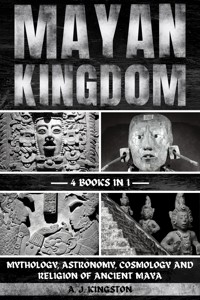
MAYAN KINGDOM
MYTHOLOGY, ASTRONOMY, COSMOLOGY AND RELIGION OF ANCIENT MAYA
4 BOOKS IN 1
BOOK 1
DAWNING OF THE JAGUAR EMPIRE: RISE OF THE MAYAN KINGDOM (300 BCE - 250 CE)
BOOK 2
GLYPHS OF ETERNAL WISDOM: EXPLORING MAYAN COSMOLOGY AND KNOWLEDGE (600 - 900 CE)
BOOK 3
SCEPTERS AND SACRIFICES: COLLAPSE AND TRANSFORMATION OF THE MAYAN CIVILIZATION (900 - 1200 CE)
BOOK 4
RESURGENCE OF THE RESPLENDENT QUETZAL: REDISCOVERING THE ANCIENT MAYAN LEGACY (20TH CENTURY - PRESENT)
BY A.J. KINGSTON
Copyright © 2023 by A. J. Kingston
All rights reserved. No part of this book may be reproduced or transmitted in any form or by any means, electronic or mechanical, including photocopying, recording, or by any information storage and retrieval system, without permission in writing from the publisher.
Published by A. J. Kingston
Library of Congress Cataloging-in-Publication Data
ISBN 978-1-83938-452-3
Cover design by Rizzo
Disclaimer
The contents of this book are based on extensive research and the best available historical sources. However, the author and publisher make no claims, promises, or guarantees about the accuracy, completeness, or adequacy of the information contained herein. The information in this book is provided on an "as is" basis, and the author and publisher disclaim any and all liability for any errors, omissions, or inaccuracies in the information or for any actions taken in reliance on such information.
The opinions and views expressed in this book are those of the author and do not necessarily reflect the official policy or position of any organization or individual mentioned in this book. Any reference to specific people, places, or events is intended only to provide historical context and is not intended to defame or malign any group, individual, or entity.
The information in this book is intended for educational and entertainment purposes only. It is not intended to be a substitute for professional advice or judgment. Readers are encouraged to conduct their own research and to seek professional advice where appropriate.
Every effort has been made to obtain necessary permissions and acknowledgments for all images and other copyrighted material used in this book. Any errors or omissions in this regard are unintentional, and the author and publisher will correct them in future editions.
Join Our Productivity Group and Access your Bonus
If you're passionate about history books and want to connect with others who share your love of the subject, joining our Facebook group (search for “History Books by A.J.Kingston”) can be a great way to do so. By joining a group dedicated to history books, you'll have the opportunity to connect with like-minded individuals, share your thoughts and ideas, and even discover new books that you might not have come across otherwise. You can also access your FREE BONUS once you joined our Facebook group called “History Books by A.J.Kingston”.
>> Click Here to Join Our Productivity Group <<
One of the biggest advantages of joining our Facebook group is the sense of community it provides. You'll be able to interact with other history book enthusiasts, ask questions, and share your own knowledge and expertise. This can be especially valuable if you're a student or someone who is just starting to explore the world of history books.
>> Click Here to Follow A.J. Kingston <<
>> Click Here to Download your Free Bonus <<
If you love audiobooks, then joining our YouTube channel that offers free audiobooks on a weekly basis can be a great way to stay entertained and engaged. By subscribing to our channel, you'll have access to a range of audiobooks across different genres, all for free. Not only this is a great opportunity to enjoy some new audiobooks, but it's also a chance to discover new authors and titles that you might not have come across otherwise.
>> Click Here to Join our YouTube Channel <<
Lastly, don’t forget to follow us on Facebook and YouTube by searching for A.J. Kingston.
TABLE OF CONTENTS – BOOK 1 - DAWNING OF THE JAGUAR EMPIRE: RISE OF THE MAYAN KINGDOM (300 BCE - 250 CE)
Introduction
Chapter 1: Mysteries of the Yucatán: Unveiling Ancient Foundations
Chapter 2: Birth of Civilization: Early Mayan Settlements and Culture
Chapter 3: Celestial Connections: Mayan Astronomy and Cosmology
Chapter 4: Kings and Chronicles: Establishing Early Dynasties
Chapter 5: Cities of Splendor: Flourishing Urban Centers
Chapter 6: Power and Rituals: Religious Practices and Elite Authority
Chapter 7: Glyphs and Chronicles: The Emergence of Mayan Writing
Chapter 8: Trade Routes and Exchange: The Economic Network of the Mayan Kingdom
Chapter 9: Warriors and Warfare: Defending and Expanding the Empire
Chapter 10: Cultural Resplendence: Achievements and Legacies of the Mayan Civilization
TABLE OF CONTENTS – BOOK 2 - GLYPHS OF ETERNAL WISDOM: EXPLORING MAYAN COSMOLOGY AND KNOWLEDGE (600 - 900 CE)
Chapter 1: Dawning of a New Era: Mayan Civilization in the 7th Century
Chapter 2: Sacred Codices Unveiled: Decoding the Mayan Glyphs
Chapter 3: Heavens and Earth: Mayan Views on Cosmology and Creation
Chapter 4: Rituals of Time: Mayan Calendars and Timekeeping Systems
Chapter 5: Temples of Wisdom: Architectural Marvels and Sacred Spaces
Chapter 6: Navigating the Cosmos: Mayan Astronomy and Navigation
Chapter 7: Wisdom Keepers: Priesthood, Scholars, and Keepers of Knowledge
Chapter 8: Artistic Narratives: Mayan Mythology and Storytelling
Chapter 9: Society and Structure: Classes, Gender, and Social Organization
Chapter 10: Legacy of Understanding: Mayan Influence on Modern Thought and Science
TABLE OF CONTENTS – BOOK 3 - SCEPTERS AND SACRIFICES: COLLAPSE AND TRANSFORMATION OF THE MAYAN CIVILIZATION (900 - 1200 CE)
Chapter 1: The Enduring Enigma: Unraveling the Maya in the 10th Century
Chapter 2: Tales from the Terminal Classic: Dynamics Leading to Collapse
Chapter 3: City-States in Decline: Abandonment and Transformation
Chapter 4: Mysteries of the Abandoned: Mayan Sites Frozen in Time
Chapter 5: Between Worlds: Shifts in Mayan Spiritual Beliefs and Rituals
Chapter 6: Fading Glyphs: The Slow Demise of Mayan Script and Record Keeping
Chapter 7: Echoes of Conflict: Warfare and Sociopolitical Unrest
Chapter 8: New Horizons: Mayan Interactions with Emerging Cultures
Chapter 9: Nature's Toll: Environmental Factors in the Mayan Collapse
Chapter 10: Threads of Continuity: The Living Legacy of the Mayan Civilization
TABLE OF CONTENTS – BOOK 4 - RESURGENCE OF THE RESPLENDENT QUETZAL: REDISCOVERING THE ANCIENT MAYAN LEGACY (20TH CENTURY - PRESENT)
Chapter 1: Archaeological Awakening: Early 20th Century Rediscoveries
Chapter 2: Mysteries Unveiled: Decoding Mayan Glyphs and Language
Chapter 3: Cultural Revival: Mayan Heritage in Modern Art and Literature
Chapter 4: Guardians of the Past: Preservation Efforts and Heritage Sites
Chapter 5: Mayan Renaissance: Influence on Contemporary Indigenous Movements
Chapter 6: Sacred Knowledge Renewed: Reclaiming Ancient Mayan Cosmology
Chapter 7: From Chichen Itza to Tikal: Modern Expeditions and Discoveries
Chapter 8: Digital Age Insights: Technology's Role in Mayan Studies
Chapter 9: Reviving Rituals: Contemporary Practices Rooted in Mayan Traditions
Chapter 10: Legacy in Flux: Challenges and Prospects for the Future of the Mayan Legacy
Conclusion
About A. J. Kingston
Introduction
Welcome to a captivating expedition into the heart of one of history's most enigmatic civilizations – the Mayan Kingdom. Our "MAYAN KINGDOM" book bundle invites you to explore the rich tapestry of Mayan mythology, astronomy, cosmology, and religion across four meticulously crafted volumes. From the dawn of their empire to the resurgence of their legacy in the present day, this bundle offers an immersive voyage through time, space, and culture.
Unveiling the Mysteries of the Mayan Civilization
The ancient Maya, renowned for their advanced understanding of the cosmos and their intricate architectural marvels, left behind a legacy that continues to awe and inspire. This meticulously curated collection of books delves deep into the various epochs of the Mayan civilization, illuminating the nuances of their society, beliefs, and profound contributions to human knowledge.
The Four Pillars of Understanding
Book 1 - Dawning of the Jaguar Empire: Rise of the Mayan Kingdom (300 BCE - 250 CE) Step into the primordial days of the Maya as they ascend from scattered settlements to establish a majestic empire. Traverse the lush landscapes, encounter the earliest city-states, and witness the evolution of dynasties that laid the foundation for their remarkable civilization.
Book 2 - Glyphs of Eternal Wisdom: Exploring Mayan Cosmology and Knowledge (600 - 900 CE) Embark on a cosmic exploration, decoding the intricate glyphs that unveil the Mayan understanding of the universe. Immerse yourself in their celestial observations, sacred calendars, and profound connection to the cosmos that guided their rituals and daily lives.
Book 3 - Scepters and Sacrifices: Collapse and Transformation of the Mayan Civilization (900 - 1200 CE) Journey through the twilight of the Mayan civilization, as it grapples with challenges that lead to its transformation. Explore the intricate web of factors that influenced their decline, the mysteries of their abandoned cities, and the enduring spirit that survived the test of time.
Book 4 - Resurgence of the Resplendent Quetzal: Rediscovering the Ancient Mayan Legacy (20th Century - Present) Witness the reawakening of the Mayan legacy in the modern era. Follow explorers, scholars, and indigenous communities as they rediscover ancient wisdom, artistry, and cultural significance. Delve into the profound impact of the Mayan civilization on our contemporary world.
A Tapestry of Insights
As you journey through the pages of the "MAYAN KINGDOM" book bundle, you'll be treated to expertly curated narratives, stunning visuals, and thought-provoking reflections. Each book is a portal to a distinct era, offering a panoramic view of the Mayan Kingdom's evolution, achievements, challenges, and enduring relevance.
From the intricate myths that shaped their spiritual beliefs to the celestial knowledge that guided their rituals, and from the grandeur of their urban centers to the resilience of their cultural spirit, this bundle is a treasure trove of insights waiting to be discovered.
Join us on this extraordinary odyssey into the heart of the Mayan Kingdom. Whether you're an avid history enthusiast, a seeker of cosmic wisdom, or simply curious about the ancient world, the "MAYAN KINGDOM" book bundle promises an immersive and enlightening journey that transcends time and space.
BOOK 1
DAWNING OF THE JAGUAR EMPIRE
RISE OF THE MAYAN KINGDOM (300 BCE - 250 CE)
BY A.J. KINGSTON
Chapter 1: Mysteries of the Yucatán: Unveiling Ancient Foundations
Sacred Cenotes hold a profound place in the ancient Mayan culture, transcending mere physical features to become symbols of spiritual importance. These natural sinkholes, carved over centuries by the dissolution of limestone, are unique to the Yucatán Peninsula, Mexico. The Mayans, recognizing the cenotes as gateways to the underworld, attached profound ritual significance to them, intertwining their cosmology, religious practices, and daily life.
Cenotes were not just water sources but also passages to the Xibalba, the Mayan underworld inhabited by deities and spirits. The Mayans believed that these divine realms were interconnected through the waters of the cenotes, representing a connection between the earthly realm and the spiritual realm. These sacred pools, shimmering with enigmatic depths, became places of reverence, often serving as sites for offerings and rituals. The Mayans would adorn the cenotes with precious objects, pottery, and even human sacrifices, believing that these offerings would bridge the gap between the mortal and divine worlds.
The cenotes’ spiritual importance extended beyond religious rituals. They played a pivotal role in shaping the Mayan society’s water management, serving as vital water sources in the region’s dry climate. Communities settled around these cenotes, thriving through agriculture and trade enabled by the water they provided. These sacred sites, while integral to spiritual practices, also ensured the survival of the civilization itself.
The architecture surrounding the cenotes highlights their significance. El Castillo at Chichen Itza, for instance, was constructed to align with the sun's angles during the equinoxes, casting a shadow that resembles a serpent descending the temple's steps. This incredible architectural alignment is a testament to the Mayans’ understanding of astronomy, timekeeping, and their reverence for the cosmos. The cenotes, central to Chichen Itza’s layout, were part of a greater symbolic framework connecting the earthly, celestial, and spiritual realms.
Archaeological excavations around cenotes have unearthed a plethora of artifacts, providing insights into the Mayan way of life. Pottery, tools, and ceremonial objects found near these sites reflect the intertwining of daily activities and spiritual beliefs. The cenotes’ significance is imprinted in these artifacts, revealing how the Mayans’ lived experiences were deeply entwined with their cosmological understanding.
Today, the cenotes continue to captivate modern explorers, researchers, and spiritual seekers. Their allure lies not only in their historical significance but also in their aesthetic beauty and the sense of wonder they evoke. As researchers make strides in deciphering Mayan glyphs and uncovering ancient texts, these sacred sites provide a tangible connection to the past, validating the knowledge contained in the codices.
Yet, alongside their allure, cenotes also face contemporary challenges. Increased tourism has brought attention to these sites, yet it also raises concerns about their preservation. Balancing accessibility with conservation is a delicate task, as the influx of visitors can impact the delicate ecosystems that have developed around the cenotes over millennia.
In summary, Sacred Cenotes are not just geological formations; they are cultural repositories, spiritual portals, and ecological microcosms. The Mayan reverence for these sinkholes, grounded in their understanding of the cosmos and their place within it, speaks to the intricate interplay between culture, spirituality, and the natural world. As we continue to explore and learn from these sites, it is imperative that we do so with respect and mindfulness, recognizing their role in shaping history and their potential to offer lessons for the future.
The Preclassic Maya period stands as a foundational chapter in the rich tapestry of Mesoamerican history. This era, stretching from around 2000 BCE to 250 CE, provides a vital glimpse into the early development of the Maya civilization, offering valuable insights into their cultural evolution, social structures, and technological advancements.
Tracing the earliest traces of the Preclassic Maya unveils a society marked by innovation and adaptability. Although evidence from this era is more elusive compared to later periods, archeological excavations, architectural remnants, and pottery fragments reveal a people engaged in dynamic interactions with both their environment and neighboring cultures.
During the Preclassic period, the Maya were predominantly an agricultural society, relying on the cultivation of crops like maize, beans, and squash. Settlements began to form, creating the foundation for the complex urban centers that would flourish in subsequent centuries. These early settlements consisted of simple homes and communal spaces, hinting at the beginnings of societal organization.
The emergence of ceremonial architecture is a hallmark of the Preclassic period. Earthen platforms and simple structures evolved into more intricate constructions, reflecting the growing religious and ceremonial importance of certain sites. The construction of pyramids, such as those at Nakbé and Mirador, demonstrates not only the technical prowess of the Preclassic Maya but also their spiritual devotion.
Artifacts from this era, including pottery, figurines, and early forms of Mayan script, hint at a society developing complex symbolic systems. The Olmec influence is notably present, showcasing the interconnectedness of cultures in the region. The establishment of trade networks allowed for the exchange of ideas and goods, contributing to the cultural mosaic that would define the Maya.
Yet, the Preclassic Maya period was not without challenges. Climatic shifts and environmental changes influenced settlement patterns and agricultural practices. These early Maya communities had to adapt to shifting conditions, laying the groundwork for their resilience in the face of future challenges.
The Preclassic Maya laid the groundwork for the grandeur that would unfold in the Classic period. Their achievements, while less flamboyant than later monumental cities, paved the way for the artistic, architectural, and scientific advancements that would become synonymous with the Maya civilization. Theirs was a time of exploration and experimentation, shaping the trajectory of their culture in profound ways.
In contemporary times, the study of the Preclassic Maya remains a vibrant field of research. The deciphering of hieroglyphic texts, the application of advanced archaeological techniques, and the integration of diverse sources provide a more nuanced understanding of this era. These insights illuminate the gradual emergence of the Maya's distinctive identity, reflecting their ability to adapt, innovate, and ultimately lay the foundation for the intricate tapestry of the civilization they would become.
In tracing the earliest traces of the Preclassic Maya, researchers and enthusiasts alike are treated to a glimpse of a society in the throes of transformation. From humble beginnings, these early Maya communities embarked on a journey of cultural and societal development, forging the path for the remarkable achievements that would follow in the centuries ahead.
The monuments of the past stand as resilient testaments to the ingenuity, artistry, and cultural expressions of civilizations long gone. Exploring ancient architecture takes us on a captivating journey through time, unveiling the stories encoded within these magnificent structures that have withstood the tests of centuries.
Ancient architecture transcends mere functional construction; it embodies the values, beliefs, and aspirations of its creators. From the colossal pyramids of Egypt to the intricate temples of Southeast Asia, every architectural marvel speaks to the creativity and resourcefulness of human societies throughout history.
These monuments often serve as reflections of power and authority. In civilizations like ancient Egypt, grandiose pyramids were built as tombs for pharaohs, signifying not only their divine right but also the society's devotion to their rulers. The massive stones used in the construction of these structures demonstrate the engineering prowess of these ancient cultures.
In other instances, architecture was an avenue for spiritual connection. Ancient Greek temples, for example, were designed to harmonize with the natural surroundings while inviting worshippers into a sacred space. The Parthenon in Athens, with its Doric columns and sculptural friezes, was not only a testament to Athenian might but also an homage to the goddess Athena.
Mayan cities in Mesoamerica featured structures like pyramids and plazas that held profound cosmological significance. These architectural wonders often aligned with celestial events, symbolizing the interconnectedness between the earthly and divine realms. Glyph-covered stelae and intricate carvings adorned these structures, narrating the histories and myths of the Mayan civilization.
The beauty of exploring ancient architecture lies in the opportunity to decode these messages from the past. Archaeological excavations, technological advancements, and interdisciplinary research have allowed us to unravel the stories etched into these stones. In recent times, digital reconstructions and virtual tours offer immersive experiences that bring these ancient structures to life once more.
However, the journey of exploration is not without challenges. Preservation efforts are crucial, as time and environmental factors threaten the integrity of these structures. Climate change, tourism, and even urbanization pose risks to these fragile monuments, highlighting the delicate balance between accessibility and conservation.
Furthermore, ancient architecture's exploration is not limited to understanding the past; it also informs the present and future. Architects and urban planners draw inspiration from historical designs, adapting ancient principles to contemporary needs. The lessons learned from ancient construction techniques, sustainable practices, and aesthetic sensibilities continue to resonate in modern design philosophies.
As we explore ancient architecture, we embark on a voyage of discovery, unearthing the stories of civilizations that have shaped our world. These monuments, whether they rise as pyramids, soar as cathedrals, or stand as stone cityscapes, transcend time to bridge the gap between past and present. They remind us of the universality of human creativity, the enduring power of architecture, and the profound impact of the built environment on societies then and now.
Chapter 2: Birth of Civilization: Early Mayan Settlements and Culture
The emergence of agriculture marks a pivotal point in human history, heralding the transition from nomadic hunting and gathering to settled societies dependent on cultivation. This monumental shift laid the groundwork for the development of complex civilizations, altering the course of human existence in profound ways.
Before the advent of agriculture, early human societies roamed the land in search of food, relying on the unpredictable availability of wild plants and animals. However, the realization that certain plants could be cultivated and animals domesticated led to a radical change in lifestyle. This discovery marked the birth of agriculture, fundamentally reshaping human interactions with the environment.
The process of transitioning to agriculture was gradual, spanning thousands of years and occurring independently in various regions around the world. This Neolithic Revolution, as it's often called, occurred in multiple centers of origin, including the Fertile Crescent, Mesoamerica, China, and the Andes. In each region, local ecosystems and available resources influenced the crops and animals that were domesticated.
With the advent of agriculture, humans began to settle in one place. This sedentary lifestyle had far-reaching implications. It allowed for the establishment of permanent communities, which paved the way for the development of social structures, economic specialization, and technological advancements. Surpluses of agricultural produce enabled the rise of non-farming roles, such as artisans, traders, and religious leaders.
Agriculture also facilitated population growth. Stable food sources meant that societies could support larger populations than ever before. Villages turned into towns, and towns into cities, creating hubs of human interaction, culture, and innovation. This demographic shift led to increased interactions between individuals and communities, resulting in the exchange of ideas, technologies, and cultural practices.
The cultivation of crops and the taming of animals were not without challenges. Early agricultural practices required careful observation of natural cycles and weather patterns. Innovations like irrigation, plowing, and crop rotation were developed to maximize yields. Domesticated animals provided not only food but also labor for farming tasks. However, these new practices also tied communities more closely to their environment, making them susceptible to crop failures, pests, and environmental changes.
The emergence of agriculture transformed not only the way humans obtained food but also their relationship with the land. As fields became a central aspect of daily life, humans began to shape the landscape through deforestation, terracing, and irrigation systems. The transition to agriculture also brought about new forms of land ownership, as settled societies had to establish rules and regulations governing land use.
In summary, the emergence of agriculture and the shift to a sedentary lifestyle were monumental turning points in human history. This transition laid the groundwork for the rise of civilizations, with agriculture serving as the catalyst for social complexity, technological advancements, and the establishment of permanent settlements. As we reflect on this transformative period, we gain a deeper appreciation for the innovative spirit of our ancestors and the profound ways in which their choices continue to shape our world today.
The crafting of identity through artifacts and symbolism is a testament to the intricate relationship between material culture, beliefs, and human expression. Throughout history, societies have used objects laden with meaning to communicate their values, social roles, and worldviews, allowing us to glimpse into their rich tapestries of identity.
Artifacts, ranging from everyday objects to intricate works of art, hold a mirror to the beliefs and aspirations of a culture. The crafting of these objects is a deliberate act, often rooted in traditions and passed down through generations. Each artifact carries with it the stories of its creators, the context of its creation, and the significance it holds within a society.
Symbolism is at the heart of crafting identity through artifacts. Objects are imbued with symbols that convey cultural narratives, spiritual beliefs, and social hierarchies. These symbols serve as a language of sorts, allowing individuals within a culture to communicate complex ideas and emotions without uttering a word.
For example, the intricate motifs and patterns adorning pottery from different cultures can reveal not only aesthetic preferences but also the role of the object in daily life and ceremonial practices. A pot's design might reflect local flora and fauna, cosmological beliefs, or historical events, acting as a canvas for storytelling and cultural transmission.
Artifacts also play a role in shaping collective memory. Cultural items like amulets, jewelry, and totems can serve as mnemonic devices, helping a society remember its origins, heroes, and defining moments. Such artifacts can evoke a sense of continuity and shared history, binding individuals within a community through a shared narrative.
The crafting of identity extends to architecture as well. Buildings, whether humble huts or majestic temples, reflect the values and priorities of a culture. Architectural styles, materials, and spatial arrangements are informed by cultural norms and practices. Monuments and structures serve as lasting symbols of a society's achievements, beliefs, and status.
However, the crafting of identity through artifacts is not always a straightforward process. Cultural exchange, trade, and conquest often lead to the blending of symbols and styles. This results in objects that carry multiple layers of meaning, reflecting the diversity and complexity of human interactions.
In modern times, the crafting of identity through artifacts has taken on new dimensions. Globalization, technological advancements, and changing social dynamics have led to the creation of new forms of symbolism. Artifacts like clothing, accessories, and digital avatars serve as extensions of individual and collective identity, often transcending geographical boundaries.
As we examine artifacts and the symbolism they embody, we gain insights into the essence of humanity itself. These objects speak to our innate need to create, communicate, and connect. They remind us that crafting identity is an ongoing dialogue between the past and the present, shaping our understanding of who we are and the narratives that bind us together.
Social organization and early governance are foundational aspects of human societies, serving as frameworks that guide interactions, resolve conflicts, and facilitate cooperation. These systems are crucial in shaping the dynamics of communities and laying the groundwork for the more complex structures that would emerge over time.
In the early stages of human history, social organization was often rooted in kinship and shared responsibilities. Small groups, such as bands or clans, relied on close familial ties to organize tasks, allocate resources, and ensure survival. These groups often had egalitarian structures, where decision-making was collective and leadership roles were fluid.
As societies grew in size and complexity, new challenges emerged. The need to manage resources, settle disputes, and coordinate efforts led to the emergence of more formalized social structures. Tribes and chiefdoms developed, where leaders held positions of authority based on factors such as lineage, charisma, or prowess in hunting or warfare. These leaders often played key roles in mediating conflicts and making decisions for the group.
Early governance systems were closely intertwined with religion and spirituality. Leaders often held dual roles as religious figures, serving as intermediaries between the community and the divine. Rituals and ceremonies played a central role in maintaining social cohesion and reinforcing the authority of leaders. These systems of governance were deeply embedded in cultural narratives, traditions, and belief systems.
In some cases, early governance systems evolved into more centralized forms of power. The transition from chiefdoms to early states marked a significant shift in social organization. Leaders in these states wielded greater authority and controlled larger territories. Bureaucratic structures and formal institutions emerged to manage resources, levy taxes, and enforce laws.
Legal codes and systems of justice also emerged as societies grew more complex. These early legal systems were often based on customary laws and oral traditions. They played a crucial role in maintaining social order, resolving disputes, and upholding the norms of the community.
Early governance was not without challenges. Striking a balance between the needs of the community and the authority of leaders could be difficult. As societies expanded, ensuring fairness and representation became more complex. Rivalries, power struggles, and conflicts over resources were inherent challenges that early governance systems had to address.
The study of social organization and early governance offers insights into the roots of political systems and the evolution of societal structures. It also highlights the interconnectedness of governance, culture, and religion in shaping the ways communities organized themselves. Understanding these early systems helps us appreciate the diversity of human experience and the ways in which societies adapted to their changing environments and needs.
Ultimately, the development of social organization and early governance laid the foundation for the complex societies and governments that we see today. These systems, shaped by cultural beliefs and environmental circumstances, continue to influence how communities organize themselves, make decisions, and navigate the challenges of collective life.
Chapter 3: Celestial Connections: Mayan Astronomy and Cosmology
Stargazing at Copán unveils a profound connection between the ancient Mayans and the cosmos above. This archaeological site, nestled in the lush landscape of present-day Honduras, serves as a celestial observatory that reveals the Mayans' intricate understanding of astronomy and their ability to align their structures with the movements of the heavens.
The Mayans, with their deep reverence for the cosmos, sought to understand the celestial bodies' patterns and cycles. At Copán, this celestial fascination is etched into the very architecture of the site. The Ball Court, for instance, features markers that align with the solstices and equinoxes, demonstrating the Mayans' meticulous tracking of the sun's path throughout the year.
The Hieroglyphic Stairway at Copán is a masterful example of the Mayans' astronomical prowess. This monumental stairway, adorned with intricate glyphs, depicts a dynastic history that spans centuries. Each of the 63 steps represents a specific time period, creating a visual timeline that aligns with significant celestial events. The Mayans encoded their history not only in words but also in the very arrangement of these glyphs, connecting their human history to the rhythms of the stars.
El Caracol, an enigmatic round building at Copán, stands as a testament to the Mayans' advanced understanding of celestial mechanics. This structure's windows align precisely with key astronomical events, such as the movements of Venus and certain lunar phases. The Mayans' ability to predict these celestial occurrences highlights their deep knowledge of planetary motion and their belief in the interconnectedness of earthly and cosmic realms.
The alignment of these structures with celestial events wasn't merely an intellectual exercise; it held profound spiritual significance. The Mayans saw the cosmos as a reflection of their spiritual beliefs and sought to bridge the gap between the human and divine through astronomical observations. Rituals conducted in alignment with specific celestial events were believed to facilitate communication with deities and ensure the prosperity of their civilization.
Stargazing at Copán also serves as a reminder of the Mayans' mastery of mathematics. Their precise calculations allowed them to predict celestial events with remarkable accuracy. The mathematics and geometry inherent in these alignments were woven into their architectural designs, emphasizing the interconnectedness of mathematics, astronomy, and spirituality.
As we look to the skies at Copán, we not only witness the remnants of an ancient civilization's scientific achievements but also a testament to their sense of wonder and awe. The Mayans' ability to align their structures with the cosmos reflects their desire to harmonize with the universe and to participate in the cyclical rhythms that governed both the celestial and earthly realms. Copán invites us to gaze upwards with a renewed appreciation for the interconnectedness of humanity, culture, and the vast expanse of the cosmos.
Cosmic deities and celestial bodies have been entwined in mythology since the dawn of human imagination. Across cultures and civilizations, the stars, planets, and constellations have inspired myths and legends that reflect humanity's desire to understand the mysteries of the universe and their place within it.
In various mythologies, cosmic deities often take on roles that align with celestial phenomena. These deities embody the sun, moon, stars, and planets, shaping the narratives that explain natural cycles and the forces that govern the cosmos. These myths not only provide explanations for the heavens' movements but also offer insights into cultural values, societal norms, and human aspirations.
In ancient Egyptian mythology, Ra, the sun god, embarked on a daily journey across the sky, symbolizing the cycle of life, death, and rebirth. His journey mirrored the sun's path, rising in the east and setting in the west, highlighting the interconnectedness of cosmic and terrestrial realms. Ra's journey represented both the passage of time and the eternal nature of the divine.
The ancient Greeks wove their celestial stories into the constellations. Orion, the hunter, and his faithful canine companion Canis Major are immortalized among the stars. The Pleiades, a cluster of seven stars, is associated with the Seven Sisters of Greek mythology. These myths served as a mnemonic device, aiding navigation and ensuring these cultural stories endured across generations.
In Hindu mythology, Surya, the sun god, rides a chariot across the sky, driving the cycle of day and night. The sun's radiance symbolizes enlightenment and cosmic order. The moon, personified as Chandra, is associated with change and emotion, mirroring the waxing and waning phases of the lunar cycle.
Mayan mythology is interwoven with astronomy, with deities closely linked to celestial events. The Maize God's resurrection is paralleled with the rebirth of the sun each day. The Hero Twins, Hunahpu and Xbalanque, are associated with the sun and moon. The Mayans' reverence for Venus, which they perceived as both the morning and evening star, is reflected in the mythology of the deity Kukulkan.
These cosmic myths often transcend individual cultures, showcasing the shared human fascination with the heavens. Across continents, stories emerge of deities and heroes ascending to the skies or constellations serving as guides. These myths not only provide explanations for the natural world but also offer cultural cohesion and spiritual insight.
The relationship between cosmic deities and mythology extends beyond antiquity. Modern interpretations, like science fiction and fantasy, continue to draw from these age-old narratives. Films, literature, and art pay homage to ancient cosmic stories, reflecting humanity's enduring quest to explore the universe's mysteries.
In exploring cosmic deities and their place in mythology, we encounter the intersection of human imagination and the vastness of the cosmos. These stories illuminate the diverse ways in which cultures have grappled with the celestial realm, seeking to understand not only the movements of the stars but also the larger questions of existence and the divine.
Sacred timekeeping was at the heart of Mayan civilization, and their intricate calendars stand as remarkable achievements in the realms of astronomy, mathematics, and culture. The Mayans' mastery of time was intertwined with their spiritual beliefs, societal organization, and agricultural cycles, revealing a deep understanding of the cosmos and their place within it.
The Mayans developed several calendars, each serving specific purposes. The Tzolk'in, or the Sacred Calendar, consisted of 260 days and played a significant role in religious and divinatory practices. Composed of 20 named days combined with 13 numbers, the Tzolk'in created a 260-day cycle where each day held a distinct energy or deity. This calendar governed rituals, ceremonies, and the timing of various events, connecting the spiritual and temporal realms.
The Haab', or the Solar Calendar, consisted of 18 months of 20 days each, followed by a five-day month called the Wayeb'. This calendar tracked the solar year and was essential for agricultural planning. The Wayeb' was considered a time of chaos and disorder, during which rituals were performed to ensure the return of order in the coming year.
The Long Count Calendar was the most significant and complex calendar system, used for tracking longer periods of time. This system marked the passage of time from a fixed starting point, known as the "zero date." It allowed the Mayans to record historical events and predict astronomical phenomena with remarkable accuracy. The Long Count played a crucial role in understanding the Mayans' mythological narratives, as it was used to date significant events and create chronological frameworks.
The Mayans' precise understanding of celestial cycles is evident in their calendar systems. They were able to synchronize the Tzolk'in and the Haab' calendars to create the Calendar Round, a 52-year cycle that combined both calendars. This synchronization reflects the Mayans' awareness of the interplay between solar and lunar cycles, allowing them to create a harmonious relationship between spiritual and agricultural timekeeping.
The Mayans' reverence for time extended beyond the Earthly realm. The movements of celestial bodies, particularly Venus, held deep symbolic significance. The Mayans tracked Venus meticulously, using its cycles to predict events and to align ceremonies and rituals. Venus was associated with deities and mythological narratives, reflecting its celestial and spiritual importance.
The legacy of Mayan calendars endures in modern times. Archaeoastronomers and scholars continue to unravel their complexities, shedding light on the Mayans' advanced mathematical and astronomical knowledge. Contemporary Mayan communities still engage with these calendars, preserving cultural practices and linking the past with the present.
The Mayans' sacred timekeeping is a testament to the ways in which humanity seeks to understand the passage of time and the mysteries of the universe. Their calendars serve as a bridge between the cosmic and the terrestrial, embodying a profound connection between culture, spirituality, and the ceaseless rhythms of the cosmos.
Chapter 4: Kings and Chronicles: Establishing Early Dynasties
The rise of divine rulership marked a significant turning point in many ancient civilizations, where the roles of kings and priests became intertwined, blurring the boundaries between the spiritual and temporal realms. This development gave birth to a complex system of governance, authority, and religious belief that shaped the course of history.
In many cultures, rulers claimed divine connections to legitimize their authority. They were often regarded as intermediaries between the mortal world and the divine realm, tasked with upholding cosmic order and ensuring the well-being of their people. This divine rulership was symbolized through titles, regalia, and elaborate ceremonies that emphasized their connection to higher powers.
Priests, on the other hand, held the sacred knowledge and rituals that maintained the cosmic balance. They were the mediators between the human and divine, responsible for performing ceremonies, interpreting omens, and offering sacrifices to appease the gods. The collaboration between rulers and priests became essential, as rulers sought the spiritual guidance of priests, and priests sought the patronage and protection of rulers.
Ancient Egypt provides a prime example of divine rulership. Pharaohs were believed to be the living embodiment of gods on Earth, with their rule grounded in cosmic order (ma'at). The pharaohs held religious responsibilities, performing rituals and acting as intermediaries between the gods and the people. The priesthood worked closely with the pharaoh, ensuring the harmony between the earthly and divine realms.
In Mesopotamia, the concept of divine rulership was evident in the person of the king, who was often associated with a particular god. The king's authority derived from his divine connection, and he played a role in religious rituals and ceremonies. Temples were centers of both worship and administration, highlighting the interdependence of religious and political functions.
The Maya civilization also embraced the intertwining of rulership and religion. Mayan rulers were seen as divinely appointed, and their rule was linked to cosmic cycles and rituals. They enacted ceremonies to ensure the well-being of their people and maintain harmony with the gods. The priesthood held a critical role in preserving knowledge, overseeing rituals, and advising rulers.
While divine rulership provided stability and a sense of cosmic order, it also had inherent challenges. The success of rulers was often tied to their ability to maintain favor with the gods. Natural disasters, military defeats, or societal unrest could be interpreted as signs of divine displeasure, leading to potential challenges to the ruler's authority.
The dynamic between rulers and priests influenced the development of religious institutions, social hierarchies, and governance structures. The roles of kings and priests in these civilizations were intertwined, creating a complex web of power and authority that shaped cultural practices, religious beliefs, and the daily lives of their subjects.
In examining the rise of divine rulership, we gain insights into the ways in which ancient societies navigated the intricate interplay between the earthly and the divine. These civilizations sought to establish a harmonious relationship between human rulers, priestly intermediaries, and the cosmic forces that governed their world. The legacy of this divine rulership continues to resonate in modern discussions of leadership, spirituality, and the complex relationship between the temporal and the sacred.
Carved in stone, Mayan glyphs and royal narratives offer a window into the intricate world of a civilization that communicated its history, beliefs, and aspirations through intricate symbols and intricate narratives. These glyphs, etched onto stelae, monuments, and buildings, constitute a sophisticated writing system that not only conveyed information but also served as a powerful tool for expressing the identity and legacy of the Mayan elite.
Mayan glyphs, also known as hieroglyphs, are a complex combination of logograms (symbols representing words) and phonetic signs (symbols representing sounds). These intricate characters were carved into stone surfaces, capturing the collective wisdom and stories of the Mayan civilization. The glyphs' visual complexity belies their precision, as they conveyed both historical accounts and ritualistic texts.
Royal narratives played a central role in Mayan glyphic inscriptions. Rulers' names, titles, and genealogies were meticulously recorded, establishing a dynastic framework that connected the present ruler to their ancestral lineage. The inscriptions on stelae often commemorated important events, such as royal births, accessions to the throne, military victories, and astronomical observations. These texts emphasized continuity and legitimized rulers' authority by anchoring them in a lineage with divine connections.
Monuments known as stelae were the canvas for these royal narratives. These tall stone slabs were adorned with intricate carvings and inscriptions that detailed the deeds of rulers and celebrated their accomplishments. Stelae were erected in prominent locations, such as city centers and plazas, ensuring that the stories they conveyed were visible to the community.
Mayan glyphs went beyond historical accounts; they also held religious and mythological significance. Temples and buildings were adorned with glyphs that narrated the cosmological beliefs of the Mayans. The Popol Vuh, a Mayan mythological text, was transcribed into glyphs, preserving stories of creation, hero twins, and interactions with the divine.
The decipherment of Mayan glyphs in the modern era has been a remarkable feat, unlocking a treasury of knowledge and cultural insight. Scholars like David Stuart and Linda Schele have played pivotal roles in decoding the complex glyphs, allowing us to read the stories, rituals, and histories written in stone by the Mayans themselves.
Carved in stone, Mayan glyphs and royal narratives present a multifaceted legacy that spans centuries. These inscriptions embody the Mayans' desire to document their civilization, communicate with future generations, and establish their rulers' legitimacy. The intricate artistry of the glyphs speaks to the Mayans' reverence for their culture and their commitment to preserving their stories for posterity. As we study these glyphs, we peel back the layers of time, unraveling the voices of the past and gaining a deeper understanding of the complexities of the Mayan civilization.
Trade and diplomacy played integral roles in the dynamics of dynastic interactions among ancient civilizations. Through these mechanisms, kingdoms and empires established connections, exchanged goods, shared knowledge, and navigated the complexities of political relationships. These interactions had far-reaching implications, shaping economies, cultures, and the course of history.
Trade formed the backbone of many dynastic interactions. Networks of commerce crisscrossed continents, connecting distant lands through a web of exchange. Valuable resources such as spices, precious metals, textiles, and luxury goods flowed along these trade routes, enriching economies and fostering cultural diffusion. The Silk Road, for example, facilitated trade between the East and the West, bridging empires and introducing new ideas and technologies.
The exchange of goods extended beyond economic interests. It often served as a catalyst for diplomatic relationships. Dynasties sought to establish peaceful relations through mutually beneficial trade agreements. Gifts and tributes exchanged between rulers were not only symbols of goodwill but also mechanisms to maintain harmony and avoid conflict.
Diplomacy was a multifaceted art that went beyond trade. Treaties, alliances, and marriages forged connections between dynasties. Marriage alliances, in particular, were powerful tools for cementing relationships between kingdoms. Royal marriages solidified bonds, prevented conflicts, and often led to the sharing of cultural practices and knowledge.




