


4,99 €
Mehr erfahren.
- Herausgeber: A.J.Kingston
- Kategorie: Sachliteratur, Reportagen, Biografien
- Sprache: Englisch
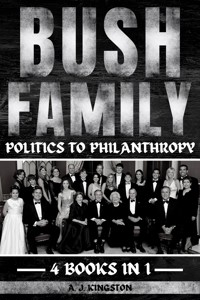
Introducing the "Bush Family: Politics to Philanthropy" Book Bundle!
Discover the compelling and influential legacy of the Bush family across four captivating volumes. This limited-time offer brings together the remarkable stories of one of America's most prominent political dynasties, spanning generations and diverse domains.
Book 1: From Prescott to George W.: The Bush Family Saga Unearth the origins of the Bush family's journey, from their early strides in the oil industry to their emergence as iconic figures in American politics. Dive into the saga of resilience, public service, and unwavering commitment to cherished ideals that defines the Bush family narrative.
Book 2: Barbara Bush: A Life of Grace and Service Explore the life of an extraordinary woman, Barbara Bush, whose grace, strength, and unwavering commitment to literacy and family values left an indelible mark on the nation. Her legacy extends far beyond the White House, touching hearts and minds across generations.
Book 3: Jeb Bush and the 21st Century Republican Party Join us on a journey through the political career of Jeb Bush, a pivotal figure in shaping the Republican Party's modern direction. From his leadership in Florida politics to his pursuit of the presidency, Jeb's story embodies the enduring influence of the Bush family on the political landscape.
Book 4: Bush Family Business: Oil, Politics, and Legacy Uncover the complex relationship between the Bush family and the energy sector in "Book 4." Delve deep into the intricate web of oil, politics, and their profound impact on both domestic and international affairs. This volume unravels the legacy of a family deeply connected to the ever-evolving landscape of energy and its lasting consequences.
This exclusive bundle provides an unprecedented opportunity to explore the complexities, triumphs, and challenges that have shaped the Bush family's enduring legacy. Their story transcends politics and philanthropy; it is a testament to the boundless potential of individuals and families to make a profound and lasting impact on our world.
Don't miss this chance to own the complete "Bush Family: Politics to Philanthropy" Book Bundle. Order now and embark on a captivating journey through the lives and legacies of a family that has left an indelible mark on American history and beyond.
Limited-time offer. Order now to secure your copy of this extraordinary book bundle.
Das E-Book können Sie in Legimi-Apps oder einer beliebigen App lesen, die das folgende Format unterstützen:
Veröffentlichungsjahr: 2023
Ähnliche
















BUSH FAMILY
POLITICS TO PHILANTHROPY
4 BOOKS IN 1
BOOK 1
FROM PRESCOTT TO GEORGE W.: THE BUSH FAMILY SAGA
BOOK 2
BARBARA BUSH: A LIFE OF GRACE AND SERVICE
BOOK 3
JEB BUSH AND THE 21ST CENTURY REPUBLICAN PARTY
BOOK 4
BUSH FAMILY BUSINESS: OIL, POLITICS, AND LEGACY
BY A.J. KINGSTON
Copyright © 2023 by A. J. Kingston
All rights reserved. No part of this book may be reproduced or transmitted in any form or by any means, electronic or mechanical, including photocopying, recording, or by any information storage and retrieval system, without permission in writing from the publisher.
Published by A. J. Kingston
Library of Congress Cataloging-in-Publication Data
ISBN 978-1-83938-473-8
Cover design by Rizzo
Disclaimer
The contents of this book are based on extensive research and the best available historical sources. However, the author and publisher make no claims, promises, or guarantees about the accuracy, completeness, or adequacy of the information contained herein. The information in this book is provided on an "as is" basis, and the author and publisher disclaim any and all liability for any errors, omissions, or inaccuracies in the information or for any actions taken in reliance on such information.
The opinions and views expressed in this book are those of the author and do not necessarily reflect the official policy or position of any organization or individual mentioned in this book. Any reference to specific people, places, or events is intended only to provide historical context and is not intended to defame or malign any group, individual, or entity.
The information in this book is intended for educational and entertainment purposes only. It is not intended to be a substitute for professional advice or judgment. Readers are encouraged to conduct their own research and to seek professional advice where appropriate.
Every effort has been made to obtain necessary permissions and acknowledgments for all images and other copyrighted material used in this book. Any errors or omissions in this regard are unintentional, and the author and publisher will correct them in future editions.
Join Our Productivity Group and Access your Bonus
If you're passionate about history books and want to connect with others who share your love of the subject, joining our Facebook group (search for “History Books by A.J.Kingston”) can be a great way to do so. By joining a group dedicated to history books, you'll have the opportunity to connect with like-minded individuals, share your thoughts and ideas, and even discover new books that you might not have come across otherwise. You can also access your FREE BONUS once you joined our Facebook group called “History Books by A.J.Kingston”.
>> Click Here to Join Our Productivity Group <<
One of the biggest advantages of joining our Facebook group is the sense of community it provides. You'll be able to interact with other history book enthusiasts, ask questions, and share your own knowledge and expertise. This can be especially valuable if you're a student or someone who is just starting to explore the world of history books.
>> Click Here to Follow A.J. Kingston <<
>> Click Here to Download your Free Bonus <<
If you love audiobooks, then joining our YouTube channel that offers free audiobooks on a weekly basis can be a great way to stay entertained and engaged. By subscribing to our channel, you'll have access to a range of audiobooks across different genres, all for free. Not only this is a great opportunity to enjoy some new audiobooks, but it's also a chance to discover new authors and titles that you might not have come across otherwise.
>> Click Here to Join our YouTube Channel <<
Lastly, don’t forget to follow us on Facebook and YouTube by searching for A.J. Kingston.
TABLE OF CONTENTS – BOOK 1 - FROM PRESCOTT TO GEORGE W.: THE BUSH FAMILY SAGA
Introduction
Chapter 1: The Roots of the Bush Dynasty
Chapter 2: Prescott Bush: A Banker and Senator
Chapter 3: George H.W. Bush: A Life in Public Service
Chapter 4: Barbara Bush: Strength in Elegance
Chapter 5: The Bush Brothers: George and Jeb
Chapter 6: A Nation at War: George W. Bush's Presidency
Chapter 7: The Bush Family in the White House
Chapter 8: Global Politics and the Bush Legacy
Chapter 9: 21st-Century Challenges: The Bush Family's Role
Chapter 10: Continuing the Family Tradition: Future Generations
TABLE OF CONTENTS – BOOK 2 - BARBARA BUSH: A LIFE OF GRACE AND SERVICE
Chapter 1: A Girl Named Barbara
Chapter 2: Becoming a Bush: The Early Years
Chapter 3: First Lady of the United States: The White House Years
Chapter 4: Family Ties: Navigating the Bush Dynasty
Chapter 5: Literacy and Legacy: Barbara's Philanthropic Work
Chapter 6: Behind the Pearls: Barbara's Personal Struggles
Chapter 7: Strength and Resilience: The Matriarch
Chapter 8: Barbara's Love Story: Life with George
Chapter 9: The End of an Era: Saying Goodbye to Barbara
Chapter 10: Remembering Barbara: Her Enduring Impact
TABLE OF CONTENTS – BOOK 3 - JEB BUSH AND THE 21ST CENTURY REPUBLICAN PARTY
Chapter 1: Jeb Bush: An Introduction
Chapter 2: A Bush in Florida: Governorship and Education Reform
Chapter 3: The Bush Legacy: A Family Affair
Chapter 4: Presidential Ambitions: Jeb's Path to 2016
Chapter 5: The Campaign Trail: Jeb's 2016 Presidential Bid
Chapter 6: Conservative Values and Policy Positions
Chapter 7: The Changing Face of the Republican Party
Chapter 8: Challenges and Controversies: Jeb's Campaign
Chapter 9: After 2016: Jeb Bush's Influence on the GOP
Chapter 10: The Future of Jeb Bush and the Republican Party
TABLE OF CONTENTS – BOOK 4 - BUSH FAMILY BUSINESS: OIL, POLITICS, AND LEGACY
Chapter 1: Oil and Opportunity: The Early Years
Chapter 2: Prescott Bush and the Oil Industry
Chapter 3: George H.W. Bush: From Oilman to President
Chapter 4: George W. Bush: Oil and the Oval Office
Chapter 5: Family Ties: The Bushes and the Energy Sector
Chapter 6: Oil, Politics, and Global Affairs
Chapter 7: The Legacy of Oil: Environmental and Social Impact
Chapter 8: Political Power and Corporate Interests
Chapter 9: The Bushes in the Middle East: A Complex Relationship
Chapter 10: The Future of the Bush Family Legacy in Energy and Politics
Conclusion
About A. J. Kingston
Introduction
In the annals of American history, few families have left as profound and enduring a mark as the Bush family. Spanning generations, their legacy has woven a rich tapestry that encompasses not only the corridors of political power but also the realms of philanthropy and societal betterment. The "Bush Family: Politics to Philanthropy" book bundle invites you on an extraordinary journey through the remarkable and multifaceted lives of this influential dynasty.
Book 1: From Prescott to George W.: The Bush Family Saga
The saga begins with "Book 1," where we delve deep into the origins of the Bush family, tracing their earliest footsteps in the world of business and politics. From Prescott Bush's pioneering endeavors in the oil industry to the rise of his son, George H.W. Bush, and grandson, George W. Bush, this volume unveils the intricate web of ambition, service, and leadership that defines the Bush family narrative.
Book 2: Barbara Bush: A Life of Grace and Service
"Book 2" brings to life the unparalleled grace and dedication of Barbara Bush, the family's matriarch. Her legacy goes far beyond the White House, encompassing a profound commitment to improving literacy and fostering timeless family values. With warmth, wisdom, and strength, she touched the lives of countless individuals and shaped the family's philanthropic endeavors.
Book 3: Jeb Bush and the 21st Century Republican Party
"Book 3" embarks on a journey with Jeb Bush, exploring his pivotal role in shaping the Republican Party's direction in the modern era. From his leadership in Florida politics to his pursuit of the presidency, Jeb's story exemplifies the enduring influence of the Bush family on the political landscape.
Book 4: Bush Family Business: Oil, Politics, and Legacy
The final installment, "Book 4," delves deep into the complex relationship between the Bush family and the energy sector. Here, we uncover the intricate intersections of oil, politics, and the profound impact they have wielded on both domestic and international affairs. This volume unravels the legacy of a family deeply connected to the ever-evolving landscape of energy and its lasting consequences.
Through these four captivating volumes, the "Bush Family: Politics to Philanthropy" book bundle offers an unprecedented glimpse into the heart of a family whose dedication to public service, advocacy for important causes, and ability to navigate the shifting tides of politics and societal change exemplify the very essence of American democracy.
As we embark on this immersive journey, we invite you to explore the complexities, triumphs, and challenges that have shaped the Bush family's enduring legacy. Their story is more than a tale of politics and philanthropy; it is a testament to the boundless potential of individuals and families to make a profound and lasting impact on our world.
BOOK 1
FROM PRESCOTT TO GEORGE W.
THE BUSH FAMILY SAGA
BY A.J. KINGSTON
Chapter 1: The Roots of the Bush Dynasty
Exploring the roots of the Bush family saga reveals a tapestry woven with historical threads, tracing back through generations to the earliest ancestors. These origins provide a foundational understanding of how the family would come to play a significant role in American politics and society.
The Bush family's lineage extends deep into the American past, with ancestors who arrived on American shores in the early 17th century, seeking opportunities and a new life in the colonies. They were among the first European settlers, venturing to a land that held the promise of prosperity and liberty.
These early ancestors faced the formidable challenges of colonial life, from the harsh New England winters to the uncertainties of forging communities in a new and often untamed world. They grappled with the complexities of survival, learning to cultivate the land, build homes, and establish the foundations of what would become the United States of America.
Over the centuries, the Bush family's journey intertwined with the evolution of American society and politics. They played roles in the American Revolution, fighting for independence and the ideals of liberty and self-governance. These ideals, etched into the very fabric of the nation, would become central to the family's identity and ethos.
As the years passed, the family diversified its pursuits, engaging in various professions and endeavors. They ventured into commerce, trade, and public service, all while maintaining a strong commitment to the principles of democracy and civic duty.
The family's roots were deeply embedded in the values of hard work, perseverance, and a dedication to public service. These values transcended generations and became guiding principles for the Bush family's future leaders.
The early ancestors set a precedent of community involvement and public service that would be carried forward by their descendants. Their contributions to local governance, military service, and community development foreshadowed the active roles the Bush family would later assume on the national and international stages.
As the family expanded and generations passed, their influence began to extend beyond the boundaries of their small New England communities. The Bush family's commitment to public service and their belief in the American dream propelled them onto a trajectory that would lead to the highest echelons of political power.
The story of the Bush family is not just a narrative of political success but also one of a family bound together by a shared commitment to their nation and its people. It's a tale of individuals who, generation after generation, answered the call to serve, driven by a deep-seated belief in the principles upon which the United States was founded.
These early ancestors and their origins set the stage for a family that would play a pivotal role in shaping the course of American history. From the humble beginnings of colonial settlers to the corridors of power in Washington, D.C., the Bush family's journey is a testament to the enduring spirit of the American dream and the enduring impact of dedicated public service.
Family values and traditions have long been a cornerstone of the Bush family's identity and their approach to public service. These values, instilled by generations of ancestors, have shaped the family's commitment to community, patriotism, and ethical leadership.
At the heart of the Bush family's values is a profound sense of duty to their nation and a belief in the importance of giving back to their communities. This commitment to service can be traced back to the family's earliest roots, where they learned the value of hard work and the rewards of contributing to the greater good.
One of the enduring traditions within the Bush family is a strong emphasis on education. From the earliest ancestors who prized knowledge and learning as a means to a better future, to more recent generations who have pursued advanced degrees and held positions in academia, education has been a driving force. This commitment to learning has not only enriched the family's members but has also influenced their approach to leadership and policy-making.
Another fundamental value within the Bush family is a dedication to civility and respect in public discourse. The family's leaders have often espoused the belief that political differences should not lead to personal animosity, and that finding common ground is essential for effective governance. This commitment to civility has guided their interactions with colleagues, opponents, and the American people.
The Bush family also places a high premium on family unity and the importance of nurturing strong, supportive relationships within their own ranks. Despite the demands of public life, they have maintained close ties and have often turned to one another for guidance and support during challenging times.
Their strong family bonds extend to their shared sense of responsibility toward society as a whole. The Bush family's philanthropic efforts, which have encompassed causes ranging from education to healthcare to disaster relief, reflect their belief in the duty of those with means and influence to assist those in need.
Religion has played a significant role in the lives of many Bush family members. From their early New England Puritan ancestors to more recent leaders who have been vocal about their faith, religion has been a source of strength and guidance. It has influenced their moral compass and shaped their views on social and ethical issues.
The importance of these values and traditions has been passed down from one generation to the next, with each new member of the family adding their unique perspective and contributions. It is this intergenerational continuity that has allowed the Bush family to maintain a strong sense of purpose and identity over the years.
In essence, family values and traditions have provided the moral and ethical foundation upon which the Bush family has built its legacy of public service. They have informed the family's approach to leadership, governance, and philanthropy, and they continue to be a driving force behind the family's commitment to making a positive impact on the world.
The Bush family's rise to prominence is a compelling narrative of ambition, dedication, and the pursuit of excellence across generations. Their ascent from modest beginnings to positions of influence in American society and politics is a testament to their commitment to public service and their ability to adapt to changing circumstances.
The journey to prominence for the Bush family began with early ancestors who settled in America seeking opportunity and freedom. These pioneers faced the challenges of building a life in a new land, and their determination laid the groundwork for future generations to thrive.
As the family's descendants multiplied and established themselves in various professions, they continued to adhere to the principles of hard work, integrity, and civic duty. These values became ingrained in the family's identity, shaping their approach to leadership and community involvement.
Prescott Bush, a pivotal figure in the family's rise, made significant strides in both the business and political arenas. His success in banking and investments elevated the family's financial standing, while his tenure as a U.S. Senator from Connecticut marked their entry into national politics.
Prescott's contributions to the family's prominence set the stage for his son, George H.W. Bush, who would become the 41st President of the United States. George H.W. Bush's journey to the presidency was marked by a distinguished military career, including service in World War II, and a commitment to public service that saw him occupy key roles in government, including Vice President under Ronald Reagan.
George H.W. Bush's presidency was a defining moment in the family's history, and it solidified their place on the national stage. His leadership during pivotal events such as the end of the Cold War and the Gulf War showcased the family's dedication to addressing global challenges.
The family's prominence was further underscored by George H.W. Bush's son, George W. Bush, who succeeded him as the 43rd President of the United States. George W. Bush's presidency was marked by significant domestic and international events, including the response to the 9/11 attacks and the subsequent War on Terror.
The Bush family's rise to prominence also extended to other members, such as Jeb Bush, who served as the Governor of Florida. Their collective influence on American politics and public policy has been notable, reflecting their commitment to conservative values and a vision for a strong, compassionate America.
Throughout their journey to prominence, the Bush family has faced challenges, controversies, and scrutiny, but they have consistently demonstrated resilience and a willingness to adapt. Their legacy is one of unwavering dedication to their nation and their belief in the power of public service to effect positive change.
In summary, the Bush family's rise to prominence is a story of resilience, leadership, and enduring values that have guided them from their early roots to positions of influence on the national and international stage. Their commitment to public service, coupled with their adaptability in the face of changing times, has solidified their enduring legacy in American history.
Chapter 2: Prescott Bush: A Banker and Senator
The Bush family's involvement in banking and business ventures has been a significant aspect of their multi-faceted journey through American history. Their forays into the financial world have played a pivotal role in shaping the family's fortune and influence over the years.
Prescott Bush, one of the key figures in the family's financial history, made a name for himself in the banking industry during the early 20th century. He started his career at a bank in Ohio before moving to Connecticut, where he would become a partner at Brown Brothers Harriman, a prestigious investment bank. His banking acumen and connections allowed him to accumulate considerable wealth and establish the family's financial foundation.
Prescott's involvement in banking also led to his entry into politics. He served as a U.S. Senator from Connecticut, a position that allowed him to leverage his financial expertise in legislative matters. This dual role as a banker and a senator exemplified the close connection between the Bush family's business interests and their political ambitions.
The family's business ventures extended beyond banking, with investments in various industries. These endeavors included interests in manufacturing, real estate, and energy. This diversified portfolio helped insulate the family's wealth and expand their financial influence.
George H.W. Bush, before entering the political arena, ventured into the oil business. He co-founded the Zapata Offshore Company, which was involved in offshore drilling. Although the business had its challenges, it marked his entry into the energy sector, an industry that would become synonymous with the Bush family's legacy.
George W. Bush also had a stint in the oil industry, following in his father's footsteps. His involvement in the oil business, particularly in Texas, helped him gain an understanding of the energy sector's dynamics, which would prove valuable during his presidency.
The Bush family's combination of political and business connections placed them at the intersection of finance, politics, and corporate interests. This unique position enabled them to navigate the corridors of power in Washington, D.C., while also contributing to the broader economic landscape of the United States.
Their business ventures were not without challenges and controversies. The family faced scrutiny over potential conflicts of interest and questions about the influence of corporate ties on their political decisions. However, they maintained that their actions were driven by a commitment to public service and the best interests of the nation.
In summary, the Bush family's involvement in banking and business ventures has been a defining element of their journey through American history. From Prescott Bush's early success in banking to George H.W. Bush and George W. Bush's experiences in the oil industry, these endeavors have played a crucial role in shaping the family's financial standing and their broader impact on American society and politics.
The political ascent of the Bush family is a compelling narrative of ambition, dedication, and a commitment to public service that spans several generations. From local politics to the highest office in the land, the family's journey to political prominence reflects their enduring influence on American politics.
The Bush family's political ascent can be traced back to early ancestors who were actively engaged in local governance and community affairs. These early forays into public service laid the groundwork for future generations to follow in their footsteps.
Prescott Bush, a prominent figure in the family's political lineage, served as a U.S. Senator from Connecticut. His successful campaign and tenure in the Senate marked the family's entry into national politics. Prescott's experience in the Senate allowed him to shape legislative initiatives and contribute to the political discourse of his time.
The next significant milestone in the family's political ascent came with George H.W. Bush's rise to political prominence. George H.W. Bush's career was marked by a series of key appointments and positions, including serving as the U.S. Ambassador to the United Nations and as the Director of the Central Intelligence Agency (CIA). These roles underscored his commitment to national security and foreign policy.
George H.W. Bush's political ascent reached its zenith when he was elected as the 41st President of the United States in 1988. His presidency was characterized by a steady and pragmatic approach to governance, which included navigating the end of the Cold War and leading a multinational coalition during the Gulf War.
George W. Bush, the son of George H.W. Bush, followed a similar trajectory to political prominence. He served as the Governor of Texas before becoming the 43rd President of the United States. His presidency was marked by significant domestic and international events, including the response to the 9/11 attacks and the subsequent War on Terror.
Jeb Bush, another member of the family, carved his own path to political prominence as the Governor of Florida. His leadership in the Sunshine State and his presidential bid in 2016 further solidified the Bush family's enduring influence on American politics.
Throughout their political ascent, the Bush family faced challenges, controversies, and electoral battles. They navigated the complexities of a changing political landscape, adapting their strategies and policies to reflect the evolving needs of the nation.
Central to the family's political ascent were the values of integrity, public service, and a commitment to conservative principles. These values guided their actions and decisions, earning them respect and admiration from supporters and colleagues alike.
The Bush family's legacy in American politics extends beyond their time in office. Their dedication to public service and their ability to forge relationships across the political spectrum have left a lasting impact on the nation's political landscape. Whether through policy initiatives, diplomatic efforts, or humanitarian endeavors, the Bush family's political ascent is a testament to their enduring influence on the United States and the world.
Leadership during turbulent times is a defining characteristic of the Bush family's legacy. Across generations, they have been called upon to navigate periods of crisis, uncertainty, and significant historical events. Their leadership during these tumultuous moments has left a profound impact on American history.
Prescott Bush, a prominent figure in the family's history, demonstrated leadership during World War II. While serving as a U.S. Senator from Connecticut, he played a key role in rallying support for the war effort and advocating for measures to bolster national security. His ability to unite diverse interests and forge bipartisan cooperation was emblematic of the family's commitment to effective governance during times of crisis.
George H.W. Bush, as the 41st President of the United States, provided steadfast leadership during a pivotal period marked by the end of the Cold War. His diplomatic finesse and ability to build international coalitions were instrumental in navigating the complex transition from a bipolar world order to a new era of global politics. His leadership during the Gulf War showcased his dedication to safeguarding national interests and international stability.
George W. Bush's presidency was defined by his leadership in the aftermath of the 9/11 terrorist attacks. Facing an unprecedented threat to national security, he displayed resolve and determination in leading the nation's response. His administration's actions, including the launch of the War on Terror and the establishment of the Department of Homeland Security, reflected his commitment to safeguarding the nation during a turbulent time.
Jeb Bush, as the Governor of Florida during moments of crisis such as Hurricane Andrew and Hurricane Katrina, demonstrated effective leadership in disaster response and recovery efforts. His ability to mobilize resources and coordinate relief efforts exemplified the family's commitment to public service during times of adversity.
Throughout these turbulent times, the Bush family's leadership was marked by a steadfast commitment to core principles, such as the importance of democracy, freedom, and national security. Their ability to make tough decisions, often in the face of opposition and criticism, showcased their resilience and dedication to the well-being of the nation.
Additionally, the family's leadership was characterized by a sense of duty to unite the American people during moments of crisis. They consistently emphasized the importance of national unity and bipartisan cooperation in addressing pressing challenges, recognizing that solidarity was essential for overcoming adversity.
The Bush family's legacy of leadership during turbulent times extends beyond their time in office. Their contributions to diplomacy, national security, disaster response, and humanitarian efforts have left an enduring impact on the nation and the world. Their ability to lead with grace, resilience, and a sense of duty continues to be a source of inspiration and reflection in the face of contemporary challenges.
Chapter 3: George H.W. Bush: A Life in Public Service
The early life and military service of George H.W. Bush, the 41st President of the United States, is a remarkable journey marked by dedication, bravery, and a commitment to duty. His experiences as a young man and his service during World War II played a profound role in shaping his character and leadership style.
George Herbert Walker Bush was born on June 12, 1924, in Milton, Massachusetts, into a family with a history of public service and business success. From a young age, he exhibited qualities of leadership, determination, and a sense of responsibility. He attended Phillips Academy in Andover, Massachusetts, where he excelled in both academics and athletics.
As a young man, George H.W. Bush's life took a significant turn when the United States entered World War II following the attack on Pearl Harbor in 1941. Instead of immediately enrolling in college, as he had planned, he felt a deep sense of duty to serve his country during the war. In 1942, at the age of 18, he enlisted in the U.S. Navy as one of the youngest naval aviators in American history.
Bush's military service was marked by courage and determination. He received flight training and was eventually assigned to fly the Grumman TBM Avenger torpedo bomber. He was stationed in the Pacific theater, where he participated in combat missions against Japanese forces.
One of the most significant events in George H.W. Bush's military service occurred on September 2, 1944, during a mission near the island of Chichi Jima. His aircraft was hit by enemy fire, and despite the plane being on fire and severely damaged, he continued his attack on the Japanese target. After releasing the bombs, he and his crew bailed out of the aircraft. Sadly, his two crewmates did not survive, but Bush was rescued by a U.S. Navy submarine, the USS Finback, after floating in a life raft for hours.
George H.W. Bush's wartime experience left a profound impact on him, shaping his perspective on leadership, sacrifice, and the importance of service to others. He often spoke of the comradeship he felt with his fellow servicemen and the sense of responsibility that came with surviving while others did not.
After the war, George H.W. Bush returned to the United States and married Barbara Pierce in 1945. He pursued his education at Yale University, where he graduated with a degree in economics. His experiences as a young Navy pilot and his dedication to service continued to influence his path in life.
George H.W. Bush's military service was a defining chapter in his early life, instilling in him the values of duty, honor, and country that would guide his future endeavors. His courage and commitment during World War II served as a testament to his character and laid the foundation for his subsequent career in public service, including his presidency, where he continued to lead with the same sense of duty and dedication that marked his early life and military service.
George H.W. Bush's political career took flight in the years following his military service, as he transitioned from a decorated war hero to a rising star in American politics. His journey from a young Navy pilot to becoming the 41st President of the United States is a testament to his leadership, dedication, and commitment to public service.
After World War II, George H.W. Bush returned to the United States with a newfound sense of purpose and a desire to make a difference. He enrolled at Yale University, where he completed his studies and earned a degree in economics. During his time at Yale, he was not only a diligent student but also a devoted husband to Barbara Bush and a young father to their growing family.
With his education complete, George H.W. Bush embarked on his business career, working in the oil industry in Texas. This marked his entry into the world of entrepreneurship and corporate leadership, which would later become a significant aspect of his life.
However, it was his interest in public service that would define the trajectory of his career. George H.W. Bush's political journey began in earnest when he decided to run for public office. In 1964, he made his first bid for political office by running as the Republican candidate for the U.S. Senate from Texas. Although he lost that election, it marked the beginning of his political career.
His next foray into politics was as a member of the U.S. House of Representatives, representing Texas' 7th congressional district. He served two terms from 1967 to 1971 and made a name for himself as a pragmatic and principled legislator.
George H.W. Bush's political ascent continued when he was appointed as the U.S. Ambassador to the United Nations by President Richard Nixon in 1971. In this role, he played a key diplomatic role during a tumultuous period in international relations.
His diplomatic skills were further put to the test when he served as the Chief of the U.S. Liaison Office in the People's Republic of China in 1974. This role allowed him to witness firsthand the changing dynamics of U.S.-China relations and to contribute to the normalization of diplomatic ties between the two countries.
After his service in China, George H.W. Bush returned to the United States and held several prominent positions, including serving as the Director of the Central Intelligence Agency (CIA) from 1976 to 1977. His tenure at the CIA demonstrated his ability to navigate complex and sensitive matters of national security.
Throughout his early political career, George H.W. Bush built a reputation as a dedicated public servant, a skilled diplomat, and a leader who was willing to tackle tough challenges. These experiences and qualities would prove invaluable as he continued his ascent in American politics, ultimately leading him to the highest office in the land.
In summary, George H.W. Bush's political career took flight as he transitioned from military service to a successful businessman and, eventually, to a series of prominent roles in government and diplomacy. His early political experiences laid the foundation for his future leadership, and his dedication to public service continued to propel him forward on the path to the presidency.
George H.W. Bush's path to the presidency was marked by a combination of political acumen, dedication to public service, and a series of strategic career moves that culminated in his election as the 41st President of the United States. His journey to the highest office in the land is a testament to his leadership and commitment to the principles of conservatism and public service.
After serving in various roles in government and diplomacy, including as a U.S. Representative, Ambassador to the United Nations, and Chief of the U.S. Liaison Office in China, George H.W. Bush's political ambitions continued to grow. In 1980, he made his first bid for the presidency by running in the Republican primaries. Although he ultimately lost the nomination to Ronald Reagan, the campaign allowed him to gain national recognition and forge important political connections.
One of the key strategic decisions in Bush's path to the presidency was his willingness to join forces with Ronald Reagan as the Republican vice-presidential nominee in 1980. This partnership, which resulted in their election as President and Vice President, marked the beginning of Bush's ascent to the presidency. As Vice President, he gained valuable experience and visibility on the national stage, positioning himself as the natural successor to Reagan.
In 1988, George H.W. Bush launched his own campaign for the presidency, seeking the Republican nomination. His extensive government experience, including his service as Vice President, positioned him as a seasoned candidate with a strong resume. During the Republican primaries, he successfully navigated a competitive field and secured the nomination.
The general election of 1988 pitted George H.W. Bush against Democratic nominee Michael Dukakis. Bush's campaign focused on a platform of traditional conservative values, national security, and a commitment to American exceptionalism. He famously pledged, "Read my lips: no new taxes," a statement that resonated with many voters.
In the November 1988 election, George H.W. Bush secured a decisive victory, winning 40 states and earning a significant margin of victory in the Electoral College. He was inaugurated as President of the United States on January 20, 1989.
As president, George H.W. Bush faced a series of significant domestic and international challenges, including the end of the Cold War, the reunification of Germany, the Gulf War, and economic issues. His leadership during these pivotal moments in history further solidified his legacy as a president who steered the nation through a period of profound change.
George H.W. Bush's path to the presidency was characterized by a combination of political experience, strategic decision-making, and a commitment to conservative principles. His willingness to work collaboratively, both as Vice President and during his presidency, contributed to his ability to address complex issues and guide the nation with steady leadership.
In summary, George H.W. Bush's journey to the presidency was marked by a series of strategic career moves and a commitment to public service that allowed him to ascend to the highest office in the United States. His presidency, which was defined by significant historical events and challenges, demonstrated his leadership and dedication to the well-being of the nation.
Chapter 4: Barbara Bush: Strength in Elegance
The story of Barbara Bush, the wife of George H.W. Bush and the mother of George W. Bush, is a remarkable tale of a woman who grew up with grace, resilience, and a deep commitment to family, education, and service to others.
Barbara Pierce was born on June 8, 1925, in New York City. She grew up in Rye, New York, in a family that emphasized the importance of education and civic engagement. Her father, Marvin Pierce, was the president of McCall Corporation, a publishing company, and her mother, Pauline Robinson, was known for her involvement in community and charitable activities.
From a young age, Barbara showed a strong passion for reading and learning. Her parents encouraged her intellectual pursuits and instilled in her a love for literature. This early emphasis on education would become a defining aspect of her life.
Barbara attended the prestigious Ashley Hall boarding school in Charleston, South Carolina, where she continued to excel academically. Her education laid the foundation for her lifelong commitment to literacy and the importance of reading.
In 1941, while still in her teenage years, Barbara met George H.W. Bush at a dance. Their courtship blossomed despite the challenges of World War II, during which George served as a Navy pilot. They became engaged shortly before he was deployed to the Pacific, and their love letters from that period reflect the deep connection between them.
The young couple married on January 6, 1945, when George was on leave from the war. Their enduring marriage would span 73 years and become one of the longest-lasting presidential marriages in American history.
As a young wife and mother, Barbara faced the challenges of a mobile military lifestyle, moving frequently with her husband as his career advanced. She raised their children, George, Jeb, Neil, Marvin, and Dorothy, with love and discipline, instilling in them the same values of public service and commitment to family that she and George shared.
Barbara's life took on new dimensions as her husband's political career flourished. She became the Second Lady of the United States when George H.W. Bush served as Vice President under Ronald Reagan. Her role as the Second Lady allowed her to champion issues dear to her heart, including literacy and family literacy initiatives.
Her dedication to literacy and her belief in the power of reading led to the creation of the Barbara Bush Foundation for Family Literacy in 1989, an organization that continues to promote literacy and educational opportunities for families across the United States.
Barbara Bush's years as First Lady of the United States (1989-1993) were marked by her warmth, wit, and unwavering support for her husband's presidency. She used her platform to advocate for literacy programs and educational initiatives while maintaining her down-to-earth and approachable demeanor.
Throughout her life, Barbara Bush faced personal challenges, including health issues and the loss of a daughter, Robin, to leukemia at a young age. Despite these hardships, she remained resilient and devoted to her family and her causes.
In her later years, Barbara and George enjoyed a well-deserved retirement, spending time with their growing family and reflecting on their shared experiences. She passed away on April 17, 2018, at the age of 92, leaving behind a legacy of dedication to family, education, and service to others.
Barbara Bush's life story is a testament to the enduring values of kindness, compassion, and the importance of nurturing both one's own family and the broader human family. Her commitment to literacy and education continues to inspire and make a positive impact on countless lives.
Barbara Bush, as the First Lady of the United States from 1989 to 1993 during her husband George H.W. Bush's presidency, left an indelible mark with her warm and down-to-earth approach to the role. Her time as First Lady was characterized by her commitment to family literacy, her strong support for her husband's presidency, and her enduring popularity with the American people.
One of the defining aspects of Barbara Bush's tenure as First Lady was her dedication to promoting literacy and education. She recognized the transformative power of literacy and believed that reading was the key to unlocking opportunities for individuals and families. Her passion for this cause led to the creation of the Barbara Bush Foundation for Family Literacy in 1989, an organization that continues to advocate for literacy and support educational programs for families across the United States.
Barbara Bush's literacy initiatives were driven by a genuine desire to make a difference in the lives of Americans. She traveled the country extensively, visiting schools, libraries, and literacy programs to raise awareness about the importance of reading. Her approach was characterized by warmth and approachability, making her a beloved figure among children and educators alike.
As First Lady, Barbara Bush also played a supportive and diplomatic role on the international stage. She hosted numerous heads of state and dignitaries at the White House, contributing to her husband's efforts in foreign policy and diplomacy. Her graciousness and charm helped foster positive relations between the United States and other nations.
Barbara Bush was known for her wit and humor, often using her quick one-liners and self-deprecating jokes to connect with the American people. Her authenticity and relatability endeared her to the public, and she was often referred to as "America's grandmother" due to her nurturing and caring demeanor.
During her time as First Lady, Barbara Bush faced the challenges and responsibilities of the role with grace and dignity. She was a steadfast supporter of her husband's presidency, offering him counsel and unwavering support. Her loyalty to her family and her country was evident in her actions and her advocacy for causes she believed in.
Barbara Bush's popularity extended beyond her time in the White House, and she remained a respected and admired figure long after her husband's presidency ended. Her legacy of promoting literacy and education continues to influence efforts to improve literacy rates and provide educational opportunities for families in need.
Barbara Bush's tenure as First Lady was characterized by her dedication to family, her commitment to education, and her genuine connection with the American people. Her impact on the nation goes far beyond her role as First Lady, as she left a lasting legacy of compassion, service, and a belief in the power of reading to change lives.
Barbara Bush's legacy as a champion of literacy and family values is a testament to her enduring commitment to improving the lives of individuals and families across the United States. Her passion for literacy and her unwavering dedication to strengthening family bonds have left a lasting impact on countless people and communities.
Barbara's dedication to literacy was born out of a genuine belief in the transformative power of education and reading. She recognized that literacy was the foundation for personal growth and success, and she made it her mission to ensure that all individuals, regardless of their background or circumstances, had access to the educational resources they needed.
One of Barbara's most significant contributions to the cause of literacy was the establishment of the Barbara Bush Foundation for Family Literacy in 1989. This nonprofit organization was founded with the goal of promoting literacy within families, recognizing that parents' literacy skills directly impact their children's educational outcomes. The foundation has provided support and resources to countless families, helping them break the cycle of illiteracy and improve their prospects for a brighter future.
Barbara Bush's advocacy for literacy extended beyond the creation of her foundation. As First Lady, she used her platform to raise awareness about the importance of reading and education. She visited schools, libraries, and literacy programs across the country, inspiring children and adults alike to embrace the joy of reading. Her warmth, approachability, and genuine concern for the well-being of others made her a beloved figure in the literacy community.
In addition to her literacy efforts, Barbara Bush was a steadfast advocate for family values and the importance of nurturing strong family bonds. She believed that families were the bedrock of society and that the values of love, respect, and compassion should be cultivated within the home. Her own family, including her husband George H.W. Bush and their children, served as an example of the enduring strength of family bonds.
Barbara's commitment to family values was evident in her role as a wife, mother, and grandmother. She instilled in her children and grandchildren the importance of integrity, kindness, and the value of a close-knit family. Her love and support for her family were unwavering, and she set an example of grace, dignity, and resilience in the face of challenges.
Barbara Bush's legacy as a champion of literacy and family values is a testament to the profound impact that one person can have on the lives of others. Her dedication to improving literacy rates and strengthening families has left a lasting imprint on the nation, and her work continues through the ongoing efforts of the Barbara Bush Foundation for Family Literacy. Her enduring message—that education, reading, and strong family bonds are the cornerstones of a better future—continues to inspire and uplift individuals and communities across the United States.
Chapter 5: The Bush Brothers: George and Jeb
The childhood of Barbara Bush, born Barbara Pierce on June 8, 1925, in New York City, was marked by a loving family environment and strong sibling dynamics. Growing up as the third of four children, Barbara experienced a close-knit family that emphasized values, education, and a sense of responsibility.
Barbara's father, Marvin Pierce, was the president of McCall Corporation, a publishing company, while her mother, Pauline Robinson, was actively involved in charitable and community activities. The Pierce household placed a significant emphasis on education and intellectual curiosity, instilling in their children a love for reading and learning.
As the third of four children, Barbara had three siblings: Martha (known as "Marty"), James (known as "Jim"), and Scott. The sibling dynamics in the Pierce family were marked by a sense of camaraderie and mutual support. Barbara shared a particularly close bond with her sister Marty, with whom she formed a lifelong friendship. They attended the prestigious Ashley Hall boarding school in Charleston, South Carolina, together and remained confidantes throughout their lives.
Barbara's childhood was marked by her strong sense of responsibility and duty, qualities that would become defining aspects of her character. She took her studies seriously and excelled academically, a testament to her parents' emphasis on education. This commitment to learning would serve as the foundation for her later advocacy for literacy and education.
In 1941, during her teenage years, Barbara met George H.W. Bush at a dance. Their courtship flourished despite the challenges of World War II, as George served as a Navy pilot. Their love letters from that period reflected their deep connection and the anticipation of a future together.
Barbara's early years as a wife and mother were marked by the challenges of a mobile military lifestyle, as her husband's career in the oil industry and the Navy required frequent moves. She balanced the responsibilities of raising their children—George, Jeb, Neil, Marvin, and Dorothy—with grace and discipline, instilling in them the same values of public service, education, and responsibility that she had learned in her own childhood.
The strong family bonds that Barbara experienced during her childhood were mirrored in her own family life. She and George raised their children with love and dedication, creating a nurturing and supportive environment that emphasized the importance of family values.
Barbara Bush's childhood, marked by a loving family, close sibling dynamics, and a commitment to education, laid the foundation for her later life as a dedicated wife, mother, and advocate for literacy and family values. Her enduring legacy continues to reflect the enduring impact of strong family ties and a commitment to nurturing the next generation.
George W. Bush's political journey is a compelling story of transformation from a businessman and Texas governor to the 43rd President of the United States. His path to the presidency was marked by personal growth, challenges, and a commitment to conservative principles.
George Walker Bush was born on July 6, 1946, in New Haven, Connecticut, as the eldest son of George H.W. Bush and Barbara Bush. From a young age, he was exposed to the world of politics and public service through his father's various roles in government, including serving as a U.S. Representative, U.S. Ambassador to the United Nations, and Director of the Central Intelligence Agency.
After completing his education, including a Bachelor's degree in history from Yale University and a Master of Business Administration (MBA) from Harvard Business School, George W. Bush pursued a career in business. He worked in the oil industry and later became co-owner of the Texas Rangers baseball team.
His entry into politics came in 1994 when he ran for Governor of Texas. Running as a Republican, he defeated incumbent Governor Ann Richards. His tenure as governor was marked by a focus on education reform, tax cuts, and a commitment to conservative policies. His success as governor helped elevate his profile on the national stage.
In 2000, George W. Bush embarked on a historic presidential campaign. He secured the Republican nomination and faced off against the Democratic nominee, Vice President Al Gore, in a closely contested election. The election, which ultimately came down to the outcome in Florida, was one of the most closely watched and controversial in U.S. history.
After a protracted legal battle and a Supreme Court decision, George W. Bush was declared the winner of the 2000 presidential election, making him the 43rd President of the United States. His presidency was marked by a series of significant events and policy initiatives, including tax cuts, education reform through the No Child Left Behind Act, and the response to the terrorist attacks on September 11, 2001, which led to the War on Terror and the invasion of Afghanistan.
During his presidency, George W. Bush also faced criticism and controversy, particularly in relation to the Iraq War and the handling of Hurricane Katrina. His leadership during these challenging times defined his presidency and elicited both praise and scrutiny.
George W. Bush was re-elected to a second term in 2004, defeating Democratic nominee John Kerry. His second term saw continued efforts in the War on Terror, as well as initiatives on immigration reform and the global fight against HIV/AIDS.
After leaving office in 2009, George W. Bush maintained a relatively low public profile but remained active in various philanthropic efforts, including his work on veterans' issues and the promotion of democracy and human rights around the world.
In summary, George W. Bush's political journey took him from the world of business and professional sports to the highest office in the land. His presidency was marked by a focus on conservative policies, significant historical events, and both challenges and accomplishments. His leadership during a time of profound change and uncertainty left an enduring impact on the United States and the world.
Jeb Bush's rise in Florida politics is a notable chapter in his political career, characterized by his successful tenure as the Governor of Florida from 1999 to 2007 and his impact on the state's policies and governance. Here's a look at the key milestones and moments in his rise in Florida politics:
Early Life and Family Background: Jeb Bush, born John Ellis Bush on February 11, 1953, in Midland, Texas, came from a prominent political family. He was the second son of George H.W. Bush and Barbara Bush, and he had a strong family legacy in politics, with his father serving as the 41st President of the United States and his brother George W. Bush becoming the 43rd President.
Move to Florida: Jeb Bush moved to Florida in 1981, and it was in this state that he would lay the foundation for his political career. He initially worked in real estate and banking before entering the political arena.
Florida Secretary of Commerce: In 1987, Jeb Bush was appointed as Florida's Secretary of Commerce by Governor Bob Martinez. This marked his entry into state government and his first significant role in Florida politics.
Unsuccessful Bid for Governor in 1994: In 1994, Jeb Bush made his first run for governor but was narrowly defeated by the incumbent Democratic governor, Lawton Chiles. Despite this setback, Jeb continued to build his political profile in the state.




