


4,99 €
Mehr erfahren.
- Herausgeber: A.J.Kingston
- Kategorie: Sachliteratur, Reportagen, Biografien
- Sprache: Englisch
Discover the Rich Tapestry of Native American Heritage
Are you ready to embark on a captivating journey through the vibrant cultures and profound histories of Native American nations? Introducing the "NATIVE AMERICANS: OSAGE, MOHICAN, NAVAJO, & APACHE NATIONS" book bundle, where you'll delve into the remarkable stories of four distinct indigenous nations, each with its own unique narrative, traditions, and resilience.
📚
BOOK 1 - OSAGE: GUARDIANS OF THE GREAT PLAINS 📚 Step onto the sweeping prairies of the Great Plains and explore the world of the Osage Nation. Their enduring presence and tribal governance have stood as a testament to their deep connection to the land. Discover their rich heritage and how they've weathered the challenges of history.
🌳
BOOK 2 - MOHICAN TALES: LEGENDS OF THE EASTERN WOODLANDS 🌳 Enter the lush forests and winding rivers of the Eastern Woodlands, where the Mohican people have nurtured their legends, stories, and traditions. Through oral history and artistry, they paint a vivid picture of their deep-rooted heritage that continues to thrive.
🌄
BOOK 3 - NAVAJO RESILIENCE: THE LONG WALK TO LIBERATION 🌄 Journey to the Southwestern deserts and witness the incredible resilience of the Navajo Nation. From the Long Walk to their triumphant return to Dinétah, the Navajo story is one of spiritual strength, cultural revival, and unwavering determination.
🏜️
BOOK 4 - APACHE WARRIORS: CONFLICT AND ADAPTATION IN THE SOUTHWEST 🏜️ Explore the rugged landscapes of the American Southwest, where the Apache people have etched their indomitable legacy. Renowned for their fierce warrior culture and adaptability, the Apache nation's history is a testament to their enduring spirit.
With this book bundle, you'll:
✨ Immerse yourself in the rich tapestry of Native American cultures. ✨ Gain a deeper understanding of the challenges and triumphs these nations have faced. ✨ Celebrate the living traditions and enduring legacies of the Osage, Mohican, Navajo, and Apache nations.
Don't miss the opportunity to explore these captivating narratives that will enrich your understanding of Native American heritage. Order the "NATIVE AMERICANS: OSAGE, MOHICAN, NAVAJO, & APACHE NATIONS" book bundle today and embark on a journey that celebrates the enduring spirit of indigenous communities.
Das E-Book können Sie in Legimi-Apps oder einer beliebigen App lesen, die das folgende Format unterstützen:
Veröffentlichungsjahr: 2023
Ähnliche















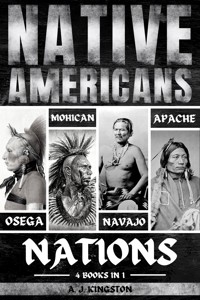
NATIVE AMERICANS
OSAGE, MOHICAN, NAVAJO, & APACHE NATIONS
4 BOOKS IN 1
BOOK 1
OSAGE: GUARDIANS OF THE GREAT PLAINS
BOOK 2
MOHICAN TALES: LEGENDS OF THE EASTERN WOODLANDS
BOOK 3
NAVAJO RESILIENCE: THE LONG WALK TO LIBERATION
BOOK 4
APACHE WARRIORS: CONFLICT AND ADAPTATION IN THE SOUTHWEST
BY A.J. KINGSTON
Copyright © 2023 by A. J. Kingston
All rights reserved. No part of this book may be reproduced or transmitted in any form or by any means, electronic or mechanical, including photocopying, recording, or by any information storage and retrieval system, without permission in writing from the publisher.
Published by A. J. Kingston
Library of Congress Cataloging-in-Publication Data
ISBN 978-1-83938-494-3
Cover design by Rizzo
Disclaimer
The contents of this book are based on extensive research and the best available historical sources. However, the author and publisher make no claims, promises, or guarantees about the accuracy, completeness, or adequacy of the information contained herein. The information in this book is provided on an "as is" basis, and the author and publisher disclaim any and all liability for any errors, omissions, or inaccuracies in the information or for any actions taken in reliance on such information.
The opinions and views expressed in this book are those of the author and do not necessarily reflect the official policy or position of any organization or individual mentioned in this book. Any reference to specific people, places, or events is intended only to provide historical context and is not intended to defame or malign any group, individual, or entity.
The information in this book is intended for educational and entertainment purposes only. It is not intended to be a substitute for professional advice or judgment. Readers are encouraged to conduct their own research and to seek professional advice where appropriate.
Every effort has been made to obtain necessary permissions and acknowledgments for all images and other copyrighted material used in this book. Any errors or omissions in this regard are unintentional, and the author and publisher will correct them in future editions.
Join Our Productivity Group and Access your Bonus
If you're passionate about history books and want to connect with others who share your love of the subject, joining our Facebook group (search for “History Books by A.J.Kingston”) can be a great way to do so. By joining a group dedicated to history books, you'll have the opportunity to connect with like-minded individuals, share your thoughts and ideas, and even discover new books that you might not have come across otherwise. You can also access your FREE BONUS once you joined our Facebook group called “History Books by A.J.Kingston”.
>> Click Here to Join Our Productivity Group <<
One of the biggest advantages of joining our Facebook group is the sense of community it provides. You'll be able to interact with other history book enthusiasts, ask questions, and share your own knowledge and expertise. This can be especially valuable if you're a student or someone who is just starting to explore the world of history books.
>> Click Here to Follow A.J. Kingston <<
>> Click Here to Download your Free Bonus <<
If you love audiobooks, then joining our YouTube channel that offers free audiobooks on a weekly basis can be a great way to stay entertained and engaged. By subscribing to our channel, you'll have access to a range of audiobooks across different genres, all for free. Not only this is a great opportunity to enjoy some new audiobooks, but it's also a chance to discover new authors and titles that you might not have come across otherwise.
>> Click Here to Join our YouTube Channel <<
Lastly, don’t forget to follow us on Facebook and YouTube by searching for A.J. Kingston.
TABLE OF CONTENTS – BOOK 1 - OSAGE: GUARDIANS OF THE GREAT PLAINS
Introduction
Chapter 1: The Origins of the Osage Nation
Chapter 2: Contact and Conflict: Osage and European Settlers
Chapter 3: Trade and Alliances: Osage in the 18th Century
Chapter 4: The Trail of Tears: Osage Forced Relocation
Chapter 5: Resilience and Renewal: Osage Survival in the 19th Century
Chapter 6: The Osage Allotment Era: A Changing Landscape
Chapter 7: Cultural Revival: Osage Identity in the 20th Century
Chapter 8: Challenges of Modernization: Osage Today
Chapter 9: Osage Leadership and Tribal Governance
Chapter 10: Preserving Heritage: Osage Nation's Cultural Initiatives
TABLE OF CONTENTS – BOOK 2 - MOHICAN TALES: LEGENDS OF THE EASTERN WOODLANDS
Chapter 1: The Mohican Homeland: Eastern Woodlands Environment
Chapter 2: Mohican Ancestry: Roots of a Remarkable Nation
Chapter 3: Pre-Contact Mohican Society: Clan, Kinship, and Leadership
Chapter 4: Spiritual Beliefs and Rituals: Mohican Connection to Nature
Chapter 5: Trade and Interactions: Mohican Relations with Neighbors
Chapter 6: Myths and Legends: Mohican Oral Tradition
Chapter 7: Challenges of Early Contact: Mohican and European Explorers
Chapter 8: War and Diplomacy: Mohican in the 17th Century
Chapter 9: Eclipse of a Nation: Mohican in the Colonial Era
Chapter 10: Legacy of the Mohican: Preserving Heritage and Traditions
TABLE OF CONTENTS – BOOK 3 - NAVAJO RESILIENCE: THE LONG WALK TO LIBERATION
Chapter 1: The Navajo Homeland: Dinétah's Natural Beauty
Chapter 2: Navajo Ancestry: The Roots of a Proud Nation
Chapter 3: Early Navajo Society: Clans, Hogan Life, and Leadership
Chapter 4: Spirituality and Traditions: Navajo Connection to the Sacred
Chapter 5: Conflict and Encounters: Navajo and Spanish Explorers
Chapter 6: The Long Walk Begins: Forced Relocation and Hardships
Chapter 7: Life in Exile: Navajo Struggles During the 19th Century
Chapter 8: Return to Dinétah: Navajo Liberation and Resilience
Chapter 9: Challenges of Modernization: Navajo in the 20th Century
Chapter 10: Navajo Nation Today: Preserving Culture and Sovereignty
TABLE OF CONTENTS – BOOK 4 - APACHE WARRIORS: CONFLICT AND ADAPTATION IN THE SOUTHWEST
Chapter 1: Apache Homeland: The Rugged Southwest Landscape
Chapter 2: Apache Ancestry: The Roots of a Fierce Nation
Chapter 3: Pre-Contact Apache Society: Bands, Leadership, and Traditions
Chapter 4: Spiritual Beliefs and Warrior Culture: Apache Way of Life
Chapter 5: Encounters with Spanish Explorers: Apache Resistance Begins
Chapter 6: Raids and Conflict: Apache vs. Mexican Settlers
Chapter 7: The Apache Wars: Battles with the United States Army
Chapter 8: Leaders and Legends: Prominent Apache Warriors
Chapter 9: Endurance and Adaptation: Apache Survival Strategies
Chapter 10: Legacy of the Apache: Impact on Southwest History
Conclusion
About A. J. Kingston
Introduction
In the vast expanse of North America, a tapestry of indigenous cultures and histories unfolds, each thread woven with resilience, tradition, and a deep connection to the land. Within this diverse landscape, we embark on a remarkable journey through the pages of "NATIVE AMERICANS: OSAGE, MOHICAN, NAVAJO, & APACHE NATIONS." This book bundle invites you to explore the unique narratives of four distinct Native American nations, each with its own compelling story to tell.
"BOOK 1 - OSAGE: GUARDIANS OF THE GREAT PLAINS" takes us into the heart of the Great Plains, where the Osage Nation has stood as sentinels for centuries. Their enduring presence, vibrant culture, and tribal governance have weathered the challenges of history, revealing a profound connection to the rolling prairies.
"BOOK 2 - MOHICAN TALES: LEGENDS OF THE EASTERN WOODLANDS" immerses us in the lush forests and winding rivers of the Eastern Woodlands, where the Mohican people have nurtured their legends, stories, and traditions. Through oral history and artistry, they paint a vivid picture of their deep-rooted heritage.
"BOOK 3 - NAVAJO RESILIENCE: THE LONG WALK TO LIBERATION" takes us to the Southwestern deserts, where the Navajo Nation has demonstrated unparalleled resilience. From the Long Walk to their triumphant return to Dinétah, the Navajo story is one of spiritual strength, cultural revival, and unwavering determination.
In "BOOK 4 - APACHE WARRIORS: CONFLICT AND ADAPTATION IN THE SOUTHWEST," we journey through the rugged landscapes of the American Southwest, where the Apache people have etched their legacy. Renowned for their fierce warrior culture and adaptability, the Apache nation's history is a testament to their enduring spirit.
As we delve into the pages of this book bundle, we bear witness to the stories of Native American nations whose histories are intertwined with the very fabric of this land. Their struggles, triumphs, and cultural richness serve as a testament to the strength of indigenous communities across North America.
Join us on this illuminating expedition through time and terrain, where we honor the heritage, traditions, and enduring legacies of the Osage, Mohican, Navajo, and Apache nations. These narratives not only shed light on the past but also inspire us to recognize the vibrant, living cultures that continue to shape the tapestry of Native American identity in the present day.
BOOK 1
OSAGE
GUARDIANS OF THE GREAT PLAINS
BY A.J. KINGSTON
Chapter 1: The Origins of the Osage Nation
Ancient Osage ancestry is a complex tapestry woven from centuries of history, traditions, and migration patterns. The Osage people, originally known as the Ni-u-kon-ska, have inhabited the central plains of North America for countless generations. Their roots are deeply embedded in the rich soil of what is now modern-day Missouri, Arkansas, Oklahoma, and Kansas.
These indigenous people have an oral tradition that traces their ancestry back to a place known as the Red Stone Place. According to their creation stories, the Ni-u-kon-ska emerged from the underworld through a hollow log and found themselves in the lush land of the Eastern Woodlands. Here, they began to establish their unique way of life.
As with many Native American nations, the Osage people organized themselves into clans, each with its own responsibilities and role within the larger community. These clans played a vital part in the social and cultural fabric of Osage society. They were responsible for various aspects of tribal life, such as hunting, gathering, and ceremonial activities.
One of the defining features of Osage ancestry is their connection to the natural world. The Ni-u-kon-ska lived in harmony with the land, relying on the bountiful resources of the Eastern Woodlands for sustenance and spiritual nourishment. They were skilled hunters and gatherers, relying on the abundant game, fish, and plant life of the region.
The Osage ancestral homeland provided them with everything they needed to thrive. The forests yielded timber for constructing their characteristic dwellings, known as earthlodges or bark houses. These semi-subterranean structures were not only practical but also reflected the deep spiritual connection the Osage had with the earth.
Osage society was characterized by a strong sense of kinship and communal bonds. Extended families lived together in close-knit communities, sharing resources and responsibilities. Elders played a crucial role in passing down oral traditions, stories, and knowledge to younger generations, ensuring the continuity of Osage culture.
The Osage people were also known for their artistic expressions, including intricate beadwork, pottery, and basketry. These crafts were not only practical but also held deep cultural significance, often featuring symbols and designs that told stories of their heritage.
As time passed, the Osage people encountered other indigenous groups in the Eastern Woodlands, leading to cultural exchanges and interactions. These encounters enriched Osage culture and added layers to their already vibrant tapestry of ancestry.
European contact brought significant changes to the Osage way of life. The arrival of French fur traders and settlers in the 17th century marked the beginning of a new era for the Ni-u-kon-ska. Trade relationships were established, introducing new technologies and goods to the Osage people. This contact also brought new challenges, including diseases that had devastating effects on the population.
As the Osage people navigated the complexities of European contact, their ancestral traditions and spirituality remained at the core of their identity. They continued to honor their connection to the land and the spiritual beings that inhabited it. Rituals and ceremonies played a central role in Osage life, fostering a deep sense of unity and purpose within the community.
The Osage people's ancestral traditions extended to their governance and leadership structures. Chiefs were chosen based on their wisdom, courage, and ability to uphold the values of the tribe. These leaders were responsible for making important decisions and representing the Osage people in diplomatic negotiations.
The 18th century brought further changes as European settlers expanded westward, encroaching on Osage lands. The tribe faced increasing pressure as their territories were coveted for their fertile soil and resources. This period of contact and conflict with European settlers would shape the course of Osage history in significant ways.
The Osage people, with their deep ancestral connections and resilient spirit, continued to adapt to the changing world around them. Their story is one of endurance, survival, and the unwavering commitment to preserving their heritage. The legacy of ancient Osage ancestry lives on in the traditions, culture, and resilience of the Osage Nation today.
Emergence and migration myths hold a special place in the oral traditions and cultural identity of many indigenous societies, including the Osage people. These myths offer profound insights into a community's worldview, values, and understanding of their own origins. For the Osage Nation, as for many other Native American tribes, these myths are essential to understanding their deep connection to the land and their place in the world.
In the context of Osage ancestry, emergence myths recount the story of the Ni-u-kon-ska, or the Osage people, and their journey into the world from the underworld. These myths are not just tales but are fundamental narratives that explain the origins of the Osage people and their sacred relationship with their homeland.
The emergence myth of the Osage people describes how they came into existence. According to this traditional narrative, the Ni-u-kon-ska emerged from the depths of the earth through a massive hollow log. This log acted as a portal between the underworld and the earthly realm, allowing the Osage people to step into the lush and fertile land of the Eastern Woodlands.
In the myth, as the Osage people emerged, they found themselves in a land of breathtaking beauty and abundance. This sacred land, known as the Red Stone Place, would become their ancestral homeland. It was a place of lush forests, flowing rivers, and diverse ecosystems that provided everything the Ni-u-kon-ska needed for sustenance and spiritual nourishment.
The emergence myth is not merely a story of how the Osage people came into existence; it is also a narrative that underscores their deep connection to the land. It conveys a sense of reverence for the natural world and the belief that the earth itself is a sacred and life-giving entity. This perspective has profound implications for how the Osage people interacted with their environment and the responsibilities they felt toward it.
Migration myths, on the other hand, detail the movements and historical migrations of a tribe or nation. In the case of the Osage, their ancestral homeland was situated in the Eastern Woodlands, but over time, they would undergo a series of migrations and relocations. These migrations were often driven by a combination of factors, including changes in resource availability, competition with other indigenous groups, and interactions with European settlers.
One significant migration event for the Osage people was their westward movement from the Eastern Woodlands into the central plains, including areas of present-day Missouri, Arkansas, Oklahoma, and Kansas. This migration allowed them to access new hunting grounds and resources, leading to adaptations in their way of life.
As the Osage people migrated, they carried with them their cultural traditions, knowledge, and spiritual beliefs, which were deeply rooted in their emergence myth. They continued to honor their connection to the land and the spiritual beings they believed inhabited it, even as their geographic location changed.
Migration myths also highlight the resilience and adaptability of the Osage people. They were able to thrive in diverse environments, from the woodlands of the east to the plains of the west, by drawing on their ancestral knowledge and resourcefulness.
In summary, emergence and migration myths are integral to the narrative of Osage ancestry. They serve as a bridge between the past and present, connecting the Ni-u-kon-ska to their ancestral origins and guiding their relationship with the land and the natural world. These myths are not just stories but are foundational elements of Osage identity, reminding them of their enduring connection to their homeland and the traditions passed down through generations.
The early Osage social structure was characterized by a complex system of clans, kinship, and leadership roles that played a fundamental role in shaping their society. This social structure provided the framework for their communal life, governance, and cultural practices. Understanding the early Osage social structure is essential for grasping the dynamics of their society and how it functioned.
Clans: At the heart of Osage social structure were clans, which were extended family groups organized around a common ancestry. Each clan had its own name and emblematic animal or symbol. These clans played a crucial role in Osage identity and structure. Members of a clan shared kinship ties and responsibilities, and they often lived in close proximity to one another within a village or community. Clans were responsible for various aspects of tribal life, such as hunting, gathering, and ceremonial activities.
Kinship: Kinship ties were central to Osage society. Relationships within clans and extended families formed the basis of social connections and obligations. Kinship determined roles and responsibilities, as well as how individuals related to one another within the tribe. This system of kinship also extended beyond immediate family members to include a broader network of relatives, creating a strong sense of community.
Leadership Structures: Osage leadership was organized into a hierarchical structure. At the top of this structure were the chiefs, who were chosen based on their wisdom, courage, and ability to uphold the values of the tribe. Chiefs played a pivotal role in decision-making, diplomacy, and representing the Osage people in interactions with other tribes and settlers. Beneath the chiefs were sub-chiefs and leaders of specific clans or bands, each with their own responsibilities.
Community Governance: Osage communities were governed by a council of elders and leaders. The council held the authority to make important decisions affecting the tribe. Council meetings were forums for discussion and consensus-building, where leaders considered the needs and concerns of the community. The decision-making process was collaborative, with leaders striving to maintain harmony and balance within the tribe.
Division of Labor: The early Osage social structure also encompassed a division of labor based on age and gender. Men and women had distinct roles within the tribe. Men were primarily responsible for hunting, fishing, and defending the community. Women played crucial roles in gathering food, processing hides, and tending to the home and family. Elders held positions of wisdom and authority, providing guidance to younger generations.
Cultural Traditions: Osage cultural traditions were intertwined with their social structure. Rituals, ceremonies, and festivals were essential components of Osage life. These cultural practices reinforced the bonds between clans and the wider community, celebrated their connection to the land and natural world, and honored their spiritual beliefs.
The early Osage social structure emphasized the importance of community, kinship, and balance. It provided a framework for cooperation, resource management, and decision-making that allowed the Osage people to thrive in their ancestral homeland. This social structure also fostered a deep sense of unity and identity among the Ni-u-kon-ska, contributing to the resilience and continuity of Osage culture across generations.
Chapter 2: Contact and Conflict: Osage and European Settlers
The first encounters between the Osage people and European explorers marked a pivotal moment in the history of the tribe and the broader context of European exploration and colonization in North America. These initial meetings were characterized by curiosity, mutual incomprehension, and the beginning of a complex and often challenging relationship.
Curiosity and Intrigue: When European explorers first arrived in the region inhabited by the Osage, both sides were curious about the other. The Osage people, who had no prior experience with Europeans, were intrigued by the newcomers' clothing, technology, and ships. European explorers, in turn, were fascinated by the indigenous people they encountered, their way of life, and the natural resources of the land.
Language Barriers: Communication between the Osage and European explorers was hindered by significant language barriers. The Osage people spoke their native Dhegihan language, while the Europeans often relied on interpreters or struggled to communicate through gestures and basic vocabulary. This linguistic divide made it challenging for both parties to convey their intentions and understand each other.
Trade and Exchange: Despite the language barriers, trade played a significant role in early interactions. The Osage people were skilled hunters and gatherers, and they possessed valuable furs, hides, and other resources that were highly sought after by European explorers. The exchange of goods and resources established the foundation for a trade relationship that would evolve over time.
Cultural Misunderstandings: Cultural differences and misunderstandings were common during these early encounters. European customs and practices often clashed with Osage traditions and norms. For example, concepts of land ownership and property rights differed substantially, leading to disputes and conflicts over land use and resource access.
Exploration and Mapping: European explorers viewed their encounters with indigenous peoples like the Osage as an opportunity to gather information about the land. These interactions contributed to the mapping and documentation of the region, which would later play a crucial role in European claims to territory.
Disease and Impact: One of the tragic consequences of early contact was the introduction of diseases to which the Osage people had no immunity. Diseases like smallpox, measles, and influenza devastated indigenous populations, leading to significant population declines and changing the dynamics of their communities.
Shifting Alliances: Over time, the Osage people navigated changing alliances with various European powers, including the French, Spanish, and later the Americans. These shifting alliances often had significant implications for the tribe's relations with neighboring indigenous groups and settlers.
The first encounters between the Osage people and European explorers set the stage for a complex and multifaceted relationship that would evolve over the centuries. These initial interactions were marked by curiosity, trade, and mutual misunderstandings, and they laid the groundwork for the cultural, economic, and political changes that would shape the course of Osage history in the context of European expansion into North America.
Clashes over resources were a recurring theme in the interactions between the Osage people and European settlers and explorers as they both sought to secure access to valuable and often limited resources in the region. These clashes had significant implications for the Osage way of life and their relationship with European newcomers.
Fur Trade: One of the primary resources that fueled clashes was fur. The Osage were skilled hunters and trappers, and their territory was rich in fur-bearing animals like beavers, foxes, and deer. European traders, particularly the French, sought to establish trade relationships to acquire these valuable furs for the European market. This competition for access to trapping territories often led to disputes and conflicts.
Land and Territory: As European settlers began to move westward, conflicts over land and territory became increasingly common. The Osage people had a deep connection to their ancestral lands, and they resisted encroachment by settlers who sought to establish farms and communities on Osage territory. These clashes over land ownership and use were a source of ongoing tension.
Resource Depletion: The demand for resources by European settlers and traders put pressure on the availability of these resources within Osage lands. Over-hunting and over-trapping of animals for their fur, coupled with deforestation and habitat destruction, led to resource depletion and environmental changes that impacted both the Osage and European communities.
Competition with Other Indigenous Groups: Clashes over resources were not limited to conflicts with Europeans. The Osage people also encountered competition from other indigenous groups, such as the Comanche and the Pawnee, who vied for control over hunting grounds, trade routes, and other valuable resources in the region. These intertribal conflicts added complexity to the resource struggles faced by the Osage.
Resource Management: The Osage people had developed their own sustainable resource management practices over centuries, which allowed them to maintain a balance between their needs and the natural environment. However, the influx of European settlers disrupted these traditional practices, leading to conflicts over resource management and use.
Disease and Population Decline: The introduction of diseases by European settlers had a profound impact on the Osage population. As communities were decimated by diseases like smallpox, measles, and influenza, the Osage people faced challenges in maintaining their traditional resource management systems and sustaining their communities.
Treaty Negotiations: Clashes over resources were often addressed, at least temporarily, through treaty negotiations between the Osage and European or American authorities. These treaties attempted to define boundaries, resource access, and compensation for the Osage people in exchange for their agreement to cede land or rights. However, many of these treaties were fraught with misunderstandings and unequal terms.
Continuing Legacy: The clashes over resources between the Osage and European settlers left a lasting legacy. While the Osage people have persevered and adapted over the centuries, these historical conflicts contributed to changes in their traditional way of life and their relationship with the land and its resources.
Clashes over resources were a central aspect of the complex and often fraught relationship between the Osage people and European settlers and explorers. These conflicts shaped the trajectory of Osage history and had far-reaching consequences for their culture, livelihoods, and interactions with the wider world.
European influences on Osage culture are a complex and multifaceted aspect of the tribe's history. As European explorers and settlers began to interact with the Osage people in the 17th century and beyond, the exchange of ideas, technologies, and traditions had a profound impact on the Osage way of life. These influences touched various aspects of Osage culture, from material and economic changes to social and spiritual shifts.
One of the most significant European influences on Osage culture was the introduction of new technologies and goods. European traders and settlers brought with them a range of tools, weapons, and materials that were previously unknown to the Osage people. These included firearms, metal tools, textiles, and various forms of European clothing.
The adoption of firearms, such as muskets and rifles, revolutionized hunting and warfare for the Osage. These weapons were more efficient and deadly than traditional hunting tools, enabling the Osage to hunt larger game and defend their territories more effectively. The acquisition of metal tools also improved their daily lives, making tasks like farming, construction, and crafting more efficient.
The introduction of European textiles and clothing materials led to changes in Osage attire. Traditional clothing made from animal hides and plant fibers began to incorporate European textiles like cotton and wool. The blending of materials resulted in a hybrid style of dress that reflected both indigenous and European influences. Additionally, European clothing styles began to influence Osage fashion, with individuals adopting certain elements of European attire.
European trade goods, such as metal pots and cooking utensils, glass beads, and firearms, became valuable commodities for the Osage people. These items played a role in their daily lives and cultural practices. Glass beads, for example, were used for intricate beadwork, which became a distinctive feature of Osage art and adornment.
The introduction of European livestock, including horses and cattle, had a transformative impact on Osage society. Horses, in particular, revolutionized transportation, hunting, and trade for the Osage. The acquisition of horses allowed them to cover greater distances, enhancing their ability to hunt bison on the plains and participate in long-distance trade networks. Horses also became integral to Osage culture, influencing their spiritual practices and social organization.
European influences extended beyond material goods and technologies. The Osage people also experienced changes in their social structures and interactions as a result of European contact. Trade relationships with European settlers and fur traders altered traditional patterns of exchange within Osage society. Clashes over resources and land with European settlers forced the Osage to adapt their strategies for maintaining access to valuable hunting grounds and territory.
The arrival of European explorers and settlers introduced new forms of governance and diplomacy to the Osage people. Treaties and agreements became a common means of formalizing relationships and land arrangements. While these treaties often had complex terms and consequences, they shaped the Osage people's interactions with European and American authorities for generations.
The spread of Christianity by European missionaries had a lasting impact on Osage spirituality and religious practices. Some Osage individuals and communities converted to Christianity, blending indigenous beliefs with elements of Christian faith. The presence of European religious practices added a layer of complexity to Osage spirituality and contributed to changes in their religious ceremonies and rituals.
Language also played a significant role in European influences on Osage culture. The Osage people interacted with Europeans who spoke different languages, leading to linguistic exchanges and the adoption of new words and phrases. These language interactions influenced Osage communication and terminology, reflecting the ongoing cultural exchange.
European influences on Osage culture were not one-sided. While European settlers and explorers brought significant changes to Osage society, the Osage people also adapted, negotiated, and selectively incorporated elements of European culture into their own. This process of cultural exchange and adaptation was shaped by both cooperation and conflict, and it contributed to the evolving identity of the Osage Nation over time.
In summary, European influences on Osage culture were multifaceted, encompassing changes in material culture, technology, social structures, and spirituality. These influences, which began with early contact and continued over centuries, contributed to the dynamic and adaptive nature of Osage culture. The Osage people navigated the complexities of cultural exchange while preserving their unique identity and traditions in the face of European influence.
Chapter 3: Trade and Alliances: Osage in the 18th Century
Osage trade networks played a vital role in the economic and social life of the tribe, facilitating the exchange of goods, resources, and cultural practices over vast distances. These networks were integral to the Osage people's survival and prosperity, allowing them to access items not readily available in their immediate territories and to engage in mutually beneficial trade relationships with neighboring indigenous groups and later with European settlers.
The Osage trade networks were extensive and interconnected, covering a wide geographic area that stretched from the central plains to the Mississippi River valley and beyond. These networks were shaped by the tribe's nomadic lifestyle and their deep knowledge of the land.
Central to the Osage trade networks were the various natural resources found within their ancestral territory. The Osage homeland was rich in valuable materials such as furs, hides, timber, and plant resources. These resources served as the foundation of their trade economy.
The Osage people were known for their skill in hunting and trapping, particularly for fur-bearing animals like beavers and otters. The furs obtained from these animals were highly sought after by European fur traders, who entered into trade relationships with the Osage to acquire these valuable commodities. The exchange of furs played a crucial role in the Osage trade networks and provided the tribe with access to European goods.
The Mississippi River served as a significant artery in the Osage trade networks. It provided a natural transportation route for the tribe, enabling them to travel to trading hubs and engage in commerce with other indigenous groups, such as the Quapaw and the Illinois tribes. These trading relationships allowed the Osage to acquire items like corn, pottery, and other goods not readily available in their own territory.
The Osage trade networks also extended westward into the vast plains of present-day Kansas and Oklahoma. Here, the tribe's nomadic lifestyle allowed them to follow the buffalo herds, which were central to their survival. The buffalo provided food, clothing, and other essential materials, and the Osage engaged in trade relationships with Plains tribes like the Pawnee and the Wichita, who also relied on buffalo hunting.
The introduction of horses to the Osage people through trade with other indigenous groups, such as the Comanche and the Kiowa, further expanded their trade networks. Horses revolutionized transportation and hunting for the Osage, allowing them to cover greater distances and participate in long-distance trade expeditions. The acquisition of horses was a transformative moment in Osage history, influencing their culture, economy, and mobility.
The Osage trade networks were not solely about the exchange of material goods. They also facilitated the flow of cultural practices, knowledge, and traditions among indigenous groups. Through trade, the Osage people learned about the customs, technologies, and spiritual beliefs of neighboring tribes, contributing to the richness and diversity of their own culture.
The arrival of European explorers and settlers in the 17th century brought new dynamics to the Osage trade networks. European traders, particularly the French, sought to establish trade relationships with the Osage for valuable fur pelts. These interactions led to the exchange of European goods, including firearms, metal tools, textiles, and glass beads. European trade items became integrated into Osage material culture and influenced their daily lives.
Treaties and agreements with European powers and later with the United States also played a role in shaping the Osage trade networks. These agreements often defined boundaries and resource access, formalizing trade relationships and economic arrangements. However, some treaties had complex terms and consequences that would impact the Osage people for generations.
The Osage trade networks were not without challenges and conflicts. Competition for resources, particularly land and fur-bearing animals, led to disputes with other indigenous groups and European settlers. Clashes over territory and resource access were common, and the Osage people had to adapt their strategies for maintaining control over valuable hunting grounds.
Despite these challenges, the Osage trade networks remained resilient and adaptable. They continued to play a central role in the tribe's economic and social life throughout the centuries. The networks evolved as the Osage people navigated the complexities of trade relationships with neighboring tribes and European settlers, contributing to the tribe's survival and endurance.
In summary, Osage trade networks were a dynamic and integral aspect of the tribe's history and culture. They facilitated the exchange of goods, resources, and knowledge over vast distances, connecting the Osage people with neighboring indigenous groups and European traders. These networks played a vital role in the tribe's economic prosperity and cultural diversity while also influencing their interactions with the changing world around them.
Alliances and partnerships have been fundamental aspects of the Osage people's history and their interactions with neighboring indigenous groups and later with European settlers. These relationships were shaped by a complex web of cultural, economic, and geopolitical factors and played a crucial role in the Osage people's ability to navigate the changing landscape of North America.
From the earliest days of their history, the Osage people recognized the value of forming alliances with neighboring indigenous tribes. These alliances were often forged for mutual benefit and security. By partnering with other tribes, the Osage could strengthen their position in the face of external threats, such as conflicts with rival tribes or encroachment by European settlers.
One significant alliance in Osage history was with the Quapaw tribe, who lived in the lower Mississippi River valley. The Osage and Quapaw formed a close relationship that involved trade, mutual defense, and cultural exchange. The Quapaw provided the Osage with access to the Mississippi River, a critical trade route, while the Osage offered their hunting and trapping skills. This alliance helped both tribes thrive in their respective territories.
The Osage people also formed alliances with other Plains tribes, such as the Pawnee and the Wichita. These alliances were based on shared interests in buffalo hunting and trade. The Osage, with their expertise in hunting, could secure valuable buffalo hides, which were in demand by the Plains tribes for clothing, shelter, and other uses. In return, the Osage received goods and resources not readily available in their own territory.
The introduction of horses to the Osage people through trade with other indigenous groups, such as the Comanche and the Kiowa, further expanded their network of alliances. Horses revolutionized transportation and hunting for the Osage, enabling them to cover greater distances and participate in long-distance trade expeditions. These new mobility capabilities strengthened their alliances with Plains tribes and allowed them to access more resources.
The arrival of European settlers in the 17th century introduced new dynamics to Osage alliances and partnerships. The French, in particular, sought to establish trade relationships with the Osage for valuable fur pelts. This trade relationship brought European goods into Osage territory, including firearms, metal tools, textiles, and glass beads. The Osage people integrated these European items into their material culture, and these goods became valuable trade commodities with neighboring tribes.
Treaties and agreements with European powers and later with the United States also played a significant role in shaping Osage alliances. These treaties often defined boundaries, resource access, and economic arrangements. Some treaties had complex terms and consequences that would impact the Osage people for generations. While alliances were sometimes established through treaties, they were also tested and reshaped through these agreements.
Not all interactions with European settlers were friendly, and clashes over resources and land were common. The Osage people had to adapt their strategies for maintaining control over valuable hunting grounds, often resulting in conflicts with other indigenous groups and settlers. These conflicts underscored the importance of alliances for the Osage's security and survival.
Throughout their history, the Osage people demonstrated a knack for diplomacy and negotiation. They navigated the complexities of forming and maintaining alliances with neighboring tribes and European powers. These alliances were not static but evolved over time as the Osage adapted to changing circumstances and political dynamics.
The Osage people also recognized the value of maintaining a degree of autonomy and sovereignty within their alliances. They were known for their independence and ability to strike advantageous deals in trade and diplomacy. This autonomy allowed them to navigate the shifting tides of alliances and partnerships without compromising their core interests.
The legacy of alliances and partnerships continues to shape the Osage Nation today. While the geopolitical landscape of North America has evolved dramatically since the earliest days of their history, the Osage people remain committed to preserving their heritage and cultural traditions. The alliances formed with neighboring tribes and European settlers played a pivotal role in the tribe's history, contributing to their resilience and adaptability in the face of a changing world.
In summary, alliances and partnerships have been integral to the Osage people's history and their interactions with neighboring indigenous groups and European settlers. These relationships were based on shared interests, mutual benefit, and cultural exchange. They allowed the Osage to thrive in their ancestral territory and navigate the complexities of changing political and economic landscapes over the centuries.
The fur trade played a central role in the prosperity and economic well-being of the Osage people, particularly during the 17th and 18th centuries. This trade brought the Osage into contact with European settlers and fur traders and allowed them to access valuable European goods, creating a mutually beneficial relationship that significantly impacted Osage society and culture.
At the heart of the fur trade was the exchange of furs from animals native to the Osage homeland, such as beavers, otters, and other fur-bearing animals, for European goods. The Osage people, known for their hunting and trapping skills, excelled in securing these valuable pelts. Beaver fur, in particular, was highly prized for its durability and waterproof qualities, making it a valuable commodity in the European market.
The fur trade introduced the Osage to European settlers and traders, particularly the French, who were active in the Mississippi River valley and surrounding regions. The French established trading posts and forts in the territory inhabited by the Osage, creating opportunities for commerce and cultural exchange. These interactions with European settlers marked a significant turning point in Osage history.
Through the fur trade, the Osage people gained access to a wide range of European goods that transformed their material culture and way of life. Firearms, such as muskets and rifles, became highly sought-after items, as they revolutionized hunting and warfare for the Osage. Metal tools, textiles, glass beads, and other European items also found their way into Osage communities, influencing their daily lives and cultural practices.
The demand for fur pelts led to the establishment of formal trade relationships between the Osage and European traders. These traders provided essential goods to the Osage in exchange for furs, forming a trade network that extended from the Mississippi River valley to the central plains. This trade network allowed the Osage to acquire European items that were not readily available in their own territory.
The fur trade also had a profound impact on Osage social structures and organization. The acquisition of firearms and other European goods enhanced the Osage's ability to secure valuable hunting grounds and defend their territories. This contributed to the centralization of leadership and decision-making within the tribe, as leaders who could effectively negotiate with European traders gained prominence.
One of the key aspects of the fur trade was the role of intermediaries and interpreters who facilitated communication between the Osage and European traders. These intermediaries often had a deep understanding of both Osage culture and the language of European traders. Their skills were crucial in maintaining successful trade relationships and ensuring that both parties understood the terms of the exchange.
As the fur trade continued, the Osage people expanded their trading partners to include other indigenous tribes, such as the Quapaw and the Illinois, who were also engaged in the trade. These intertribal trade relationships allowed the Osage to access goods and resources from regions beyond their immediate territory.
The prosperity brought about by the fur trade had a profound impact on Osage culture and identity. The acquisition of European goods influenced their material culture, attire, and daily practices. Glass beads, for example, became a prominent feature of Osage adornment and beadwork. Firearms and metal tools improved their hunting and farming techniques.
The fur trade also contributed to changes in Osage social structures. Leadership roles and power dynamics within the tribe were influenced by the ability to negotiate with European traders and secure advantageous trade deals. Some leaders became prominent figures in the trade, amassing wealth and influence.
While the fur trade brought prosperity to the Osage people, it was not without challenges and conflicts. Competition for fur-bearing animals and hunting territories sometimes led to disputes and conflicts with other indigenous groups and European settlers. These conflicts underscored the importance of diplomacy and alliances in securing access to valuable resources.
In summary, the fur trade played a pivotal role in the prosperity and economic well-being of the Osage people during the 17th and 18th centuries. This trade introduced them to European settlers and traders, facilitated cultural exchange, and transformed their material culture. The demand for fur pelts created a thriving trade network that extended across regions and allowed the Osage to access European goods. While the fur trade brought economic prosperity, it also influenced social structures and power dynamics within the tribe, shaping Osage society and culture during this pivotal period in their history.
Chapter 4: The Trail of Tears: Osage Forced Relocation
Forced relocation is a deeply impactful and often tragic chapter in the history of many indigenous peoples, including the Osage. The causes and consequences of forced relocation are complex, with far-reaching implications for the affected communities and their way of life.
Causes of Forced Relocation:
Territorial Expansion: One of the primary causes of forced relocation was the territorial expansion of European settlers and later the United States government. As settlers moved westward, they sought to acquire indigenous lands for agriculture, mining, and other purposes. This often resulted in the displacement of indigenous communities, including the Osage.
Treaties and Land Cessions: Many forced relocations were a direct consequence of treaties and land cessions negotiated between indigenous tribes and the U.S. government. These treaties, often made under duress or with inadequate understanding, resulted in the cession of tribal lands in exchange for promises of protection, compensation, or the reservation of certain territories. However, these promises were frequently broken.
Resource Extraction: The desire to access valuable natural resources, such as gold, silver, and fertile land, was another driving force behind forced relocations. Indigenous lands were seen as valuable assets, leading to the removal of tribes from these areas to facilitate resource extraction.
Conflict and War: Armed conflict between indigenous tribes and European settlers or the U.S. military sometimes led to forced relocations. These conflicts escalated tensions and resulted in the displacement of indigenous communities deemed a threat to settlers' safety.
Government Policies: U.S. government policies played a significant role in forced relocations. The Indian Removal Act of 1830, for example, authorized the removal of indigenous tribes from their ancestral lands to designated territories west of the Mississippi River. This policy had devastating consequences for many tribes, including the Osage.
Consequences of Forced Relocation:
Loss of Land and Resources: Forced relocation often resulted in the loss of ancestral lands and valuable resources. This loss had profound economic, cultural, and spiritual implications for indigenous communities, including the Osage.
Disruption of Communities: The forced separation and relocation of indigenous communities disrupted social bonds and traditional ways of life. Families and clans were torn apart, leading to a breakdown of traditional kinship systems and social structures.
Loss of Cultural Heritage: Forced relocation often meant the loss of cultural knowledge, traditions, and practices tied to specific geographical locations. Indigenous communities had to adapt to new environments and landscapes, which sometimes resulted in the erosion of cultural heritage.
Health and Well-Being: The conditions during forced relocations, often referred to as "trails of tears," were harsh and led to suffering, illness, and death among indigenous people. The lack of adequate food, shelter, and medical care took a toll on their health and well-being.
Resistance and Resilience: Despite the immense challenges they faced, many indigenous communities, including the Osage, demonstrated resilience and resistance. They preserved elements of their culture, language, and traditions and continued to assert their identity in the face of adversity.
Contemporary Impacts: The consequences of forced relocation continue to affect indigenous communities today. Historical trauma, loss of land, and economic disparities persist as ongoing challenges, contributing to the complex issues faced by indigenous peoples in contemporary society.
Legal and Political Struggles: Some indigenous communities have pursued legal and political avenues to address the consequences of forced relocation. Land claims, treaty rights, and efforts to reclaim ancestral lands are ongoing battles for many tribes.
Forced relocation is a painful and traumatic aspect of indigenous history, including that of the Osage people. It has left a lasting legacy of loss and resilience, shaping the experiences and challenges faced by indigenous communities in the United States. Understanding the causes and consequences of forced relocation is essential for acknowledging and addressing the historical injustices faced by these communities and working towards reconciliation and justice.
The challenging journey westward was a defining experience for many indigenous communities, including the Osage, as they faced forced relocation, environmental hardships, and the disruption of their traditional way of life. This journey marked a dark chapter in their history, filled with adversity and suffering.
Forced Relocation: The journey westward for the Osage often began with forced relocation. Under the Indian Removal Act of 1830, the U.S. government compelled indigenous tribes, including the Osage, to leave their ancestral lands in the southeastern United States and move to designated territories west of the Mississippi River. This forced displacement was met with resistance and sorrow as Osage families were uprooted from their homelands.
Long and Arduous Trails: The trails westward were long and arduous, earning them the name "trails of tears." These journeys involved traveling hundreds of miles on foot or horseback, often in harsh weather conditions and over challenging terrain. The Osage people faced extreme heat, cold, and exposure during these grueling journeys.
Scarcity of Resources: The scarcity of resources along the way added to the hardships of the journey. Food and clean water were often in short supply, leading to hunger and dehydration. The Osage people had to rely on their resourcefulness and knowledge of the land to forage for sustenance.
Health Challenges: The challenging journey westward took a toll on the health of the Osage people. The unsanitary conditions, lack of medical care, and exposure to diseases led to illness and death among the travelers. Many Osage individuals, including elders and children, did not survive the journey.
Cultural Disruption: The forced relocation and journey westward disrupted Osage communities and their cultural fabric. Families were separated, and traditional kinship structures were fractured. The loss of their ancestral lands and the upheaval of their way of life had profound cultural and spiritual implications.




