


Erhalten Sie Zugang zu diesem und mehr als 300000 Büchern ab EUR 5,99 monatlich.
- Herausgeber: Pocket Essentials
- Kategorie: Religion und Spiritualität
- Sprache: Englisch
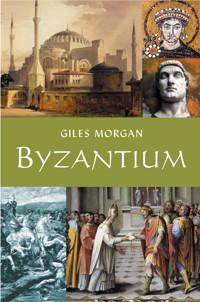
Today it is known as Istanbul, the modern city which stands at the crossroads of Europe and Asia. For centuries past, it was Constantinople. But before that, it was Byzantium, and it gave its name to an ancient empire. Ancient Greeks, led by a man named Byzas, founded the city in the seventh century BC. A millennium later, it was revitalised by the Roman emperor Constantine the Great, who played a crucial role in making Christianity the official religion of the Empire. When the Roman Empire in the West collapsed, it was Byzantium that kept the imperial idea alive. For centuries, surrounded by hostile neighbours, Byzantium remained a Christian city at the heart of a Christian empire. As the new religion of Islam expanded, it was Byzantium and the Byzantine Empire that stood on the frontline of the confrontation between two faiths. When, in 1453, the city fell to the Turks and its last emperor died, the world was changed forever. The Byzantine Empire created remarkable art and architecture and a lasting cultural and religious legacy. Giles Morgan provides a concise history of a city which gave its name to an extraordinary civilisation.
Sie lesen das E-Book in den Legimi-Apps auf:
Seitenzahl: 156
Veröffentlichungsjahr: 2011
Das E-Book (TTS) können Sie hören im Abo „Legimi Premium” in Legimi-Apps auf:
Ähnliche






Today it is Istanbul, the modern city which stands at the crossroads of Europe and Asia. For centuries in the past, it was Constantinople. But before that it was Byzantium and it gave its name to an ancient empire. Ancient Greeks, led by a man named Byzas, founded the city in the 7th century BC. A millennium later, it was refounded by the Roman emperor Constantine the Great, the controversial ruler who played a crucial role in making Christianity the official religion of the Empire. When the Roman Empire in the West collapsed under the impact of wave upon wave of Germanic invaders, it was Byzantium that kept the imperial idea alive. For century after century, increasingly surrounded by hostile neighbours, Byzantium remained a Christian city at the heart of a Christian empire. As the new religion of Islam expanded, it was Byzantium and the Byzantine Empire that stood on the frontline of the confrontation between two faiths. When, in 1453, the city fell to the Turks and its last emperor died in a failed attempt to defend his capital, the world was changed forever. The Byzantine Empire lasted for over a thousand years. Until recently historians and scholars tended to dismiss its achievements and innovations but increasingly there has been an acknowledgement of the unique nature of Byzantine culture and its role in linking the ancient world with the medieval period. The Byzantine Empire created remarkable art and architecture and a lasting cultural and religious legacy.
Giles Morgan is the author of the Pocket Essentials on The Holy Grail and Saint George.
Byzantium
GILES MORGAN
POCKET ESSENTIALS
For Gareth and Agnes
Contents
Introduction
1:The Reign of Constantine the Great
2:The Roman Empire in Crisis
3:The Reign of Justinian
4:The Rise of Islam
5:The Great Schism
6:The Crusades
7:The Siege of Constantinople
8:The Shadow of Empire
Bibliography
Web Pages
Copyright
Introduction
In 312 AD, Constantine the Great saw a shining cross of light in the sky.
This is the legend that has become attached to the Roman Emperor who is today widely seen as having played a crucial role in the transmission of Christianity to the West. Constantine is often credited with having made two important and interlinked decisions that were to play a major part in the shaping of modern Europe. The first was his toleration, and subsequent adoption, of Christianity. The second was the relocation of the capital of the Empire to the site of the ancient Greek city of Byzantium. The term ‘Byzantine’ derives from this city of Byzantium, founded in 667 BC by Greek colonists from Megara and named in honour of their leader Byzas.
Re-founded as ‘Nova Roma’ or New Rome in 330 AD, this new capital became better known as Constantinople or the ‘city of Constantine’.
The Byzantine Empire grew out of the Eastern half of the Roman Empire and was to continue long after the Western Empire finally fell to Germanic tribes in 476 AD. Indeed, the Byzantine Empire would endure until as late as 1453 and the eventual fall of Constantinople to the Ottoman Turks. Until comparatively recently historians and scholars tended to dismiss the achievements and innovations of the Byzantine Empire as being of a lesser magnitude than those of ancient Greece and Rome. But increasingly there has been a reassessment of this view and an acknowledgement of the unique nature of Byzantine culture and its role in linking the ancient world with the medieval period.
In recent years the development of Christianity and the role of Constantine the Great in that process has come under intense scrutiny, particularly in the wake of the popular success of Dan Brown’s novel The Da Vinci Code. Constantine is generally perceived as the first Christian Emperor but controversy has surrounded the differing forms that Christianity took in a period of intense theological debate. The varying movements within the Church would lead ultimately to the convening of the Council of Nicaea in an attempt to ratify Christian belief.
It is interesting to note, however, that, even as Christianity became the state religion of the Empire, many pagan beliefs, stories and ideas from the classical world survived and, indeed, were incorporated into the new dominant religion. Grave goods and luxury items, produced in Byzantine territories from different time periods up until as late as the Middle Ages, depict pre-Christian themes and images and challenge the idea that Byzantine art was solely concerned with Christian content.
Arguably, the Emperor Justinian I was to have as much influence over the development of the Byzantine Empire as Constantine since he extended the boundaries of its lands substantially, notably within Italy and North Africa. Justinian was also responsible for the building of the legendary domed church of Hagia Sophia in Constantinople. During his lifetime Constantinople would become one of the major cities of the ancient world.
However, the authority and power of the Byzantine Empire were to be seriously tested by the rise of Islam. Territories belonging to the Empire were lost and the city of Constantinople withstood sieges by Arab navies. The Byzantines displayed great resourcefulness and technological ingenuity during these trying times, developing an incendiary substance known as ‘Greek Fire’ which appears to have had similar properties to napalm. The secret formula for its creation was said to only be known to the Emperors of Byzantium. It proved particularly effective when propelled by pumps, often in battles at sea.
Conflicts emerged within Byzantine Christianity over the worship of icons and, in 726 AD, Emperor Leo III banned them throughout the Empire. However, in 843 AD, this decision was overturned. Tensions between the Eastern and Western Church would lead eventually to the Great Schism of 1054 when the Pope and the Patriarch of Constantinople excommunicated one another, paving the way for the entirely separate Catholic and Eastern Orthodox Churches that we know today.
The defeat of Byzantine forces at the Battle of Manzikert by the Seljuk Turks resulted in appeals to the West for aid and precipitated the First Crusade. However, Constantinople was itself overrun by Crusader forces in 1204 during the Fourth Crusade. The fall of Constantinople to the Ottoman Turks in 1453 was a major shock to many Western European countries and has subsequently come to be seen as marking the end of the medieval period.
The collapse of the Byzantine Empire is considered to have contributed greatly to the Renaissance. Many scholars had to flee Constantinople to the West, carrying unique knowledge and material with them. Constantinople had also served as an important city linking East and West on the Silk Road and its loss sparked attempts to open up new trade routes. Exploration by sea following the fall of the Byzantine Empire would, in time, lead to important new discoveries by Europeans. The development of Christianity and Islam has been strongly influenced by the Byzantine Empire and its major legacy today is arguably the survival of the Orthodox Church. The staggering scale of the Empire at its peak is illustrated by the buildings that remain from its rule in countries ranging from Macedonia to Northern Africa. The art and architecture produced by the Byzantines is distinctive and fascinating as is their often incredible, and sometimes overlooked, story.
1 - The Reign of Constantine the Great
It could be argued that no single individual played a greater role in the establishment and development of the Byzantine Empire than Constantine the Great. Like the immense marble head carved in his likeness that has survived from the fourth century AD at the Capitoline Museum in Rome, with its huge eyes and air of terrible power, his presence seems to dominate modern perceptions of Byzantium. However, to understand and trace the story of the Byzantine Empire, it is necessary to look first at the state of the Roman Empire under the Emperor Diocletian who ruled from 284 AD until his voluntary and unprecedented abdication in 305 AD.
During his reign Diocletian had divided the Empire into two halves formed of Eastern and Western parts. He shared his power with a trusted friend from the Roman military called Maximian, making him ruler in the West in 286 AD. Diocletian ruled the Eastern half of the Empire and retained ultimate power for himself. The decision to divide the Empire was an attempt to achieve greater control of what had become a vast and sprawling concern, stretching from Hadrian’s Wall in Northern England to territories in Egypt. Diocletian divided the power structure still further with the appointment of two junior Caesars to serve the Emperors. These actions also reflected the fact that the city of Rome itself was no longer ideally placed in geographical terms to govern and control such a huge multi-national Empire. Diocletian based himself and his court primarily in the city of Nicomedia whilst Maximian ruled his half of the Empire principally from Milan.
This system of government was known as the Tetrachy. Apart from his structural changes, Diocletian is today most infamously remembered for his persecution of Christians throughout the Empire whom he saw as a pernicious, disruptive and divisive influence within Roman society. When Diocletian abdicated, weary with the pressures of power, he forced his reluctant co-emperor to do likewise and their two junior Caesars were declared ‘Augusti’ in their stead. Constantius Chlorus, nicknamed ‘The Pale’, took over the Western Empire whilst Galerius, a soldier with a vicious and formidable reputation, became Emperor in the East. Constantius Chlorus was the father of Constantine the Great and, following an impressive and successful career as a general in the Roman Army, he had been given the task of subduing unrest in the unruly province of Britain. Constantine’s mother Helena is thought to have been the daughter of an innkeeper from Bithynia. Although historians generally concur that Constantius and Helena were at one time married, Helena was to be set aside in favour of a more prestigious and politically motivated marriage which Constantius made with Theodora, the adopted stepdaughter of the Emperor Maximian.
It is known that Constantine was born on 27 February but the exact year of his birth is not know for certain. It is thought to have been around 274 AD in a Roman province called Dacia. The town of his birth, Naissus, is known today as Nis in the former Republic of Yugoslavia. Although little is known about the origins of Constantine’s parents, it seems that Constantius was an example of an increasing trend of the time for individuals to gain success within the Empire on the basis of merit and ability rather than simply high birth and attachment to one of the old families of the city of Rome. Diocletian himself was not from a Roman background but as an efficient and often ruthless soldier and leader he had gained power and approval within the Roman army.
Constantine spent his early life attached to the court of Diocletian at Nicomedia. Although this would have provided Constantine with an opportunity to serve and impress within the Emperor’s court, it is likely that Diocletian kept him close as a potential bargaining tool should his father Constantius ever displease him or, indeed, openly rebel.
When Diocletian and Maximian did step down from power and Constantius and Galerius became Emperors, conflict almost immediately arose as to who was to take their place as Eastern and Western Caesars. Through the murky political machinations of the time Constantine was selected and left the court at Nicomedia in some haste to join his father’s army in Gaul. There is every chance that, if he had remained, he would have been assassinated in order to prevent his coming to power.
When Constantine joined his father’s army it was setting out on a military campaign against the Pictish tribes in Northern Britain. They succeeded in suppressing the marauding and aggressive Picts who had been wreaking havoc in Roman-controlled England and drove them back beyond the boundaries of Hadrian’s Wall. However, soon after this success, Constantius became ill and he died suddenly at York on 25 July 306 AD. Constantine, who seems to have rapidly gained the respect and admiration of his father’s troops during this campaign, was then acclaimed Augustus and ‘raised to the purple’.
However, events were to run far less smoothly when the Eastern Emperor Galerius was informed of Constantine’s acclamation by his troops. He refused to recognise Constantine as Western Emperor, viewing him as a rebellious upstart, and would accept him only as a Caesar and therefore junior to him in rank. In the short term Constantine was prepared to accept the situation and ruled in Britain and Gaul for a period of five years. Upon the death of Galerius in 311 AD, a power vacuum was created and rivalry between the Caesars came to a head. In the meantime the former Emperor Maximian, who had abdicated with Diocletian, had come back to power in Italy, supported by his son Maxentius. It is thought that Constantine may well have been involved in the later death of Maximian who had tried to make the legions of Gaul overthrow the younger man. Rivalry and mutual dislike was, therefore, particularly intense between Constantine and Maxentius and soon escalated into open war when Maxentius publicly accused Constantine of the murder of his father. Constantine is said to have raised an army of around 98,000 troops and marched on Italy. He successfully took a series of cities in Northern Italy and advanced inexorably on Rome to confront Maxentius.
The Battle of Milvian Bridge
The subsequent meeting of the two armies at the Battle of the Milvian Bridge on 28 October 312 AD has come to be seen as one of the defining moments in the life of Constantine with colossal implications for the future of European history. According to popular legend, Constantine is said to have undergone a profound and mystical religious experience either before or actually during the battle, one that could be compared to Paul’s experience on the road to Damascus. Accounts of Constantine’s vision vary and have subsequently proven to be an extremely popular and effective piece of pro-Christian propaganda. In his Life of Constantine (De Vita Constantini, I) the historian Eusebius of Caesarea tells how the Emperor described the experience to him:
…a most marvellous sign appeared to him from heaven… He said that about midday, when the sun was beginning to decline, he saw with his own eyes the trophy of a cross of light in the heavens, above the sun, and bearing the inscription ‘Conquer by This’. At this sight he himself was struck with amazement, and his whole army also.
(quoted in John Julius Norwich, Byzantium: The EarlyYears, p.39).
Similarly the historian Socrates, who wrote his account in the fifth century, states that:
… at about that time of day when the sun, having passed the meridian, began to decline towards the West, he saw a pillar of light in the form of a cross which was inscribed ‘in this conquer’. The appearance of the sign struck him with amazement, and doubting his own eyes, he asked those around him if they could see what he did, and as they unanimously declared that they could, the emperor’s mind was strengthened by this divine and miraculous apparition.
(quoted in John Holland Smith, Constantine the Great, p.102).
Socrates further explains that Christ himself appeared to Constantine in a dream the next night and commanded him to make a standard in the shape of a cross and to carry it into battle. If he did so, he would be assured of victory.
However, the first text to record the alleged mystical events around the Battle of Milvian Bridge was produced by a writer called Lactantius who actually knew Constantine and his family.Writing within a relatively short period after the battle, he describes the sleeping Constantine being directed in the course of a dream to order his troops to display the chi rho symbol. Constructed of the first two Greek letters of the name of Christ, this was a popular and well-known cipher for early Christians and can still be found in Christian contexts today. Historians now think that it is most likely that it was this symbol that Constantine utilised during the battle and that the vision of the cross was an elaboration which other contemporary accounts do not mention. It does seem, however, as if the Emperor did have some kind of experience that was meaningful to him and which he took to be of a divine origin and which greatly encouraged him before the battle took place.
When the two armies did meet it is thought that Constantine was leading the smaller of the two forces and yet he succeeded in forcing the troops of Maxentius into a disorderly retreat. The battle took place several miles from the city of Rome, near to the river Tiber and, in the melee, the army of Maxentius was pushed back to the Milvian Bridge, which was made of stone and fairly narrow. Knowing that it was possible that his troops might have to withdraw and would struggle to cross this bridge, Maxentius had ordered that a pontoon bridge be constructed next to it. Unfortunately, in the panic of retreat, the pontoon bridge was disassembled whilst men were still crossing it and it collapsed under their collective weight.
Many were drowned, including Maxentius himself, whilst the remaining men, who rushed to cross the stone bridge, became trapped and crushed by sheer weight of numbers. The army of Constantine emerged victorious, thus seeming to confirm the mystical dream or intuition of the Emperor.
The Edict of Milan
Following his victory at the Milvian Bridge and his acceptance by the Roman Senate as the Western Emperor, Constantine met with the Eastern Emperor Licinius in the city of Milan in early 313 AD. The subsequent talks between the two Emperors are best remembered today for producing the Edict of Milan which promised that there would be a new climate of religious tolerance and the cessation of persecution of individuals based on their beliefs. The edict was aimed particularly at protecting the Christians who had suffered greatly, particularly during the bloody and violent persecutions instituted by the Emperor Diocletian.
However, although Constantine was to legislate in favour of the Christians and had come to align himself with their cause, there is still considerable debate as to the extent to which he himself had embraced their religious beliefs. Clearly the events of the Battle of Milvian Bridge appear to show Constantine appealing to the Christian god for aid but a closer examination of what is known of the Emperor’s religious beliefs during this period reveals a more complex spiritual identity. Constantine had in fact been variously a devotee of the cult of Apollo, of Mithras and of Sol Invictus or the ‘Unconquered Sun’. Coins from the early part of his reign as Western Emperor depict Sol Invictus and it has been argued that, like his own father Constantius, he was increasingly becoming interested and moving towards the idea of a single supreme deity. Interestingly, however (and, arguably, entirely in keeping with attitudes of the time), Constantine seems to have felt reasonably comfortable with, and open to, the concept of this supreme deity taking more than one form or assuming more than one identity. It must also be remembered that it would have been politically unwise of Constantine to commit fully and publicly to the Christian cause and so upset the long-standing traditions of polytheistic worship in the Roman Empire.




