


0,99 €
Mehr erfahren.
- Herausgeber: Kendall Miccoli
- Kategorie: Geisteswissenschaft
- Sprache: Englisch
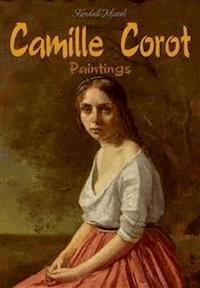
Jean-Baptiste-Camille Corot (1796 - 1875) was the leading French painter of the Barbizon school. Unlike the Impressionists, Corot painted only sketches in the open air; he composed his finished paintings in the studio. Corot executed many etchings and pencil sketches. Some of the sketches used a system of visual symbols—circles representing areas of light and squares representing shadow. He also experimented with a hybrid of photography and engraving. Starting in the 1830s, Corot also painted decorative panels and walls in the homes of friends, aided by his students. As he declared for his own method to depict: "I noticed that everything that was done correctly on the first attempt was more true, and the forms more beautiful."
Das E-Book können Sie in Legimi-Apps oder einer beliebigen App lesen, die das folgende Format unterstützen:
Veröffentlichungsjahr: 2015
Ähnliche
















Camille Corot:Drawingsand Etchings
ByKendall Miccoli
First Edition
Copyright © 2015 byKendall Miccoli
*****
Camille Corot:Drawingsand Etchings
*****
Foreword
"In my eyes, nobody taught me anything. When one finds oneself alone confronted by nature, one extricates oneself as best one can, and naturally one invents one's own style."
Jean-Baptiste-Camille Corot
Jean Baptiste Camille Corot was French painter anddraftsman, born in Paris, in a house on the Quai by the rue du Bac, on the 26th of July 1796. His family werewealthy bourgeois, and whatever may have been the experience of some of his artistic colleagues, he never, throughout his life, felt the want of money. He was educated at Rouen and was afterwards apprenticed to a draper, but hated commercial life and despised what he called its “business tricks,” yet he faithfully remained in it until he was twenty-six, when his father at last consented to his adopting the profession of art. Corot learned little from his masters. He visited Italy on three occasions: two of his Roman studies are now in the Louvre. He was a regular contributor to the Salon during his lifetime, and in 1846 was decorated with the cross of the Legion of Honour. He was promoted to be officer in 1867. His many friends considered nevertheless that he was officially neglected, and in 1874, only a short time before his death, they presented him with a gold medal. He died in Paris, on the 22nd of February 1875, and was buried at Père Lachaise.
Of the painters classed in the Barbizon school it is probable that Corot will live the longest, and will continue to occupy the highest position. His art is more individual than Rousseau’s, whose works are more strictly traditional; more poetic than that of Daubigny, who is, however, Corot’s greatest contemporary rival; and in every sense more beautiful than J. F. Millet, who thought more of stern truth than of aesthetic feeling.
Corot’s works are somewhat arbitrarily divided into periods, but the point of division is never certain, as he often completed a picture years after it had been begun. In his first style he painted traditionally and “tight” — that is to say, with minute exactness, clear outlines, and with absolute definition of objects throughout. After his fiftieth year his methods changed to breadth of tone and an approach to poetic power, and about twenty years later, say from 1865 onwards, his manner of painting became full of “mystery” and poetry. In the last ten years of his work he became the Père Corot of the artistic circles of Paris, in which he was regarded with personal affection, and he was acknowledged as one of the five or six greatest landscape painters the world has ever seen, along with Hobbema, Claude, Turner and Constable.
During the last few years of his life he earned large sums by his pictures, which became greatly sought after. Besides landscapes, of which he painted several hundred, Corot produced a number of figure pictures which are much prized. These were mostly studio pieces, executed probably with a view to keep his hand in with severe drawing, rather than with the intention of producing pictures. Yet many of them are fine in composition, and in all cases the colour is remarkable for its strength and purity. Corot also executed a few etchings and pencil sketches.
Drawingsand Etchings
Nepi in Rome
1826,Pencil on white paper
View of Nemi
1826,Graphite on cream wove paper
Clump of Trees at Civita Castellana
1826,Graphite on cream wove paper
Monte Soracte
1827,Pen and black ink over graphite pencil on white paper
Italian Landscape
1827,Drawing in pen and ink with lead pencil




