


Erhalten Sie Zugang zu diesem und mehr als 300000 Büchern ab EUR 5,99 monatlich.
- Herausgeber: Istros Books
- Kategorie: Gesellschafts- und Liebesromane
- Sprache: Englisch
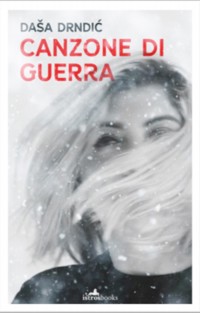
In typical Drndić style, the reader is offered a view of the past and the present through a collage of different genres - from (pseudo) autobiography to documentary material and culinary recipes as the narrative explores different perspectives on the issue of emigration, the unresolved history of the Second World War, while emphasising the absurdity of politics of differences between neighbouring nations. Tea Radan, the narrator of the novel Canzone di Guerra, reflects on her own past and in doing so, composes a forgotten mosaic of historical events that she wants to first tear apart and then reassemble with all the missing fragments. In front of the readers eyes, a collage of different genres takes place - from (pseudo) autobiography to documentary material and culinary recipes. With them, the author Daša Drndić skillfully explores different perspectives on the issue of emigration and the unresolved history of the Second World War, while emphasizing the absurdity of politics of differences between neighboring nations. The narrator subtly weaves the torturous story of searching for her own identity with a relaxed, sometimes disguised ironic style, which takes the reader surprisingly easily into the world of persecution and the sense of alienation between herself and others.
Sie lesen das E-Book in den Legimi-Apps auf:
Seitenzahl: 250
Veröffentlichungsjahr: 2022
Das E-Book (TTS) können Sie hören im Abo „Legimi Premium” in Legimi-Apps auf:
Ähnliche
















Table of Contents
Imprint
Little Pioneers
Little Unfinished Story
Glasshouses and Shitballs
Hitler Liked Quail and Father Christmas Abandons Bosnia
Oh, Donna Clara
Afterword: Consistent Profession of Revolt
Translator's Note
The Translator
The Author
DAŠA DRNDIĆ
CANZONE DI GUERRA
New battle songs
Translated from the Croatian by Celia Hawkesworth
First published in 2022 by
Istros Books
London, United Kingdom www.istrosbooks.com
Copyright © Estate of Daša Drndić, 2022
Previously published by Partizanska knjiga, Serbia, 2019
The right of Daša Drndić, to be identified as the author of this work has been asserted in accordance with the Copyright, Designs and Patents Act, 1988
Translation © Celia Hawkesworth, 2022
Cover design and typesetting: Davor Pukljak, www.frontispis.hr
Cover design based on the photo by Jonathan Sanchez on Unsplash
ISBN:
978-1-912545-92-6 (Print version)
978-1-912545-98-8 (Ebook version)
This publication is made possible by the Croatian Ministry of Culture.
This book has been selected to receive financial assistance from English PEN’s “PEN Translates” programme, supported by Arts Council England. English PEN exists to promote literature and our understanding of it, to uphold writers’ freedoms around the world, to campaign against the persecution and imprisonment of writers for stating their views, and to promote the friendly co-operation of writers and the free exchange of ideas.www.englishpen.org
LITTLE PIONEERS
Jadranka said: Don’t go.
Father said: You’re right to go.
Nenad said: If only I could go.
Jasna said to Sara: Your mum’s capable, you’ll be fine. Three years earlier (when we moved from Belgrade to Rijeka in Croatia), Jasna had said to Sara: Your mum’s hopeless, she’s never achieved anything.
Laura asked: Will you write to me about how bad things are? (When I wrote that things were all right, Laura stopped talking to me.)
My brother said: I’m going to America, that’s where I was born. (He didn’t go anywhere.)
Only my sister Lena sighed: I’ll miss you. But she lived in Slovenia.
I had applied for a small managerial post. I didn’t get it. The newspapers wished me a safe journey.
I read Dovlatov.
I read Krleža.
I read Brodsky.
Dovlatov was big and strong. He downed two litres of vodka a day. He spent seventeen years in Petrograd writing, but no one published any of it. He went to America, became well-known and after twelve years, in 1990, he died. He was forty-nine. Before that his daughter had asked him: Are you happy now? He replied: No.
After living in Rijeka for three years, Sara finally summoned the courage to ask for frankfurters using the Croatian and not the Serbian word.
Vesna told me that someone in a Croatian bank had said that she couldn’t understand Serbian at all.
There’s little Lulu from Somalia. Her father speaks French, English and German, as does her mother. Her mother is not from Somalia but of half-Polish, half-Hungarian origin and she was born in America. She asks Lulu from Somalia: Qu’est-ce qu’il y a dans ta soupe? Lulu says: Il y a des carrotes, des pommes-de-terre, chicken and noodles and je veux un ice-cream maintenant. She asks the waiter: A glass of voda, please. Lulu’s not yet five. Everyone understands her.
It’s a sunny winter’s day. The sky is electric blue as it can only be in Paris or on the Adriatic when there’s a north wind. Sara is saying goodbye to her girlfriends in the pizzeria under the building where we live. I walk and sing (to myself).
Rijeka is divided by a railway line. In Rijeka trains pass slowly through the city. Trains completely block out the view of the sea. This makes the city seem smaller.
There are several benches along the Quay. They’re used by prostitutes and old people. The old people rest from standing, because the benches are opposite various administrative offices in which the old people spend a long time waiting in queues. The old people wear old clothes and worn-out shoes. Old people find it hard to get used to new clothes. The old men don’t shave every day. The old man beside me takes a bun out of his shopping bag and sucks it. The way my granny Ana used to suck old toast because her teeth were no use anymore. There’s a carrot poking out of his bag.
The sky is electric blue, says the old man.
The prostitute is no more than nineteen. She’s got a small pale yellow towel poking out of her bag. The prostitute is eating salami. It’s midday.
My mum sent me this, says the prostitute.
I’m sitting in the middle, between the old man and the prostitute, and I’m not eating anything.
The shape of your face isn’t at all Serbian, my colleague R. V. in Belgrade had said. You’ll have to leave, she also said.
In Rijeka everyone told me: Tone down that Serbian accent.
Dovlatov wrote about Spivakov.
As a Jew in the Soviet Union, Spivakov experienced a lot of unpleasantness. Even though he was called Spivakov and not Spivberg or Spivman. After all kinds of tribulations, the authorities permitted him to give a recital in the USA. When he arrived at the Carnegie Hall, he found a crowd from the American League for the Defence of Jews. They were holding up placards reading: KGB agents – out! They were shouting: Fighting for the rights of Soviet Jews!
When the concert began, Spivakov was bombarded with tins filled with red paint. Spivakov was completely red.
That was a long time ago. It’s nothing like that now. Spivakov is internationally famous now. Among the most famous.
My little pocket mirror doesn’t encompass all the lines on my face. It can only take in a small part of my chin. I’m grateful to my little pocket mirror.
The old man and the prostitute lean towards me, that is, towards my little mirror.
The old man says: Just for a moment, my eye hurts.
The prostitute says: Let me just look at this tooth. It’s loose. She says that with a very wide-open mouth.
You’ve got hairs poking out of your nose, Sara told me at the bus station, where there were a lot of people. I pretended not to hear.
You’ve got dandruff, she added. And that coat looks dreadful on you and you’re fat. The bus came so she stopped. In the bus, I told her: I’m not buying you any more Kinder eggs.
In the library they hadn’t let me take the translation of Catcher in the Rye for Sara to read, because it was printed in the Cyrillic script. The librarian had whiskers and a lot of hair in her armpits.
The old man was chomping noisily on his dry bread.
The prostitute was chewing her dry sausage.
I took out some cherry sweets and offered them to the others. The three of us munched.
I said: I’ll take you for cakes.
The old man said: I’ve booked a place in the graveyard.
The prostitute said: There are a lot of suicides in Vojvodina.
That didn’t interest me as I was intending to go on living,in Canada. I didn’t have anyone in the graveyard in Rijeka in anycase.
At the cake-shop the waitress told us: We don’t sell baklava anymore.
The old man said: I like jam doughnuts best.
The prostitute said: I need a dentist.
In the cake-shop we heard a direct broadcast of two acrimonious debates taking place in the Parliament. One about Istrian cattle, the other about Lipizzaner horses.
In the cake-shop, the old man said: I’ll come to see you off.
I knew he wouldn’t as he’d be asleep. Old people go to bed early, and we’d be leaving Rijeka at three in the morning.
The prostitute said: I’ll come too.
That was also impractical as prostitutes generally work at night, when old people are sleeping. So, no one would be seeing us off.
Afterwards, when we arrived, I wrote to everyone. For the Christmas and New Year holidays. I sent 47 cards, nine to Belgrade, three to Israel, two to America, two to South Africa, one to Paris, one to Slovenia, one to Amsterdam, the rest to Croatia. Five people replied from Croatia, three from Belgrade and from the other countries – everyone, because they were nostalgic. That didn’t surprise me. I’d lost ten kilograms for Canada. I looked quite good. Later, in Canada, I put them all back on. I took two evening outfits with me which I never wore. I took a white Toledo tablecloth for twelve people, which I never used. I took a large silver platter, which I later cleaned with Vim.
Fatima had left Croatia two days earlier. She had wanted to go to Australia, but she ended up in Novi Sad. She gave me a little badge, with Fatima written on it. Otherwise, in Croatia she told everyone to call her Seka (Sis). I attached the little badge to my coat. At the airport everyone thought I was called Fatima. In Croatia at that time, it wasn’t a good idea to be called Fatima. It was better to be called Grozda, say. If that wasn’t possible, then at least Vesna, Ivana, Maja or Ankica. Or perhaps Ada.
On the building of the Tuberculosis Clinic, someone had written Turks go back to Bosnia! That was where we had our lungs examined, because the Canadian authorities stipulated that only healthy, clean lungs should enter their country. My lungs are healthy, as are Sara’s, needless to say. On the image of my lungs today you can’t see that there was once a bit of a problem. The doctor said: Give me your family history.
I confessed everything:
Mother: open cavities, 1942. Later, cancer of the uterus, with metastases on the lungs. Died 1978. Sister, brother and I: distended hilum, early stage of process.
The doctor wrote everything in my notes and handed them to me. Then I took them to the office that sends them to Canada.
The following day, I went back to the office that sends the results of medical examinations to Canada. I need those results for a competition in Croatia. I’ll bring them back tomorrow.
The assistant was very helpful. She was obviously a fighter against the drain of brains from the Homeland.
I threw away the notes the doctor had written. I went back to the Tuberculosis Clinic, with the words Turks go back to Bosnia written on it. This time with Sara, so that I wasn’t recognised. I said: I’ve lost the results of the examination.
The assistant said: You have to see the same doctor.
Sara was horrified because I’d told her the whole story.
The doctor asked: Has anyone in your family suffered from tuberculosis?
I exclaimed: Heaven forbid!
The doctor also said: Your heart is enlarged.
That’s from swimming, I said.
In her report for the Canadian authorities, the doctor wrote the nicest and best things about me. We were suitable for entry into that large, rich country. Especially Sara. She was so pure and healthy.
We were driven to Zagreb airport by a driver who offers funeral services. His car was the biggest and the only one where we could fit our four enormous suitcases, bought in Trieste for 73,000 lira each. The driver gave me an extremely significant letter to take to a distant relative of his who lives in Canada. He told me: Be sure to find him. I want to go to Canada too.
I asked him: Do you have a reserved graveyard space?
He said: No. I’m from Bosnia.
LITTLE UNFINISHED STORY
INTRODUCTION
There is a lot of literature about pigs. There is almost no genre of the written word into which pigs have not worked their way. They are found in science (veterinary, biological, medical), in literature (essays, poetry, belles-lettres), not to mention film and painting. As far as life is concerned, here too, in our everyday life, pigs are all around us, and their destiny in the development of civilisation and technology is increasingly bizarre. The bizarre destiny of pigs is our reality.
A BRIEF HISTORY OF THE ORIGIN OF VIETNAMESE POT-BELLIED PIGS
Most breeds of domestic pigs originated from the European wild pig, which in turn is thought to come from the Chinese breed Sus vittatus (or Sus indicus) and the Indian, Sus cristatus. Wild pigs are considered nocturnal omnivores. The pot-bellied pig is a direct descendant of the wild pig, that is the boar, from the genus Artiodactyl, sub-genus Suiformes, family Suidae, breed Sus, type Scrof. Pot-bellied pigs have existed in Europe and Asia for 40,000 years now, in territories from the Pacific to the Atlantic and from the Mediterranean to Siberia. It is believed that they were kept as pets by some Chinese rulers eight thousand years ago.
There are numerous breeds of pig. Today’s European and American pigs have come into being on the whole through crossbreeding, in other words man has intervened and, in addition to pigs of the usual size, produced also this miniature type. Of the large breeds some of the best known are the Yorkshire, White Chesters, American Landrace pigs (of Danish origin), Hampshire (USA), Berkshires (England), Polish-Chinese (USA), spotted, Herefords, Tamworths. The small pigs include: the miniature Homel pig, also known as the Sinclair and produced in the Homel Institute of the University of Minnesota, in 1949;the Pittman Moore pig (also from the USA); the Hanford miniature (which saw the light of day in the Hanford laboratory, USA, 1958); the Göttingen miniature (Germany, 1980); the Ohimi pig (Japan, 1945); the Lee Sung miniature (Taiwan, 1975); the Yukatan miniature (Mexico, 1960); the Yukatan micropig, and so on. It is interesting that the Vietnamese pot-bellied pig was not crossbred, and does not represent various breeds of a single genus, but is rather indigenous, and includes several types: Mong Cai (North East Vietnam); I (West Vietnam); Co (Central Vietnam); Heo Moi (South Vietnam). It is only recently, with the migration of small Vietnamese pot-bellied pigs to other continents, that they have been crossed with large local pigs. That’s enough of that.
PIGS IN SOCIALIST YUGOSLAVIA
In the Balkans, the pig is a cult-animal, the more so the further east you go. I remember pre-holiday days, especially before New Year, because of the market stalls piled high with little clean pink suckling pigs. When there was no more room on the stalls, the peasants would arrange the piglets, dead, scalded, smooth, all dolled-up, in the open boots of their cars, even on their roofs, while snow creaked under the feet of passers-by, customers and observers. Pigs would also be seen hanging on fat metal hooks in the window of almost all the butchers in town, upside down, sometimes decorated with twinkling ribbons used for New Year decorations, with a couple of baubles to boot, to be properly festive. Before the larger state or popular festivals, our socialist towns, swamped with suckling pigs, big pigs, and little pigs, used to exhale a blessed, indisputable sense of community. Bakers were all booked days in advance, people swarmed through the streets, carrying huge black trays with their chief ‘booty’ to their homes, to their festively prepared tables.1
Further west, but still in the Balkans, the cult of roast suckling pig did not emit the authenticity so characteristic of their eastern neighbours. For instance, in the western Balkans (mainly in towns) in the pre-holiday, New Year fever, activities involving pigs and their culinary processing appeared artificial, like a forced but feeble imitation, like a kind of obsessive neurosis infecting the people as a whole. The way the ‘nation’ in the western Balkans practised godlessness, the way it had practised Yugoslavism and brotherhood, was the way it also roasted pigs. The way it now practises Catholicism and chokes on greasy noodles. And people wonder secretly whether sour cabbage is a Serbian dish; whether its preparation is perhaps an act of sacrilege to the homeland.
In the western Balkans (where an outer wall rears up for one to jump over), what is authentic, original, natural, ‘national’ – are turkeys. And poultry in general.2 Feast days, especially winter ones, and turkey, not with baked sauerkraut but with sour cabbage, that is the glory of the Catholic west-Balkan culinary outer wall. Turkey with noodles (here they are again), turkey roasted with olives, charcoal-grilled turkey, and in more recent times – Istrian turkey in a hundred ways – with truffles, as cutlets, turkey stew, turkey cooked under embers, turkey ‘à la Motovun’. Turkeys are clean, they’re not fat (like pigs), when they’re brought onto the table they look noble, as in American films. In the western Balkans, for a festive meal, a pig or a turkey may also be replaced by a roast ham. Absolutely. Not to mention smoked bacon. Just as in the eastern Balkans, for festive celebrations, roast pork may be replaced by roast turkey. And the circle closes. With ham and bacon, we return to pigs, in the western variant, with suckling pig and roast turkey we are in the eastern variant, and all that is connected by bacon, kidneys, sweetbreads and tripe – the edible parts of an ordinary pig.
After the war, in socialist Yugoslavia skyscrapers began to spring up rapidly, accompanied by songs of freedom and construction on the lips of eager builders, because socialist Yugoslavia had to become an industrial country and absolutely not, heaven forbid, remain (or become) an agricultural stock-raising paradise. Peasants scurried into the towns, dragging with them their hens, their sheep, their families and – their pigs. Since there were no adequate gardens, yards, pastures or cultivatable land around the skyscrapers, the mostly small apartments with mostly small bathrooms were transformed into chicken coops and pigsties. The mild spring nights echoed with the nostalgic grunting of pigs and clucking of hens as a memento of past days of authentic village living. With subdued melancholy, the new citizens of the new towns, exchanging their fields and their forests, their external and internal spaces for asphalt, lived an imitation of tribal life; they practised their pathetically dislocated collectivity in surroundings of extreme individualism.
Brandy was brewed on electric cookers and pigs were slaughtered in reinforced concrete shelters. Knives were sharpened and blood coursed down the drains of built-in enamel baths. And song soared and a medley of folk dances wound round the narrow stairways, sometimes fifteen floors to the street. And in the street, all of this longing, singing, roaring, grunting, blood, sausages, offal, innards, merged with the din of the towns coming into being. The new socialist man was being born.
Today that Odyssey of the new socialist man is over. In great fury, sickened by himself and his own acceptance of the imposed alteration of his genealogical code, he reared up, he shouted, he destroyed towns, he forged himself a path to his mental pastures and now he is calm and ecstatic. He squats bewildered on the ashes of his past. Roast suckling pig and even roast turkey are things he only dreams of now.
A SCIENTIFIC DISCOVERY IN CONNECTION WITH PIGS
Recently published research by the British endocrinologist Dr Vinod Patel confirms that confined pigs, forcibly moved away from their familiar surroundings, die abruptly. If the confinement of the pigs lasts after they have been moved, death is almost inevitable. That is probably why, after several years of endeavouring to adapt to their new surroundings, sows and boars disappeared from the towns of the Yugoslav community of nations and nationalities. Dr Patel’s research also confirms that many condemned people die in custody before they reach their prison cell. It is believed that death, in pigs as in people, comes as a result of disturbances in the endocrine system of both species, which causes the undue secretion of a particular hormone. A contemporary illness has acquired a contemporary name: Porcine Stress Syndrome.
WHAT DO (SOME) IMMIGRANTS DO IN CANADA AFTER THE COLLAPSE OF SOCIALIST YUGOSLAVIA?
Sara’s song: In the shower, when she thinks I can’t hear her, Sara sings: What can we do to make things better, what can we do to make things better. La-la-la-la, grass so green, la-la oh heart of mine, la-la-la-la! In the Istrian style.
Boris’s story:Yes, there was a war and we were, in a way, forced to leave, but in the end, in the end, it’s our decision.
Boris is talking to a journalist from Canadian state radio on an underground platform. In the background a violinist is playing a Hungarian czardasz, passers-by hurry, the scene is almost filmically all-encompassing and complete. Pizzicato.
There are so many excellent musicians in Canada. I don’t think I’m good enough to play in the underground. Really. You don’t have to do an audition, did you know that?
In his apartment, Boris takes out his violin and talks to a journalist from Canadian state television. As he talks, he plucks at the strings and talks about his violin worth fifteen thousand German marks that went up in flames in Sarajevo. Boris does not seem at all sad. He even often laughs.
I went into a shop selling musical instruments, just in case. There was a Chinese man at the counter. I asked him whether he hired out violins. He said, well no, but I’ll give you one, you don’t need to pay anything, he said. Keep it for three months; if you like it, you can pay, if you don’t bring it back. He was the first person in Canada to offer me anything without asking a whole lot of questions. He didn’t even ask for any identification. He just asked me whether I knew what was happening with Bosnian wood. Because Bosnian wood was very famous. I read somewhere that even Stradivarius made violins out of Bosnian wood. It was exported from Bosnia to Italy. Today I don’t know whether there’s any wood left in Bosnia.
Branko’s story:The first winter it was mostly old people who died. They couldn’t keep warm. I watched old ladies, perfectly dressed, in fur coats, they wore fur coats, and I watched them collecting twigs in the parks, thin, damp twigs, in fact just the remains of what others had already cut up. And you could see that they’d once been ladies, real upper-class ladies. Eighty percent of the trees in Sarajevo parks were felled.3
David’s story:We came to Canada in order to start a new life and we thought that, with time, we’d become part of the middle class. Ha! What an outmoded concept! Because the middle class is dying out. And that is very, very bad for contemporary society. We are returning to the old times in which a small ruling class held virtually everything in its own hands; today only technology has progressed, so that small ruling class controls you more easily, channels your behaviour, your way of life, more easily. Without a healthy middle class, society cannot advance.
(The Canadian radio reporter was astounded and offended. He couldn’t understand what David was jabbering about. As he drank his coffee, the Canadian radio reporter was discreetly irritated that the story he was preparing didn’t contain enough of the tragic and sensational, it lacked a certain je ne sais quoi that would get listeners’ artistic juices flowing on a Sunday morning.)
Almira’s interjection:Some people thought they were coming to the promised land, while others quickly realised that there were no promised lands.
David’s story:Over there, where you could barely make a living, you were still contented. There was always someone who would think for you. People were somehow modest. And somehow contented. There weren’t many insatiable people, there weren’t many who were terribly rich. There was no reason to work very hard. People understood: we’re not rich, but we do have time.
Branko’s story:Overnight you become a person without anything. A person without property, without money, without land. You have nothing. First there were some gunshots, then you could hear shelling in the distance. That sounded like fireworks. Exactly like fireworks. Then those ‘fireworks’ came ever closer. Just two weeks later the explosions had become pretty strong. That meant that the shells were right here, really close. A friend told me that he was in the street when he heard an explosion. Then he saw a dog, there were a lot of abandoned dogs in Sarajevo at that time, and the dog was running through the streets carrying a piece of human flesh in its teeth. Someone had been killed in that explosion, and that flesh was still living, that flesh in the dog’s mouth was alive, it was pulsating.
It was warm in the passageways of the underground. On borrowed guitars, trumpets, saxophones and electric organs musicians played, people for the most part from East-European countries, for the most part with university degrees, people who had passed auditions. In the busy, noisy streets overhead, the wind whipped you, your fingers froze.
Marko’s story:
Marko: Which would you like, spicy Italian or Polish?
Passing man: Polish.
Marko: Something to drink?
Passing man: Coca-Cola.
Marko (to the Canadian radio reporter): I never dreamed that I’d be selling hot-dogs and sausages in Toronto. I thought I’d make more of a success of my career. Because, excuse me… Hi! Spicy Italian or Polish?
Passing woman: Hot-dog.
Marko: First I taught literature at a secondary school, later I was a lecturer at the university. I also worked as an editor for a publisher and wrote literary criticism. Then, I’m a poet. Yes, I’ve had books published. Excuse me… Hi! Spicy Italian or Polish? Three dollars please… Three hot-dogs? Right away. Well-done or medium?
Passing man: Medium; wrapped.
Marko: I don’t know. Canadian people’s problems seem comic to me. In my country a lot of people died.
Passing woman: We’re ungrateful. We don’t know how luckywe are…
Marko: Well-done, you said?
Passing woman: Not too well-done, medium well-done…
Marko: On its way. Those problems… Hi! What would you like, spicy Italian or Polish? My mother was born in Croatia. I was… Hi! I’m a mixture. I’m a mixture of nationalities from former Yugoslavia. From Goražde. Have you heard of Goražde? No? Goražde is a town with one of the most tragic fates in this war. Massacres. My mother spent two years and two months there during the war. Then she had to run away because she couldn’t legally leave the town. And my aunt was killed… Excuse me. Hi! Spicy Italian or Polish?
Branko’s story:Dinner: spring onion with a few drops of vegetable oil and two slices of bread. That was an excellent dinner.4 But the worst thing was that I hadn’t even started to eat when two shells exploded in the neighbourhood and all the glass shattered, right beside me. Up until then I had believed that the war was happening somewhere else, far away. I didn’t eat. My plate was full of tiny pieces of glass. Window glass. I was left hungry. That was the worst.
Enes’s story:I’m from Sarajevo as well. I’ve been in Canada for a year and a half now, I’ve got refugee status. Otherwise, I’m an economist. I used to work in financial control and analysis. I don’t like being on social support. I’m looking for work, it’s hard. I attend a programme of classes for refugees. There we’re taught how to look for work in Canada, how to create connections, how to write CVs, how to change profession. They teach us literature. In fact, it’s a secondary school. They tell us: Join clubs run by your ethnic minorities. Then: Go to sports clubs and play sport. That’s how contacts are made. Then: Find a hobby, there are a lot of hobby clubs.
Marija’s story:When I went to that school, there were about thirty of us in the class, and it was well known that we all had some kind of university degree. They gave us a maths test: addition and subtraction. The kind of problems set for my daughter in primary school. And before the class started, the teacher gave a little introductory speech about cleaning our teeth every morning and using deodorant and keeping ourselves clean and not smelling because in Canada a bad smell, a bad human smell is offensive to the public, whereas perhaps in our countries it wasn’t.
Enes’s story: I think that many people make a mistake because they want to work in their own profession. I think that we have to change careers. We have to make a living doing jobs for which there is demand on the market. The ones needed in Canada. Canada needs electricians, bakers, plumbers, truck drivers. There is great competition for highly qualified jobs. My wife is a doctor, but in Canada it is very hard to get a permit to work in the medical profession. She needs five years. She has to take very difficult exams and she must have a year of working in Canada. My wife is now forty-four.
David’s story: At home I worked in marketing and tourism. Otherwise, I’m a historian. When I arrived, I worked in a baker’s, I sold bread and cakes. Then I worked as a secretary in a private office, for roughly six months, then I was dismissed. Then I went onto social security. In my case, my age is a handicap. I’ll soon be fifty. Otherwise, I might have some hope. There are various conditions that incomers must fulfil. They have to have Canadian letters of recommendation and Canadian experience. What is so special about Canadian experience if a person already has twenty-five years’ working experience? Book-keeping, for instance, is the same all over the world. Income-expenditure. It was invented by an Italian monk as early as the end of the fifteenth century. It’s not rosy. The prognosis is gloomy.
We sometimes wonder why we came, why did the Canadian authorities allow us to come in, why they import so many people? The conclusion sounds almost Marxist: they need cheap manpower. They need educated people to work for a minimal wage.
Boris’s story: (Accompanied by constant plucking on the strings of the borrowed violin.)




