


1,99 €
Mehr erfahren.
- Herausgeber: Publisher s22302
- Kategorie: Geisteswissenschaft
- Sprache: Englisch
Carl Larsson (1853 - 1919) was a Swedish painter and interior designer, representative of the Arts and Crafts Movement. His many paintings include oils, watercolors, and frescoes. He considered his finest work to be Midvinterblot (Midwinter Sacrifice), a large wall mural now displayed inside the Swedish National Museum of Fine Arts.After several years working as an illustrator of books, magazines, and newspapers, Larsson moved to Paris in 1877, where he spent several frustrating years as a hardworking artist without any success. Larsson was not eager to establish contact with the French Impressionists; instead, along with other Swedish artists, he cut himself off from the radical movement of change.After spending two summers in Barbizon, the refuge of the plein-air painters, he settled down with his Swedish painter colleagues in 1882 in Grez-sur-Loing, at a Scandinavian artists' colony outside Paris.It was there that he met the artist Karin Bergoo, who soon became his wife. This was to be a turning point in Larsson's life. In Grez, Larsson painted some of his most important works, now in watercolor and very different from the oil painting technique he had previously employed.Carl and Karin Larsson had eight children and his family became Larsson's favourite models. Many of his watercolors are now popular all over the world.Larsson's popularity increased considerably with the development of color reproduction technology in the 1890s, when the Swedish publisher Bonnier published books written and illustrated by Larsson and containing full color reproductions of his watercolours. However, the print runs of these rather expensive albums did not come close to that produced in 1909 by the German publisher Karl Robert Langewiesche: His choice of watercolours, drawings and text by Carl Larsson, titled Das Haus in der Sonne (The House in the Sun), immediately became one of the German publishing industry's best-sellers of the year- 40,000 copies sold in three months.Larsson also drew several sequential picture stories, thus being one of the earliest Swedish comic creators.Carl Larsson considered his monumental works, such as his frescos in schools, museums and other public buildings, to be his most important works.
Das E-Book können Sie in Legimi-Apps oder einer beliebigen App lesen, die das folgende Format unterstützen:
Veröffentlichungsjahr: 2017
Ähnliche




















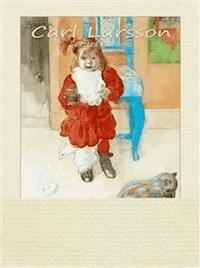
Carl Larsson
Selected Paintings
By Siana Bhatt
––––––––
First Edition
*****
Copyright © 2017 by Siana Bhatt
Table of Contents
Title Page
Copyright Page
Foreword
Paintings
Contents
Foreword
Carl Larsson (1853 - 1919) was a Swedish painter and interior designer, representative of the Arts and Crafts Movement. His many paintings include oils, watercolors, and frescoes. He considered his finest work to be Midvinterblot (Midwinter Sacrifice), a large wall mural now displayed inside the Swedish National Museum of Fine Arts.
Larsson was born on May 28, 1853 in Gamla stan, the old town in Stockholm. His parents were extremely poor, and his childhood was not happy. Carl's strong artistic talent had emerged early in his life. When he was 13 years old, his teacher at the school for the poor had persuaded him to apply for enrollment at Principskolan, the preparatory department of the Royal Art Academy. During his first years there, Larsson felt socially inferior, confused, and shy. In 1869, at the age of sixteen, he was promoted to the "antique school" of the same academy. There Larsson gained confidence, and even became a central figure in student life. Carl earned his first medal in nude drawing. In the meantime, Larsson worked as a caricaturist for the humorous paper Kasper and as graphic artist for the newspaper Ny lllustrerad Tidning. His annual wages were sufficient to allow him to help his parents out financially.
After several years working as an illustrator of books, magazines, and newspapers, Larsson moved to Paris in 1877, where he spent several frustrating years as a hardworking artist without any success. Larsson was not eager to establish contact with the French Impressionists; instead, along with other Swedish artists, he cut himself off from the radical movement of change.
After spending two summers in Barbizon, the refuge of the plein-air painters, he settled down with his Swedish painter colleagues in 1882 in Grez-sur-Loing, at a Scandinavian artists' colony outside Paris.
It was there that he met the artist Karin Bergoo, who soon became his wife. This was to be a turning point in Larsson's life. In Grez, Larsson painted some of his most important works, now in watercolor and very different from the oil painting technique he had previously employed.
Carl and Karin Larsson had eight children and his family became Larsson's favourite models. Many of his watercolors are now popular all over the world.
Larsson's popularity increased considerably with the development of color reproduction technology in the 1890s, when the Swedish publisher Bonnier published books written and illustrated by Larsson and containing full color reproductions of his watercolours. However, the print runs of these rather expensive albums did not come close to that produced in 1909 by the German publisher Karl Robert Langewiesche: His choice of watercolours, drawings and text by Carl Larsson, titled Das Haus in der Sonne (The House in the Sun), immediately became one of the German publishing industry's best-sellers of the year- 40,000 copies sold in three months.
Larsson also drew several sequential picture stories, thus being one of the earliest Swedish comic creators.
Carl Larsson considered his monumental works, such as his frescos in schools, museums and other public buildings, to be his most important works.
Paintings
1. Light-Shadow, 1877, Oil on canvas, 130 × 102.5 cm
Detail
2. Stromkarlen, 1878, Oil on canvas, 32.5 × 23.5 cm
Detail
3. Little Red Riding Hood and the Wolf in the Forest, 1881, Oil on canvas, 37 × 45 cm




