


34,99 €
Mehr erfahren.
- Herausgeber: John Wiley & Sons
- Kategorie: Fachliteratur
- Sprache: Englisch
CBT AND CHRISTIANITY
“A surprisingly satisfying read that refreshed my perspective on, and deepened my understanding of, two topics that have long seemed overly familiar. This work underscores how much of contemporary thinking has been anticipated by the ancients or just how much ‘new thinking’ is a recapitulation of the old, but does so in a thoroughly original way.”
Murray J. Dyck, PhD, Professor of Clinical Psychology, Griffith University
While cognitive behavioural therapy (CBT) is an empirically supported treatment, many behavioural and analytical psychotherapists also recognize the healing potential of religious belief. CBT and Christianity offers CBT therapists an authoritative, practical, and comprehensive resource for counselling clients with an allegiance to the Christian faith. This innovative new treatment approach compares the teachings of Jesus to contemporary cognitive and mindfulness-based therapies, describing a variety of successful assessment and treatment approaches with Christian clients by incorporating the teachings of Jesus into logical thinking, schema modification, and committed behaviour change. Clarity is further enhanced through a variety of specific examples, descriptions of generic methods, and supplemental resources provided by the author. By combining effective treatments with sensitivity to religious convictions, CBT and Christianity offers innovative insights into the spiritual and psychological well-being of clients with Christian beliefs.
Sie lesen das E-Book in den Legimi-Apps auf:
Seitenzahl: 705
Veröffentlichungsjahr: 2015
Ähnliche



















CONTENTS
Cover
Title page
List of Figures
List of Boxes
List of Tables
About the Author
Author’s Preface
Part 1: Rationale for the Use of the Teachings of Jesus in CBT
1 Introduction
A historical view of spirituality, religion and psychotherapy
The development and dominance of cognitive therapy as a psychotherapy
The importance of Christianity in the West
The appreciation of the role of non-specific factors in psychotherapy
Interest in the Buddhist technique of ‘mindfulness’
Findings relating religious adherence to positive mental and physical health
The growing respect for cultural and individual differences
The decline of logical positivism and the rise of postmodernism and social constructionist theory
The question of a logical connection between cognitive therapy and the teachings of Jesus
A general outline of the book
2 Introduction to Cognitive Therapy
General aspects of psychotherapy
The basis of cognitive therapy
Beck’s cognitive therapy
Rational emotive (behaviour) therapy
Schema therapy
Similarities amongst the three main schools of cognitive therapy
3 The Context of theTeachings of Jesus
Why we should consider the teachings of Jesus
The records of Jesus the person
The location of the teachings of Jesus
The approach taken in this book towards the teachings of Jesus
The historical context of the New Testament
The social context of the New Testament
Stages in the early dissemination of the teachings of Jesus
Jesus’ own context
The written Gospels
Conclusion
4 What Did Jesus Teach: A Biblical Scholarship Approach
The purpose of the chapter
Problems with direct use of the Gospels
Summary of factors influencing the content of the Gospels
The historical Jesus and the Jesus of faith (and the inerrancy of scripture)
Biblical scholarship: Tracking the words and deeds of Jesus
Conclusions about Jesus’ life, circumstances and characteristic behaviour
Jesus’ teachings as conveyed in words
The proverbial sayings (apophthegms/aphorisms)
Other kinds of sayings
Conclusion
5 Comparison of Jesus’ Teaching with Cognitive Therapy: Part I: Logic
Topics in Chapter 5
Content and process of thinking
The nature of logic
Logic in cognitive therapy
Logic in the teaching of Jesus
A method for comparing cognitive therapy with the teachings of Jesus
Jesus’ references to the use of logic
Conclusions
Comparison of Jesus’ logic with cognitive therapy
6 Comparison of Jesus’ Teaching with Cognitive Therapy: Part II: Content
The content of cognitive therapy
The content of Jesus’ deeds
The content of Jesus’ teachings as reported by experts
The implicational content in Jesus’ teachings
Relationship of themes identified in the teachings of Jesus to cognitive therapy
Part 2: Approach to Using the Teachings of Jesus in CBT with Christians
7 A Schema-Centred Model of Psychological Dysfunction
Topics in Chapter 7
A schema-centred model of psychological dysfunction
Assessment
Assessment as therapy
Choosing the intervention
Using the results of assessment in conjunction with the rest of this book
8 New Life in Cognitive Therapy
Topics in Chapter 8
Reasons for seeking therapy
Ways of doing therapy
The need to address Christian issues in therapy
Preliminary considerations for doing cognitive therapy with Christians
Use of the scriptures in cognitive therapy
Ways of using scripture in cognitive therapy
Making choices
Commitment
Is it appropriate for a Christian to use logic?
Using logic like Jesus
Jesus’ view of logical errors
Values
Conclusion
9 Introduction to Content Interventions
Overview of content intervention
Working with propositional content
Working with implicational content
Part 3: Resources for Using the Teachings of Jesus in CBT with Christians
10 Jesus and the Value of People
Topics in Chapter 10
Teachings relevant to the value of people
Social inclusion
Implicational work
Interpersonal considerations
The value of people
Loving
Conclusions
11 Relationship to God, the World and the Future
God, the world and the future
Acceptance and trust versus fear and anxiety
Knowing the future
Spiritual versus material concerns
The relationship of Jesus’ teachings to the Jewish Law: Principle versus literal/old versus new
The inconsequential becomes greatly valuable
12 The Christian’s Behaviour
Topics in Chapter 12
The relevance of Jesus’ teaching to the Christian’s behaviour
Commitment, allegiance, readiness
What is important versus what is not important
Assumption of status
Asking for desires/praying
Prophecy, signs, logic
The relationships amongst intention, fantasy, action and responsibility
Conclusions
13 Following Jesus: The Ongoing Dialectic
Dialectics in clinical psychology
Consistency between cognitive therapy and the teaching of Jesus
Assessment for treatment
Commitment to therapy
Using logic like Jesus
Values
Content interventions
Tensions in the content of Jesus’ teaching
Resolution
Appendix 1
Appendix 2
Appendix 3
Hermeneia
The Anchor Bible
The New International Commentary on the New Testament
The Sacra Pagina New Testament Commentary Series
References
Index
End User License Agreement
List of Tables
Chapter 04
Table 4.1 Criteria for determining authenticity.
Table 4.2 Examples of ‘reversal’ in the parables.
Table 4.3 Examples of different categories of content in Jesus’ sayings.
Chapter 05
Table 5.1 Examples of analogies in the Gospel of John.
Chapter 06
Table 6.1 Idiosyncratic ideational content in different emotional disorders.
Table 6.2 Groupings of material in ‘The Gospel of Jesus’.
Table 6.3 Themes evident in the parables.
Table 6.4 Consistencies between Jesus’ deeds and teaching and the cognitive therapies.
Chapter 08
Table 8.1 Gospel passages relevant to intentional action.
Table 8.2 Gospel passages that relate to commitment.
Table 8.3 Examples of Jesus’ use of logic.
Table 8.4 Logical errors identified by Jesus and the alternate logic that he advocates.
Chapter 10
Table 10.1 Passages relevant to inclusion.
Table 10.2 Gospel passages relevant to forgiving, judging and loving.
Table 10.3 Gospel passages relevant to judging.
Table 10.4 Gospel passages relevant to the value of people.
Table 10.5 Passages relevant to the question of whether Jesus loved other people.
Table 10.6 Passages relevant to whether Jesus encouraged his disciples to love others.
Table 10.7 Passages relevant to love of self and other(s) that are useful in implicational exercises.
Chapter 11
Table 11.1 Gospel passages relevant to acceptance, trust and fear.
Table 11.2 Passages that relate to Jesus’ knowledge of the future.
Table 11.3 Passages that relate to spiritual versus material concerns.
Table 11.4 Passages relevant to Jesus' teachings about principled versus literal interpretation of the Law.
Table 11.5 Passages concerned with the inconsequential becoming greatly valuable.
Chapter 12
Table 12.1 Passages associated with commitment, allegiance and readiness.
Table 12.2 Passages associated with commitment in particular.
Table 12.3 Passages that relate to watchfulness and readiness.
Table 12.4 Passages that relate to what Jesus considered important versus not important.
Table 12.5 Passages that relate to the assumption of status by disciples.
Table 12.6 Passages that relate to asking or praying for one’s desires.
Table 12.7 Passages that relate to prophecies, signs and logic.
Table 12.8 Passages relevant to the relationships between intention, fantasy, action and responsibility.
List of Illustrations
Chapter 03
Figure 3.1 Sources of the Gospels.
Chapter 06
Figure 6.1 Relationships amongst fundamental schema content.
Figure 6.2 Positive and negative fundamental schema content.
Chapter 07
Figure 7.1 A schema-centred model for cognitive-behavioural formulation of distressing emotion and counterproductive behaviour.
Chapter 08
Figure 8.1 Dimensions of therapy.
Guide
Cover
Table of Contents
Begin Reading
Pages
iii
iv
v
xii
xiii
xiv
xv
xvi
xvii
xviii
1
3
4
5
6
7
8
9
10
11
12
13
14
15
16
17
18
19
20
21
22
23
24
25
26
27
28
29
30
31
32
33
34
35
36
37
38
39
40
41
42
43
44
45
46
47
48
49
50
51
52
53
54
55
56
57
58
59
60
61
62
63
64
65
66
67
68
69
70
71
72
73
74
75
76
77
78
79
80
81
82
83
84
85
86
87
88
89
90
91
92
93
94
95
96
97
98
99
100
101
102
103
104
105
106
107
108
109
110
111
112
113
114
115
116
117
118
119
120
121
122
123
124
125
126
127
128
129
130
131
132
133
134
135
136
137
138
139
140
141
142
143
144
145
146
147
148
149
150
151
152
153
154
155
156
157
158
159
160
161
162
163
164
165
166
167
168
169
170
171
172
173
174
175
176
177
179
180
181
182
183
184
185
186
187
188
189
190
191
192
193
194
195
196
197
198
199
200
201
202
203
204
205
206
207
208
209
210
211
212
213
214
215
216
217
218
219
220
221
222
223
224
225
226
227
228
229
230
231
232
233
234
235
236
237
239
241
242
243
244
245
246
247
248
249
250
251
252
253
254
255
256
257
258
259
260
261
262
263
264
265
266
267
268
269
270
271
272
273
274
275
276
277
278
279
280
281
282
283
284
285
286
287
288
289
290
291
292
293
294
295
296
297
298
299
300
301
302
303
304
305
306
307
308
309
310
311
312
313
314
315
316
317
318
319
320
321
322
323
324
325
326
327
328
329
330
331
332
333
334
335
336
337
338
339
340
341
342
343
344
345
346
347
348
349
350
351
352
353
354
355
356
357
358
359
360
361
362
363
364
365
366
367
368
369
370
371
372
373
374
375
376
377
378
CBT and Christianity
Strategies and Resources for Reconciling Faith in Therapy
Michael L. Free
This edition first published 2015© 2015 Michael L. Free
Registered OfficeJohn Wiley & Sons, Ltd, The Atrium, Southern Gate, Chichester, West Sussex, PO19 8SQ, UK
Editorial Offices350 Main Street, Malden, MA 02148-5020, USA9600 Garsington Road, Oxford, OX4 2DQ, UKThe Atrium, Southern Gate, Chichester, West Sussex, PO19 8SQ, UK
For details of our global editorial offices, for customer services, and for information about how to apply for permission to reuse the copyright material in this book please see our website at www.wiley.com/wiley-blackwell.
The right of Michael L. Free to be identified as the author of this work has been asserted in accordance with the UK Copyright, Designs and Patents Act 1988.
All rights reserved. No part of this publication may be reproduced, stored in a retrieval system, or transmitted, in any form or by any means, electronic, mechanical, photocopying, recording or otherwise, except as permitted by the UK Copyright, Designs and Patents Act 1988, without the prior permission of the publisher.
Wiley also publishes its books in a variety of electronic formats. Some content that appears in print may not be available in electronic books.
Designations used by companies to distinguish their products are often claimed as trademarks. All brand names and product names used in this book are trade names, service marks, trademarks or registered trademarks of their respective owners. The publisher is not associated with any product or vendor mentioned in this book.
Limit of Liability/Disclaimer of Warranty: While the publisher and author have used their best efforts in preparing this book, they make no representations or warranties with respect to the accuracy or completeness of the contents of this book and specifically disclaim any implied warranties of merchantability or fitness for a particular purpose. It is sold on the understanding that the publisher is not engaged in rendering professional services and neither the publisher nor the author shall be liable for damages arising herefrom. If professional advice or other expert assistance is required, the services of a competent professional should be sought.
Library of Congress Cataloging-in-Publication Data
Free, Michael L. CBT and christianity : strategies and resources for reconciling faith in therapy / Michael L. Free. pages cm Includes bibliographical references and index.
ISBN 978-0-470-68325-5 (cloth) – ISBN 978-0-470-68324-8 (pbk.) 1. Cognitive therapy. 2. Psychology and religion. I. Title. RC489.C63F724 2015 616.89′1425–dc23
2015004422
A catalogue record for this book is available from the British Library.
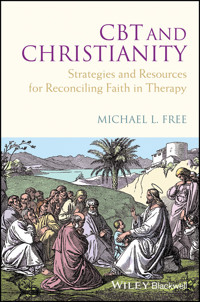
Cover image: Illustration of Jesus teaching humility, from Henry Davenport Northrop,Charming Bible Stories, 1893. Clipart courtesy FCITCover design by Simon Levy Associates
To Marian
List of Figures
3.1
Sources of the Gospels
6.1
Relationships amongst fundamental schema content
6.2
Positive and negative fundamental schema content
7.1
A schema-centred model for cognitive-behavioural formulation of distressing emotion and counterproductive behaviour
8.1
Dimensions of therapy
List of Boxes
2.1
Techniques used in cognitive therapy
6.1
Categories of parables based on content
7.1
Dimensions of temperament
7.2
Examples of specific predisposing, precipitating and perpetuating factors relevant to Christian people
8.1
Initiating change versus using scripture
9.1
Examples of propositions and associated principles
List of Tables
4.1
Criteria for determining authenticity
4.2
Examples of ‘reversal’ in the parables
4.3
Examples of different categories of content in Jesus’ sayings
5.1
Examples of analogies in the Gospel of John
6.1
Idiosyncratic ideational content in different emotional disorders
6.2
Groupings of material in ‘The Gospel of Jesus’
6.3
Themes evident in the parables
6.4
Consistencies between Jesus’ deeds and teaching and the cognitive therapies
8.1
Gospel passages relevant to intentional action
8.2
Gospel passages that relate to commitment
8.3
Examples of Jesus’ use of logic
8.4
Logical errors identified by Jesus and the alternate logic that he advocates
10.1
Passages relevant to inclusion
10.2
Gospel passages relevant to forgiving, judging and loving
10.3
Gospel passages relevant to judging
10.4
Gospel passages relevant to the value of people
10.5
Passages relevant to the question of whether Jesus loved other people
10.6
Passages relevant to whether Jesus encouraged his disciples to love others
10.7
Passages relevant to love of self and other(s) that are useful in implicational exercises
11.1
Gospel passages relevant to acceptance, trust and fear
11.2
Passages that relate to Jesus’ knowledge of the future
11.3
Passages that relate to spiritual versus material concerns
11.4
Passages relevant to Jesus’ teachings about principled versus literal interpretation of the Law
11.5
Passages concerned with the inconsequential becoming greatly valuable
12.1
Passages associated with commitment, allegiance and readiness
12.2
Passages associated with commitment in particular
12.3
Passages that relate to watchfulness and readiness
12.4
Passages that relate to what Jesus considered important versus not important
12.5
Passages that relate to the assumption of status by disciples
12.6
Passages that relate to asking or praying for one’s desires
12.7
Passages that relate to prophecies, signs, and logic
12.8
Passages relevant to the relationships between intention, fantasy, action and responsibility
About the Author
Michael Free trained as a clinical psychologist at the University of Canterbury in Christchurch, New Zealand, qualifying in 1980. He then worked for the Queensland Health Department in a variety of positions in adult psychiatry for 12 years. From 1993 till July 2008 he held a part-time position as a lecturer in clinical psychology at Griffith University, Brisbane. He obtained his PhD in 1997 for research on the relationship between biological and psychological processes during recovery from depression. He has been in part-time private practice since 1997 and in July 2008 commenced full-time private practice. Dr Free’s expertise is in complex anxiety and depression including emotional and behavioural issues derived from childhood experiences. He works with adults and adolescents both in individual therapy and group therapy programmes. He has written a book on group cognitive therapy now in its second edition. He is married to an Anglican priest and they have three adult children and one grandchild.
Author’s Preface
This book has been a long time in the making. I have been a practising Christian for most of my adult life, and am married to an Anglican priest and Biblical scholar. In the late 1990s I started a half-time private practice in a regional city in Queensland, Australia, and came across a number of clients who told me things their pastor had reportedly said to them about the teaching of Jesus. Many of those things seemed inconsistent with my experience and understanding of Jesus and his teaching, and were not very helpful with my clients’ mental health difficulties. I had been a cognitive therapy practitioner for all of my career and had just completed a book for Wiley called Cognitive Therapy in Groups (Free, 1999) so I was very familiar with the cognitive therapy paradigm. My intuition was that there was compatibility between cognitive therapy and the teachings of Jesus, that was different from what my clients were being led to believe, so I resolved to investigate that further, and as systematically as I could. Being married to a Biblical scholar, it was not long before I was introduced to the idea that the words of Jesus, as recorded in the Gospels, have a relatively tenuous relationship to the actual words that scholarship suggests he actually said. I therefore resolved to obtain the most accurate representation of what the historical Jesus actually taught, before attempting to integrate that with cognitive therapy.
That led me into Biblical scholarship, and historical Jesus scholarship, and inevitably to the ‘Jesus Seminar’, as one attempt to obtain some consensus on the things that the historical Jesus said and did, rather than those things that have been added or changed after his death, as a result of the passing on of oral tradition, the collation and writing down of that tradition, and the subsequent processes of redaction, copying and translation into modern languages, that have produced the four canonical Gospels.
This book is the result of that exploration, my evaluation of my original intuition that there was consistency between the teaching of Jesus and cognitive therapy and my attempt to develop a synergy of the teaching of Jesus with the practice of cognitive therapy. As such, it is meant to be a resource for cognitive therapists who wish to use cognitive therapy with Christian clients. It therefore summarises my understanding of cognitive therapy, introduces the reader to the fundamentals of Biblical scholarship and investigates the consistencies between findings of Biblical scholarship related to Jesus’ teaching and cognitive therapy. The book provides resources for therapists to use with Christian clients, organised according to major and minor themes that seem evident in both traditions: relationships to self and others, relationships with God and the cosmos, and one’s own desired and desirable behaviour.
I hope that the book is also accessible to non-therapists, and indeed to any person who wants to improve their emotional and behavioural functioning using an integration of the principles and methods of cognitive therapy with an informed view of the teaching of the historical Jesus.
The interest amongst my friends, colleagues and clients in this book has been amazing, and I thank them all for their support. I also thank Wiley, now Wiley-Blackwell, for persisting with me on this project, which is now being completed two years after the contracted date. I thank my previous editor, Allison, for her encouragement and assistance in resurrecting the project in 2007, and my current editors Darren and Karen for their patience and support. Thanks also to Bec, and Nikki for reading drafts of the manuscript and making comments. Thanks to Paula Gooder for helpful advice at crucial times.
Thank you to Marian who has been with me every step of the way in the development of this book, including editing an advanced draft in her own holidays in November 2012. Her scholarly, intellectual and personal support has been critical to any value this book may have and to my survival of the process of writing it. Lastly thank you to God who has guided me inexorably to the completion of this task.
Nevertheless, the work is my own. While I am not a Biblical scholar, I have attempted to use a range of reputable and respected commentaries, and I have tried not to go beyond their core statements and conclusions. Even so, it is possible that some errors of interpretation have crept in. I take full responsibility for any such, and apologise in advance. I do hope that any errors are trivial and that the bulk and main thrust of the work is sound and useful to therapists and their clients and anyone interested in using cognitive therapy and the teachings of Jesus for any beneficial or benevolent purpose.
Michael Free, Chapel Hill, Queensland,AustraliaJuly 2014
Part 1Rationale for the Use of the Teachings of Jesus in CBT
1Introduction
Topics in Chapter 1
A historical view of spirituality, religion and psychotherapy
The development and dominance of cognitive therapy as a psychotherapy
The importance of Christianity in the West
The appreciation of the role of non-specific factors in psychotherapy
Interest in the Buddhist technique of ‘mindfulness’
Findings relating religious adherence to positive mental and physical health
The growing respect for cultural and individual differences
The decline of logical positivism and the rise of postmodernism and social constructionist theory
The question of a logical connection between cognitive therapy and the teachings of Jesus
A general outline of the book
A historical view of spirituality, religion and psychotherapy
Psychotherapy, a form of treatment for people suffering from emotional and behavioural disorders such as anxiety disorders, had its major period of development during the twentieth century. With rare exceptions, for most of this time there was seen to be little connection between the conduct of psychotherapy on the one hand, and spirituality and the practice of religion on the other. Two very significant figures in the development of psychotherapy, Sigmund Freud and Albert Ellis, have taken an essentially negative view of religion. Freud saw it as an illusion and the result of wish fulfilment in terms of longing for the father (Wulff, 1996). Ellis (1980) contended that all forms of religious belief were pathological and lead to neurosis. For much of the twentieth century the view prevailed that values, including religious values, could be kept out of psychological theory, research and practice (Patterson, 1958, cited in Bergin, Payne & Richards, 1996).
Lesen Sie weiter in der vollständigen Ausgabe!
Lesen Sie weiter in der vollständigen Ausgabe!
Lesen Sie weiter in der vollständigen Ausgabe!
Lesen Sie weiter in der vollständigen Ausgabe!
Lesen Sie weiter in der vollständigen Ausgabe!
Lesen Sie weiter in der vollständigen Ausgabe!
Lesen Sie weiter in der vollständigen Ausgabe!
Lesen Sie weiter in der vollständigen Ausgabe!
Lesen Sie weiter in der vollständigen Ausgabe!
Lesen Sie weiter in der vollständigen Ausgabe!
Lesen Sie weiter in der vollständigen Ausgabe!
Lesen Sie weiter in der vollständigen Ausgabe!
Lesen Sie weiter in der vollständigen Ausgabe!
Lesen Sie weiter in der vollständigen Ausgabe!
Lesen Sie weiter in der vollständigen Ausgabe!
Lesen Sie weiter in der vollständigen Ausgabe!
Lesen Sie weiter in der vollständigen Ausgabe!
Lesen Sie weiter in der vollständigen Ausgabe!
Lesen Sie weiter in der vollständigen Ausgabe!
Lesen Sie weiter in der vollständigen Ausgabe!




