


Erhalten Sie Zugang zu diesem und mehr als 300000 Büchern ab EUR 5,99 monatlich.
- Herausgeber: Flint
- Kategorie: Geisteswissenschaft
- Sprache: Englisch
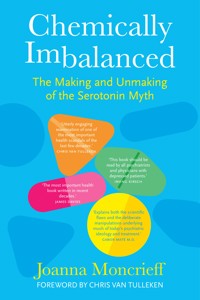
Featured on ITV's THIS MORNING and in SUNDAY TIMES MAGAZINE 'controversial and courageous' – DAILY MAIL For years, we've been led to believe that depression is caused by a chemical imbalance in the brain and antidepressants are the solution. But what if this widely accepted belief has been built on unreliable truths? In Chemically Imbalanced, renowned psychiatrist Joanna Moncrieff takes readers on a thought-provoking journey through the history of the serotonin theory of depression, from its origins in the 1960s to its widespread acceptance in the 1990s. With clarity and compelling evidence, Moncrieff exposes how scientific understanding has been swayed by social and economic forces, leading to misconceptions that have shaped treatment decisions for millions. Accessible yet profoundly insightful, Chemically Imbalanced is essential reading for anyone seeking to make more informed choices about their mental health and understand the forces that shape the way we perceive and treat depression today.
Sie lesen das E-Book in den Legimi-Apps auf:
Seitenzahl: 506
Veröffentlichungsjahr: 2025
Das E-Book (TTS) können Sie hören im Abo „Legimi Premium” in Legimi-Apps auf:
Ähnliche




















This book contains advice and information relating to health care. It should be used to supplement rather than to replace the advice of your doctor or another trained health professional. If you feel that you are depressed or you are taking antidepressants, it is recommended that you seek your doctor’s advice before embarking on or attempting to change any medical programme or treatment. All efforts have been made to assure the accuracy of the information contained in this book as of the date of publication. The publisher and author denies liability for any medical outcomes that may occur as a result of applying the methods suggested in this book.
First published 2025
FLINT is an imprint of The History Press
97 St George’s Place, Cheltenham,
Gloucestershire, GL50 3QB
www.flintbooks.co.uk
© Joanna Moncrieff, 2025
The right of Joanna Moncrieff to be identified as the Author of this work has been asserted in accordance with the Copyright, Designs and Patents Act 1988.
All rights reserved. No part of this book may be reprinted or reproduced or utilised in any form or by any electronic, mechanical or other means, now known or hereafter invented, including photocopying and recording, or in any information storage or retrieval system, without the permission in writing from the Publishers.
British Library Cataloguing in Publication Data.
A catalogue record for this book is available from the British Library.
ISBN 978 1 80399 680 6
Typesetting and origination by The History Press
Printed and bound in Great Britain by TJ Books Limited, Padstow, Cornwall
eBook converted by Geethik Technologies
Contents
Foreword by Chris van Tulleken
Preface
PART 1 THE ISSUES
1 How the Chemical Imbalance Theory Changed Our Lives
2 Justifying Antidepressants: The Purpose of the Chemical Imbalance Theory
3 So, What is Depression?
4 What are Antidepressants?
PART 2 THE HISTORY
5 The Origins of the Chemical Imbalance Theory and the Early History of Antidepressants
6 Serotonin Arrives on the Scene
7 The ‘Age of Depression’
PART 3 THE SCIENCE
8 Reviewing the Evidence on the Serotonin Theory of Depression
9 What Antidepressant Research Really Shows
10 Spinning Straw into Gold: How We Came to Believe that Antidepressants are Effective
11 How Antidepressants Affect Feelings and Sex
12 Dependence and Withdrawal Effects of Antidepressants
PART 4 REACTIONS
13 Moving the Goalposts
14 Battening Down the Hatches: Public Reactions
15 The Profession Strikes Back
PART 5 THE FUTURE
16 Alternative Approaches: The Good, the Bad and the Worrying
17 Informed Consent
Epilogue
Appendix 1: Public Information Suggesting Depression is Linked to a ‘Chemical Imbalance’
Appendix 2: What to Do if You are Taking Antidepressants: Advice and Resources
Glossary
Acknowledgements
Notes
Foreword by Chris van Tulleken
In 1998, in my second year at medical school, I attended a series of tutorials on depression. The pharmacology tutor began these by explaining that there was very little evidence that antidepressants improved the lives of most people who took them, and that we had little understanding of their effects on the brain and body. Refusing to believe this, I spent weeks looking through the literature for evidence to support the chemical imbalance theory of depression. I found instead inadequate trials, misinterpreted experiments, and huge gaps in logic. It was my first exposure to the gulf between what science shows and what happens in the clinic. But I was left confused. How had this theory, that depression is a chemical imbalance with a chemical solution, survived and spread to become one of the most pervasive cultural ideas of the last half century?
My confusion was finally resolved more than two decades later reading this book, which so elegantly describes the history of industry co-opting science and scientists against the interests of patients and public health to sell drugs that don’t work, for conditions that we don’t understand.
Yet, for me, reading this book wasn’t just about finding the missing puzzle piece from my undergraduate essays; it has been a profound reimagining of my mind and brain.
In my fourth year of medical school, I had an episode of what everyone around me called depression. My pharmacology lectures meant that I was reluctant to use antidepressants so, instead, like some of the characters you’ll meet in the pages that follow, I was forced to learn something about myself and my emotions, and I cobbled together a few crude strategies to cope with grief, loss and sadness. These have proved useful over the years, but I was left feeling vulnerable – as if I was, fundamentally, ill; someone with ‘depression’, a brain disease, that could, at any moment, come back unbidden. Despite all my reading, the chemical imbalance theory had somehow sunk in and coloured my idea of myself.
By the end of this book I had been gently released from this vulnerability. I finished reading and found it had been replaced with a much more nuanced understanding of myself and how I move through the world. It has left me empowered, with more and better tools to face the challenges that life throws at me.
Very few writers could pull this trick off, but Joanna writes with clarity, honesty and compassion drawn from years of work caring for people struggling with their emotions. This expertise shines through on every page so that at its heart this book is, for me, profoundly therapeutic. I hope you have the same experience.
Preface
In the summer of 2022, I published a paper showing there is no convincing evidence that depression is caused by an abnormality of the brain chemical serotonin.1 The paper consisted of a systemic review of the principal research in the relevant areas and I led the team that conducted the review. The theory that depression is caused by a deficiency of serotonin has been around for decades and most people believed it was proven. We showed it wasn’t supported by scientific evidence after all.
This result had been suspected for years in the scientific community, but the public was shocked and shaken by the news. It turned everything people thought they knew about depression upside down. This brought home to me how the view of depression as a brain disorder has come to be accepted as the truth, with few being aware of its murky origins and shaky scientific foundations.
Doctors are good at making pronouncements as if they are 100 per cent certain, and these are amplified by the media. So, for decades, people have been told that depression is a biological condition and that antidepressants ‘work’ and ‘save lives’, as if these are indisputable facts. They are not. As I will show in this book, these beliefs are part of a myth – one that was constructed and is maintained to further various vested interests and bears little resemblance to the scientific reality.
The publication of our review ignited a process of questioning that started to unravel this myth. People wanted to know whether they had been given the wrong idea about depression. They asked why they should take antidepressants if there is so little evidence of a serotonin abnormality, and they were concerned about why they had been misled about this for so long. They wanted to know what antidepressants do exactly.
This book is an attempt to answer these questions, and to do so by presenting the relevant scientific evidence and philosophical concerns so that people can come to their own conclusions. It is an invitation to engage in an important debate that has a bearing, not just on how we understand and treat depression, but on how we think about ourselves and what it is to be human.
* * *
Antidepressants are some of the most used medicines in the world. They have been presented to the public as sophisticated and effective pharmaceutical weapons, but there is considerable research that questions this view, and there are legitimate scientific questions about their nature and effectiveness. Because most people are unaware of this, they are unable to make properly informed decisions about whether to take antidepressants or not – or if they are taking them already, whether to continue with them or not.
There is much in the following pages that is critical of antidepressants, because the evidence suggests they have little benefit and some concerning adverse effects that are only recently receiving the attention they deserve. However, it is not my intention to stop people taking antidepressants or starting them if they want to. My purpose is to ensure that people know exactly what they are doing and what risks they are running. If any readers are taking antidepressants and decide to stop them, it is important they do so slowly and carefully, preferably with the guidance of an informed doctor or prescriber, because severe withdrawal effects are one of the underappreciated hazards of using these drugs.
I trained as a medical doctor and then specialised in psychiatry. I have worked as a senior psychiatrist in the National Health Service (NHS) in England for over twenty years now, alongside my research and academic work, and I enjoy being a psychiatrist. I prescribe medication in some circumstances, and I know that most people who work in mental health services sincerely want to make patients’ lives better.
There is no doubt that some people struggle with their mental health and need support and sometimes care. However, the idea that mental health problems are ‘just like any other illness’ has never been persuasive to me. Through my own experience (both personal and professional) and by reading critiques of psychiatry written by scientists, philosophers and psychiatrists, I came to the conclusion that there is a fundamental difference between what we sometimes refer to as ‘mental disorders’ and general medical conditions like arthritis or ’flu. When I was a young psychiatrist in training, this could be an uncomfortable view to hold, yet I knew I was not alone. In fact, there is a long tradition of critiquing psychiatry from within the profession and many psychiatrists, past and present, feel the same way. For this reason, I set up the Critical Psychiatry Network.
Members of this network, which now includes hundreds of psychiatrists from across the world, have a wide range of views. Most share a scepticism of claims that mental disorders like depression arise from simple biological causes that can be targeted by drugs or other biological interventions. That doesn’t mean they disagree with the prescription of drugs in every situation. Many ‘critical psychiatrists’ adopt the ‘drug-centred’ approach that I have outlined in the scientific literature and set out in this book. This provides a new way of understanding what psychiatric drugs do that entails a more informed and cautious approach to using them.
In the wake of the publication of our paper, some mainstream psychiatrists weighed in to try to shut down the discussion and re-establish the status quo. Some members of the public were unsettled by the questions our paper raised too. When experts express contrasting points of view, it can be bewildering, especially if some of those are questioning a position that has been regarded as fact. That is why I have set out the evidence itself, in a digestible form, so that people can see the basis for my arguments and make up their own minds.
Many areas of science are not settled, and the story I am going to tell illustrates what can happen when people are misled into believing they are. Questioning and debate are key to making progress and avoiding mistakes in science and medicine, as in the rest of life. This book is intended to ensure these processes are not stifled and that everyone can take part.
Part 1
The Issues
1
How the Chemical Imbalance Theory Changed Our Lives
Mental health problems, as they are now referred to, are all around us. Whether it’s depression, anxiety or attention deficit hyperactivity disorder (ADHD), you, or someone you know, probably has one. Generally, that means the person has been to see a doctor, the doctor has diagnosed them with one of these conditions and most likely recommended they take some medication. This reflects the fact that the predominant way of understanding these problems today is as medical conditions, and the predominant form of treatment is drugs. This medical view entails the idea that mental health problems arise from a malfunctioning of the body, particularly the brain, just like other medical diseases.
The nature of this malfunction has commonly been suggested to consist of a brain-chemical imbalance and drug treatment is proposed to correct the malfunction and restore the brain’s normal chemical composition. In the case of depression in particular, it has been widely reported that an imbalance or deficiency of serotonin is the abnormality in question.
This message has been deeply absorbed into Western culture. The media and the internet are awash with news items, documentaries and articles about the importance of getting a medical diagnosis and treatment, and of how our brains are implicated in our problems.1 People make songs, plays and works of art that express these ideas. In a song called ‘Serotonin’, a young Swedish singer tells listeners she doesn’t have enough serotonin, that this chemical imbalance is messing her up and she needs medicine to fix it.2 You can also buy a variety of antidepressant-themed paraphernalia, which joke about the normality of antidepressant use. Vendors on Redbubble do a range of Prozac cushions, for example, and some on Etsy sell T-shirts, keyrings, fridge magnets and bags carrying slogans such as ‘if you’re happy and you know it, thank your meds’ and ‘today’s good mood is sponsored by antidepressants’. For all the tongue-in-cheek humour, such items display the depths to which the idea that we are chemically imbalanced and need to be corrected with medication has become part of our psyche.
What is happening here? Have we always been this ill and just not known about it before, or has some mysterious disease come out of nowhere? Or might there be another way of understanding these problems and, with it, another way of helping and supporting people?
This book will reveal that the idea of a chemical imbalance is a myth. The strongest candidate for this idea – the theory that depression is caused by low serotonin – is not supported by consistent or reliable evidence. The emperor has no clothes, and this matters, because our widespread use of antidepressants and other drugs for mental health problems is grounded in this idea.
I will focus mainly on depression, since depression is where the idea of the chemical imbalance has played out most clearly. Depression is strongly linked with anxiety, however; therefore, so much of what I have to say will also apply to anxiety, as we understand it now. It is recognised that there is considerable overlap between anxiety and depression. Most people with depression have some symptoms of anxiety and vice versa.3 It has also been suggested (based on the history we will delve into later) that most people in distress have elements of both, and whether they are deemed to have anxiety or depression is determined more by what set of drugs are being marketed than what people actually experience.4
Our understanding of anxiety piggy-backs on the conventional view of depression. Like depression, it is now most commonly treated with antidepressants, and these are implicitly presented as working in the same way as in depression – that is, by correcting an underlying brain abnormality, although the nature of that abnormality is not often specified in the case of anxiety.
Being depressed in the 1980s
When I was a precocious 14-year-old, I had a period of what might have been called depression. I don’t want to claim this was a really serious situation, but I had several of the classic symptoms: difficulty sleeping, loss of pleasure, waking up with a sinking feeling every morning when I realised I had to face another day, and doubts about whether I really wanted to carry on living. I had some idea of what was making me feel that way, but I didn’t know what I could do about it, and I worried that I was naturally susceptible to depression. I felt I was odd and different. I found it difficult to find people who shared my passions for philosophy and punk music, especially in my slightly stuffy girls’ school, although admittedly I had cultivated interests my classmates didn’t share. Looking back, I was a pretty stereotypical teenager: full of burning questions about the meaning of life that I felt no one else cared about, but still desperate for friends and companionship like everybody else.
I never saw a doctor about it, and no one suggested that I should. Maybe my parents knew what sort of reaction they would get; I was terrified of being told to take a drug that would cloud my mind. Despite the fact I was unhappy being me, I didn’t want to take anything that would stop me reading my philosophy books and, more importantly, prevent me from working out what I could do about my situation. I expect my resistance was coloured by my parents’ general stoicism.
In the end, I changed schools, found some more like-minded friends and a lovely boyfriend, and I was happy again. For years afterwards I felt vulnerable, though. I was concerned that I would slip back into a depressed state – that my recovery was precarious. I can’t remember at what point I stopped worrying about it, but at some point I did.
I wrestled with writing this autobiographical sketch because I know I will be criticised for trying to generalise from my situation. And I agree that none of us can speak for anyone else about the nature of our feelings. But I wanted to make some important points. One of them is that depression is a near-universal experience. We have this idea that there is ordinary low mood or sadness, and then there is this different thing called ‘clinical depression’ or ‘major depression’. We have been told there is a difference between these two situations, but, in fact, there is no dividing line. There is no test that can tell us who has the ‘ordinary’ version and who has the ‘real’ medical condition. Researchers in New Zealand, for example, followed people from birth until middle age and found that 86 per cent of people fulfilled official diagnostic criteria for some form of mental disorder before they reached the age of 45, and 70 per cent for anxiety or depression.5 Not having emotional problems is the exception not the rule in life.
Back in the 1980s, my reaction to my difficulties was common. Research conducted in 1991 showed that people were reluctant to consult their doctor about emotional problems and the majority thought depression was primarily caused by adverse life events such as unemployment or divorce. They also shared my worries about taking antidepressants. They didn’t think depression should be treated with drugs and they worried that antidepressants were ‘addictive’ and ‘dulled the symptoms rather than solving the problem’.6
Changes were afoot, however. In the 1990s, an onslaught of advertising campaigns that accompanied the introduction of the Selective Serotonin Reuptake Inhibitor (SSRI) antidepressants started to change people’s previous understanding of depression. This, in fact, was exactly what the campaigns were designed to do. But where did these drugs come from and what evidence suggested they were effective and useful? Why was so much invested in promoting them, and why was the chemical imbalance theory so critical to that effort?
Being depressed in the twenty-first century
In the 1990s, a slightly geeky boy with a talent for maths was being bullied at school. It was an all-boys’ school and he happened to be the youngest and shortest boy in his year. Despite the sharp wit he developed to deflect the bullies, the experience sapped his confidence and left him feeling pessimistic and despondent, which continued when he left school and went to university to study medicine. His penchant for existential philosophy filled him with further doubts about the direction of his life and the course he had chosen, and by 2002, having been posted to a remote town away from family and friends, he started to spiral downwards. Too ashamed to talk to anyone about the state he was in, he sneaked books about cognitive behaviour therapy (CBT) out of the hospital library in a furtive attempt at do-it-yourself therapy. When this didn’t work, he decided to see a doctor.
Like me, he came from a medical family: his father was a doctor and his mother a pharmacist. Medications were as plentiful in the family home as books, he told me, so seeking medical attention seemed like a natural thing to do. By the time he saw his general practitioner (GP), he was so desperate for relief he was excited to try the sample pack of antidepressants he was offered.
This was the start of a nineteen-year career of taking psychiatric medication, over the course of which he took five different antidepressants. When he subsequently developed problems with fatigue, concentration and memory, most likely as a consequence of the antidepressants, he was prescribed further drugs, including a stimulant to keep him awake and a tranquilliser to send him to sleep. Overall, at one time or another, he was prescribed twenty different medications, and at the height of his treatment he was on five drugs at the same time. Despite these difficulties, he graduated from medical school, became a doctor and subsequently managed to complete a PhD; but he was so debilitated by fatigue and concentration problems, he could only work part time for much of his career.
This doctor is my colleague, Mark Horowitz, who was one of the co-authors of the paper on the serotonin theory of depression. As a medical student, he had absorbed and accepted the message that there was something wrong with his brain that was making him depressed. He remembers being impressed by lectures about how antidepressants compensated for various brain chemicals, including serotonin, that were said to be deficient or awry in people with different sorts of depression. While he was conducting research for his PhD, he delivered lectures in which he told students that serotonin is involved in causing depression.
It was when he experienced severe withdrawal symptoms while trying to discontinue his antidepressants that Mark started to re-evaluate the drugs he had been taking for so many years, and the messages he had absorbed along with them. He had been told that antidepressants were safe and easy to stop, but he quickly found out this was not the case, at least not for him. This led him to wonder what else he had been led to believe that wasn’t true.
He also remembered how he had been asked by a psychiatrist in the past, ‘When did all this begin?’ For the first time, he realised the question had a clear answer: when he was being bullied at school. Slowly, the story he had been telling himself – that he was someone with a broken brain – unravelled. In its place, he began to think of himself instead as someone who had responded, perhaps quite normally, to a difficult period in his life.
By this time, however, Mark had been on medication for so long that withdrawing from it had become an excruciatingly difficult process. He had to make tiny reductions in his dose to prevent uncomfortable and disabling withdrawal symptoms, and it was clear that stopping his medication would take years.
Back in the 1980s, I managed to get through my troubles, work out what I needed to change and move on with my life. Mark, on the other hand, entered a spiral of pharmaceutical interventions, which left him in a worse state than he had started in. He went from having existential problems, which only slightly dented his ability to function, to having significant physical symptoms, which prevented him from working full time, destroyed his hopes of a conventional medical career and prevented him from enjoying many of the usual life experiences of a young adult. ‘Fifteen years of my life have been damaged because of unnecessary and unhelpful medical treatment for a problem that was never medical to begin with and could have been solved – as it was over time – by better relationships and making sense of who I was,’ he told me. ‘And,’ he added, ‘I have had five more years disrupted by trying to come off that treatment.’
* * *
Not everyone’s experience of antidepressant treatment works out as badly as Mark’s, of course. Many people feel they have been helped by antidepressants; although whether antidepressants are actually effective and useful is, it turns out, uncertain. Not everyone experiences major difficulties with withdrawal, either; but many do, along with other complications, including significant sexual dysfunction, which is sometimes enduring.
Yet, the point of this book is not to tell you how bad antidepressants can be. It is not a catalogue of side-effects or a reproach for how the mass use of antidepressants has abolished sadness, as previous critiques have been.7 The effects of antidepressants are not as simple as this idea implies in any case. My aim is to reveal that people have been profoundly misled about the nature of antidepressants. In fact, there has been a systematic programme to mislead the public about the nature of depression and the action of antidepressants. Not only have antidepressants never been shown to rectify a chemical imbalance or any other underlying brain abnormality, but there is another, more intuitive and scientifically supported way of understanding what antidepressants do. This alternative view of them highlights how they interfere with the normal state of the brain, just like alcohol and other mind-altering drugs. This explains how they can produce the uncommon but potentially devastating side-effects that are beginning to emerge.
I have no problem if people choose to take antidepressants, and I know that among people who read this book, there will be many who do. But I do want people to be properly informed about what they take. This book will show that trusting doctors or purported scientific experts is not enough – people need to inform themselves.
Over the last twenty years, I have also been on a journey to appreciate the full nature of drugs like antidepressants, and particularly to understand their potential to cause lasting damage and consequent suffering in some people. The best evidence on this has come from people like Mark, who use or have used antidepressants themselves. I am deeply indebted to all those who have bravely shared their experiences of drug-induced harm, and if this book achieves anything, I hope that it will reduce the number of future victims.
The story I am going to tell has echoes of the way the pharmaceutical industry deceived people about the non-addictive nature of OxyContin to create a mass market for a highly addictive drug, igniting the United States’ twenty-first-century opioid crisis.8 In the case of antidepressants, the myth that they normalise an underlying brain dysfunction has facilitated the successful promotion of a range of highly profitable drugs, whose full range of harmful effects was never properly investigated. This book tells the story of how the quest for money and professional status, the hubris of the scientific community and the quiet desperation of so many people combined to create one of the most widespread and harmful delusions of recent times: the idea that emotional problems can be resolved with a pill.
2
Justifying Antidepressants: The Purpose of the Chemical Imbalance Theory
The first part of the twenty-first century has witnessed a rising epidemic in the use of antidepressants and other drugs prescribed for psychological problems, including depression and anxiety. Data from England show the number of prescriptions issued for antidepressants has been rising year on year for over three decades now. The number almost doubled between 2011 and 2022 and has increased more than eight times since 1990.1
In 2022, 8.6 million people in England were taking an antidepressant: almost 19 per cent of the total adult population and 23 per cent of adult women.2 In the USA in the same year, 23 per cent of the population had taken a drug for some kind of mental health problem.3 In 2021, 17 per cent of US college students were taking antidepressants.4
The number of people who have taken antidepressants at some point in their lives is likely to be higher still. We also know that increasing numbers of people are using antidepressants on a long-term basis, often for years on end.5Eighteen per cent of people who start an antidepressant in England end up taking it for more than a year, and at any one time, two-thirds of those who are taking antidepressants have been taking them for over a year.6 The use of other drugs prescribed for psychological problems has also been rising.7
The official view is that these drugs are treating a variety of previously unrecognised diseases that afflict a substantial proportion of the population. Public information emanating from pharmaceutical companies and medical organisations has informed people that depression is, or is likely to be, caused by an abnormality of brain chemistry – that it is due to a chemical imbalance. This message has encouraged people to take antidepressants and other prescription drugs intended to modify their moods and emotions, something they might otherwise have been reluctant to do.
My team and I started working on the serotonin review in 2019, and the paper was published in July 2022 in the academic journal Molecular Psychiatry.8 We showed that, despite heavily funded research taking place over several decades, there is no convincing evidence that serotonin is linked with depression. Specifically, there is no evidence for the hypothesis that depression is caused by low serotonin. The paper has become one of the most widely read and influential papers of modern times (it is ranked in the top 5 per cent of all scientific papers ever written by Altmetric, an online influence tracker, and in the top 1 per cent of papers the same age).9 The interest the paper inspired around the world demonstrates how deeply convinced people were that the link between depression and serotonin had been scientifically demonstrated. Some were literally stunned to find out this was not true: it ‘blows your mind,’ said a presenter on ITV’s This Morning.10
The serotonin paper was news because the idea that depression is caused by a deficiency of serotonin, or some other sort of chemical imbalance, has been intimately entwined with the justification for using antidepressants. Millions of people have been told by their doctors they have a chemical imbalance in their brain and they require an antidepressant to fix it.
In the hullaballoo that followed the publication of the paper, it became clear to me that there are facts about antidepressants that the psychiatric establishment and sections of the media do not want people to know. From the beginning, high-profile psychiatrists lined up to tell the public we had no right to raise questions about antidepressants. Antidepressants work, they said, and it doesn’t matter how. They played down the significance of the paper, and when that didn’t work, they tried to discredit it. Some insisted no one believes the serotonin theory of depression in any case, while others claimed serotonin does play a role in depression but couldn’t specify what that might be.11 They accused us of irresponsibly discouraging people from seeking treatment, of putting people at risk of relapse and of causing people to attempt suicide.12 Sections of the media aligned with this position suggested we were putting ‘millions in danger’ and tried to paint us as right-wing extremists and conspiracy theorists.13
Leaders of the psychiatric profession were on the defensive. No one actually contradicted our conclusions, but they didn’t like them. The strategy was to stifle the message and impugn the messenger.
These attempts to manipulate the information that reaches the public are the tip of an iceberg. A tangled web of misconceptions has been disseminated over many years, starting with the over-optimistic view that we understand the links between brain chemicals and emotions, and including the unwarranted presumption that drugs like antidepressants target the underlying biological basis of depression and other unwanted mental states. Exposing that the chemical imbalance theory of depression is not supported started to unravel this edifice. It challenges the view of depression as a brain disorder and calls into question our use of antidepressants. It also raises the issue of what antidepressants are doing to us exactly, if they are not correcting a chemical imbalance.
Before I go on, I want to stress that I am not against the use of drugs for psychological problems in any circumstances. I believe some psychiatric drugs (drugs prescribed for psychiatric or psychological disorders) can be useful in some situations. However, the way these drugs are currently presented as working is fundamentally incorrect. And because of this, they have not been properly researched and we therefore do not understand the full consequences of taking them.
The downsides of antidepressants
It goes without saying that we need to be cautious about using chemicals that modify the normal state of the brain, which is what antidepressants do. At the very least, we need good-quality information about all the consequences of taking a particular drug over the sort of period that people commonly use it for – that is months and years in the case of antidepressants. Yet, no such research was conducted before modern antidepressants were released into the world, soon becoming some of the most widely prescribed medicines of their generation. What took place were short-term trials typically lasting eight weeks. There has been little interest in establishing the adverse effects of these drugs past ensuring they don’t immediately kill or maim people.
Modern antidepressants are safer than older generations of these drugs, in the sense that it is more difficult to die if you overdose on them. However, they do have harmful effects on the body. SSRIs are known to prolong bleeding time and have been linked to an increase in haemorrhages, birth complications and strokes (which may be caused by bleeding).14 Evidence also suggests they reduce bone mineral density, causing osteoporosis and fractures.15 In younger people, antidepressants can cause a state of agitation and impulsivity that has been linked to suicidal behaviour and aggression.16
Over recent years, further disturbing complications have been coming to light. Severe and prolonged withdrawal reactions are one of these. Although we have known about antidepressant withdrawal for decades now, it was thought to be mild and short-lived. We used to think the brain quickly returns to normal after people stop using whatever substance they are using, but it is becoming clear this is not always true. Antidepressants, and benzodiazepines in particular, produce withdrawal symptoms that can last for months and sometimes years after they are stopped, causing considerable suffering and impairment. There are now huge online communities of people, who, like Mark, are struggling to get off these drugs, many of whom have lost jobs and careers, suffered relationship breakdowns and become suicidal as a consequence of severe and protracted withdrawal reactions.17 Yet, despite this, persistent withdrawal has not been widely acknowledged by the medical community.
The gravity of this problem was brought home to me when Ed White, an IT executive and researcher with whom I was collaborating, sadly and shockingly took his own life in 2021 at the age of 57. He had suffered severe and incapacitating withdrawal symptoms since stopping his antidepressants some years earlier. Despite this, he had dedicated much of his time to helping others in the same boat, as well as contributing to research intended to improve our understanding of protracted withdrawal.18
Another potentially devastating complication that is emerging is persistent sexual dysfunction. It has long been known that antidepressants, particularly SSRIs, cause sexual dysfunction while people are taking them, but it was assumed the problems resolved when people stopped them.19 However, accumulating evidence suggests the sexual side-effects persist in some people. Internet-based support groups have campaigned to raise awareness of this problem, with men and women describing their experiences on social media. A typically sad post from a young man reads, ‘No more love, no more sex, no more feelings’.20
No one currently knows exactly how common it is for people to experience severe and protracted withdrawal or persistent sexual dysfunction. However, millions of people now take antidepressants, so even if these conditions only affect a small minority of users, they still amount to a colossal public health problem and many individual tragedies. No one should be prescribed antidepressants any more without being warned about these effects in the strongest possible terms, yet the medical community has not been quick to publicise them.
Fudging the issues
For more than three decades now, people have been misled about the origins of depression and what antidepressants do. Judging by reactions to our paper, some psychiatrists and sections of the media want this situation to continue. They want to replace the idea that depression is caused by low serotonin with vague suggestions that depression is caused by a complex interaction of many brain chemicals and systems, including, but not limited to, serotonin; or they want to persuade people that depression is something to do with abnormalities in the generation of new nerve cells and nerve cell connections; or that it is connected with the disruption of other brain chemicals. Yet none of these theories, nor others like them, are supported by robust evidence either.
Essentially, all these theories are ways of persuading people to take prescription drugs. A new array of substances derived from or related to recreational drugs is currently being developed and promoted for the treatment of depression and anxiety disorders. These include ketamine, and its close relation esketamine, psychedelics, benzodiazepine-like drugs and even opioids. These are all claimed to counteract an underlying biological abnormality or deficiency, often by people with links to companies that are marketing them.
Whatever the details, the message is the same: depression is in the brain and can be targeted by drugs. The pharmaceutical industry and its allies need business to go on as usual. People must be convinced there is something wrong with their brains and that antidepressants and other drugs prescribed for common mental health problems rectify the biological nature of the problem in some way. Then the market will be sustained, and people won’t pause to think that they are taking foreign chemicals into their bodies – chemicals we understand little about and which are unlikely to be harmless, especially if taken, day in, day out, for years at a time.
I will come back to these subjects, but the point is we have been far too blasé about the use of antidepressants. We have not appreciated the full implications of taking drugs that change the normal state of the brain, partly because we have not acknowledged that this is what drugs like antidepressants do. I don’t want to alarm people, but it is essential that everyone understands exactly what they are doing when they take an antidepressant, or any other drug prescribed for a mental health problem. To put it bluntly, they are tinkering with their brain in ways we do not fully understand – and we mess with the brain at our peril.
Chemical imbalance messaging
I set out to do the serotonin review because I was aware that most of the public had come to believe causal links between serotonin and depression were an established scientific fact. This came home to me when I gave a presentation in 2014 at a seminar organised by members of the University College London Centre for German Studies. The audience of professors, lecturers and PhD students were shocked when I suggested that the biological basis of depression had not been established. They believed the science was settled, and that biochemical abnormalities, including those involving serotonin, had been clearly demonstrated to play a causal role in depression. Yet, I knew that people who were familiar with the research recognised this was not true.
Surveys conducted in the USA around 2006 and Australia in 2011 showed that almost 90 per cent of the public believed depression is caused by a chemical imbalance.21 The idea is frequently referred to as a fact in the press and on the internet. In 2014, a British radio presenter said depression was when ‘all the goodness is flushed out of the brain [and you have to] top it up now and again; that’s why you need medicine’.22 An internet blogger put it like this: ‘Literally, we depressed people don’t have the “happy” chemicals that the rest of the world operates with.’23
It is not surprising people think this. The pharmaceutical industry has been bombarding the Western public with the idea that depression is the result of a chemical imbalance for decades. In the USA, where pharmaceutical companies can advertise directly to the public (unlike most of the rest of the world), television advertisements beamed this message into people’s living rooms, illustrating their claims using scientific-looking pictures of nerve cells and serotonin molecules. A now infamous television advertisement for the antidepressant Zoloft (sertraline) featured a sad, blob-like creature who takes Zoloft and then miraculously cheers up. A voiceover told people, ‘Depression may be related to an imbalance of natural chemicals between nerve cells in the brain’ and ‘prescription Zoloft works to correct this imbalance’.24
Websites set up by drug companies conveyed the same message worldwide, as illustrated by the examples provided in Appendix 1. Time and again, the public were told that people with depression had a brain-chemical imbalance, involving serotonin and sometimes other chemicals (depending on the drug being advertised), and that they needed to take an antidepressant to ‘restore the brain’s chemical balance’.25
Medical institutions have been busily disseminating the idea too. In 2024, eighteen months after our paper was published, the American Psychiatric Association was still telling people that ‘differences in certain chemicals in the brain may contribute to symptoms of depression’.26 In April 2023, the then president of the association, psychiatrist Rebecca Brendel, told a podcaster, ‘We know that serotonin has been strongly associated with depression’ and antidepressants ‘work on neurotransmitters, the chemicals in our brain, to rebalance the relative levels’.27
Up until 2022, the Royal Australian and New Zealand College of Psychiatrists informed people that medications ‘work by rebalancing the chemicals in the brain. Different types of medication act on different chemical pathways.’ The page was subsequently taken down for ‘review’. The UK Royal College of Psychiatrists’ public information on antidepressants has become more circumspect in recent years, due to pressure to moderate its claims from academics and people who had experienced the harmful effects of antidepressants.28 It has made similar claims in the past, however, and in its information on antidepressants, it continues to imply that they rectify a chemical imbalance without stating this explicitly. ‘We don’t know for certain,’ it reads, ‘but antidepressants do affect the activity of certain chemicals in our brains called neurotransmitters … The neurotransmitters most affected by antidepressants are serotonin and noradrenaline.’29 A further selection of the many institutions that have promoted the chemical imbalance theory of depression is provided in Appendix 1.
Professional positions
When challenged, leading psychiatrists have long admitted there is no good evidence to support the theory that depression is caused by low serotonin or any other chemical abnormality. They don’t tell the public this, however; at the same time, they are unable to give up on the theory altogether and instead reassert that it is true, or likely to be true, or that something similar is the case.
In 2005, two American academics published a paper called ‘Serotonin and depression: a disconnect between advertisements and the scientific literature’.30 It pointed out that messages in pharmaceutical advertisements and promotional websites were out of step with the views of leading scientists, who admitted there was a lack of evidence for a chemical imbalance in depression.
The article received attention because it was the first time the media had got wind of the possibility that the serotonin theory might not be supported by evidence. Like our paper, it provoked a defensive reaction from the psychiatric profession, who insisted at one and the same time that no one believed the serotonin theory anyway, yet it was still true in some form. Even if it was not true, they said, it was useful.
Academic psychiatrist and then Chair of the USA’s Food and Drug Administration’s (FDA) Psychopharmacological Committee, Wayne Goodman, for example, conceded to a reporter that evidence of a chemical deficiency in people with depression was ‘elusive’. However, he described the chemical imbalance idea as a ‘useful metaphor’ that represented a ‘reasonable short-hand’ to describe how depression ‘is a chemically or brain-based problem and that the medications are normalizing function’.31 He failed to mention that the basis for these suppositions was the very evidence for a chemical imbalance that was in question.
In 2011, another leading US psychiatrist, Ronald Pies, wrote an article in the widely read professional magazine Psychiatric Times (of which he had been the chief editor until 2010), in which he dubbed the chemical imbalance theory of depression an ‘urban legend’. Pies claimed that no well-informed psychiatrist believed the theory was true.32 A few months later, when readers wrote in to tell him they had, in fact, been told by their doctors they had a chemical imbalance, he had to row back on his words. In a follow-up article, he admitted that psychiatrists might tell this to their patients, but they don’t really believe it. They only say it to make patients feel better or to save time. He spent the rest of the article reassuring readers that there are lots of ‘sophisticated, modern theories’ about the biology of depression, including the idea that ‘certain psychiatric illnesses probably involve abnormalities in specific brain chemicals’. He even presented the ‘biogenic amine hypothesis’ of depression (more commonly referred to as the monoamine hypothesis)33 as a credible hypothesis, even though, as we will see, this is the chemical imbalance theory that he was trying to disown.34
Therefore, at the same time as Goodman and Pies acknowledged the chemical imbalance theory was unproven, they were quick to provide the public with reassuring messages that this didn’t change the narrative about the biological origins of depression. It seems that some in the profession want people to go on believing that depression is a brain disorder, and don’t want people to ask questions about the scientific justification for the use of antidepressants.
A different story
Consequently, as well as looking at the science itself, this book is also about exposing the institutions and vested interests that distort medical science and co-opt the media, so that the public receives a select and one-sided story about research on the biology of mental health. Most people know about the influence of the pharmaceutical industry by now, but the interests of the medical establishment and how these are exerted are less well documented. My account will raise questions about whether we can really trust our doctors and other medical authorities to know and recommend what is best for us. For, although I don’t doubt they have patients’ best interests at heart, the information they have access to is already partial and distorted and, like all of us, they operate with unconscious biases that incline them to take a rose-tinted view of the things they have to offer.
Many doctors and members of the public now assume that depression is a biological disorder, but there are other ways to think about it. I will suggest that emotions and moods are better characterised not as brain events, but as the distinctive reactions of intelligent creatures to their circumstances – a view that is aligned with our intuitive understanding of the nature of human feelings. There are more obvious ways of understanding what drugs like antidepressants do to our feelings, too. We naturally understand that using drugs to drown our sorrows or obliterate our worries is at best a temporary distraction and, at worst, an act of self-harm.
The pharmaceutical industry had to actively suppress these understandings when it started promoting its new range of antidepressants back in the 1990s. Preceding this, the scandal of the mass prescribing of benzodiazepines (drugs like Valium) and the revelation of their addictive properties had brought the use of drugs to numb and suppress emotions into disrepute.
A new narrative was needed if drugs were to continue to be marketed for psychological problems. The chemical imbalance was that narrative. It enabled the SSRIs and the antidepressants that followed them to be presented in a way that suited the new times. These were not emotional anaesthetics, the marketing went, and they would not get you addicted. They were sophisticated medical agents that targeted an underlying ‘disease’ – the disease of depression. This disease was common and caused by an imbalance in brain chemicals and this could, by happy coincidence, be reversed by the new drugs. How could people resist this sort of message, especially when it was delivered not just by drug companies, but by national medical institutions and by their own doctors?
Yet, this narrative is a myth – one that was woven to support a particular view of human emotions; a view that just happened to coincide with the interests of the multibillion-dollar pharmaceutical industry and some in the medical profession.
3
So, What is Depression?
When I was interviewed about the serotonin paper I was frequently asked, ‘If not serotonin, then what?’ When I tried to explain that we don’t have to think of depression as something caused by a particular biological mechanism, several of my interviewers were perplexed.
This is not surprising. The idea that depression is a biological condition has been presented for decades as if it is an established fact, with few of its promoters acknowledging that it is not a universal or necessary way of thinking about depression. In 2008, the prominent psychiatrist and researcher David Nutt, who is currently championing psychedelics, declared that the ‘origins’ of depression and related psychiatric disorders ‘are clearly explained by altered brain functions’.1 In 2023, another senior psychiatrist told the BBC’s Naked Scientist programme, ‘Different underlying abnormalities in the brain’ can lead to the symptoms of depression, although we don’t know exactly how.2
There are two versions of this idea. The first is that everything can be explained by biology. Human beings can be understood as complex machines and, ultimately, everything we do, say or feel is determined by a particular biological process (even if it may be triggered by something else).
The second version is that depression is different from normal feelings. It is the result of the brain malfunctioning in some way. This is the argument that depression is a disease, just like other medical conditions. ‘Depression is a real illness, with real physical causes’ was how one psychiatrist summed it up.3
The simplest response to both these positions is that there is no good evidence from neuroscience or medicine to support either of them. Indeed, the point of this book is to reveal the lack of scientific evidence that depression is related to any specific brain process or abnormality. But first, I want to suggest that both positions fundamentally fail to grasp the nature of human feelings and behaviour and, specifically, that they fail to explain depression.
An alternative approach to understanding mental characteristics, including emotions like depression, acknowledges that humans are biological organisms and that our biological make-up determines the extent and limits of our physical and mental capacities. Yet, it is a mistake to think of feelings such as happiness, sadness, pride, disappointment, fear, guilt, jealousy and depression, even serious depression, as states of the brain or of the body. They are attributes of human beings and that means of whole human beings, with their individual histories, personalities, desires and values. It is not my brain that feels happy because it’s a sunny day or dejected because it is raining, it is me.
A painting, such as the Mona Lisa, provides a useful analogy. The painting would not exist without the materials used to create it, but we cannot understand the picture by examining the nature of the paint or the type of canvas used. We recognise and understand the image because of what it means to us as human beings, living our lives in the world we share with other human beings.
In the last few years, I have had the pleasure of getting to know Dr Cathy Wield, who works in accident and emergency medicine and whose story illustrates some of the points I am going to make in this chapter.4 When Cathy was a junior doctor in the 1990s, she became profoundly depressed and suicidal and she was hospitalised for long periods on a number of occasions over the course of seven years. She was given every medical treatment in the armoury, including multiple different antidepressants, other sorts of drugs, electroconvulsive therapy (ECT) and ultimately brain surgery (she had a procedure that, like the once-dreaded lobotomy, aims to destroy small parts of the brain). None of these had a lasting effect.
Initially Cathy had thought her problems were caused by a confluence of stressful circumstances – she was working long hours, had four children at home and her daughter being admitted to the Royal Ballet School had brought back memories of her own ‘horrendous’ experiences at boarding school. But the doctors kept telling her she had a serious medical illness that required physical treatments to correct her malfunctioning brain. Cathy and her family accepted what they were told – why wouldn’t they? She followed her doctors’ advice, she took the antidepressants and, despite some misgivings, she became convinced that her ‘depression was caused by a physical phenomenon such as a chemical imbalance, which science had not yet fully elucidated’.5 It was difficult to resist this point of view, she told me in an email, because the ‘biological illness model was reinforced throughout’. ‘It’s almost as if I became conditioned into believing the opinion of the day,’ she continued. ‘I was in awe of these experts who kept on telling me how I had a uniquely severe endogenous [biological] depression.’
During a period of remission, Cathy took a job as a junior doctor in a psychiatric ward. Previously, her doctors had told her she was unusually ‘resistant’ to treatment, so she was surprised to find she was far from alone. ‘Few if any of the patients on my ward got better,’ she recalled. This was the beginning of a process of questioning the narrative she had been fed and of revisiting her past in order to, as she put it, ‘relearn how to see myself as a good person who had a right to feel the way I felt’.6
In the end, Cathy would come to see her depression as she had at the beginning: an understandable, if extreme, reaction to events in her life. To comprehend depression is to know how individual people react when faced with the challenges life can throw up. Cathy’s story, like Mark’s and mine, is the story of a life, not a brain process and not a diagnosis.
Humans are not just complex machines
A common modern point of view is that we can understand human beings as if they are sophisticated machines and each one of our thoughts, feelings and actions can be traced back to a particular configuration of our brain chemistry or activity. This idea has been encouraged by neuroscientists and the media, who frequently claim that one emotion or another has been linked with a particular brain chemical.7 It has also become deeply embedded in our culture. Referring to serotonin and dopamine when talking about our feelings or habits is now commonplace. On social media, people post pictures of their ‘serotonin moments’, a phrase that has become synonymous with happiness or serenity (though the derivation of the word serotonin has nothing to do with serenity).8
Although many people feel uneasy about the ‘reductionism’ of this perspective, few have had the courage to challenge it. One of those who has is the contemporary philosopher Peter Hacker, who teamed up with distinguished neuroscientist Max Bennett to mount a ‘withering attack’ on the conceptual basis of modern ‘cognitive neuroscience’ (the neuroscience of thinking).9 I have been lucky enough to get to know Peter Hacker recently and the following account is deeply indebted to him.10
Like other animals, human beings operate on biological principles. However, we are distinguished among animals for having particularly complex nervous systems, including our large brains that enable us to perceive and react to the world around us. Importantly, we have the capacity for rational thought and sophisticated emotions, and for language on which these are based.
The feelings we call emotions and moods are a reflection of our ability to evaluate the world and they entail that we care about things. Emotions and moods manifest our reactions to events or circumstances from the past, the present or the future. This is integral to the way we understand the concepts of emotions and moods, and it is evident from the way we use the related vocabulary: I am sad that my dog ran away; I am happy to see my friends; I am disappointed I failed my exams.
Hacker describes moods, specifically, as ‘frames of mind’ that infuse everything we think and do and that last for a significant period of time. Like other types of emotion, moods are not neutral and they are, by and large, a response to the world around us.11 Negatively inflected moods and emotions, such as sadness, disappointment, anger, fear, worry, despair and depression, are reactions to circumstances that threaten our welfare, comfort, future hopes and peace of mind. They also relate to our previous experiences, which colour the way present-day circumstances affect us.
Emotions and moods are not the same as freely willed thoughts and actions. We do not choose to feel happy or sad or depressed like we choose to go for a walk. Although we have some degree of control over them, we cannot simply will them into being or will them away. Nevertheless, emotions are not the same as physical sensations, such as pain, or biological ‘appetites’, like hunger, thirst and sexual desire. They are not biological reflexes. They are the reactions of an individual with a particular history and character. For this reason, emotions need to be explained in terms of reasons rather than mechanical causes, such as brain events.
The reasons for our emotions can be complex, however. They relate to our current needs and desires, but also to the predispositions we have developed over the course of our lives; and, therefore, they relate indirectly to everything that has ever happened to us and, in turn, to the history of our society and culture. Partly because they are so complex, we are not always aware of the reasons why we feel something or we might be mistaken about them. Sometimes, we only become aware of the most likely reasons for our feelings later in the day, when we have a different perspective on our previous situation. Unlike Cathy, who at least had an inclination about the source of her troubles, some people cannot figure out why they are depressed, especially when they are in the depths of despair. Yet, that doesn’t necessarily mean there is no reason.
Going back to our analogy with the Mona Lisa, we understand the picture, not through our knowledge of the chemical composition of the paint, but




