


38,99 €
Mehr erfahren.
- Herausgeber: John Wiley & Sons
- Kategorie: Geisteswissenschaft
- Sprache: Englisch
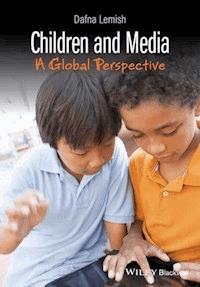
Taking a global and interdisciplinary approach, Children and Media explores the role of modern media, including the internet, television, mobile media and video games, in the development of children, adolescents, and childhood.
- Primer to global issues and core research into children and the media integrating work from around the world
- Comprehensive integration of work that bridges disciplines, theoretical and research traditions and methods
- Covers both critical/qualitative and quantitative approaches to the topic
Sie lesen das E-Book in den Legimi-Apps auf:
Seitenzahl: 672
Veröffentlichungsjahr: 2014
Ähnliche




















CONTENTS
Cover
Title page
Copyright page
Dedication
Preface
References
Companion Website
Introduction
Why Media (Now, More than Ever)?
Why Children (Only)?
Why Global? (But Is It?)
About this Book
References
1 Media and Children at Home
The Role of Context
Media Diffusion in the Family
The Role of Media in the Fabric of Family Life
Parenting Styles and Mediation
Concluding Remarks
References
2 Media and Individual Development
Developmental Theories
Attention to and Comprehension of Screen Content
Development of Viewing Preferences
Development of Fantasy–Reality Distinction
Identification with Media Characters
Children’s Fear Reactions
Television, Imagination, and Creativity
A Conceptual and Methodological Reflection
References
3 Media, Learning, and Literacy
Media and School – Two Educational Systems
Viewing Television and School Performance
The Audio-Visual Language and Cognitive Skills
Learning from Educational Television
New Media Learning and Literacy
Television and Language Acquisition
Concluding Remarks
References
4 Media and Health-related Behaviors
Media and Violent Behaviors
Media, Sex, and Sexuality
Media and Advertising
Media, Alcohol, and Smoking
Media, Obesity, and Eating Disorders
Media and Pro-social Behavior
Concluding Remarks
References
5 Media and Perceptions of Self and Society
Media and Gender
The Social Construction of Reality
The Construction of Political Reality
Americanization and Globalization
Concluding Remarks
References
6 Media, Sociality, and Participation
Social Networking
Risk and Harm
Organized Production and Participation
Concluding Remarks
References
7 Media Literacy Education
The Central Debates in Media Literacy Education
Media Literacy Education Around the World
Practical Aspects of Media Literacy Education
Evaluating Media Literacy Education
References
8 Policy and Advocacy
Criteria for Quality Media
Broadcasting Policy for Children
Internet-related Policy Issues
Interventions on Behalf of Children
Concluding Remarks
References
Conclusions
The Changing Nature of Childhood
Research Involvement in the Debate
Neither Good nor Bad
References
References
Index
Access to Companion Site
End User License Agreement
Guide
Cover
Table of Contents
Begin Reading
Pages
iii
iv
v
xi
xii
xiii
xiv
xv
1
2
3
4
5
6
7
8
9
10
11
12
13
14
15
16
17
18
19
20
21
22
23
24
25
26
27
28
29
30
31
32
33
34
36
37
35
38
39
40
41
42
43
44
45
46
47
48
49
50
51
52
53
54
55
56
57
58
59
60
61
62
63
64
65
66
67
68
69
70
71
72
73
74
75
76
77
78
79
80
81
82
83
84
85
86
87
88
89
90
91
92
93
94
96
97
95
98
99
100
101
102
103
104
105
106
107
108
109
110
111
112
113
114
115
116
117
118
119
120
121
122
123
124
125
126
127
128
129
130
131
132
133
134
135
136
137
138
139
140
141
142
143
144
145
146
147
148
149
150
151
152
153
154
155
156
157
158
159
160
161
162
163
164
165
166
167
168
169
170
171
172
173
174
175
176
177
178
179
180
181
182
183
184
185
186
187
188
189
192
193
194
190
191
195
196
197
198
199
200
201
202
203
204
205
206
207
208
209
210
211
212
213
214
215
216
217
218
219
220
221
222
223
224
225
226
227
228
230
231
232
229
233
234
235
236
237
238
239
240
241
242
243
244
245
246
247
248
249
250
251
252
253
254
255
256
257
258
259
260
261
262
263
264
265
266
267
Children and Media
A Global Perspective
Dafna Lemish
This edition first published 2015© 2015 John Wiley & Sons, Inc.
Registered OfficeJohn Wiley & Sons Ltd., The Atrium, Southern Gate, Chichester, West Sussex, PO19 8SQ, UK
Editorial Offices350 Main Street, Malden, MA 02148-5020, USA9600 Garsington Road, Oxford, OX4 2DQ, UKThe Atrium, Southern Gate, Chichester, West Sussex, PO19 8SQ, UK
For details of our global editorial offices, for customer services, and for information about how to apply for permission to reuse the copyright material in this book please see our website at www.wiley.com/wiley-blackwell.
The right of Dafna Lemish to be identified as the author of this work has been asserted in accordance with the UK Copyright, Designs and Patents Act 1988.
All rights reserved. No part of this publication may be reproduced, stored in a retrieval system, or transmitted, in any form or by any means, electronic, mechanical, photocopying, recording or otherwise, except as permitted by the UK Copyright, Designs and Patents Act 1988, without the prior permission of the publisher.
Wiley also publishes its books in a variety of electronic formats. Some content that appears in print may not be available in electronic books.
Designations used by companies to distinguish their products are often claimed as trademarks. All brand names and product names used in this book are trade names, service marks, trademarks or registered trademarks of their respective owners. The publisher is not associated with any product or vendor mentioned in this book.
Limit of Liability/Disclaimer of Warranty: While the publisher and author have used their best efforts in preparing this book, they make no representations or warranties with respect to the accuracy or completeness of the contents of this book and specifically disclaim any implied warranties of merchantability or fitness for a particular purpose. It is sold on the understanding that the publisher is not engaged in rendering professional services and neither the publisher nor the author shall be liable for damages arising herefrom. If professional advice or other expert assistance is required, the services of a competent professional should be sought.
Library of Congress Cataloging-in-Publication Data applied for.
9781118787069 Hardback9781118786772 Paperback
A catalogue record for this book is available from the British Library.
Cover image: © kali9 /iStock
To Lia Margaret Lemish,her future siblings and cousins,and their parents ‒who give meaning to it all
Preface
Can one book fully and completely cover such a wide and complex terrain as the intersection of children and media, and do so from a global perspective? Obviously it cannot.
What it does seek to do is to provide you with one scholar's account of the landscape, a map, if you will, of the typography of the field of children and media, highlighting favorite places, mountain peaks, and hidden valleys from the point of view of an individual who has been engaged in this global trek over an extended period of time. Thus, by definition, this book is by no means inclusive, and should not be depended upon, solely, for your specific research project or thesis. But if you are looking for a mapping of the field, then I hope you will find this to be the right book for you. If so, it can serve as a takeoff point for your own journey.
Accordingly, this book organizes and analyzes the accumulated literature developed over the past 50 years by scholars studying relationships of children and media, with a view to assisting students, media producers, policymakers, educators, and parents in understanding key issues in relations of media, society, and culture that have been and should be studied, discussed, and confronted in terms of research, public policy, education, and production.
The general structure and content of the book follows an earlier version entitled Children and television: A global perspective (2007), which was based, originally, with permission, on a textbook I wrote for the Open University in Israel (Growing-up with television: The little screen in the lives of children and youth, 2002, in Hebrew) and updated in 2013 (Growing up with television and the internet). I continue to be indebted to the Open University of Israel for their generous permission to expand on that excellent experience. However, this book moves beyond the emphasis on television, including my own earlier work, to present a broader, integrative analysis of what we know about research conducted all over the world on the inter-relationships between all forms of media and children as a global phenomenon.
Expanding the discussion means a lot more than just “adding” all media to the previous analysis of children and television. Indeed, many of our assumptions and concerns about television use have been turned on their head with the introduction of digital media. Take, for example, the preoccupation of much of the public discourse with the passive and isolating nature of television viewing. Over the last decade, the rapid growth of social media has led us to discuss how children’s active participation in media production and online social networking are changing the nature of sociability. Thus, integrating new scholarship generated over the last decade in the vast area of children and media challenges us to reconsider many previous understandings of the roles of television.
I have been studying children and media for 30 years in the USA, Europe, and Israel, as well as its complementary implications for the development of media literacy. I have read, taught, conducted research, written about it, and presented my work in numerous scholarly as well as professional settings. I take pride in being in a unique position to bridge two complementary research traditions to children and media, stated very roughly as: The American tradition of developmental psychology with a general emphasis on the individual child, effects studies, and quantitative methodologies; and the European tradition of sociology of childhood and cultural studies with its general emphasis on sociological and cultural issues, and the application of qualitative methodologies. My education and experience in both traditions allows me the privileged position of sharing with you my integration of these traditions into a more holistic view of the field, which is neither limited to nor biased by either tradition.
I bring with me to this work, as to anything else in my professional and personal life, a feminist worldview and set of values. What I mean by this is a special concern for and interest in issues of equality and diversity, a critical view on the constructed nature of all social life, and an ethics of care. Within the framework of my own research, the feminist worldview has stimulated a rethinking of traditional binary oppositions related to children and media: The distinction between childhood and adulthood; the separation of children’s public and private lives; rational and emotional reactions to media; formal schooling and leisure activities; cultural constructions and developmental theories; consumption and production of media content. I have also taken very seriously an understanding of the power hierarchies that characterize relations between adult researchers and children investigated, and my own privileged position as a middle-class, educated, white female academic.
A major characteristic of all feminist work is the commitment not only to contribute to research and social theory, but also the commitment to being a catalyst for deep social change. Indeed, the feminist perspective often criticizes contemporary social science for differentiating rather than integrating knowledge and action and highlights instead the emancipatory potential of their co-joint workings. I am, therefore, deeply involved with making academic knowledge accessible to the public through efforts at teacher training, development of media literacy curricula, appearances in the media, advising grassroots organizations, and participating in exchanges with producers. What I have gained from these efforts occupies an important place in the following pages as well.
The task undertaken here is enormous and very ambitious. I approached this challenge with deep gratitude to many, many people who have contributed to my professional development and life throughout the years. While there are too many to even attempt to name individually, I am indebted to them all. A few who stand out as important “mile-stones” on my intellectual way have my deepest gratitude. Therefore, I want to offer special thanks to David Buckingham, Linda Renée Bloch, Akiba Cohen, Máire Davies-Messenger, Kirsten Drotner, Nelly Elias, Shalom Fisch, Maya Götz, Amy Jordan, Barbara Kolucki, Sonia Livingstone, Rivka Ribak, Michael Rich, Chava Tidhar, Barbara Wilson, and Patti Valkenburg ‒ from whom I learned much about children and media as well as about the intricacies of cross-cultural research; to Aletha Huston, Mabel Rice, and the late John Wright who assisted me in understanding the child developmental traditions; and to Ellen Wartella, with whom I first started on this trek in my first course in the field, over three decades ago, and who has continued to fuel my interests since.
To my colleagues and friends from the Feminist Scholarship Division of the International Communication Association (ICA), and especially Carolyn Byrely, Cynthia Carter, Marian Meyers, Lana Rakow, Karen Ross, and Angharad Valdivia, I give thanks for constantly reminding me of the meaning and responsibility of being a citizen of the globe, and the value of our daily work in attempting to make a difference within it.
I owe a great deal to Elizabeth Swayze, Senior Editor of Wiley Blackwell, who believed in this project and in me from our first exchange; to Julia Kirk, Senior Project Editor, Fiona Screen, copy editor, as well as to the production staff at Wiley Blackwell for their professional, efficient, and friendly collaboration. I am also deeply grateful to Jim Bigogno, our Dean’s Office administrator in the College of Mass Communication and Media Arts, Southern Illinois University, for his administrative assistance and dedicated, personal, year-round support; and to Jennifer Sigler, a talented doctoral student and graduate research assistant, for her valuable assistance. Finally, I am in debt to my colleagues Sun Sun Lim, Cristina Ponte, and the anonymous reviewers for their valuable comments and contributions to the book proposal and the final draft.
I hope all of these colleagues and friends will find something of themselves resonating in the following pages.
To my children – Leeshai, Noam, and Erga ‒ who were fortunate to enjoy consuming media in several places around the globe, and who never fail to challenge, inspire, delight, and surprise me. I thank them for stimulating my research following their own development from infancy to adulthood.
And finally, I am grateful to Peter Lemish, my lifetime partner and the most critical, yet loving, reviewer and editor, for keeping me intellectually and personally on the tips of my toes.
Above all else, this book is for the betterment of children’s lives around the globe.
References
Lemish, D. (2002).
Growing up with television: The little screen in the lives of children and youth
. Tel-Aviv: The Open University (in Hebrew).
Lemish, D. (2007).
Children and television: A global perspective
. Malden, MA: Blackwell.
Lemish, D. (Ed.). (2013).
Growing-up with television and the internet: The screens in the lives of children and youth: A reader
. Tel-Aviv: The Open University of Israel (in Hebrew and English).
Companion Website
Please visit the companion website at www.wiley.com/go/lemish/childrenandmedia to view additional content for this title.
Freely Available:
Meet the author introductory video
Key terms
Questions for discussion and evaluation
Web links
Available to Instructors Only:
Assignments for each chapter
Sample syllabi for undergraduate, graduate, and professionally oriented courses
Introduction
Why study the role of media in children’s lives? Why a specific concern with the audience of children? And why are children and media a global issue? Let us start our joint journey into the exciting field of the study of children and media by engaging the three central challenges embedded in this book’s title.
Why Media (Now, More than Ever)?
The study of children and media relations is an enormously important topic for a variety of compelling reasons. First, children of both genders and all ages, races, religions, classes, and geographical regions of the world use media on a regular basis, enjoy them tremendously, and learn more about the world from them than from any other socializing agent. A phenomenon so pervasive and central in children’s lives is bound to be of great interest to anybody involved in and/or concerned about their world – students, parents, teachers, scholars, politicians, professionals, policymakers, and concerned citizens; in short, all of us.
Indeed, there is very little else that can so confidently claimed to be an experience shared by most children in the world today. At the beginning of the third millennium, children are being raised in a variety of social arrangements: by dual parents, single parents, divorced parents, same-sex parents, communal parents, no parents. Furthermore, regarding the existential nature of their lives, we can say that not all children are literate or, for that matter, go to school. They speak hundreds of different languages, eat different foods, play different games, wear different clothes. They face very different challenges in their daily lives, and have different dreams and aspirations for their future. Yet almost all of them spend time with media on a regular basis.
In short, media are one of the most shared and homogenizing mechanisms engaged in by children throughout the world, such that today we can barely think of childhood void of media. Whether they have a television or computer in their bedroom, share the family set in the living room, play computer games on their tablet while riding in the car to school, text on their mobile phone in the playground, or use media in the classroom or the community center, for most children today media are part of their taken-for-granted everyday experience. They may be watching television while playing on the rug, texting while eating their dinner, emailing while doing homework, or listening to music while surfing the internet – but still, they are using media. Children around the world are constantly “on” some form of a media experience.
Lesen Sie weiter in der vollständigen Ausgabe!
Lesen Sie weiter in der vollständigen Ausgabe!
Lesen Sie weiter in der vollständigen Ausgabe!
Lesen Sie weiter in der vollständigen Ausgabe!
Lesen Sie weiter in der vollständigen Ausgabe!
Lesen Sie weiter in der vollständigen Ausgabe!
Lesen Sie weiter in der vollständigen Ausgabe!
Lesen Sie weiter in der vollständigen Ausgabe!
Lesen Sie weiter in der vollständigen Ausgabe!
Lesen Sie weiter in der vollständigen Ausgabe!
Lesen Sie weiter in der vollständigen Ausgabe!
Lesen Sie weiter in der vollständigen Ausgabe!
Lesen Sie weiter in der vollständigen Ausgabe!




